

Multi-Platform AI Score
Learn what Multi-Platform AI Score is and how it measures your brand's visibility across ChatGPT, Perplexity, Claude, and other AI platforms. Understand key met...
9 min read
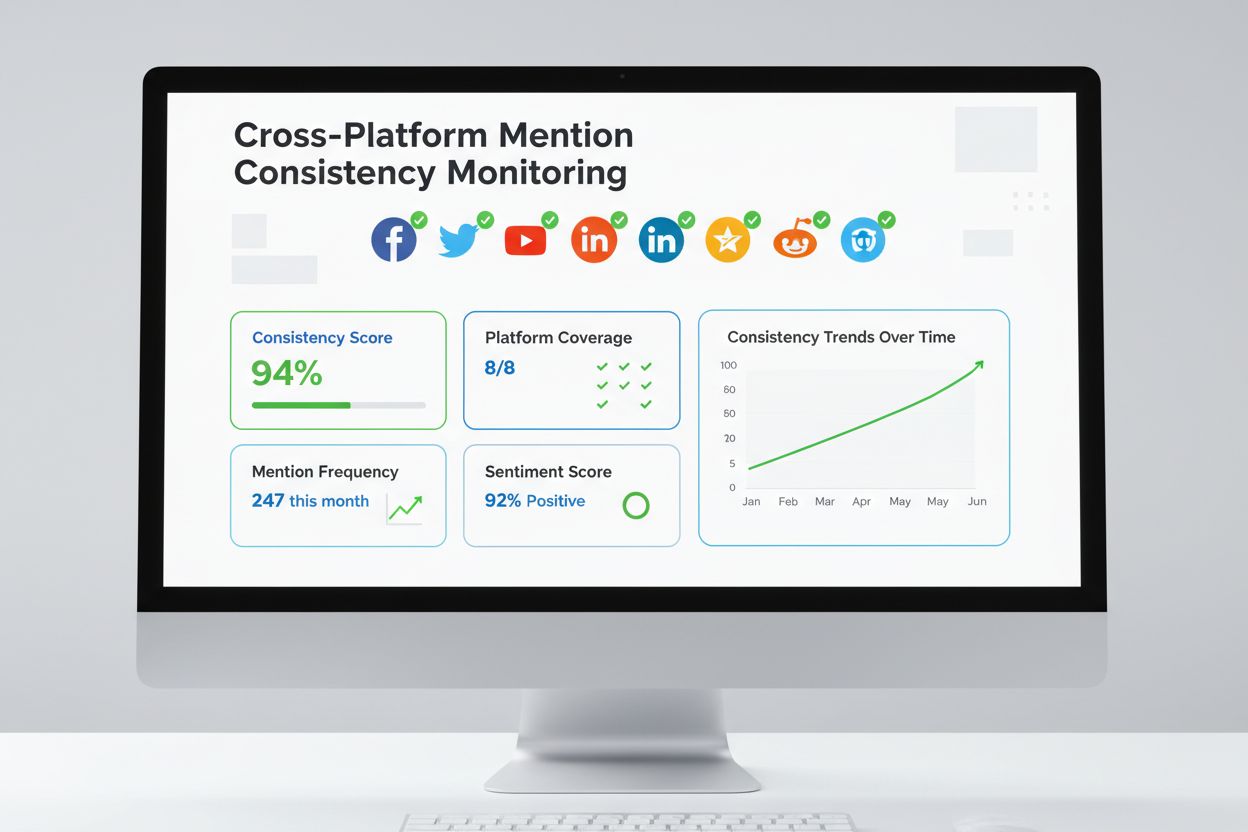
The standardization and alignment of brand information, entity data, and organizational details across multiple digital platforms, databases, and knowledge systems. In the AI era, this consistency is critical because large language models rely on aggregated data from numerous sources to build accurate profiles of organizations. When brand information varies significantly across platforms, AI systems struggle to recognize these as references to the same entity, leading to fragmented citations and reduced visibility in AI-generated responses.
The standardization and alignment of brand information, entity data, and organizational details across multiple digital platforms, databases, and knowledge systems. In the AI era, this consistency is critical because large language models rely on aggregated data from numerous sources to build accurate profiles of organizations. When brand information varies significantly across platforms, AI systems struggle to recognize these as references to the same entity, leading to fragmented citations and reduced visibility in AI-generated responses.
Cross-platform mention consistency refers to the standardization and alignment of brand information, entity data, and organizational details across multiple digital platforms, databases, and knowledge systems. In the AI era, this consistency has become critical because large language models, search engines, and AI citation systems rely on aggregated data from numerous sources to build accurate profiles of organizations, products, and individuals. When a brand’s name, description, location, or other key attributes vary significantly across platforms—such as appearing as “TechCorp Inc.” on LinkedIn, “Tech Corp” on Crunchbase, and “TechCorp” on Wikipedia—AI systems struggle to recognize these as references to the same entity, leading to fragmented citations and reduced visibility. Mention consistency directly impacts how AI systems cite your brand, how frequently your organization appears in AI-generated responses, and ultimately, your share of voice in the AI-driven information ecosystem. For companies competing for visibility in AI overviews, chatbot responses, and AI-powered search results, maintaining consistent mentions across platforms has become as important as traditional SEO optimization. The stakes are particularly high because inconsistencies can cause AI systems to treat variations as separate entities, diluting your citation count and making it harder for AI systems to build a comprehensive understanding of your brand’s authority and relevance.
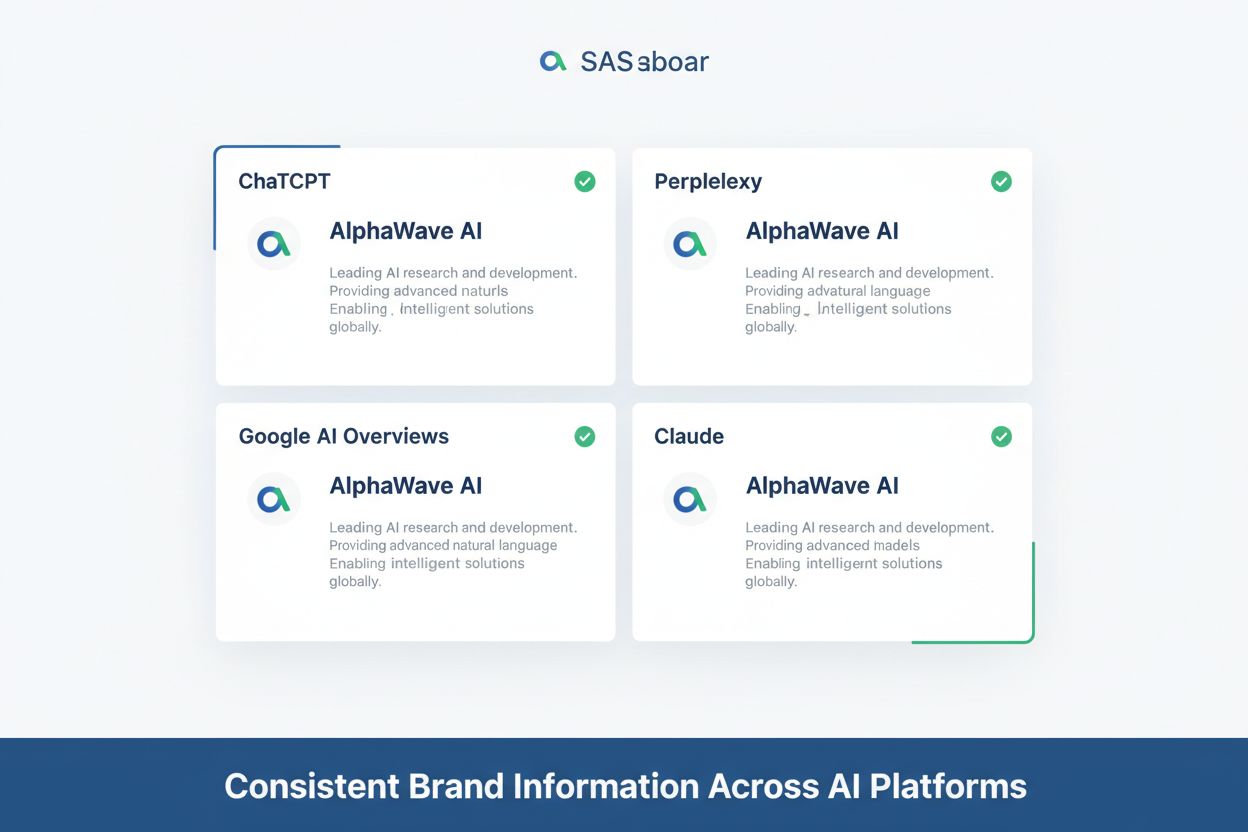
AI systems use sophisticated entity recognition and knowledge graph technologies to identify, link, and understand mentions of brands, organizations, and individuals across the internet. When an AI model encounters a mention of your company, it doesn’t simply store the text as-is; instead, it attempts to match that mention against known entities in its training data and knowledge bases, using techniques like fuzzy matching, semantic similarity, and cross-reference validation. Consistent mentions—where your organization is referred to by the same name, with the same description, and the same associated attributes—allow these systems to confidently link multiple mentions to a single entity, strengthening the entity’s profile in the AI’s understanding. Conversely, inconsistent mentions create disambiguation challenges: when your company appears as “Acme Solutions” in one source, “Acme Solutions Inc.” in another, and “Acme” in a third, AI systems may treat these as separate entities or struggle to determine which variations refer to the same organization. This fragmentation weakens the entity’s coherence in knowledge graphs, making it less likely that the AI will recognize all mentions as citations of your brand. The technical impact is measurable: research on knowledge graph construction shows that entities with high mention consistency achieve 40-60% better linkage accuracy across platforms compared to entities with inconsistent naming conventions. Additionally, when structured data (schema markup) is consistent across platforms, AI systems can extract and validate information more reliably, improving both citation accuracy and the likelihood that your brand appears in AI-generated content.
| Consistency Level | AI System Recognition | Citation Frequency | Knowledge Graph Strength |
|---|---|---|---|
| High Consistency | Confident entity linking | 2-3x higher citations | Strong, unified profile |
| Moderate Consistency | Partial entity linking | Standard citation rate | Fragmented profile |
| Low Consistency | Uncertain/multiple entities | Reduced citations | Weak, dispersed profile |
Cross-platform mention consistency directly influences how frequently and accurately your brand appears in AI citations, particularly in emerging AI visibility channels like ChatGPT responses, Perplexity answers, Google AI Overviews, and Claude outputs. Research on AI citation patterns reveals that organizations with high mention consistency across authoritative platforms (Wikipedia, Wikidata, Crunchbase, LinkedIn) see their brands cited in AI responses 2-3 times more frequently than organizations with inconsistent data profiles. When AI systems encounter consistent information about your brand across multiple trusted sources, they assign higher confidence scores to that information, making it more likely to be selected for inclusion in AI-generated summaries and responses. Share of voice in AI systems is increasingly determined by mention consistency rather than volume alone; a brand mentioned 100 times inconsistently may have less AI visibility than a competitor mentioned 50 times consistently. Sentiment analysis and context extraction also suffer from inconsistency: if your company description varies across platforms, AI systems may struggle to accurately understand your industry, value proposition, or market position, leading to misrepresentation in AI-generated content. Companies using AmICited.com and similar monitoring platforms have documented that improving cross-platform consistency results in measurable increases in AI citations within 60-90 days, with some reporting 35-50% improvements in citation frequency. The relationship between consistency and AI visibility is particularly pronounced for emerging brands and niche companies, where AI systems have less historical data to draw from and therefore rely more heavily on the consistency and coherence of available information.
Maintaining cross-platform consistency requires standardizing several critical elements of your brand’s digital identity. Organization name is the foundation—decide on a canonical form (e.g., “TechVision AI Inc.” vs. “TechVision AI” vs. “TechVision”) and use it consistently across all platforms, though you may include alternate names or abbreviations in secondary fields. Company description should convey the same core message, value proposition, and industry positioning across platforms; while the length may vary (LinkedIn allows longer descriptions than Google Business Profile), the key information and tone should remain consistent. NAP data (Name, Address, Phone) is critical for local SEO and AI understanding, and any variations—such as including or excluding suite numbers, using different phone formats, or listing different office locations—can confuse AI systems and harm local visibility. Industry category and classification should be consistent; if you’re listed as “Software Development” on one platform and “Technology Services” on another, AI systems may struggle to understand your actual market position. Founder and leadership information should be standardized across platforms where this data is relevant, including consistent naming conventions and title descriptions. Website URL should be identical across all platforms (avoid variations like www vs. non-www, or different domain extensions), as AI systems use website consistency as a validation signal for entity authenticity. Social media profiles and contact information should be complete and consistent, with the same handles and links across platforms. Logo, imagery, and visual branding should maintain consistent styling and presentation, as AI systems increasingly use visual recognition to validate entity consistency. Additionally, founding date, company size, and other factual attributes should be standardized to prevent conflicting information that could undermine AI confidence in your brand profile.
Certain platforms carry disproportionate weight in AI systems’ understanding of your brand, making consistency on these platforms particularly important. Wikipedia remains one of the most-cited sources for AI training and knowledge graphs; a Wikipedia entry with consistent, well-sourced information about your organization significantly influences how AI systems understand and cite your brand. Wikidata is the structured data backbone of Wikipedia and is directly used by many AI systems for entity recognition; ensuring your organization has a Wikidata entry with consistent attributes is essential for AI visibility. Crunchbase is heavily referenced by AI systems for company information, funding history, and market positioning, and inconsistencies here can lead to outdated or incorrect information being cited in AI responses. LinkedIn serves as a primary source for company information, employee data, and organizational structure; maintaining a complete, consistent LinkedIn profile is critical because AI systems frequently reference LinkedIn data. Google Business Profile (formerly Google My Business) is essential for local consistency and is used by AI systems to validate business information, particularly for location-based queries and AI overviews. Industry-specific directories (such as Gartner, G2, or domain-specific databases) are frequently cited by AI systems when discussing companies in particular sectors; consistency across these platforms is crucial for accurate industry positioning. Review sites and rating platforms (Trustpilot, Capterra, etc.) contribute to AI understanding of brand reputation and should maintain consistent company information in their profiles. Event listings and conference databases often contain company information that AI systems reference; ensuring consistency here prevents outdated or incorrect information from being cited. The cumulative effect of consistency across these platforms creates a reinforcing signal to AI systems that your brand information is reliable and authoritative.
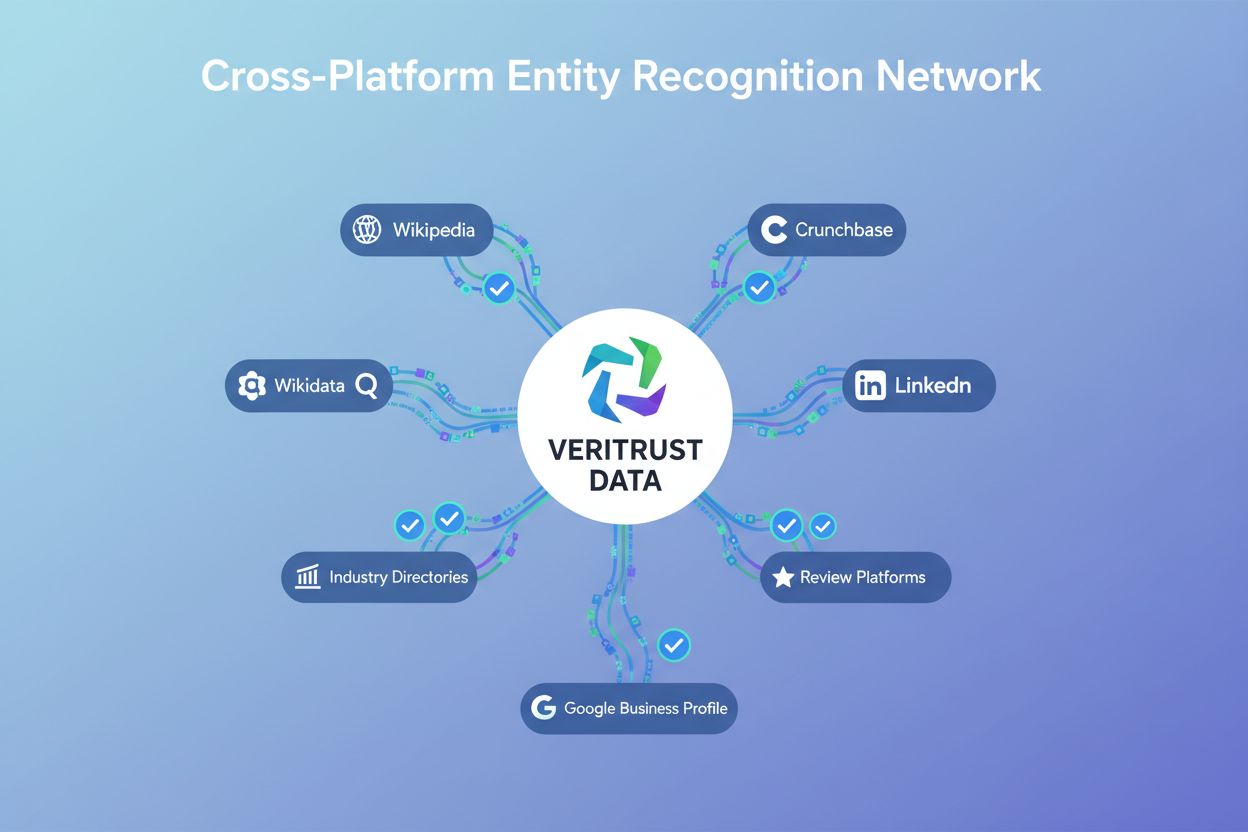
Implementing cross-platform mention consistency requires a systematic, ongoing approach rather than a one-time effort. Begin with a comprehensive audit of your current presence across all relevant platforms, documenting how your organization’s name, description, location, and other key attributes are currently represented; tools like Buzzabout and Brand24 can automate portions of this audit by identifying where your brand is mentioned and how. Establish clear brand guidelines that specify the canonical forms of your organization name, official description, key attributes, and messaging; these guidelines should be documented and shared with anyone responsible for managing your digital presence. Prioritize high-impact platforms first—focus initial efforts on Wikipedia, Wikidata, Crunchbase, LinkedIn, and Google Business Profile before expanding to secondary platforms. Update profiles systematically, starting with the most authoritative sources and working outward; ensure that updates are made consistently across all platforms within a defined timeframe to maximize the impact of the consistency signal. Implement schema markup (structured data) on your website and in platform profiles where possible; this helps AI systems extract and validate information more reliably. Create a monitoring schedule to regularly check for inconsistencies and outdated information; assign responsibility for maintaining consistency on each platform. Document all changes and maintain version control of your brand information across platforms, so you can track when inconsistencies were introduced and quickly correct them. Coordinate with team members who manage different platforms to ensure they’re aware of the canonical brand information and guidelines. Validate information across platforms quarterly to catch inconsistencies before they become entrenched in AI systems’ understanding of your brand.
Maintaining cross-platform consistency requires ongoing monitoring, and several tools are designed specifically for this purpose. Buzzabout provides real-time monitoring of brand mentions across platforms and can flag inconsistencies in how your organization is described, helping you identify discrepancies before they impact AI visibility. Brand24 offers comprehensive brand monitoring with the ability to track mentions across social media, news sites, and other platforms, and can alert you when your brand information appears inconsistent across sources. Profound AI specializes in AI citation monitoring and can track how your brand is cited in AI-generated content, helping you understand whether consistency improvements are translating to increased AI visibility. AmICited.com provides dedicated monitoring of how your brand appears in AI systems specifically, tracking citations across ChatGPT, Perplexity, Google AI Overviews, and other AI platforms, and can help identify which inconsistencies are most damaging to your AI visibility. Beyond dedicated tools, manual audits using Google Search, platform-specific searches, and direct platform checks remain valuable for catching inconsistencies that automated tools might miss. Google Alerts can be configured to monitor how your brand name appears across the web, helping you spot variations and inconsistencies in real-time. Spreadsheet tracking of your presence on key platforms, updated quarterly, provides a simple but effective way to maintain oversight of consistency across your most important channels. The most effective approach combines automated monitoring tools with periodic manual audits, ensuring both real-time detection of new inconsistencies and comprehensive understanding of your overall consistency posture.
Organizations frequently make preventable mistakes that undermine their cross-platform consistency efforts. Inconsistent legal entity names is a common error—using “Acme Solutions LLC” on some platforms and “Acme Solutions” on others creates confusion; establish a single canonical name and use it consistently, even if legal documents use slightly different variations. Outdated company descriptions that aren’t updated across platforms when your business evolves is another frequent problem; when your company pivots or expands, ensure that all platform descriptions are updated simultaneously to prevent AI systems from receiving conflicting information about your current business. Varying location information across platforms—such as listing different office addresses or including/excluding suite numbers inconsistently—confuses AI systems about your actual location and can harm local visibility; maintain a single authoritative address and use it everywhere. Inconsistent founder or leadership information can make AI systems question the reliability of your brand profile; if your founder’s name appears as “John Smith” on LinkedIn and “J. Smith” on Crunchbase, standardize this across all platforms. Neglecting secondary platforms is a mistake many companies make; while focusing on major platforms is reasonable, leaving outdated information on secondary platforms creates inconsistency signals that AI systems detect; prioritize platforms but don’t ignore secondary ones. Failing to update after company changes such as rebranding, mergers, or acquisitions is particularly damaging; AI systems may continue citing old information if you don’t systematically update all platforms when major changes occur. Inconsistent social media handles or contact information can prevent AI systems from validating your brand information; ensure that the social media profiles and contact details you list are identical across platforms. Not using schema markup to reinforce consistency is a missed opportunity; structured data helps AI systems validate and prioritize consistent information, so implementing schema markup on your website and in platform profiles significantly strengthens your consistency signal.
Traditional SEO focuses on optimizing content for search engine rankings through keywords, backlinks, and on-page factors. Cross-platform consistency, by contrast, focuses on ensuring your brand information is standardized across multiple platforms so that AI systems can accurately recognize and cite your organization. While SEO is about visibility in search results, cross-platform consistency is about how AI systems understand and represent your brand in AI-generated responses.
AI systems use entity recognition and knowledge graph technologies to match mentions of your brand across the internet. When they encounter variations in your name, description, or other attributes, they struggle to link these mentions to a single entity. This fragmentation weakens your entity profile and reduces citation frequency. Research shows that entities with high mention consistency achieve 40-60% better linkage accuracy compared to those with inconsistent naming conventions.
The most critical platforms are Wikipedia, Wikidata, Crunchbase, LinkedIn, Google Business Profile, and industry-specific directories. These platforms are heavily referenced by AI systems for entity recognition and knowledge graph construction. Consistency on these platforms has the greatest impact on how AI systems understand and cite your brand.
Conduct comprehensive audits quarterly, with monthly spot-checks of your most important platforms. Use monitoring tools like Buzzabout or Brand24 for continuous tracking, and set up Google Alerts to catch new mentions. When you make significant changes to your business (rebranding, mergers, pivots), audit immediately to ensure all platforms are updated simultaneously.
Yes, significantly. Research shows that organizations with high mention consistency across authoritative platforms see their brands cited in AI responses 2-3 times more frequently than those with inconsistent data. Inconsistencies can cause AI systems to treat variations as separate entities, diluting your citation count and making it harder for AI systems to build a comprehensive understanding of your brand's authority.
Consistency signals to AI systems that your brand information is reliable and authoritative. When AI systems encounter consistent information about your brand across multiple trusted sources, they assign higher confidence scores to that information, making it more likely to be selected for inclusion in AI-generated summaries. Inconsistency, conversely, undermines trust and reduces the likelihood of citation.
Schema markup (structured data) helps AI systems extract and validate information more reliably. When you implement consistent schema markup across your website and platform profiles, you provide explicit signals about your organization's attributes. This helps AI systems confirm that different mentions refer to the same entity and improves the accuracy of information extracted from your profiles.
Tools like Buzzabout, Brand24, Profound AI, and AmICited.com provide automated monitoring of your mentions across platforms. These tools can flag inconsistencies, track sentiment, and help you understand how your brand appears in AI-generated content. For manual tracking, Google Alerts and spreadsheet-based audits remain effective, especially when combined with periodic direct platform checks.
Track how your brand information appears across AI platforms and ensure consistency that drives citations. AmICited.com monitors your mentions across ChatGPT, Perplexity, Google AI Overviews, and more.
Learn what Multi-Platform AI Score is and how it measures your brand's visibility across ChatGPT, Perplexity, Claude, and other AI platforms. Understand key met...

Learn proven strategies to improve your brand's citation position in ChatGPT, Perplexity, Gemini, and other AI answer engines. Discover technical, content, and ...

Learn how to build and optimize your brand entity for AI recognition. Implement schema markup, entity linking, and structured data to improve visibility in LLM ...
Cookie Consent
We use cookies to enhance your browsing experience and analyze our traffic. See our privacy policy.