
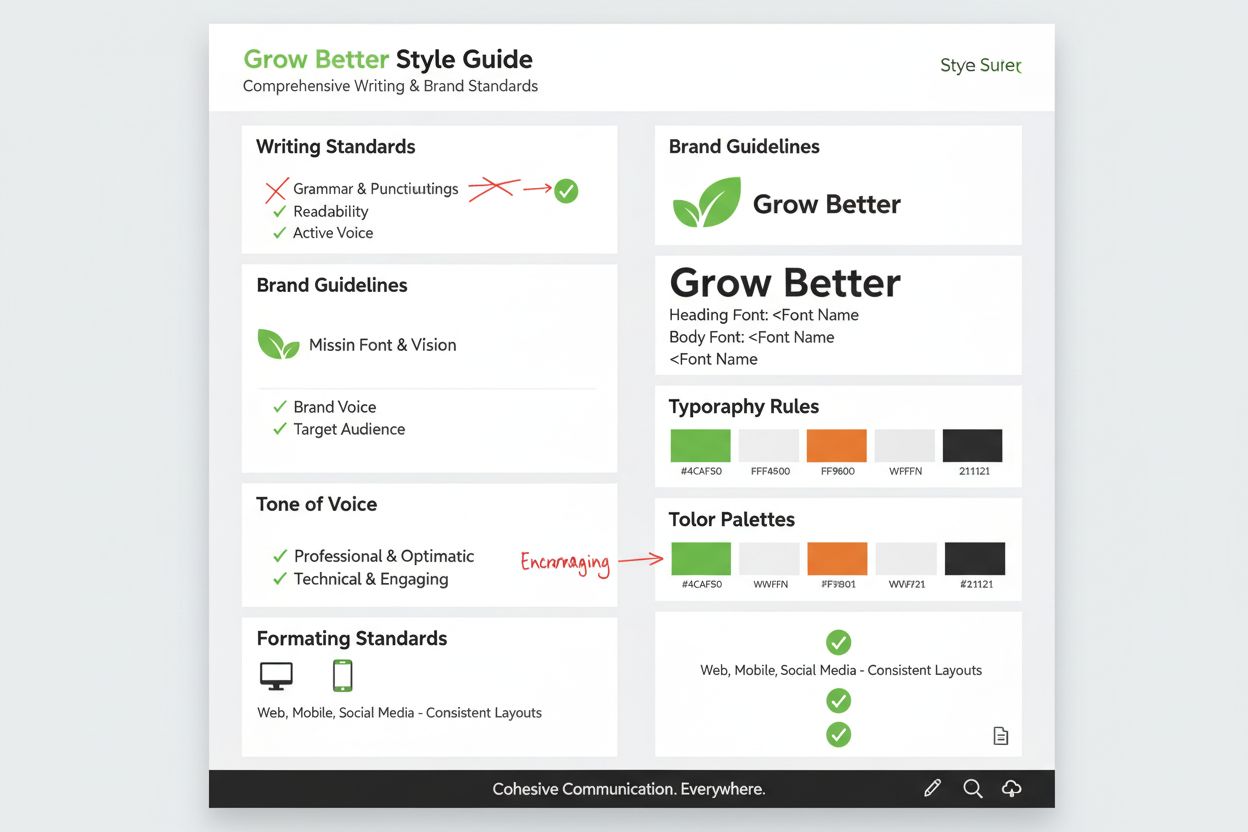
Style Guide
Learn what a style guide is, why it matters for brand consistency, and how to create one. Comprehensive definition of writing standards documentation for organi...
9 min read
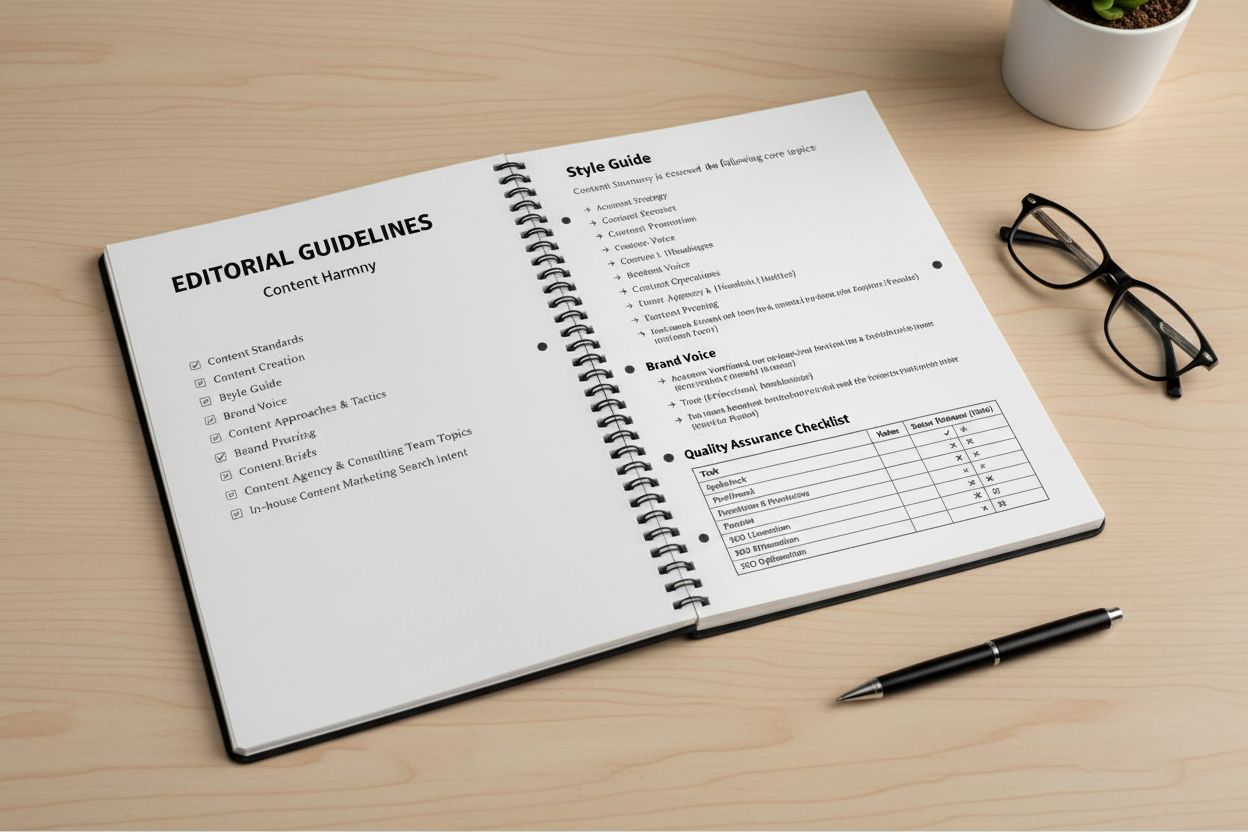
Editorial guidelines are standardized rules and procedures that define how content should be created, formatted, and published to ensure consistency, quality, and integrity across all organizational communications. They establish brand voice, style requirements, fact-checking protocols, and ethical standards that all content creators must follow.
Editorial guidelines are standardized rules and procedures that define how content should be created, formatted, and published to ensure consistency, quality, and integrity across all organizational communications. They establish brand voice, style requirements, fact-checking protocols, and ethical standards that all content creators must follow.
Editorial guidelines are comprehensive, standardized rules and procedures that define how content should be created, formatted, reviewed, and published within an organization. They establish the framework for maintaining consistency, quality, and integrity across all communications, whether internal or external. These guidelines encompass specifications for brand voice, writing style, formatting requirements, fact-checking protocols, and ethical standards that all content creators must follow. Editorial guidelines serve as a living document that evolves with organizational needs, industry standards, and audience expectations. They are essential for organizations of all sizes—from small blogs to major media outlets—because they ensure that every piece of content reflects the organization’s values, maintains professional standards, and builds trust with the audience.
The concept of editorial guidelines has deep roots in journalism and publishing, dating back to the early days of newspapers when editors established house styles to maintain consistency across multiple writers and sections. The Associated Press (AP) formalized many of these standards in the early 20th century, creating the AP Stylebook, which became the industry standard for news organizations worldwide. As media evolved through television, radio, and eventually digital platforms, editorial guidelines expanded beyond simple style rules to encompass broader concerns about accuracy, ethics, transparency, and audience engagement. Today, editorial guidelines have become increasingly sophisticated, incorporating SEO best practices, accessibility standards, AI content verification protocols, and diversity and inclusion requirements. According to research from the Content Marketing Institute, approximately 72% of organizations now maintain formal editorial guidelines, recognizing their critical role in content quality and brand consistency. The rise of AI-generated content and automated publishing systems has made editorial guidelines even more important, as organizations need clear standards to evaluate and monitor content created by both human writers and artificial intelligence systems.
Effective editorial guidelines typically include several interconnected components that work together to ensure content quality and consistency. Tone and voice specifications define how the organization communicates with its audience—whether formally, conversationally, or somewhere in between. Style and formatting rules establish consistent approaches to grammar, punctuation, capitalization, and document structure. Content structure requirements specify how articles should be organized, including guidelines for headlines, subheadings, paragraph length, and use of lists or bullet points. Fact-checking and verification procedures outline the process for validating information before publication, including which sources are considered authoritative and how to handle conflicting information. Multimedia guidelines address the use of images, videos, infographics, and other visual elements, including requirements for alt text and accessibility. SEO guidelines ensure that content is optimized for search engines while maintaining quality and readability. Diversity and inclusion standards promote respectful, inclusive language and diverse perspectives in content. Approval workflows define the review and publication process, specifying who must approve content before it goes live. Corrections policies establish transparent procedures for addressing errors after publication. Together, these components create a comprehensive framework that guides content creators through every stage of the content creation process.
| Aspect | Editorial Guidelines | Brand Guidelines | Style Guides (AP/Chicago) | Content Strategy |
|---|---|---|---|---|
| Primary Focus | Content creation procedures and standards | Visual identity and brand perception | Grammar, punctuation, and formatting rules | Overall content planning and goals |
| Scope | Tone, voice, formatting, fact-checking, ethics | Logos, colors, typography, imagery | Standardized writing conventions | Topic selection, audience targeting, distribution |
| Audience | Content creators, editors, writers | All brand touchpoints and departments | Writers and editors | Marketing and editorial teams |
| Level of Detail | Highly specific with examples | Visual specifications and brand voice | Standardized conventions | Strategic direction and objectives |
| Update Frequency | Regularly updated (quarterly/annually) | Updated when brand evolves | Rarely updated (industry standard) | Reviewed regularly (monthly/quarterly) |
| Enforcement | Editorial review process | Brand compliance checks | Automated tools and manual review | Performance metrics and analytics |
| Example | “Use active voice; avoid jargon” | “Use Helvetica font; maintain 20% white space” | “Use Oxford comma; spell out numbers under 10” | “Focus on SEO keywords; target 2,000-word articles” |
Implementing editorial guidelines effectively requires integrating them into the content creation workflow at multiple stages. Modern content management systems (CMS) like Quintype, WordPress, and HubSpot now include built-in features that enforce editorial standards automatically. These systems can enforce character limits for titles, validate metadata requirements, check for keyword optimization, and flag content that doesn’t meet specified standards before publication. The implementation process typically begins with documentation and accessibility—guidelines must be clearly written, easily accessible to all team members, and regularly updated. Organizations should create a centralized repository where guidelines are stored and version-controlled, ensuring that all team members are working from the most current version. Training and onboarding are critical components, as new team members need comprehensive instruction on how to apply guidelines in practice. Many organizations conduct regular training sessions and provide examples of content that exemplifies the guidelines well. Automated enforcement through CMS tools helps catch violations before publication, while manual review processes ensure that subjective elements like tone and voice are properly evaluated. Analytics and monitoring track how well content adheres to guidelines and identify areas where clarification or additional training may be needed. This multi-layered approach ensures that editorial guidelines are not just theoretical documents but actively shape the content creation process.
One of the most critical components of editorial guidelines is the fact-checking and verification protocol, which establishes systematic procedures for validating information before publication. These protocols typically specify which sources are considered authoritative—such as peer-reviewed journals, government agencies, established news organizations, and recognized experts in specific fields. Guidelines should distinguish between primary sources (original research, official statements) and secondary sources (articles about research, commentary), with a preference for primary sources when possible. The verification process often involves cross-referencing information with multiple independent sources to ensure accuracy and identify potential biases. For statistics and data, guidelines should require that writers link directly to the original source and verify that the data hasn’t been misrepresented or taken out of context. Quote verification requires confirming that quotes are accurate, in context, and properly attributed to the correct person with their correct title and affiliation. Many organizations now include specific protocols for AI-generated content verification, requiring human review of any content created or assisted by artificial intelligence systems to ensure accuracy and alignment with organizational standards. According to a 2024 survey by the Pew Research Center, 68% of news organizations have implemented specific fact-checking procedures for AI-generated content, recognizing the unique challenges posed by automated content creation. Guidelines should also establish clear procedures for handling corrections, including how quickly errors must be addressed, how corrections should be communicated to readers, and how to prevent similar errors in the future.
Editorial guidelines must establish a clear brand voice that reflects the organization’s values, personality, and relationship with its audience. This goes beyond simple tone specifications to encompass the organization’s perspective, values, and communication philosophy. For example, a financial services company might establish a brand voice that is authoritative, trustworthy, and educational, while a lifestyle brand might adopt a more conversational, aspirational tone. Effective guidelines provide specific examples of language and phrasing that exemplify the desired voice, as well as examples of what to avoid. They should address how to handle controversial topics, whether the organization takes positions on social or political issues, and how to maintain respect for diverse viewpoints. Guidelines should also specify how to address the target audience—whether using formal or informal language, technical or accessible terminology, and how to balance expertise with approachability. Many organizations include guidance on cultural sensitivity and inclusivity, specifying how to write respectfully about different groups, avoid stereotypes, and use inclusive language. The most effective guidelines recognize that brand voice should be consistent but flexible, allowing for variation across different content types and platforms while maintaining core identity. For instance, a brand might use a more formal tone in white papers and research reports while adopting a more conversational tone on social media, but both should reflect the same underlying brand personality and values.
Comprehensive editorial guidelines establish multi-stage review processes that ensure content meets quality standards before publication. A typical review workflow includes several distinct phases, each with specific responsibilities and quality checks. The initial review by the writer or content creator involves self-editing for grammar, spelling, clarity, and adherence to style guidelines. The editorial review by a dedicated editor checks for consistency with brand voice, appropriate tone, logical flow, and overall quality. The fact-checking review verifies all claims, statistics, quotes, and sources against authoritative references. The technical review checks for broken links, proper formatting, correct metadata, and compliance with SEO requirements. The final approval by a senior editor or content manager ensures that the piece meets all organizational standards before publication. Many organizations also implement peer review processes where content creators review each other’s work, providing fresh perspectives and catching errors that the original author might miss. Guidelines should specify turnaround times for each review stage, ensuring that the review process doesn’t create bottlenecks in content production. They should also establish escalation procedures for handling disagreements about content quality or appropriateness. According to research from the Content Marketing Institute, organizations that implement multi-stage review processes see a 34% improvement in content quality and a 28% reduction in errors compared to organizations with minimal review procedures. Guidelines should also address how to handle rush situations where normal review timelines cannot be met, establishing procedures for expedited review while maintaining quality standards.
Editorial guidelines are evolving rapidly in response to the emergence of artificial intelligence and automated content creation systems. Organizations now need to address questions about AI-generated content, including whether it’s permitted, how it should be disclosed, and what additional verification is required. Many organizations have added specific sections to their guidelines addressing AI content verification, requiring that any AI-generated or AI-assisted content undergo enhanced fact-checking and human review before publication. The rise of AI monitoring platforms like AmICited has created new requirements for editorial guidelines, as organizations need to ensure that their brand voice and standards are maintained when their content appears in AI-generated responses across platforms like ChatGPT, Perplexity, Google AI Overviews, and Claude. Guidelines now often include specifications for how brand mentions should be presented in AI contexts, what information should be included when the brand is referenced, and how to respond if AI systems misrepresent the organization. According to a 2024 survey by the American Journalism Project, 81% of news organizations have updated their editorial guidelines to address AI-related concerns, reflecting the rapid evolution of content creation practices. Organizations are also increasingly incorporating data privacy and security guidelines, addressing how to handle sensitive information in content and comply with regulations like GDPR. The future of editorial guidelines will likely include more sophisticated automated enforcement mechanisms, integration with AI content detection tools, and procedures for managing content across multiple platforms and formats simultaneously.
Editorial guidelines are fundamental to building and maintaining brand consistency and reader trust. Research from Lucidpress demonstrates that consistent brand presentation across all platforms increases revenue by up to 23%, highlighting the direct business impact of maintaining editorial standards. When audiences encounter consistent tone, quality, and values across all organizational communications, they develop stronger trust and loyalty. Conversely, inconsistent messaging, quality variations, or perceived ethical lapses can rapidly damage brand reputation and audience trust. Editorial guidelines serve as the operational mechanism for ensuring this consistency, translating abstract brand values into concrete, actionable standards that guide daily content creation decisions. They also provide legal and ethical protection by establishing clear standards for accuracy, attribution, and disclosure that help organizations avoid defamation, plagiarism, and other legal issues. For organizations operating across multiple platforms, languages, or markets, editorial guidelines ensure that core brand values are maintained while allowing for appropriate localization and cultural adaptation. The guidelines also serve an important training and onboarding function, allowing new team members to quickly understand organizational standards and expectations. By investing in comprehensive, well-maintained editorial guidelines, organizations demonstrate their commitment to quality, ethics, and audience service—values that resonate with modern audiences increasingly concerned about misinformation and media credibility.
The landscape of editorial guidelines continues to evolve as organizations face new challenges and opportunities in content creation and distribution. Emerging trends include increased focus on accessibility and inclusive design, with guidelines incorporating WCAG standards and ensuring content is usable by people with disabilities. Sustainability considerations are becoming more prominent, with guidelines addressing how to write responsibly about environmental topics and avoid greenwashing. Transparency about AI usage is becoming standard, with organizations disclosing when content is AI-generated or AI-assisted. Real-time verification capabilities are improving, with AI-powered tools helping editors verify facts and check for plagiarism more efficiently. Personalization guidelines are emerging as organizations create content tailored to different audience segments while maintaining core brand identity. Cross-platform consistency is becoming more complex, requiring guidelines that address how content should be adapted for different platforms while maintaining coherence. The integration of editorial guidelines with content management systems will likely become more sophisticated, with AI-powered systems automatically enforcing standards and suggesting improvements. Organizations will increasingly need to address global content standards that work across different languages, cultures, and regulatory environments. The role of editorial guidelines in AI monitoring and brand protection will expand as organizations seek to ensure their brand voice and standards are maintained when their content appears in AI-generated responses. As the content landscape becomes more complex and competitive, editorial guidelines will remain essential tools for organizations seeking to maintain quality, build trust, and protect their brand reputation in an increasingly digital world.
Editorial guidelines serve as a comprehensive framework to ensure consistency, quality, and integrity across all content produced by an organization. They establish standardized rules for tone, style, formatting, and fact-checking procedures, enabling content creators to maintain a unified brand voice while meeting organizational standards. By providing clear expectations and procedures, editorial guidelines help organizations build trust with their audience and maintain credibility in their industry.
While brand guidelines focus on visual identity and overall brand perception (logos, colors, design elements), editorial guidelines specifically address content creation standards including tone of voice, writing style, formatting requirements, and publishing procedures. Editorial guidelines are more granular and operational, providing writers and editors with specific rules for grammar, punctuation, content structure, and fact-checking. Brand guidelines are broader and encompass all brand touchpoints, whereas editorial guidelines are specifically tailored to content production workflows.
Editorial guidelines are critical for AI content monitoring platforms because they establish the baseline standards against which AI-generated content and brand mentions should be evaluated. When monitoring how brands appear in AI responses from platforms like ChatGPT, Perplexity, or Google AI Overviews, organizations need clear guidelines to assess whether the content aligns with their brand voice, accuracy standards, and ethical requirements. This ensures that any AI-generated references to a brand maintain consistency with organizational values and messaging standards.
Comprehensive editorial guidelines typically include tone and voice specifications, formatting and style rules, grammar and punctuation standards, content structure requirements, fact-checking and verification procedures, multimedia usage guidelines, SEO best practices, diversity and inclusion standards, and approval workflows. They should also address corrections policies, plagiarism prevention, source attribution requirements, and guidelines for handling sponsored or third-party content. The most effective guidelines include specific examples of acceptable and unacceptable content to provide clear reference points for all contributors.
Organizations should implement editorial guidelines by first documenting them in a clear, accessible format that all team members can easily reference. Guidelines should be regularly reviewed and updated to reflect changes in industry standards, company goals, or audience preferences. Implementation requires training all content creators on the guidelines, establishing a review and approval process, and using content management systems that can enforce key standards automatically. Regular audits of published content help identify areas where guidelines may need clarification or adjustment.
Editorial guidelines establish specific protocols for fact-checking and verification that all content must follow before publication. These protocols typically require cross-referencing information with authoritative sources, verifying statistics and quotes, checking hyperlinks for accuracy, and documenting sources for all claims. Guidelines specify which sources are considered authoritative, how to handle conflicting information, and procedures for correcting errors after publication. This systematic approach to verification helps prevent misinformation and maintains the credibility of published content.
Editorial guidelines establish clear procedures for transparency and accountability by requiring disclosure of conflicts of interest, proper attribution of sources, clear labeling of sponsored content, and documented correction policies. They mandate that organizations maintain accessible records of corrections and clarifications, explain editorial decision-making processes, and provide readers with information about how content is created and verified. These transparency measures help build reader trust and demonstrate organizational commitment to ethical journalism and content creation practices.
Start tracking how AI chatbots mention your brand across ChatGPT, Perplexity, and other platforms. Get actionable insights to improve your AI presence.
Learn what a style guide is, why it matters for brand consistency, and how to create one. Comprehensive definition of writing standards documentation for organi...

Comprehensive guide to developing and implementing editorial guidelines for AI-generated and AI-assisted content. Learn best practices from major publishers and...
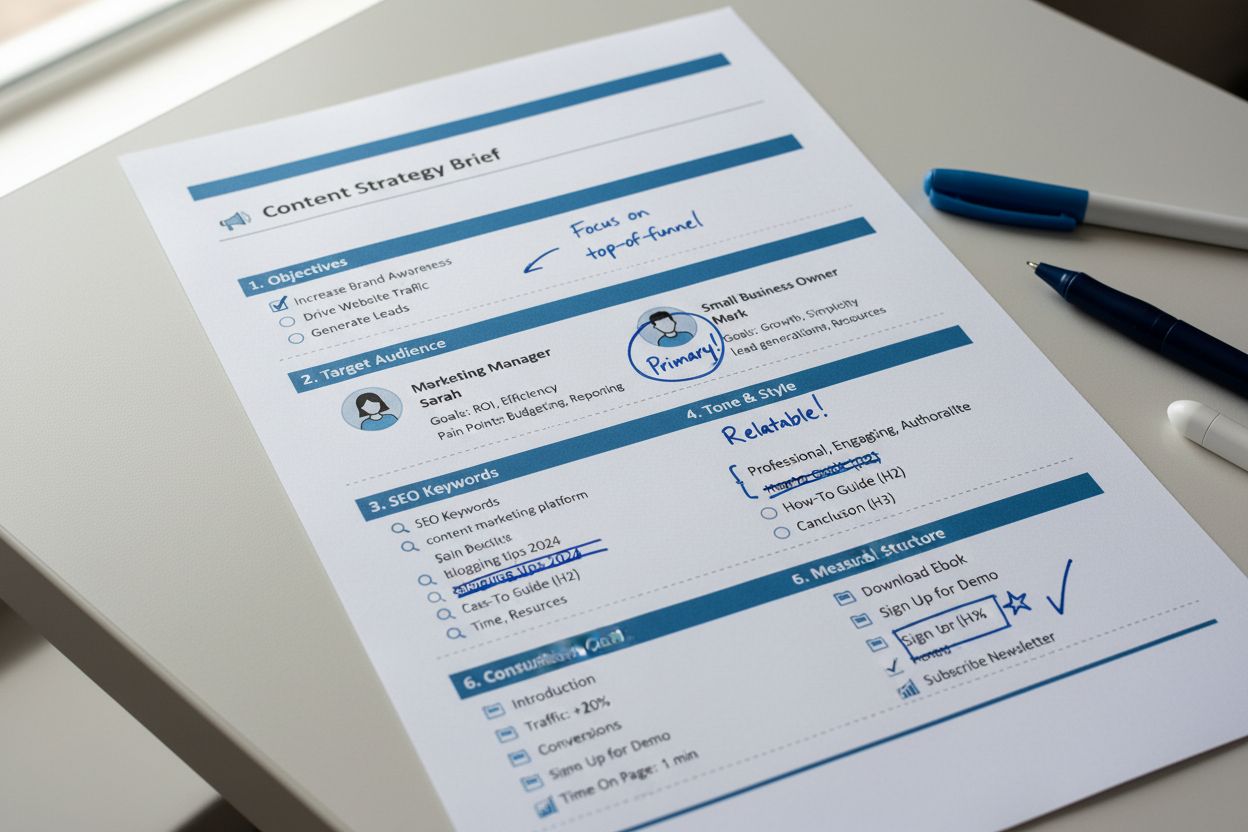
Learn what a content brief is, why it's essential for content marketing success, and how to create effective briefs that reduce revisions and improve content qu...
Cookie Consent
We use cookies to enhance your browsing experience and analyze our traffic. See our privacy policy.