

What is Evergreen Content for AI Search?
Learn how evergreen content stays relevant for AI search engines like ChatGPT and Perplexity. Discover why timeless content matters for AI citations and visibil...
9 min read

Evergreen content is content that remains relevant and valuable over an extended period, requiring minimal updates to continue providing value to readers. Unlike trending or seasonal content, evergreen material addresses timeless topics and questions that audiences consistently search for, generating sustained traffic and ROI long after publication.
Evergreen content is content that remains relevant and valuable over an extended period, requiring minimal updates to continue providing value to readers. Unlike trending or seasonal content, evergreen material addresses timeless topics and questions that audiences consistently search for, generating sustained traffic and ROI long after publication.
Evergreen content is search-optimized material that remains relevant and valuable over an extended period, requiring minimal updates to continue providing value to readers. The term derives from evergreen trees, which retain their leaves year-round, symbolizing perpetual relevance and sustainability. Unlike trending articles or seasonal posts that lose value quickly, evergreen content addresses timeless topics and fundamental questions that audiences consistently search for, generating sustained organic traffic and leads long after initial publication. This type of content is designed to answer core problems, explain foundational concepts, or provide step-by-step guidance on topics that don’t change significantly over time. Evergreen content is essential for building long-term SEO authority, as it continues attracting visitors through search engines for months or even years, making it one of the most cost-effective content investments a brand can make.
The concept of evergreen content emerged as digital marketers recognized that not all content needs to be timely or trend-focused to drive value. While breaking news and trend-based articles generate short-term traffic spikes, they quickly become irrelevant as new information emerges. In contrast, evergreen content creates a compounding effect, where each piece continues working for the business indefinitely. According to HubSpot’s State of Marketing report, 70% of marketers actively invest in content marketing, with evergreen formats forming the backbone of sustainable strategies. Research from Ahrefs demonstrates that evergreen blog posts can generate 38% of a website’s total organic traffic, sometimes even more depending on the niche and content quality. This statistic has remained consistent over multiple years, underscoring the reliability of evergreen strategies.
The rise of search engine optimization further elevated the importance of evergreen content. As Google’s algorithms evolved to prioritize helpful, authoritative, and trustworthy content, evergreen material naturally aligned with these ranking factors. Content that thoroughly addresses user intent and provides lasting value receives better rankings and attracts more backlinks, which further strengthens domain authority. Additionally, evergreen content often becomes ’link bait’, attracting citations and references from other websites, blogs, and industry publications. This organic link acquisition process is far more sustainable than pursuing temporary traffic spikes from viral content.
In recent years, the emergence of AI-powered search platforms like ChatGPT, Perplexity, and Google AI Overviews has introduced new dimensions to evergreen content strategy. While traditional search engines reward content that ranks well over time, LLMs (Large Language Models) prioritize fresh, well-structured, and authoritative content when generating answers. This shift means that evergreen content now requires more active maintenance to remain visible in AI-generated responses, with optimal refresh cycles ranging from 60-90 days for high-priority content rather than the traditional 24-36 month cycles.
| Attribute | Evergreen Content | Seasonal Content | Trending Content |
|---|---|---|---|
| Relevance Period | 2+ years or indefinite | 3-6 months (tied to seasons/holidays) | 2-4 weeks (rapid decline) |
| Traffic Pattern | Consistent, steady growth | Sharp spikes then drops | Sudden spike then crash |
| Examples | How-to guides, tutorials, FAQs | Holiday marketing, seasonal tips | Breaking news, viral topics |
| SEO Value | High long-term rankings | Moderate, time-limited | Low after initial period |
| ROI | 4x higher than seasonal | Moderate, short-term focused | Low overall ROI |
| Update Frequency | Every 60-90 days (AI era) | Annually or as needed | Rarely updated |
| Backlink Potential | High, attracts citations | Low to moderate | Very low |
| AI Citation Likelihood | High (if maintained) | Low | Very low |
| Maintenance Effort | Moderate (regular refreshes) | Low (seasonal only) | Minimal |
| Best For | Long-term traffic, authority | Promotional campaigns | Immediate visibility |
Evergreen content succeeds through strategic structure and technical optimization that makes it easy for both human readers and AI systems to extract value. The most effective evergreen pieces follow a clear hierarchy with descriptive H2 and H3 headings that mirror natural-language questions users might ask. For example, instead of a generic heading like “SEO Tips,” an evergreen article uses “What Are the Most Important On-Page SEO Factors?” This approach improves scannability for readers and helps search engines and LLMs understand the content’s relevance to specific queries.
Schema markup and structured data play a crucial role in evergreen content optimization. By implementing FAQ schema, article schema, and definition schema, content creators signal to search engines and AI systems exactly what information the page contains. This structured approach is particularly important for LLM citations, as AI models prefer content they can easily parse and extract. Additionally, clear definitions at the beginning of sections make it simpler for AI systems to use the content in their generated answers. Research shows that content starting with concise, direct answers to questions is significantly more likely to appear in featured snippets and AI-generated responses.
The technical performance of evergreen content also matters significantly. Page load speed, mobile responsiveness, and crawlability directly impact how search engines and AI crawlers interact with the content. Pages that load in under 2 seconds are more likely to be fully crawled and indexed, while slow-loading pages may be skipped in retrieval pipelines. Additionally, ensuring that robots.txt files don’t block AI crawlers and that the site uses clean URL structures helps maximize visibility across both traditional search and AI platforms.
How-to guides and tutorials represent one of the most powerful evergreen formats because they address recurring user needs. Examples include “How to Write a Resume,” “How to Optimize Images for Web,” or “How to Create a Content Calendar.” These guides remain relevant because the fundamental processes they describe don’t change significantly over time. Users continuously search for these topics, ensuring consistent traffic flow. Ultimate guides take this concept further by providing comprehensive coverage of a topic, such as “The Complete Guide to SEO” or “Ultimate Guide to Email Marketing.” These in-depth resources often rank for multiple related keywords and attract numerous backlinks.
Listicles and tips format content into easily digestible lists, such as “10 Best Practices for Social Media Marketing” or “15 Ways to Improve Customer Retention.” This format works well for evergreen content because lists remain relevant as long as the underlying principles don’t change. FAQ pages and Q&A content directly address questions users search for, making them highly valuable for both SEO and AI citation. When structured with proper schema markup, FAQ content is particularly attractive to LLMs, which can easily extract direct answers for their responses.
Glossaries and definition pages serve as evergreen resources that accumulate backlinks over time. Industry-specific glossaries like “SEO Terminology Glossary” or “Digital Marketing Terms” become reference materials that other websites link to repeatedly. Case studies and success stories provide evergreen value by demonstrating real-world applications of concepts or products. While specific client names or dates might change, the underlying methodology and lessons learned remain timeless. Resource lists and tool compilations like “Best SEO Tools” or “Top Content Management Systems” require regular updates but maintain evergreen value because users continuously search for recommendations in these categories.
The financial impact of evergreen content is substantial and well-documented. Evergreen content delivers 4x higher ROI than seasonal content, according to Demand Metric research, because it continues generating leads, traffic, and conversions indefinitely. A single well-crafted evergreen guide can drive thousands of visitors over multiple years, whereas a seasonal article might generate significant traffic for a few weeks before becoming obsolete. This compounding effect means that businesses investing in evergreen content see exponential returns on their content creation investment over time.
Compounding blog posts—those that increase in traffic over time—account for only 10% of published content but generate 38% of total blog traffic, according to HubSpot research. This asymmetrical distribution highlights the importance of quality over quantity in content strategy. Rather than publishing numerous mediocre articles, successful content strategies focus on creating fewer, higher-quality evergreen pieces that continue working indefinitely. Additionally, 81% of companies use blogging as a primary content strategy, with evergreen formats dominating editorial calendars because they provide predictable, measurable returns.
From a lead generation perspective, evergreen content serves as a perpetual lead magnet. Visitors searching for solutions to problems your evergreen content addresses are often in the early stages of the buyer’s journey, making them valuable prospects for nurturing. By providing comprehensive, authoritative answers to their questions, brands establish trust and position themselves as industry experts. This authority translates into higher conversion rates when visitors are ready to make purchasing decisions. Furthermore, evergreen content supports email marketing strategies, as brands can continuously promote these assets to new subscribers, ensuring consistent engagement and lead generation.
The emergence of AI-powered search platforms has fundamentally changed how evergreen content must be managed. LLMs like ChatGPT, Perplexity, and Google AI Overviews prioritize fresh, well-maintained content when generating answers, even if older content is more comprehensive. This represents a significant shift from traditional SEO, where older, established content often maintained rankings indefinitely. Research indicates that the shelf life of evergreen content in AI search is approximately 90 days to 9 months, compared to 24-36 months in traditional search. This shorter cycle means that brands must implement more aggressive refresh schedules to maintain AI visibility.
Brand authority and E-E-A-T signals become even more critical in the AI era. LLMs evaluate content based on author credentials, original research, media mentions, and backlink profiles to determine trustworthiness. Content demonstrating clear expertise, experience, authoritativeness, and trustworthiness is significantly more likely to be cited in AI-generated answers. Additionally, LLMs track content freshness through multiple signals: visible modified dates, new backlinks, updated examples, expanded sections, and fresh schema markup. Superficial updates—such as merely changing the publication date—are insufficient; AI systems detect substantive changes and reward meaningful revisions.
Monitoring AI citations has become essential for content strategy. Tools like Writesonic, AtomicAGI, and Profound allow brands to track when their content appears in AI-generated answers across multiple platforms. Manual testing—asking relevant questions in ChatGPT, Gemini, and Perplexity to see which sources are cited—provides another tracking method. Brands discovering that their evergreen content isn’t appearing in AI answers should analyze competitor content to identify structural, formatting, or authority gaps. This competitive analysis often reveals that competitors have more recent updates, clearer definitions, or stronger author credentials.
The future of evergreen content strategy will increasingly emphasize active maintenance and AI optimization rather than the traditional “publish and forget” approach. As AI search platforms become more sophisticated, the distinction between evergreen and time-sensitive content will blur. Content that was once considered evergreen may require more frequent updates to maintain visibility in AI-generated answers. Simultaneously, brands that master the art of strategic content refreshing will gain significant competitive advantages, as fewer competitors currently implement systematic refresh workflows.
Topical authority and content clusters will become increasingly important for evergreen content success. Rather than publishing isolated evergreen articles, successful strategies will involve building interconnected networks of evergreen content around core topics. These clusters signal to search engines and LLMs that a brand possesses deep expertise in specific areas, making all related content more likely to rank and be cited. Additionally, original research and proprietary data will become more valuable for earning AI citations, as LLMs seek to cite sources that provide unique insights rather than rehashing common knowledge.
The integration of AI-assisted content creation and optimization will accelerate evergreen content production. Tools powered by generative AI can help identify outdated sections, generate updated FAQs, surface recent studies, and create first-draft revisions that human editors refine. This automation will enable smaller teams to maintain larger evergreen content portfolios while maintaining quality standards. However, human expertise will remain essential for ensuring accuracy, adding original insights, and maintaining brand voice. The most successful evergreen content strategies will combine AI efficiency with human judgment and domain expertise.
Looking ahead, monitoring and measurement tools will become more sophisticated, providing real-time visibility into how evergreen content performs across search engines, AI platforms, and social channels. Brands will increasingly use unified dashboards to track traditional SEO metrics alongside AI citation rates, sentiment analysis, and influence scores. This comprehensive visibility will enable data-driven decisions about which evergreen content to prioritize for refreshes and which topics to develop further. As the content landscape becomes more competitive and AI search becomes more prevalent, the brands that treat evergreen content as living, continuously-optimized assets rather than static resources will establish lasting competitive advantages in organic visibility and lead generation.
Evergreen content addresses timeless topics that remain relevant year-round, such as 'How to Write a Resume' or 'SEO Best Practices,' while seasonal content is tied to specific times or events, like holiday marketing guides or Black Friday tips. Evergreen content generates consistent traffic over months or years, whereas seasonal content experiences sharp spikes followed by traffic drops. According to research, evergreen content delivers 4x higher ROI than seasonal content because it continues attracting visitors long after publication.
Evergreen blog posts can generate approximately 38% of a website's total organic traffic, according to Ahrefs research. This figure varies by niche but demonstrates the substantial long-term value of evergreen strategies. Additionally, evergreen content often ranks in the top 10 search results for 2+ years without major updates, making it one of the most sustainable assets in any content portfolio. When refreshed strategically, updating old evergreen posts can increase traffic by over 106%.
The most effective evergreen content formats include how-to guides and tutorials, listicles and tips, ultimate guides, 'what is' explainers, glossaries, FAQs, checklists, case studies, and resource lists. These formats work well because they address fundamental questions and problems that don't change over time. LLMs and search engines particularly prefer structured, actionable content with clear definitions, frameworks, and step-by-step instructions that remain applicable regardless of when the content is accessed.
Evergreen content is increasingly important for AI citation tracking, as LLMs like ChatGPT, Perplexity, and Gemini prioritize fresh, well-structured, authoritative content. However, the shelf life of evergreen content in AI search is shorter than in traditional SEO—typically 90 days to 9 months rather than 24-36 months. AI systems reward actively maintained content with updated timestamps, fresh examples, and substantive revisions. Brands that monitor their AI visibility and refresh evergreen content regularly see higher citation rates and stronger presence in AI-generated answers.
Evergreen content should be audited and refreshed on a tiered schedule: high-traffic, high-conversion content every 60-90 days; supporting content every 6 months; and foundational pieces annually. Updates should include replacing outdated statistics, adding recent examples, refreshing screenshots, expanding FAQ sections, and updating metadata and modified dates. Regular refreshes signal to both search engines and LLMs that content is actively maintained, which improves rankings and citation visibility.
Evergreen content forms the foundation of sustainable SEO strategy by providing consistent organic traffic, building domain authority through backlinks, and supporting topic clusters and pillar page structures. Approximately 70% of marketers actively invest in content marketing, with evergreen formats driving the majority of long-term results. Evergreen content often becomes 'link bait,' attracting backlinks from other websites and establishing brand authority. When combined with proper keyword research and internal linking, evergreen content creates a compounding effect where just 10% of posts generate 38% of total blog traffic.
Identify evergreen topics by researching keywords with consistent historical search volume using tools like Semrush Keyword Magic, Ahrefs, or Google Trends. Look for topics addressing fundamental questions in your niche that don't change seasonally or with trends, such as 'How to,' 'What is,' or 'Best practices' queries. Analyze top-ranking content for your target keywords to understand search intent and content format preferences. Avoid topics with jargon, slang, or specific dates that quickly become outdated. Focus on problems your audience consistently faces and questions they repeatedly ask.
Start tracking how AI chatbots mention your brand across ChatGPT, Perplexity, and other platforms. Get actionable insights to improve your AI presence.
Learn how evergreen content stays relevant for AI search engines like ChatGPT and Perplexity. Discover why timeless content matters for AI citations and visibil...
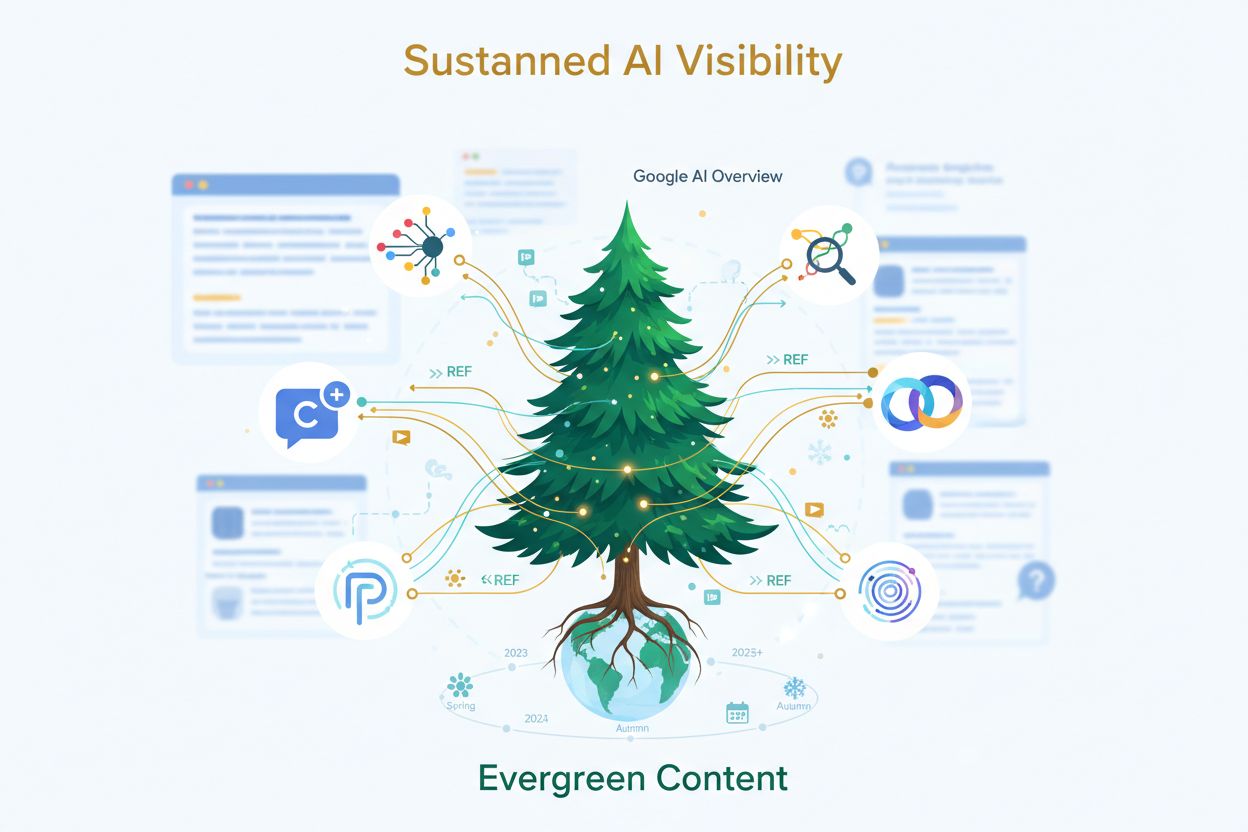
Learn what evergreen AI content is, why it matters for AI visibility, and how to structure content for sustained citations in ChatGPT, Perplexity, and Google AI...
Community discussion on the role of evergreen content in AI search. Balancing timeless content value with AI systems' preference for fresh information.
Cookie Consent
We use cookies to enhance your browsing experience and analyze our traffic. See our privacy policy.