
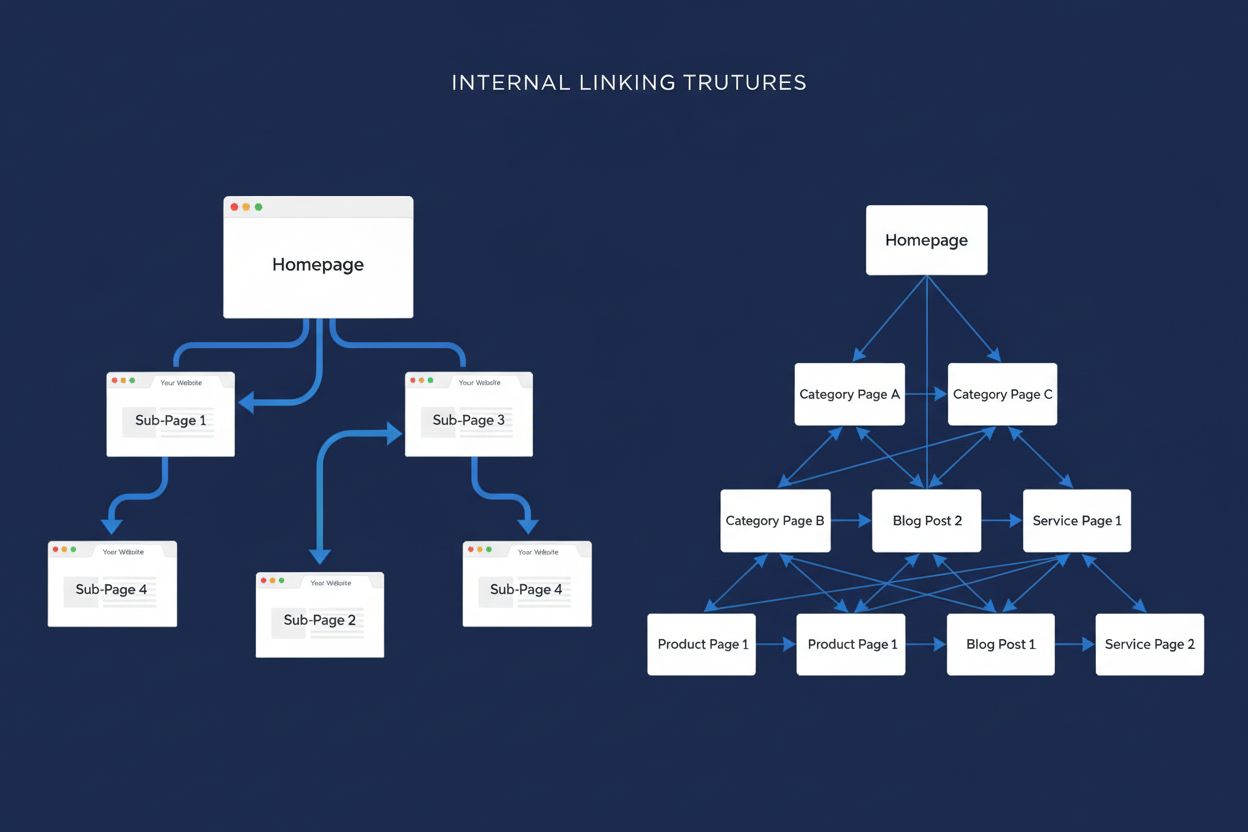
Internal Linking
Internal linking connects pages within the same domain to improve crawlability, distribute authority, and enhance user navigation. Learn how strategic internal ...
14 min read
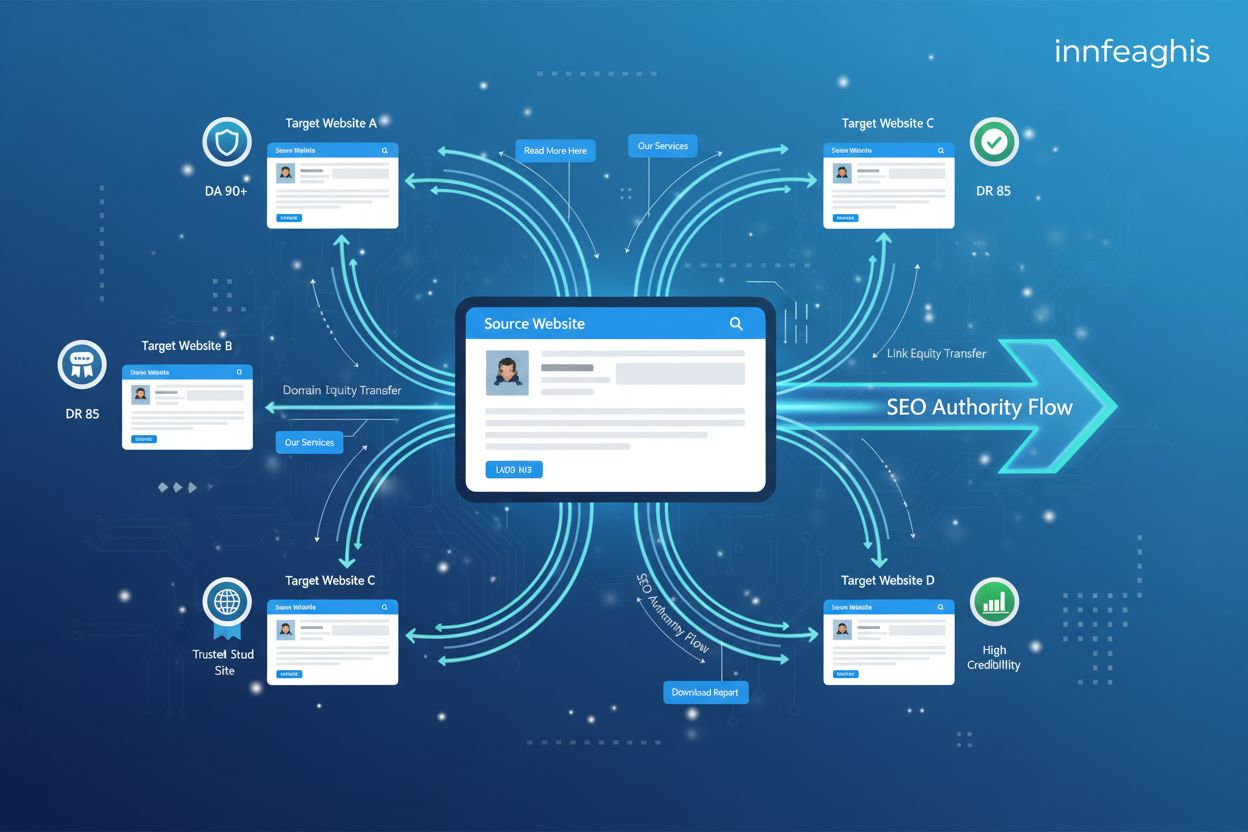
External linking refers to hyperlinks placed on a website that direct users to pages on different domains or websites. These outbound links serve as citations, provide additional resources to readers, and signal to search engines that a website is connected to authoritative sources within its niche.
External linking refers to hyperlinks placed on a website that direct users to pages on different domains or websites. These outbound links serve as citations, provide additional resources to readers, and signal to search engines that a website is connected to authoritative sources within its niche.
External linking, also known as outbound linking, refers to the practice of placing hyperlinks on your website that direct users to pages on different domains. These links are fundamental to how the web functions and serve multiple critical purposes in both user experience and search engine optimization. An external link is any clickable link that takes a visitor away from your current website to another website entirely. Unlike internal links, which keep users within your site’s ecosystem, external links acknowledge and connect to the broader internet landscape. According to research from Moz, external links are considered one of the most important ranking factors by top SEO professionals, with studies showing that pages with relevant external links tend to rank higher in search results. The significance of external linking extends beyond SEO—it demonstrates editorial credibility, provides readers with additional resources, and helps search engines understand the context and authority of your content within your industry or niche.
The concept of external linking has been central to the internet’s architecture since its inception. When Tim Berners-Lee created the World Wide Web in 1989, hyperlinks—both internal and external—were the fundamental mechanism for connecting documents across different servers. However, it wasn’t until Google’s introduction of PageRank in the late 1990s that external links became recognized as a critical ranking signal. PageRank, developed by Google co-founders Larry Page and Sergey Brin, treated external links as “votes” for a webpage’s importance and relevance. This revolutionary approach fundamentally changed how search engines evaluated content quality and authority. Over the past two decades, the role of external linking has evolved significantly. While Google has become more sophisticated in evaluating link quality over quantity, research from Backlinko indicates that backlinks remain one of the top three ranking factors, alongside content quality and RankBrain. The evolution of external linking practices reflects broader changes in digital marketing, with emphasis shifting from acquiring numerous low-quality links to earning fewer, high-quality links from authoritative sources. Today, approximately 91.89% of SEO professionals believe their competitors actively build links, demonstrating the continued importance of external linking in competitive digital landscapes. The rise of AI-powered search engines like Perplexity and ChatGPT has introduced a new dimension to external linking—these systems now cite and reference external sources in their responses, making link quality and relevance even more critical for brand visibility.
External linking operates through HTML anchor tags that create clickable text or images directing users to external URLs. In HTML code, an external link appears as <a href="https://example.com">anchor text</a>, where the href attribute specifies the destination URL and the anchor text provides context about the linked content. When a user clicks this link, their browser navigates to the specified external domain. From a search engine perspective, external links serve as signals that help algorithms understand the relationship between websites and the relevance of content. Search engines analyze several factors when evaluating external links, including the authority of the linking domain, the relevance of the linked content to the source page, the quality of anchor text, and the overall context in which the link appears. The rel attribute plays a crucial role in external linking, allowing webmasters to communicate the nature of links to search engines. The most common rel attributes include rel="nofollow" (indicating the link is not endorsed), rel="sponsored" (for paid links), and rel="ugc" (for user-generated content). These attributes help search engines understand whether a link should pass ranking signals or simply serve as a reference. Additionally, link equity—the ranking power transferred through links—flows differently depending on the link’s attributes and the linking page’s authority. A single link from a high-authority domain can be more valuable than dozens of links from low-quality sources, making strategic external linking far more important than volume.
| Concept | Definition | Direction | SEO Impact | Primary Purpose |
|---|---|---|---|---|
| External Links | Hyperlinks pointing to different domains | Outbound from your site | Builds credibility, signals relevance | Provide resources, cite sources |
| Internal Links | Hyperlinks connecting pages within the same domain | Within your site | Distributes link equity, improves navigation | Organize content, guide users |
| Backlinks | External links pointing TO your website from other sites | Inbound to your site | Direct ranking factor, builds authority | Vote of confidence from other sites |
| Nofollow Links | Links with rel=“nofollow” attribute | Can be internal or external | Minimal direct SEO value | Indicate non-endorsement |
| Dofollow Links | Links without nofollow attribute (default) | Can be internal or external | Pass link equity and ranking signals | Endorse linked content |
| Anchor Text | Clickable text in a hyperlink | N/A | Provides context for ranking | Helps users and engines understand link destination |
External linking is a cornerstone of modern SEO strategy because it directly influences how search engines perceive your website’s authority, relevance, and trustworthiness. When you link to authoritative sources, you’re essentially telling search engines that your content is well-researched and connected to credible information. This is particularly important for YMYL (Your Money or Your Life) topics—content related to health, finance, legal matters, and safety—where Google places exceptional emphasis on source credibility. Research from Reboot Online’s 2020 study confirmed that relevant outbound links to authoritative sources have a positive impact on website rankings, with pages containing strategic external links outperforming those without them. The relationship between external linking and SEO extends beyond direct ranking factors. High-quality external links improve user experience by providing readers with pathways to deeper information, additional perspectives, and supporting evidence. This improved user experience translates into lower bounce rates, longer session durations, and higher engagement metrics—all of which search engines use as signals of content quality. Furthermore, external links help establish your website as a knowledge hub within your niche. When you consistently link to relevant, authoritative sources, you demonstrate expertise and editorial judgment. Search engines recognize this pattern and reward it with better rankings. Additionally, linking to other websites creates opportunities for relationship building and reciprocal linking, where other site owners may link back to your content, further amplifying your authority.
Implementing external links effectively requires a strategic approach that balances SEO benefits with genuine user value. The first and most critical best practice is linking to relevant, authoritative sources. Every external link should serve a purpose—either supporting a claim with evidence, providing additional context, or offering readers a valuable resource. Generic links to unrelated websites can harm your credibility and confuse search engines about your content’s topic. When selecting external links, evaluate the domain authority and trustworthiness of the target website. Tools like Moz’s Domain Authority, Ahrefs’ Domain Rating, or SE Ranking’s Domain Trust score can help assess a site’s quality. Additionally, examine the anchor text you use for external links. Descriptive anchor text like “external linking best practices” is far more valuable than generic phrases like “click here.” Descriptive anchor text provides context to both users and search engines about what they’ll find on the linked page. Avoid excessive external linking, which can dilute your content’s focus and overwhelm readers. A good rule of thumb is to include external links when they genuinely enhance your content, typically ranging from 2-10 links per 1,000 words depending on content type. Open external links in new tabs or windows to prevent users from leaving your site entirely, improving user experience and reducing bounce rates. Furthermore, regularly audit your external links to identify and fix broken links, which negatively impact both user experience and SEO. Broken external links signal to search engines that your content is outdated or poorly maintained, potentially harming your rankings.
The emergence of AI-powered search engines and language models has introduced a new dimension to external linking’s importance. Platforms like Perplexity, ChatGPT, Google AI Overviews, and Claude now cite external sources in their responses, making external links a critical component of AI visibility and brand monitoring. When your website is linked to by authoritative sources, it increases the likelihood that AI systems will recognize your content as credible and cite it in their responses. This is where AmICited’s monitoring capabilities become invaluable—tracking where your domain, URLs, and brand appear across AI-powered search engines helps you understand your AI visibility and optimize your external linking strategy accordingly. AI systems prioritize sources with strong external link profiles because these links serve as indicators of authority and credibility. When your content receives links from reputable websites, AI systems are more likely to include your site in their knowledge base and cite it when answering user queries. This creates a direct connection between traditional SEO practices—particularly external linking—and modern AI visibility. Organizations that understand this relationship can strategically build external links not just for traditional search engine rankings, but also for AI citation and visibility. The quality of external links pointing to your site matters even more in the AI era, as these systems are designed to identify and prioritize authoritative, well-sourced information. Additionally, the anchor text and context of external links help AI systems understand what your content is about, making it more likely to be cited for relevant queries.
The future of external linking is being shaped by several converging trends in technology, search behavior, and content consumption. As AI systems become more sophisticated, they will likely place even greater emphasis on the quality and relevance of external links when evaluating source credibility. This means that traditional SEO practices around external linking will become increasingly important for AI visibility and citation. The rise of zero-click searches and AI-generated answers has already begun to change how external links function. Rather than driving users to linked websites, external links now serve as citations within AI responses, creating a new form of visibility and authority. Organizations that understand this shift can adapt their external linking strategies to optimize for both traditional search engines and AI systems. Additionally, the concept of link quality will continue to evolve. Search engines and AI systems are becoming better at identifying and valuing links from genuinely authoritative sources while filtering out manipulative linking practices. This means that link building strategies focused on quantity will become increasingly ineffective, while strategies emphasizing relevance, authority, and natural link acquisition will gain prominence. The integration of machine learning and natural language processing into search algorithms means that search engines can now better understand the context and semantic relationship between linked pages. This allows for more nuanced evaluation of external links based on topical relevance rather than simple link counts. Furthermore, as privacy concerns and data regulations evolve, the way search engines track and evaluate external links may change, potentially shifting emphasis toward other authority signals. However, external linking will remain a fundamental aspect of web architecture and SEO strategy for the foreseeable future, adapting to new technologies while maintaining its core function of connecting authoritative sources and improving user experience.
External links point to pages on different domains, while internal links connect pages within the same website. External links help search engines understand your site's relevance to other authoritative sources and provide users with additional resources. Internal links improve site navigation, distribute link equity across your pages, and help search engines understand your site structure. Both are essential for comprehensive SEO strategy.
While Google has stated that outbound links themselves don't directly pass ranking power, they contribute to SEO in several ways. External links to authoritative sources enhance your content's credibility, improve user experience, and signal to search engines that your site is connected to reputable sources. Research shows that pages with relevant external links tend to rank better because they provide comprehensive, well-sourced information that users and search engines value.
The nofollow attribute (rel="nofollow") tells search engines not to pass ranking signals through a link. Use nofollow for links you don't want to endorse, such as links to untrusted websites, sponsored content, affiliate links, or user-generated content. Google now treats nofollow as a hint rather than a directive, meaning it may still crawl these links but won't pass link equity. Always use rel="sponsored" for paid links and rel="ugc" for user-generated content.
There's no fixed number—it depends on your content length and relevance. The key is quality over quantity. Include external links when they genuinely add value to your readers and support your claims with credible sources. A 2,000-word article might have 5-10 relevant external links, while shorter pieces may have fewer. Focus on making each link purposeful rather than hitting a specific number.
Use SEO tools like SE Ranking's Website Audit, Semrush's Site Audit, or free tools like Check My Links to scan your site for broken external links. These tools identify 404 errors, timeout issues, and links without anchor text. Conduct audits quarterly to maintain link quality. When you find broken links, either update them with current URLs, replace them with relevant alternatives, or remove them entirely to preserve user experience.
Yes, linking to spammy or low-quality websites can negatively impact your site's reputation and SEO. Search engines may interpret such links as poor editorial judgment. However, if you must link to a questionable source, use the nofollow attribute to indicate you don't endorse it. Always prioritize linking to authoritative, relevant sources that enhance your content's credibility and provide genuine value to your readers.
External links are crucial for AI monitoring platforms like AmICited because they track where your brand, domain, or content appears across AI systems like ChatGPT, Perplexity, and Google AI Overviews. When authoritative websites link to your content, it increases the likelihood that AI systems will cite and reference your site in their responses. Quality external links from reputable sources strengthen your domain authority, making your content more discoverable and citable by AI-powered search engines.
Start tracking how AI chatbots mention your brand across ChatGPT, Perplexity, and other platforms. Get actionable insights to improve your AI presence.
Internal linking connects pages within the same domain to improve crawlability, distribute authority, and enhance user navigation. Learn how strategic internal ...
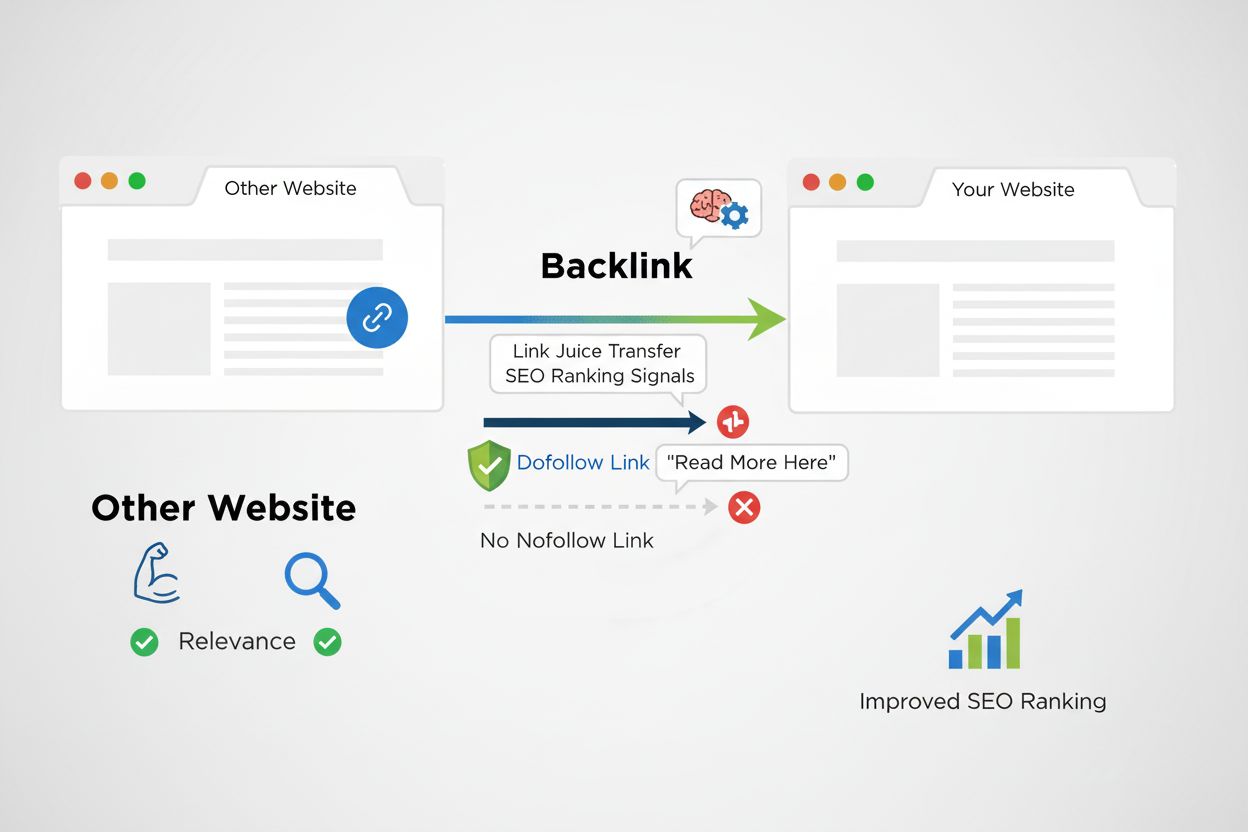
Learn what backlinks are, why they matter for SEO, and how they influence search rankings. Comprehensive guide to backlink quality, types, and monitoring for AI...
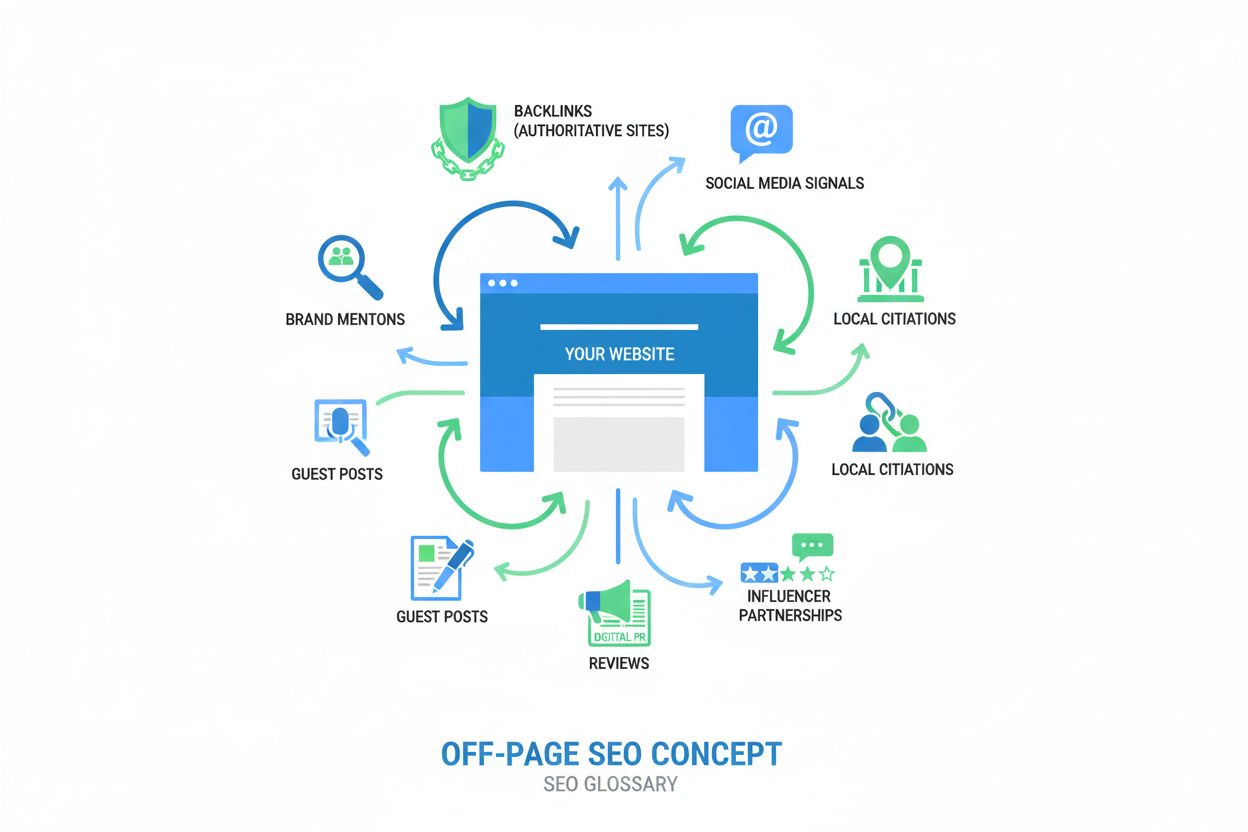
Off-page SEO definition: external optimization strategies including backlinks, brand mentions, and authority building. Learn how off-site signals impact search ...
Cookie Consent
We use cookies to enhance your browsing experience and analyze our traffic. See our privacy policy.