


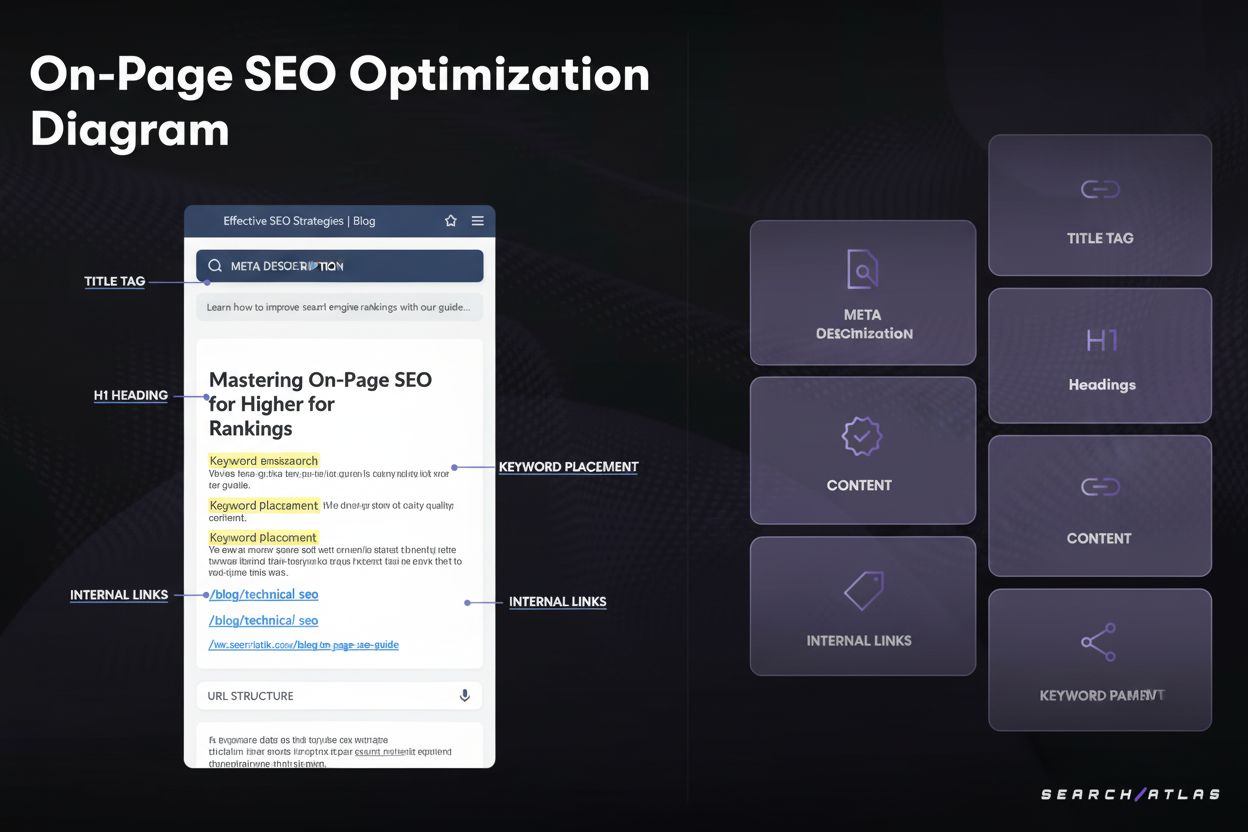
On-Page SEO
On-page SEO optimizes webpage elements like titles, content, and links to improve search rankings. Learn key factors, techniques, and best practices for maximiz...
11 min read
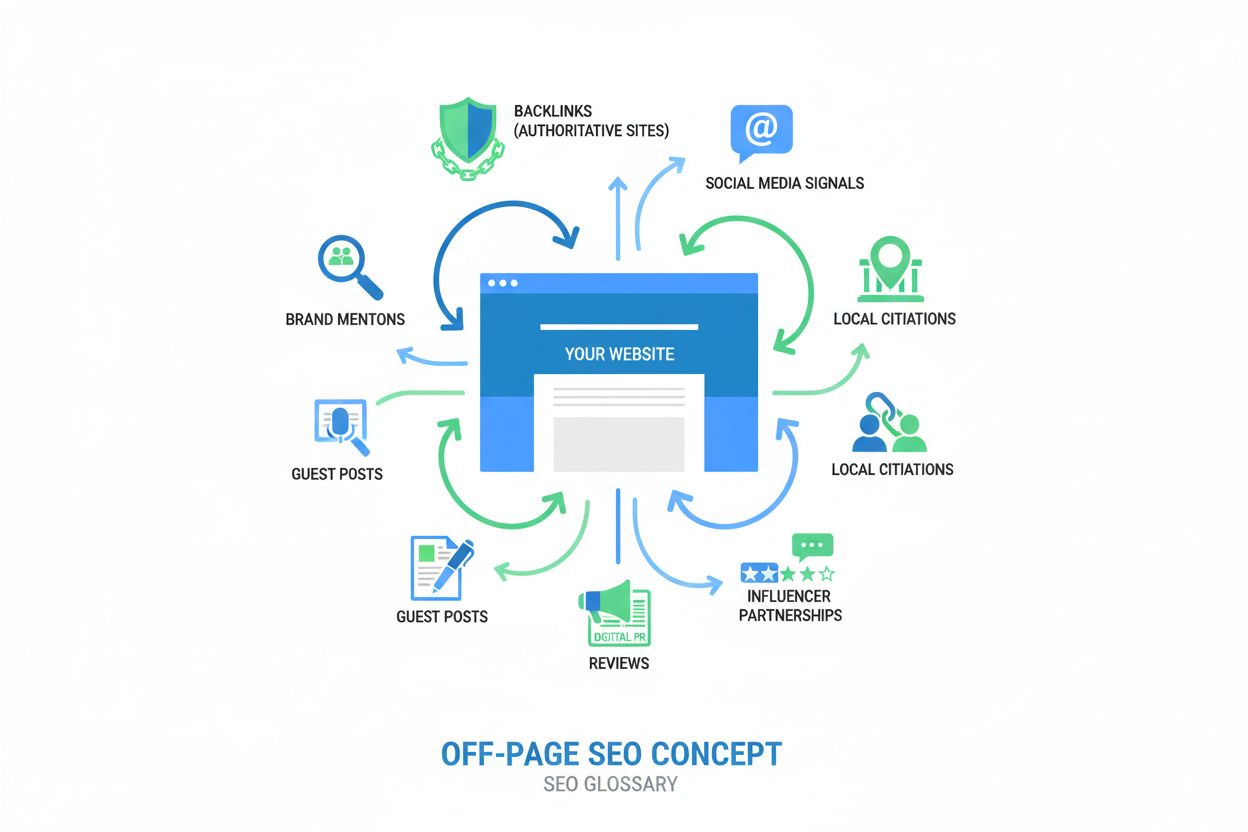
Off-page SEO encompasses all optimization activities performed outside your website to improve search engine rankings and digital authority. These external strategies include building high-quality backlinks, earning brand mentions, leveraging social signals, and establishing credibility through digital PR and influencer partnerships.
Off-page SEO encompasses all optimization activities performed outside your website to improve search engine rankings and digital authority. These external strategies include building high-quality backlinks, earning brand mentions, leveraging social signals, and establishing credibility through digital PR and influencer partnerships.
Off-page SEO refers to all optimization activities performed outside your website to improve search engine rankings, establish authority, and enhance your digital reputation. Unlike on-page SEO, which focuses on elements you directly control within your website, off-page SEO involves external signals that search engines use to evaluate your site’s credibility, relevance, and trustworthiness. These external signals include backlinks from authoritative websites, brand mentions across the web, social media engagement, customer reviews, and citations in business directories. The primary objective of off-page SEO is to convince search engines that your website deserves prominent positioning in search results by demonstrating that other reputable sources endorse your content and recognize your expertise. In the context of modern search, off-page SEO has become increasingly important as search engines like Google, Bing, and emerging AI search platforms rely heavily on external validation to determine which websites provide the most valuable information to users.
Off-page SEO emerged as a critical component of search engine optimization following Google’s introduction of PageRank, the algorithm developed by Larry Page and Sergey Brin that revolutionized how search engines evaluate website authority. PageRank fundamentally changed SEO by establishing the concept that hyperlinks function as “votes of confidence” between websites, with each link representing an endorsement of a page’s quality and relevance. This innovation shifted the focus from purely on-page keyword optimization to building external authority through link acquisition. Over the past two decades, off-page SEO has evolved significantly beyond simple link counting. Modern search algorithms now consider a sophisticated array of external signals including brand mentions, social engagement, E-E-A-T indicators, and reputation metrics. Research indicates that off-page factors contribute to over 50% of ranking factors, making external optimization strategies essential for competitive search visibility. The evolution of off-page SEO reflects search engines’ increasing sophistication in distinguishing between genuine authority signals and manipulative tactics, with algorithms now prioritizing quality, relevance, and natural growth patterns over raw link quantity.

Track how AI chatbots mention your brand across ChatGPT, Perplexity, and other platforms.
| Aspect | Off-Page SEO | On-Page SEO | Technical SEO |
|---|---|---|---|
| Location | External (outside website) | Internal (on website) | Internal (website infrastructure) |
| Primary Focus | Backlinks, brand mentions, authority | Content, keywords, meta tags | Site speed, crawlability, indexing |
| Control Level | Indirect (requires outreach) | Direct (full control) | Direct (full control) |
| Timeline to Results | 3-6+ months | 1-3 months | 1-2 months |
| Key Metrics | Domain Authority, referring domains | Keyword rankings, CTR | Core Web Vitals, crawl efficiency |
| Main Activities | Link building, PR, social marketing | Content optimization, keyword placement | Site architecture, mobile optimization |
| Search Engine Weight | 50%+ of ranking factors | 30-40% of ranking factors | 10-20% of ranking factors |
| Difficulty Level | High (requires relationships) | Medium (requires expertise) | Medium (requires technical knowledge) |
| AI Search Relevance | Critical (authority signals) | Important (content quality) | Important (accessibility) |
Backlinks remain the cornerstone of off-page SEO, functioning as the primary mechanism through which search engines assess website authority and relevance. A backlink is a hyperlink from one website to another, and search engines interpret these links as independent endorsements of content quality and credibility. The quality of backlinks matters exponentially more than quantity—a single link from a high-authority, topically relevant website like Forbes or The New York Times carries significantly more weight than hundreds of links from low-quality or irrelevant sources. Research analyzing millions of Google search results demonstrates a clear correlation between the number of referring domains and first-page rankings, with websites featuring diverse, high-quality backlink profiles consistently outranking competitors with similar on-page optimization but weaker external signals. Anchor text, the clickable text used in hyperlinks, also plays an important role by providing contextual clues about your page’s content. An ideal anchor text distribution includes a mix of branded anchors (your company name), naked URLs, partial match anchors, and generic anchors, creating a natural-looking link profile that avoids triggering spam filters. Modern off-page SEO emphasizes acquiring backlinks through legitimate means such as creating exceptional content that naturally attracts links, guest posting on authoritative websites, digital PR campaigns, and broken link building—all strategies that prioritize relevance and quality over manipulative link schemes.
Get the latest insights on AI mentions, brand monitoring, and optimization strategies.
Beyond backlinks, brand mentions and E-E-A-T signals have become increasingly important components of off-page SEO, particularly following Google’s emphasis on Experience, Expertise, Authoritativeness, and Trustworthiness in its Quality Rater Guidelines. Brand mentions—both linked and unlinked—signal to search engines that your website is recognized and discussed across the web, contributing to your overall reputation and authority. Unlinked mentions, while not passing link equity, still provide valuable credibility signals, especially when they appear on authoritative websites or in reputable publications. Google’s Quality Raters are specifically instructed to evaluate a website’s reputation by researching what others say about it rather than relying solely on the website’s self-promotion, making external validation crucial for YMYL (Your Money Your Life) topics and competitive niches. E-E-A-T signals are strengthened through off-page activities such as earning media coverage, receiving industry awards and recognition, obtaining positive customer reviews, and being featured in expert roundups and “best of” lists. For example, a financial advisor who is quoted in major financial publications, featured in industry awards, and maintains positive client reviews demonstrates stronger E-E-A-T signals than one relying solely on website content. These external signals collectively create a comprehensive reputation profile that search engines use to determine whether your website deserves prominent positioning for competitive queries, particularly in sensitive niches where trustworthiness is paramount.
Local SEO represents a specialized branch of off-page optimization focused on improving visibility in location-based searches and local business directories. Local citations—mentions of your business name, address, and phone number (NAP) across online directories—form the foundation of local off-page SEO. Consistency of NAP information across all platforms is critical, as search engines use these citations to verify your business’s legitimacy and geographic relevance. Building citations across both general directories (Google Business Profile, Yelp, Apple Maps) and niche-specific directories (industry associations, local chambers of commerce) creates a network of external signals that collectively strengthen your local search visibility. Customer reviews on platforms like Google, Yelp, and industry-specific review sites serve as powerful off-page signals for local businesses, influencing both search rankings and user decision-making. Positive reviews with detailed feedback demonstrate customer satisfaction and build trust with potential customers, while also signaling credibility to search algorithms. Local businesses that actively manage their Google Business Profile—keeping information current, uploading quality photos, responding to reviews, and posting regular updates—establish stronger off-page authority signals than competitors with neglected listings. The integration of local citations, reviews, and Google Business Profile optimization creates a comprehensive local off-page SEO strategy that drives qualified traffic from customers actively searching for services in their geographic area.
Strategic content marketing serves as a catalyst for earning high-quality backlinks and brand mentions through off-page channels, making it an essential component of modern off-page SEO. Rather than directly requesting links through outreach, content marketing focuses on creating exceptional, original content that naturally attracts links from other websites seeking to cite valuable information. Research-backed content—including original studies, surveys, data analysis, and proprietary methodologies—proves particularly effective at earning links, as journalists, bloggers, and industry experts actively seek authoritative sources to reference. For example, publishing an original survey about industry trends can generate dozens or hundreds of backlinks as other websites cite your findings and link to your research. Guest posting on authoritative websites in your industry combines content marketing with link building, allowing you to reach new audiences while earning high-quality backlinks and brand mentions. Effective guest posting requires identifying relevant, high-authority websites that accept guest contributions, then pitching compelling topic ideas that provide genuine value to their audience rather than serving as thinly-veiled promotional content. Digital PR campaigns leverage media relationships and newsworthy content to earn coverage in publications, blogs, and news sites, generating both backlinks and brand mentions from high-authority sources. Successful digital PR involves creating genuinely newsworthy content, building relationships with journalists and editors, monitoring industry trends for timely opportunities, and distributing press releases strategically to relevant media outlets. These content-driven off-page strategies create sustainable authority growth by focusing on providing value rather than manipulating search algorithms.
While Google has explicitly stated that social signals don’t directly influence rankings, social media engagement and influencer partnerships indirectly support off-page SEO by amplifying brand visibility and driving organic backlinks and mentions. A strong social media presence exposes your content to wider audiences, increasing the likelihood that other websites will discover and link to your content, and that users will search for your brand on Google. Influencer partnerships—collaborations with individuals or brands that have established credibility and large followings in your industry—can dramatically expand your reach and generate high-quality brand mentions and backlinks. When respected influencers mention, share, or endorse your content, their followers are exposed to your brand, leading to increased branded searches, social shares, and organic link acquisition. YouTube marketing proves particularly effective for building brand signals, as video content reaches large audiences and often drives branded search volume. Research shows a strong correlation between YouTube channel growth and branded search volume, indicating that video content effectively builds brand awareness and recognition. Social media platforms also serve as distribution channels for your content, allowing you to amplify reach and increase the likelihood of earning backlinks and mentions. Engagement on social platforms—responding to comments, participating in industry discussions, and building community—strengthens brand loyalty and encourages organic sharing and discussion of your content, creating additional off-page signals that support your overall authority.
Implementing an effective off-page SEO strategy requires a multi-faceted approach combining several complementary techniques:
Teams running off-page campaigns repeatedly make the same errors, and each one undermines the authority they’re trying to build. The first is prioritizing link volume over relevance—buying or acquiring large numbers of backlinks from unrelated or low-quality domains does little for rankings, since search engines weight a single link from a topically relevant, high-authority site far more than dozens from irrelevant sources. The second is ignoring anchor text diversity, over-optimizing for exact-match keyword anchors across a link-building campaign; this pattern is a classic spam signal and is far more likely to trigger algorithmic scrutiny than to help rankings, especially compared to a natural mix of branded, generic, and partial-match anchors. Third, many teams treat off-page SEO as a one-time project rather than an ongoing practice, running a burst of PR or guest posting and then stopping—since off-page authority compounds over the 3-6+ month timelines described above, sporadic effort produces weaker results than sustained, consistent activity even at lower volume. Fourth, businesses frequently neglect unlinked brand mentions, focusing exclusively on securing backlinks while ignoring citations that don’t include a hyperlink; because Google’s Quality Raters are instructed to research what others say about a brand regardless of linking, these unlinked mentions still contribute to credibility and are often easier to earn than a link. Fifth, local businesses commonly let NAP (name, address, phone) data go inconsistent across directories after a move or rebrand, which undermines the citation consistency that local off-page SEO depends on for verifying business legitimacy. Auditing your backlink and citation profile against these five failure patterns is a faster path to authority than adding more links.
Start tracking how AI chatbots mention your brand across ChatGPT, Perplexity, and other platforms. Get actionable insights to improve your AI presence.
On-page SEO optimizes webpage elements like titles, content, and links to improve search rankings. Learn key factors, techniques, and best practices for maximiz...
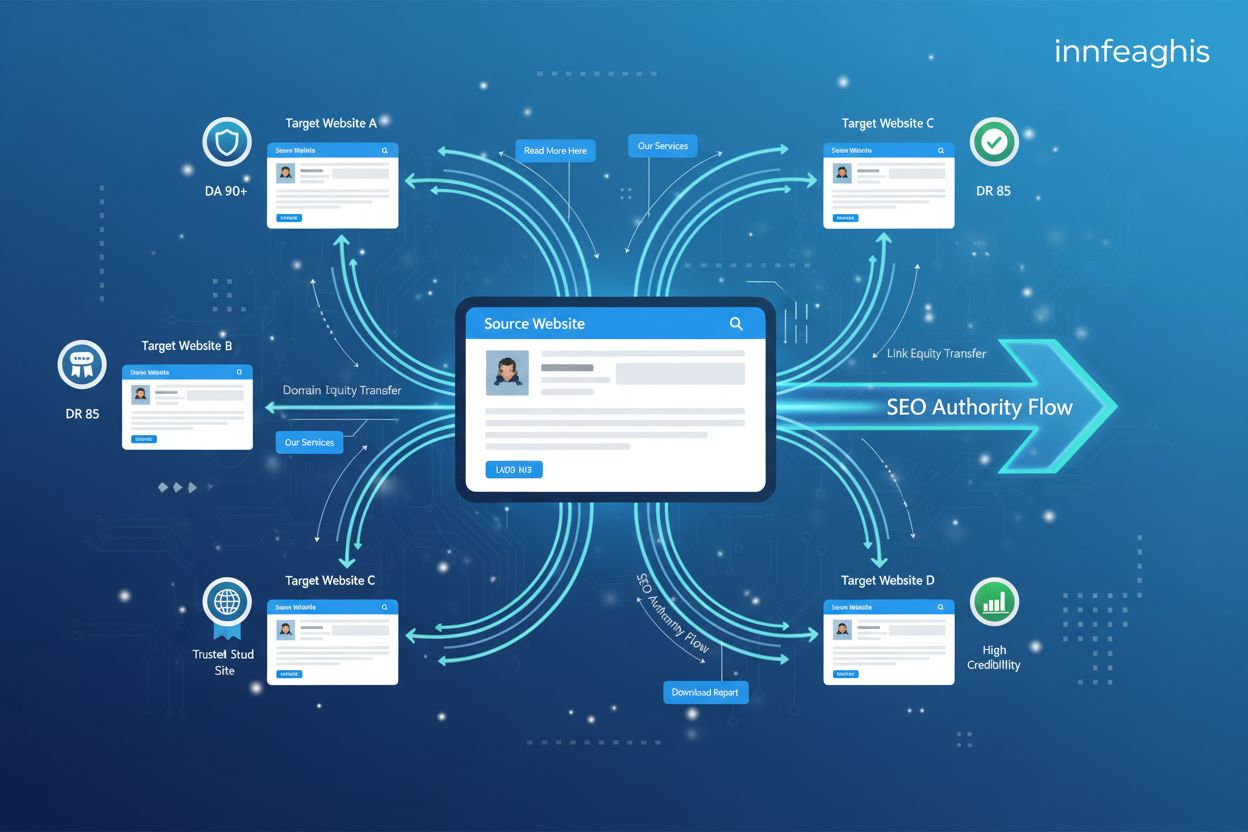
External linking explained: hyperlinks to other websites that improve credibility, user experience, and SEO. Learn best practices for outbound links and their r...

Link building is the process of acquiring backlinks from external websites. Learn strategies, best practices, and how quality links improve SEO rankings and bra...
Cookie Consent
We use cookies to enhance your browsing experience and analyze our traffic. See our privacy policy.