
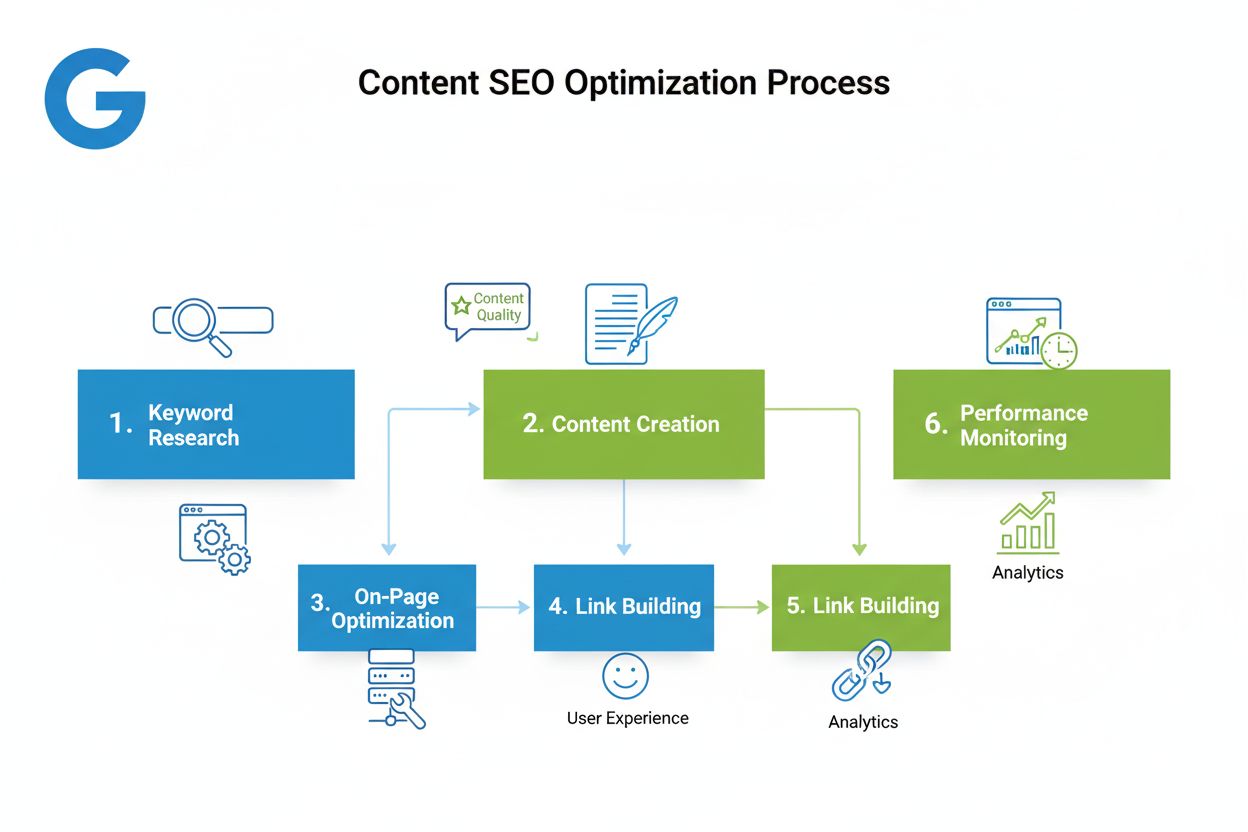
Content SEO
Content SEO is the strategic creation and optimization of high-quality content to improve search engine rankings and organic visibility. Learn how to optimize c...
12 min read
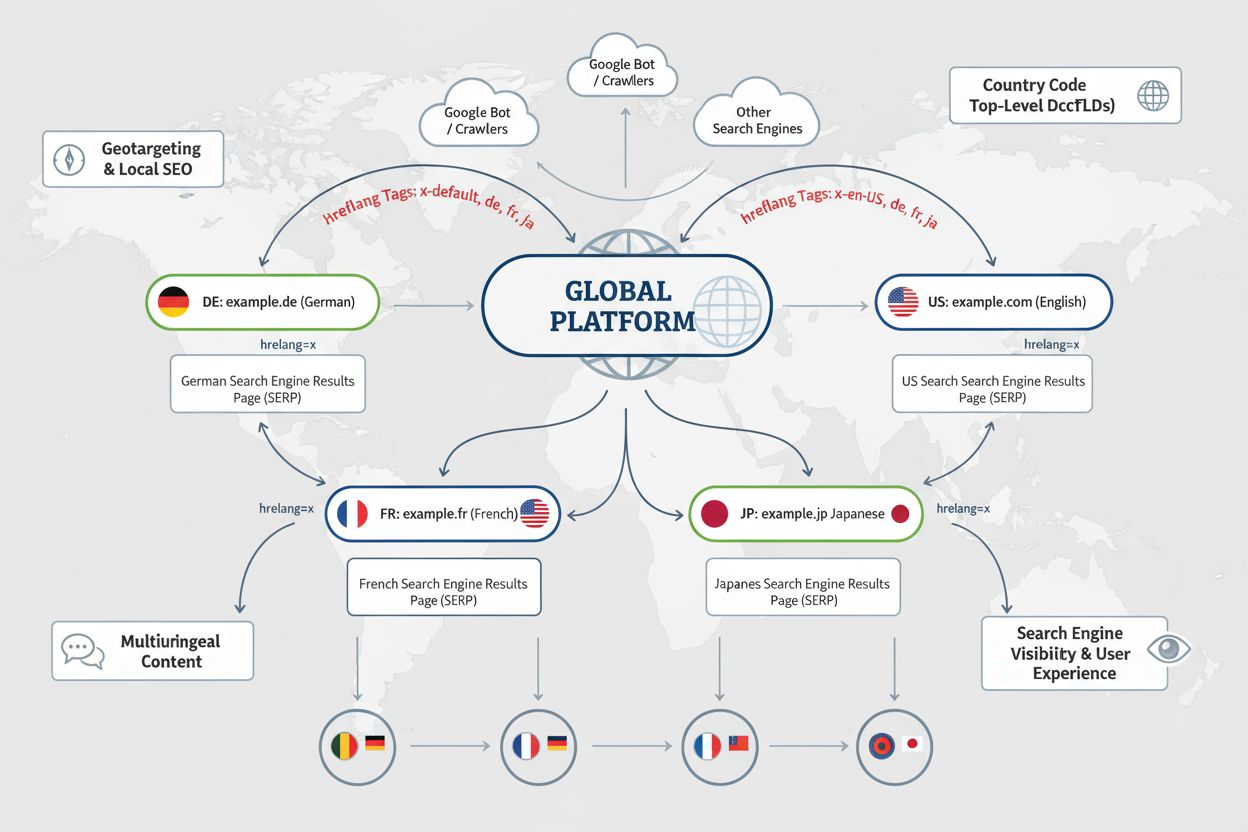
International SEO is the process of optimizing website content for multiple languages and geographic regions to improve visibility in search engines across different countries and markets. It involves implementing technical elements like hreflang tags, choosing appropriate domain structures, and creating localized content that resonates with diverse audiences worldwide.
International SEO is the process of optimizing website content for multiple languages and geographic regions to improve visibility in search engines across different countries and markets. It involves implementing technical elements like hreflang tags, choosing appropriate domain structures, and creating localized content that resonates with diverse audiences worldwide.
International SEO is the strategic process of optimizing website content, technical infrastructure, and user experience for multiple languages and geographic regions to improve visibility in search engines across different countries and markets. Unlike standard SEO, which targets a single language and region, International SEO addresses the complex challenge of serving diverse audiences with varying languages, cultural preferences, and search behaviors. This comprehensive approach involves implementing technical elements like hreflang tags, selecting appropriate domain structures, conducting localized keyword research, and creating culturally relevant content that resonates with international audiences. The primary goal is to ensure that search engines correctly identify and display the most appropriate language and regional version of your website to users based on their location and language preferences, ultimately driving qualified traffic from multiple markets and improving global search visibility.
The importance of International SEO has grown exponentially as businesses increasingly recognize the value of global expansion. According to recent market research, the global SEO market was valued at $74.9 billion in 2025 and is projected to reach $127.3 billion by 2030, with a significant portion of this growth driven by international optimization strategies. Over 75% of the world’s population speaks a language other than English, yet many businesses fail to optimize their websites for these audiences, missing substantial revenue opportunities. Research indicates that 72% of consumers prefer spending most or all of their time on websites in their native language, and 56% prefer information in their language over competitive pricing. This consumer preference has profound implications for businesses seeking to expand internationally—localized websites can expand audience reach by 75% and increase conversion rates by 70%, demonstrating the direct correlation between International SEO implementation and business growth.
The evolution of International SEO has been shaped by search engine algorithm updates and the increasing sophistication of search engines in understanding language and regional targeting. Google’s introduction of hreflang annotations in 2011 marked a turning point, providing webmasters with a standardized method to indicate language and regional alternatives. Prior to this, search engines struggled to differentiate between duplicate content in different languages, often penalizing websites with multilingual content. Today, International SEO encompasses not only traditional search engine optimization but also optimization for AI-powered search systems like Google AI Overviews, ChatGPT, Perplexity, and Claude, which increasingly serve as primary information sources for global users. This expansion of the search landscape has made International SEO even more critical for maintaining brand visibility and ensuring that your content reaches audiences regardless of their language or location.
International SEO comprises several interconnected components that must work together seamlessly to achieve optimal results. The first critical component is domain structure selection, which determines how your website is organized across different languages and regions. The second is hreflang implementation, which communicates language and regional targeting to search engines. The third is localized content creation, which goes beyond simple translation to adapt messaging, cultural references, and user experience for specific markets. The fourth component is technical optimization, including proper use of language meta tags, XML sitemaps with language annotations, and mobile optimization for all language versions. Finally, link building and authority development in each target market ensures that your localized pages gain credibility and ranking power within their respective regions. Each of these components requires careful planning and execution to avoid common pitfalls that can undermine your international optimization efforts.
| Aspect | ccTLD (Country Code Domain) | Subdomain Structure | Subdirectory Structure | Single Domain with Language Parameter |
|---|---|---|---|---|
| Domain Example | example.de, example.fr | de.example.com, fr.example.com | example.com/de/, example.com/fr/ | example.com?lang=de |
| Geographic Signal | Strongest - explicit country targeting | Moderate - requires hreflang | Moderate - requires hreflang | Weakest - requires hreflang |
| Domain Authority | Separate for each domain | Shared with main domain | Shared with main domain | Shared with main domain |
| Setup Complexity | High - separate domains needed | Medium - subdomain setup | Low - simple folder structure | Low - parameter-based |
| SEO Performance | Excellent for local ranking | Good with proper implementation | Good with proper implementation | Requires careful optimization |
| Cost | High - multiple domain registrations | Medium - hosting and management | Low - single hosting account | Low - single hosting account |
| Best For | Large enterprises, strong local presence | Medium-sized businesses, multiple markets | Businesses targeting similar language groups | Small businesses, limited resources |
| Maintenance Burden | High - separate site management | Medium - centralized with variations | Low - centralized management | Low - centralized management |
The technical foundation of International SEO begins with proper hreflang tag implementation, which serves as the primary mechanism for communicating language and regional targeting to search engines. Hreflang tags are HTML attributes that inform search engines about alternative versions of a page in different languages or for different regions. For example, if you have an English version of a page at example.com/en and a German version at example.com/de, you would include hreflang tags on both pages indicating their relationship. The implementation can be done through HTML link elements in the page header, HTTP response headers for non-HTML files like PDFs, or through XML sitemaps. Each page should include hreflang tags for all its language and regional variants, including a self-referential tag pointing to itself. This bidirectional linking ensures search engines fully understand the relationship between different versions and can appropriately distribute ranking signals across all localized pages.
Beyond hreflang implementation, technical International SEO requires careful attention to domain structure, which fundamentally affects how search engines perceive and rank your international content. Country code top-level domains (ccTLDs) like .de for Germany or .fr for France send the strongest geographic signal to search engines, making them ideal for businesses with significant resources and strong local market presence. However, ccTLDs require separate domain authority building and management, making them more expensive and complex. Subdomain structures like de.example.com provide a middle ground, allowing you to share some domain authority with your main site while maintaining separate identities for each market. Subdirectory structures like example.com/de/ are the most cost-effective and easiest to manage, sharing full domain authority with the main site, though they require explicit hreflang implementation to clarify geographic targeting. Your choice of domain structure should align with your business goals, available resources, and long-term international expansion plans.
International SEO success depends critically on effective content localization, which extends far beyond simple translation. Localization involves adapting your content to reflect the cultural nuances, preferences, and expectations of your target audience in each market. This includes not only translating keywords naturally but also adjusting examples, references, imagery, currency formats, date formats, and even color schemes to align with local preferences. For instance, a marketing campaign that emphasizes sustainability might resonate strongly in Germany but require different messaging in other markets. Professional human translators or transcreation specialists should handle high-visibility, brand-sensitive content like homepage copy, marketing campaigns, and product descriptions, as these require capturing tone, emotion, and cultural relevance that machine translation cannot achieve. Lower-visibility content like internal documentation, FAQs, and support materials can be efficiently handled through machine translation with post-editing by native speakers.
The process of content localization also requires conducting thorough localized keyword research for each target market, as search terms vary significantly across languages and regions. A keyword research tool might show that “handmade jewelry” is popular in English-speaking markets, but German users search for “handgemachter Schmuck,” while French users prefer “bijoux faits main.” Relying on automated translation of keywords can lead to targeting terms that users don’t actually search for, resulting in wasted optimization efforts and poor rankings. Working with native speakers and local SEO experts ensures that your keyword strategy reflects actual user search behavior in each market. Additionally, content localization should consider regional differences in user behavior, such as mobile penetration rates, internet speeds, and preferred payment methods, which may influence how you structure and present your content for different markets.
As artificial intelligence increasingly shapes how users discover information, International SEO has become essential for maintaining brand visibility across AI-powered search platforms. Systems like Google AI Overviews, ChatGPT, Perplexity, and Claude now serve as primary information sources for millions of users globally, and these platforms rely on properly optimized, authoritative content to generate responses. When your website implements International SEO best practices—including clear language targeting through hreflang tags, high-quality localized content, and strong domain authority in each market—you increase the likelihood that AI systems will cite your content when answering queries in different languages and regions. This is particularly important for businesses seeking to maintain brand presence and credibility in an increasingly AI-driven search landscape. Monitoring your brand’s appearance in AI responses across multiple languages and markets requires understanding how International SEO principles influence content selection and citation by these systems, making it essential to track your international optimization performance across all major AI platforms.
Successful International SEO implementation requires a systematic approach that addresses both technical and content-related factors. The first step is to identify your target markets through thorough market research, considering factors like market demand, competition level, language spoken, and cultural fit with your products or services. The second step is to conduct comprehensive keyword research for each target language and region, using tools like Google Keyword Planner and Google Trends while consulting with native speakers to ensure accuracy. The third step is to select your domain structure based on your business size, resources, and growth plans, choosing between ccTLDs, subdomains, or subdirectories. The fourth step is to create or localize your content, ensuring that translations are accurate and culturally appropriate, with professional translators handling high-visibility content. The fifth step is to implement hreflang tags correctly on every page with language or regional alternatives, ensuring bidirectional linking and self-referential tags. The sixth step is to build backlinks from reputable sources in each target market, establishing local authority and credibility. Finally, monitor your performance using tools like Google Search Console, tracking rankings, traffic, and conversions for each language and regional version.
The landscape of International SEO continues to evolve rapidly, driven by technological advances, changing user behaviors, and the emergence of new search platforms. One significant trend is the increasing importance of AI-powered search optimization, as businesses must now consider how their content appears not only in traditional search results but also in AI-generated responses from systems like Google AI Overviews and ChatGPT. This requires maintaining high-quality, authoritative content that AI systems can confidently cite, making International SEO even more critical for brand visibility. Another emerging trend is the growing emphasis on voice search optimization across multiple languages, as voice assistants become more prevalent globally. Users searching via voice often use different query patterns than text-based searches, requiring adjustments to keyword strategy and content structure for each language and region.
Additionally, the integration of machine learning and AI translation technologies is transforming how businesses approach content localization. While human translation remains essential for brand-sensitive content, advanced AI translation tools combined with human post-editing are making it more efficient and cost-effective to maintain high-quality multilingual websites at scale. The future of International SEO will likely see increased automation in content adaptation and localization workflows, allowing businesses to expand into new markets more quickly while maintaining quality standards. Furthermore, as search engines continue to refine their understanding of language and regional intent, the importance of precise hreflang implementation and clear geographic targeting will only increase. Businesses that invest in robust International SEO strategies today will be better positioned to capitalize on global growth opportunities and maintain competitive advantage in an increasingly multilingual, AI-driven digital landscape.
International SEO targets multiple countries and regions, focusing on geographic and regional optimization, while Multilingual SEO specifically targets multiple languages. International SEO is always multinational but not necessarily multilingual—a company might target the US and UK in English only. However, many global businesses need both strategies simultaneously to reach diverse audiences across different countries and languages effectively.
Hreflang tags tell search engines which language and regional version of a page to display to users based on their location and language preferences. Without hreflang tags, search engines may treat similar content in different languages as duplicate content, which can harm your rankings. Proper hreflang implementation prevents duplicate content issues, improves user experience, and ensures each page receives appropriate ranking credit in its target market.
There are three main domain structures: country code top-level domains (ccTLDs) like example.de for Germany, subdomains like de.example.com, and subdirectories like example.com/de/. ccTLDs provide the strongest geographic signal but require separate domain authority building. Subdomains and subdirectories share domain authority with the main site but may be less clear to search engines about geographic targeting. Your choice depends on your business size, resources, and growth plans.
Studies show that multilingual websites can expand audience reach by 75% and increase conversion rates by 70%. When customers see content in their native language, they're more likely to complete purchases and trust your brand. E-commerce platforms with localized websites typically see 20-30% sales increases within the first year. Additionally, 72% of consumers prefer spending time on websites in their native language, making localization critical for revenue growth.
Keyword research is foundational to International SEO because search terms vary significantly across languages and regions. The same product may use different keywords in different markets—for example, 'handmade jewelry' translates to 'handgemachter Schmuck' in German and 'bijoux faits main' in French. Conducting localized keyword research with native speakers ensures you target terms your audience actually uses, improving relevance and rankings in each market.
Localization goes beyond translation—it requires adapting content to cultural nuances, local preferences, and regional differences. This includes translating keywords naturally, adjusting currency and measurements, using local examples, and respecting cultural sensitivities. Professional human translators or transcreation specialists should handle high-visibility content like marketing pages and product descriptions, while machine translation with post-editing works for lower-visibility content like FAQs and support documentation.
Critical technical elements include proper hreflang implementation, XML sitemaps with language annotations, correct HTTP headers for language targeting, mobile optimization for all language versions, fast page load times across regions, and proper use of language meta tags. Additionally, ensure your website structure clearly indicates language and regional targeting, implement canonical tags correctly to avoid conflicts with hreflang, and monitor crawl errors in Google Search Console for each language version.
As AI systems like ChatGPT, Perplexity, and Google AI Overviews become primary information sources, International SEO becomes crucial for brand visibility across these platforms. Properly optimized multilingual content with clear hreflang implementation increases the likelihood that AI systems cite your content when answering queries in different languages and regions. Monitoring your brand's appearance in AI responses across multiple languages and markets requires understanding International SEO principles to ensure consistent global visibility.
Start tracking how AI chatbots mention your brand across ChatGPT, Perplexity, and other platforms. Get actionable insights to improve your AI presence.
Content SEO is the strategic creation and optimization of high-quality content to improve search engine rankings and organic visibility. Learn how to optimize c...
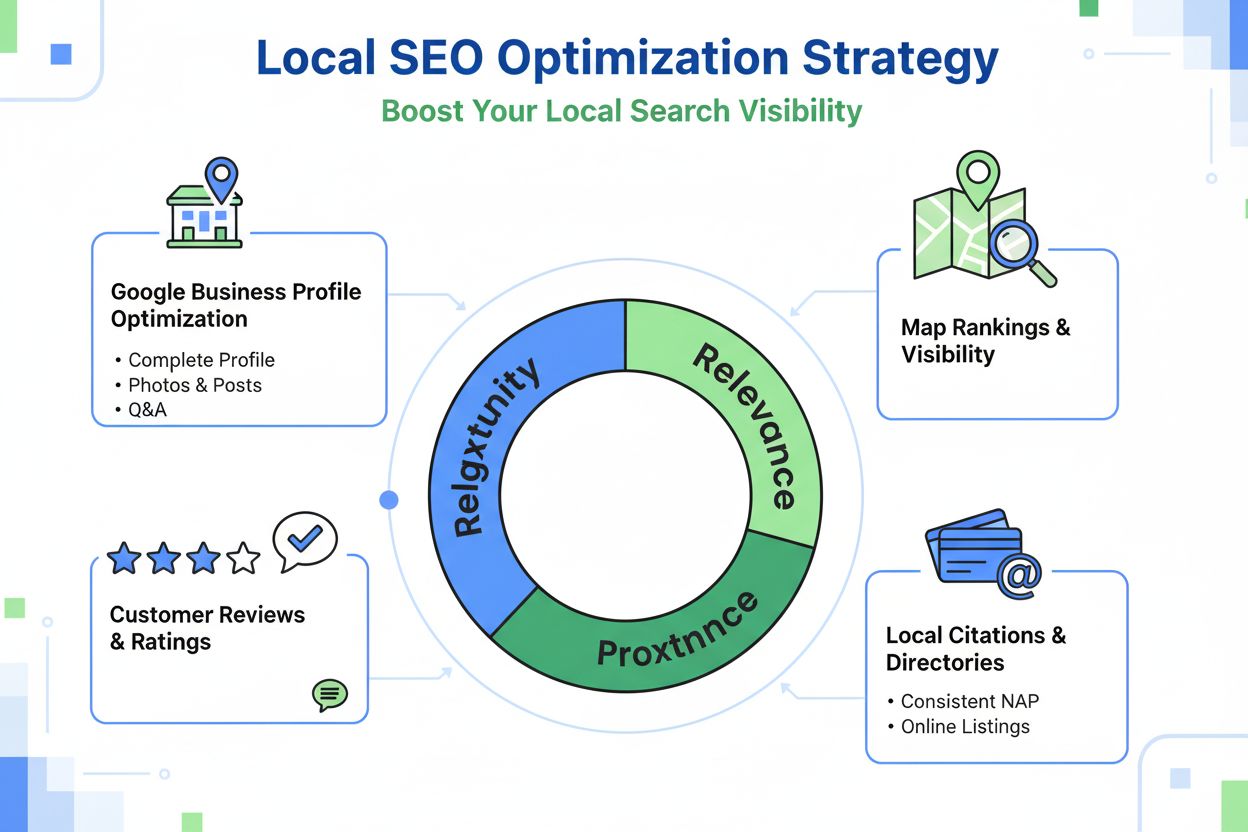
Local SEO is the practice of optimizing a business's online presence for location-based search results. Learn how to rank higher in Google Maps, local pack, and...
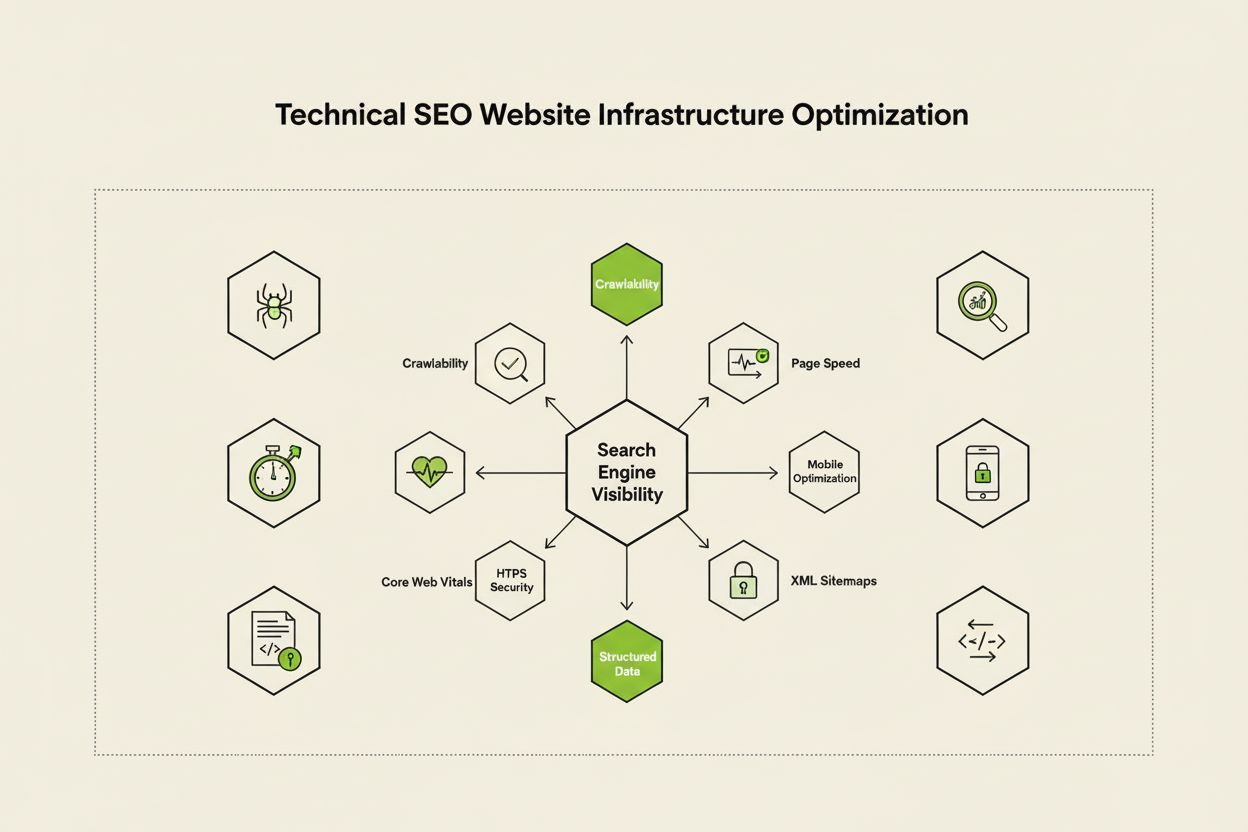
Technical SEO optimizes website infrastructure for search engine crawling, indexing, and ranking. Learn crawlability, Core Web Vitals, mobile optimization, and ...
Cookie Consent
We use cookies to enhance your browsing experience and analyze our traffic. See our privacy policy.