
Broken Link Building
Learn what broken link building is, how it works as an SEO strategy, and why it's one of the most effective white-hat link building tactics for earning quality ...
13 min read

Link building is the strategic process of acquiring hyperlinks from external websites to your own site, serving as endorsements that improve search engine rankings and domain authority. These backlinks signal to search engines that your content is trustworthy, relevant, and valuable, making them a critical component of off-page SEO and digital authority.
Link building is the strategic process of acquiring hyperlinks from external websites to your own site, serving as endorsements that improve search engine rankings and domain authority. These backlinks signal to search engines that your content is trustworthy, relevant, and valuable, making them a critical component of off-page SEO and digital authority.
Link building is the strategic process of acquiring hyperlinks from external websites pointing to your own site, with the goal of improving search engine rankings, domain authority, and online visibility. These hyperlinks, commonly called backlinks, function as digital endorsements or “votes of confidence” that signal to search engines—and increasingly to AI systems—that your content is trustworthy, authoritative, and valuable. Unlike paid advertising or direct traffic generation, link building focuses on earning these connections through merit-based content, relationships, and strategic outreach. The quality, relevance, and authority of the linking domains matter far more than the quantity of links acquired, making this a nuanced discipline that requires both technical understanding and creative strategy.
In the modern digital landscape, link building extends beyond traditional SEO. As AI-powered search platforms like ChatGPT, Perplexity, Google AI Overviews, and Claude become primary information sources, the role of backlinks in establishing domain authority and E-E-A-T (Experience, Expertise, Authoritativeness, Trustworthiness) signals has become even more critical. These AI systems evaluate backlink profiles as indicators of credibility when deciding which sources to cite in their responses. Therefore, link building is no longer just about ranking in Google—it’s about establishing your brand as a trusted authority across the entire digital ecosystem, including AI-driven search and citation platforms.
Link building emerged as a critical SEO practice in the late 1990s when Google introduced its PageRank algorithm, which fundamentally changed how search engines evaluated website authority. PageRank treated backlinks as citations, with the assumption that more links from authoritative sources indicated higher-quality content. This innovation made link building a cornerstone of SEO strategy almost overnight. However, the early 2000s saw widespread abuse of this system, with practitioners engaging in link farms, directory submissions, and reciprocal linking schemes designed purely to manipulate rankings rather than provide genuine value.
By the mid-2000s, Google began cracking down on manipulative link building practices. The introduction of the nofollow attribute in 2005 allowed webmasters to indicate which links should not pass ranking authority, helping combat spam. Over the following decade, Google released numerous algorithm updates—including Penguin (2012), which specifically targeted unnatural linking patterns—that fundamentally shifted the link building landscape. These updates forced practitioners to abandon quantity-focused tactics and embrace quality-driven, relationship-based approaches.
Today, link building has evolved into a discipline closely aligned with digital PR and content marketing. According to 2025 research from editorial.link, 48.6% of SEO experts consider digital PR the most effective link-building tactic, reflecting a broader industry shift toward earning links through newsworthy content, expert positioning, and genuine relationship-building rather than technical manipulation. This evolution reflects a deeper truth: link building is fundamentally about establishing credibility and trust, not just gaming algorithms.
Backlinks influence search rankings through multiple mechanisms that search engines use to evaluate domain authority and content relevance. When a high-authority website links to your content, it passes what’s known as link equity or link juice—a measure of the linking site’s authority transferred to your site. However, not all links are created equal. The authority score of the linking domain, the relevance of the linking page to your content, the anchor text (clickable text of the link), and the placement of the link within the content all determine how much ranking benefit you receive.
Google’s algorithms consider approximately 200+ ranking factors, and research indicates that 8 of the top 20 ranking factors relate directly to backlinks. This underscores the continued importance of link building in SEO strategy. Additionally, the reasonable surfer model—a Google patent that evaluates link value based on the likelihood a user would click it—means that links placed prominently in main content carry more weight than those buried in footers or sidebars. The anchor text of a link also provides contextual signals; descriptive anchor text like “link building strategies” is more valuable than generic text like “click here.”
Beyond direct ranking benefits, backlinks serve as discovery mechanisms for search engines. When Google’s crawlers encounter a link to your site from an external domain, they follow that link to discover and index your content. This is particularly important for new websites or pages that haven’t yet been indexed. Furthermore, backlinks from diverse, relevant sources signal to search engines that your content is genuinely valuable across different contexts and audiences, which strengthens your overall domain authority and topical relevance.
The link building landscape is divided into three distinct approaches, each with different risk profiles and long-term viability. White hat link building adheres strictly to Google’s Webmaster Guidelines and focuses on earning links through merit-based content, genuine relationships, and transparent outreach. Examples include creating original research, publishing comprehensive guides, conducting digital PR outreach to journalists, and building relationships with industry influencers. White hat strategies take longer to produce results but create sustainable, long-term authority that compounds over time.
Black hat link building violates Google’s guidelines and includes tactics like purchasing links, participating in link schemes, using private blog networks (PBNs), and engaging in link exchanges designed purely to manipulate rankings. While black hat tactics can produce quick ranking gains, they carry severe penalties: Google can devalue your links, reduce your rankings, or remove your site from search results entirely. Recovery from a manual penalty can take months or years, making black hat approaches extremely risky for any business that depends on organic search traffic.
Gray hat link building occupies the middle ground, using tactics that aren’t explicitly prohibited but operate in ethically ambiguous territory. Examples include guest posting on moderately selective sites, contributing to crowdsourced content, or leveraging unlinked brand mentions. Gray hat tactics often produce faster results than pure white hat approaches while carrying less risk than black hat methods. However, they can still trigger algorithmic penalties if search engines determine the tactics are manipulative. The industry consensus in 2025 strongly favors white hat approaches, with 66.6% of SEO experts believing that finding unique backlink opportunities offers greater benefits than pursuing high-volume link acquisition.
| Link Building Method | Effort Level | Time to Results | Risk Level | Long-term Value | Best For |
|---|---|---|---|---|---|
| Digital PR & Journalist Outreach | High | 2-4 months | Low | Very High | Authority sites, newsworthy content |
| Content Creation (Linkable Assets) | Very High | 3-6 months | Low | Very High | Establishing thought leadership |
| Broken Link Building | Medium | 1-3 months | Low | Medium | Quick wins, relationship building |
| Guest Posting | Medium | 1-2 months | Medium | Medium | Niche authority, brand awareness |
| Unlinked Mention Recovery | Low | 1-2 weeks | Low | Medium | Easy wins, existing brand mentions |
| Private Blog Networks (PBNs) | Medium | Immediate | Very High | Very Low | NOT RECOMMENDED - High penalty risk |
| Link Directories | Low | 1-2 weeks | Medium | Low | Local SEO, basic citations |
| Paid Links (Undisclosed) | Low | Immediate | Very High | Very Low | NOT RECOMMENDED - Violates guidelines |
| Skyscraper Technique | Very High | 2-4 months | Low | Very High | Competitive niches, high-value content |
| Influencer Partnerships | High | 2-3 months | Low | High | Brand awareness, targeted reach |
Domain authority (DA) is a metric developed by Moz that predicts how well a website will rank in search results on a scale of 1-100. While not an official Google metric, domain authority correlates strongly with ranking ability and is influenced primarily by the quantity and quality of backlinks pointing to a domain. When you engage in link building, you’re essentially accumulating authority signals that increase your domain authority score over time. However, the relationship is not linear; a single link from a domain with DA 80 may be worth more than 100 links from domains with DA 10.
Link velocity—the rate at which you acquire new backlinks—is another important technical consideration. Acquiring links too quickly can trigger spam detection algorithms, as natural link growth typically follows a gradual pattern. Conversely, acquiring links too slowly means your competitors may outpace you in authority accumulation. The ideal link building strategy maintains a steady, sustainable pace of link acquisition that appears natural to search engines. Additionally, the anchor text distribution across your backlinks matters significantly; over-optimized anchor text (using exact-match keywords in too many links) can signal manipulation and trigger penalties.
Link quality assessment involves evaluating multiple factors beyond just domain authority. Topical relevance is critical—a link from a website in your industry carries more weight than a link from an unrelated site. Link placement within the content hierarchy matters; links in the main body content are more valuable than those in sidebars or footers. The referring domain’s link profile also matters; if a site links to thousands of unrelated websites, its links carry less value. Tools like Semrush, Ahrefs, and Moz provide metrics to evaluate these factors, helping you prioritize which link opportunities to pursue.
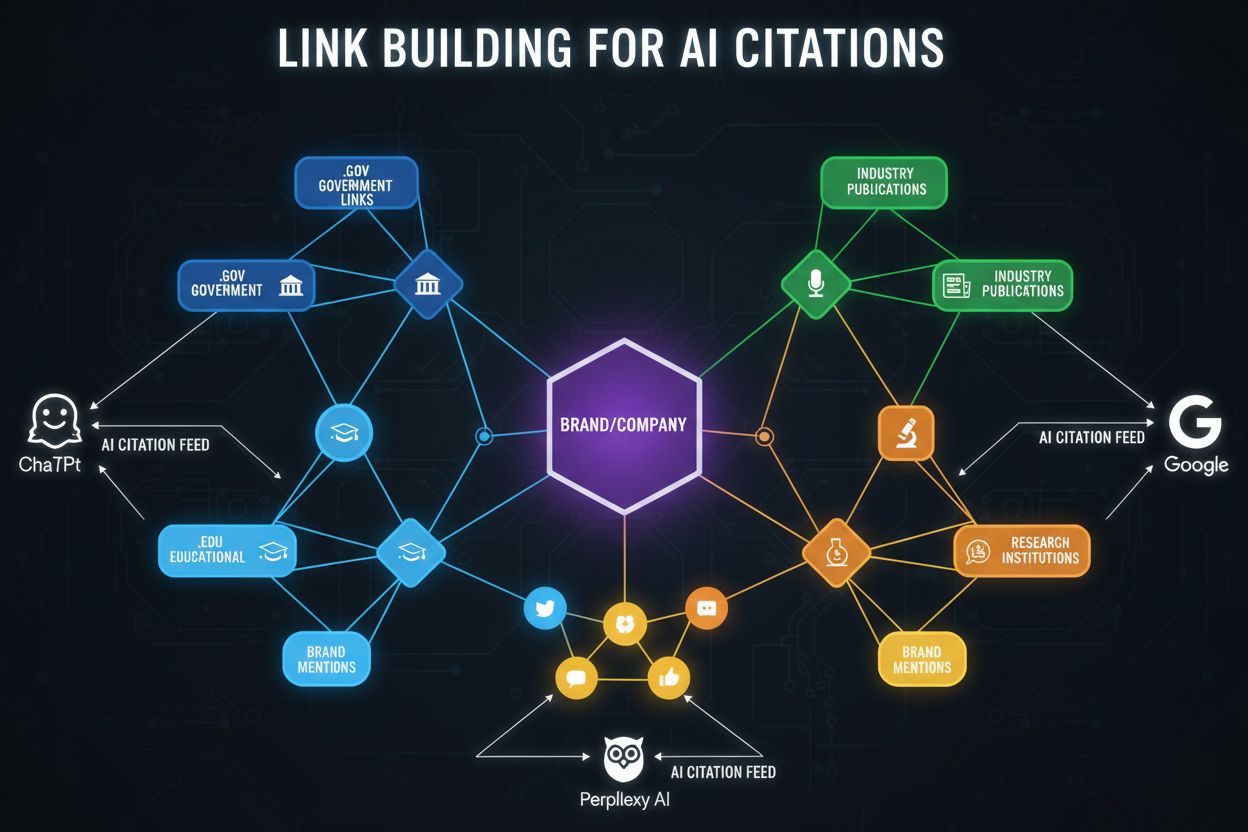
The emergence of AI-powered search platforms like ChatGPT, Perplexity, Google AI Overviews, and Claude has introduced a new dimension to link building strategy. While these AI systems don’t directly crawl backlinks like traditional search engines, they evaluate domain authority, content credibility, and E-E-A-T signals—all of which are strengthened by quality backlinks. When an AI system decides which sources to cite in its responses, it considers factors like the source’s authority, the quality of its backlinks, and its reputation across the web. Therefore, link building now serves a dual purpose: improving traditional search rankings while simultaneously establishing the authority signals that AI systems use to determine citation worthiness.
Brand monitoring has become increasingly important in this context. Platforms like AmICited track where your domain appears in AI responses across multiple platforms, providing visibility into how your link building efforts translate into AI citations. A domain with a strong backlink profile is more likely to be cited by AI systems, creating a virtuous cycle where quality link building leads to AI mentions, which in turn drive traffic and further establish authority. This represents a fundamental shift in how link building contributes to overall digital visibility—it’s no longer just about ranking in Google, but about being recognized as an authoritative source across the entire digital ecosystem.
The relationship between link building and AI visibility also highlights the importance of E-E-A-T signals. AI systems evaluate whether content comes from someone with genuine expertise, experience, and trustworthiness. Quality backlinks from authoritative sources serve as third-party validation of these signals. Additionally, structured data (Schema markup) that clearly identifies your organization, authors, and content topics helps both search engines and AI systems understand your authority. Therefore, modern link building strategies should integrate structured data implementation alongside traditional backlink acquisition to maximize visibility across both traditional and AI-driven search platforms.
Successful link building requires a systematic approach that combines content creation, relationship building, and strategic outreach. The first step is creating linkable assets—content specifically designed to attract backlinks naturally. These include original research and data studies, which journalists and bloggers frequently cite; comprehensive guides and ultimate resources, which become go-to references in their niches; free tools and calculators, which provide immediate utility and encourage sharing; and infographics and visual assets, which are easy to embed and share. The key is ensuring these assets provide genuine value that makes people want to reference and link to them.
Digital PR and journalist outreach represents the most effective modern link building strategy. This involves identifying journalists, bloggers, and content creators who cover topics relevant to your industry, then pitching them newsworthy angles or data that would interest their audiences. Platforms like HARO (Help A Reporter Out) and Connectively connect experts with journalists seeking sources. When you provide valuable insights or data to journalists, they often include links to your site as attribution. This approach generates high-quality links from authoritative news sites and industry publications, while simultaneously building your brand visibility and thought leadership.
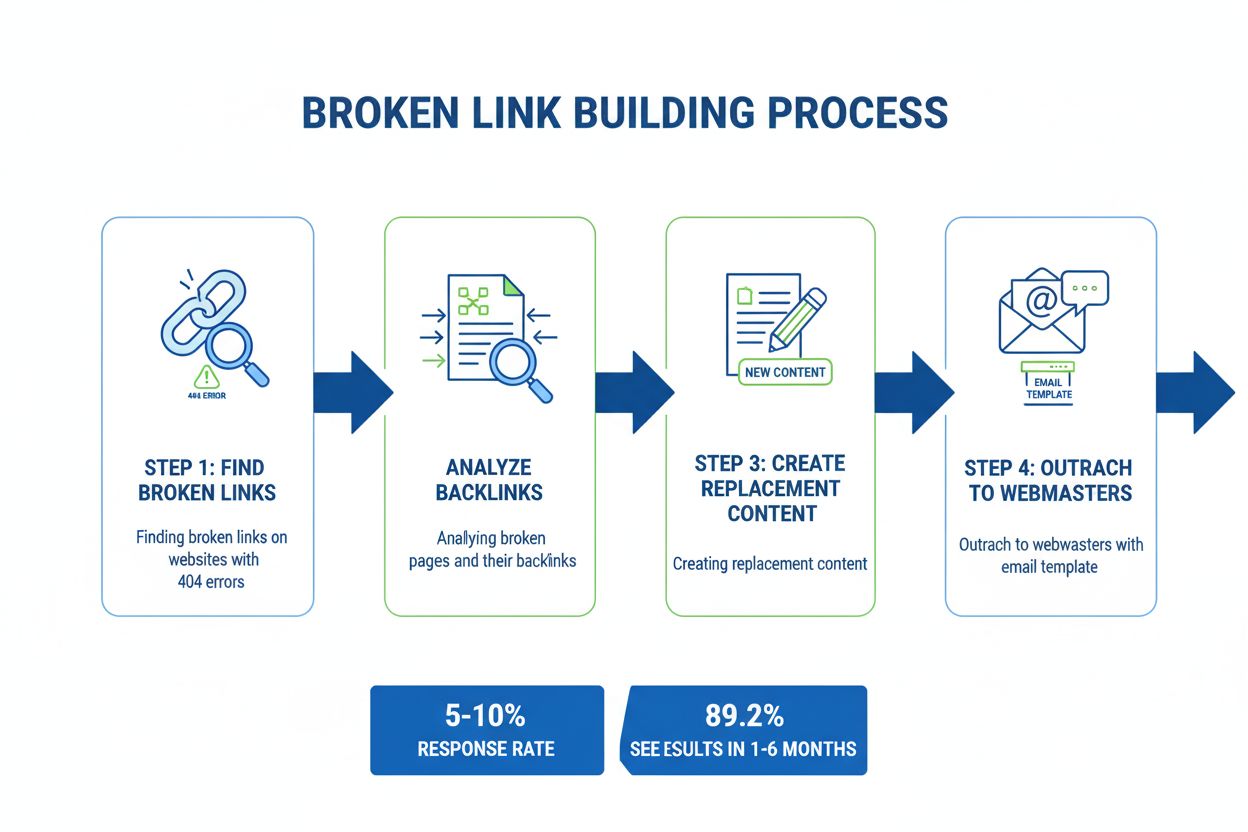
Broken link building is another highly effective tactic that involves finding broken links on relevant websites, then offering your content as a replacement. The process requires identifying pages that might link to you, finding broken links on those pages (using tools like Semrush’s Backlink Analytics), and reaching out to the webmaster with a suggestion to replace the broken link with a link to your relevant content. This strategy works because webmasters want to maintain the quality of their sites and are motivated to fix broken links. The approach is less competitive than trying to earn links from scratch, making it an efficient use of outreach efforts.
Unlinked brand mention recovery capitalizes on existing brand awareness by converting mentions into links. Tools like Semrush’s Brand Monitoring identify websites that mention your brand without linking to it. You can then reach out to these sites with a simple request to add a link, explaining that it will help readers find your site. This strategy is particularly effective because the site owner has already demonstrated familiarity with your brand by mentioning it, making them more likely to add a link. Additionally, it requires minimal effort compared to earning links from scratch, making it an excellent quick-win tactic.
Prioritize quality over quantity: A single link from a high-authority, relevant site is worth more than dozens of links from low-quality directories or unrelated sites. Focus on earning links from sites with strong editorial standards and real audiences.
Create genuinely valuable content: The foundation of sustainable link building is content that people actually want to reference. Invest in original research, comprehensive guides, and tools that solve real problems for your audience.
Build relationships, not just links: Successful link building is fundamentally about building relationships with journalists, bloggers, and industry influencers. Engage with their content, provide value without expecting immediate returns, and maintain these relationships over time.
Maintain natural link velocity: Acquire links at a sustainable pace that appears natural to search engines. Sudden spikes in link acquisition can trigger spam detection algorithms, while too-slow growth means competitors may outpace you.
Diversify your link profile: Earn links from various types of sites (news outlets, industry blogs, resource pages, educational institutions) and use varied anchor text. A diverse link profile appears more natural and is less vulnerable to algorithm changes.
Monitor and audit your backlinks regularly: Use tools like Semrush’s Backlink Audit to identify toxic or low-quality links that could harm your rankings. Remove or disavow harmful links to maintain a clean link profile.
Align link building with content strategy: Integrate link building into your overall content marketing strategy. Create content with link-earning potential, then actively promote it to relevant audiences and link prospects.
Track metrics and ROI: Monitor key metrics like referring domains, link velocity, domain authority changes, and ranking improvements. This data helps you understand which link building tactics work best for your business and where to allocate resources.
The future of link building is being shaped by several converging trends that will fundamentally change how brands approach authority building. First, the rise of AI-powered search means that link building will increasingly serve dual purposes: improving traditional search rankings while establishing the authority signals that AI systems use for citations. Brands that build strong backlink profiles will naturally gain more visibility in AI responses, creating a competitive advantage in the emerging AI search landscape. This shift is already evident, with forward-thinking brands integrating AI visibility monitoring into their link building strategies.
Second, digital PR and content-driven link building will continue to dominate over technical or manipulative tactics. As search engines become more sophisticated at detecting unnatural linking patterns, the ROI on black hat and gray hat tactics continues to decline. Conversely, the value of earning links through newsworthy content, expert positioning, and genuine relationships continues to increase. This trend favors brands that can invest in high-quality content creation and relationship building, potentially creating barriers to entry for smaller competitors.
Third, link building will become increasingly integrated with brand monitoring and reputation management. As AI systems cite sources more frequently, brands will need to actively monitor where they appear in AI responses and understand how their backlink profiles contribute to AI visibility. Platforms like AmICited represent the future of link building analytics, providing visibility into how link building efforts translate into actual citations and brand mentions across AI platforms. This integration of link building with AI visibility tracking will become standard practice for sophisticated digital marketing teams.
Finally, the importance of E-E-A-T signals and author authority will continue to grow. Search engines and AI systems increasingly evaluate not just domain authority, but the expertise and authority of individual authors and content creators. This means link building strategies will need to incorporate author branding and expert positioning alongside traditional domain authority building. Brands that establish their team members as recognized experts in their fields will naturally attract more high-quality links and AI citations, creating a sustainable competitive advantage.
Link building remains one of the most powerful and essential components of modern digital marketing strategy. While the tactics and best practices have evolved significantly since the early days of SEO, the fundamental principle remains unchanged: quality backlinks from authoritative, relevant sources signal to both search engines and AI systems that your content is trustworthy and valuable. The shift from quantity-focused tactics to quality-driven, relationship-based approaches reflects a deeper maturation of the industry and a recognition that sustainable authority building requires genuine value creation and authentic relationship development.
In the context of emerging AI search platforms, link building has taken on new significance. As ChatGPT, Perplexity, Google AI Overviews, and Claude become primary information sources for millions of users, the ability to be cited by these systems depends partly on the authority signals established through link building. Brands that invest in quality link building today are positioning themselves to be recognized as authoritative sources not just in traditional search, but across the entire AI-driven digital ecosystem. This dual benefit—improved search rankings plus increased AI visibility—makes link building more valuable than ever before.
Link building remains crucial because backlinks are one of Google's top ranking factors. Research shows that 8 of the top 20 ranking factors relate directly to backlinks. Additionally, in the era of AI search platforms like ChatGPT, Perplexity, and Google AI Overviews, quality backlinks contribute to establishing domain authority and E-E-A-T signals that these systems evaluate when citing sources. Links act as third-party endorsements that help both search engines and AI systems understand content credibility.
Dofollow links (also called follow links) pass ranking authority from the linking site to your site, directly benefiting your SEO. Nofollow links contain the rel='nofollow' attribute, which tells search engines not to count the link as an endorsement or pass authority. While nofollow links don't directly improve rankings, they can still drive referral traffic and contribute to brand awareness. Google also recognizes sponsored and UGC (user-generated content) attributes for paid and community-generated links.
Link building results typically take 3-6 months to become visible in search rankings, though some high-quality links may show impact within weeks. The timeline depends on factors like link authority, relevance, and your site's existing domain strength. Consistent link building efforts compound over time, with most successful campaigns showing measurable ranking improvements within 6-12 months. Patience and persistence are essential, as sustainable link building is a long-term strategy.
High-quality backlinks come from authoritative, topically relevant websites with strong editorial standards and real traffic. They're placed naturally within content and provide genuine value to readers. Low-quality links come from spammy directories, private blog networks (PBNs), irrelevant sites, or pages with thin content. Google's algorithms are designed to ignore or penalize low-quality links, so focusing on quality over quantity is essential for sustainable SEO success.
Yes, link building indirectly supports AI search visibility. While AI systems like ChatGPT and Perplexity don't directly crawl backlinks, they evaluate domain authority, E-E-A-T signals, and content credibility—all strengthened by quality backlinks. Additionally, link building through digital PR and content marketing often generates brand mentions across the web, which AI systems use to assess authority and relevance when deciding which sources to cite in their responses.
The most effective strategies focus on quality and relationship-building: creating linkable assets (original research, tools, comprehensive guides), digital PR and journalist outreach, broken link building, unlinked brand mention recovery, and strategic partnerships. According to 2025 research, 48.6% of SEO experts consider digital PR the most effective tactic. Content-driven approaches that provide genuine value consistently outperform transactional or manipulative tactics.
Guest posting has declined in effectiveness since Google's 2014 warning about guest blogging spam. However, it can still work when done strategically: focus on highly selective, authoritative sites with strong editorial standards, avoid exact-match anchor text, prioritize relevance over domain authority, and don't rely on it as your primary strategy. Quality guest posts on relevant sites can provide value, but they're no longer a scalable link building tactic.
Start tracking how AI chatbots mention your brand across ChatGPT, Perplexity, and other platforms. Get actionable insights to improve your AI presence.
Learn what broken link building is, how it works as an SEO strategy, and why it's one of the most effective white-hat link building tactics for earning quality ...

Learn what a link farm is, how it manipulates search rankings, why Google penalizes them, and how to detect and avoid these black-hat SEO schemes that damage we...
Learn how link building has evolved for AI search. Discover strategies to earn AI citations across ChatGPT, Perplexity, and Google AI Overviews. Master the new ...
Cookie Consent
We use cookies to enhance your browsing experience and analyze our traffic. See our privacy policy.