
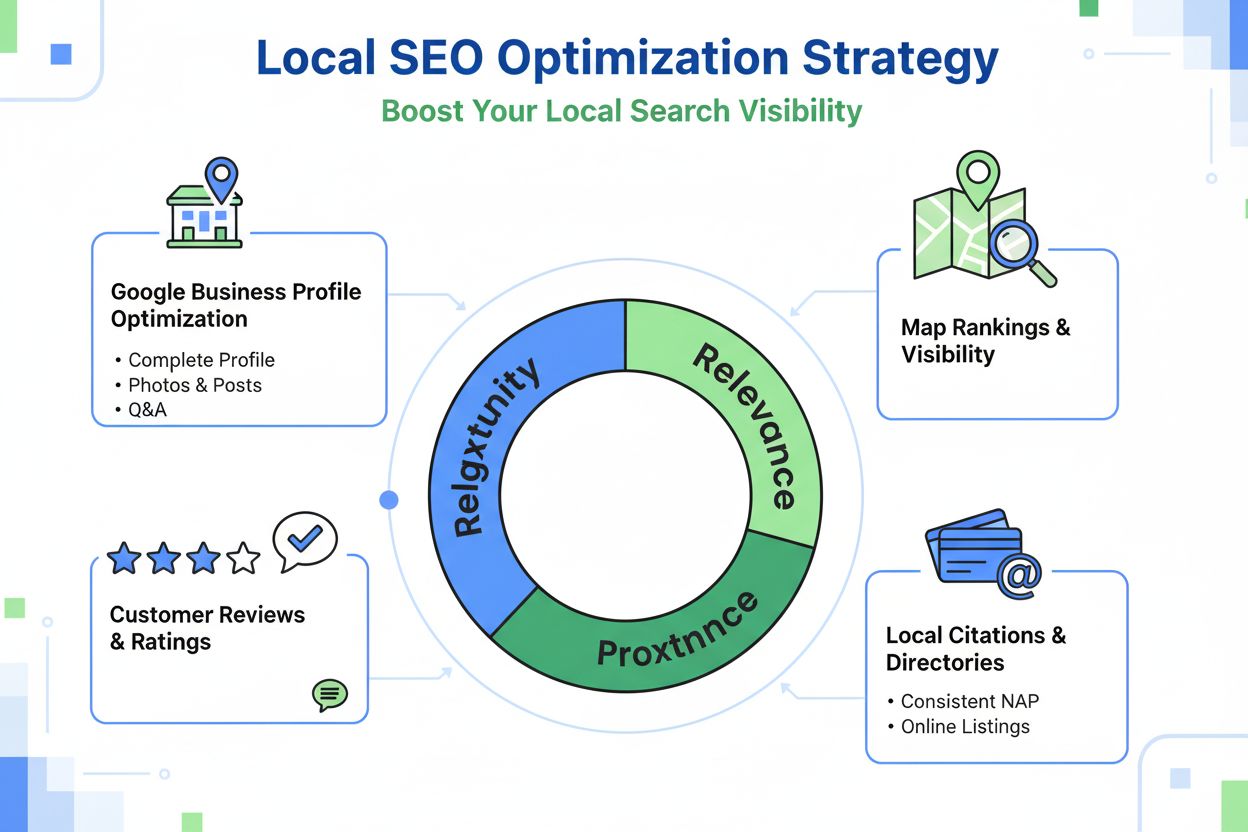
Local SEO
Local SEO is the practice of optimizing a business's online presence for location-based search results. Learn how to rank higher in Google Maps, local pack, and...
15 min read
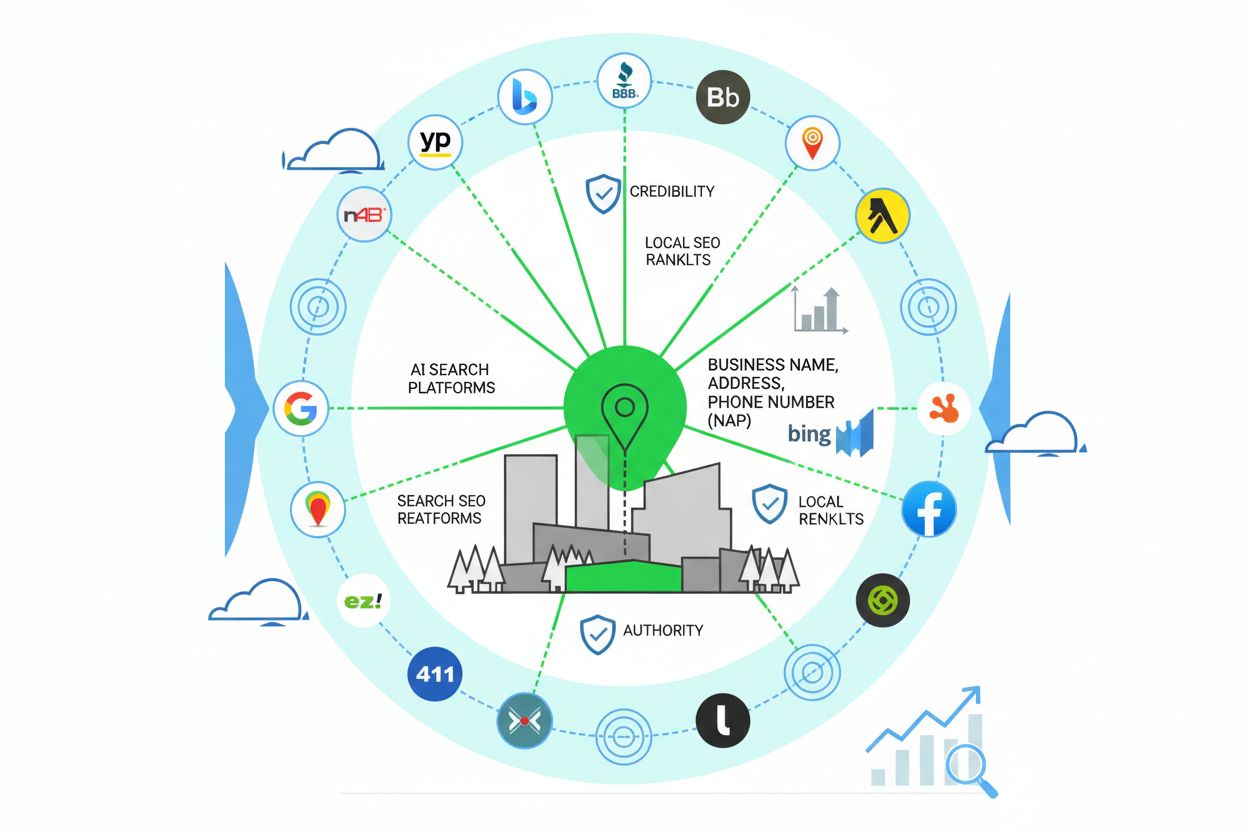
Local citations are online mentions of a business’s name, address, and phone number (NAP) on third-party websites, directories, and platforms that help establish credibility with search engines and AI systems. These structured and unstructured references appear on business directories, review sites, social media, and local websites, directly influencing local search rankings and visibility in AI-generated answers.
Local citations are online mentions of a business's name, address, and phone number (NAP) on third-party websites, directories, and platforms that help establish credibility with search engines and AI systems. These structured and unstructured references appear on business directories, review sites, social media, and local websites, directly influencing local search rankings and visibility in AI-generated answers.
Local citations are online mentions of a business’s name, address, and phone number (NAP) that appear on third-party websites, directories, and platforms. These digital references serve as verification signals to search engines and AI systems that your business exists at a specific location and operates legitimately. A local citation can be a complete mention including all NAP information or a partial citation containing only some of these elements. Citations appear across diverse platforms including business directories like Yelp and Yellow Pages, social media networks like Facebook and Instagram, review sites, local blogs, news publications, and specialized industry directories. The fundamental purpose of local citations is to establish your business’s credibility, verify its location and contact information, and improve its visibility in local search results and AI-generated answers. Unlike traditional backlinks, citations don’t require a clickable hyperlink—the mere mention of your business information on an authoritative source carries SEO value.
Local citations have become increasingly important as search behavior has fragmented across multiple platforms and AI systems. Historically, citations were primarily valuable for local search rankings on Google Maps and local pack results. Today, their importance has expanded significantly due to the rise of AI search platforms like ChatGPT, Perplexity, and Google Gemini. According to groundbreaking research from Yext analyzing 6.8 million AI citations, 86% of citations in AI-generated answers come from brand-managed sources including websites and business listings. This finding fundamentally changes how businesses should approach citation strategy. The research also revealed that 80% of US consumers search online for local businesses on a weekly basis, with 32% searching daily, making local visibility more critical than ever. Additionally, 76% of consumers who search for “near me” visit a business within a day, demonstrating the direct connection between local search visibility and customer acquisition. As search continues to fragment across Google, AI platforms, social media, and specialized search engines, maintaining accurate citations across all relevant platforms has become a cornerstone of digital visibility strategy.
Local citations exist in two distinct formats, each serving different purposes in your overall local SEO strategy. Structured citations are business listings on dedicated directory platforms where your NAP information appears in clearly defined, standardized fields. These platforms include major directories like Google My Business, Yelp, Facebook, Yellow Pages, Bing Places for Business, Apple Maps, and industry-specific directories. Search engines and AI systems can easily parse structured citations because the information follows a consistent format. The advantage of structured citations is their immediate recognizability by algorithms—when search engines encounter your business name, address, and phone number in the same standardized format across multiple platforms, they quickly verify your business information and build trust signals.
Unstructured citations, by contrast, are mentions of your business information scattered throughout web content without a standardized format. These appear in blog posts, news articles, social media posts, forum discussions, and other informal online content. For example, a local food blogger might write “Smith’s Bakery, located at 123 Main Street in Portland, makes the best sourdough bread” without using any special formatting. While unstructured citations are harder for algorithms to process, they carry significant value because they appear on diverse, often high-authority domains. Unstructured citations are increasingly valuable for AI search visibility because they provide context and verification across multiple independent sources. According to iPullRank’s analysis of AI citation patterns, unstructured citations on reputable local websites and news sites are being picked up more frequently by AI models as they seek to verify business information through multiple independent mentions.
| Aspect | Structured Citations | Unstructured Citations | Data Aggregators |
|---|---|---|---|
| Format | Standardized fields (Name, Address, Phone) | Scattered mentions in content | Centralized databases distributing to multiple sites |
| Examples | Yelp, Google My Business, Yellow Pages | Blog posts, news articles, social media | Foursquare, Data Axle, Neustar/Localeze |
| Search Engine Processing | Easily parsed and verified | Requires contextual analysis | Highly trusted, distributed widely |
| AI Search Impact | 42% of AI citations | 8% of AI citations (reviews/social) | Foundational for directory citations |
| Control Level | High (you manage directly) | Low (earned through PR/mentions) | Medium (claim and optimize) |
| Implementation Effort | Moderate (manual or tool-assisted) | High (requires PR and outreach) | Low (one-time setup, wide distribution) |
| Time to Impact | Weeks to months | Months to years | Weeks (distribution is rapid) |
| Authority Signal | Strong on major platforms | Varies by source authority | Very strong (trusted aggregators) |
The core of every local citation is NAP data—your business name, address, and phone number. The consistency of this information across all citations is one of the most critical factors in local SEO success. Search engines use NAP consistency as a primary trust signal. When they find identical information across multiple authoritative sources, they gain confidence that your business is legitimate and trustworthy. Conversely, inconsistencies create confusion and reduce your authority.
NAP consistency issues are surprisingly common and often overlooked. Businesses might use different business name variations across platforms (“Joe’s Plumbing” vs. “Joe’s Plumbers”), include or exclude suite numbers in addresses, use different phone number formats (with or without parentheses and hyphens), or list different phone numbers on different platforms. Even seemingly minor variations like abbreviating “Street” as “St.” on some platforms but spelling it out on others can be problematic. According to BrightLocal research, 63% of consumers say that finding incorrect information would actively stop them from choosing a business, making NAP accuracy not just an SEO issue but a customer acquisition issue.
The solution is establishing a single authoritative version of your NAP information and using it consistently everywhere. Your Google My Business profile should serve as your canonical source of truth. Every other citation should match this information exactly. When you need to update information—such as moving to a new location or changing your phone number—update Google My Business first, then systematically work through all other citations to ensure consistency. This approach prevents the fragmentation of your authority across multiple conflicting listings.
Local citations directly influence how search engines rank your business in local search results and Google Maps. The mechanism works through several interconnected factors. First, citations establish relevance—when search engines find your business mentioned on relevant directories and industry-specific sites, they understand what services or products you offer and who your target customers are. A dental practice appearing on dental-specific directories sends a stronger relevance signal than appearing only on generic business directories.
Second, citations build authority and trust. Each citation on a reputable, authoritative platform functions as a vote of confidence in your business. When Google sees your business listed on the Better Business Bureau, industry associations, and established directories, it interprets this as verification that your business is legitimate and established. This trust signal directly influences your local ranking position. Research from Whitespark shows that the most impactful local ranking factors include your Google Business Profile category, keywords in your profile title, and proximity to the search location—all factors that are reinforced through consistent citations.
Third, citations provide geographic signals that help search engines understand your service area and location. Every citation containing your address reinforces your physical location. This geographic data is crucial for “near me” searches and location-based queries. When someone searches “plumber near me” in a specific city, search engines use geographic signals from citations to determine which businesses are relevant to that location. A business with citations across multiple platforms in a specific geographic area will rank higher for location-based searches in that area than a business with scattered, inconsistent citations.
The cumulative effect of multiple high-quality citations is significant. According to local SEO research, businesses with consistent citations on 50+ authoritative directories typically see substantially better local rankings than competitors with fewer citations. However, quality matters more than quantity—a well-optimized presence on 15 high-authority directories often outperforms poorly maintained citations on 100+ sites.
Understanding the citation ecosystem is essential for effective citation strategy. The landscape includes several categories of citation sources, each playing a different role in your overall visibility. Search engines like Google, Bing, and Apple maintain their own business listing platforms (Google My Business, Bing Places, Apple Maps). These are foundational and should be your first priority.
Primary data aggregators are companies that collect business information and distribute it to hundreds of other websites. The three major US data aggregators are Foursquare, Data Axle (formerly InfoGroup), and Neustar/Localeze. These aggregators are critical because they serve as distribution hubs—when you claim and optimize your listing with a data aggregator, your information flows to numerous downstream directories automatically. This makes data aggregators incredibly efficient for reaching many citation sources with minimal effort.
Major directories and platforms include Yelp, Facebook, Yellow Pages, Angi, Manta, and similar sites. These platforms have high domain authority and receive significant traffic, making them valuable citation sources. They often allow customer reviews, which adds another layer of value beyond the citation itself.
Industry-specific directories are specialized platforms serving particular industries or professions. Examples include Avvo for lawyers, Healthgrades for doctors, Zillow for real estate, and countless others. These directories carry significant weight because they reinforce your industry relevance and often attract highly qualified potential customers.
Unstructured citation sources include local blogs, news publications, government websites, chamber of commerce listings, and professional association directories. While these require more effort to secure, they provide valuable verification signals, especially when they appear on high-authority local websites.
Effective citation strategy requires a systematic approach. Start by claiming and optimizing your core citations on Google My Business, Yelp, Facebook, and other major platforms. Ensure your NAP information is perfect and consistent across all these foundational sources. This step is non-negotiable—these platforms receive the most traffic and have the highest authority.
Next, audit your existing citations to identify inconsistencies and gaps. Use citation audit tools or manually search for your business on major directories. Document every citation you find, noting any NAP inconsistencies, missing information, or duplicate listings. This audit reveals your current citation footprint and identifies problems that need correction.
Then, systematically correct inconsistencies. For citations you control (those where you have an account), log in and update information directly. For citations you don’t control, contact the platform’s support team and request corrections. This process can be time-consuming, but it’s essential for building trust with search engines.
After cleanup, expand to additional citations on relevant industry-specific directories and local platforms. Prioritize directories that are most relevant to your business and most likely to be visited by your target customers. A local plumber should prioritize directories where homeowners search for plumbing services, while a restaurant should focus on food-related directories and review sites.
Consider using citation building services like Moz Local, BrightLocal, or Yext if you have multiple locations or want to streamline the process. These services can submit your information to hundreds of directories simultaneously and help maintain consistency over time. While they involve recurring fees, they save significant time and ensure broader distribution.
The role of local citations is evolving rapidly as AI search platforms become mainstream. Traditional local SEO focused primarily on Google Maps and local pack rankings, but the emergence of ChatGPT, Perplexity, Google Gemini, and other AI systems has created new citation opportunities and requirements. These AI platforms rely heavily on citations to verify information and build trust in their responses. According to Yext’s research, websites and listings account for 86% of AI citations, meaning the sources you control are more important than ever.
The future of citations will likely involve greater emphasis on structured data and machine-readable information. AI systems prefer information that’s clearly formatted and easy to parse. Businesses that invest in proper schema markup, complete business profiles, and consistent structured data will have advantages in AI search visibility. Additionally, as AI systems become more sophisticated, they’ll likely place greater emphasis on citation diversity—having your business mentioned across multiple independent sources rather than just major directories.
Another emerging trend is the integration of local citations with review management. Review sites like Yelp and Google are becoming increasingly important citation sources because they combine business information with customer feedback. AI systems use reviews as verification signals, making review management an integral part of citation strategy. Businesses with high-quality reviews on multiple platforms will see better AI search visibility than those with poor or missing reviews.
The rise of voice search and conversational AI also impacts citation strategy. When users ask voice assistants or AI chatbots for local business recommendations, these systems rely on citations to provide accurate information. Ensuring your business is properly cited across all relevant platforms becomes even more critical as voice and conversational search grow.
Measuring the impact of your citation efforts requires tracking multiple metrics. Local search rankings for relevant keywords in your service area provide direct evidence of citation impact. Use rank tracking tools to monitor your position in local pack results and organic local rankings. You should see improvements within weeks to months of building and optimizing citations.
Google My Business Insights provide valuable data about how customers discover your business. Track metrics like “how customers search for your business” (direct, discovery, branded) and “where customers view your business” (search vs. maps). Improvements in discovery metrics indicate that your citations are helping customers find you through search.
Website traffic from referral sources like Yelp, Yellow Pages, and other directories shows direct engagement with your citations. Use Google Analytics to track traffic from these sources and monitor trends over time. Increasing referral traffic indicates that your citations are driving customer interest.
Phone call tracking through your Google My Business profile and other platforms reveals how many customers are contacting you directly from your citations. This is one of the most direct measures of citation ROI—actual customer inquiries generated by your online presence.
Citation audit scores from tools like Moz Local or BrightLocal track your citation consistency and completeness over time. Improving scores indicate that your citation management efforts are working and that search engines are seeing more consistent, trustworthy information about your business.
Local citations have evolved from a nice-to-have SEO tactic to an essential component of digital visibility strategy. Whether your goal is ranking in Google Maps, appearing in local search results, or being cited by AI search platforms, local citations play a critical role. The research is clear: 86% of AI citations come from brand-managed sources, meaning the citations you control directly impact your visibility in the future of search.
The path forward is straightforward: claim and optimize your core citations on major platforms, ensure perfect NAP consistency across all sources, audit and correct existing citations, and systematically expand to relevant industry-specific directories. This foundation of accurate, consistent citations will support your visibility across Google Search, Google Maps, AI search platforms, and other emerging search channels. In an increasingly fragmented search landscape, local citations remain one of the most controllable and impactful elements of your digital marketing strategy.
Structured citations are business listings on dedicated directories like Yelp, Google Business Profile, and Yellow Pages where NAP information appears in clearly formatted fields that search engines can easily process. Unstructured citations are mentions of your business name, address, and phone number in blog posts, news articles, or social media where the information isn't in a standardized format. Both types are valuable for local SEO, though structured citations typically have more immediate impact on search rankings.
According to Yext research analyzing 6.8 million AI citations across ChatGPT, Gemini, and Perplexity, 86% of AI citations come from brand-managed sources including websites and listings. Accurate citations on directories and your website help AI models verify business information and determine trustworthiness. When AI systems find consistent NAP data across multiple authoritative sources, they're more likely to cite your business in AI-generated answers, making citations essential for visibility in AI search platforms.
NAP consistency refers to having identical business name, address, and phone number information across all online citations and platforms. Search engines and AI systems use NAP consistency as a trust signal—conflicting information can confuse algorithms and reduce your authority. Even minor variations like abbreviations (St. vs Street) or different phone number formats can be problematic. Maintaining perfect NAP consistency across all citations is one of the most important local SEO practices.
The most important citation sources are Google My Business (the foundation), followed by major directories like Yelp, Facebook, Apple Maps, and Bing Places. Data aggregators like Foursquare, Data Axle, and Neustar/Localeze are critical because they distribute your information to hundreds of other directories. Industry-specific directories relevant to your business also carry significant weight. According to research, websites generate 44% of AI citations, listings 42%, making these two categories the most controllable and impactful sources.
There's no magic number of citations required, as quality matters more than quantity. However, research shows that businesses with citations on 50+ directories typically see better local rankings than those with fewer citations. The key is ensuring citations are on relevant, authoritative platforms and maintaining perfect NAP consistency. A well-optimized presence on 10-15 high-authority directories often outperforms poorly maintained citations on 100+ sites.
Local citations primarily impact local search rankings and Google Maps visibility, but they can indirectly support organic rankings through several mechanisms. Citations often include links to your website, which provide link equity. They also establish topical relevance and geographic authority. Additionally, citations on high-authority domains can drive referral traffic and brand signals. While citations are not a primary organic ranking factor like backlinks, they contribute to overall domain authority and local relevance.
Inaccurate citations create trust issues with search engines and confuse potential customers. According to BrightLocal research, 63% of consumers say finding incorrect information would actively stop them from choosing a business. Inaccurate citations can result in lower local rankings, reduced visibility in Google Maps, and lost customer opportunities. Search engines may also struggle to connect different citations to your business if information conflicts, fragmenting your authority across multiple listings instead of consolidating it.
Start by searching your business name, address, and phone number on Google and major directories like Yelp, Facebook, and Yellow Pages. Use free tools like Google My Business Insights or paid citation audit tools like Moz Local, BrightLocal, or Yext to scan hundreds of directories simultaneously. Document any inconsistencies in NAP data, missing listings, or duplicate entries. Focus first on correcting information on high-authority platforms, then systematically address issues on smaller directories. Regular audits (quarterly or bi-annually) help maintain citation accuracy.
Start tracking how AI chatbots mention your brand across ChatGPT, Perplexity, and other platforms. Get actionable insights to improve your AI presence.
Local SEO is the practice of optimizing a business's online presence for location-based search results. Learn how to rank higher in Google Maps, local pack, and...
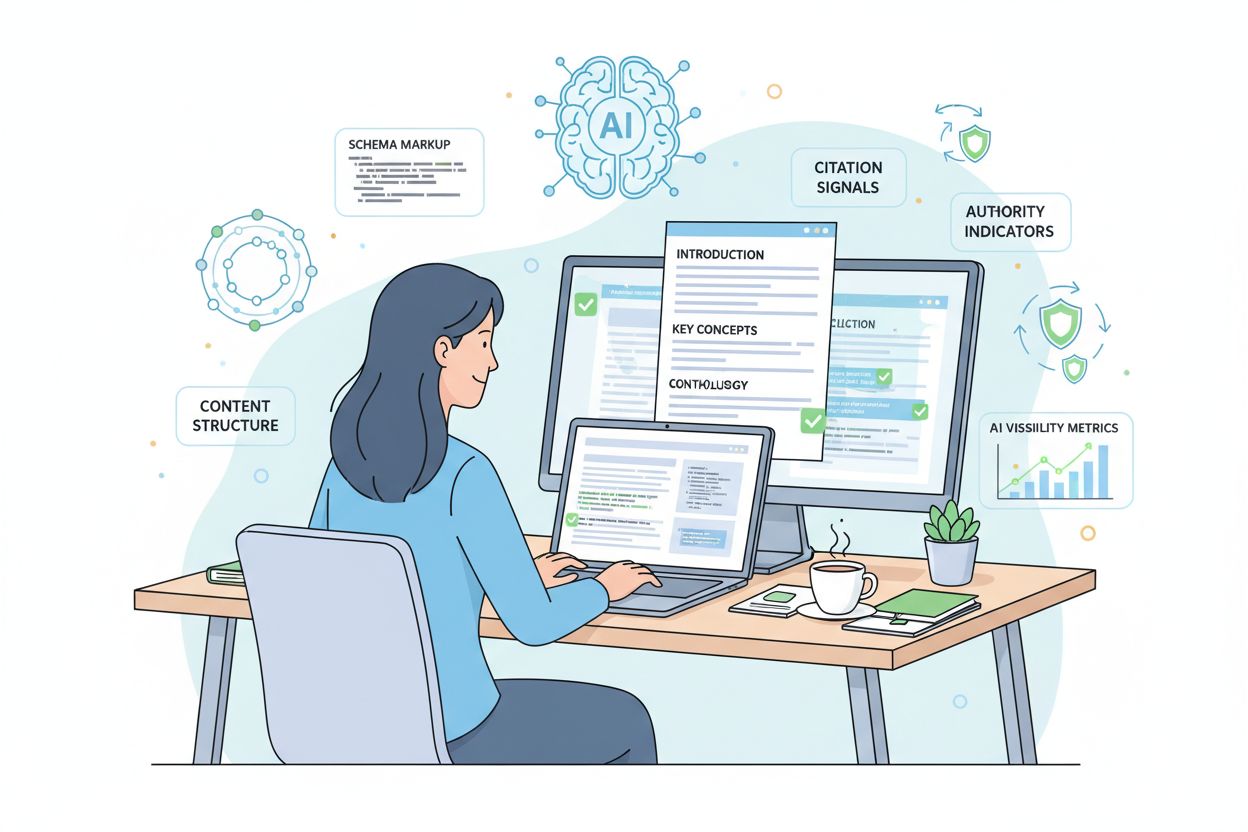
Learn what makes content citation-worthy for AI systems like ChatGPT, Perplexity, and Google AI Overview. Discover the key characteristics, optimization strateg...

Learn how citation position works across ChatGPT, Perplexity, Google AI Overviews, and other AI systems. Understand citation placement strategies and how to opt...
Cookie Consent
We use cookies to enhance your browsing experience and analyze our traffic. See our privacy policy.