
Algorithmic Penalty
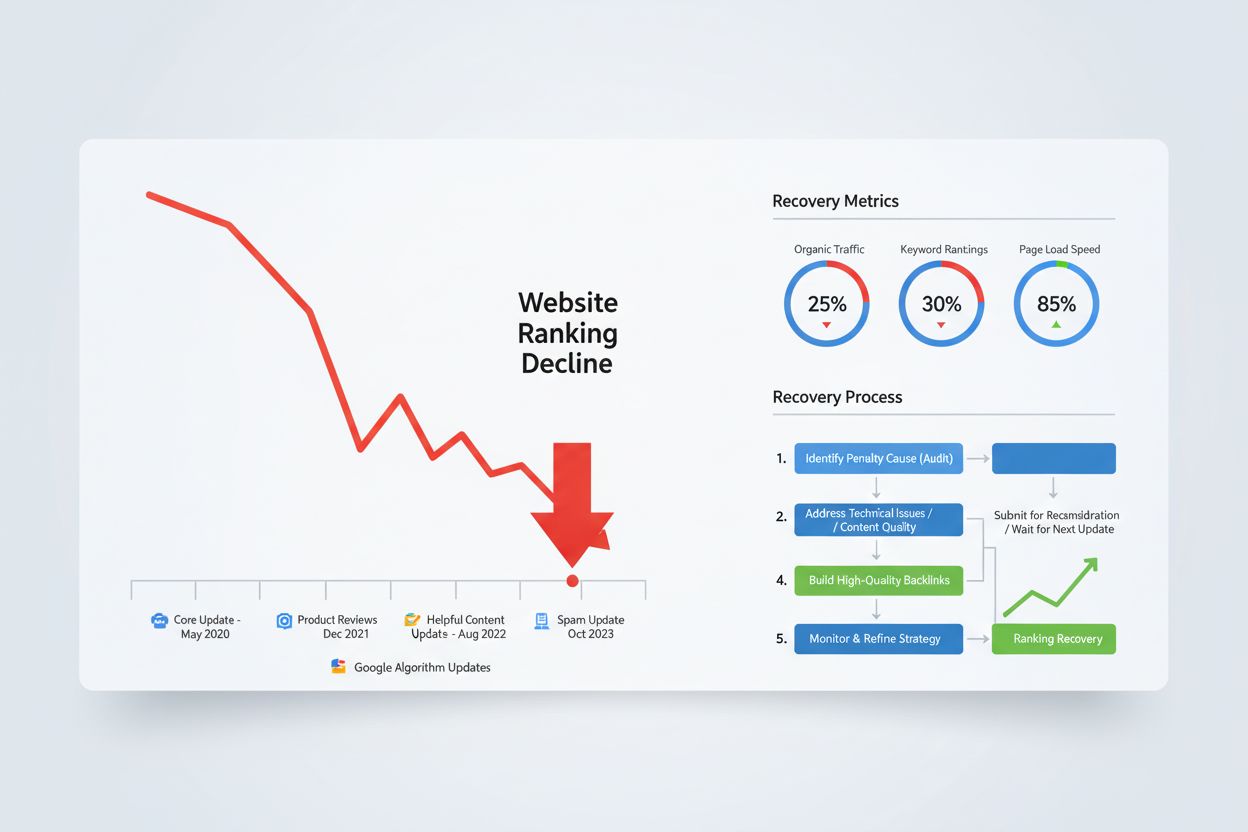
Learn what algorithmic penalties are, how they differ from manual penalties, and discover proven strategies to detect and recover from ranking drops caused by G...
9 min read

A Manual Action is a penalty issued by Google when a human reviewer determines that a website violates Google Search Essentials guidelines. It results in reduced visibility or removal from search results until the violations are fixed and a reconsideration request is approved.
A Manual Action is a penalty issued by Google when a human reviewer determines that a website violates Google Search Essentials guidelines. It results in reduced visibility or removal from search results until the violations are fixed and a reconsideration request is approved.
A Manual Action is a penalty applied by Google when a human reviewer at Google determines that pages on a website are not compliant with Google Search Essentials (formerly known as Google Webmaster Guidelines). This enforcement mechanism represents Google’s commitment to maintaining search result quality and protecting users from spammy, deceptive, or manipulative content. When a Manual Action is issued, it typically results in some or all of a website’s pages being ranked lower or completely omitted from Google Search results without any visual indication to users. The penalty is distinct from algorithmic changes because it involves direct human review and explicit notification through Google Search Console, making it a more transparent but also more serious form of enforcement. Manual Actions exist because, despite Google’s sophisticated automated spam detection systems, certain violations require human judgment to identify and address effectively.
Google has been issuing Manual Actions since the early days of search engine optimization, recognizing that automated systems alone cannot catch all attempts to manipulate search rankings. The Manual Actions report in Google Search Console was formalized to provide website owners with transparency about violations and a clear path to recovery. According to industry research, Google issues approximately 400,000 manual penalties each month, demonstrating the scale of this enforcement effort. However, only about 5% of penalized websites actually submit reconsideration requests, suggesting that many site owners either abandon their sites or fail to recognize the penalty. The evolution of Manual Actions reflects Google’s changing priorities—early penalties focused heavily on link schemes and keyword stuffing, while modern penalties increasingly address structured data manipulation, News and Discover policy violations, and site reputation abuse. This shift demonstrates Google’s commitment to evolving its enforcement mechanisms alongside emerging spam tactics and the changing landscape of web content.
Google’s Manual Actions cover a comprehensive range of violations, each addressing specific ways websites attempt to manipulate search results or provide poor user experiences. Unnatural links to your site represent the most frequently applied Manual Action, targeting websites that have acquired artificial, deceptive, or manipulative backlinks through link schemes or paid link purchases. Thin content with little or no added value penalizes websites that provide minimal unique information, including heavily monetized affiliate pages, scraped content, and doorway pages designed primarily for search engine manipulation. User-generated spam addresses forums, comments, and user profiles that contain commercial spam, while site abused with third-party spam targets websites where spammers have injected malicious content through vulnerabilities. Cloaking and sneaky redirects penalize websites that show different content to search engines versus users, or that redirect users to unexpected destinations. Structured data issues address manipulative implementation of schema markup, such as marking up invisible content or misleading information. Unnatural outbound links target websites selling links to manipulate other sites’ rankings. Additionally, News and Discover policy violations address dangerous content, deceptive practices, hateful content, manipulated media, and other editorial violations specific to Google’s news and discovery platforms.
| Aspect | Manual Action | Algorithmic Penalty | Security Issue |
|---|---|---|---|
| Detection Method | Human reviewer at Google | Automated algorithm | Automated security scan |
| Notification | Explicit notification in Search Console | No direct notification | Prominent warning in Search Console |
| Scope | Can affect specific pages or entire site | Typically affects entire site | Affects compromised pages |
| Recovery Process | Requires fixing issues + reconsideration request | May resolve with algorithm updates | Requires security fix + verification |
| Timeline to Recovery | 2 weeks to 3+ months | Varies; may take weeks to months | Days to weeks after fix |
| Visibility Impact | Reduced rankings or complete removal | Significant ranking drop | Warning label in SERPs |
| Examples | Unnatural links, thin content, cloaking | Helpful Content Update, Core Update | Malware, phishing, hacking |
Google’s spam detection system operates through a combination of automated algorithms and manual human review by the Google Search Quality team. When Google’s systems identify potential violations, they flag pages for human review. A trained reviewer then examines the flagged content to determine if it genuinely violates Google Search Essentials. If a violation is confirmed, Google issues a Manual Action and notifies the website owner through Google Search Console. The notification includes specific information about the violation type, affected pages or patterns, and recommended steps to fix the issue. Website owners receive both an in-console notification and an email alert, ensuring they are aware of the penalty. The specificity of Google’s notifications varies—some include sample URLs showing exactly where violations occur, while others provide more general guidance. This transparency is intentional, as Google aims to help website owners understand and fix problems rather than simply punishing them indefinitely.
The consequences of a Manual Action can range from barely noticeable to catastrophic, depending on the violation type and scope. Websites affected by Manual Actions typically experience immediate and significant drops in organic search traffic, often losing 50-90% of their search visibility within days of the penalty being applied. For example, a website penalized for unnatural links might see its rankings drop across hundreds or thousands of keywords simultaneously. In severe cases, such as those involving pure spam or major spam problems, websites can be completely de-indexed and removed from Google Search results entirely, making them invisible to users searching for relevant terms. The financial impact can be devastating for businesses that rely on organic search traffic for leads and revenue. Beyond immediate traffic loss, Manual Actions damage a website’s long-term authority and trustworthiness in Google’s eyes, meaning that even after recovery, the site may struggle to regain its previous rankings. Additionally, the reputational damage extends beyond search—users who encounter warning labels or find the site missing from results may lose confidence in the brand.
Recovering from a Manual Action requires a systematic approach: identifying the violation, fixing all instances, documenting your efforts, and submitting a reconsideration request. The first step is to carefully review the Manual Action notification in Google Search Console, which specifies the violation type and often provides sample affected pages. Next, conduct a thorough audit of your entire website to identify all instances of the violation, not just the examples Google provided. For link-related penalties, this means downloading your complete backlink profile and analyzing it for unnatural patterns. For content violations, you must review all pages for thin content, cloaking, or other issues. Once you’ve identified all violations, take corrective action—removing bad links, improving thin content, fixing cloaking issues, or addressing whatever the specific violation requires. Importantly, fixing only some instances is insufficient; Google requires that all violations be addressed across the entire site. After making corrections, use Google’s URL Inspection tool to verify that your fixes are working correctly. Finally, submit a reconsideration request through Google Search Console that explains the violation, describes your fixes in detail, and documents the outcome. Google recommends that reconsideration requests include three elements: an explanation of the exact quality issue, a description of steps taken to fix it, and documentation of the results.
The timeline for recovering from a Manual Action depends on multiple factors that influence both the speed of your fixes and Google’s review process. Most reconsideration reviews take several days to weeks, though link-related requests may take significantly longer—sometimes several months. The complexity of your violation affects recovery time; simple violations like a few unnatural links might be resolved quickly, while widespread thin content issues across thousands of pages require more extensive work. The quality of your reconsideration request documentation significantly impacts review speed—comprehensive, well-documented requests are processed faster than vague or incomplete submissions. Google’s current review queue also affects timing; during periods of high penalty volume, reviews may take longer. Additionally, the type of violation matters; link-related penalties historically take longer to review than content-related penalties. Industry data suggests that recovery typically spans 2 weeks to 3 months, with an average of 4-6 weeks for most violations. However, some sites have reported recovery in as little as 7 days with thorough, immediate action, while others have waited 6+ months for approval. It’s important to note that Google may reject your first reconsideration request if your fixes are deemed insufficient, requiring you to resubmit with more comprehensive corrections.
Preventing Manual Actions is far more efficient than recovering from them, requiring adherence to Google Search Essentials and focus on user-first content creation. The foundation of avoiding penalties is creating high-quality, original content that provides genuine value to users. Google’s emphasis on E-E-A-T (Experience, Expertise, Authoritativeness, Trustworthiness) means that content should demonstrate clear expertise, be written by qualified authors, and come from authoritative sources. Building a natural backlink profile through legitimate link earning—rather than link buying or link schemes—is essential for avoiding link-related penalties. This means creating content so valuable that other websites naturally want to link to it, and earning links through digital PR, guest posting on relevant sites, and genuine relationship building. Technical security is equally important; regularly update your CMS, plugins, and software to prevent hacking that could lead to user-generated spam or hacked content penalties. Implement strong moderation on user-generated content platforms, using blacklists for spammy keywords and requiring review of suspicious posts. Ensure your website is secure with HTTPS, has proper robots.txt configuration, and doesn’t use deceptive techniques like cloaking or sneaky redirects. Regularly audit your structured data implementation to ensure it accurately represents your content and complies with Google’s guidelines. Finally, monitor your website’s health using Google Search Console, checking the Manual Actions report regularly and addressing any issues immediately upon discovery.
As AI-powered search engines like ChatGPT, Perplexity, and Google AI Overviews become increasingly important for brand visibility, understanding Manual Actions remains critical for maintaining presence across all search platforms. While Manual Actions are specific to Google Search, the underlying principles—avoiding spam, maintaining content quality, and building authority—apply across all search and AI discovery platforms. Websites penalized by Google for guideline violations often experience reduced visibility not just in traditional search but also in AI-generated responses and recommendations. For example, a site with a Manual Action for thin content may be deprioritized by AI systems that rely on Google’s index and authority signals. Conversely, websites that maintain clean compliance records and high content quality are more likely to be cited and recommended by AI systems. This interconnection means that the effort to recover from a Manual Action benefits your visibility across the entire search and AI landscape. Monitoring tools like AmICited help track how your domain appears in AI responses, providing early warning if your visibility is declining across multiple platforms—a signal that might indicate an undetected Manual Action or other compliance issue.
Google’s approach to Manual Actions is evolving to address emerging threats and maintain search quality in an increasingly complex digital landscape. Recent trends show increased focus on News and Discover policy violations, reflecting Google’s commitment to combating misinformation and maintaining editorial standards in news and discovery features. The expansion of structured data policies suggests Google will continue penalizing manipulative schema markup as AI systems increasingly rely on structured data for understanding content. Additionally, as AI-generated content becomes more prevalent, Google is likely to develop new Manual Action categories addressing AI-generated spam and synthetic content violations. The rise of site reputation abuse—where third-party content damages a site’s reputation—indicates Google’s recognition that modern websites face threats beyond their direct control. Looking forward, Manual Actions may become more granular, with Google potentially issuing penalties at the page level rather than site-wide for certain violations, allowing sites to recover faster. The integration of Manual Actions with AI monitoring systems suggests that future enforcement may be more automated yet more precise, catching violations faster while reducing false positives. Website owners should expect continued evolution of Google’s enforcement mechanisms and maintain vigilance in monitoring their compliance status across all platforms.
Understanding Manual Actions is fundamental to maintaining long-term search visibility and protecting your website’s organic traffic. The key to avoiding Manual Actions is maintaining strict compliance with Google Search Essentials through high-quality content creation, natural link building, technical security, and regular monitoring. If you do receive a Manual Action, respond immediately by thoroughly identifying and fixing all violations, documenting your efforts comprehensively, and submitting a detailed reconsideration request. Remember that recovery is possible—even severely penalized sites can return to search results with sufficient effort and genuine compliance improvements. The 5% reconsideration request rate suggests that many penalized sites give up prematurely; persistence and thoroughness significantly increase your chances of approval. Finally, recognize that Manual Actions are not permanent judgments but rather opportunities to improve your website’s quality and compliance. By treating a penalty as a catalyst for comprehensive improvement rather than a death sentence, you can emerge from the recovery process with a stronger, more compliant website that performs better not just in Google Search but across all search and AI platforms.
A Manual Action is issued by a human reviewer at Google and includes a specific notification in Google Search Console, while an algorithmic penalty is automatically applied by Google's search algorithms with no direct notification. Manual Actions require explicit fixing and a reconsideration request for recovery, whereas algorithmic penalties may resolve automatically when Google updates its algorithms or when you improve your site's compliance with guidelines.
Recovery from a Manual Action typically takes 2 weeks to 3 months, depending on the severity of the violation and how quickly you fix the issues. Most reconsideration reviews take several days to weeks, though link-related requests may take longer. The timeline depends on how thoroughly you address all flagged problems and the quality of your reconsideration request documentation.
The most common Manual Actions include unnatural inbound links (link schemes), thin content with little added value, user-generated spam, cloaking and sneaky redirects, unnatural outbound links, and structured data issues. According to industry data, approximately 400,000 manual penalties are issued monthly by Google, with unnatural links being the most frequently applied penalty.
Yes, Google can permanently de-index a website if it deems the violation extremely severe, such as in cases of pure spam, malware, or repeated egregious violations. However, most Manual Actions do not result in permanent bans. Even severely penalized sites can recover if they thoroughly fix all violations and submit a compelling reconsideration request demonstrating good-faith efforts.
A successful reconsideration request should include three key elements: a clear explanation of the exact quality issue on your site, a detailed description of the steps you took to fix the problem, and documentation of the outcome of your efforts. Google emphasizes that vague or insufficient explanations will likely result in rejection, so provide specific examples and evidence of your corrections.
You can check for Manual Actions in Google Search Console by navigating to the 'Security & Manual Actions' section and clicking on 'Manual Actions.' If your site has any penalties, they will be listed with a red alert. You will also receive email notifications from Google when a Manual Action is applied to your site.
According to Google data, only about 5% of websites that receive Manual Actions actually submit reconsideration requests. Of those that do submit, success rates vary significantly based on the quality of the fix and the reconsideration request documentation. Sites that thoroughly address all violations and provide comprehensive documentation have higher approval rates than those with minimal efforts.
Start tracking how AI chatbots mention your brand across ChatGPT, Perplexity, and other platforms. Get actionable insights to improve your AI presence.
Learn what algorithmic penalties are, how they differ from manual penalties, and discover proven strategies to detect and recover from ranking drops caused by G...
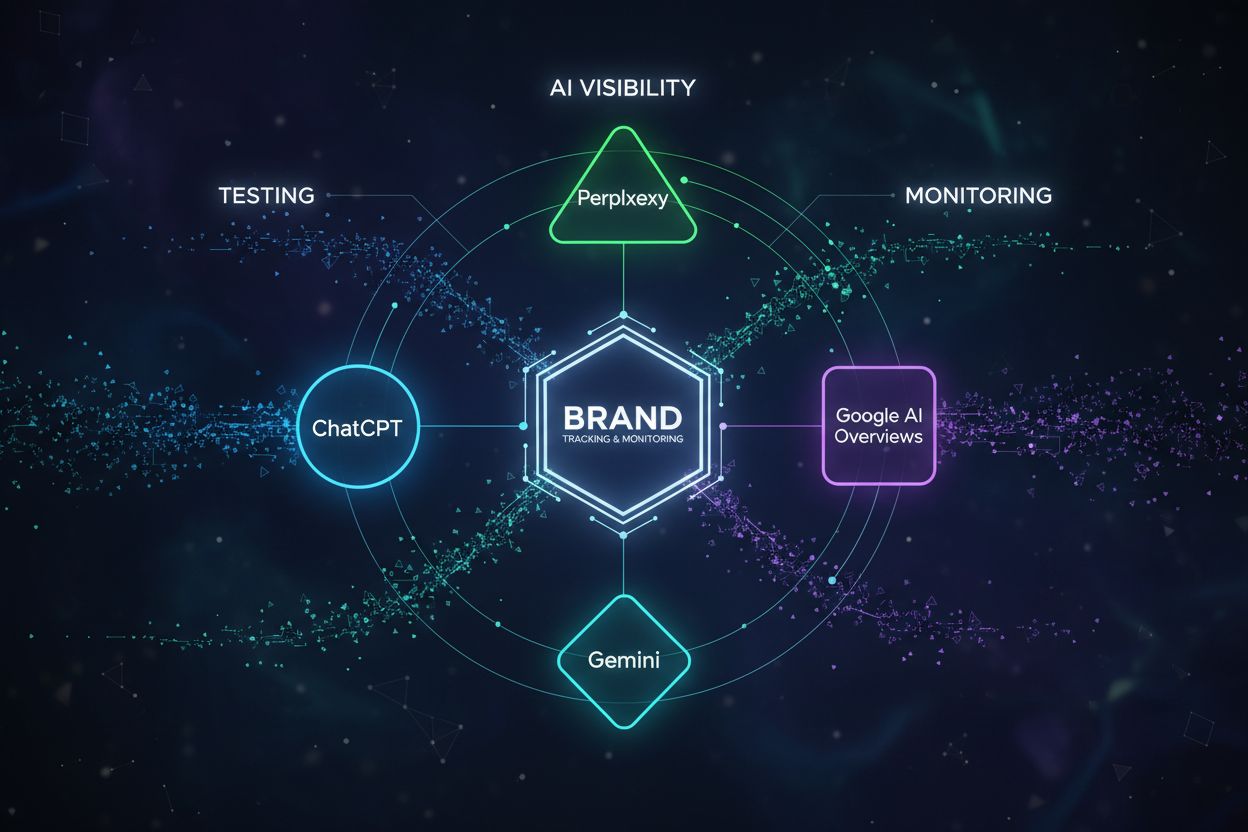
Learn how to manually test your brand's visibility in AI search engines like ChatGPT, Perplexity, and Google AI Overviews. Step-by-step DIY guide for testing AI...

Learn about penalties in AI search engines and answer generators. Discover how ChatGPT, Perplexity, and other AI platforms evaluate content quality and what fac...
Cookie Consent
We use cookies to enhance your browsing experience and analyze our traffic. See our privacy policy.