


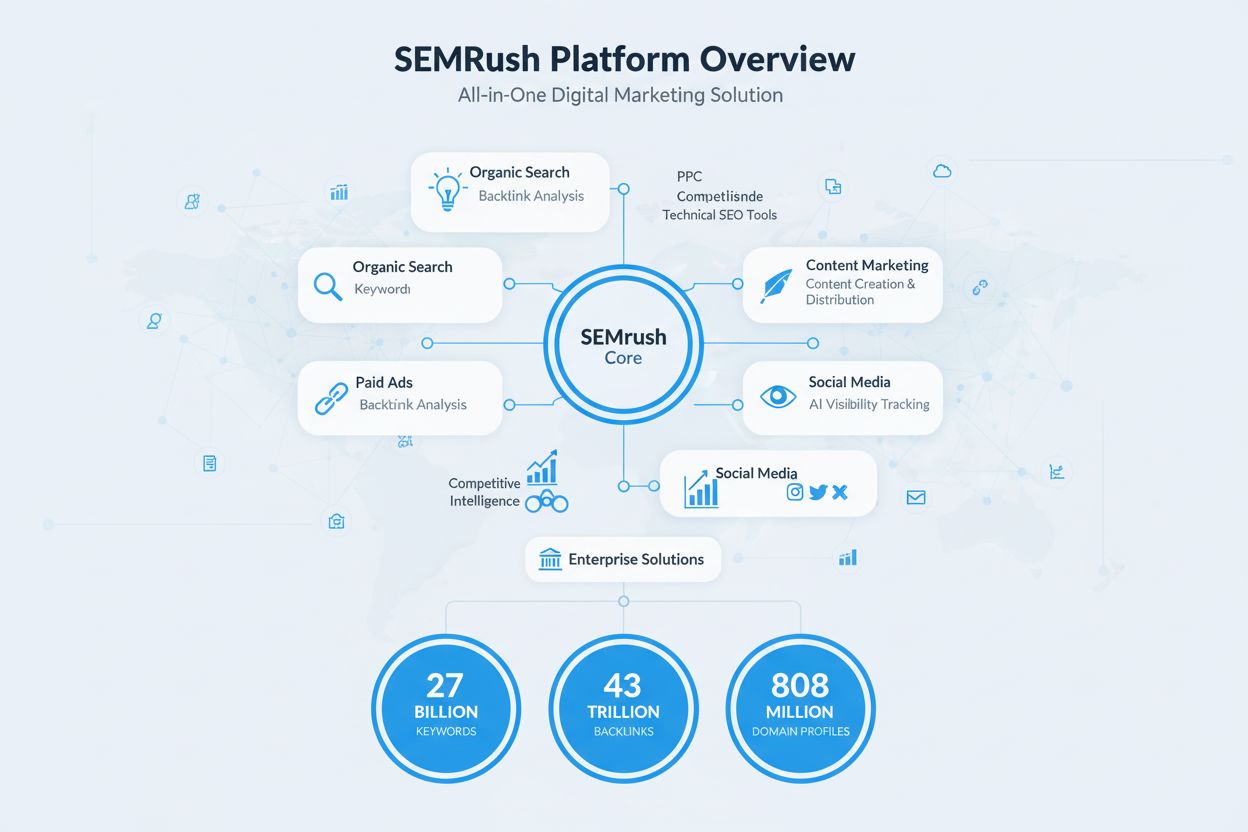
SEMrush
SEMrush is an all-in-one digital marketing platform offering SEO, PPC, content marketing, and AI visibility tools. Learn how it helps marketers optimize search ...
9 min read

MarketMuse is an AI-powered content strategy platform that uses patented topic modeling technology to analyze content, identify topic authority gaps, and provide personalized recommendations for content planning, creation, and optimization. The platform helps content teams determine what to write, how much content is needed, and how to rank higher by leveraging existing expertise and finding competitor content gaps.
MarketMuse is an AI-powered content strategy platform that uses patented topic modeling technology to analyze content, identify topic authority gaps, and provide personalized recommendations for content planning, creation, and optimization. The platform helps content teams determine what to write, how much content is needed, and how to rank higher by leveraging existing expertise and finding competitor content gaps.
MarketMuse is an AI-powered content strategy platform that leverages patented topic modeling technology to help content teams plan, create, and optimize content for search engine visibility and topical authority. The platform analyzes entire content inventories, identifies topic clusters, discovers competitor content gaps, and provides personalized recommendations for what content to write and how much depth is needed to rank competitively. Unlike traditional keyword research tools that focus on individual search terms, MarketMuse uses machine learning algorithms to understand relationships between concepts, enabling teams to build comprehensive content strategies that establish domain expertise. The platform is trusted by major brands including Sumo Logic, Discover, The Motley Fool, and Orbit Media Studios, and has been recognized by G2 as an “Easiest Setup” and “High Performer” solution for content optimization.
MarketMuse was founded by practitioners—SEOs and content strategists who recognized the inefficiency of traditional keyword research and spreadsheet-based content planning. The platform emerged from a fundamental insight: basic keyword research doesn’t reveal what content is truly worth creating or how much content is needed to establish authority on a topic. Over the past decade, MarketMuse has evolved from a content analysis tool into a comprehensive content strategy platform, incorporating AI capabilities that have become increasingly sophisticated. The platform’s patented topic modeling technology represents a significant departure from commodity data approaches used by competitors, utilizing proprietary algorithms combined with open-source natural language processing techniques. According to the Marketing AI Institute, MarketMuse automates essential research tasks, allowing professionals to focus on crafting content that truly stands out rather than spending hours in spreadsheets analyzing competitor data.

Track how AI chatbots mention your brand across ChatGPT, Perplexity, and other platforms.
MarketMuse’s core functionality centers on five primary capabilities that address different stages of the content lifecycle. Topic Authority identification automatically analyzes your entire content inventory to pinpoint high-value topic clusters and quick wins based on existing authority. Competitor Gap Analysis locates gaps in competitor content and reveals topics they’ve missed, enabling strategic differentiation. Personalized Difficulty Scoring shows which topics are easiest to rank for based on your specific domain authority and existing content. Content Planning generates personalized roadmaps showing what to create or update in minutes rather than hours. Content Optimization provides recommendations on structure, expertise, editorial integrity, and depth through the platform’s Optimize Brief feature. The platform also includes Link Recommendations for crafting ideal content clusters and unifying reader journeys through strategic internal linking. Each feature integrates with the others to create a unified workflow that reduces the time spent on research and planning while improving content quality and search performance.
The technical foundation of MarketMuse rests on its proprietary topic modeling engine, which represents a fundamental advancement in how content strategy platforms analyze search results and content comprehensiveness. For every page and topic analyzed, MarketMuse’s AI fetches hundreds to thousands of pages of content, removes low-quality outliers, and applies a combination of proprietary and open-source algorithms to classify parts of speech and calculate relevance. This approach differs significantly from TF-IDF (Term Frequency-Inverse Document Frequency) or correlation-based SEO analysis used by competitors. The topic model guides AI in creating topically rich and relevant content that improves content scores and search visibility. By understanding semantic relationships between concepts rather than just keyword density, MarketMuse can predict the likelihood of ranking success if you create and optimize clusters of content on a topic. The higher your Topic Authority score, the more likely your content will rank competitively. This technology enables the platform to provide recommendations that go beyond surface-level optimization, addressing the fundamental question of content comprehensiveness that search engines increasingly prioritize.
Get the latest insights on AI mentions, brand monitoring, and optimization strategies.
| Feature | MarketMuse | Surfer SEO | Clearscope | Frase.io |
|---|---|---|---|---|
| Primary Approach | Topic modeling & topic authority | Keyword-focused NLP analysis | Term-based optimization | AI-powered content research |
| Word Count Recommendations | 17,022 avg (comprehensive) | 10,616-12,208 avg | 8,990 avg | 5,397 avg |
| Content Inventory Tracking | Yes (34 metrics, 7 templates) | Limited audit function | Yes (automatic monitoring) | No |
| Question Generation | Excellent | Good (via Content Planner) | None | Excellent |
| Competitive Analysis | Topic-level gap analysis | Keyword clustering | Term mapping | Limited |
| Content Editor | Integrated with research | Separate from keyword tool | Integrated with research | Integrated |
| Ease of Use (G2 Rating) | 8.8/10 | 9.4/10 | 9.6/10 | Not rated |
| Ease of Setup (G2 Rating) | 8.5/10 | 9.5/10 | 9.8/10 | Not rated |
| Pricing Model | Credit-based | Credit-based | Credit-based | Credit-based |
| Best For | Comprehensive content strategy | Quick optimization & clustering | User-friendly interface | Question-focused content |
Organizations using MarketMuse report significant improvements in content performance and marketing efficiency. Case studies demonstrate tangible results: Cortex increased traffic 3x while growing leads by 30%, Stick Shift Driving Academy increased traffic 72% with form completions up 110% and inbound calls up 120%, and one publisher achieved a 1,570% increase in organic search traffic after implementing the MarketMuse process. These results stem from the platform’s ability to eliminate wasted content creation efforts by identifying high-value topics before investing resources. MarketMuse helps teams save significant hours per month on content planning, writing, editing, and optimization by automating research and providing data-driven prioritization. The platform’s ROI-justified content planning approach enables marketers to predict content success likelihood and allocate budgets more effectively. By focusing on topics where you have competitive advantages and can establish authority, teams avoid the common pitfall of creating content that ranks poorly or fails to rank at all. The platform’s emphasis on topic authority means that content created following MarketMuse recommendations often positions within weeks rather than months, accelerating time-to-value for content investments.
Successful MarketMuse implementation requires understanding the platform’s workflow and integrating it into existing content operations. The typical workflow begins with Research, where you input a target topic and MarketMuse analyzes the competitive landscape to identify related topics, questions, and content gaps. Next, the Content Brief phase uses the topic model to generate personalized recommendations on structure, depth, and coverage. The Optimize phase provides real-time feedback as writers create content, with the AI assistant offering prompts to expand concepts, improve writing, adjust tone, and ensure comprehensive coverage. The Inventory phase tracks all content across your domain, monitoring performance against algorithm changes and identifying pieces that need updates. Best practices include:
MarketMuse is designed to integrate into existing content workflows without requiring teams to adopt entirely new processes. The platform works with SEO professionals, content strategists, editors, writers, and digital managers who oversee content operations. Unlike a content management system (CMS), MarketMuse creates a content inventory with data points to inform decisions but doesn’t manage or change content directly. This separation of concerns allows teams to use their preferred CMS while leveraging MarketMuse’s strategic insights. The platform’s visual editor enables collaborative content creation, though users should utilize the “Copy for Publishing” button when exporting to WordPress or other platforms to avoid unnecessary code. MarketMuse Academy provides training resources, and the knowledge base offers extensive documentation for implementation. Teams can create templates for commonly used content types like landing pages or blog posts, streamlining the process for recurring content needs. The platform’s project management features allow teams to organize content by campaign, topic, or any other taxonomy that matches their workflow.
The content strategy landscape is rapidly evolving as AI-driven content analysis becomes increasingly sophisticated and search engines place greater emphasis on topical authority and E-E-A-T signals. MarketMuse’s continued development reflects broader industry trends toward AI-powered content intelligence, with the platform expanding its capabilities to address emerging challenges. The rise of AI search results from ChatGPT, Perplexity, Google AI Overviews, and Claude creates new imperatives for content strategy—not only must content rank in traditional search results, but it must also be authoritative enough to be cited by AI systems. MarketMuse’s focus on building topical authority positions it well for this evolving landscape, as comprehensive, expert content is more likely to be cited by AI systems. The platform’s integration with content monitoring and brand tracking capabilities will likely become increasingly important as organizations seek to understand their visibility across both traditional and AI-driven search channels. As search algorithms continue to reward expertise and comprehensive coverage, tools like MarketMuse that help teams build genuine topical authority rather than just optimizing for keywords will become essential infrastructure for content-driven organizations. The future of content strategy increasingly depends on understanding not just what keywords to target, but what topics matter most to your audience and how to establish undeniable expertise in those areas.
For organizations using AI monitoring platforms like AmICited, MarketMuse serves as a complementary strategic tool that increases the likelihood of brand and domain citations in AI-generated responses. While AmICited tracks where your brand appears in AI responses from major platforms, MarketMuse ensures your content is discoverable and authoritative enough to be cited. The combination of these tools creates a comprehensive approach to AI-era visibility: MarketMuse optimizes your content strategy to build topical authority and comprehensive coverage, while AmICited monitors the results of those efforts across AI search systems. Organizations that use both platforms can identify which topics and content pieces are being cited by AI systems, then use that intelligence to inform future content strategy decisions. This feedback loop enables continuous improvement in content strategy, ensuring that your brand maintains competitive visibility as AI search continues to evolve and reshape how audiences discover information.
Start tracking how AI chatbots mention your brand across ChatGPT, Perplexity, and other platforms. Get actionable insights to improve your AI presence.
SEMrush is an all-in-one digital marketing platform offering SEO, PPC, content marketing, and AI visibility tools. Learn how it helps marketers optimize search ...
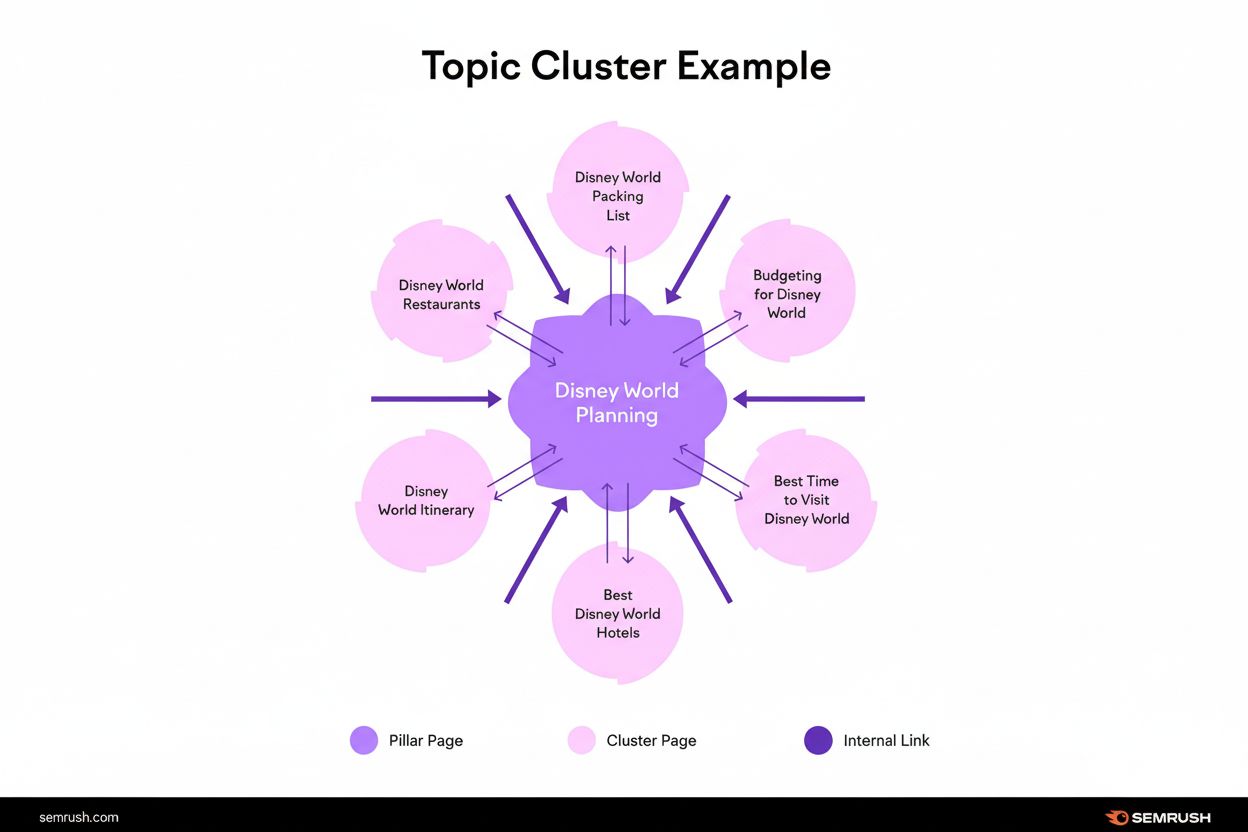
Learn what the Topic Cluster Model is, how it works for SEO, and why it matters for ranking in Google, ChatGPT, Perplexity, and other AI search platforms. Compl...

Clearscope is an AI content optimization tool using NLP to analyze SERPs and provide real-time SEO recommendations. Learn how it helps create ranking content.
Cookie Consent
We use cookies to enhance your browsing experience and analyze our traffic. See our privacy policy.