

What is Multi-Modal Content for AI? Definition and Examples
Learn what multi-modal content for AI is, how it works, and why it matters. Explore examples of multi-modal AI systems and their applications across industries.
9 min read
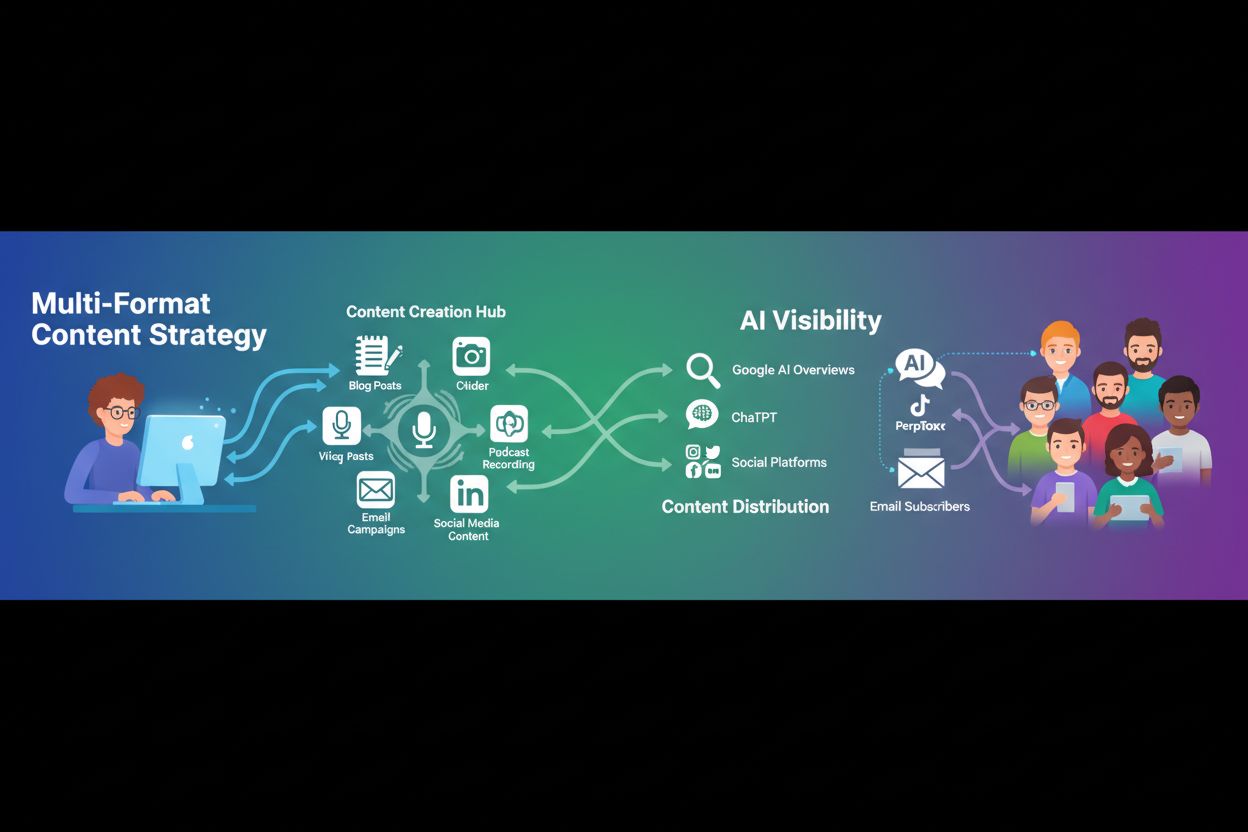
Creating content in multiple formats (text, video, audio, visuals) to maximize reach across different audience segments and AI systems. This approach systematically adapts one comprehensive asset into complementary formats that serve different consumption preferences and discovery mechanisms, dramatically increasing the likelihood of AI citations and brand visibility across Google AI Overviews, ChatGPT, Perplexity, and other generative search platforms.
Creating content in multiple formats (text, video, audio, visuals) to maximize reach across different audience segments and AI systems. This approach systematically adapts one comprehensive asset into complementary formats that serve different consumption preferences and discovery mechanisms, dramatically increasing the likelihood of AI citations and brand visibility across Google AI Overviews, ChatGPT, Perplexity, and other generative search platforms.
A multi-format content strategy is the systematic process of creating and distributing content across multiple formats—text, video, audio, and visuals—to maximize reach and visibility across different audience segments and AI systems. Rather than producing isolated pieces of content for individual channels, this approach starts with one comprehensive asset and strategically adapts it into complementary formats that serve different consumption preferences and discovery mechanisms. For example, a single webinar can become a blog post, podcast episodes, social media clips, email sequences, and infographics, each reinforcing the same core message from different angles. This differs fundamentally from multichannel marketing, which simply distributes identical content across multiple platforms, whereas multimodal content creates different formats of the same message to reach audiences through different sensory modes and attention states. In the AI-powered search era, where systems like Google AI Overviews, ChatGPT, and Perplexity pull answers from diverse content types, a multi-format strategy dramatically increases the likelihood that your brand will be cited and referenced across multiple AI-generated results.
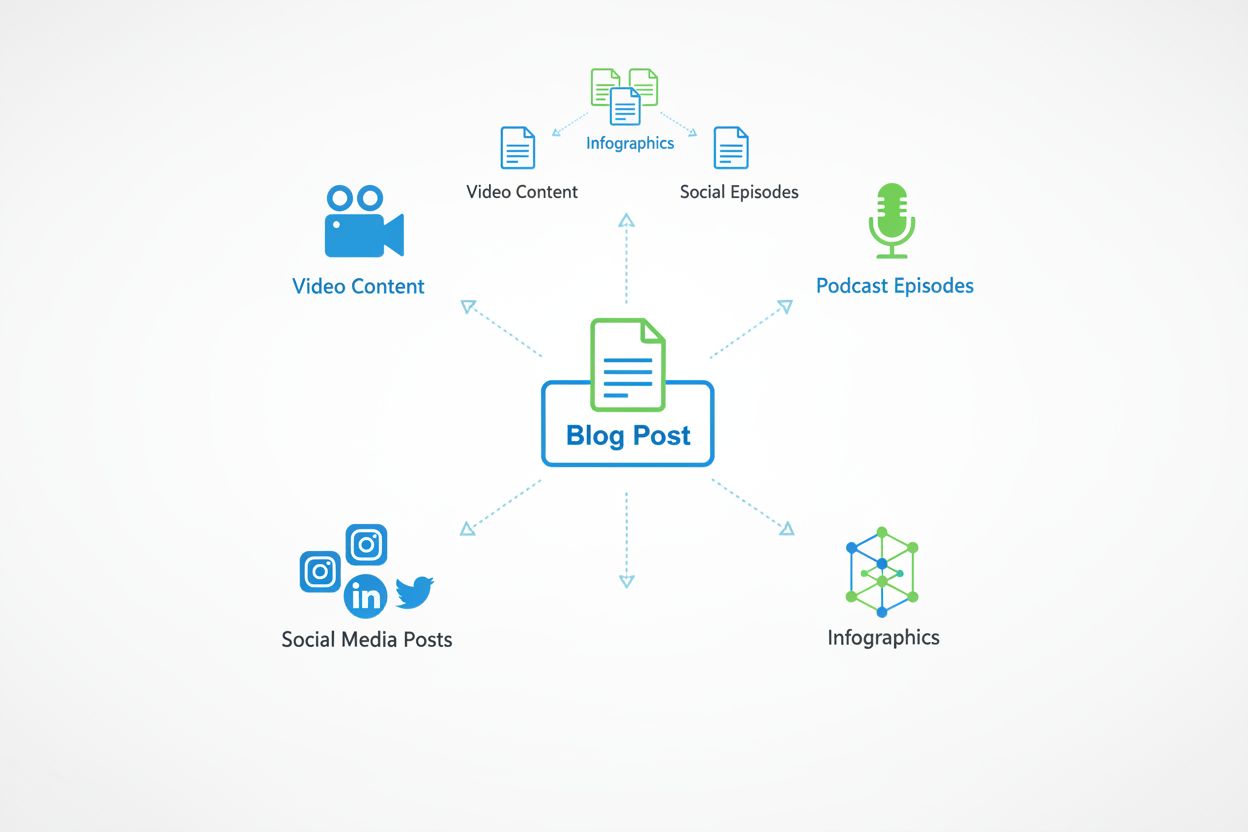
AI systems fundamentally change how content gets discovered and cited, making format diversity essential for visibility. When users query AI platforms, these systems deconstruct complex questions into subtopics and pull diverse content types to answer each component—using written guides for explanations, process diagrams for visual context, and video walkthroughs for step-by-step guidance. This creates a critical advantage: single-format content can appear once in an AI response, while multi-format content increases your chances of appearing multiple times across text, visual, and video results. Beyond AI systems, audiences move through different attention states throughout the day—during busy moments they skim short articles, when focused they watch videos, and while multitasking they prefer audio content. If your brand publishes only one format, you’re visible to your audience during just one of those states. Multi-format content ensures you’re discoverable and relevant across all of them, keeping your brand present whether your audience is scrolling, watching, or listening.
| Aspect | Single-Format Content | Multi-Format Content |
|---|---|---|
| AI Citation Chances | Lower (one format per query) | Higher (multiple formats per query) |
| Audience Reach | Limited to one consumption preference | Expanded across all attention states |
| Content Lifespan | Shorter (format-specific decay) | Extended (multiple discovery pathways) |
| Production Efficiency | Lower ROI per asset | Higher ROI through systematic repurposing |
| AI Visibility | Single mention potential | Multiple mention opportunities |
Different content formats serve distinct purposes in AI-powered search and audience engagement. The most effective multi-format strategies leverage a combination of these formats, each optimized for how AI systems parse and cite information:
Implementing a multi-format strategy requires a systematic approach to content multiplication rather than treating each format as a separate project. The most efficient teams start with one comprehensive “anchor piece”—typically a blog post, webinar, or research report—and then systematically extract and adapt it into complementary formats. Path 1: Starting with video content involves extracting audio for podcast episodes, pulling transcripts to edit into blog posts, capturing short clips for social media, and designing quote graphics from key soundbites. Path 2: Starting with written content means converting step-by-step sections into video tutorials, turning data points into infographics, repurposing key insights as social carousels, and building email sequences from main points. Path 3: Starting with audio or podcast content involves transcribing episodes into blog posts, extracting quotes for social graphics, adding visuals to create video versions, and summarizing insights into email content. The key to efficiency is batching related tasks—dedicating one day to creating all social graphics, another to infographic design, and a third to video editing—rather than context-switching between formats. By integrating content multiplication directly into your production calendar as a standard stage rather than an optional add-on, teams can systematically expand each asset’s reach without proportionally increasing workload.
Beyond format selection, how you structure and present content dramatically impacts AI visibility and citation likelihood. Schema markup serves as a critical foundation, helping AI systems understand content type and intent—FAQ schema for Q&A sections, HowTo schema for step-based guides, and Article schema for blog posts all improve how AI interprets your content. Semantic chunking involves organizing content into short, clearly labeled sections that focus on single ideas, making it easier for AI systems to extract and cite specific passages. Citation-ready snippets should be self-contained thoughts that can stand alone as complete answers, typically 1-3 sentences that directly address a specific question or concept.
The five core optimization strategies for AI visibility are:
Additionally, mobile optimization is non-negotiable—the majority of content consumption happens on mobile devices, yet many teams design graphics or videos that don’t translate to smaller screens. Always preview every asset on mobile before publishing, optimizing aspect ratios (1:1, 9:16) and ensuring text remains readable without zooming.
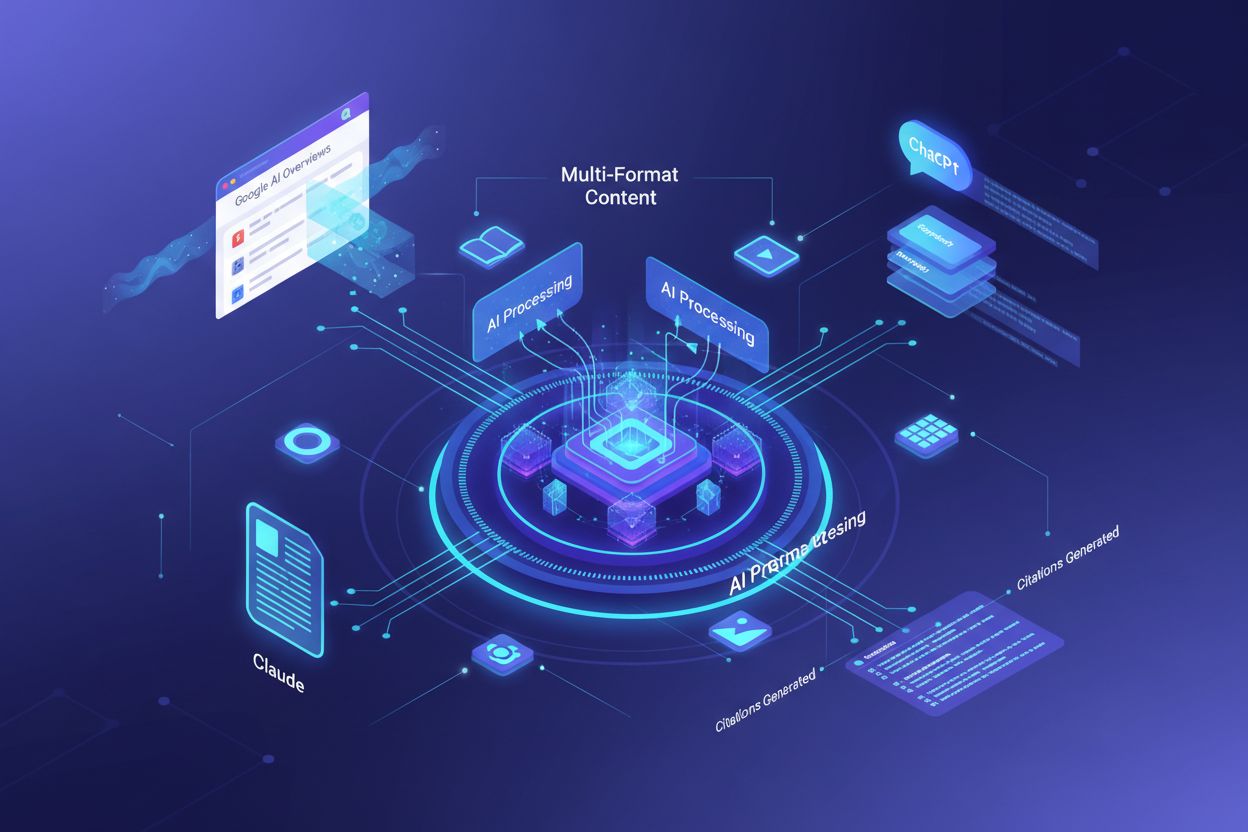
Tracking performance across multiple formats requires a systematic approach to attribution and measurement. UTM parameters (tracking codes) should be applied to each format and distribution channel, allowing you to see exactly which versions drive traffic and conversions—for example, utm_medium=video, utm_content=infographic, or utm_source=podcast. Different formats naturally serve different purposes: blog posts should be measured by organic traffic, time on page, and assisted conversions; video content by view duration and click-throughs; social media posts by share-to-view ratio and profile visits; and email sequences by open rates, click rates, and downstream conversions. AI citation monitoring is equally important—track how often your content appears in AI Overviews, ChatGPT responses, Perplexity answers, and other generative search results. Tools like AmICited.com specifically monitor brand mentions and citations across AI platforms, showing you which formats and topics generate the most AI visibility. Review your data monthly or quarterly to identify which combinations of topic and format drive the strongest results, then adjust your production priorities accordingly—doubling down on high-performing formats while scaling back on those with low engagement or ROI.
Even well-intentioned multi-format strategies can stall without disciplined execution. Trying to do everything at once is the most common pitfall—teams that attempt eight or more content formats simultaneously quickly exhaust resources and sacrifice quality. Start with a maximum of three core formats and build reliable systems around those before expanding. Ignoring mobile optimization means your carefully crafted graphics and videos won’t translate to the devices where most consumption happens, reducing their effectiveness and AI citation potential. Skipping tracking setup makes it impossible to know which formats actually perform best—without UTM codes and conversion tracking from day one, you can’t optimize what you don’t measure. Treating repurposing as extra work causes it to become the first task dropped when deadlines tighten; instead, integrate multi-format creation directly into your content calendar as a standard production stage. Producing formats your audience doesn’t want wastes resources—test audience demand with quick-turn, low-cost formats before scaling to full production. Inconsistent messaging across formats confuses both audiences and AI systems; ensure your core message remains consistent while adapting delivery to each format’s strengths. Finally, poor quality in repurposed content damages credibility—each format should feel intentionally designed for its medium, not like a hastily adapted afterthought.
Implementing a multi-format content strategy is only half the battle—you also need visibility into how your content performs across AI systems and which formats generate the most citations. AmICited.com solves this critical gap by monitoring how your brand appears in AI-powered search results across Google AI Overviews, ChatGPT, Perplexity, Claude, and other generative AI platforms. Rather than guessing which formats drive AI visibility, AmICited tracks exactly which of your content pieces get cited, how often they appear in AI responses, and which topics generate the most mentions. This intelligence allows you to refine your multi-format strategy based on actual performance data—if your video content consistently gets cited while infographics rarely appear, you can adjust your production priorities accordingly. You can also monitor competitor visibility to understand which formats and topics your competitors are winning with, identifying gaps in your own strategy. By combining a systematic multi-format content approach with AmICited’s AI visibility monitoring, you gain a sustainable competitive advantage: you’re not just creating content in multiple formats, you’re ensuring those formats actually drive the AI citations and brand visibility that matter most in today’s search landscape.
Multichannel distributes the same content across multiple platforms (like sharing one blog post on LinkedIn, Twitter, and email), while multimodal creates different formats of the same message to reach audiences through different sensory modes and attention states (like turning a blog post into a video, podcast, and infographic). AI systems reward multimodal content because it provides multiple surfaces for citation.
AI systems like Google AI Overviews and ChatGPT deconstruct queries into subtopics and pull diverse content types to answer each component. Single-format content can appear once in an AI response, while multi-format content increases your chances of appearing multiple times across text, visual, and video results, dramatically improving your brand's visibility in AI-generated answers.
Start with your strongest format based on your team's expertise and audience preferences. If you excel at writing, begin with comprehensive blog posts and repurpose them into video, audio, and visual formats. If video is your strength, extract transcripts for blogs and audio for podcasts. The key is choosing one anchor format and systematically adapting it rather than trying to create all formats simultaneously.
Initial setup typically takes 2-4 weeks to establish workflows, templates, and batching processes. However, ongoing production becomes increasingly efficient once systems are in place. Most teams see significant time savings within 6-8 weeks as they refine their content multiplication processes and identify which formats work best for their audience.
Essential tools include an analytics platform (Google Analytics), content calendar, and basic editing software. Advanced setups might include AI writing tools, video editors (Loom, Adobe Premiere), design software (Canva), and project management platforms (Trello, Notion). Most importantly, you need AmICited.com to monitor how your multi-format content performs across AI platforms and which formats generate the most citations.
Track format-specific metrics using UTM parameters to see which versions drive traffic and conversions. Monitor AI citations through tools like AmICited.com to understand which formats get referenced most in AI responses. Review data monthly to identify which topic-format combinations drive the strongest results, then adjust your production priorities accordingly to maximize ROI.
Yes, absolutely. Audit your existing content to identify high-performing pieces with strong repurposing potential (comprehensive blog posts, case studies, webinars, research reports). Update these pieces with current information, add schema markup and FAQ sections, then systematically adapt them into new formats. Google emphasizes that quality and structure matter more than novelty, so existing content can be made highly effective for AI visibility.
Common pitfalls include trying too many formats at once (start with 3), ignoring mobile optimization, skipping tracking setup, treating repurposing as extra work, producing formats your audience doesn't want, and maintaining inconsistent messaging across formats. The key is starting small with disciplined execution, measuring results, and scaling only what works for your specific audience and AI visibility goals.
Track how your content appears across Google AI Overviews, ChatGPT, Perplexity, and other AI platforms. See which formats generate the most citations and optimize your content strategy based on real AI visibility data.
Learn what multi-modal content for AI is, how it works, and why it matters. Explore examples of multi-modal AI systems and their applications across industries.
Master multimodal AI search optimization. Learn how to optimize images and voice queries for AI-powered search results, featuring strategies for GPT-4o, Gemini,...
Omnichannel content delivers unified brand messaging across all customer touchpoints. Learn how consistent content across channels drives engagement, loyalty, a...
Cookie Consent
We use cookies to enhance your browsing experience and analyze our traffic. See our privacy policy.