

What is Navigational Search Intent for AI? Definition and Impact
Learn how navigational search intent works in AI systems. Understand why it collapsed from 32% to 2% in ChatGPT and how this shift impacts your brand's visibili...
10 min read
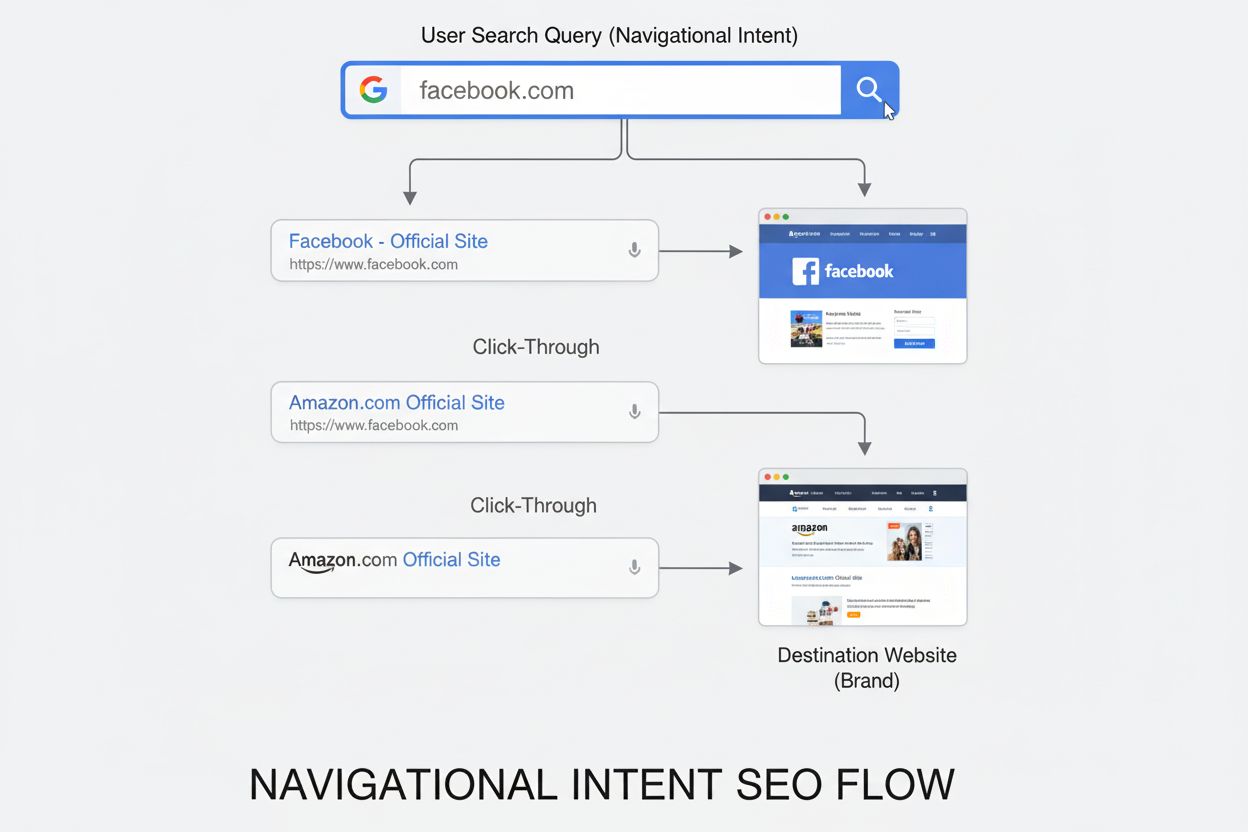
Navigational intent refers to searches where users seek to reach a specific website, brand, or webpage they already know about. These branded queries represent approximately 32.15% of all search engine queries and are critical for brand visibility and AI monitoring across platforms like ChatGPT, Perplexity, and Google AI Overviews.
Navigational intent refers to searches where users seek to reach a specific website, brand, or webpage they already know about. These branded queries represent approximately 32.15% of all search engine queries and are critical for brand visibility and AI monitoring across platforms like ChatGPT, Perplexity, and Google AI Overviews.
Navigational intent is a search behavior where users enter queries specifically designed to reach a particular website, brand, or webpage they already know about or are actively seeking. Rather than searching for information or products, users with navigational intent use search engines as a navigation tool—essentially as a shortcut to reach their intended destination. When someone searches for “Facebook login,” “Amazon homepage,” or “Netflix account,” they are demonstrating navigational intent because they already know the brand and want to access it quickly. This type of search represents approximately 32.15% of all search engine queries, making it the second-largest search intent category after informational searches. Navigational queries are predominantly branded searches, meaning they include company names, product names, or specific service references. Understanding navigational intent is crucial for both traditional SEO and emerging AI monitoring platforms that track brand visibility across systems like ChatGPT, Perplexity, Google AI Overviews, and Claude.
The concept of navigational intent emerged as search engines evolved from simple keyword-matching tools to sophisticated systems capable of understanding user behavior and intent. In the early days of search, users typed exact URLs into browsers or used search engines primarily for discovery. However, as internet usage expanded and users became more comfortable with search engines, the behavior shifted—people began using search engines as navigation shortcuts rather than typing full URLs. This evolution reflected a fundamental change in how users interacted with the web. Search engines recognized this pattern and began optimizing for navigational queries, prioritizing official brand websites and sitelinks in search results. The rise of mobile search accelerated this trend, as users found it faster to search for a brand name than to type a complete URL on a mobile device. Today, navigational intent represents a core component of search engine optimization strategy, and its importance has expanded into the realm of AI-powered search systems where brand visibility in AI responses has become a new frontier for monitoring navigational intent performance.
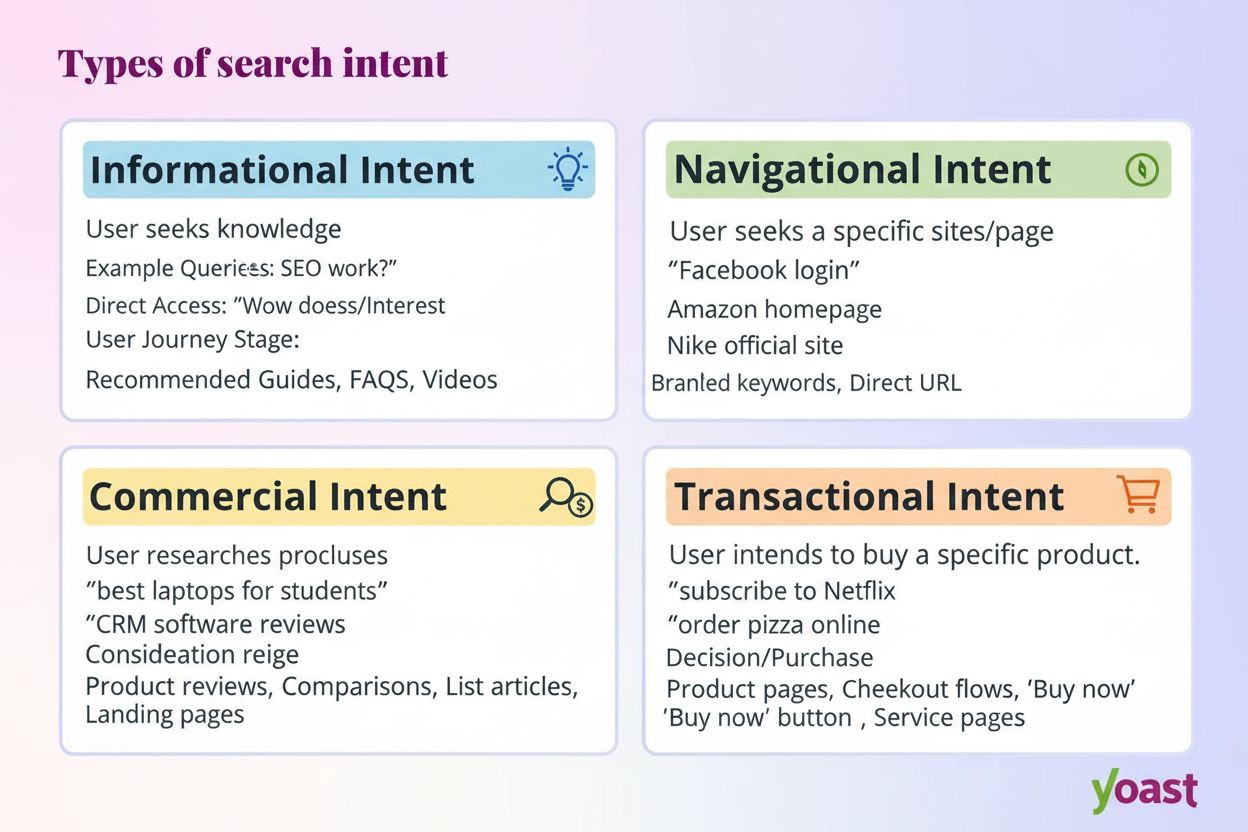
| Search Intent Type | User Goal | Query Examples | Content Type | Percentage of Searches |
|---|---|---|---|---|
| Navigational | Reach a specific website or brand | “Facebook login,” “Amazon homepage,” “Yoast SEO” | Homepage, branded pages, login pages | 32.15% |
| Informational | Learn or gain knowledge | “How to tie a tie,” “What is blockchain,” “London weather” | Blog posts, guides, FAQs, tutorials | 52.65% |
| Commercial | Research products before buying | “Best laptops 2025,” “iPhone vs Samsung,” “Peet’s vs Starbucks” | Reviews, comparisons, buying guides | 14.51% |
| Transactional | Complete a purchase or action | “Buy running shoes,” “Subscribe to Netflix,” “Download Photoshop” | Product pages, checkout pages, landing pages | 0.69% |
Navigational queries possess distinct technical characteristics that differentiate them from other search intent types. These searches typically contain brand names or product identifiers without additional descriptive modifiers. For example, a navigational query might be simply “Twitter” rather than “best social media platform” or “how to use Twitter.” The absence of question words like “how,” “what,” “why,” or “best” is a strong indicator of navigational intent. Additionally, navigational queries often include action-oriented terms such as “login,” “account,” “near me,” or “hours,” which specify the user’s immediate need. Search engines recognize these patterns and respond by displaying sitelinks, knowledge panels, and Google Business Profiles prominently in search results. The click-through rate for navigational queries is typically higher than other intent types because users have a clear destination in mind and are more likely to click on the official result. From an AI monitoring perspective, navigational queries in AI systems reveal how accurately these platforms recognize and present brand information, making them valuable indicators of brand visibility in emerging search technologies.
The manifestation of navigational intent differs significantly between traditional search engines and emerging AI-powered search systems. In traditional Google search, navigational queries trigger specific SERP features designed to help users reach their destination quickly. The official website typically ranks first, accompanied by sitelinks that direct users to key pages like login, pricing, or support sections. Google Business Profiles appear prominently for local navigational queries, displaying business hours, location, and contact information. This optimization has been refined over decades of search engine development. However, in AI search systems like ChatGPT, Perplexity, and Google AI Overviews, navigational intent manifests differently. These systems generate conversational responses rather than displaying traditional search results. When users ask an AI system about a specific brand, the AI must decide whether to cite that brand, mention competitors, or provide general information. Research indicates that brands with strong traditional SEO performance sometimes struggle in AI search results, suggesting that navigational intent optimization strategies differ between platforms. This discrepancy has created a new challenge for brand monitoring, as companies must now track not only whether they rank for navigational queries in Google but also how accurately and prominently they appear in AI-generated responses. AmICited and similar platforms address this gap by monitoring navigational intent appearances across multiple AI systems, providing brands with comprehensive visibility insights.
Branded keywords form the foundation of navigational intent searches. These are search terms that include a company name, product name, or brand identifier. Examples include “Nike shoes,” “Microsoft Office,” “Coca-Cola,” or “Tesla Model 3.” Branded keywords are inherently navigational because they indicate the user already knows the brand and is seeking specific information about it. Research analyzing 332 million queries over 21 months found that over 44% of Google searches are for branded terms, demonstrating the massive volume of navigational traffic. This statistic is particularly significant for businesses because branded searches represent high-intent users who are already aware of and interested in your company. Unlike informational searches where users are still in the awareness stage, navigational searches indicate users are further along in their journey. The value of branded keywords extends beyond immediate traffic; they also serve as indicators of brand strength and market position. Companies with strong brand recognition typically see higher volumes of branded searches, while emerging brands may struggle to generate navigational traffic. In the context of AI monitoring, tracking branded keyword appearances in AI responses reveals how well your brand is recognized and represented by artificial intelligence systems, providing insights into your brand’s authority and relevance in the AI-driven search landscape.
Search engines display specific SERP features when they recognize navigational intent, and understanding these features is crucial for optimizing navigational search performance. Sitelinks are the most prominent navigational SERP feature, appearing as a grid of links below the main search result that direct users to important pages within the website. These typically include links to login pages, pricing, support, or product categories. Knowledge panels frequently appear for navigational queries, especially for well-known brands, displaying company information, contact details, and social media links. Google Business Profiles are essential for local navigational queries, showing business hours, location, phone number, and customer reviews. Answer boxes and featured snippets occasionally appear for navigational queries when users ask specific questions about a brand. The presence of these features indicates that Google has recognized the query as navigational and is prioritizing helping users reach their destination. Paid ads often appear above organic results for navigational queries, with competitors bidding on brand names to capture traffic. Understanding which SERP features appear for your navigational queries helps you optimize your presence and identify opportunities to improve visibility. In the context of AI search systems, the equivalent features might include how prominently your brand is mentioned, whether your official website is cited as a source, and how your brand is described in AI-generated responses.
Understanding the psychology and behavior of users with navigational intent reveals important insights for brand strategy and monitoring. Users with navigational intent are typically in the later stages of the customer journey, having already decided on a brand or company. They are not comparing options or seeking information; they are ready to engage with a specific brand. This behavioral pattern makes navigational searches highly valuable for conversion optimization, as these users are more likely to complete desired actions like making purchases, signing up for services, or accessing account information. The speed and efficiency of reaching the destination are critical factors for navigational users. If your website is slow to load or difficult to navigate, users may become frustrated and abandon their search. This is why technical SEO and site performance are particularly important for navigational queries. Additionally, navigational users often search from mobile devices, making mobile optimization essential. The behavior of navigational users also extends to brand loyalty and repeat visits. Users who successfully find what they’re looking for through navigational searches are more likely to return and search for your brand again. This creates a positive feedback loop where strong navigational search performance reinforces brand loyalty. In the AI monitoring context, understanding navigational user behavior helps brands recognize that AI systems should accurately represent their brand to these high-intent users, as poor representation in AI responses could damage brand perception and loyalty.
The emergence of AI-powered search systems has fundamentally changed how navigational intent manifests and how brands should monitor it. Traditional search engines like Google have optimized for navigational queries over decades, creating predictable patterns where official brand websites rank first. However, AI search systems operate differently, generating conversational responses rather than displaying ranked lists of websites. When users ask an AI system about a specific brand, the AI must decide how to represent that brand in its response. This creates new challenges and opportunities for brand monitoring. Research has shown that brands with strong traditional SEO performance can be virtually invisible in AI search results, indicating that navigational intent optimization strategies must evolve. Some brands find themselves underrepresented or misrepresented in AI responses, while competitors may receive more favorable mentions. This discrepancy has created a new category of brand monitoring focused specifically on AI visibility and representation. Platforms like AmICited track navigational intent appearances in AI responses, helping brands understand how accurately and prominently they appear when users search for their brand name in AI systems. This monitoring is particularly important because AI systems are increasingly becoming the primary search interface for many users, especially younger demographics. As AI search continues to grow, optimizing for navigational intent in AI systems will become as important as traditional SEO optimization.
Effective measurement of navigational intent performance requires tracking multiple metrics across both traditional search engines and AI systems. In traditional search, key metrics include branded keyword rankings, click-through rates for branded searches, and impressions for brand-related queries. Tools like Google Search Console provide detailed data on how often your brand appears in search results and how many users click through to your website. Branded search volume is another important metric, as increases or decreases can indicate changes in brand awareness or market position. For AI search monitoring, metrics are more complex because AI systems don’t provide traditional ranking data. Instead, brands must track how frequently their brand is mentioned in AI responses, the sentiment and accuracy of those mentions, and whether their official website is cited as a source. AmICited and similar platforms provide dashboards that show how your brand appears across multiple AI systems, tracking mentions, citations, and representation quality. Additionally, brands should monitor competitor mentions in AI responses to understand their relative position in the AI search landscape. Conversion tracking is also important for navigational intent, as you should measure whether navigational traffic converts at higher rates than other traffic sources. By combining traditional search metrics with AI monitoring data, brands can develop a comprehensive understanding of their navigational intent performance and identify optimization opportunities.
The landscape of navigational intent is evolving rapidly as AI search systems mature and become more prevalent. Several emerging trends are likely to shape how navigational intent functions in the coming years. First, AI systems will likely become more sophisticated at recognizing and representing brands, moving beyond simple mention-based approaches to more nuanced understanding of brand identity and positioning. Second, navigational intent in AI systems may become more personalized, with AI responses varying based on user history, preferences, and context. Third, brand monitoring will become increasingly important, as companies recognize that AI visibility is as critical as traditional search visibility. Fourth, new metrics and tools for measuring AI brand visibility will continue to emerge, providing more granular insights into how brands appear in AI responses. Fifth, competition for brand representation in AI systems may intensify, with companies investing more resources in ensuring accurate and favorable representation. Finally, regulatory frameworks around AI search and brand representation may develop, potentially requiring AI systems to disclose how they select and present brand information. As these trends unfold, navigational intent will remain a critical component of brand strategy, but the methods for optimizing and monitoring it will continue to evolve. Brands that stay ahead of these trends and invest in comprehensive AI monitoring will be better positioned to maintain strong brand visibility across all search platforms.
Brand authority plays a crucial role in how navigational intent manifests in AI search systems. When users search for a brand name in an AI system, the AI must determine whether that brand is authoritative and trustworthy enough to cite prominently in its response. Brands with strong E-E-A-T signals (Experience, Expertise, Authoritativeness, Trustworthiness) are more likely to receive favorable representation in AI responses. This means that building brand authority through high-quality content, industry recognition, and positive reviews directly impacts navigational intent performance in AI systems. Additionally, the accuracy and consistency of brand information across the web influences how AI systems represent your brand. If your brand information is inconsistent across different platforms or websites, AI systems may struggle to provide accurate responses. This creates an incentive for brands to maintain consistent brand messaging and information across all digital properties. Furthermore, citations and backlinks from authoritative sources signal to AI systems that your brand is credible and important. Brands that are frequently cited by reputable publications and websites are more likely to receive prominent mentions in AI responses. The relationship between brand authority and navigational intent in AI systems suggests that long-term brand building strategies are essential for maintaining strong visibility in AI search. Companies cannot simply optimize for navigational intent in the short term; they must invest in building genuine brand authority and trustworthiness that will be recognized by both traditional search engines and AI systems.
+++
Navigational intent differs fundamentally from informational, commercial, and transactional intents. While informational intent seeks knowledge (52.65% of searches), commercial intent researches products (14.51%), and transactional intent completes purchases (0.69%), navigational intent specifically targets known brands or websites (32.15% of searches). Users with navigational intent already know their destination and use search engines as a shortcut rather than a discovery tool.
Navigational intent is critical for AI brand monitoring because it directly reflects brand awareness and user loyalty. When users search for your brand name in AI systems like ChatGPT, Perplexity, or Google AI Overviews, they expect to find your official content. Research shows that brands with strong traditional SEO performance can be virtually invisible in AI results, making navigational intent tracking essential for understanding your brand's visibility across multiple AI platforms and search engines.
Navigational queries typically include brand names, product names, or specific website references. Common identifiers include searches like 'Facebook login,' 'Amazon homepage,' 'Netflix account,' or 'Yoast SEO.' These queries often lack descriptive modifiers and go directly to the brand or service name. You can identify them by analyzing your search analytics, reviewing SERP features (which typically show sitelinks for navigational queries), or using SEO tools that classify keyword intent.
Sitelinks are the primary SERP feature indicating navigational intent, appearing directly below the main search result to help users navigate to specific pages within a website. Knowledge panels and Google Business Profiles also frequently appear for navigational queries, especially for local businesses. These features signal that Google recognizes the query as navigational and prioritizes helping users reach the specific destination quickly and efficiently.
To optimize for navigational intent, ensure your brand name appears prominently in your homepage H1 tag, meta titles, and key pages. Maintain a clear site structure with updated sitemaps, create a Google Business Profile for local visibility, and ensure fast page load times. Technical SEO health is crucial since users expect immediate access to your site. Additionally, monitor your brand mentions across the web and maintain consistent branding across all digital properties to strengthen navigational search performance.
According to 2025 data, navigational intent accounts for approximately 32.15% of all search engine queries, making it the second-largest search intent category after informational searches (52.65%). Research analyzing 332 million queries over 21 months found that over 44% of Google searches are for branded terms, indicating the substantial volume of navigational traffic. This significant percentage underscores the importance of optimizing for navigational queries in any comprehensive SEO strategy.
Navigational intent is increasingly important for AI monitoring because it reveals how AI systems recognize and present your brand. When users prompt AI tools with your brand name, they expect accurate, authoritative information about your company. AmICited and similar platforms track navigational intent appearances in AI responses to measure brand visibility across ChatGPT, Perplexity, Google AI Overviews, and Claude. This monitoring helps brands understand their AI search presence and identify gaps where they may be underrepresented.
Start tracking how AI chatbots mention your brand across ChatGPT, Perplexity, and other platforms. Get actionable insights to improve your AI presence.
Learn how navigational search intent works in AI systems. Understand why it collapsed from 32% to 2% in ChatGPT and how this shift impacts your brand's visibili...
Search intent is the purpose behind a user's search query. Learn the four types of search intent, how to identify them, and optimize content for better rankings...
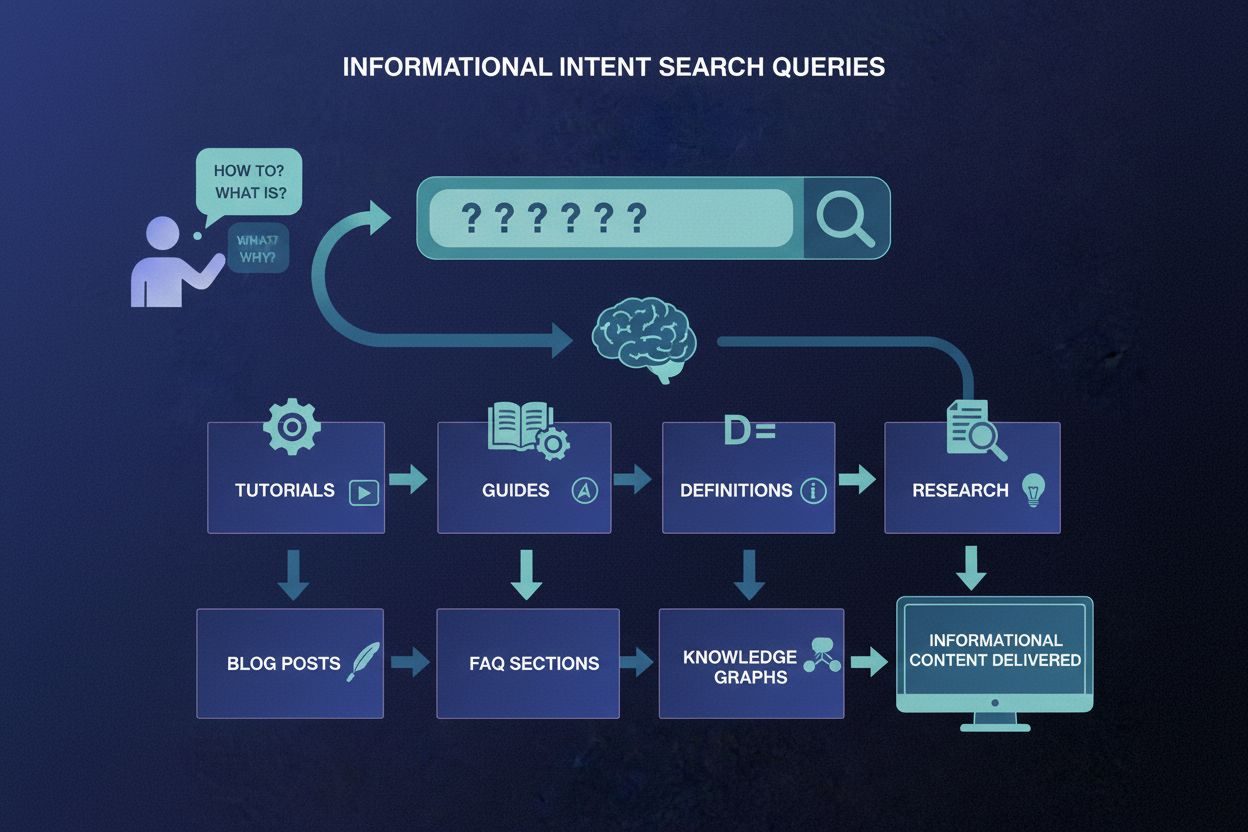
Informational intent is when users search for knowledge or answers. Learn how to optimize content for informational queries and understand its role in AI search...
Cookie Consent
We use cookies to enhance your browsing experience and analyze our traffic. See our privacy policy.