
SEO ROI
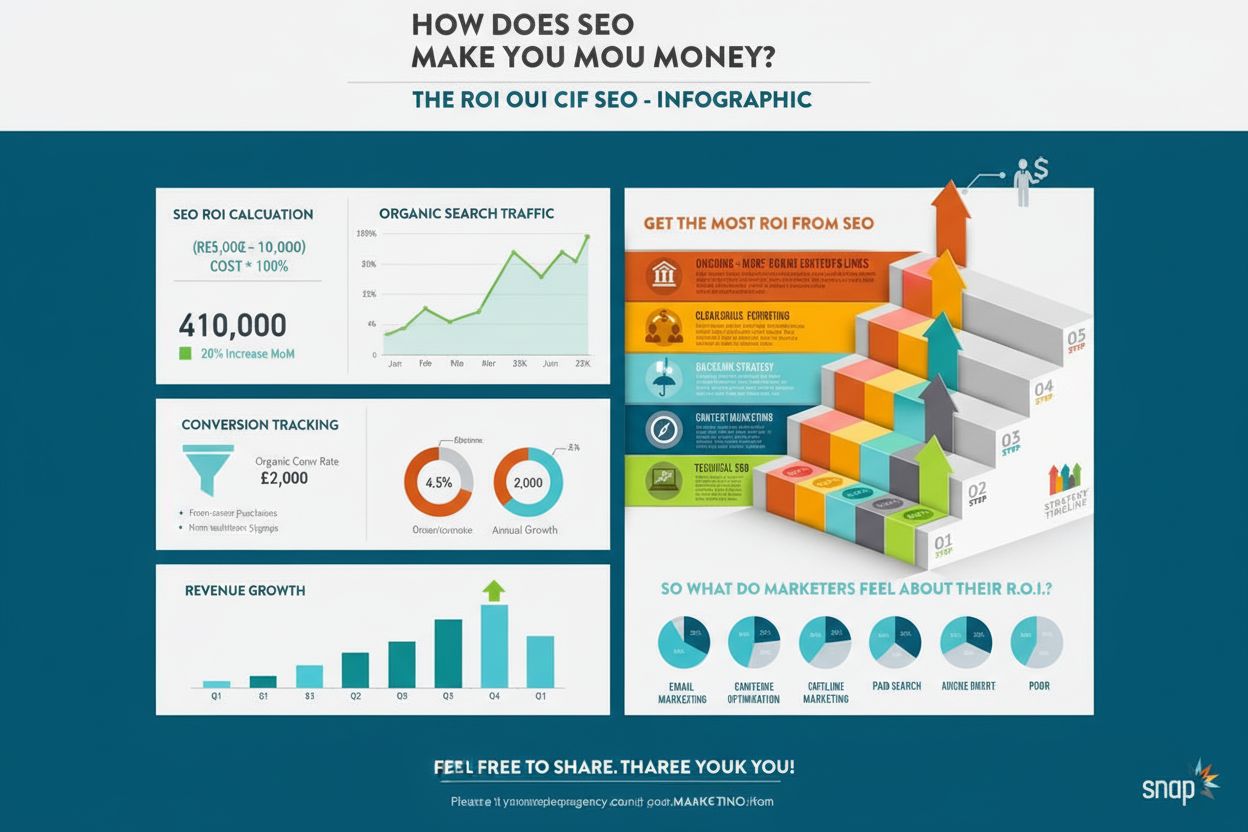
SEO ROI measures revenue generated from search engine optimization compared to investment costs. Learn how to calculate, track, and optimize SEO return on inves...
10 min read
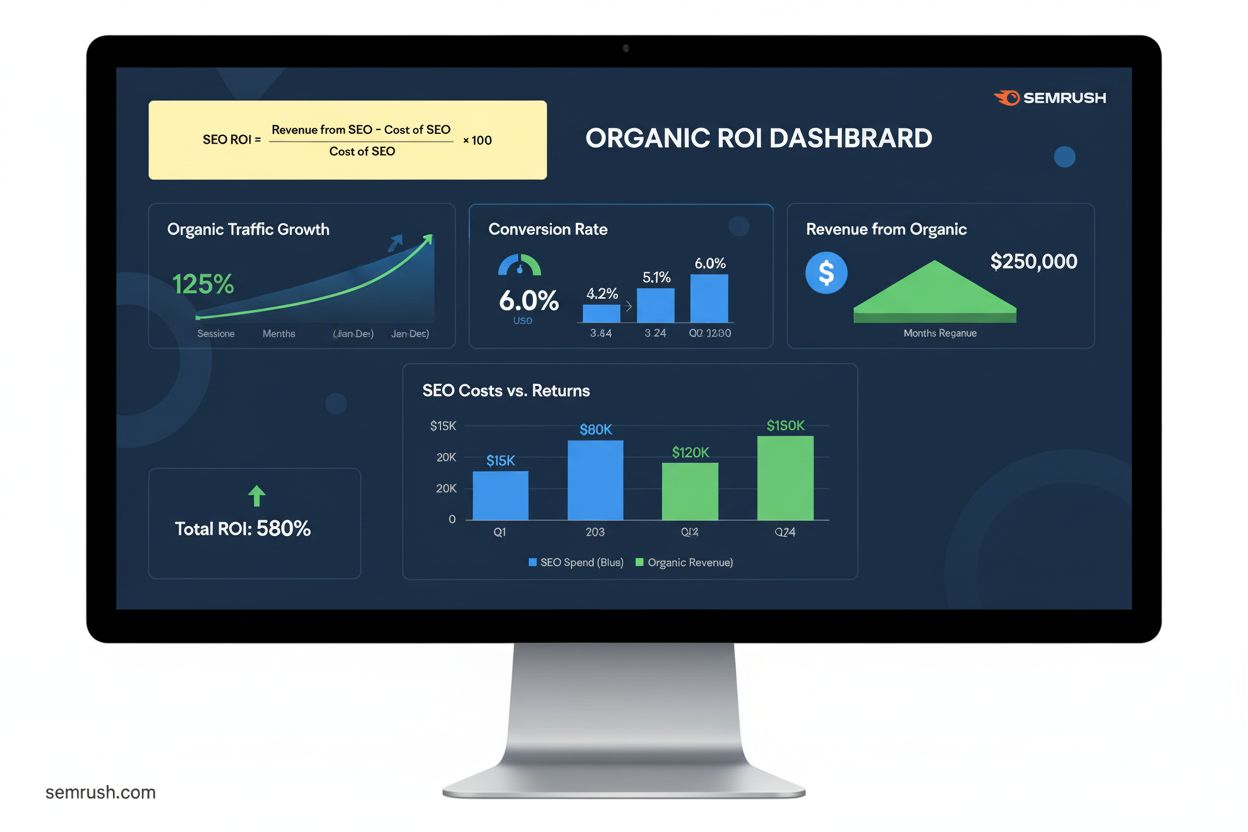
Organic ROI (Return on Investment) measures the financial return generated from organic search efforts compared to the total cost of SEO investments. It quantifies how much revenue a business generates from unpaid search traffic relative to the resources spent on optimization, typically expressed as a percentage that demonstrates the profitability of organic search strategies.
Organic ROI (Return on Investment) measures the financial return generated from organic search efforts compared to the total cost of SEO investments. It quantifies how much revenue a business generates from unpaid search traffic relative to the resources spent on optimization, typically expressed as a percentage that demonstrates the profitability of organic search strategies.
Organic ROI (Return on Investment) is a financial metric that measures the profitability of organic search efforts by calculating the revenue generated from unpaid search traffic relative to the total cost of SEO investments. Expressed as a percentage, Organic ROI demonstrates how much financial return a business receives for every dollar spent on search engine optimization activities. Unlike paid search, which involves direct costs per click, organic search ROI reflects the cumulative value of long-term optimization efforts including content creation, technical improvements, and link building. This metric serves as a critical indicator for businesses to justify SEO budgets, allocate resources effectively, and understand whether their organic search strategy is generating profitable returns. The calculation provides clear visibility into whether organic search investments are delivering business value or require strategic adjustments.
The fundamental Organic ROI formula is straightforward yet powerful: (Revenue from Organic Search - Cost of SEO) / Cost of SEO × 100. This calculation yields a percentage that directly indicates profitability. For example, if a business invests $10,000 in SEO over a period and generates $50,000 in revenue from organic search traffic, the calculation would be ($50,000 - $10,000) / $10,000 × 100 = 400%. This means the business earns $4 in return for every $1 invested in SEO. The beauty of this formula lies in its universality—it applies across all industries and business models, though the revenue sources may differ. E-commerce businesses track direct sales transactions, while lead-generation companies must assign monetary values to form submissions and qualified leads. Understanding this formula is essential for any organization seeking to demonstrate the financial impact of their organic search strategy to stakeholders and executives.
The distinction between Organic ROI and Paid Search ROI fundamentally shapes how businesses approach search marketing strategy. Paid search ROI is relatively straightforward to calculate because businesses pay a defined amount for each click—typically ranging from $1.16 in ecommerce to $6.75 in legal services. This fixed cost structure makes attribution simple: divide revenue by advertising spend. However, Organic ROI presents greater complexity because there is no fixed cost per organic click. Instead, businesses invest in ongoing optimization efforts whose benefits compound over time. According to industry research, organic search drives 1,000% more traffic than organic social media and accounts for 53.3% of all web traffic, compared to only 27% from paid search. A high-quality SEO campaign achieves an average ROI of 748%, meaning businesses see $7.48 return for every dollar invested. While paid search delivers immediate results, organic search requires patience—typically 4-12 months to see meaningful returns—but ultimately generates more sustainable, long-term profitability. The average CTR for position 1 in organic search is 37.15%, compared to just 3.17% for paid search ads, demonstrating organic search’s superior visibility advantage.
Accurately calculating Organic ROI requires identifying and quantifying both investment costs and revenue generation. SEO investment costs encompass multiple categories: in-house team salaries or hourly rates for employees dedicating partial time to SEO, agency retainers or freelancer fees (averaging $2,501-$5,000 per project in the U.S.), subscriptions to SEO tools like Semrush, Ahrefs, or Moz, content creation and editing expenses, link-building campaign costs, technical SEO implementation, website hosting and maintenance, and content distribution expenses across social media and email channels. Many businesses underestimate costs by overlooking indirect expenses or failing to allocate staff time appropriately. On the revenue side, ecommerce businesses can directly track transaction values through Google Analytics 4, while lead-generation companies must establish conversion values by calculating: Customer Lifetime Value × Lead Conversion Rate. For instance, if a company’s average customer lifetime value is $20,000 and their sales close rate is 15%, each lead should be valued at $3,000. This comprehensive approach to cost and revenue identification ensures that Organic ROI calculations reflect true business impact rather than incomplete financial pictures.
| Metric | Organic ROI | Paid Search ROI | Customer Lifetime Value (LTV) | Cost Per Acquisition (CPA) |
|---|---|---|---|---|
| Calculation Method | (Revenue - Cost) / Cost × 100 | (Revenue - Ad Spend) / Ad Spend × 100 | Total revenue per customer over relationship | Total acquisition cost / conversions |
| Time to Results | 4-12 months | Immediate (days/weeks) | Long-term (months/years) | Varies by channel |
| Cost Structure | Fixed investment in optimization | Variable per-click costs | Cumulative customer value | Direct cost per conversion |
| Average Return | 748% for quality campaigns | Varies by industry (3-5x typical) | Determines lead value | $26-$101 depending on industry |
| Traffic Volume | 53.3% of all web traffic | 27% of all web traffic | N/A | N/A |
| Sustainability | Compounds over time | Stops when spending stops | Increases with retention | Decreases with optimization |
| Attribution Complexity | High (multi-touch) | Low (direct) | Medium (requires tracking) | Medium (requires tracking) |
| Best For | Long-term strategy | Quick wins & brand protection | Retention focus | Budget allocation |
Effective Organic ROI measurement requires tracking multiple interconnected metrics that collectively demonstrate search performance and financial impact. Organic traffic volume represents the foundation—monitoring total visitors from search results and segmenting by branded versus non-branded keywords reveals whether you’re attracting new customers or primarily retaining existing ones. Conversion rates measure the percentage of organic visitors who complete desired actions, whether purchases, form submissions, or newsletter signups. According to research, search-engine leads yield higher close rates at 14.6% compared to only 1.7% for outbound leads, making conversion quality particularly important. Keyword rankings directly reflect SEO strategy success; monitoring positions for target keywords over time shows whether optimization efforts are moving the needle. Click-through rates (CTR) indicate how compelling your search results appear—the average CTR for position 1 is 37.15%, while position 2 drops to 14.91%, demonstrating the dramatic value of top rankings. Bounce rate and pages per session reveal content quality and user engagement; high bounce rates may indicate poor user experience or misaligned keyword targeting. Assisted conversions capture the full customer journey, recognizing that organic search often plays a supporting role before final conversion through other channels. Customer lifetime value (LTV) and cost per acquisition (CPA) connect organic traffic to long-term profitability, ensuring that acquired customers generate sufficient revenue to justify acquisition costs.
Organic ROI calculations vary significantly across business models, requiring tailored approaches to revenue attribution. E-commerce businesses benefit from the most straightforward measurement—direct transaction data flows from online sales, making revenue attribution clear and immediate. A jewelry store investing $480,000 in SEO over five years and attracting 1,258,000 visitors with a 2% conversion rate and $100 average order value generates $2,516,000 in revenue, yielding a 424.17% ROI. SaaS companies track subscription revenue and customer lifetime value, which typically extends over years. An HR software company investing $672,000 in SEO over five years, attracting 1,031,673 visitors with a 1.5% conversion rate and $900 customer LTV, generates $13,927,500 in revenue, resulting in a 1,972.7% ROI. Lead-generation businesses like service providers or professional firms must assign monetary values to leads based on historical close rates and deal values. A moving company investing $240,000 in local SEO over five years, attracting 1,820,000 visitors with a 5% quote request rate and 25% conversion to paying customers at $350 per service, generates $7,962,500 in revenue, achieving a remarkable 3,217.71% ROI. These examples demonstrate that while calculation methodology remains consistent, the revenue sources and attribution models differ substantially based on business type.
Despite its importance, Organic ROI measurement presents several significant challenges that complicate accurate calculation and stakeholder communication. Attribution complexity ranks foremost—customers rarely convert on their first interaction, instead following multi-touch journeys involving organic search, paid ads, social media, and direct visits. Determining how much credit organic search deserves in this journey requires sophisticated attribution modeling. Time lag between investment and returns creates another obstacle; while paid search delivers results within days, organic search typically requires 4-12 months to generate meaningful returns, making it difficult to justify continued investment to impatient stakeholders. Isolating organic efforts proves challenging because multiple factors influence rankings and traffic—algorithm updates, competitor actions, seasonal trends, and external market conditions all impact results independent of your optimization work. Non-financial benefits like improved brand visibility, enhanced user experience, and increased domain authority are difficult to quantify monetarily yet contribute real business value. Ongoing returns from past efforts complicate period-specific ROI calculations; successful SEO campaigns continue generating revenue long after initial investment, making it unclear whether to attribute returns to current or historical efforts. Data attribution issues arise when tracking systems fail to properly credit organic traffic, particularly in scenarios involving assisted conversions or complex customer journeys. Addressing these challenges requires sophisticated analytics setup, clear attribution models, and communication strategies that emphasize long-term cumulative value rather than short-term metrics.
The emergence of AI-powered search platforms like ChatGPT, Perplexity, Google AI Overviews, and Claude introduces new dimensions to Organic ROI measurement and strategy. As these systems increasingly influence search behavior and user decision-making, brands must expand their ROI calculations to account for visibility across both traditional search results and AI-generated responses. AI search monitoring platforms like AmICited track brand mentions and citations in AI responses, revealing how organic search investments translate to presence in these emerging channels. A brand ranking well in Google’s organic results may also appear in AI responses, multiplying the value of SEO investments. This expanded visibility directly impacts Organic ROI by increasing the total addressable audience and potential customer touchpoints. Companies investing in comprehensive SEO strategies that optimize for both traditional search and AI systems can achieve higher overall returns. The integration of AI visibility tracking into ROI calculations ensures that businesses understand the full scope of their organic search investments’ impact. As AI search continues evolving, organizations that measure and optimize for both traditional and AI-driven visibility will maintain competitive advantages and maximize their Organic ROI across the entire search landscape.
Maximizing Organic ROI requires strategic optimization across multiple dimensions of SEO and conversion performance. Content quality and relevance form the foundation—companies maintaining blogs receive 57% more visitors, 67% more leads, 97% more inbound links, and 434% more indexed pages than non-blogging competitors. Creating comprehensive, well-researched content targeting high-intent keywords attracts qualified traffic more likely to convert. Technical SEO optimization ensures search engines can efficiently crawl and index your site; improving page speed, mobile responsiveness, and site architecture directly impacts rankings and user experience. Link building remains critical—pages ranking in position 1 have 3.8x more backlinks than those in positions 2-20, demonstrating authority’s importance. Keyword strategy refinement focuses resources on high-value keywords with commercial intent and reasonable competition levels. User experience improvements reduce bounce rates and increase pages per session, signaling content quality to search engines. Conversion rate optimization ensures that traffic translates to revenue; even small improvements in conversion rates dramatically impact ROI. Assisted conversion tracking reveals how organic search contributes to multi-touch customer journeys, potentially uncovering undervalued organic contributions. Regular performance analysis using tools like Google Analytics 4, Semrush, and Ahrefs identifies underperforming pages and opportunities for improvement. Competitive analysis benchmarks your performance against industry leaders, revealing gaps and opportunities. By systematically addressing these optimization areas, businesses can progressively improve their Organic ROI and demonstrate increasing value from SEO investments.
The landscape of Organic ROI measurement continues evolving as technology, search behavior, and business models change. AI-driven attribution modeling increasingly replaces last-click attribution, providing more accurate understanding of organic search’s true contribution to conversions. Privacy-first analytics following cookie deprecation requires new approaches to tracking and attribution, pushing businesses toward first-party data collection and server-side tracking. AI search integration into ROI calculations will become standard as platforms like ChatGPT and Perplexity capture increasing search volume; brands will need to measure visibility and impact across both traditional and AI search channels. Real-time ROI dashboards powered by advanced analytics platforms enable continuous monitoring and rapid optimization rather than retrospective analysis. Predictive ROI modeling using machine learning will help businesses forecast returns before launching campaigns, improving resource allocation decisions. Holistic value measurement beyond direct revenue—including brand awareness, customer satisfaction, and market share—will gain prominence as businesses recognize organic search’s broader strategic value. Voice search and visual search optimization will require new ROI measurement approaches as these channels grow. Sustainability metrics may emerge, measuring organic search’s long-term competitive advantages and brand equity building. As these trends develop, organizations that adapt their Organic ROI measurement approaches will maintain strategic clarity and competitive advantage in an increasingly complex search environment.
The standard Organic ROI formula is: (Revenue from Organic Search - Cost of SEO) / Cost of SEO × 100. This calculation provides a percentage that represents your return. For example, if you generate $50,000 in revenue from organic search with $10,000 in SEO costs, your ROI would be 400%, meaning you earn $4 for every $1 invested. This formula applies consistently across all business models, though the revenue sources may differ between ecommerce transactions and lead generation conversions.
According to Google's Maile Ohye, it typically takes 4-12 months to see meaningful results from SEO efforts. Most businesses should expect a longer timeline compared to paid search, which delivers immediate results. However, once organic ROI becomes positive, it tends to compound over time, creating sustainable long-term value. The exact timeline depends on factors like industry competition, website age, content quality, and SEO strategy effectiveness.
Essential metrics include organic traffic volume, conversion rates, customer lifetime value (LTV), cost per acquisition (CPA), keyword rankings, click-through rates (CTR), bounce rates, pages per session, and assisted conversions. For ecommerce businesses, track transaction value and average order value (AOV). For lead-generation businesses, assign monetary values to form submissions and leads. Monitoring these metrics in Google Analytics 4 and SEO tools like Semrush or Ahrefs provides comprehensive ROI visibility.
Organic ROI has no fixed cost per click, making it harder to calculate immediately but potentially more profitable long-term. Paid search ROI is easier to measure because you pay a defined amount per click, but costs accumulate continuously. Organic search drives 1,000% more traffic than organic social and accounts for 53.3% of all web traffic, while paid search represents only 27%. A high-quality SEO campaign achieves an average ROI of 748%, meaning businesses see $7.48 return for every dollar invested.
Include all direct and indirect SEO costs: in-house team salaries (or hourly rates for partial SEO work), agency retainers or freelancer fees, SEO tools subscriptions (Semrush, Ahrefs, Moz), content creation and editing expenses, link-building costs, technical SEO implementation, website hosting and maintenance, and content distribution expenses. Accurately accounting for all costs ensures realistic ROI calculations. Many businesses underestimate costs by excluding indirect expenses like staff time or tool subscriptions.
As AI systems like ChatGPT, Perplexity, and Google AI Overviews increasingly influence search behavior, understanding Organic ROI helps brands justify investments in visibility across both traditional search and AI-generated responses. Platforms like AmICited track brand mentions in AI responses, making it critical to measure how organic search investments translate to overall brand visibility and revenue. Strong Organic ROI demonstrates that SEO efforts contribute to comprehensive digital presence and business growth.
An Organic ROI above 5x (500%) is generally considered healthy and indicates that efforts are paying off. However, benchmarks vary by industry and business model. Ecommerce SEO achieves an average ROI of 1,600% compared to paid search, while B2B businesses generate twice as much revenue from organic search as all other channels combined. SaaS companies often see ROI exceeding 1,900% over multi-year periods. Your specific benchmark should account for industry competition, target market, and business model.
Start tracking how AI chatbots mention your brand across ChatGPT, Perplexity, and other platforms. Get actionable insights to improve your AI presence.
SEO ROI measures revenue generated from search engine optimization compared to investment costs. Learn how to calculate, track, and optimize SEO return on inves...
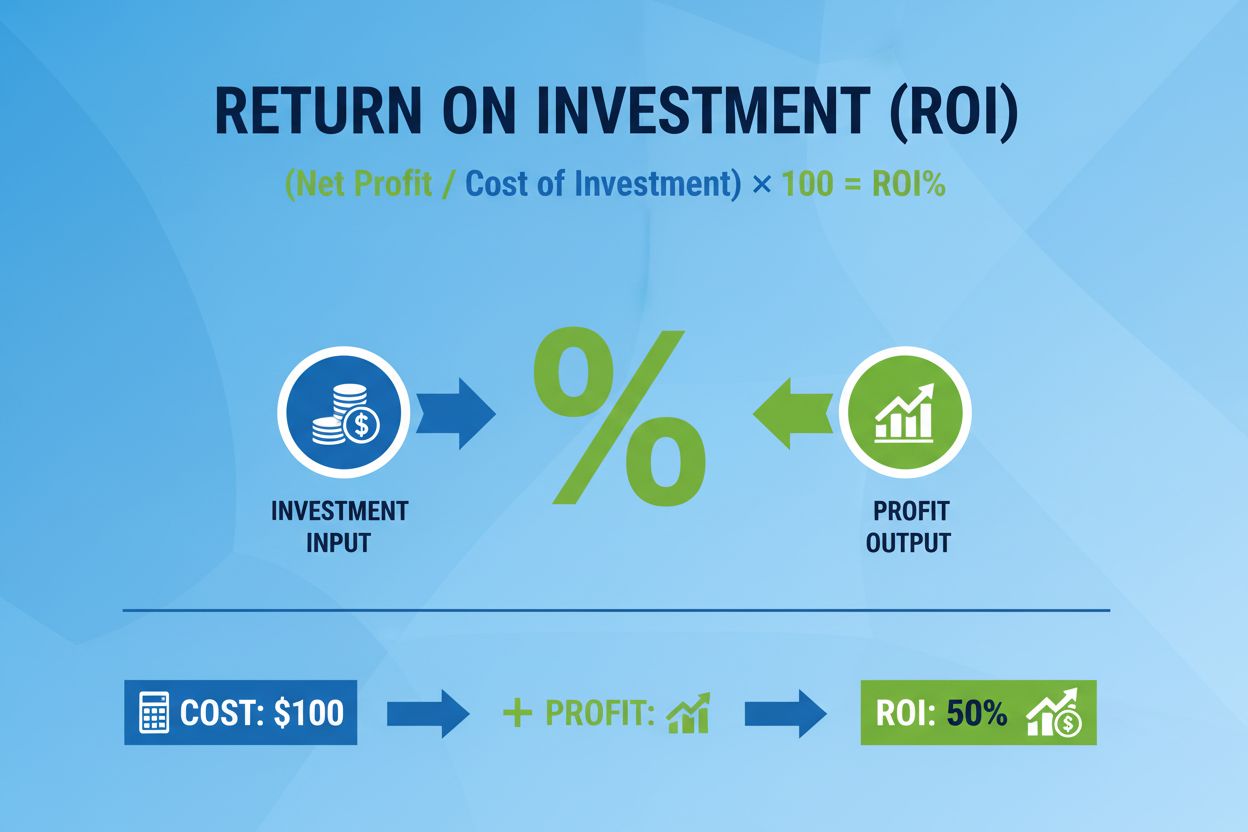
Learn what ROI (Return on Investment) means, how to calculate it, and why it matters for measuring investment profitability. Comprehensive guide with formulas a...

Content ROI measures the financial return from content marketing investments. Learn how to calculate, track, and optimize content ROI with metrics, formulas, an...
Cookie Consent
We use cookies to enhance your browsing experience and analyze our traffic. See our privacy policy.