


Organic Search Results
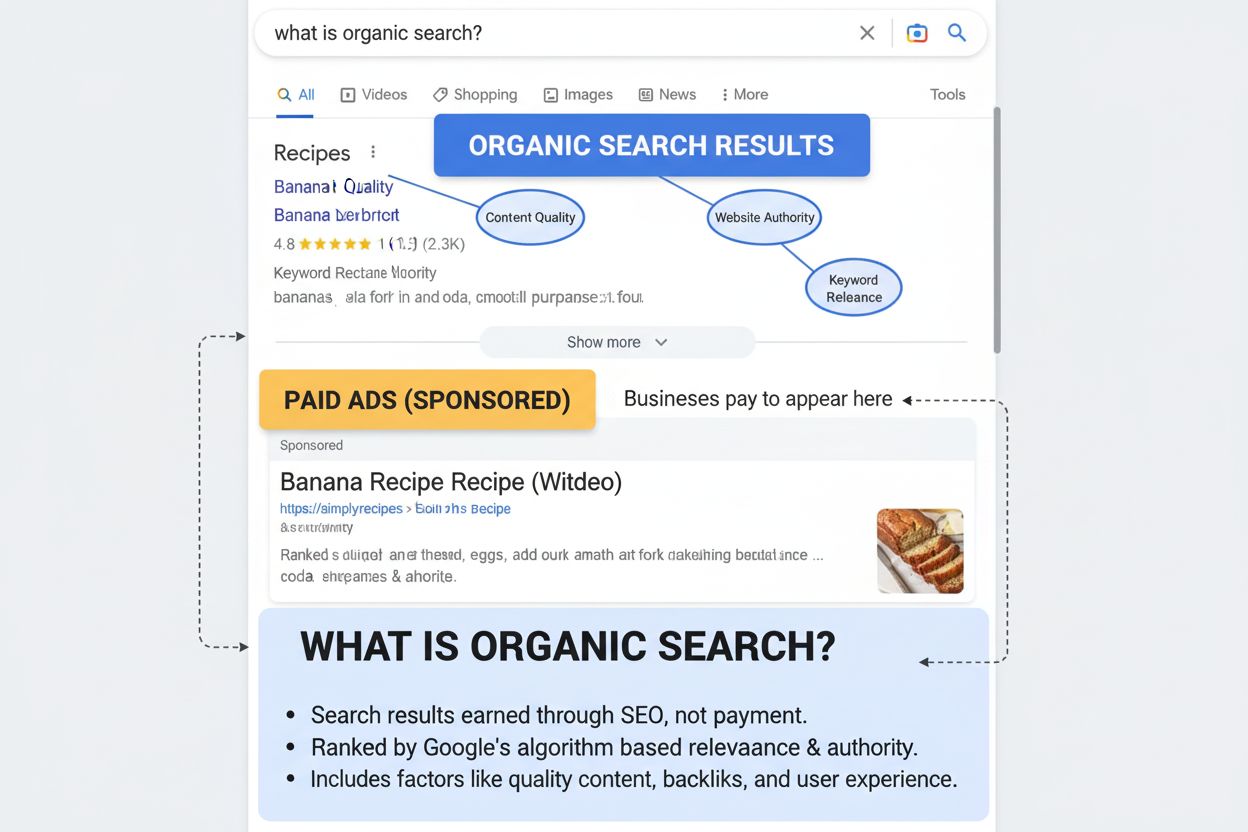
Organic search results are unpaid SERP listings determined by search algorithms based on relevance, quality, and authority. Learn how they differ from paid sear...
19 min read
Organic traffic refers to visitors arriving at a website through unpaid search engine results, generated naturally through search engine optimization (SEO) efforts rather than paid advertising. These visitors find your site by searching relevant keywords on search engines like Google, Bing, or other platforms, making them highly valuable for long-term business growth and brand visibility.
Organic traffic refers to visitors arriving at a website through unpaid search engine results, generated naturally through search engine optimization (SEO) efforts rather than paid advertising. These visitors find your site by searching relevant keywords on search engines like Google, Bing, or other platforms, making them highly valuable for long-term business growth and brand visibility.
Organic traffic represents visitors who arrive at your website through unpaid search engine results, making it one of the most valuable and sustainable sources of web traffic. When users search for keywords related to your business, products, or services on search engines like Google, Bing, or other platforms, and click on your website in the natural search results (not paid advertisements), they become organic traffic. This traffic is “organic” because it grows naturally through search engine optimization (SEO) efforts rather than through paid advertising campaigns. The distinction is critical: organic traffic is earned through relevance, authority, and quality content, whereas paid traffic is purchased through advertising platforms. Understanding organic traffic is essential for any digital marketing strategy, as it directly impacts long-term business growth, brand visibility, and return on investment.
The concept of organic traffic emerged with the rise of search engines in the mid-1990s, particularly after Google’s launch in 1998. Initially, website visibility depended almost entirely on organic search rankings, as paid search advertising didn’t exist. As the digital landscape evolved, pay-per-click (PPC) advertising became prominent, creating a distinction between paid and organic traffic. Throughout the 2000s and 2010s, organic traffic remained the dominant source of website visits, with search engines continuously refining their algorithms to reward high-quality, relevant content. The introduction of mobile search, voice search, and now AI-powered search platforms has fundamentally transformed how organic traffic is generated and measured. Today, organic traffic accounts for 53.3% of all website traffic globally according to 2024-2025 data, demonstrating its continued dominance despite the proliferation of alternative traffic sources. The emergence of AI search engines like ChatGPT, Perplexity, and Google AI Overviews is creating a new paradigm where organic visibility extends beyond traditional search results to AI-generated responses and citations.

Track how AI chatbots mention your brand across ChatGPT, Perplexity, and other platforms.
Organic traffic drives significantly more value than most marketers realize. Research demonstrates that organic search generates 300% more traffic than social media, making it the primary discovery channel for most websites. In ecommerce specifically, 43% of all ecommerce traffic originates from organic search, with conversion rates averaging 14.6%—substantially higher than other traffic sources. The financial value is staggering: for major websites like eBay, the equivalent cost to replicate their organic traffic through paid search advertising would exceed $23 million monthly. This illustrates why organic traffic is considered the most cost-effective long-term investment in digital marketing. Beyond immediate traffic metrics, organic traffic builds brand authority and credibility. When users find your website through organic search results, they perceive your business as more trustworthy than if they encountered it through advertisements. This trust translates into higher engagement rates, longer session durations, and increased likelihood of repeat visits and customer loyalty. For businesses operating in competitive markets, strong organic traffic presence often becomes a competitive advantage that’s difficult for competitors to replicate quickly.
| Aspect | Organic Traffic | Paid Traffic |
|---|---|---|
| Cost Model | Free clicks after SEO investment | Pay-per-click (PPC) model |
| Time to Results | 3-6 months for meaningful results | Immediate results |
| Sustainability | Long-term, compounds over time | Stops when budget ends |
| Conversion Rate | 2.9-14.6% average (higher quality) | 1.6-2.4% average |
| User Intent | High intent, actively searching | Variable intent, targeted by ads |
| Brand Perception | Builds trust and authority | Perceived as promotional |
| Scalability | Grows with content and authority | Limited by budget |
| Algorithm Dependency | Subject to search algorithm changes | Controlled by platform rules |
| ROI Timeline | Excellent long-term ROI | Immediate but ongoing costs |
| Traffic Predictability | Stable once established | Highly predictable |
Get the latest insights on AI mentions, brand monitoring, and optimization strategies.
Organic traffic generation begins with search engine crawling and indexing. Search engine bots continuously scan the internet, discovering and analyzing web pages to understand their content, relevance, and quality. When your website is properly optimized, these bots can easily discover, crawl, and index your pages, adding them to the search engine’s database. The next phase involves ranking, where search algorithms evaluate thousands of factors to determine which pages best answer a user’s search query. These factors include keyword relevance, content quality, page authority, backlink profile, user experience signals, and technical SEO elements like site speed and mobile-friendliness. When a user enters a search query, the search engine returns results ranked by relevance and authority. Users who click on your website from these organic results become organic traffic. The entire process is governed by complex algorithms that continuously evolve—Google alone makes thousands of algorithm updates annually. Understanding this technical foundation is crucial because it explains why organic traffic requires ongoing optimization rather than one-time efforts. Your rankings aren’t permanent; they must be maintained through consistent content updates, technical maintenance, and authority building.
Keyword research forms the foundation of any organic traffic strategy. By identifying the specific terms and phrases your target audience uses when searching for solutions, you can create content that directly addresses their needs. Effective keyword research reveals search volume (how many people search for a term), search intent (what users hope to achieve), and keyword difficulty (how competitive a term is). Long-tail keywords—longer, more specific phrases like “best organic dog food for sensitive stomachs”—often drive higher-quality traffic than broad keywords because they indicate more specific user intent. Once you’ve identified target keywords, content creation becomes the vehicle for capturing organic traffic. High-quality content that comprehensively answers user questions ranks better in search results and attracts more clicks. The content must be original, well-researched, and structured for both search engines and human readers. This includes proper use of heading tags, meta descriptions, internal links, and keyword optimization without sacrificing readability. Content that satisfies user intent—whether informational, commercial, or navigational—performs better and generates more engaged organic traffic. The relationship between keywords and content is symbiotic: keywords guide content creation, while quality content earns rankings for those keywords, creating a virtuous cycle of increasing organic traffic.
The emergence of AI-powered search platforms is fundamentally reshaping organic traffic dynamics. Platforms like ChatGPT, Perplexity, Google AI Overviews, and Claude are changing how users discover information, with significant implications for traditional organic traffic. Research indicates that AI Overviews can reduce organic traffic by 15-64% depending on industry and search type, as users get answers directly from AI summaries rather than clicking through to websites. This shift creates both challenges and opportunities. The challenge is that traditional organic traffic metrics may decline as AI platforms capture search volume. The opportunity is that brands can now appear in AI-generated responses and citations, creating a new form of visibility that AmICited and similar platforms help monitor. Forward-thinking businesses are adapting their strategies to optimize for both traditional search results and AI platforms. This includes ensuring your brand is cited in AI responses, appears in AI-generated recommendations, and maintains strong visibility across multiple search channels. The future of organic traffic isn’t about abandoning traditional SEO; it’s about expanding visibility to encompass the entire search ecosystem, including AI platforms that increasingly mediate how users discover information.
Accurate measurement of organic traffic requires multiple tools and approaches. Google Analytics 4 (GA4) provides comprehensive organic traffic data, showing total sessions, conversion rates, user behavior, and traffic trends over time. Within GA4, the “Traffic Acquisition” report specifically isolates organic search traffic from other sources, allowing you to see which keywords drive the most valuable visitors. Google Search Console (GSC) offers complementary data, showing which search queries bring users to your site, your average ranking position, click-through rates, and impressions. This data is invaluable for identifying optimization opportunities—keywords where you rank in positions 4-10 can often be improved to positions 1-3 with targeted optimization. Third-party SEO tools like Semrush, Ahrefs, and Moz provide competitive analysis, keyword tracking, and traffic estimates for any website. These tools help you understand your organic traffic potential, identify gaps compared to competitors, and track ranking changes over time. For businesses monitoring brand visibility across AI platforms, tools like AmICited track how often your brand appears in AI-generated responses, providing a new dimension of organic visibility metrics. Effective organic traffic measurement requires monitoring not just volume, but quality indicators like conversion rate, average session duration, pages per session, and bounce rate. These metrics reveal whether your organic traffic consists of genuinely interested users or casual visitors unlikely to convert.
Maximizing organic traffic requires a systematic, multi-faceted approach:
The organic traffic landscape is undergoing profound transformation. Traditional organic traffic from Google and Bing remains dominant, but the emergence of AI search platforms is creating new channels for visibility and discovery. The concept of “organic” is expanding beyond traditional search results to include AI citations, AI recommendations, and AI-generated content mentions. Brands that adapt their strategies to optimize for both traditional and AI search will maintain competitive advantage. This includes ensuring your content is discoverable by AI systems, appears in AI-generated responses, and maintains strong brand presence across multiple platforms. The integration of AI into search will likely increase the importance of brand authority, topical expertise, and content quality—factors that help AI systems identify trustworthy sources. Additionally, the rise of voice search, visual search, and conversational search means organic traffic will increasingly come from diverse query types beyond traditional text searches. The future of organic traffic isn’t about a single channel but about omnipresent visibility across the entire search ecosystem. Businesses that understand organic traffic as a holistic concept encompassing traditional search, AI platforms, and emerging search technologies will be best positioned for sustained growth. The fundamental principle remains unchanged: create valuable content that genuinely serves user needs, and organic traffic will follow.
Start tracking how AI chatbots mention your brand across ChatGPT, Perplexity, and other platforms. Get actionable insights to improve your AI presence.
Organic search results are unpaid SERP listings determined by search algorithms based on relevance, quality, and authority. Learn how they differ from paid sear...
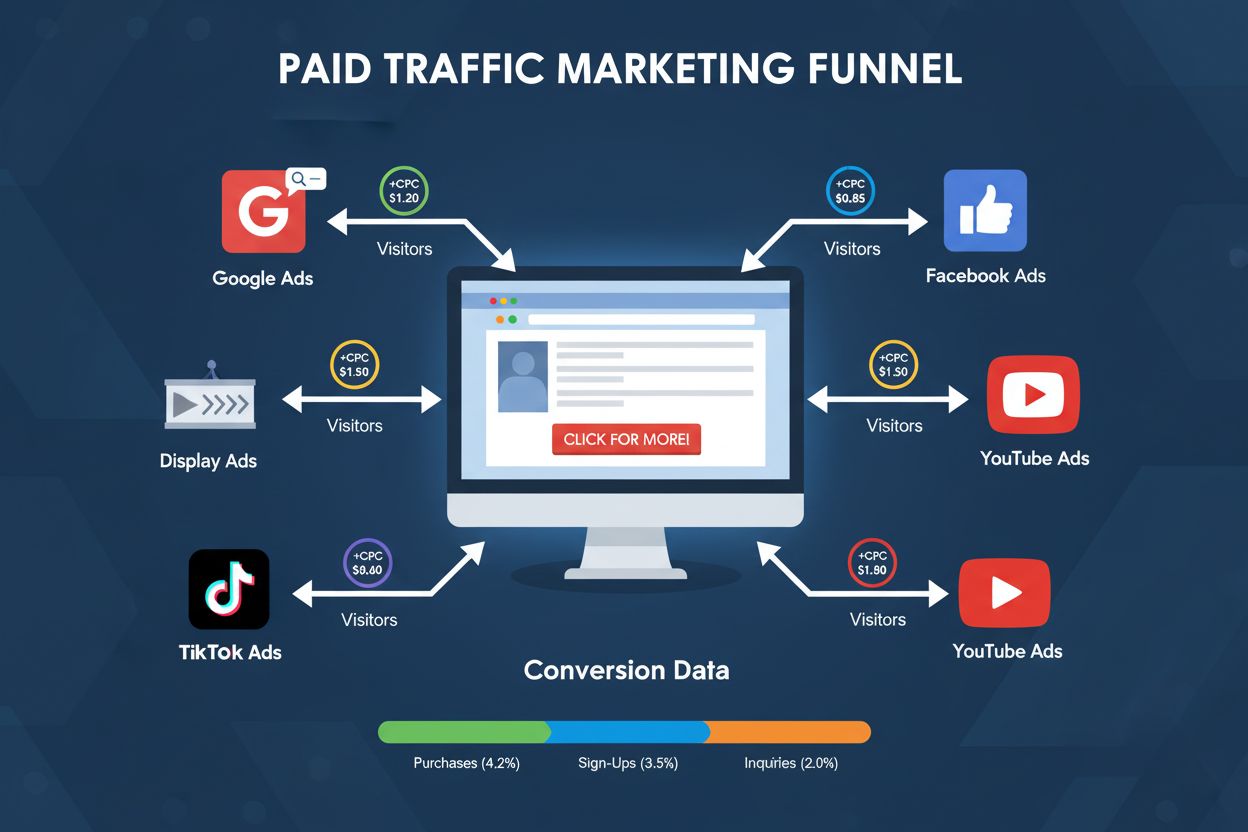
Paid traffic definition: visitors from paid ads on Google, Facebook, display networks. Learn CPC costs, conversion rates, ROI, and how paid traffic differs from...

Discover how AI search engines like ChatGPT and Perplexity are affecting organic traffic. Learn about traffic decline statistics, quality metrics, and strategie...
Cookie Consent
We use cookies to enhance your browsing experience and analyze our traffic. See our privacy policy.