
AI Content Optimization Platform
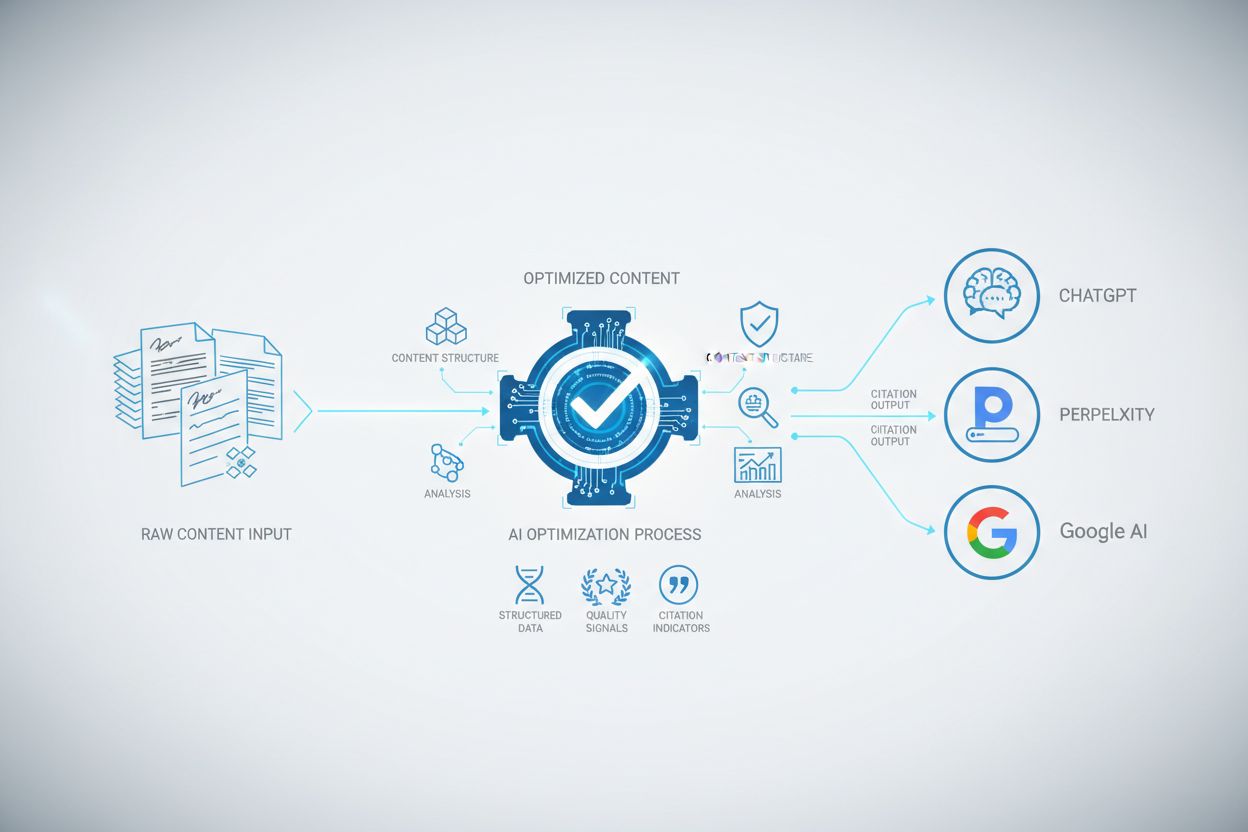
Learn what AI Content Optimization Platforms are, how they work, and why they're essential for visibility in ChatGPT, Perplexity, and Google AI Overviews. Disco...
8 min read

Crafting self-contained text passages (134-167 words) that can be extracted as complete answers by AI systems. Passages are optimized for semantic retrieval and citation in AI-generated responses, focusing on modular content design that works with RAG systems and dense retrieval methods.
Crafting self-contained text passages (134-167 words) that can be extracted as complete answers by AI systems. Passages are optimized for semantic retrieval and citation in AI-generated responses, focusing on modular content design that works with RAG systems and dense retrieval methods.
Passage optimization is the practice of crafting self-contained text passages that AI systems can extract and present as complete, standalone answers to user queries. Unlike traditional SEO, which optimizes entire pages for search rankings, passage optimization focuses on creating modular content chunks—typically 134-167 words—that function independently while remaining contextually relevant. These passages are designed to answer specific questions directly, making them ideal for Retrieval-Augmented Generation (RAG) systems used by AI platforms like Google AI Overviews, ChatGPT, and Perplexity. When an AI system processes a user query, it doesn’t retrieve your entire webpage; instead, it uses dense retrieval methods to find the most semantically relevant passages from across the web. By optimizing individual passages rather than whole pages, you increase the probability that your content will be selected, cited, and featured in AI-generated answers. This shift represents a fundamental change in how content visibility works in the age of generative AI search.
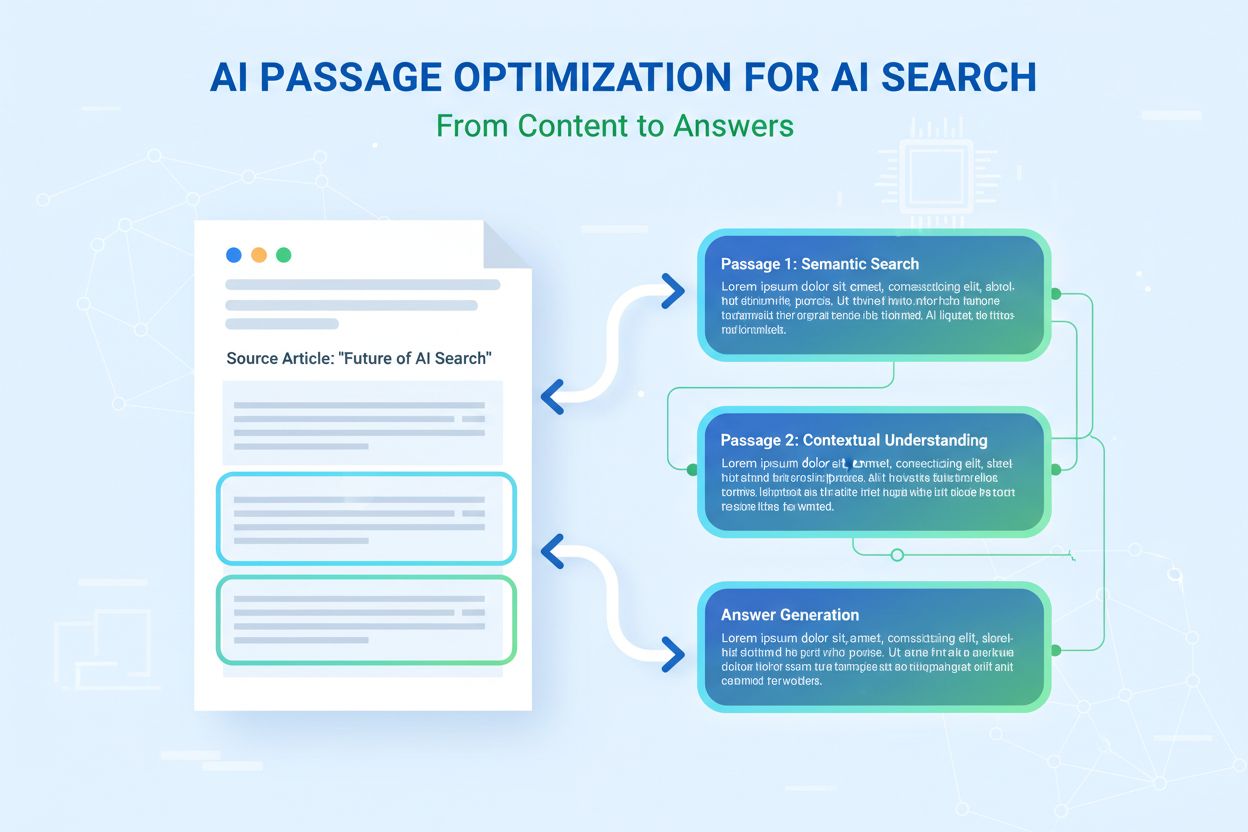
AI systems retrieve passages through a sophisticated process called dense retrieval, which converts both user queries and content passages into numerical representations called embeddings. These embeddings capture semantic meaning rather than relying on simple keyword matching, allowing the system to find passages that answer a query even when the exact words don’t match. When a user submits a query, the AI system often performs query fan-out—breaking the original question into multiple synthetic variations and searching for relevant passages across all of them simultaneously. This means a single user query might trigger dozens of related searches in the background, each pulling passages that could contribute to the final answer. The system then segments your content into logical passages and scores them based on relevance, authority, and freshness. Passages that are well-structured, semantically rich, and clearly answer specific questions rank higher in this retrieval process. Understanding this architecture is crucial because it explains why traditional page-level optimization no longer guarantees visibility—your content must be optimized at the passage level to compete in AI search results.
| Aspect | Traditional SEO | Passage Optimization |
|---|---|---|
| Optimization Unit | Entire page (URL-level) | Individual passages (chunk-level) |
| Primary Focus | Keyword density and page authority | Semantic relevance and extractability |
| Ranking Factor | Backlinks and domain authority | Passage clarity and answer-first structure |
| Retrieval Method | Keyword matching | Dense retrieval and embeddings |
| Citation Pattern | Full page ranking | Passage-level citation in AI answers |
To optimize passages effectively, follow these evidence-based best practices:
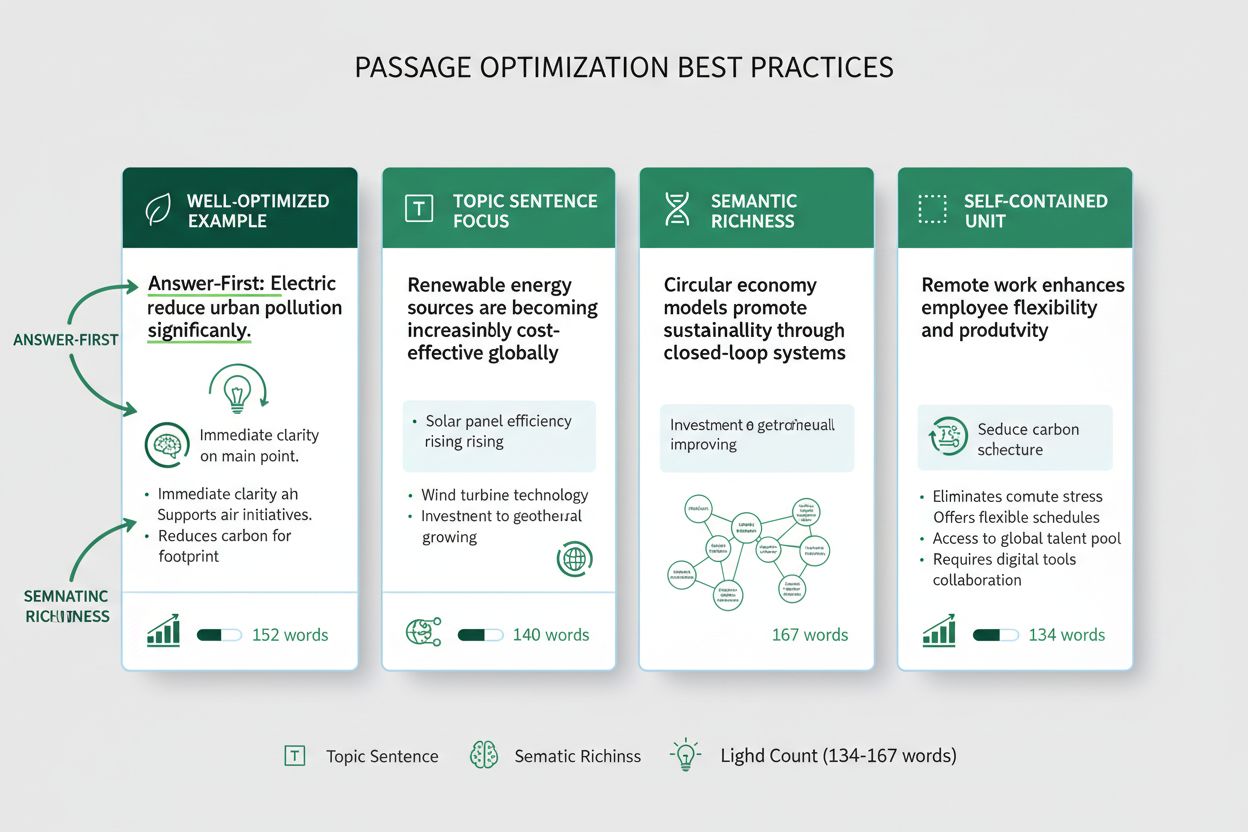
Maintain ideal passage length: Keep passages between 134-167 words to ensure they’re substantial enough to provide complete answers while remaining concise enough for easy extraction and citation by AI systems.
Create self-contained passages: Each passage should stand alone as a complete answer to a specific question, with its own topic sentence, supporting details, and conclusion, requiring minimal context from surrounding content.
Lead with clear topic sentences: Begin each passage with a direct statement that answers the core question, allowing AI systems to immediately understand the passage’s relevance and purpose.
Adopt an answer-first structure: Place your most important information at the beginning of each passage, following the inverted pyramid model used in journalism and preferred by AI systems for rapid comprehension.
Ensure semantic richness: Use varied terminology, related concepts, and natural language that reflects how users actually ask questions, helping dense retrieval systems recognize your passage as relevant to multiple query variations.
Maintain logical boundaries: Use clear heading hierarchies (H2, H3) to delineate where one passage ends and another begins, helping both AI systems and human readers understand content structure.
Optimize for multiple intents: Address related questions and subtopics within your passages, increasing the likelihood that your content matches the synthetic queries generated during query fan-out.
The shift from traditional SEO to passage optimization represents a fundamental change in optimization strategy. Traditional SEO focuses on optimizing entire pages to rank for specific keywords, emphasizing page authority, backlinks, and keyword density. Passage optimization, by contrast, focuses on optimizing individual passages for semantic relevance and extractability, emphasizing clarity, self-containment, and answer-first structure. In traditional SEO, a page’s overall authority and link profile determine its ranking potential; in passage optimization, individual passage quality and semantic alignment with user intent determine citation probability. However, both approaches remain important—passages within pages that rank well in traditional search results have higher retrieval probability in AI systems, suggesting that strong traditional SEO foundations support passage optimization success. The key difference is that passage optimization requires thinking beyond keyword rankings to consider how AI systems will parse, understand, and cite your content at the granular level. Content creators must now balance page-level optimization for traditional search with passage-level optimization for AI search, creating a dual-track strategy that addresses both discovery mechanisms.
Different AI platforms exhibit distinct citation patterns, requiring platform-specific passage optimization strategies. Google AI Overviews show strong correlation with traditional search rankings—pages ranking in Google’s top 10 have approximately 81% probability of being cited in AI Overviews. This means optimizing passages for Google’s traditional ranking factors remains essential for visibility in Google’s AI results. ChatGPT and Perplexity, however, show weak correlation with Google rankings, instead favoring encyclopedic sources like Wikipedia and community-driven content from Reddit and Quora. For these platforms, passage optimization should emphasize original research, first-hand experience, and authentic expertise rather than traditional SEO signals. AmICited.com provides monitoring tools specifically designed to track how your passages perform across these different AI platforms, helping you understand which passages are being cited and where. Additionally, FlowHunt.io offers content generation and optimization tools that help structure passages for maximum AI retrievability. A comprehensive passage optimization strategy requires running parallel campaigns: one optimizing for Google’s ranking factors to win AI Overviews citations, and another building authority and presence on community platforms to win citations from standalone LLMs.
Measuring passage optimization success requires new key performance indicators (KPIs) beyond traditional rank tracking. Passage inclusion rate—how often your passages appear in AI-generated answers—becomes the primary metric, replacing keyword rankings as the measure of visibility. Track citation frequency across different AI platforms using tools like AmICited.com, which monitors when your brand and content are mentioned in AI responses. Monitor answer coverage, measuring how many distinct user queries your passages help answer across different AI systems. Analyze attribution accuracy, ensuring that when your passages are cited, they’re correctly attributed to your brand and linked appropriately. Use sentiment analysis to understand the context of your mentions—being cited as the “most expensive” option differs significantly from being cited as the “most reliable.” AmICited.com’s monitoring capabilities specifically track passage-level citations across Google AI Overviews, ChatGPT, Perplexity, and other AI systems, providing visibility into how your passage optimization efforts translate to actual AI answer inclusion. Establish baseline metrics before optimization, then track changes over time to measure the impact of your passage optimization strategy on AI search visibility and downstream conversions.
Common mistakes in passage optimization can undermine your efforts and reduce AI citation probability. Over-optimization and keyword stuffing within passages damages readability and semantic quality, causing AI systems to deprioritize your content in favor of more naturally written alternatives. Passages lacking sufficient context fail to stand alone as complete answers, forcing AI systems to supplement your passage with information from competitors’ content, reducing your citation probability. Poor passage segmentation—creating passages that are too long, too short, or that split ideas awkwardly—makes it difficult for AI systems to extract coherent, citable content. Ignoring semantic relationships between passages and related content reduces the likelihood that your passages will be retrieved for the synthetic queries generated during query fan-out. Failing to maintain passage independence by creating passages that require extensive context from surrounding content reduces their extractability and citation value. Additionally, neglecting to optimize passages for multiple platforms—treating Google AI Overviews optimization identically to ChatGPT optimization—limits your visibility across the diverse AI search landscape. Avoiding these mistakes requires maintaining focus on user intent, semantic clarity, and passage independence while resisting the temptation to over-optimize for AI systems at the expense of human readability.
The ideal passage length is 134-167 words, which provides enough substance to deliver a complete answer while remaining concise enough for easy extraction and citation by AI systems. This length ensures your passage can stand alone as a meaningful response without requiring extensive context from surrounding content.
Traditional SEO optimizes entire pages for keyword rankings using page authority and backlinks, while passage optimization focuses on individual passages for semantic relevance and extractability. Passage optimization emphasizes clarity, self-containment, and answer-first structure, recognizing that AI systems retrieve and cite passages rather than ranking full pages.
AI systems use dense retrieval methods that search for semantically relevant content fragments rather than entire pages. Passages allow AI to extract specific, citable answers directly, reducing the need for users to navigate full pages. This approach improves user experience by providing immediate answers while increasing citation opportunities for well-optimized passages.
Track new KPIs including passage inclusion rate (how often your passages appear in AI answers), citation frequency across platforms, answer coverage (how many queries your passages help answer), and attribution accuracy. Tools like AmICited.com monitor passage-level citations across Google AI Overviews, ChatGPT, Perplexity, and other AI systems to measure optimization impact.
Google AI Overviews show strong correlation with traditional search rankings, so optimize for Google's ranking factors first. ChatGPT and Perplexity favor encyclopedic sources and community content, so emphasize original research, first-hand experience, and authentic expertise. A comprehensive strategy requires parallel campaigns targeting both discovery mechanisms.
Start by identifying your highest-value, top-performing pages and retrofit them with passage optimization techniques. Focus on pages that already rank well in traditional search, as these have higher retrieval probability in AI systems. Gradually expand to other content while ensuring all new content is created with passage optimization in mind from the start.
Create self-contained passages with clear topic sentences, supporting details, and conclusions that stand alone. Use heading hierarchies (H2, H3) to delineate passage boundaries, maintain 134-167 word length, and lead with your most important information. Ensure each passage answers a specific question completely without requiring extensive context from surrounding content.
Semantic richness—using varied terminology, related concepts, and natural language—helps dense retrieval systems recognize your passage as relevant to multiple query variations. This increases the probability your passage will be retrieved for synthetic queries generated during query fan-out, expanding your visibility across different AI search paths and user intents.
Track how often your content appears in AI-generated responses across Google AI Overviews, ChatGPT, Perplexity, and other AI systems. AmICited helps you measure passage optimization success.
Learn what AI Content Optimization Platforms are, how they work, and why they're essential for visibility in ChatGPT, Perplexity, and Google AI Overviews. Disco...

Learn AI Search Optimization strategies to improve brand visibility in ChatGPT, Google AI Overviews, and Perplexity. Optimize content for LLM citation and AI-po...

Learn how to optimize news content for AI systems. Discover best practices for getting cited by ChatGPT, Gemini, Perplexity, and Google AI Overviews. Master AI ...
Cookie Consent
We use cookies to enhance your browsing experience and analyze our traffic. See our privacy policy.