
Perplexity Spaces
Learn about Perplexity Spaces, collaborative research environments that combine AI-powered search with team collaboration features for organizing and sharing re...
7 min read
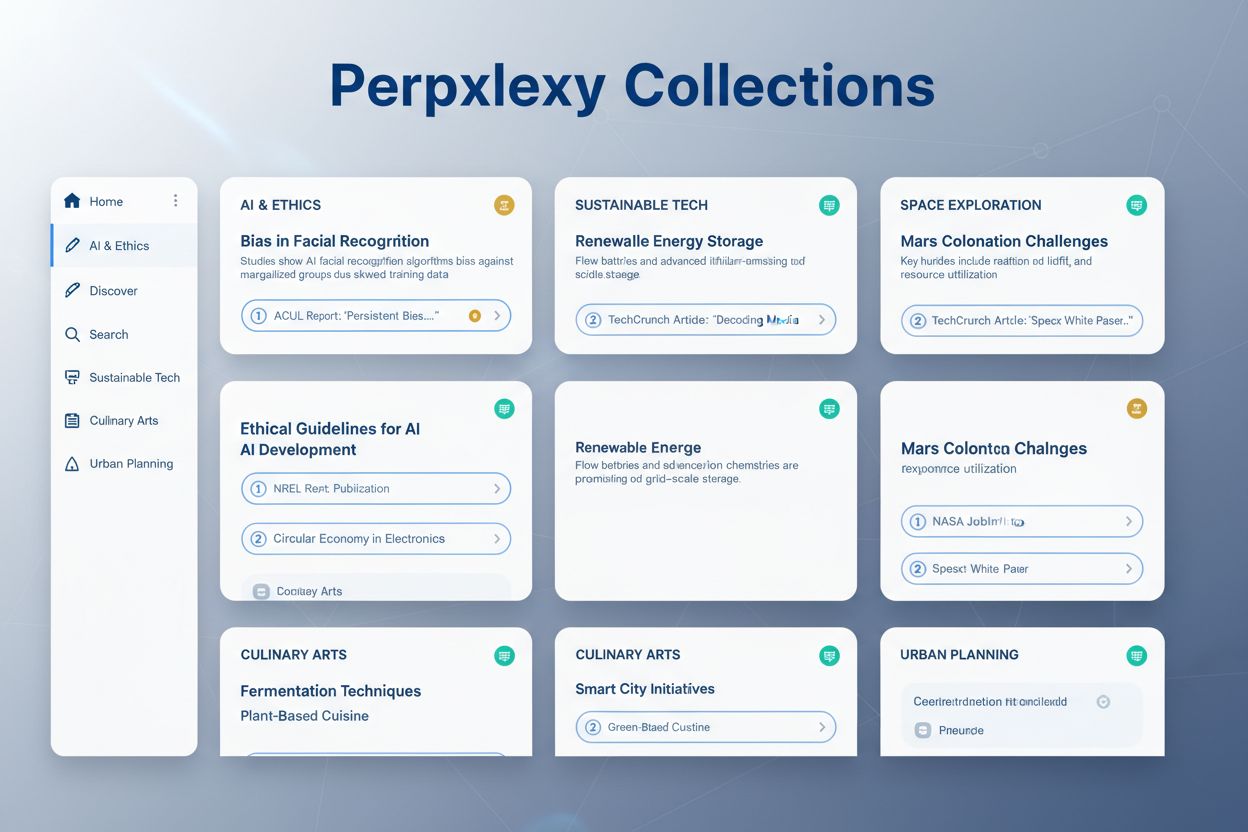
Saved groups of AI-generated answers and sources in Perplexity, creating curated knowledge bases on specific subjects. Collections allow users to organize research by topic, save important answers with citations, and build personal knowledge repositories for efficient information management.
Saved groups of AI-generated answers and sources in Perplexity, creating curated knowledge bases on specific subjects. Collections allow users to organize research by topic, save important answers with citations, and build personal knowledge repositories for efficient information management.
Perplexity Collections are curated repositories of AI-generated answers and their associated sources that users can save, organize, and reference for future use. They function as personalized knowledge bases where users compile research, insights, and information on specific topics within the Perplexity platform. Collections preserve the complete context of each answer, including citations and source materials, enabling users to build comprehensive research archives without losing critical attribution information. This feature transforms Perplexity from a single-query tool into a persistent knowledge management system tailored to individual research needs.
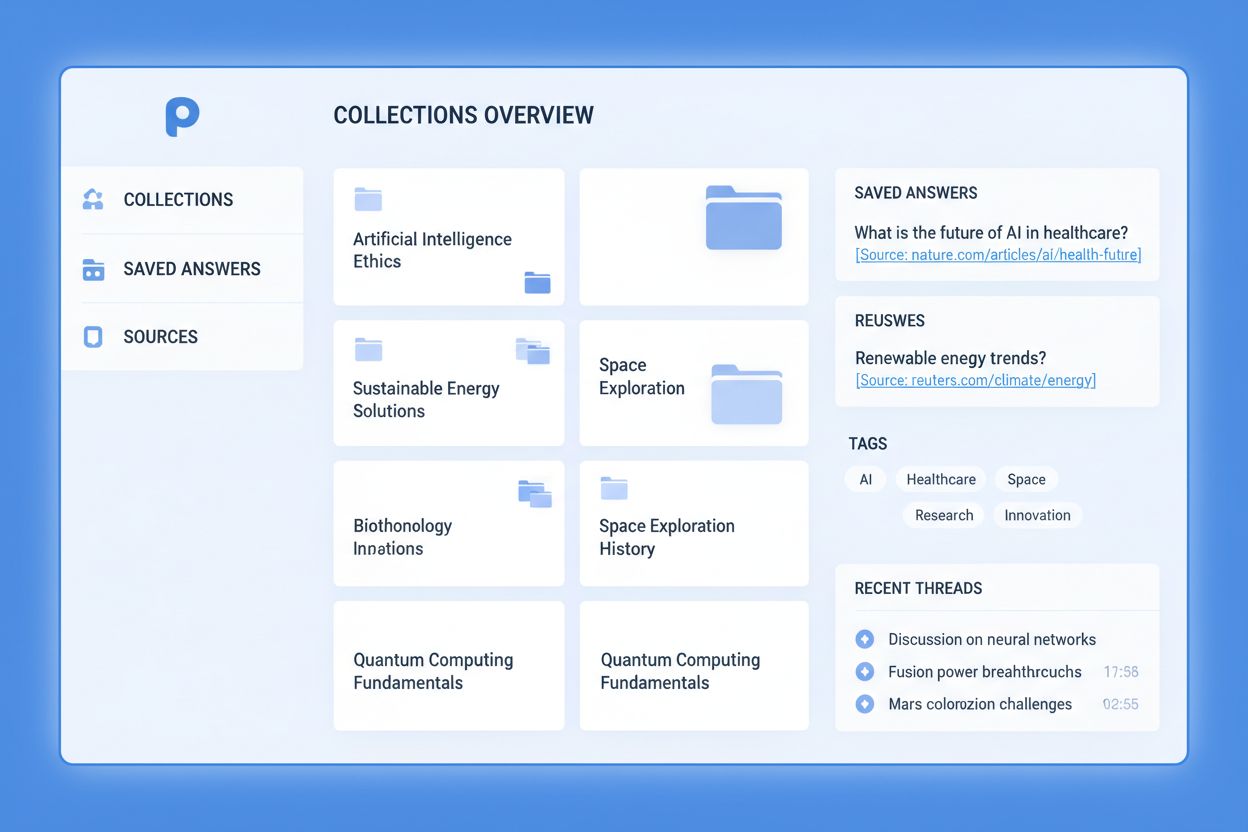
Perplexity Collections have evolved significantly as the platform matured, with the introduction of Spaces representing the next generation of this feature set. Spaces offer enhanced functionality including file uploads, more granular sharing controls, and advanced collaboration features, positioning them as the premium evolution of Collections. However, Collections remain fully functional and widely used across the Perplexity ecosystem, particularly among users on Pro and Enterprise plans who prefer the streamlined interface or have established workflows around the original feature. The naming distinction reflects Perplexity’s commitment to offering multiple organizational tools suited to different user needs and complexity levels.
| Feature | Collections | Spaces |
|---|---|---|
| Save Answers | Yes | Yes |
| Organize by Topic | Yes | Yes |
| Custom Prompts | Yes | Yes |
| File Uploads | No | Yes |
| Advanced Sharing | Basic | Advanced |
| Collaboration Tools | Limited | Enhanced |
| Available Plans | Pro, Enterprise | Pro, Enterprise |
Collections provide a comprehensive suite of organizational and research tools designed to maximize productivity and knowledge retention. The save answers feature allows users to capture AI-generated responses with a single click, preserving the exact content and context at the moment of creation. Topic-based organization enables users to categorize answers into logical groupings, making retrieval intuitive and efficient across large collections. The custom prompts capability lets users define specific query templates within collections, ensuring consistent research methodology and reducing repetitive typing for frequently asked questions. Collaboration features permit users to share collections with team members, facilitating group research projects and distributed knowledge management. Together, these capabilities transform scattered research into a structured, accessible, and shareable knowledge asset.
The Collections workflow follows an intuitive four-stage process that integrates seamlessly into the Perplexity research experience. When users encounter a valuable answer during their Perplexity searches, they can immediately save it to an existing collection or create a new one with a single action. The system automatically preserves the complete answer text, all associated source citations, and metadata about when the answer was saved and from which query it originated. Users can then organize these saved answers within their collections using custom tags, folders, or topic hierarchies depending on their organizational preferences. When returning to a collection, users can quickly review all saved answers, access the original sources, and even use saved answers as context for follow-up queries. The preservation of source information ensures that users maintain full citation trails, critical for academic research, content creation, and professional documentation. This workflow transforms Perplexity from a stateless question-answering tool into a persistent research platform where knowledge accumulates and becomes increasingly valuable over time.
Collections serve diverse professional and academic needs across multiple user categories, each leveraging the feature to solve distinct organizational challenges:
Researchers and Academics: Compile literature reviews, organize findings by research question, maintain citation trails for papers, and build topic-specific knowledge bases that support thesis development and scholarly writing.
Content Creators and Journalists: Gather background research, organize source materials by article topic, maintain fact-checking references, and create reusable research libraries that accelerate content production cycles.
Business Professionals and Analysts: Build competitive intelligence databases, organize market research by industry segment, maintain client-specific research repositories, and create institutional knowledge bases that persist across team transitions.
Students and Learners: Organize study materials by subject, compile research for assignments, maintain learning resources across multiple courses, and create personal knowledge bases that support long-term academic success.
Creating a Collection in Perplexity requires minimal effort but benefits significantly from thoughtful planning and organization. Users initiate a new collection by selecting the save option on any answer and choosing to create a new collection, at which point they assign a descriptive name and optional description that clarifies the collection’s purpose and scope. Effective naming conventions typically follow a hierarchical structure—for example, “Market Research > Technology Sector > AI Adoption 2024”—which facilitates navigation when collections multiply over time. As collections grow, users should periodically review and reorganize content, consolidating related answers and removing outdated information to maintain relevance and searchability. The most successful collections employ consistent tagging systems and clear organizational logic that aligns with how users naturally think about their research domain. Regular maintenance ensures that collections remain valuable reference tools rather than becoming cluttered repositories of forgotten information.
Collections deliver substantial productivity and knowledge management advantages that compound over time as users build comprehensive research repositories. The time savings from avoiding redundant research are significant—users can reference previously compiled answers rather than re-querying the same topics, accelerating project timelines and reducing cognitive load. Knowledge retention improves dramatically when research is organized and accessible; users internalize information more effectively when they can review and cross-reference related answers systematically. Research efficiency increases as collections become more comprehensive, with users building on previous work rather than starting from scratch with each new project. The source preservation inherent in Collections ensures that users maintain proper attribution and can verify information by returning to original sources, critical for maintaining credibility in professional and academic contexts. Collaboration benefits emerge when teams share collections, enabling distributed research efforts and ensuring that institutional knowledge persists beyond individual team members. The cumulative effect is a transformation from ephemeral question-answering into persistent, organized, and shareable knowledge management that becomes increasingly valuable as it grows.
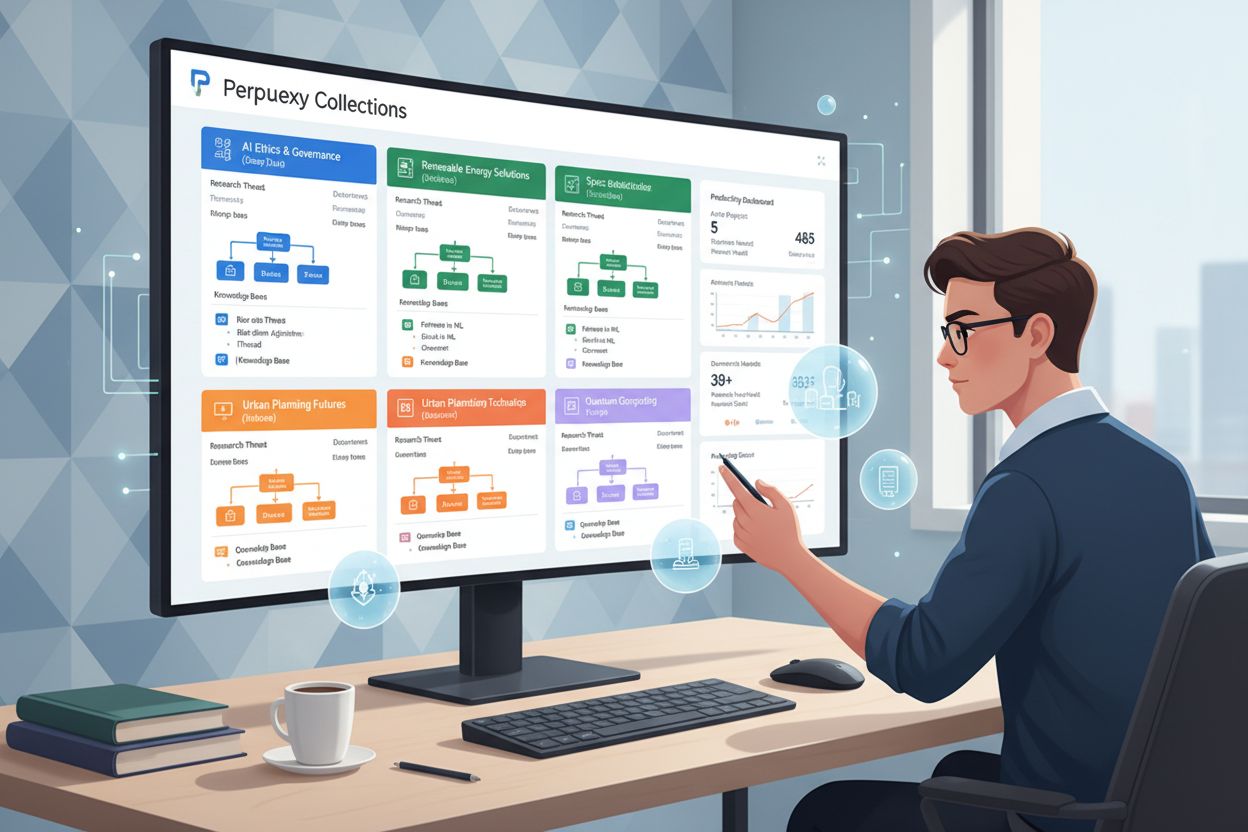
Collections represent a critical touchpoint for understanding how information flows through AI-powered research platforms and how brands, products, and ideas are cited within these systems. As Collections accumulate answers from Perplexity’s AI, they create a permanent record of how the platform synthesizes and presents information on specific topics, including which sources receive prominence and how different perspectives are represented. For organizations and brands, monitoring how their content appears within Perplexity Collections—and by extension, how it’s cited and contextualized in AI-generated answers—has become essential to understanding their visibility and credibility in the AI-driven information landscape. AmICited.com specializes in tracking how brands, companies, and content creators are cited and represented across AI answer platforms, including monitoring their presence in user-created Collections and shared research repositories. Understanding Collection dynamics helps organizations identify opportunities to improve their source attribution, verify accurate representation of their products and services, and recognize gaps where their expertise should be more prominently featured in AI-generated research.
Collections are the original feature for saving and organizing AI-generated answers, while Spaces represent an enhanced evolution with additional capabilities like file uploads, advanced sharing controls, and improved collaboration tools. Both remain available on Perplexity Pro and Enterprise plans, allowing users to choose based on their specific needs and workflow preferences.
Yes, Collections can be shared with other Perplexity users, though sharing capabilities are more basic compared to Spaces. Shared Collections allow team members to access the same curated answers and sources, facilitating collaborative research and distributed knowledge management across organizations.
When viewing any AI-generated answer in Perplexity, you can click the save option and choose to add it to an existing Collection or create a new one. The system automatically preserves the complete answer text, all source citations, and metadata, making it easy to build your knowledge base over time.
Collections primarily store AI-generated answers from Perplexity searches along with their associated source citations. While Collections focus on answers and sources, Spaces offer expanded functionality to include uploaded files like PDFs, documents, and other reference materials for more comprehensive knowledge management.
Yes, Collections support custom prompts that allow you to define specific query templates within each collection. This feature ensures consistent research methodology and reduces repetitive typing when conducting similar searches, making your research process more efficient and standardized.
Collections enable topic-based organization of research findings, allowing you to categorize answers into logical groupings with custom tags and hierarchies. This structure makes retrieval intuitive and efficient, helping you build comprehensive research archives that become increasingly valuable as they grow.
Collections are available on Perplexity Pro and Enterprise plans. Free tier users have access to basic Perplexity features but cannot create or manage Collections. Upgrading to Pro or Enterprise unlocks the full Collection functionality for knowledge management and research organization.
While Perplexity doesn't offer direct export functionality for Collections, you can access all saved answers and sources within your Collections at any time through the platform. For critical research, you can manually compile and export important answers, or consider using Spaces which may offer enhanced data management options.
AmICited tracks how your content is referenced and cited across AI platforms including Perplexity. Discover if your brand appears in AI-generated answers and Collections.
Learn about Perplexity Spaces, collaborative research environments that combine AI-powered search with team collaboration features for organizing and sharing re...

Learn how to get your website cited by Perplexity AI. Discover the technical requirements, content optimization strategies, and authority-building tactics that ...
Perplexity AI is an AI-powered answer engine combining real-time web search with LLMs to deliver cited, accurate responses. Learn how it works and its impact on...
Cookie Consent
We use cookies to enhance your browsing experience and analyze our traffic. See our privacy policy.