
Publisher AI Visibility: Protecting Traffic in the AI Era
Learn how publishers can protect traffic and maintain visibility in the AI era. Discover strategies for AI optimization, citation tracking, and diversifying bey...
7 min read
Publisher AI Visibility refers to the extent to which a publisher’s content appears in and receives traffic from AI-powered search features like Google’s AI Overviews. It measures how discoverable and cited publisher content is within AI systems, and encompasses strategies to maintain traffic and visibility despite AI summaries reducing direct clicks to publisher websites.
Publisher AI Visibility refers to the extent to which a publisher's content appears in and receives traffic from AI-powered search features like Google's AI Overviews. It measures how discoverable and cited publisher content is within AI systems, and encompasses strategies to maintain traffic and visibility despite AI summaries reducing direct clicks to publisher websites.
Publisher AI Visibility refers to the extent to which a publisher’s content appears in and receives traffic from AI-powered search features, particularly Google’s AI Overviews (formerly SGE). This metric has become critical as AI systems increasingly summarize search results directly on the search engine results page (SERP), fundamentally changing how users discover and consume content. The core challenge is that AI Overviews often provide comprehensive answers without requiring users to click through to the original publisher’s website, creating what researchers call the “zero-click search” phenomenon. Studies show that AI Overviews have reduced publisher click-through rates by 47.5% on desktop and 37.7% on mobile, while approximately 60% of searches now result in zero clicks to any website.
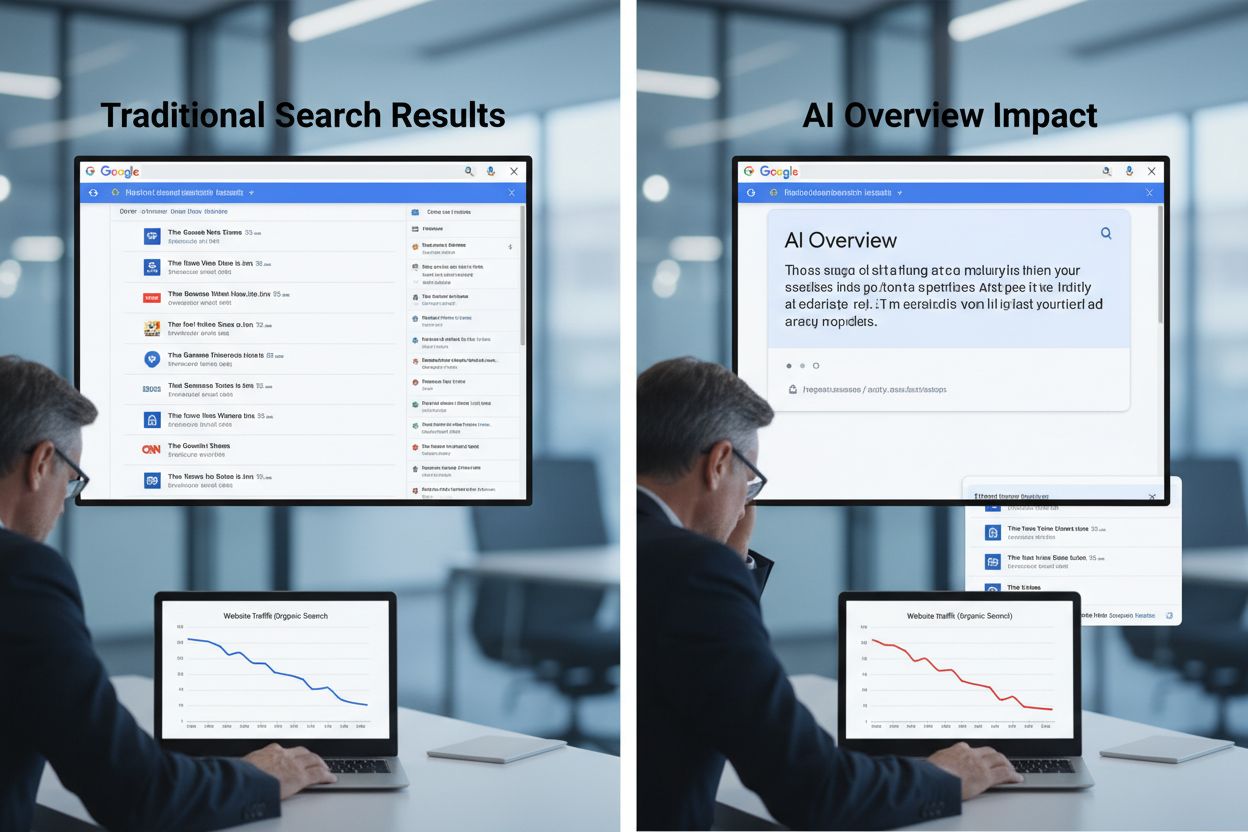
The scale of this problem extends far beyond theoretical concerns, with real-world data demonstrating significant revenue impacts across the publishing industry. Research from Bain & Company confirms that 60% of searches generate zero clicks to any website, while Authoritas documented the 47.5% desktop CTR decline and 37.7% mobile decline following AI Overview rollout. Major publishers have reported even more dramatic losses—Daily Mail experienced an 89% traffic drop from certain AI-driven queries, while Reach plc saw substantial declines across its portfolio of publications. These impacts vary significantly depending on content type, query intent, and geographic market, with some publishers experiencing 20-30% overall traffic reductions while others face losses exceeding 50% in specific content categories. Understanding these statistics is essential because they directly translate to lost advertising revenue, reduced subscription conversions, and diminished audience engagement for publishers of all sizes.
| Metric | Impact | Source |
|---|---|---|
| Zero-click searches | 60% of all searches | Bain & Company |
| Desktop CTR decline | 47.5% reduction | Authoritas |
| Mobile CTR decline | 37.7% reduction | Authoritas |
| Daily Mail traffic drop | 89% for certain queries | Daily Mail |
| Average traffic loss | 20-50% by content type | Industry reports |
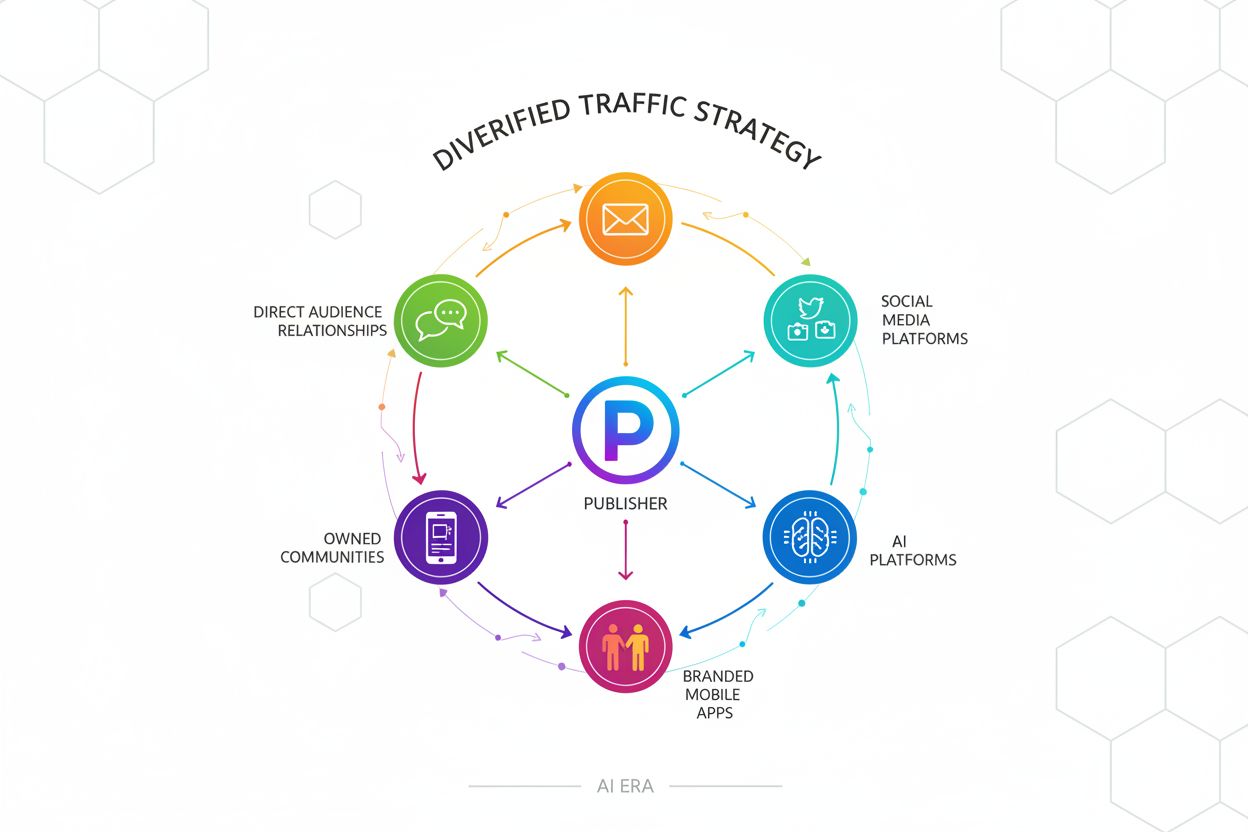
Rather than relying solely on search engine traffic, forward-thinking publishers are deliberately diversifying their traffic sources to reduce dependency on any single platform. Future plc, one of the world’s largest digital publishers, derives only 27% of its traffic from Google, demonstrating the viability of a multi-channel approach. Social media platforms like Facebook, Instagram, and WhatsApp have become increasingly important traffic drivers, with publishers developing dedicated strategies for each platform’s unique audience behaviors and content formats. Meta’s monetization programs, including in-stream ads and branded content partnerships, provide alternative revenue streams that complement traditional search-based models. Direct audience engagement through email newsletters, push notifications, and first-party data collection creates loyal readerships less vulnerable to algorithm changes. Publishers implementing these strategies report more stable traffic patterns, higher lifetime customer value, and reduced vulnerability to AI-driven visibility changes.
Certain content categories naturally resist AI Overviews and continue to drive clicks despite AI summarization efforts. Shopping queries, product comparisons, real estate listings, local business information, time-sensitive news, and sports scores rarely trigger AI Overviews, as these content types require users to take action (purchase, contact, visit) rather than simply consume information. Rich media content—particularly high-quality images, videos, and interactive elements—encourages users to click through to the original source because AI Overviews cannot fully replicate these experiences in text-based summaries. Publishers focusing on these content verticals maintain stronger click-through rates and more resilient traffic patterns. For example, a product review with embedded comparison tables, video demonstrations, and user galleries will drive more clicks than a text-only review, even when both appear in search results. Similarly, local restaurant guides with maps, reservation links, and photo galleries outperform generic summaries. Strategic content planning around these high-click categories provides publishers with a practical defense against AI visibility challenges.
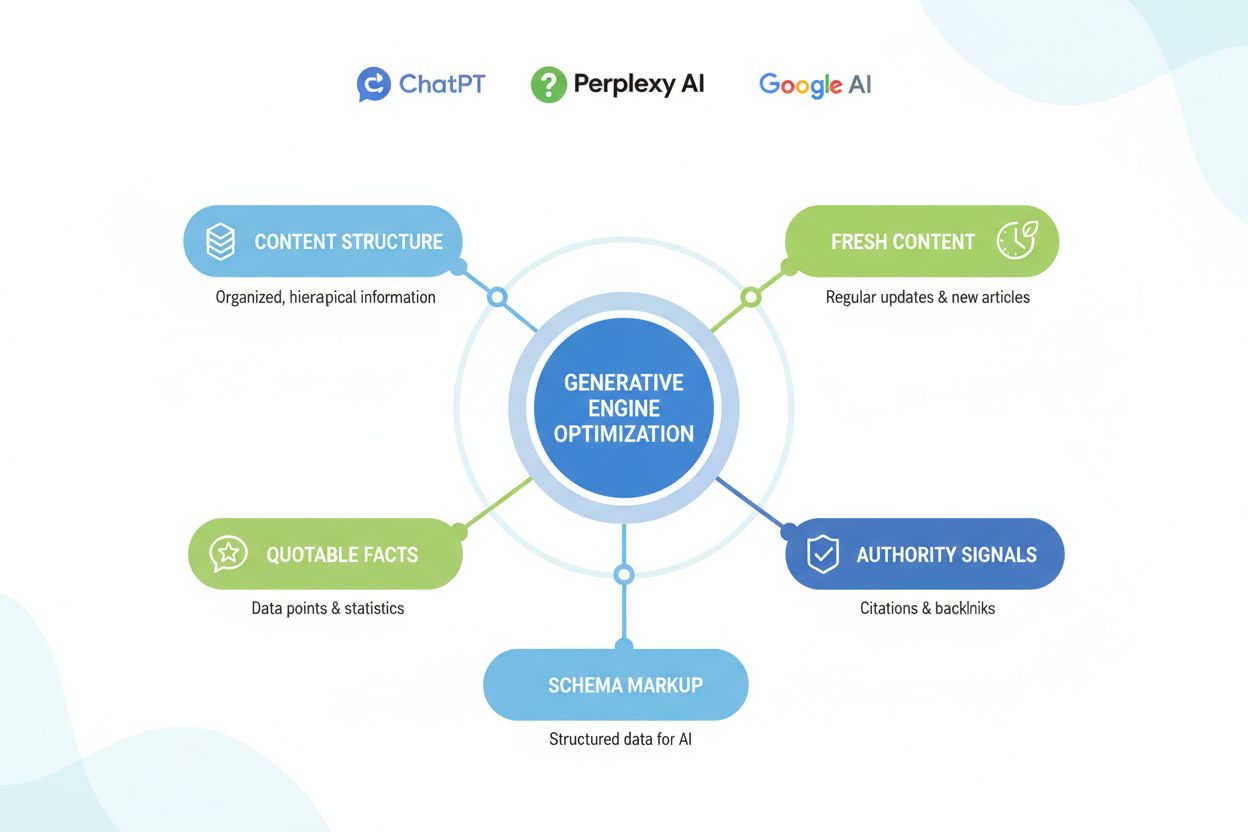
Generative Engine Optimization (GEO) represents the evolution of traditional SEO practices specifically designed to improve visibility in AI-powered search systems. While traditional SEO focuses on ranking in the “blue links” of search results, GEO emphasizes being cited and quoted by AI systems, requiring fundamentally different optimization approaches. Effective GEO strategies include: structuring content with clear hierarchies and subheadings that AI systems can easily parse and cite; creating quotable facts and statistics that AI systems naturally incorporate into summaries; building authority signals through bylines, author expertise, and publication credentials; and maintaining fresh, updated content that AI systems recognize as current and reliable. The E-E-A-T principles (Experience, Expertise, Authoritativeness, Trustworthiness) have become even more critical in the AI era, as these signals help AI systems identify which sources to cite and prioritize. Schema markup implementation—particularly for articles, authors, and organizations—provides structured data that helps AI systems understand and properly attribute content. Publishers should also focus on creating comprehensive, authoritative content that answers questions thoroughly, as AI systems tend to cite sources that provide complete, well-researched answers rather than thin or promotional content.
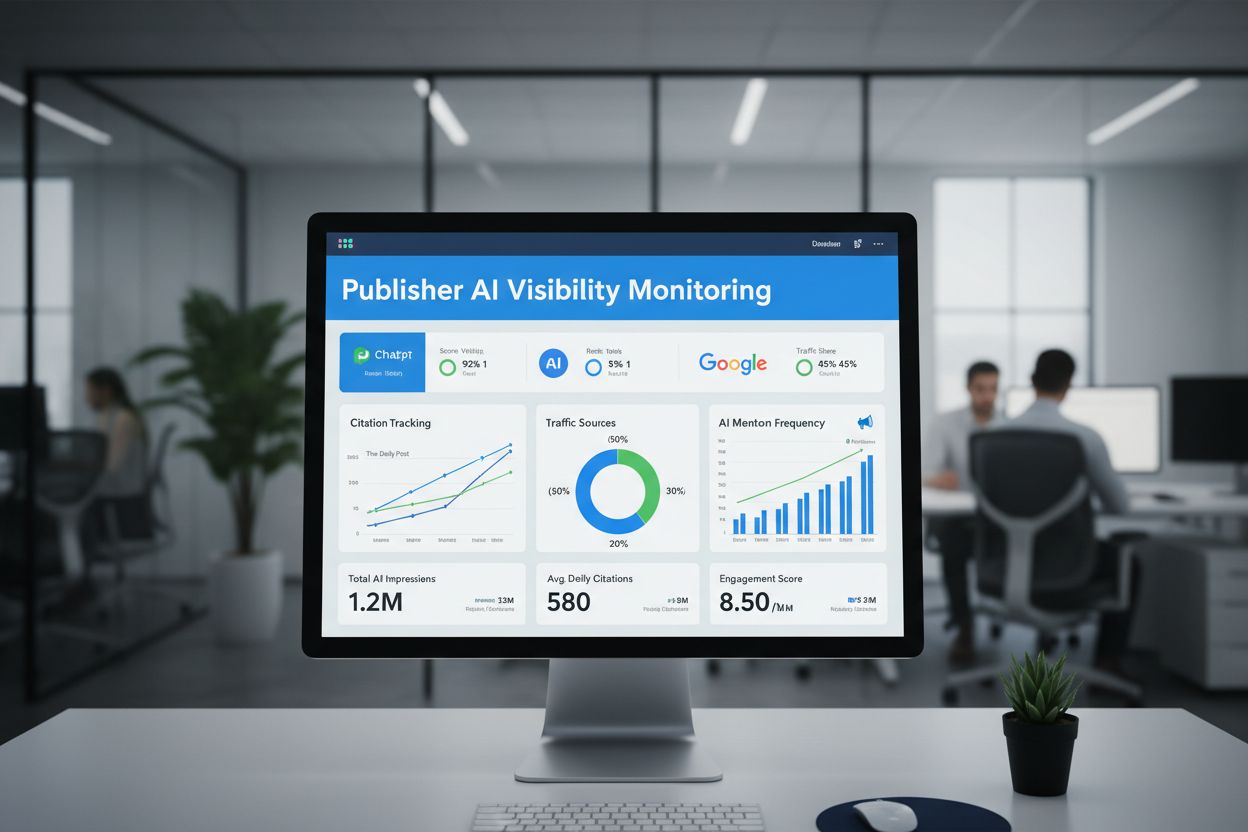
Monitoring Publisher AI Visibility requires specialized tools designed to track how often your content appears in AI Overviews and receives citations. Leading platforms for this monitoring include Semrush, Similarweb, and Profound, which use different methodologies to measure AI visibility:
These tools help publishers understand which content types, topics, and strategies are most effective at maintaining visibility in the AI-driven search landscape.
Publishers must adopt a strategic, tiered approach to AI crawler access rather than implementing blanket blocking policies. Proprietary, time-sensitive, or premium content should be protected through robots.txt restrictions or the Google-Extended opt-out option, which prevents inclusion in Google’s AI training and AI Overview generation. Conversely, evergreen, authoritative content that benefits from AI citations should remain fully accessible and optimized for AI systems, as citations can drive significant traffic and authority signals. This balanced approach recognizes that blocking alone provides limited protection—determined AI systems and competitors can still scrape and repurpose content through other means—while strategic optimization can actually increase visibility and traffic. Publishers should regularly audit their content portfolio to determine which pieces warrant protection and which should be optimized for maximum AI visibility. The goal is not to block all AI access, but to strategically manage which content types are exposed to AI systems based on business value and competitive positioning.
The future of Publisher AI Visibility will be shaped by regulatory developments and industry adaptation. The UK Competition and Markets Authority (CMA) has received recommendations for a Publisher Payment Agreement (PPA) similar to Australia’s News Media Bargaining Code, which could require AI companies to compensate publishers for content used in AI systems. Greater transparency from Google regarding AI Overview selection criteria would help publishers understand and optimize for algorithmic preferences. However, publishers cannot wait for regulatory solutions—the sustainability of digital publishing depends on immediate adaptation through traffic diversification, strategic content optimization, and continuous monitoring of AI visibility metrics. The publishers thriving in this environment are those treating AI Visibility not as a threat to resist, but as a new dimension of search visibility requiring active management and strategic optimization.
Publisher AI Visibility measures how often your content appears in AI-powered search results like Google's AI Overviews and ChatGPT responses. It matters because AI systems now provide direct answers to users without requiring clicks to publisher websites, fundamentally changing how audiences discover content. Publishers with strong AI visibility maintain traffic and authority even as traditional search traffic declines.
Research shows AI Overviews have reduced click-through rates by 47.5% on desktop and 37.7% on mobile. Approximately 60% of searches now result in zero clicks to any website. Some publishers like Daily Mail have experienced drops as high as 89% for certain queries, though impacts vary by content type and industry.
Traditional SEO focuses on ranking high in search results to earn clicks. Generative Engine Optimization (GEO) focuses on getting your content cited and quoted by AI systems. Both are necessary for modern visibility, as AI systems use different criteria when selecting content to cite versus when search engines rank pages.
A strategic, tiered approach works better than blanket blocking. Protect proprietary and premium content through robots.txt or Google-Extended, while optimizing evergreen content for AI visibility. Blocking alone doesn't prevent scraping and can cut off valuable referral traffic from AI platforms.
Specialized tools like Semrush, Similarweb, Profound, and AmICited.com track how often your content appears in AI Overviews and receives citations. These tools use synthetic prompts, clickstream data analysis, and citation tracking to measure your visibility across different AI platforms.
Shopping queries, product comparisons, real estate listings, local business information, time-sensitive news, and sports content rarely trigger AI Overviews. Rich media content like videos, interactive elements, and high-quality images also encourages clicks because AI summaries cannot fully replicate these experiences.
AmICited.com is a specialized AI monitoring platform that tracks how your content is referenced and cited across AI systems like Google AI Overviews, ChatGPT, and Perplexity. It provides publisher-specific metrics, citation tracking, and actionable insights to optimize your AI visibility strategy.
Effective GEO includes: clear content structure with hierarchical headings, quotable facts and statistics, strong authority signals through bylines and credentials, fresh and updated content, proper schema markup implementation, and comprehensive answers that address user questions thoroughly.
Track how your content appears in AI Overviews and ChatGPT responses. Get real-time insights into your AI visibility metrics and optimize your content strategy with AmICited.com.
Learn how publishers can protect traffic and maintain visibility in the AI era. Discover strategies for AI optimization, citation tracking, and diversifying bey...

Learn how news publishers can optimize content for AI citations, track visibility across ChatGPT and Perplexity, and build authority in the AI search era with d...

Discover how CMOs can master AI visibility, monitor brand presence across ChatGPT, Perplexity, and Google AI Overviews, and implement strategic priorities for 2...
Cookie Consent
We use cookies to enhance your browsing experience and analyze our traffic. See our privacy policy.