



Keyword Stuffing
Learn what keyword stuffing is, why it's harmful to SEO, how Google detects it, and best practices to avoid this black-hat tactic that damages rankings and user...
10 min read

Search engine spam refers to deliberate manipulation tactics used to artificially influence search engine rankings through deceptive techniques that violate search engine guidelines. These practices include keyword stuffing, cloaking, link farms, and hidden text, designed to deceive algorithms rather than provide genuine value to users.
Search engine spam refers to deliberate manipulation tactics used to artificially influence search engine rankings through deceptive techniques that violate search engine guidelines. These practices include keyword stuffing, cloaking, link farms, and hidden text, designed to deceive algorithms rather than provide genuine value to users.
Search engine spam, also known as spamdexing, refers to the deliberate manipulation of search engine indexes through deceptive techniques designed to artificially inflate a website’s ranking position. The term encompasses a broad range of unethical practices that violate search engine guidelines, including keyword stuffing, cloaking, link farms, hidden text, and sneaky redirects. These tactics prioritize deceiving search algorithms over providing genuine value to users, fundamentally undermining the integrity of search results. When search engines detect spam on a website, they typically impose penalties ranging from ranking reductions to complete removal from search indexes, making the site invisible to potential visitors.
Search engine spam has existed since the early days of the internet when search algorithms were less sophisticated and easier to manipulate. In the 1990s and early 2000s, spamdexing techniques proliferated as webmasters discovered they could artificially boost rankings through simple keyword repetition and link manipulation. As search engines evolved, particularly after Google’s introduction of PageRank and subsequent algorithm updates like Panda (2011) and Penguin (2012), the detection and penalization of spam became increasingly sophisticated. The emergence of SpamBrain, Google’s AI-based spam-prevention system introduced in 2022, marked a significant shift toward machine learning-driven spam detection. Today, search engines employ advanced algorithms that analyze hundreds of ranking factors, making traditional spam tactics largely ineffective while simultaneously creating new opportunities for sophisticated manipulation attempts.

Track how AI chatbots mention your brand across ChatGPT, Perplexity, and other platforms.
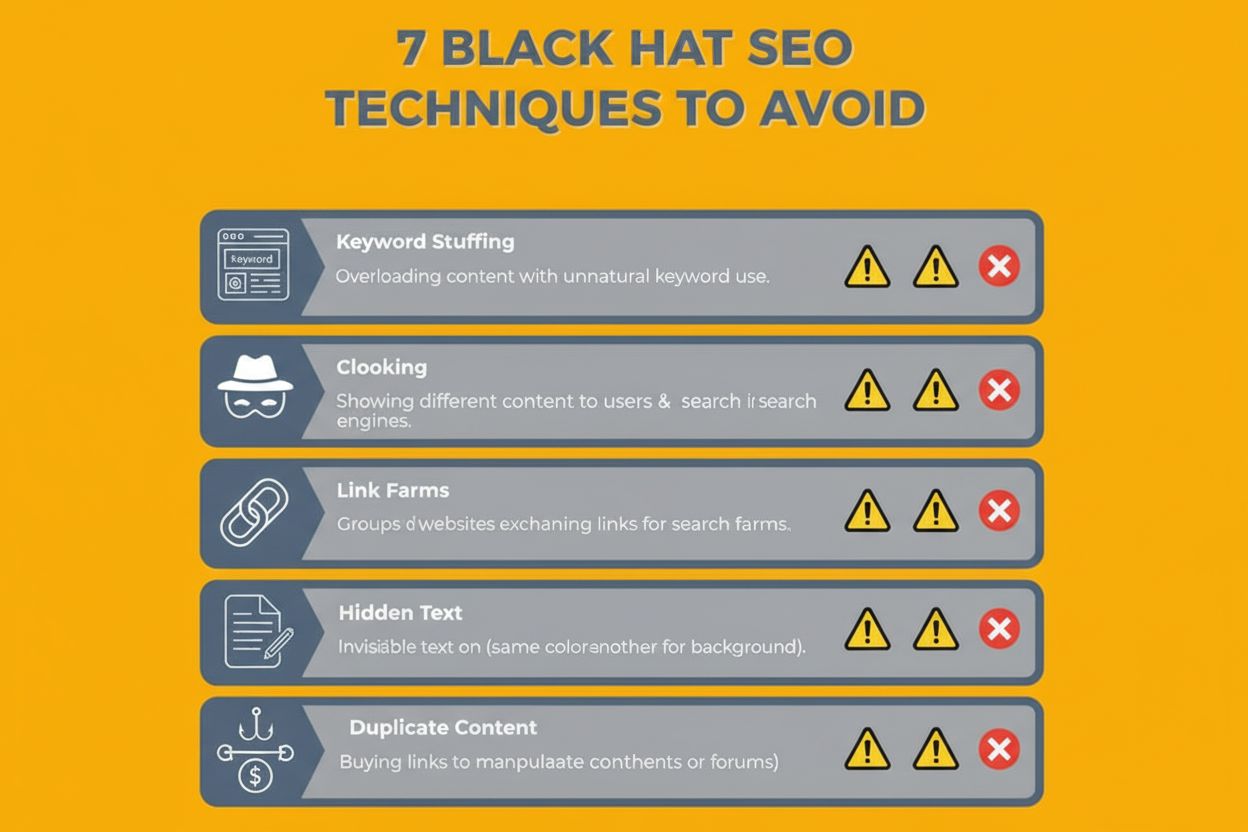
Keyword stuffing remains one of the most recognizable spam tactics, involving the unnatural repetition of target keywords throughout page content, meta tags, and hidden elements. This practice artificially inflates keyword density without providing coherent, valuable information to readers. Cloaking represents a more deceptive approach, where different content is served to search engine crawlers than what users see in their browsers, typically using JavaScript or server-side techniques to detect and differentiate between bot and human visitors. Link farms and Private Blog Networks (PBNs) constitute another major category of spam, involving networks of low-quality websites created solely to generate artificial backlinks to target sites. These networks exploit the fact that search engines historically weighted backlinks heavily as ranking signals, though modern algorithms have become adept at identifying and devaluing such artificial link schemes.
Sneaky redirects manipulate user behavior by sending visitors to different URLs than what search engines crawl, often redirecting users to irrelevant or malicious content after they click through from search results. Hidden text and links involve placing content in colors matching the background, using extremely small fonts, or positioning text off-screen—making it invisible to human visitors while remaining visible to search crawlers. Comment spam and forum spam exploit user-generated content platforms by automatically posting links and promotional content across blogs, forums, and social media platforms. Content scraping involves copying content from other websites without permission or modification, then republishing it to artificially inflate a site’s content volume and capture search traffic. Each of these tactics represents an attempt to game search algorithms rather than earn rankings through legitimate means.
| Aspect | Search Engine Spam (Black Hat) | Legitimate SEO (White Hat) | Gray Hat SEO |
|---|---|---|---|
| Primary Goal | Manipulate algorithms through deception | Provide value to users and earn rankings naturally | Exploit gray areas in guidelines |
| Content Quality | Low-quality, keyword-stuffed, or scraped | High-quality, original, user-focused content | Mixed quality with some questionable tactics |
| Link Building | Artificial links from farms, PBNs, or hacked sites | Natural links earned through quality content | Purchased links or reciprocal linking schemes |
| Technical Methods | Cloaking, hidden text, sneaky redirects | Clean HTML, proper meta tags, structured data | JavaScript redirects, doorway pages |
| User Experience | Poor; content designed for algorithms, not users | Excellent; content designed for user satisfaction | Moderate; some user experience compromises |
| Search Engine Penalties | Manual actions, deindexing, ranking drops | None; continuous improvement in rankings | Potential penalties if detected |
| Long-term Viability | Unsustainable; penalties inevitable | Sustainable; builds lasting authority | Risky; depends on detection likelihood |
| Recovery Time | Months to years; some benefits irreversible | N/A; no penalties to recover from | Weeks to months if caught |
Get the latest insights on AI mentions, brand monitoring, and optimization strategies.
SpamBrain represents a fundamental shift in how search engines combat spam through artificial intelligence and machine learning. Introduced by Google in 2022, SpamBrain analyzes patterns across billions of websites to identify spam characteristics with unprecedented accuracy. The system operates continuously, examining both on-page factors (content quality, keyword distribution, structural elements) and off-page signals (link profiles, domain history, user behavior patterns). SpamBrain’s machine learning models have been trained on vast datasets of known spam and legitimate websites, enabling the system to recognize new spam variations even before they become widespread. The AI system can identify sophisticated spam attempts that might evade rule-based detection systems, including coordinated link schemes, content manipulation, and hacked website exploitation. Google has reported that SpamBrain’s improvements have reduced low-quality, unoriginal content in search results by approximately 45% since its implementation, demonstrating the effectiveness of AI-driven spam detection.
The proliferation of search engine spam directly degrades the quality and usefulness of search results for end users. When spam content ranks highly, users encounter irrelevant, low-quality, or misleading information instead of authoritative sources that genuinely answer their queries. This degradation of search quality undermines user trust in search engines and forces platforms to invest heavily in spam detection and removal. The presence of spam also creates an unfair competitive landscape where legitimate businesses struggle to compete against sites using unethical tactics, at least temporarily. Search engines respond to spam proliferation with periodic spam updates—notable improvements to their spam-detection systems that are announced and tracked separately from core algorithm updates. Google’s December 2024 spam update, for example, applied globally across all languages and took up to one week to fully roll out, demonstrating the scale and frequency of spam-fighting efforts. The continuous arms race between spammers and search engines consumes significant computational resources and engineering effort that could otherwise be directed toward improving search quality.
Websites caught engaging in search engine spam face a spectrum of consequences, from algorithmic penalties to manual actions and complete deindexing. Manual actions represent Google’s most direct response to spam, where human reviewers identify violations and apply specific penalties through Google Search Console. These manual actions notify site owners of specific violations—such as unnatural links, keyword stuffing, or cloaking—and typically result in significant ranking drops or removal from search results. Algorithmic penalties occur when Google’s automated systems detect spam patterns and reduce a site’s visibility without human intervention. These penalties can be temporary, lasting until the spam is removed and the site is recrawled, or permanent if the violations are severe or repeated. In extreme cases, websites are completely deindexed, meaning they no longer appear in Google search results at all, effectively erasing their organic search visibility. Recovery from manual actions requires comprehensive remediation, detailed documentation of changes, and submission of a reconsideration request through Google Search Console. However, even after successful recovery, websites cannot regain ranking benefits previously generated by spammy links—those benefits are permanently lost.
The emergence of AI-powered search systems like ChatGPT, Perplexity, Google AI Overviews, and Claude introduces new dimensions to the search engine spam problem. These systems rely on web content to generate responses, making them vulnerable to spam and low-quality content that could influence their outputs. Unlike traditional search engines that display ranked lists of results, AI systems synthesize information into natural language responses, potentially amplifying the impact of spam content if it influences the training data or retrieval mechanisms. Organizations like AmICited have emerged to address this challenge, providing AI prompts monitoring platforms that track where brands and domains appear in AI-generated responses. This monitoring capability is crucial because spam content appearing in AI responses can damage brand reputation and visibility in ways that differ from traditional search results. As AI systems become increasingly prevalent in how users discover information, the importance of monitoring and preventing spam in these new search paradigms grows exponentially. The challenge for AI systems is distinguishing between authoritative sources and spam content when making decisions about which information to include in generated responses.
Organizations committed to sustainable search visibility should implement comprehensive strategies to avoid spam tactics and maintain compliance with search engine guidelines. Content strategy should prioritize creating original, high-quality, user-focused content that naturally incorporates relevant keywords without artificial repetition or manipulation. Link building efforts should focus on earning natural backlinks through content quality, industry relationships, and legitimate outreach rather than purchasing links or participating in link schemes. Technical SEO should emphasize clean HTML, proper meta tags, structured data implementation, and transparent redirects that treat search engines and users identically. Regular audits of website content, links, and technical elements help identify potential spam issues before they trigger search engine penalties. Monitoring tools should track keyword rankings, backlink profiles, and search visibility to detect unusual changes that might indicate spam problems or competitive attacks. User experience optimization ensures that content serves human visitors first, with search engine optimization as a secondary consideration. Organizations should also establish clear internal policies prohibiting spam tactics and educating team members about the risks and consequences of manipulation attempts.
Assuming spam penalties only happen to sites deliberately trying to manipulate rankings. Sites can be hit by algorithmic spam updates or even manual actions because of legacy content from a previous owner, a hacked section injecting spam links, or an SEO vendor who used link farms without disclosure. Not auditing for these possibilities before assuming a ranking drop is unrelated to spam is a common and costly mistake.
Treating gray hat tactics as safe because they haven’t triggered a penalty yet. Purchased links, reciprocal linking schemes, and JavaScript redirects sit in a gray zone that SpamBrain’s machine learning models are specifically trained to catch as detection improves—the absence of a penalty today isn’t evidence the tactic is sustainable, since Google has reported reducing low-quality, unoriginal content in results by roughly 45% since SpamBrain’s rollout.
Removing spam elements but skipping the reconsideration request, or filing it without documentation. Cleanup alone doesn’t restore rankings after a manual action; the reconsideration request needs to explicitly document what was removed and why, since Google’s reviewers are evaluating whether the violation has genuinely been addressed, not just whether the site looks different today.
Expecting full recovery of pre-penalty rankings. As covered above, ranking benefits generated by spammy links are permanently lost even after successful reconsideration—sites need to rebuild authority through legitimate means rather than expecting a return to prior positions once the penalty is lifted.
Ignoring AI citation exposure when auditing for spam. A site cleaning up traditional search spam issues may not realize that scraped or manipulated content is still being surfaced by AI systems like ChatGPT or Perplexity, since these systems draw on different retrieval mechanisms than traditional SERPs and don’t necessarily reflect a Google penalty in real time.
Start tracking how AI chatbots mention your brand across ChatGPT, Perplexity, and other platforms. Get actionable insights to improve your AI presence.
Learn what keyword stuffing is, why it's harmful to SEO, how Google detects it, and best practices to avoid this black-hat tactic that damages rankings and user...
Black Hat SEO definition: unethical techniques violating search engine guidelines. Learn common tactics, penalties, and why ethical SEO matters for sustainable ...
Cloaking is a black-hat SEO technique showing different content to search engines vs users. Learn how it works, its risks, detection methods, and why it violate...
Cookie Consent
We use cookies to enhance your browsing experience and analyze our traffic. See our privacy policy.