
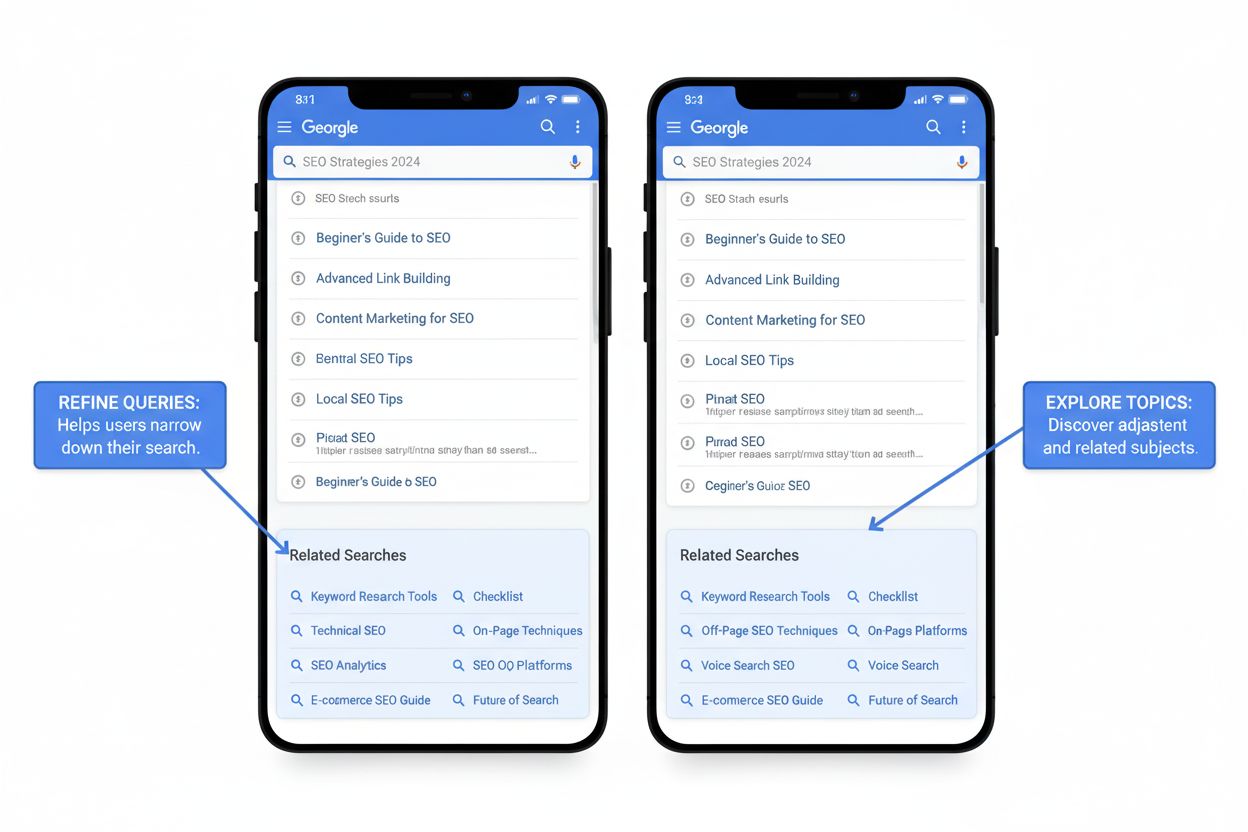
Related Searches
Related Searches are suggested queries at the bottom of Google SERPs. Learn how this SERP feature works, its prevalence, and how to leverage it for keyword rese...
9 min read
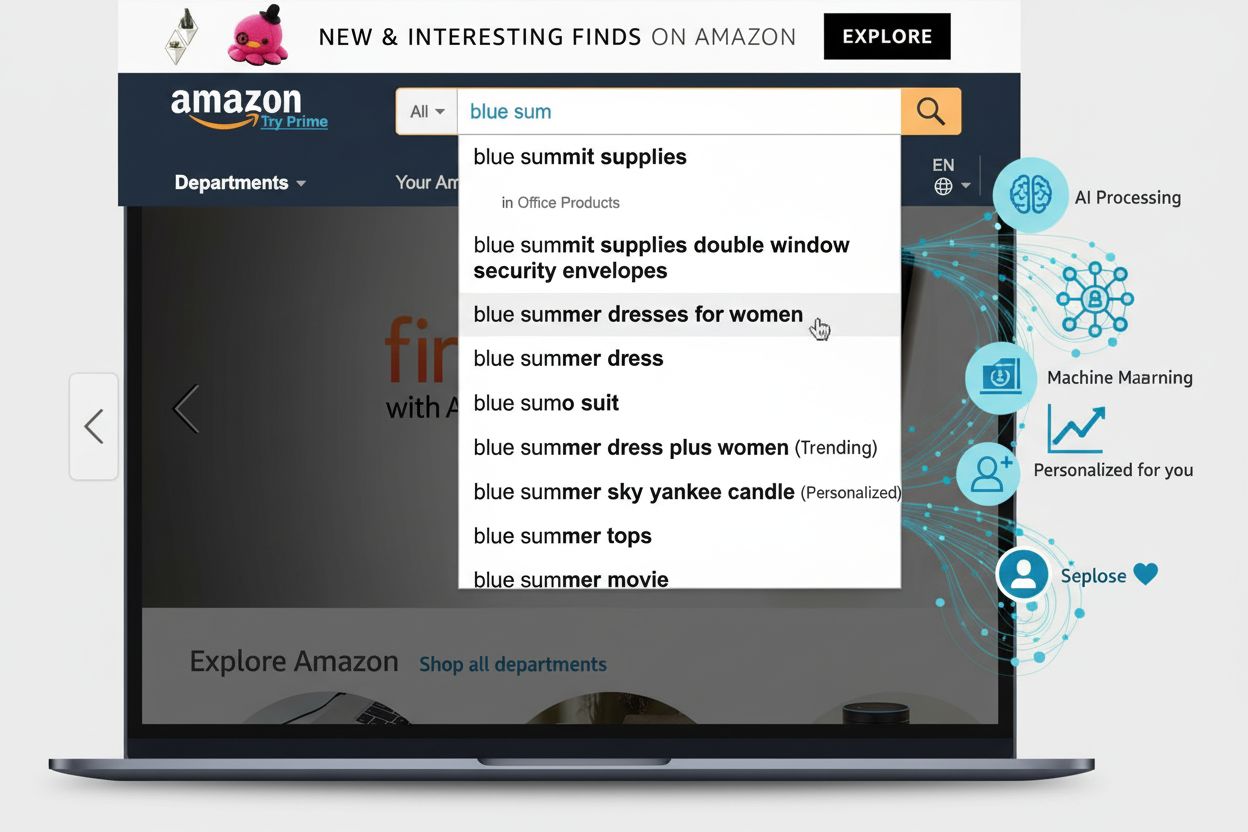
Search suggestions, also known as autocomplete recommendations, are real-time query predictions that appear in a dropdown menu as users type in a search box. These AI-powered suggestions help users find relevant information faster by predicting their search intent based on popular searches, user history, and machine learning algorithms.
Search suggestions, also known as autocomplete recommendations, are real-time query predictions that appear in a dropdown menu as users type in a search box. These AI-powered suggestions help users find relevant information faster by predicting their search intent based on popular searches, user history, and machine learning algorithms.
Search suggestions, also known as autocomplete recommendations or query suggestions, are real-time predictive recommendations that appear in a dropdown menu as users type in a search box. These intelligent suggestions predict what users are searching for based on their partial input, displaying the most relevant and popular search terms that match their query. Search suggestions represent a fundamental feature of modern search interfaces, appearing across search engines like Google, Bing, and DuckDuckGo, as well as on e-commerce platforms, social media sites, and enterprise search systems. The feature was first introduced by Google in 2004 through a junior software developer named Kevin Gibbs, who recognized that predictive search technology could tap into collective search behavior to improve user experience. Today, search suggestions have become an essential component of digital discovery, influencing how billions of users formulate queries and discover information online.
The evolution of search suggestions reflects the broader transformation of search technology from simple keyword matching to sophisticated AI-driven prediction systems. When Google first introduced autocomplete in 2004, it was a revolutionary feature that reduced typing effort and improved search efficiency. Over the past two decades, search suggestions have become ubiquitous across digital platforms, with research from Baymard Institute revealing that 80% of e-commerce sites now provide autocomplete functionality. The adoption of search suggestions has accelerated dramatically with the rise of artificial intelligence and machine learning, enabling more accurate and personalized predictions. According to industry data, approximately 78% of mobile users depend on autocomplete options for search assistance, highlighting the critical importance of this feature for mobile commerce and discovery. The integration of search suggestions with AI systems has created new opportunities for brand visibility but also introduced challenges related to reputation management and search result accuracy. As AI-powered search platforms like ChatGPT, Perplexity, and Google AI Overviews have gained prominence, search suggestions have become increasingly important for brand monitoring and visibility tracking, making them a key focus area for businesses implementing AI search monitoring strategies.
Search suggestions operate through a sophisticated multi-layered technical process that combines data collection, algorithmic processing, and real-time delivery. When a user begins typing in a search box, the system captures each keystroke and immediately queries a massive indexed database of potential matches, which may include popular search terms, historical user behavior, trending topics, and curated suggestion lists. The underlying technology typically involves database indexing for rapid retrieval, caching mechanisms to ensure sub-100-millisecond response times, and machine learning algorithms that continuously improve suggestion quality based on user interactions. The natural language processing (NLP) component analyzes the partial query to understand user intent, while neural networks process patterns from billions of historical searches to predict what users are likely searching for. The system ranks suggestions using multiple factors including search frequency, relevance to the partial query, user location, personalization data, and real-time trending information. Advanced search suggestions systems also incorporate semantic understanding to recognize that different query formulations may represent the same intent, allowing them to suggest variations and related searches that users might not have explicitly typed. The entire process occurs in milliseconds, creating the seamless experience users expect from modern search interfaces.
| Feature | Search Suggestions | Related Searches | Search Results | Trending Searches |
|---|---|---|---|---|
| Timing | Appears while typing (real-time) | Appears after search completion | Appears after search submission | Appears in search interface |
| Purpose | Predict and complete user query | Show alternative query angles | Display matching content | Show popular current topics |
| Data Source | User input, history, popularity | Search results analysis | Index matching and ranking | Real-time search volume data |
| User Action Required | Click or continue typing | Click to refine search | Click to visit content | Click to explore trend |
| Personalization Level | High (location, history, behavior) | Medium (based on results) | Medium (ranking factors) | Low (global or regional) |
| AI/ML Involvement | Heavy (NLP, prediction models) | Medium (semantic analysis) | Heavy (ranking algorithms) | Medium (trend detection) |
| Impact on Discovery | Guides query formulation | Expands search scope | Delivers final content | Reveals emerging topics |
| Brand Visibility Impact | Very High (first impression) | High (alternative positioning) | Critical (final destination) | Medium (awareness building) |
Machine learning algorithms form the backbone of modern search suggestions, enabling systems to learn from vast amounts of search data and continuously improve their predictions. These algorithms analyze patterns in user behavior, identifying which suggestions users click on most frequently and which queries lead to successful outcomes. Natural language processing (NLP) technologies enable the system to understand the semantic meaning of partial queries, recognizing that “iph” likely refers to “iPhone” and “nk” might mean “Nike” or “notebook” depending on context. The machine learning models employed in search suggestions use unsupervised learning techniques to identify clusters of related searches, supervised learning to rank suggestions based on historical click-through data, and reinforcement learning to optimize the ranking algorithm based on user satisfaction signals. Advanced systems incorporate deep learning neural networks that can capture complex patterns in search behavior, including seasonal variations, geographic preferences, and demographic trends. The personalization aspect of search suggestions relies on collaborative filtering techniques that compare a user’s search history with similar users to predict what they might search for next. These AI systems are continuously trained on new data, with models being updated regularly to reflect changing search trends, emerging topics, and evolving user behavior patterns. The sophistication of search suggestions algorithms has reached a point where they can predict user intent with remarkable accuracy, often suggesting exactly what users were planning to search for before they finish typing.
Search suggestions have a profound impact on user experience by reducing friction in the search process and enabling faster discovery of relevant information. Research demonstrates that users who interact with search suggestions complete their searches more quickly, with reduced typing effort and fewer spelling errors. The feature is particularly valuable for mobile users, where typing is more challenging and time-consuming, with studies showing that 78% of mobile users depend on autocomplete for search assistance. When search suggestions are well-implemented, they can increase conversion rates by up to 3x compared to users who browse without using search functionality, according to e-commerce research. The psychological benefit of search suggestions extends beyond efficiency; they also provide users with confidence that they’re searching for the right terms and discovering relevant content. Poor implementation of search suggestions, however, can have the opposite effect, frustrating users with irrelevant recommendations, excessive options, or difficult-to-navigate interfaces. Research from Baymard Institute found that only 19% of e-commerce sites implement search suggestions correctly across all best practices, meaning the majority of users experience suboptimal autocomplete experiences. The quality of search suggestions directly influences user satisfaction, time spent on site, pages per session, and ultimately, conversion rates and customer lifetime value.
Search suggestions have become increasingly important for brand visibility in the era of AI-powered search platforms. When a brand appears in search suggestions for relevant queries, it gains prominent placement before users even complete their search, significantly increasing the likelihood of discovery and engagement. Conversely, the absence of a brand from search suggestions can result in reduced visibility, as users may not think to search for that brand or may discover competitors instead. The emergence of AI search platforms like ChatGPT, Perplexity, Google AI Overviews, and Claude has created new dynamics around search suggestions, as these systems generate their own autocomplete recommendations based on their training data and user interactions. Brands that appear in search suggestions across multiple AI platforms gain competitive advantages in visibility and credibility. Negative or inappropriate search suggestions associated with a brand can severely damage reputation and influence user perceptions before they even click through to content. For example, if a brand name appears in autocomplete with terms like “scam,” “complaint,” or “lawsuit,” it can deter potential customers and investors. This has made search suggestions monitoring a critical component of online reputation management and brand protection strategies. Companies now use specialized tools to track their appearance in search suggestions across search engines and AI platforms, identifying opportunities to improve visibility and addressing negative suggestions that may violate platform policies.
Search suggestions implementation varies significantly across different platforms and use cases, each optimized for specific contexts and user needs. Google Search provides query suggestions based on global search volume, trending topics, and personalized search history, with the algorithm considering factors like location, language, and current events. E-commerce platforms like Amazon and Shopify implement search suggestions that include product names, categories, brands, and attributes, helping customers navigate large product catalogs more efficiently. Social media platforms use search suggestions to help users find other users, hashtags, and content, incorporating social graph data and engagement metrics into their recommendations. Enterprise search systems implement search suggestions to help employees find internal documents, knowledge bases, and resources, often incorporating role-based access controls and organizational hierarchies. Mobile keyboards and voice assistants use search suggestions to predict what users want to type or say, incorporating context from previous interactions and device usage patterns. AI-powered search platforms like ChatGPT and Perplexity generate search suggestions based on their training data and user interaction patterns, creating new opportunities for brand visibility in AI-driven discovery. Each platform’s approach to search suggestions reflects its specific goals, user base, and available data, resulting in diverse implementations that serve different purposes while sharing common principles of prediction, relevance, and user experience optimization.
Search suggestions present both opportunities and challenges for online reputation management, as they can significantly influence user perceptions before users even click through to content. Negative or inappropriate search suggestions associated with a brand name can damage reputation, deter potential customers, and influence investment decisions. Research has documented cases where brands appeared in search suggestions with harmful terms like “scam,” “lawsuit,” “complaint,” or discriminatory language, causing substantial reputational damage. Google acknowledges that its autocomplete predictions aren’t perfect and has implemented systems designed to prevent potentially unhelpful and policy-violating predictions from appearing, including filters for violent, sexually explicit, hateful, disparaging, or dangerous content. When automated systems miss problematic predictions, Google’s enforcement teams remove those that violate policies, though the process can be slow and reactive rather than proactive. Brands and individuals can report inappropriate search suggestions through Google’s feedback mechanism, providing evidence that a suggestion violates policies and requesting removal. However, the removal process is not guaranteed, and suggestions may reappear if search volume for those terms increases again. This has led to the emergence of specialized online reputation management firms that monitor search suggestions and work to suppress negative autocomplete recommendations. The challenge of managing negative search suggestions has become more complex with the rise of AI-powered search platforms, as each platform has its own algorithms and policies for generating and filtering suggestions.
Search suggestions are evolving rapidly as AI technology advances and search behavior changes in response to new platforms and user expectations. The integration of generative AI into search experiences is creating new forms of search suggestions, with AI systems now generating conversational suggestions and multi-turn query recommendations rather than simple keyword completions. Voice search and conversational AI are driving changes in how search suggestions are presented and formatted, with systems now suggesting full phrases and natural language queries rather than just keywords. The rise of multimodal search is expanding search suggestions beyond text to include image, video, and audio suggestions, allowing users to search using multiple modalities simultaneously. Personalization is becoming increasingly sophisticated, with search suggestions now incorporating real-time context like user location, device type, time of day, and current activity to deliver hyper-relevant recommendations. Privacy-preserving approaches to search suggestions are emerging as users become more concerned about data collection, with some systems implementing on-device processing and federated learning to generate suggestions without centralizing user data. The competitive landscape of search suggestions is intensifying as new AI platforms enter the market, each implementing their own approaches to prediction and recommendation. Search suggestions monitoring and optimization are becoming critical components of digital marketing strategies, with brands investing in tools and services to track their visibility across multiple platforms and AI systems. As AI search continues to evolve, search suggestions will likely become even more important for brand visibility, user experience, and the overall discovery landscape.
Organizations implementing search suggestions must balance multiple competing objectives including relevance, performance, user experience, and brand safety. The first step is to establish a comprehensive search suggestions strategy that aligns with business goals, whether that’s improving conversion rates, enhancing user experience, or protecting brand reputation. This requires analyzing search data to understand user intent patterns, identifying high-value search queries, and determining which suggestions will drive the most valuable outcomes. Search suggestions algorithms must be continuously monitored and optimized based on user interaction data, with A/B testing used to validate changes and measure impact on key metrics. Organizations should implement robust filtering systems to prevent harmful, offensive, or policy-violating suggestions from appearing, protecting both users and brand reputation. For businesses using search suggestions as part of their AI search monitoring strategy, integration with tools like AmICited enables tracking of brand visibility across multiple AI platforms and search engines. Regular audits of search suggestions performance should be conducted to identify opportunities for improvement, including analysis of which suggestions drive conversions, which are ignored, and which may be causing user frustration. Training and documentation should be provided to teams responsible for managing search suggestions, ensuring they understand the technical implementation, best practices, and business implications. Finally, organizations should establish processes for responding to user feedback about search suggestions, including mechanisms for reporting inappropriate suggestions and tracking removal requests through platform support channels.
+++
Search suggestions are predictive recommendations that appear while you're typing, before you submit your query, whereas search results are the actual pages or content returned after you complete your search. Suggestions help guide your query formulation in real-time, while results show what's available based on your final search term. Search suggestions use machine learning to predict intent, while results are determined by ranking algorithms that evaluate relevance, authority, and other factors.
Search suggestions are influenced by multiple factors including search volume and popularity, user location and geographic data, search history and personalization, trending topics and current events, language and spelling variations, and keyword associations from trusted sources. Search engines also consider user behavior patterns, seasonal trends, and real-time data to generate relevant suggestions. Additionally, the algorithm filters out harmful, offensive, or policy-violating predictions to maintain quality.
Search suggestions significantly impact brand visibility because they shape user search behavior and can influence which brands users discover. When a brand appears in autocomplete suggestions, it gains prominent placement before users even complete their search, increasing click-through rates and brand awareness. Negative or missing brand suggestions can reduce visibility, while positive suggestions can drive traffic and conversions. For businesses, appearing in search suggestions is critical for AI search monitoring and maintaining competitive positioning.
AI and machine learning power search suggestions through natural language processing (NLP) that understands user intent, predictive algorithms that analyze patterns in search data, and neural networks that learn from billions of search queries. Machine learning models continuously improve by analyzing which suggestions users click on, refining future predictions. These systems process user input in real-time, matching partial queries against indexed databases, and ranking suggestions based on relevance, popularity, and personalization factors.
Yes, negative search suggestions can significantly harm brand reputation by displaying harmful, defamatory, or inaccurate terms associated with a brand name. These suggestions appear prominently before users complete their search, potentially influencing perceptions and purchase decisions. For example, if negative terms like 'scam' or 'complaint' appear in autocomplete for a brand, it can damage trust and reduce conversions. Brands can report inappropriate suggestions to search engines for removal if they violate policies.
Search suggestions have a particularly significant impact on mobile user experience because typing on mobile devices is more challenging and time-consuming than on desktop. According to Baymard Institute research, 78% of mobile users depend on autocomplete options for help. Effective search suggestions reduce typing effort, prevent spelling errors, and help users discover relevant content faster on smaller screens. Poor implementation of mobile search suggestions can lead to user frustration and abandoned searches.
Search suggestions are a critical component of AI search monitoring because they represent how AI systems predict and present information to users. Platforms like AmICited track where brands appear in search suggestions across AI systems like ChatGPT, Perplexity, and Google AI Overviews. Monitoring search suggestions helps brands understand their visibility in AI-driven discovery, identify opportunities for optimization, and detect potential reputation issues before they escalate.
Businesses can optimize their presence in search suggestions by creating high-quality, relevant content that matches user search intent, building strong brand authority and backlinks, maintaining consistent brand messaging across platforms, monitoring and managing their online reputation, and understanding their target audience's search behavior. Additionally, businesses should track their appearance in search suggestions across platforms, respond to negative suggestions through proper reporting channels, and align their content strategy with trending search patterns and user queries.
Start tracking how AI chatbots mention your brand across ChatGPT, Perplexity, and other platforms. Get actionable insights to improve your AI presence.
Related Searches are suggested queries at the bottom of Google SERPs. Learn how this SERP feature works, its prevalence, and how to leverage it for keyword rese...
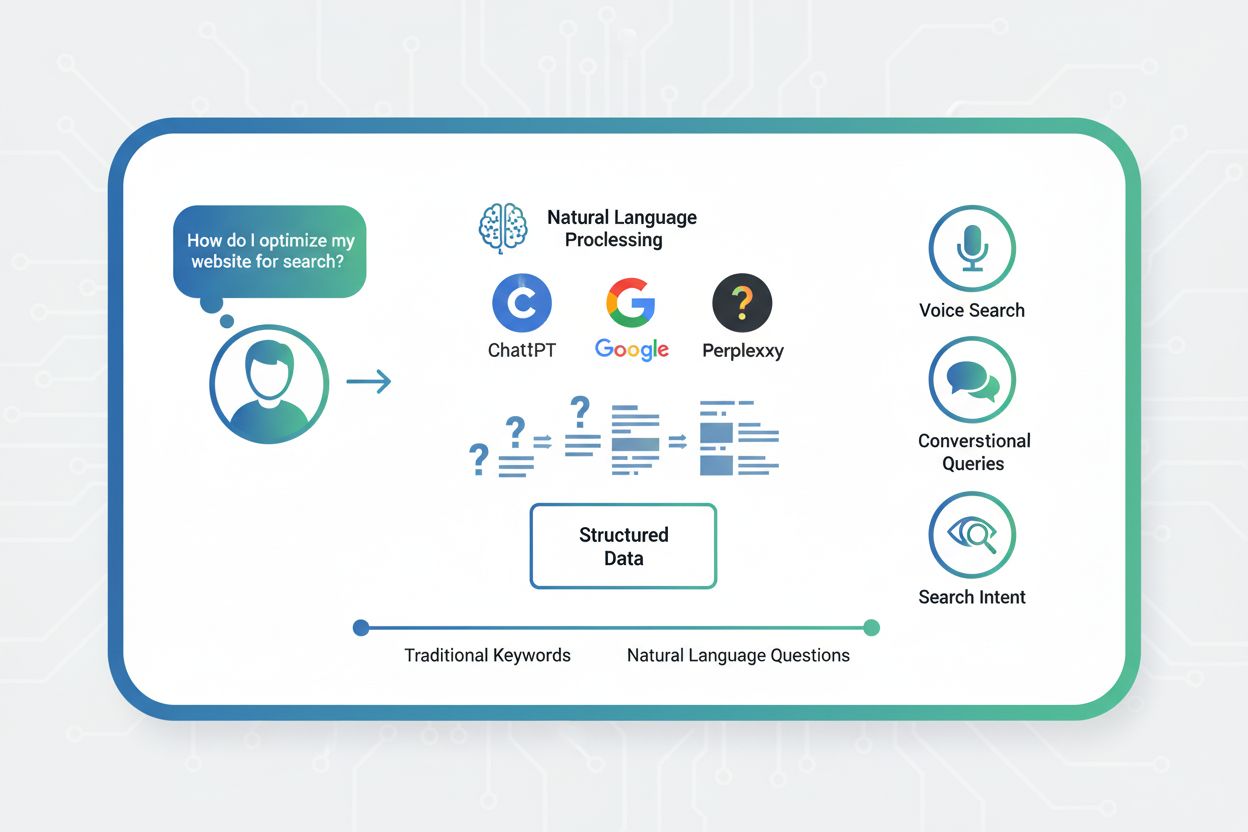
Question-based search is natural language queries phrased as questions. Learn how this shift impacts AI monitoring, brand visibility, and modern SEO strategy fo...
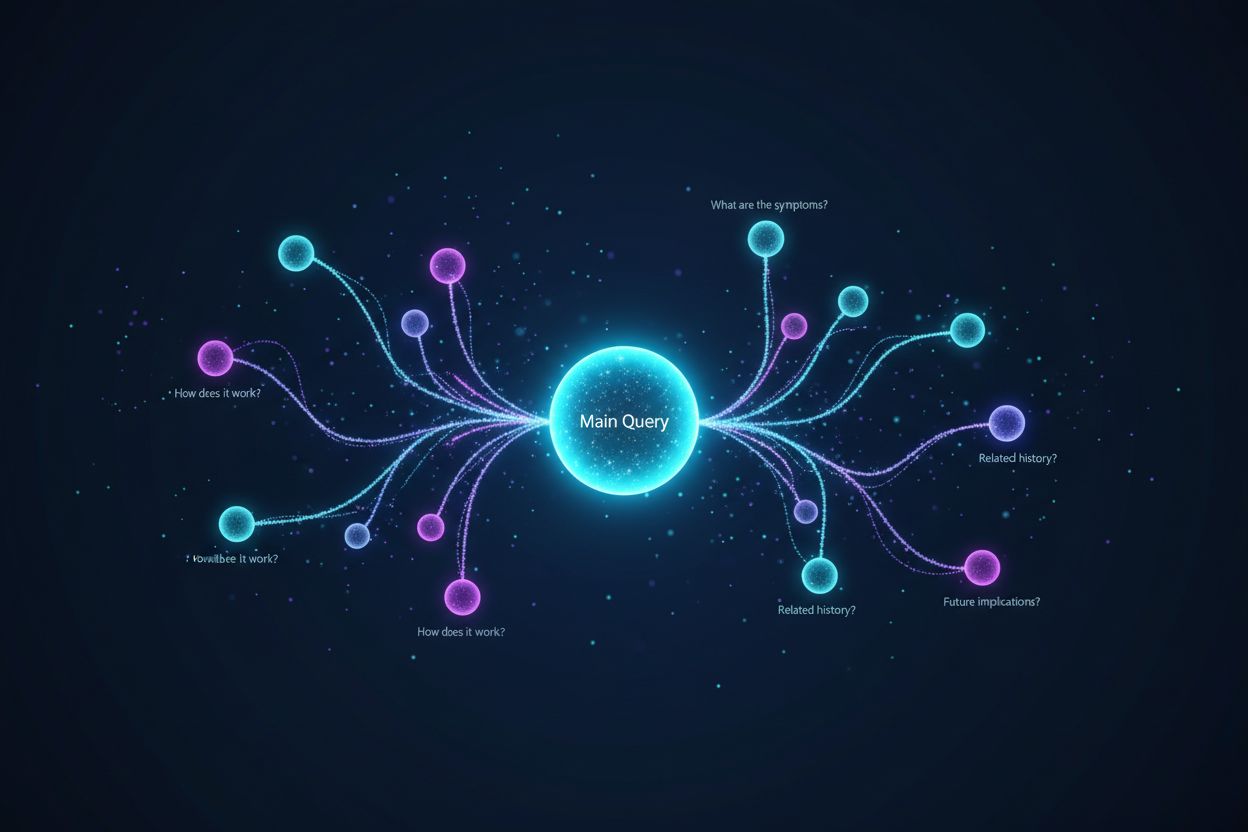
Learn how Query Anticipation helps your content capture extended AI conversations by addressing follow-up questions. Discover strategies to identify anticipated...
Cookie Consent
We use cookies to enhance your browsing experience and analyze our traffic. See our privacy policy.