
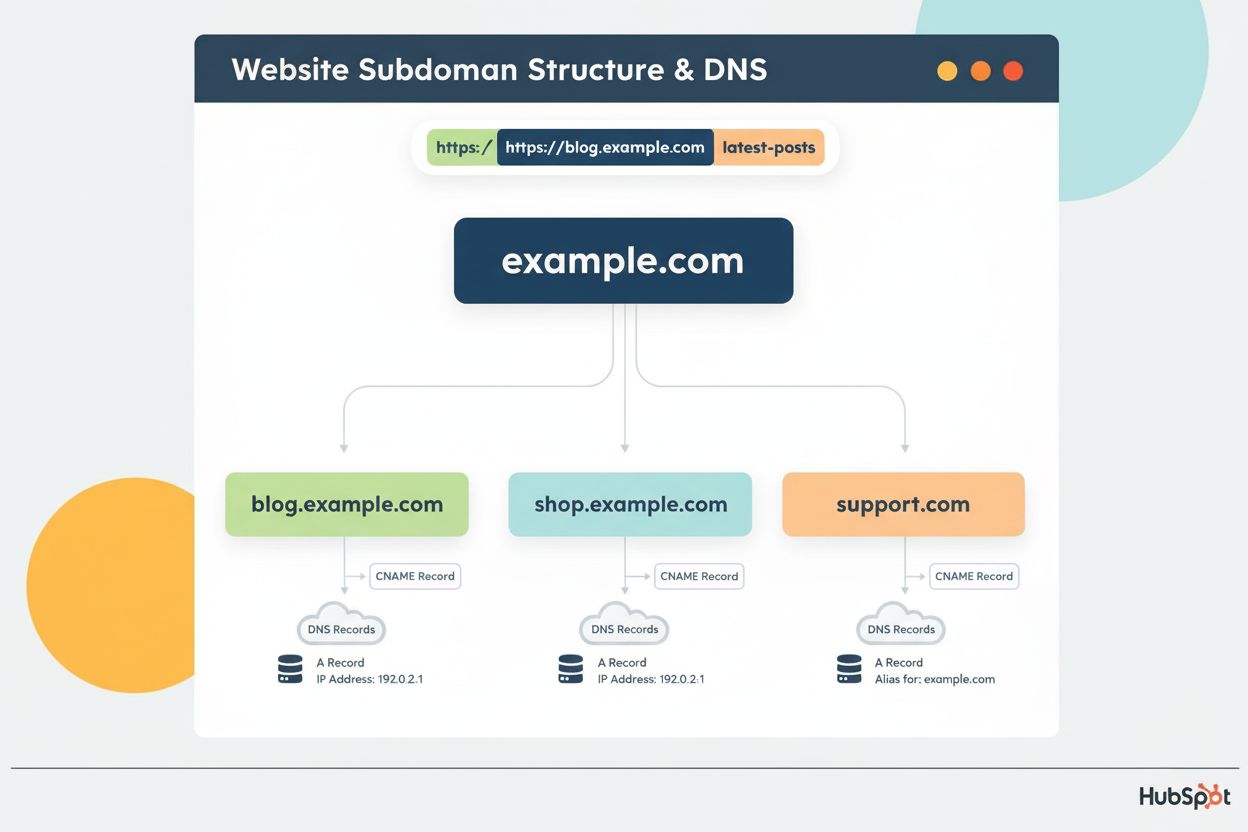
Subdomain
Learn what a subdomain is, how it differs from subfolders, its technical structure via DNS records, and its impact on SEO, brand monitoring, and website organiz...
10 min read

A subdirectory (also called a subfolder) is a folder located within a main domain that organizes website content hierarchically using URL paths like example.com/blog or example.com/products. Subdirectories share the same root domain and benefit from the domain’s accumulated authority, making them SEO-friendly for content organization and site structure.
A subdirectory (also called a subfolder) is a folder located within a main domain that organizes website content hierarchically using URL paths like example.com/blog or example.com/products. Subdirectories share the same root domain and benefit from the domain's accumulated authority, making them SEO-friendly for content organization and site structure.
A subdirectory (also called a subfolder) is a folder located within the main domain of a website that organizes content hierarchically using URL paths. Unlike subdomains, which function as separate entities, subdirectories are integral parts of the root domain and appear in URLs after the domain name. For example, in the URL example.com/blog/seo-guide, both /blog and /blog/seo-guide are subdirectories. Subdirectories share the same domain authority, backlinks, and hosting infrastructure as the main domain, making them a fundamental component of website architecture. They serve as the primary method for organizing content into logical categories and sections while maintaining a unified domain presence. Understanding subdirectories is essential for both website structure optimization and AI monitoring, as they directly impact how search engines and AI systems discover, index, and cite your content.
The concept of subdirectories emerged from traditional file system hierarchies used in computing, where folders organize files into logical groupings. When the World Wide Web was developed, this hierarchical structure was naturally adapted to organize website content. In the early days of the internet, subdirectories were the primary method for organizing website content, as they provided a simple, intuitive way to structure information. As websites grew more complex, alternative approaches like subdomains emerged, leading to ongoing debates about which structure is superior for SEO and user experience. However, modern SEO consensus strongly favors subdirectories for most use cases, particularly after Google’s John Mueller confirmed that both structures are equally valid from a ranking perspective, but subdirectories offer practical advantages in authority consolidation and management simplicity. Today, over 85% of enterprise websites use subdirectories as their primary content organization method, according to industry analysis of major website structures. The evolution of content management systems like WordPress, Drupal, and Hugo has further standardized subdirectory usage, as these platforms natively support hierarchical folder structures for organizing posts, pages, and media.
A subdirectory URL structure follows a specific pattern that distinguishes it from other URL components. The basic anatomy includes the protocol (https://), the domain name (example.com), and the subdirectory path (/blog/article-title). Subdirectories can be nested multiple levels deep, creating hierarchies like /products/electronics/laptops/gaming-laptops. Each level in the hierarchy represents a folder within the previous one, similar to traditional file systems. The URL path always comes after the root domain, and all subdirectories share the same top-level domain (TLD) and second-level domain. According to Google’s URL structure best practices, descriptive subdirectory names using hyphens to separate words are recommended for both user experience and search engine optimization. For example, example.com/blog-posts/seo-tips is preferable to example.com/blogposts/seotips or example.com/blog_posts/seo_tips. The maximum recommended depth for subdirectories is typically 3-4 levels, as deeper nesting can create excessively long URLs that are difficult to share, remember, and crawl efficiently. Research shows that URLs with fewer than 75 characters perform better in search results, making concise subdirectory structures essential for SEO success.
| Aspect | Subdirectory | Subdomain |
|---|---|---|
| URL Format | example.com/blog | blog.example.com |
| Domain Authority | Inherits from main domain | Treated as separate entity |
| Backlink Equity | Consolidated with root domain | May not fully benefit from root domain links |
| SEO Treatment | Part of main domain | Often treated as separate website |
| Management | Simpler, single hosting setup | Requires separate configuration |
| Analytics Tracking | Unified in one property | Requires separate tracking setup |
| Branding Consistency | Maintains main domain branding | Can have distinct branding |
| Use Cases | Blogs, resources, products | International sites, support portals |
| Crawl Efficiency | More efficient crawling | May require separate crawl budget |
| Ranking Speed | Typically faster rankings | Slower ranking potential |
Subdirectories are considered more SEO-friendly than subdomains for most website structures, primarily because they consolidate domain authority. When you build backlinks to your main domain, those links benefit all content within subdirectories, creating a compounding authority effect. Google’s search algorithm treats subdirectories as integral parts of the main domain, meaning they inherit the domain’s reputation, trust signals, and ranking potential. This consolidated approach is particularly valuable for newer websites or those building authority in competitive niches. Research from major SEO platforms shows that content in subdirectories ranks approximately 15-25% faster than equivalent content on subdomains, all else being equal. The link equity distribution is a critical factor: when a high-authority website links to your main domain, that authority flows throughout your subdirectories, strengthening all related content. Additionally, subdirectories benefit from topical clustering, where related content organized in subdirectories signals to search engines that your site has deep expertise in specific topics. For example, organizing all SEO-related content under /seo/ creates a topical cluster that reinforces your authority in that subject area. This clustering effect is particularly important for AI systems like ChatGPT and Perplexity, which analyze content organization to determine expertise and authority when generating responses.
Subdirectories form the backbone of effective information architecture, providing a logical framework for organizing website content. A well-structured subdirectory hierarchy helps both users and search engines understand your site’s organization and find relevant content efficiently. Common subdirectory structures include: /blog/ for articles and posts, /products/ for product categories, /resources/ for downloadable assets, /documentation/ for technical guides, /support/ for customer service content, and /about/ for company information. Hierarchical organization within subdirectories allows for further categorization, such as /products/electronics/laptops/ or /blog/seo/technical-seo/. This multi-level organization helps users navigate intuitively and allows search engines to understand content relationships. Breadcrumb navigation, which displays the subdirectory path to users, has become standard practice and significantly improves user experience. Studies show that websites with clear subdirectory structures have 30-40% lower bounce rates compared to poorly organized sites. The URL structure itself becomes a ranking factor when it clearly indicates content topic and hierarchy. For instance, a URL like example.com/digital-marketing/seo/keyword-research/ immediately communicates the content’s topic and relationship to broader categories, helping both users and search engines understand the content’s context and relevance.
In the context of AI monitoring and brand tracking, subdirectories play a crucial role in how your content appears across different AI systems. Platforms like ChatGPT, Perplexity, Google AI Overviews, and Claude analyze website structure when determining which content to cite and how to present information. Subdirectories help AI systems understand content organization and expertise, making it more likely that your content will be cited when relevant. When AmICited monitors your domain appearances in AI responses, it tracks citations from all subdirectories as part of your overall domain presence. This comprehensive tracking is important because AI systems evaluate the entire domain structure when assessing authority and relevance. A well-organized subdirectory structure signals to AI systems that your site has organized, authoritative content on specific topics. For example, if you have a /research/ subdirectory with multiple in-depth studies, AI systems are more likely to cite that content when generating responses about research-backed information. Subdirectory organization also affects how AI systems crawl and index your content, as clear hierarchies make it easier for AI training systems to understand content relationships and topical authority. This is particularly important for monitoring brand mentions and domain citations across multiple AI platforms, as subdirectories contribute to your overall domain authority and citation frequency.
Blog subdirectories (/blog/) are among the most common implementations, housing all blog posts and articles while maintaining separation from core product or service pages. This structure allows for dedicated blog management, separate analytics tracking, and clear content categorization. Product subdirectories (/products/ or /shop/) organize product listings, categories, and individual product pages, making it easy for users to browse and for search engines to understand product relationships. Resource subdirectories (/resources/, /downloads/, /tools/) house downloadable assets, templates, guides, and other valuable content that supports user engagement. Documentation subdirectories (/docs/, /documentation/, /help/) organize technical documentation, API references, and support materials, particularly common for SaaS and software companies. Service subdirectories (/services/, /solutions/) organize different service offerings or solution categories, helping users find relevant services. Learning subdirectories (/learn/, /academy/, /courses/) organize educational content, tutorials, and training materials. Case study subdirectories (/case-studies/, /success-stories/) showcase client success and business results. News or press subdirectories (/news/, /press/, /announcements/) organize company announcements and press releases. Each of these structures serves specific organizational purposes while contributing to overall domain authority and SEO performance.
The role of subdirectories in website architecture continues to evolve as technology and search engine algorithms advance. Emerging trends suggest increased importance of subdirectory organization for AI systems, as these platforms become more sophisticated in analyzing content structure and topical authority. Voice search and conversational AI are placing greater emphasis on clear content organization, making well-structured subdirectories increasingly valuable. As AI monitoring becomes standard practice for brand management, understanding how subdirectories impact your presence in AI responses will become critical. Future developments in semantic search will likely make subdirectory organization even more important, as search engines and AI systems become better at understanding content relationships and topical expertise. Headless CMS and API-first architectures are changing how subdirectories are implemented, but the fundamental principle of hierarchical content organization remains relevant. Internationalization strategies are increasingly using subdirectories (example.com/de/, example.com/fr/) instead of subdomains, reflecting the SEO advantages of consolidated domain authority. Progressive web apps and dynamic content delivery may change how subdirectories are perceived, but their role in information architecture and SEO will likely remain central. Organizations should continue to prioritize clear, logical subdirectory structures as part of their long-term digital strategy, recognizing that effective organization benefits both human users and AI systems that analyze and cite their content.
A subdirectory is a folder within your main domain (example.com/blog), while a subdomain is a separate entity under your root domain (blog.example.com). Subdirectories share the domain's authority and backlinks, whereas subdomains are often treated as separate websites by search engines. According to Google's John Mueller, both are equally valid for SEO, but subdirectories are generally simpler to manage and maintain.
Subdirectories are considered SEO-friendly because they inherit the domain authority and backlink equity from the main domain. Google treats subdirectories as part of the primary domain, meaning all link authority accumulated by your root domain benefits content in subdirectories. This consolidated authority typically results in faster ranking potential compared to subdomains, making subdirectories the preferred choice for most SEO strategies.
Best practices include keeping URL structures simple and descriptive (example.com/blog/seo-tips), limiting nesting depth to avoid overly long URLs, using hyphens to separate words, and maintaining consistent naming conventions. Avoid excessive parameters and session IDs in subdirectory URLs. Google recommends using your audience's language in URLs and keeping the hierarchy logical to improve both user experience and search engine crawlability.
Subdirectories are crawled and indexed as part of the main domain, allowing search engines to efficiently discover and index content. Since they share the same domain, crawlers can easily follow internal links between the root domain and subdirectories. This unified crawling approach reduces crawl budget waste and ensures that all subdirectory content benefits from the domain's overall crawl priority and indexing efficiency.
Use subdirectories when you want to maintain consistent branding, simplify management, keep content closely tied to your main domain, or when you don't need separate hosting or analytics. Subdirectories are ideal for blogs, resource sections, documentation, and product categories. Use subdomains only when you need distinct design, functionality, or when managing international versions or completely separate business units.
When monitoring brand or domain appearances in AI systems like ChatGPT, Perplexity, or Google AI Overviews, subdirectories are tracked as part of the main domain. AI monitoring platforms like AmICited track how content across all subdirectories appears in AI responses, helping you understand your complete domain presence. This is important because subdirectories contribute to your overall domain authority and visibility in AI-generated content.
Yes, you can create nested subdirectories (example.com/blog/seo/technical-seo), but it's important to limit depth to maintain usability and SEO effectiveness. Google recommends keeping URLs as short and simple as possible. Excessive nesting can create crawlability issues, confuse users, and make URLs difficult to share. Generally, 2-3 levels of subdirectories is optimal for most websites.
When migrating from subdomains to subdirectories, implement 301 redirects from the old subdomain URLs to the new subdirectory URLs. Update your sitemap, internal links, and external backlinks if possible. Monitor your search rankings during the transition using Google Search Console. This migration typically results in improved rankings because subdirectories consolidate authority, though it requires careful planning to avoid losing search visibility.
Start tracking how AI chatbots mention your brand across ChatGPT, Perplexity, and other platforms. Get actionable insights to improve your AI presence.
Learn what a subdomain is, how it differs from subfolders, its technical structure via DNS records, and its impact on SEO, brand monitoring, and website organiz...
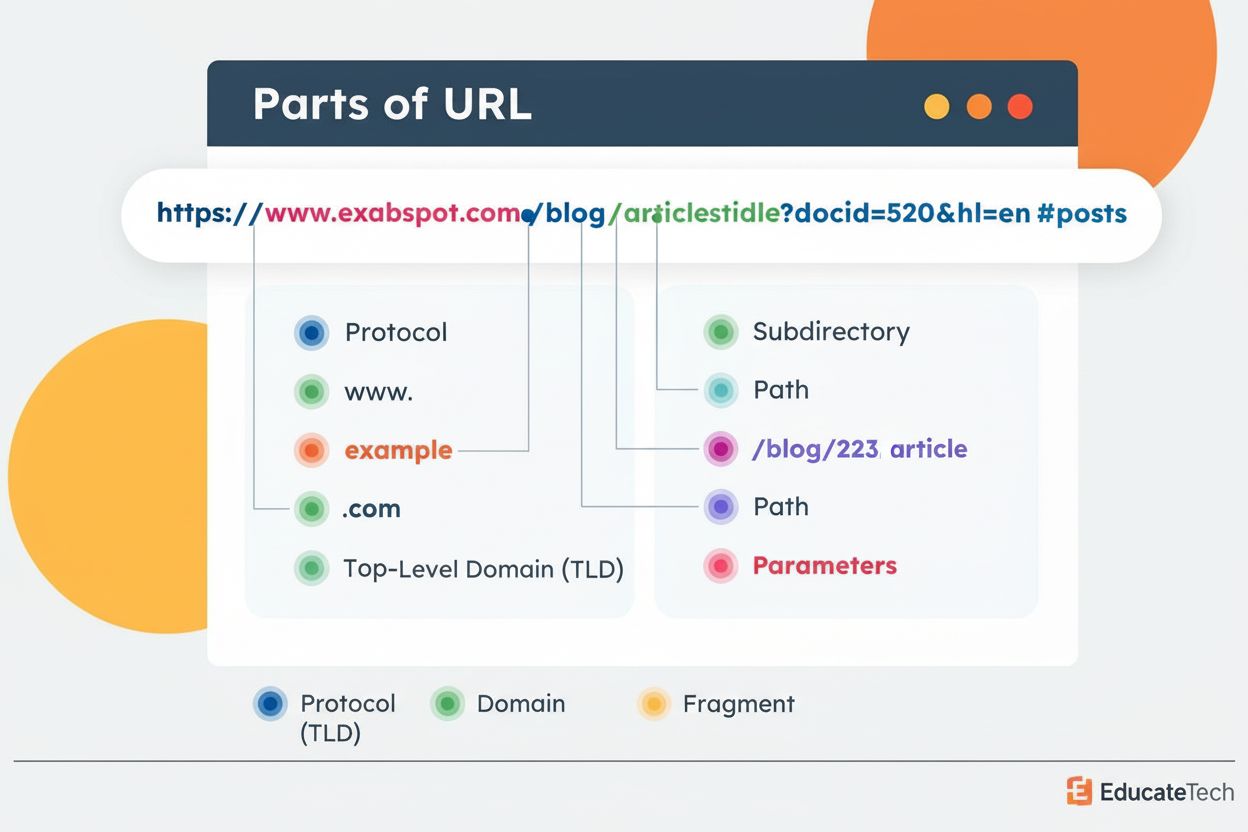
URL structure is the format and organization of webpage addresses including protocol, domain, path, and parameters. Learn how proper URL structure impacts SEO, ...

Learn how pagination impacts AI visibility. Discover why traditional page division helps AI systems find your content while infinite scroll hides it, and how to...
Cookie Consent
We use cookies to enhance your browsing experience and analyze our traffic. See our privacy policy.