

Subdirectory
Learn what a subdirectory is, how it differs from subdomains, and why it matters for SEO, website organization, and AI monitoring of domain appearances.
9 min read
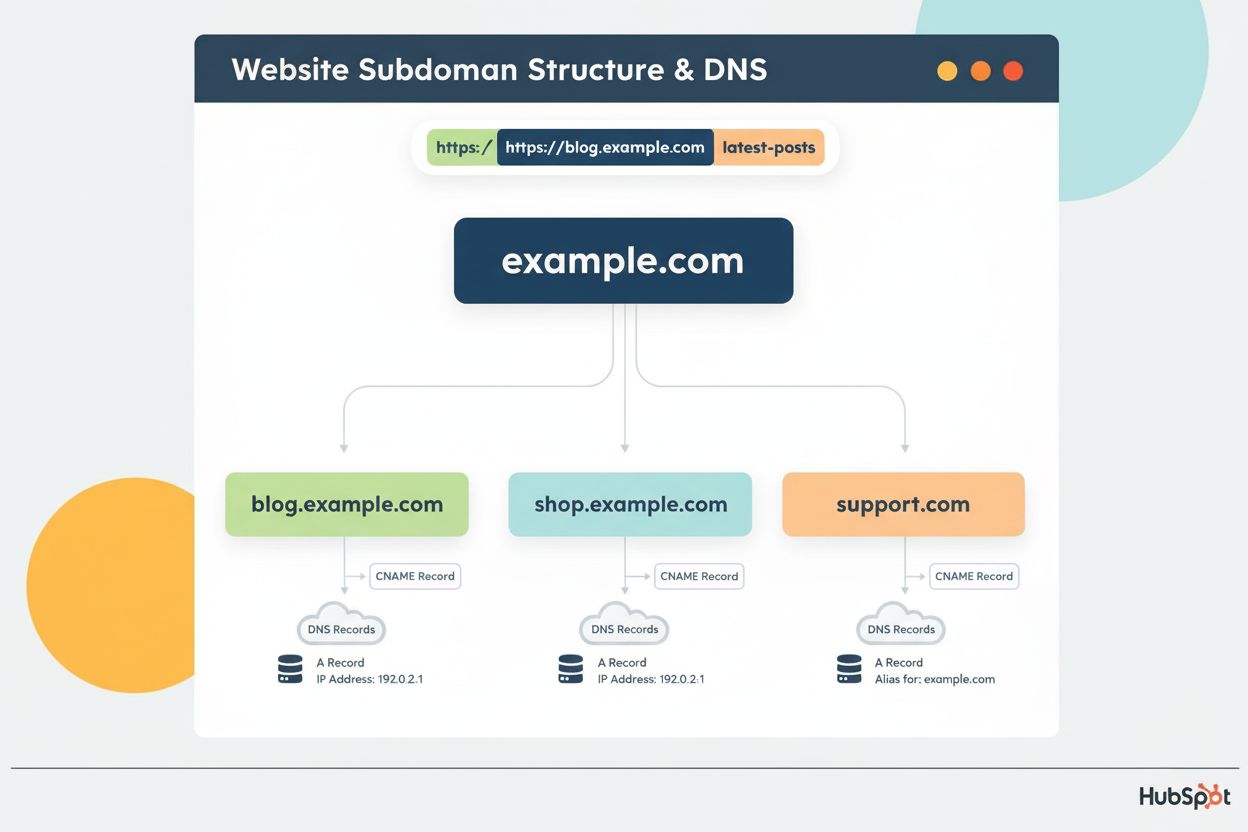
A subdomain is a prefix added to a domain name that creates a distinct web address functioning as a separate section of a website. Subdomains appear before the main domain name (e.g., blog.example.com) and are managed through DNS records, allowing organizations to organize content, target specific audiences, or create dedicated microsites while maintaining brand association.
A subdomain is a prefix added to a domain name that creates a distinct web address functioning as a separate section of a website. Subdomains appear before the main domain name (e.g., blog.example.com) and are managed through DNS records, allowing organizations to organize content, target specific audiences, or create dedicated microsites while maintaining brand association.
A subdomain is a prefix added to a domain name that creates a distinct web address functioning as a separate section of a website. In the URL structure, the subdomain appears before the main domain name and is separated by a dot. For example, in the URL blog.example.com, “blog” is the subdomain, “example” is the second-level domain, and “.com” is the top-level domain. Subdomains allow website owners to organize content into separate sections while maintaining brand association with the main domain. They are managed through DNS records (Domain Name System records) that direct traffic to specific servers or IP addresses. Unlike simple folder structures, subdomains function as independent entities in the eyes of search engines and web browsers, requiring their own configuration, SSL certificates, and management strategies. Organizations use subdomains to create targeted experiences for different audiences, languages, regions, or business functions without purchasing additional domain names.
The concept of subdomains emerged alongside the development of the Domain Name System (DNS) in the 1980s, which established the hierarchical structure of internet addressing. As websites grew more complex and organizations expanded their online presence, the need for organizing multiple sections under a single brand became apparent. Early implementations of subdomains were primarily technical—used for email servers (mail.example.com) and FTP services (ftp.example.com). However, as the web matured and e-commerce, blogging, and content management systems became prevalent, subdomains evolved into strategic tools for content organization and audience segmentation. By the 2000s, major platforms like Google, Yahoo, and Facebook had established sophisticated subdomain architectures to serve different user experiences and regional content. Today, research indicates that approximately 6.5 million unique subdomains are actively indexed across the internet, reflecting their widespread adoption for everything from mobile optimization to international SEO. The rise of AI-powered search and monitoring platforms has added a new dimension to subdomain importance, as these systems now track and cite subdomains separately when referencing brand content in AI responses.
Subdomains operate through a hierarchical DNS structure that allows multiple web addresses to exist under a single registered domain. When you create a subdomain, you’re essentially adding a new DNS record that points to either an IP address (using an A record) or another domain name (using a CNAME record). An A record directly associates the subdomain with a specific server’s IP address, making it ideal for hosting unique content on dedicated servers. A CNAME record, conversely, creates an alias that points to another fully qualified domain name, useful when you want multiple subdomains to share the same hosting infrastructure. The DNS hierarchy works from right to left: the top-level domain (.com, .org, .edu) is at the highest level, followed by the second-level domain (your brand name), and then any number of subdomains. Each label in a subdomain can contain 0 to 63 characters, and the complete domain name cannot exceed 253 characters. When a user types a subdomain URL into their browser, the DNS resolver queries nameservers to find the corresponding DNS record, which then directs the request to the appropriate server. This technical architecture enables organizations to maintain multiple distinct web properties under a single domain registration while keeping them logically and physically separated.
| Aspect | Subdomain | Subdirectory (Subfolder) | Separate Domain |
|---|---|---|---|
| URL Example | blog.example.com | example.com/blog | blog.com |
| Search Engine Treatment | Treated as separate site | Part of main domain | Completely separate site |
| SEO Authority | Builds own authority independently | Inherits parent domain authority | Builds own authority independently |
| Setup Complexity | Requires DNS records, SSL cert | Simple folder structure | Requires new domain registration |
| Cost | Usually included with domain | No additional cost | Separate domain registration fee |
| Best For | Major content sections, regional sites | Related content supporting main topic | Completely different brand/business |
| Link Equity Flow | Does not pass to main domain | Passes to main domain | Does not pass to main domain |
| Analytics Tracking | Requires separate setup | Shares main domain analytics | Separate analytics account |
| Brand Association | Clear brand connection | Strong brand connection | May confuse brand identity |
| Maintenance | More complex management | Simpler management | Independent management |
Subdomains serve numerous strategic purposes across different industries and business models. E-commerce companies frequently use shop.example.com or store.example.com to separate their transactional platform from informational content on the main domain, allowing for specialized payment processing, inventory management, and user experience optimization. Media organizations and news outlets leverage subdomains for content segmentation—The New York Times uses cooking.nytimes.com for culinary content, maintaining distinct editorial standards and audience targeting. International businesses implement language-specific subdomains like es.example.com for Spanish content or de.example.com for German content, enabling international SEO strategies and localized user experiences. Technology companies often create support.example.com or help.example.com subdomains to host dedicated customer service platforms with ticketing systems, knowledge bases, and community forums. Mobile-first organizations maintain m.example.com subdomains optimized for mobile devices, though this practice has declined with responsive design adoption. Development teams use staging.example.com or dev.example.com for testing new features before production deployment. Marketing teams create campaign-specific subdomains to track performance metrics and isolate campaign traffic from main site analytics. Educational institutions establish academy.example.com or learning.example.com for online courses and training materials. These diverse applications demonstrate how subdomains provide flexibility in website architecture while maintaining centralized brand identity.
The SEO impact of subdomains represents one of the most debated topics in digital marketing, with nuanced implications for search visibility and ranking authority. Search engines treat subdomains as separate websites, meaning they don’t automatically inherit the link equity, domain authority, or ranking power of the main domain. This separation requires each subdomain to build its own backlink profile and establish independent topical authority through content optimization and external linking. However, this separation also provides strategic advantages: subdomains can rank independently for different keywords, potentially increasing your brand’s presence in search results. Google’s John Mueller has clarified that subdomains work best when content can stand independently, but content tightly connected to the main site performs better in subdirectories. Research from SEO experts indicates that approximately 68% of enterprises consider subdomain strategy when planning website expansion, recognizing both opportunities and challenges. The key to subdomain SEO success involves creating genuinely distinct content that serves specific audiences or topics, implementing proper internal linking between the subdomain and main domain, ensuring each subdomain has its own XML sitemap and robots.txt file, and maintaining consistent brand messaging across all properties. Poorly implemented subdomains with duplicate or thin content can actually harm overall site performance by diluting crawl budget and confusing search engine understanding of your site’s primary purpose. Strategic subdomain implementation, conversely, can expand your keyword targeting capabilities and improve user experience for specific audience segments.
In the emerging landscape of AI-powered search and content generation, subdomains have become increasingly important for brand monitoring and citation tracking. Platforms like AmICited track how brands appear across AI systems including ChatGPT, Perplexity, Google AI Overviews, and Claude, and subdomains represent distinct touchpoints in this monitoring ecosystem. When an AI system cites your content, it may reference your main domain (example.com), a specific subdomain (blog.example.com), or multiple subdomains across different responses. This fragmentation means that comprehensive brand monitoring requires tracking not just your primary domain but all active subdomains. Organizations with multiple subdomains need to understand that each subdomain may have different citation patterns, visibility levels, and authority in AI responses. For instance, a company’s support.example.com might be cited frequently in customer service contexts, while blog.example.com appears in informational queries. AI monitoring tools must account for this subdomain complexity to provide accurate brand visibility metrics. The rise of generative AI in search has made subdomain tracking essential for understanding your complete digital footprint—a brand that only monitors its main domain risks missing significant portions of its online presence and citation opportunities. This represents a fundamental shift from traditional SEO monitoring, where subdomains were often treated as secondary concerns, to a more holistic approach where every subdomain contributes to overall brand authority and visibility in AI-generated content.
Successfully implementing subdomains requires careful planning and adherence to best practices that balance technical requirements with business objectives. First, establish clear organizational logic for your subdomain structure—each subdomain should serve a distinct purpose and target a specific audience or content category, avoiding arbitrary subdomain creation that complicates management. Second, implement proper SSL certificates for each subdomain to ensure security and maintain user trust; modern SSL providers offer wildcard certificates that cover all subdomains under a domain. Third, configure DNS records correctly by choosing between A records for dedicated hosting or CNAME records for shared infrastructure, and ensure your DNS provider supports your chosen approach. Fourth, set up separate analytics tracking for each subdomain using Google Analytics or similar tools, implementing proper cross-domain tracking to understand user journeys across subdomains. Fifth, create distinct content strategies for each subdomain rather than duplicating main domain content, as search engines penalize duplicate content and users expect specialized content on dedicated subdomains. Sixth, establish internal linking architecture that connects related content across subdomains while maintaining clear navigation hierarchies. Seventh, monitor subdomain performance through regular audits of traffic, rankings, and user engagement metrics. Eighth, consider your target audience when deciding between subdomains and subdirectories—subdomains work better for significantly different content or audiences, while subdirectories suit related content supporting your main topic. Finally, plan for scalability by designing your subdomain structure to accommodate future growth without requiring major architectural changes.
The role of subdomains in digital strategy continues to evolve as technology and user behavior shift. The rise of headless CMS platforms and API-driven architectures is changing how subdomains are implemented, with more organizations using subdomains to serve different content formats and API endpoints rather than just traditional web pages. Progressive Web Apps (PWAs) and single-page applications (SPAs) are influencing subdomain strategy, as these technologies blur the lines between traditional website sections and dedicated applications. The increasing importance of AI-powered search and content generation means subdomains will become more critical for brand visibility—organizations must ensure all subdomains are discoverable and properly cited by AI systems. Voice search optimization and conversational AI are creating new subdomain use cases, with companies potentially creating specialized subdomains for voice-optimized content. The evolution of privacy regulations and data protection laws may drive increased use of subdomains for compliance purposes, with separate subdomains handling different data categories or user types. Edge computing and distributed content delivery are enabling more sophisticated subdomain implementations that optimize performance across global networks. Looking forward, the distinction between subdomains and other organizational structures may blur as serverless architectures and microservices become more prevalent, potentially replacing traditional subdomain structures with more granular, API-based approaches. However, for the foreseeable future, subdomains remain essential tools for website organization, audience targeting, and brand management. Organizations that master subdomain strategy—understanding both technical implementation and SEO implications—will be better positioned to maximize their digital presence across traditional search, AI-powered platforms, and emerging technologies. The integration of subdomain monitoring into comprehensive brand monitoring strategies represents the next frontier, where tracking citations across all domain variations becomes as important as tracking the main domain itself.
A subdomain (e.g., blog.example.com) is treated as a separate website by search engines and has its own DNS records, while a subdirectory (e.g., example.com/blog) is a folder within the main domain that shares SEO authority with the root domain. Subdomains require separate setup and management, whereas subdirectories inherit the parent domain's authority and are simpler to implement.
Search engines treat subdomains as separate entities from the main domain, meaning they don't automatically inherit link equity or domain authority. Each subdomain must build its own SEO authority through backlinks and optimization. However, subdomains can increase your brand's search visibility by allowing multiple listings in search results and help organize content by topic or audience.
Common subdomains include www.example.com (main website), blog.example.com (blog content), shop.example.com (e-commerce), support.example.com (customer support), m.example.com (mobile version), and language-specific subdomains like es.example.com or fr.example.com. Businesses also use subdomains for staging environments, regional content, and dedicated campaigns.
Subdomains are created by adding DNS records through your domain registrar or web hosting provider. The two main types are A records (pointing to specific IP addresses) and CNAME records (pointing to other domain names). Most hosting providers offer user-friendly tools to create subdomains without manual DNS configuration, though understanding DNS structure helps with advanced management.
Yes, subdomains are important for brand monitoring platforms like AmICited because they represent distinct sections of your web presence. When tracking brand mentions in AI responses (ChatGPT, Perplexity, Google AI Overviews), subdomains may be cited separately from the main domain, requiring separate monitoring strategies to ensure comprehensive brand visibility across all your digital properties.
No, subdomains typically don't require separate hosting accounts. They usually share the same server and hosting resources as the main domain, though they have their own DNS records. However, depending on your hosting plan and traffic requirements, you may choose to host subdomains on different servers for performance or organizational reasons.
Most domain registrars and hosting providers allow unlimited subdomains, though some may have technical limits based on DNS record capacity. GoDaddy, for example, allows up to 500 DNS records per domain with standard DNS and 1,500 with premium DNS. The practical limit depends on your hosting provider's infrastructure and your specific needs.
A wildcard subdomain uses an asterisk (*) to match any subdomain name (e.g., *.example.com) and redirect all undefined subdomains to a specific page or server. This prevents 404 errors for misspelled or non-existent subdomains and is useful for dynamic subdomain systems or catch-all configurations that need to handle numerous subdomain variations.
Start tracking how AI chatbots mention your brand across ChatGPT, Perplexity, and other platforms. Get actionable insights to improve your AI presence.
Learn what a subdirectory is, how it differs from subdomains, and why it matters for SEO, website organization, and AI monitoring of domain appearances.
Learn what ccTLDs are, how they work, their SEO impact, and why they matter for international businesses. Comprehensive guide to country code domain extensions.
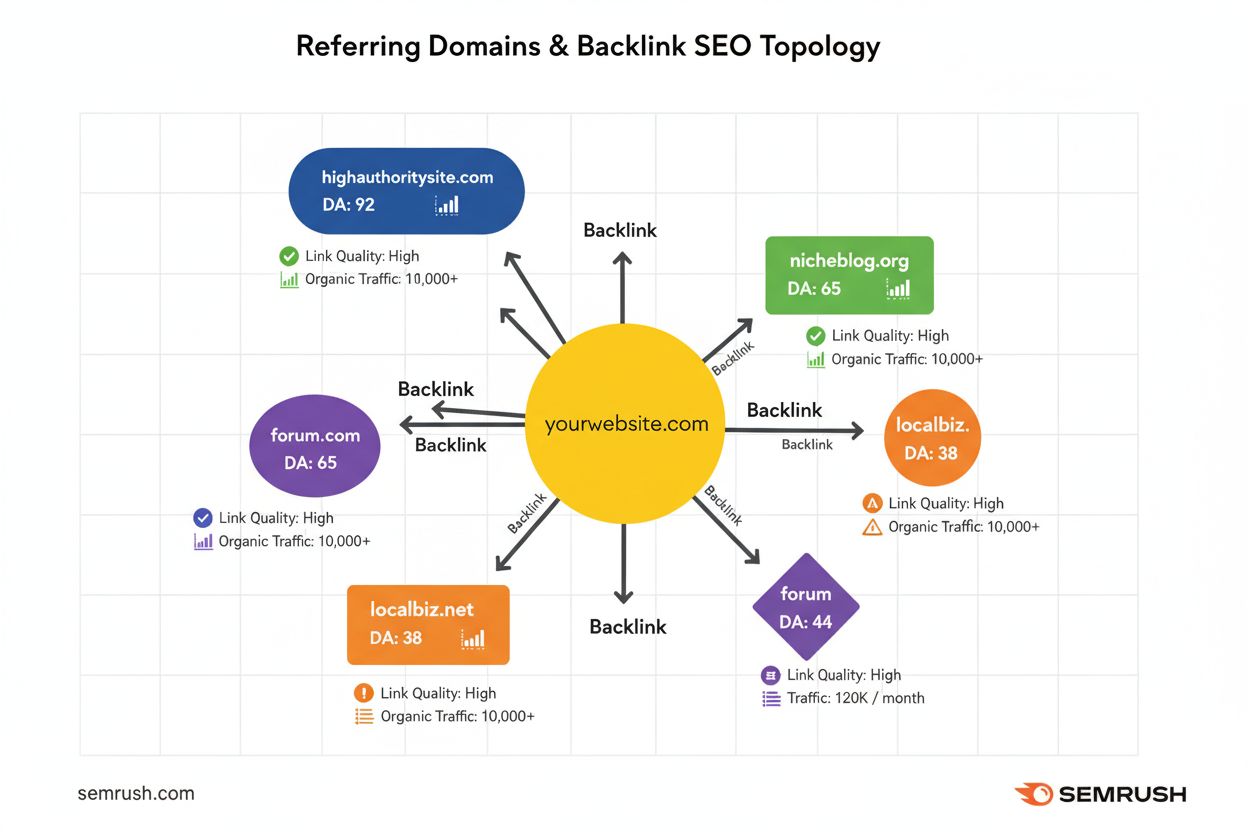
Learn what referring domains are, why they matter for SEO rankings, and how they differ from backlinks. Discover strategies to acquire high-quality referring do...
Cookie Consent
We use cookies to enhance your browsing experience and analyze our traffic. See our privacy policy.