
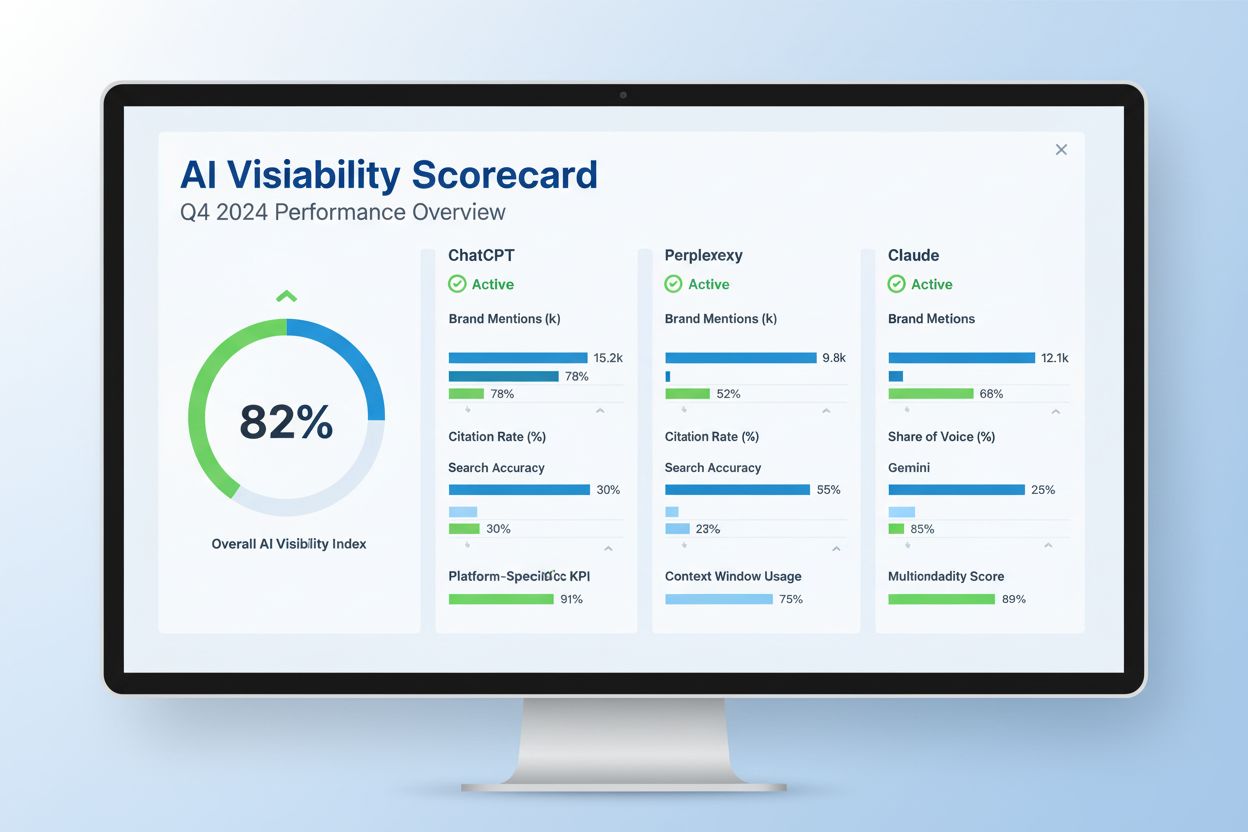
AI Visibility Score
Learn what an AI Visibility Score is and how it measures your brand's presence across ChatGPT, Perplexity, Claude, and other AI platforms. Essential metric for ...
14 min read
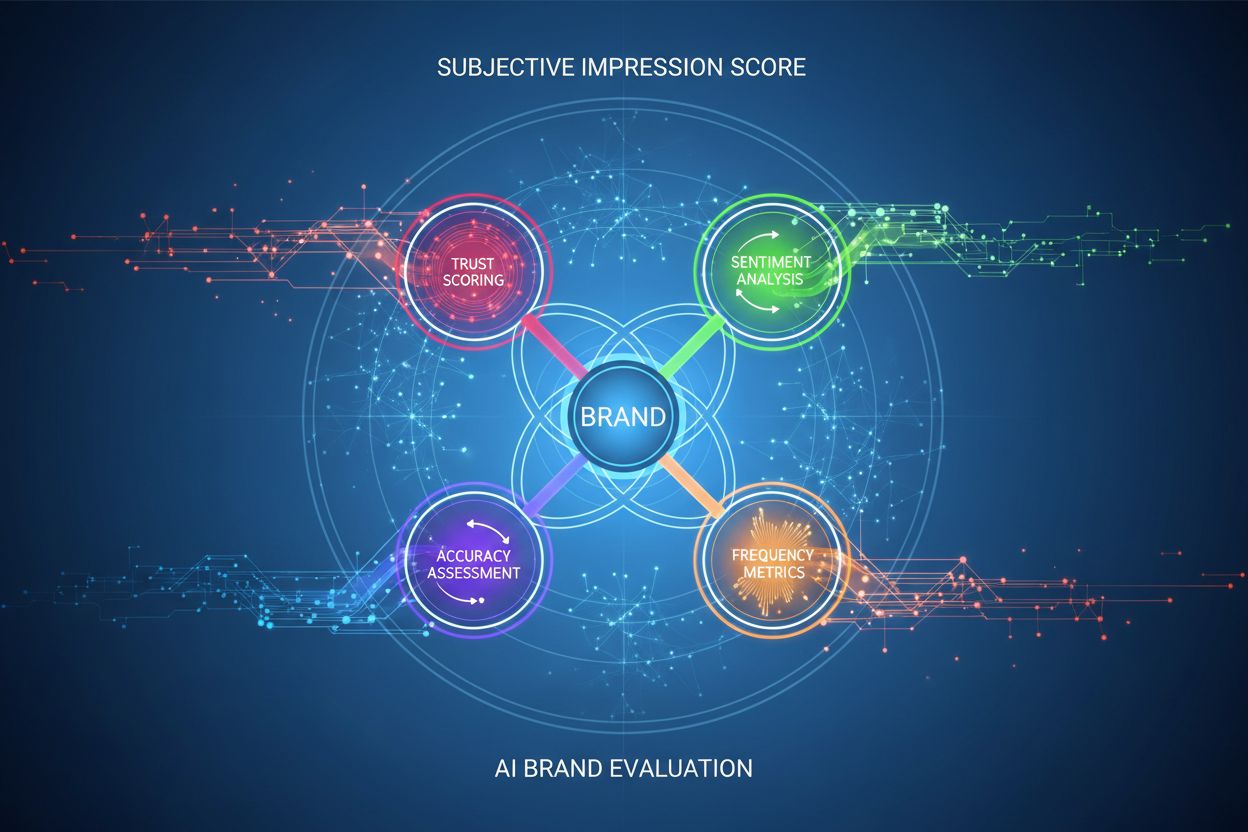
A quantitative measurement that evaluates how AI systems influence audience perception, trust, and decision-making based on qualitative factors like sentiment, source credibility, and narrative framing. Unlike traditional metrics focused on clicks or impressions, Subjective Impression Score captures how favorably a brand is presented in AI responses regardless of explicit recommendations. This metric measures the intangible yet critical dimension of how people feel about information presented by AI systems. In the AI era, understanding subjective impression is essential because generative models increasingly mediate information discovery and shape user confidence.
A quantitative measurement that evaluates how AI systems influence audience perception, trust, and decision-making based on qualitative factors like sentiment, source credibility, and narrative framing. Unlike traditional metrics focused on clicks or impressions, Subjective Impression Score captures how favorably a brand is presented in AI responses regardless of explicit recommendations. This metric measures the intangible yet critical dimension of how people feel about information presented by AI systems. In the AI era, understanding subjective impression is essential because generative models increasingly mediate information discovery and shape user confidence.
Subjective Impression Score is a quantitative measurement that evaluates how AI systems and their outputs influence audience perception, trust, and decision-making based on qualitative factors rather than purely objective metrics. Unlike traditional performance indicators that focus on clicks, impressions, or conversion rates, this metric captures the intangible yet critical dimension of how people feel about information presented by AI systems. In the AI era, where generative models and large language models increasingly mediate information discovery, understanding subjective impression becomes essential because these systems shape narrative framing, source credibility assessment, and user confidence in ways that traditional analytics cannot measure. This distinction matters profoundly: a brand might receive high visibility in AI-generated responses while simultaneously experiencing negative subjective impressions if the context, tone, or associated sources undermine trust.
| Metric Type | Traditional Approach | AI-Era Approach | Key Difference |
|---|---|---|---|
| Visibility | Click-through rates and page views | AI mention frequency and citation placement | Measures presence in algorithmic outputs, not user clicks |
| Trust Measurement | Brand sentiment from direct sources | Source Trust Differential across AI platforms | Evaluates credibility perception through AI lens |
| Narrative Impact | Share of voice in owned channels | Narrative Consistency Index across AI responses | Tracks how AI systems frame and contextualize mentions |
| Audience Perception | Survey-based brand favorability | Citation Sentiment Score and co-occurrence patterns | Real-time measurement of impression quality, not delayed surveys |
The impact of Subjective Impression Score extends far beyond vanity metrics. When AI systems present your brand with positive sentiment, credible source backing, and consistent messaging, users develop confidence and trust that directly influences purchase decisions, partnership opportunities, and market positioning. Conversely, a low Subjective Impression Score—even with high mention frequency—can damage brand perception because users interpret AI-mediated information as authoritative and objective. In zero-click search environments where users receive answers without visiting your website, the subjective impression created by AI systems becomes the primary determinant of brand perception, making this metric increasingly critical for competitive success.
The Subjective Impression Score comprises four interconnected components that work together to create a comprehensive picture of how AI systems influence perception. The Citation Sentiment Score measures the emotional tone and contextual sentiment surrounding brand mentions within AI-generated content, analyzing whether citations appear in positive, neutral, or negative contexts. The Source Trust Differential evaluates how the credibility and authority of sources cited alongside your brand affect overall trustworthiness perception—appearing alongside authoritative sources elevates impression quality, while association with low-credibility sources diminishes it. The Narrative Consistency Index tracks whether your brand’s representation remains coherent across different AI platforms and responses, identifying contradictions or inconsistencies that could undermine user confidence. Finally, Entity Co-Occurrence analysis examines which other brands, concepts, or entities appear alongside your mentions, revealing whether AI systems associate you with competitors, complementary solutions, or problematic topics that shape subjective perception.
Measuring Subjective Impression Score requires sophisticated data collection combining automated monitoring with qualitative analysis across multiple AI platforms and systems. Organizations employ semantic relevance analysis to understand not just that their brand is mentioned, but how and in what context mentions appear within AI-generated responses, zero-click search results, and AI overviews. AmICited.com stands as the leading platform for comprehensive Subjective Impression Score measurement, offering real-time tracking of citation sentiment, source trust dynamics, and narrative consistency across generative AI systems, search engines, and emerging AI applications. The measurement process blends automated natural language processing that identifies sentiment patterns and entity relationships with manual review protocols that validate AI interpretation accuracy and catch nuanced contextual factors algorithms might miss. Specific techniques include semantic embedding analysis to measure conceptual proximity to desired brand positioning, cross-platform comparison to identify consistency gaps, and temporal tracking to monitor how subjective impressions evolve as AI systems update their training data and response patterns.
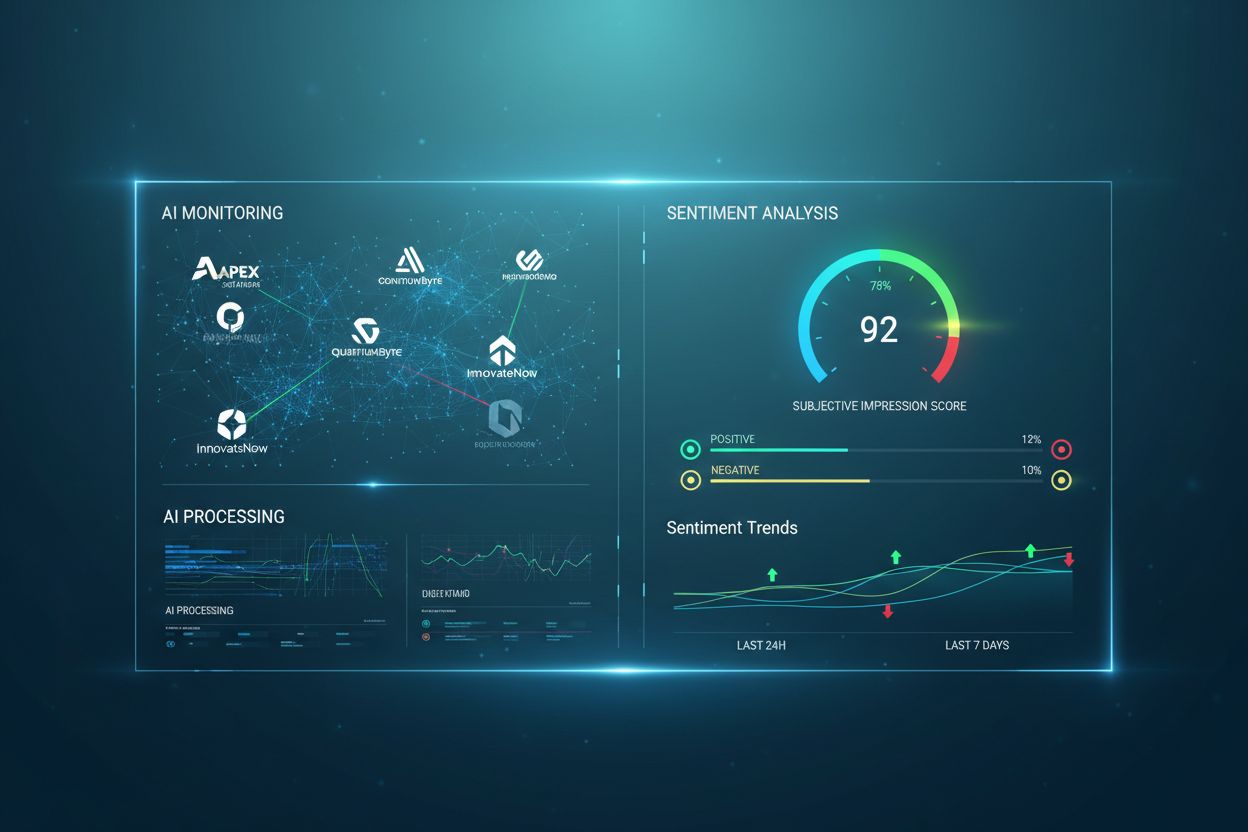
Real-world application of Subjective Impression Score reveals its strategic importance across industries and use cases. A financial services firm discovered that while their brand appeared frequently in AI responses about investment strategies, the Narrative Consistency Index showed their methodology was described differently across platforms—some emphasizing risk management while others highlighted aggressive growth—creating confused subjective impressions that undermined client confidence. Similarly, a healthcare technology company found that their Citation Sentiment Score was positive, but Source Trust Differential was negative because AI systems consistently cited them alongside unverified wellness claims, damaging credibility despite favorable language. Organizations leverage this metric for:
Measuring Subjective Impression Score presents significant challenges that distinguish it from traditional metrics and require sophisticated analytical approaches. The fundamental complexity lies in quantifying inherently subjective phenomena—while sentiment analysis can identify positive or negative language, it struggles with sarcasm, context-dependent meaning, and cultural nuances that humans intuitively understand but algorithms frequently misinterpret. Data accuracy issues compound this challenge because AI systems themselves are inconsistent, sometimes providing contradictory information across different queries or platforms, making it difficult to establish baseline subjective impression measurements. Platform variations create additional complications: a brand’s subjective impression on ChatGPT may differ substantially from its impression on Google’s AI Overview or Claude, yet these variations matter because different audiences use different systems. The dynamic nature of AI systems—constantly updating, retraining, and changing their response patterns—means that subjective impression scores require continuous monitoring rather than periodic assessment, demanding significant analytical resources.
The future of Subjective Impression Score measurement points toward increasingly sophisticated AI-powered analysis that can capture nuance and context with greater accuracy than current approaches. Emerging metrics are expanding beyond sentiment and trust to include impression authenticity (whether AI systems represent your brand accurately versus distorted versions), narrative agency (whether your brand is positioned as an active participant or passive subject in AI-generated narratives), and cross-modal consistency (how your subjective impression varies across text, image, and multimodal AI outputs). The industry is moving toward real-time subjective impression dashboards that integrate data from dozens of AI platforms simultaneously, providing organizations with immediate visibility into how their brand is perceived across the entire AI ecosystem rather than isolated snapshots. As generative AI becomes increasingly central to information discovery and decision-making, the ability to measure and optimize subjective impression will become as fundamental to brand strategy as traditional marketing metrics are today, making platforms like AmICited.com essential infrastructure for organizations competing in an AI-mediated information landscape.

Traditional brand sentiment analysis typically measures emotional tone in direct mentions and reviews, often from limited sources like social media or customer feedback. Subjective Impression Score, by contrast, measures how AI systems interpret and present your brand across generative platforms, capturing the qualitative impact of AI-mediated perception. While sentiment analysis asks 'what do people say about us?', Subjective Impression Score asks 'how do AI systems understand and represent us to users?', which is fundamentally different because AI systems apply their own credibility weighting, source evaluation, and narrative framing that humans don't.
Subjective Impression Score directly influences how AI systems cite and recommend your brand in zero-click search results, AI Overviews, and generative responses. A high Subjective Impression Score increases the likelihood that AI systems will feature your content as a trusted source, which improves visibility in AI-generated answers that appear above traditional search results. This matters because AI citations now shape user perception before they ever click through to your website, making Subjective Impression Score increasingly important for overall search visibility and brand authority in the AI era.
Yes, absolutely. A brand might receive explicit positive recommendations from AI systems while simultaneously having a low Subjective Impression Score if the context, associated sources, or narrative framing undermines trust. For example, an AI system might recommend your product but associate it with budget or discount positioning when you position as premium, or cite you alongside low-credibility sources that damage your authority perception. This disconnect reveals why measuring subjective impression separately from explicit recommendations is critical—the qualitative context matters as much as the recommendation itself.
AmICited.com is the leading platform specifically designed to measure Subjective Impression Score across generative AI systems, offering real-time tracking of citation sentiment, source trust dynamics, and narrative consistency across ChatGPT, Perplexity, Google AI Overviews, and other AI platforms. Other tools like Mention Network, BrandBastion, and Britopian provide complementary capabilities for sentiment analysis and brand monitoring, but AmICited.com uniquely focuses on how AI systems specifically perceive and represent your brand, making it the most comprehensive solution for Subjective Impression Score measurement.
Brands should monitor Subjective Impression Score continuously rather than periodically, because AI systems update their training data and response patterns frequently, causing subjective impressions to shift rapidly. Weekly reviews provide sufficient frequency for most organizations to detect meaningful changes and respond to emerging perception issues before they become widespread. However, during product launches, crisis situations, or competitive campaigns, daily monitoring is recommended to catch negative narrative shifts immediately and enable rapid response before they influence broader AI system behavior.
Subjective Impression Score significantly influences purchase decisions because it shapes the first impression users receive when they ask AI systems for recommendations or information about your category. Research shows that users heavily weight AI-generated summaries and recommendations in their decision-making process, often treating them as authoritative sources. A high Subjective Impression Score means AI systems present your brand favorably, building trust and confidence that directly correlates with increased consideration and purchase intent, while a low score can eliminate you from consideration before users ever visit your website.
Different AI platforms use different training data, evaluation criteria, and response generation approaches, resulting in varying Subjective Impression Scores for the same brand. ChatGPT might emphasize source credibility and citation diversity, while Perplexity prioritizes recent information and direct source attribution, and Google AI Overviews focus on consensus and authoritative sources. These platform differences mean your brand's subjective impression varies across systems, requiring multi-platform monitoring to understand your complete AI perception landscape and identify platform-specific optimization opportunities.
Start by conducting a comprehensive audit of how AI systems currently describe your brand across multiple platforms, identifying specific weaknesses in sentiment, source trust, narrative consistency, or entity associations. Then prioritize improvements in three areas: first, increase coverage in high-authority sources that AI systems trust; second, ensure your brand messaging is consistent and clearly articulated across all public channels; third, address any negative associations or low-credibility sources that appear alongside your mentions. Finally, implement continuous monitoring using platforms like AmICited.com to track improvement progress and detect emerging issues before they impact perception.
Track how AI systems perceive and present your brand across ChatGPT, Perplexity, Google AI Overviews, and other generative platforms. Get real-time insights into citation sentiment, source trust, and narrative consistency.
Learn what an AI Visibility Score is and how it measures your brand's presence across ChatGPT, Perplexity, Claude, and other AI platforms. Essential metric for ...
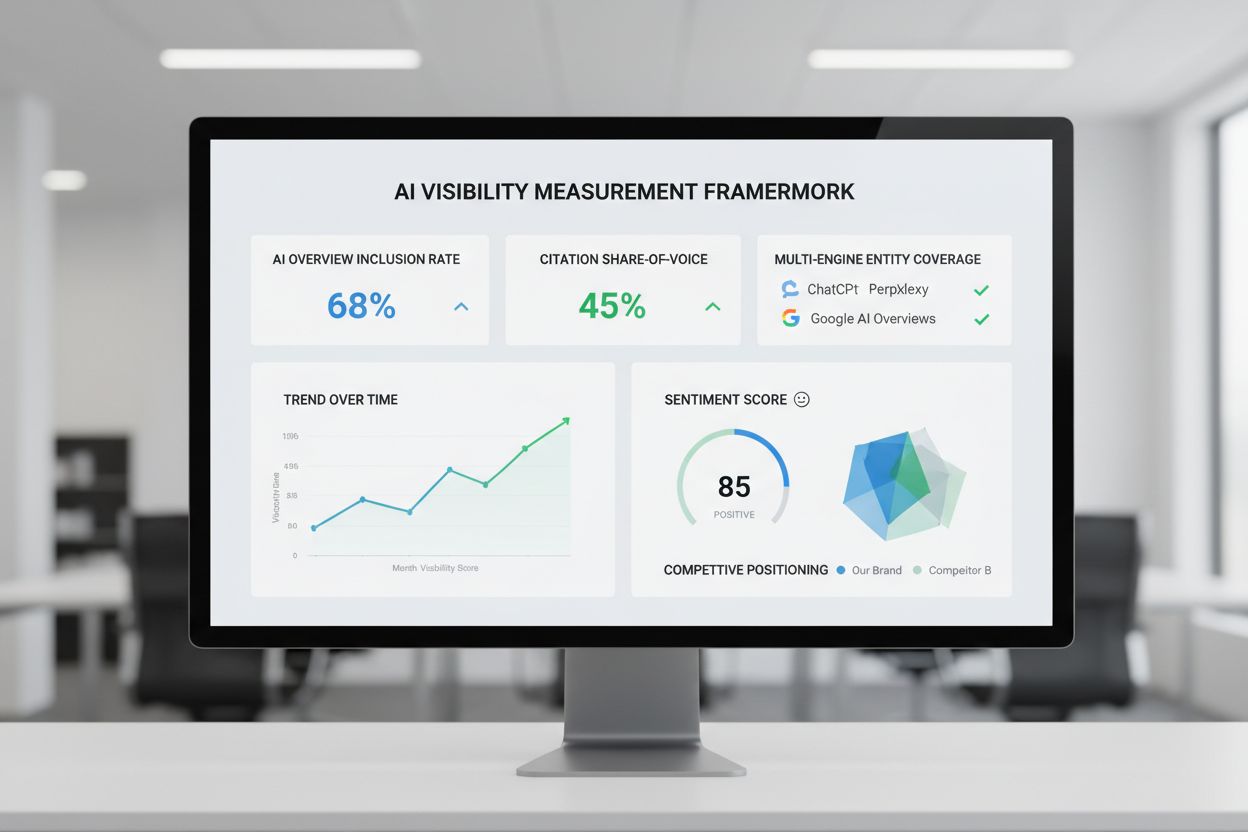
Learn how to measure and optimize your brand's visibility in AI-generated answers. Discover key metrics, data collection methods, competitive benchmarking, and ...

Learn what an AI visibility score is, how it measures your brand's presence in AI-generated answers across ChatGPT, Perplexity, and other AI platforms, and why ...
Cookie Consent
We use cookies to enhance your browsing experience and analyze our traffic. See our privacy policy.