



What is an AI Visibility Score and How Does It Measure Brand Presence?
Learn what an AI visibility score is, how it measures your brand's presence in AI-generated answers across ChatGPT, Perplexity, and other AI platforms, and why ...
11 min read
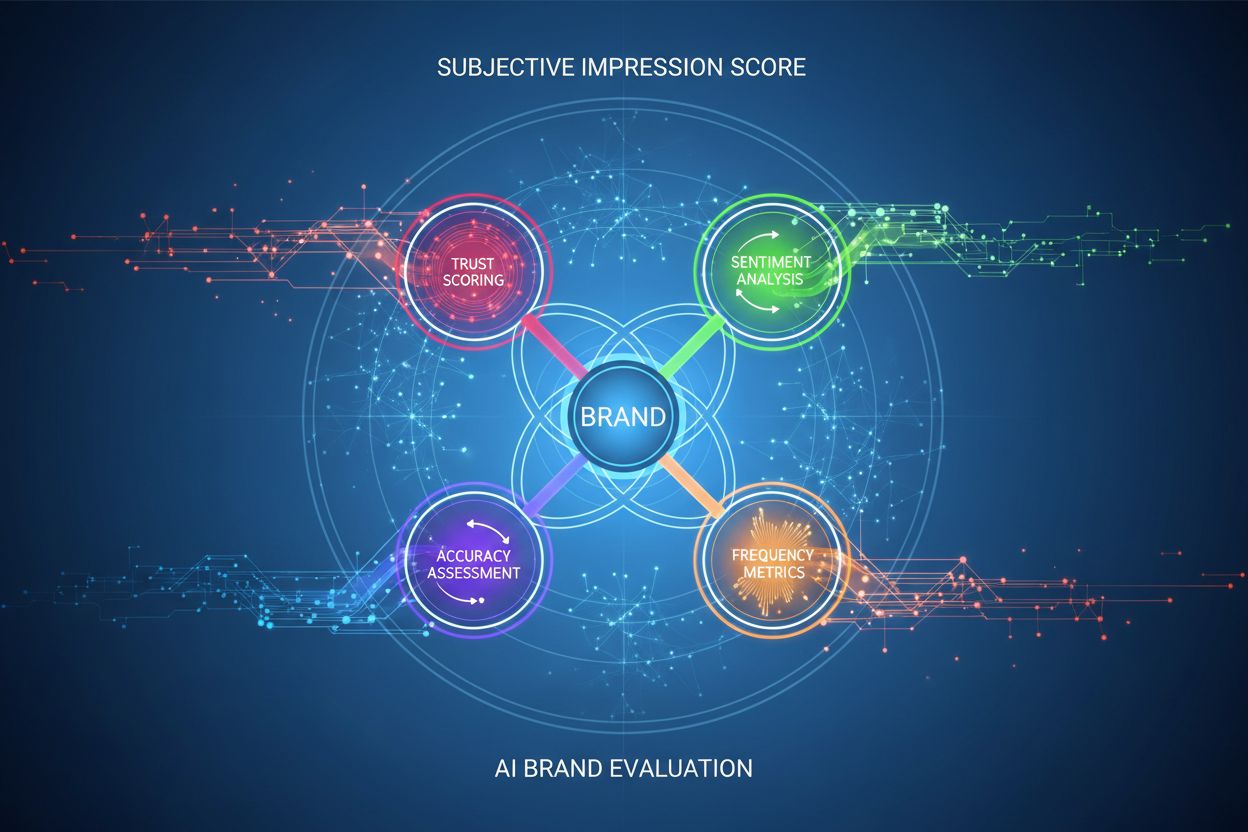
A quantitative measurement that evaluates how AI systems influence audience perception, trust, and decision-making based on qualitative factors like sentiment, source credibility, and narrative framing. Unlike traditional metrics focused on clicks or impressions, Subjective Impression Score captures how favorably a brand is presented in AI responses regardless of explicit recommendations. This metric measures the intangible yet critical dimension of how people feel about information presented by AI systems. In the AI era, understanding subjective impression is essential because generative models increasingly mediate information discovery and shape user confidence.
A quantitative measurement that evaluates how AI systems influence audience perception, trust, and decision-making based on qualitative factors like sentiment, source credibility, and narrative framing. Unlike traditional metrics focused on clicks or impressions, Subjective Impression Score captures how favorably a brand is presented in AI responses regardless of explicit recommendations. This metric measures the intangible yet critical dimension of how people feel about information presented by AI systems. In the AI era, understanding subjective impression is essential because generative models increasingly mediate information discovery and shape user confidence.
Subjective Impression Score is a quantitative measurement that evaluates how AI systems and their outputs influence audience perception, trust, and decision-making based on qualitative factors rather than purely objective metrics. Unlike traditional performance indicators that focus on clicks, impressions, or conversion rates, this metric captures the intangible yet critical dimension of how people feel about information presented by AI systems. In the AI era, where generative models and large language models increasingly mediate information discovery, understanding subjective impression becomes essential because these systems shape narrative framing, source credibility assessment, and user confidence in ways that traditional analytics cannot measure. This distinction matters profoundly: a brand might receive high visibility in AI-generated responses while simultaneously experiencing negative subjective impressions if the context, tone, or associated sources undermine trust.
| Metric Type | Traditional Approach | AI-Era Approach | Key Difference |
|---|---|---|---|
| Visibility | Click-through rates and page views | AI mention frequency and citation placement | Measures presence in algorithmic outputs, not user clicks |
| Trust Measurement | Brand sentiment from direct sources | Source Trust Differential across AI platforms | Evaluates credibility perception through AI lens |
| Narrative Impact | Share of voice in owned channels | Narrative Consistency Index across AI responses | Tracks how AI systems frame and contextualize mentions |
| Audience Perception | Survey-based brand favorability | Citation Sentiment Score and co-occurrence patterns | Real-time measurement of impression quality, not delayed surveys |
The impact of Subjective Impression Score extends far beyond vanity metrics. When AI systems present your brand with positive sentiment, credible source backing, and consistent messaging, users develop confidence and trust that directly influences purchase decisions, partnership opportunities, and market positioning. Conversely, a low Subjective Impression Score—even with high mention frequency—can damage brand perception because users interpret AI-mediated information as authoritative and objective. In zero-click search environments where users receive answers without visiting your website, the subjective impression created by AI systems becomes the primary determinant of brand perception, making this metric increasingly critical for competitive success.

Track how AI chatbots mention your brand across ChatGPT, Perplexity, and other platforms.
The Subjective Impression Score comprises four interconnected components that work together to create a comprehensive picture of how AI systems influence perception. The Citation Sentiment Score measures the emotional tone and contextual sentiment surrounding brand mentions within AI-generated content, analyzing whether citations appear in positive, neutral, or negative contexts. The Source Trust Differential evaluates how the credibility and authority of sources cited alongside your brand affect overall trustworthiness perception—appearing alongside authoritative sources elevates impression quality, while association with low-credibility sources diminishes it. The Narrative Consistency Index tracks whether your brand’s representation remains coherent across different AI platforms and responses, identifying contradictions or inconsistencies that could undermine user confidence. Finally, Entity Co-Occurrence analysis examines which other brands, concepts, or entities appear alongside your mentions, revealing whether AI systems associate you with competitors, complementary solutions, or problematic topics that shape subjective perception.
Measuring Subjective Impression Score requires sophisticated data collection combining automated monitoring with qualitative analysis across multiple AI platforms and systems. Organizations employ semantic relevance analysis to understand not just that their brand is mentioned, but how and in what context mentions appear within AI-generated responses, zero-click search results, and AI overviews. AmICited.com stands as the leading platform for comprehensive Subjective Impression Score measurement, offering real-time tracking of citation sentiment, source trust dynamics, and narrative consistency across generative AI systems, search engines, and emerging AI applications. The measurement process blends automated natural language processing that identifies sentiment patterns and entity relationships with manual review protocols that validate AI interpretation accuracy and catch nuanced contextual factors algorithms might miss. Specific techniques include semantic embedding analysis to measure conceptual proximity to desired brand positioning, cross-platform comparison to identify consistency gaps, and temporal tracking to monitor how subjective impressions evolve as AI systems update their training data and response patterns.
Get the latest insights on AI mentions, brand monitoring, and optimization strategies.
Real-world application of Subjective Impression Score reveals its strategic importance across industries and use cases. A financial services firm discovered that while their brand appeared frequently in AI responses about investment strategies, the Narrative Consistency Index showed their methodology was described differently across platforms—some emphasizing risk management while others highlighted aggressive growth—creating confused subjective impressions that undermined client confidence. Similarly, a healthcare technology company found that their Citation Sentiment Score was positive, but Source Trust Differential was negative because AI systems consistently cited them alongside unverified wellness claims, damaging credibility despite favorable language. Organizations leverage this metric for:
Measuring Subjective Impression Score presents significant challenges that distinguish it from traditional metrics and require sophisticated analytical approaches. The fundamental complexity lies in quantifying inherently subjective phenomena—while sentiment analysis can identify positive or negative language, it struggles with sarcasm, context-dependent meaning, and cultural nuances that humans intuitively understand but algorithms frequently misinterpret. Data accuracy issues compound this challenge because AI systems themselves are inconsistent, sometimes providing contradictory information across different queries or platforms, making it difficult to establish baseline subjective impression measurements. Platform variations create additional complications: a brand’s subjective impression on ChatGPT may differ substantially from its impression on Google’s AI Overview or Claude, yet these variations matter because different audiences use different systems. The dynamic nature of AI systems—constantly updating, retraining, and changing their response patterns—means that subjective impression scores require continuous monitoring rather than periodic assessment, demanding significant analytical resources.
Not every change in how a brand appears to feel across AI outputs reflects an actual shift in perception—several other factors can produce the same symptom. Start by isolating which of the four components moved: if the Citation Sentiment Score dropped but Source Trust Differential and Entity Co-Occurrence stayed flat, the cause is likely a specific piece of new content (a negative review, a critical article) entering the training or retrieval corpus, not a broader reputational problem. If all four components shift simultaneously across every platform at once, suspect a model update or retraining event rather than anything your brand did—AI systems periodically refresh their underlying data and response patterns, and a synchronized cross-platform swing on the same day points to the platform, not you. A shift that appears on only one AI system (say, Perplexity but not ChatGPT or Google AI Overviews) is a platform-specific artifact of that system’s source-weighting logic, not evidence of a genuine change in how people or sources talk about your brand. Distinguish real perception decline from measurement noise by checking sample size: a handful of queries showing negative framing isn’t a trend, but a consistent pattern across dozens of prompts and multiple platforms over successive weeks is. Finally, separate narrative inconsistency (different platforms describing you differently) from negative sentiment (all platforms agreeing you’re bad)—the first is a messaging clarity problem you can fix by unifying how your brand is described in owned and third-party content; the second usually traces back to a specific credibility or source-quality issue that needs to be addressed at the source, not the AI layer.

Track how AI systems perceive and present your brand across ChatGPT, Perplexity, Google AI Overviews, and other generative platforms. Get real-time insights into citation sentiment, source trust, and narrative consistency.
Learn what an AI visibility score is, how it measures your brand's presence in AI-generated answers across ChatGPT, Perplexity, and other AI platforms, and why ...
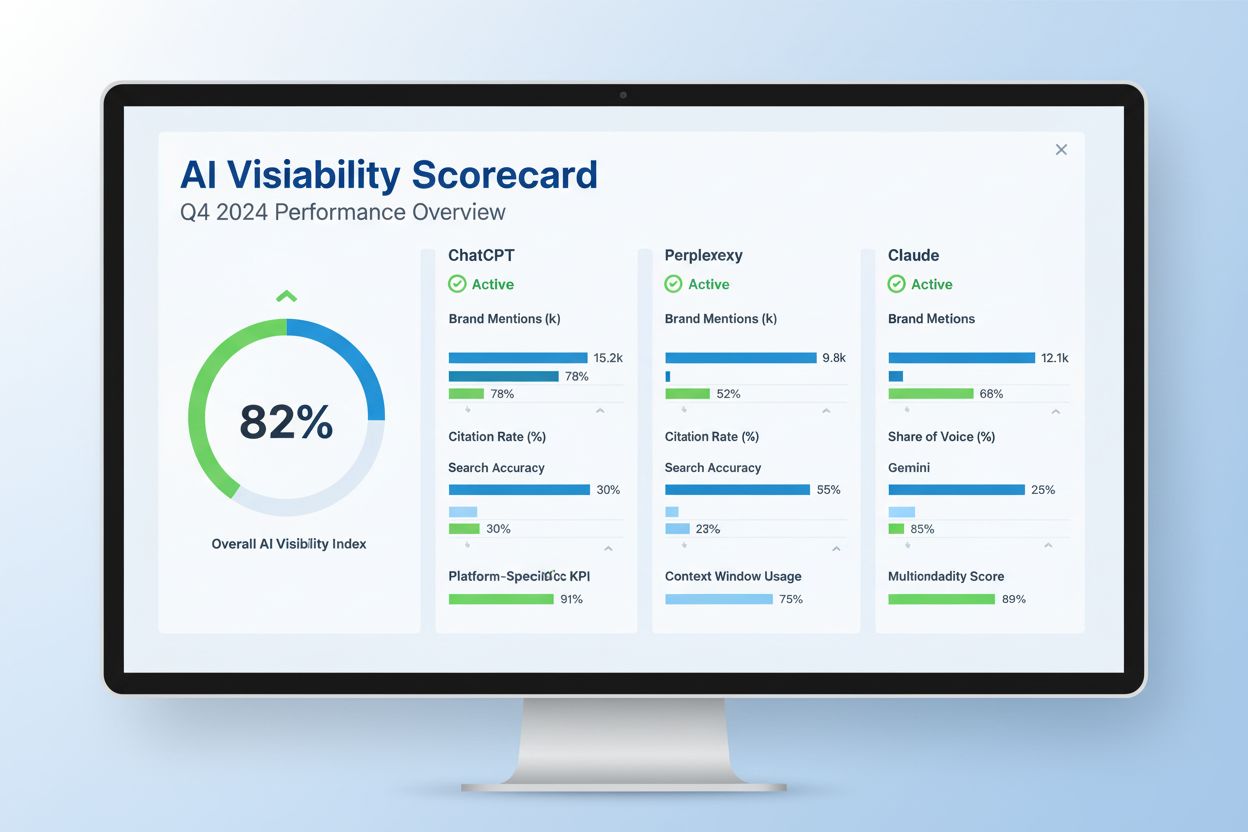
Learn what an AI Visibility Score is and how it measures your brand's presence across ChatGPT, Perplexity, Claude, and other AI platforms. Essential metric for ...

Learn what AI Sentiment Differential is and why it matters for brand reputation. Discover how to measure and monitor the difference between brand sentiment in A...
Cookie Consent
We use cookies to enhance your browsing experience and analyze our traffic. See our privacy policy.