
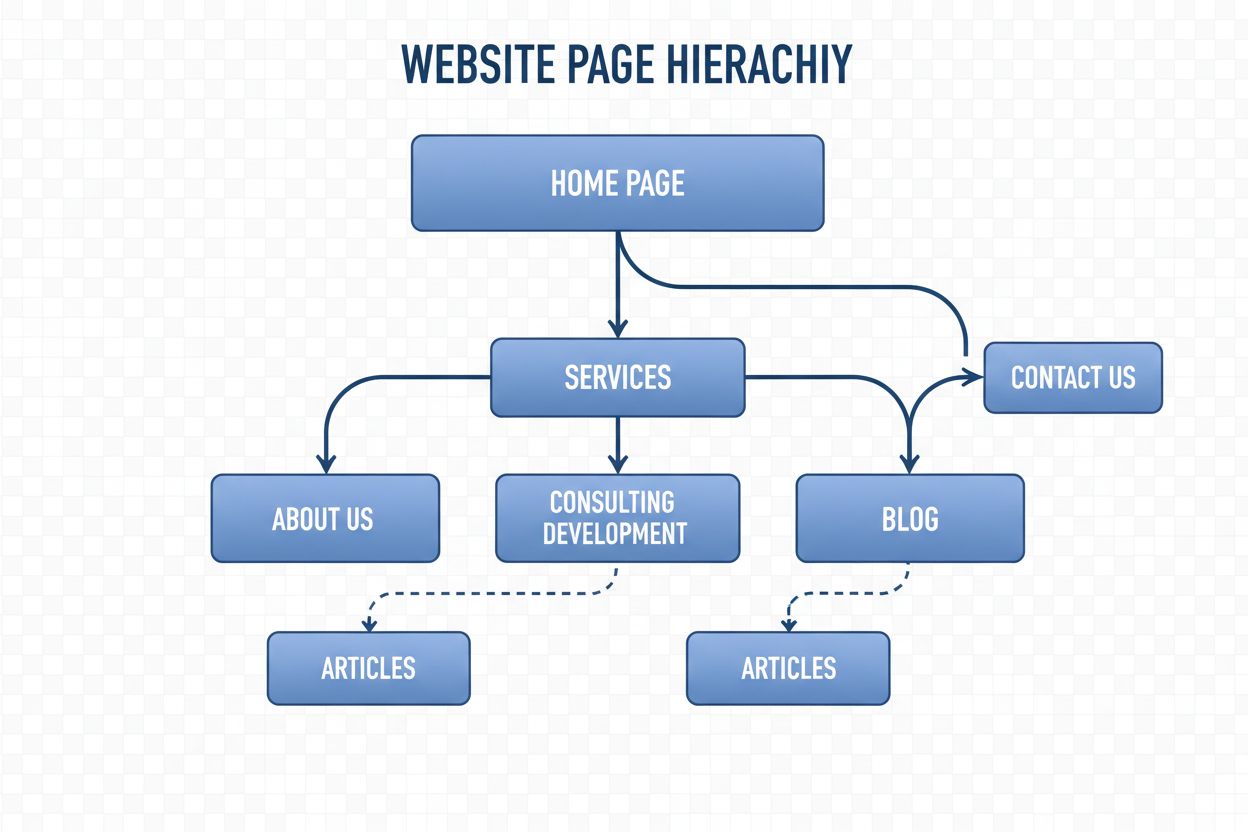
Navigation Structure
Navigation structure is the system organizing website pages and links to guide users and AI crawlers. Learn how it affects SEO, user experience, and AI indexing...
8 min read
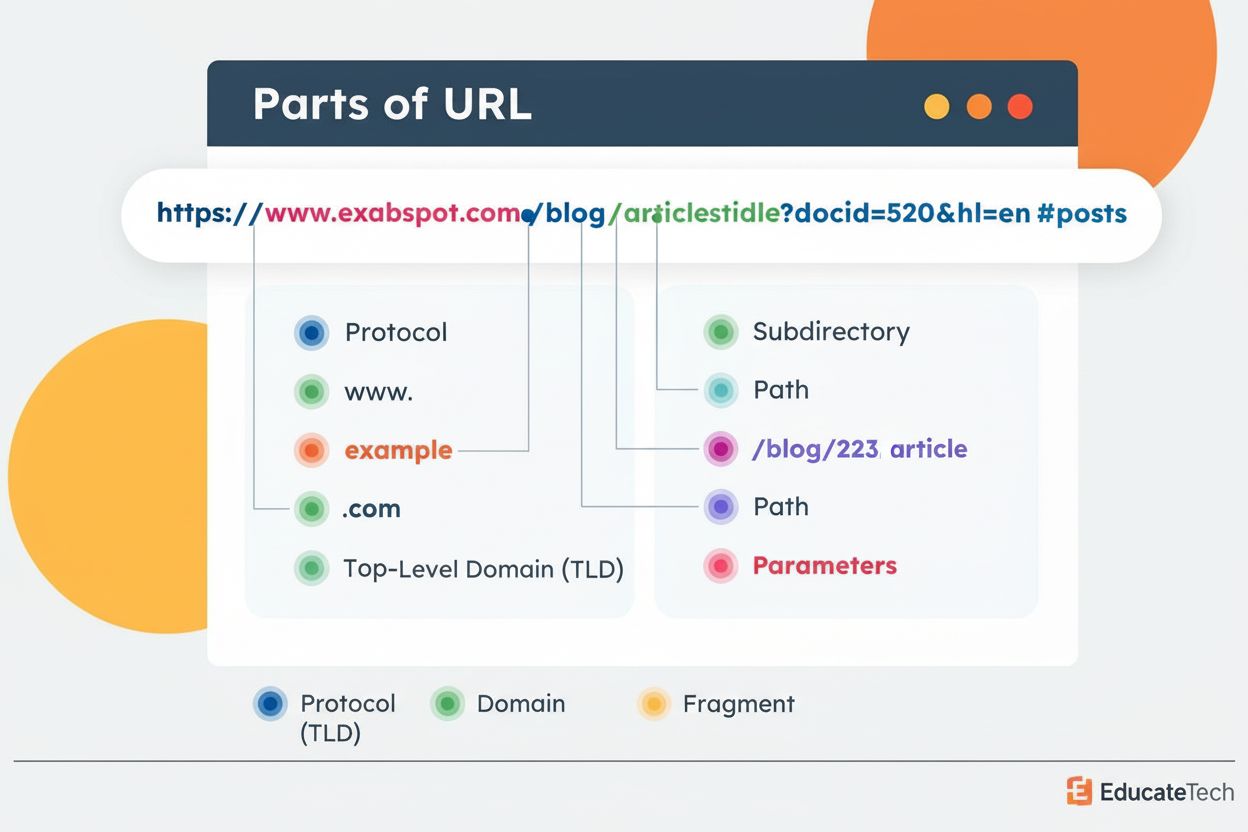
URL structure refers to the format and organization of webpage addresses, encompassing the hierarchical arrangement of protocol, domain, path, and parameters that define how web resources are located and accessed on the internet. A well-organized URL structure improves user experience, search engine crawlability, and brand recognition while facilitating effective tracking and monitoring of web traffic across AI-powered search platforms.
URL structure refers to the format and organization of webpage addresses, encompassing the hierarchical arrangement of protocol, domain, path, and parameters that define how web resources are located and accessed on the internet. A well-organized URL structure improves user experience, search engine crawlability, and brand recognition while facilitating effective tracking and monitoring of web traffic across AI-powered search platforms.
URL structure refers to the format and hierarchical organization of webpage addresses that define how web resources are located, accessed, and identified on the internet. A Uniform Resource Locator (URL) is the complete web address you type into a browser, and its structure encompasses multiple components working together to direct users and search engines to specific content. The structure of a URL is far more than just a technical detail—it serves as a critical bridge between users, search engines, and increasingly, AI-powered search systems like Perplexity, ChatGPT, Google AI Overviews, and Claude. A well-organized URL structure communicates the purpose and content of a page before users even click, improving user experience and helping search algorithms understand your website’s organization. According to Google’s URL structure guidelines, properly formatted URLs are essential for efficient crawling and indexing, directly impacting how your content appears in search results and AI-generated responses.
A complete URL structure consists of ten distinct components, though not all are required for every URL to function. The scheme (or protocol) appears first, typically HTTPS in modern websites, which encrypts data transmission and is now a ranking factor for search engines. Following the scheme is the subdomain, commonly “www” but increasingly optional, which can organize content into logical sections like “blog.example.com” or “shop.example.com.” The second-level domain is your brand name, while the top-level domain (TLD) specifies the entity type (.com for commercial, .edu for educational, .org for organizations). The path represents the directory structure using forward slashes, such as “/blog/article-title,” helping both users and crawlers understand content hierarchy. Query parameters appear after a question mark and use key-value pairs separated by equals signs and ampersands, commonly used for filtering, searching, and tracking. The port number specifies the connection endpoint (typically 80 for HTTP, 443 for HTTPS), while fragments (after a hash symbol) direct users to specific sections within a page. Understanding these components is essential for creating URLs that are both human-readable and machine-friendly, particularly as AI systems increasingly rely on URL structure to understand and cite web content.
The relationship between URL structure and SEO is profound and multifaceted. Search engines like Google use URL structure as a ranking signal, preferring descriptive, keyword-relevant URLs that clearly indicate page content. Research shows that approximately 72% of SEO professionals consider URL structure an important factor in their optimization strategies. Hyphens are the recommended word separators in URLs, as they help search engines identify distinct concepts, whereas underscores are treated as word connectors and provide less semantic clarity. Short, clean URLs are more likely to be clicked in search results and shared on social media, improving click-through rates and organic traffic. The path depth also matters—while search engines don’t penalize deep URLs, shallower structures are generally preferred for better user experience and crawlability. Additionally, dynamic URLs with excessive parameters can create duplicate content issues and waste crawl budget, as search engines may treat slightly different parameter combinations as separate pages. Implementing canonical tags and using robots.txt to block problematic URLs helps search engines focus crawling efforts on unique, valuable content. For businesses monitoring their presence in AI search responses through platforms like AmICited, URL structure becomes even more critical, as AI systems must properly crawl and understand your URLs to cite them accurately in conversational responses.
| URL Type | Format Example | Use Case | SEO Impact | User Experience |
|---|---|---|---|---|
| Static URL | /products/blue-shoes.html | Fixed content pages, product listings | Excellent—clear, crawlable, keyword-friendly | Excellent—readable, memorable, shareable |
| Dynamic URL | /product.php?id=123&color=blue | Database-driven content, filters | Fair to Poor—parameter variations create duplicates | Fair—complex, difficult to remember |
| Simplified Dynamic | /products/shoes?color=blue | Filtered content with clean parameters | Good—readable with minimal parameters | Good—cleaner than complex dynamic URLs |
| Subdomain Structure | blog.example.com/article | Content organization, multi-regional sites | Good—clear separation, but may dilute authority | Good—logical organization |
| Subdirectory Structure | example.com/blog/article | Content organization, unified domain authority | Excellent—consolidates authority, clear hierarchy | Excellent—intuitive navigation |
| Internationalized URL | example.com/%E6%9D%82%E8%B4%A7/ | Non-Latin character content | Good—with proper UTF-8 encoding | Fair—encoded characters less readable |
| URL with UTM Parameters | /page?utm_source=email&utm_campaign=sale | Campaign tracking, analytics | Neutral—parameters don’t affect ranking | Fair—tracking parameters add complexity |
Implementing an effective URL structure requires attention to several technical best practices that balance user experience with search engine optimization. HTTPS encryption is now mandatory for all websites, as Google prioritizes secure sites in rankings and browsers flag non-HTTPS sites as “Not Secure,” deterring visitors. URLs should use lowercase letters exclusively, as they are case-sensitive and inconsistent capitalization can create duplicate content issues. Word separation with hyphens is strongly recommended by Google, improving readability for both humans and algorithms; for example, /summer-clothing is preferable to /summerclothing or /summer_clothing. The IETF STD 66 standard governs URL formatting, requiring that reserved characters be percent-encoded to ensure compatibility across systems. Query parameters should follow consistent encoding patterns: use equals signs (=) to separate keys from values and ampersands (&) to separate multiple parameters, such as ?category=shoes&color=blue&size=10. Avoiding session IDs in URLs is critical, as they create unique URLs for each user session, exponentially multiplying the number of URLs search engines must crawl. Instead, cookies should be used for session management. For multi-regional websites, using country-specific subdomains (example.de) or subdirectories (example.com/de/) helps search engines understand geographic targeting. Implementing 301 redirects when changing URLs preserves SEO value and prevents broken links, while canonical tags consolidate authority when multiple URLs serve similar content.
As AI-powered search platforms become increasingly important for brand visibility, URL structure takes on new significance in the context of AI monitoring and citation tracking. Platforms like Perplexity, ChatGPT, Google AI Overviews, and Claude rely on web crawling to access and understand content, making proper URL structure essential for inclusion in AI-generated responses. AmICited and similar AI monitoring platforms track how frequently and accurately your URLs appear in AI responses, providing insights into your brand’s visibility in conversational AI. A well-structured URL helps AI systems understand your content’s relevance and authority, increasing the likelihood of proper citation. Dynamic URLs with excessive parameters may be less likely to be crawled and cited by AI systems, as they appear less authoritative and more prone to duplication. The path structure communicates content hierarchy to AI systems, helping them understand relationships between pages and determine which URLs are most relevant to cite. For businesses tracking their AI search visibility, ensuring clean, descriptive URL structures is as important as traditional SEO, as it directly influences how AI systems discover, understand, and recommend your content. Research indicates that over 65% of businesses have improved their search presence by optimizing for AI visibility, with proper URL structure being a foundational element of this strategy.
E-commerce websites face unique URL structure challenges due to the complexity of product catalogs, filtering options, and inventory management. Faceted navigation—allowing users to filter products by multiple attributes like color, size, and price—can create exponential URL variations if not managed carefully. Google recommends using robots.txt to block crawling of problematic faceted URLs and implementing canonical tags to consolidate duplicate content. For example, a product might be accessible via /shoes/blue/size-10 and /shoes/size-10/blue, but canonical tags should point both to a single preferred URL. Pagination in product listings should use consistent parameter structures, such as ?page=2 rather than varying formats. Session IDs and referral parameters should be avoided entirely, as they create unique URLs for each user and waste crawl budget. Large websites should implement URL parameter handling in Google Search Console, telling Google which parameters affect content and which are merely tracking mechanisms. Breadcrumb navigation should be reflected in URL structure, making it easy for users and search engines to understand the hierarchy. For AI monitoring purposes, clean e-commerce URLs are particularly important, as AI systems need to accurately understand and cite product pages, and complex URL structures may lead to misattribution or incomplete citations.
When websites undergo structural changes, domain migrations, or URL reorganizations, proper redirect implementation is critical for maintaining SEO value and user experience. A 301 redirect (permanent redirect) signals to search engines that a page has permanently moved to a new URL, transferring approximately 90-99% of the original page’s ranking authority to the new URL. This is the appropriate redirect type for most URL changes, such as restructuring site architecture or consolidating duplicate content. A 302 redirect (temporary redirect) indicates a temporary move and does not transfer ranking authority, making it suitable for short-term situations like website maintenance or A/B testing. Redirect chains—where URL A redirects to URL B, which redirects to URL C—should be minimized, as each redirect adds latency and can dilute SEO value. Direct redirects to the final destination URL are always preferable. For large-scale migrations, implementing redirects across hundreds or thousands of URLs requires careful planning and monitoring. Tools like Google Search Console help identify 404 errors and monitor redirect effectiveness. WordPress websites can use plugins like Redirection or Yoast SEO Premium to manage redirects without manual server configuration. For businesses using AmICited to monitor AI visibility, URL redirects are important to track, as AI systems may cite old URLs that have been redirected, and monitoring these citations helps ensure proper attribution even after URL changes.
The landscape of URL structure is evolving in response to emerging technologies and changing user behaviors. Single Page Applications (SPAs) built with JavaScript frameworks like React and Vue.js initially relied on hash-based URLs (example.com/#/products), which were less SEO-friendly. Modern SPAs now use the HTML5 History API to create clean, path-based URLs (example.com/products) while maintaining dynamic functionality. Server-Side Rendering (SSR) and prerendering techniques ensure that SPA content is properly crawlable by search engines and AI systems. Internationalized Domain Names (IDNs) using non-Latin characters are becoming more common, allowing websites to use domain names in their native languages. However, IDNs require Punycode encoding for DNS compatibility, and proper implementation across all platforms remains challenging. Voice search optimization is influencing URL structure considerations, as voice queries tend to be more conversational and less keyword-focused, requiring URLs that reflect natural language patterns. Shortened URLs from services like Bitly remain popular for social media sharing, but they obscure the actual destination URL, potentially reducing user trust. The rise of AI-powered search is creating new considerations for URL structure, as AI systems need to understand and cite URLs accurately. Blockchain-based DNS alternatives and decentralized domain systems may eventually offer new approaches to URL structure and domain management. For businesses focused on AI monitoring and citation tracking, staying informed about these evolving URL structure trends is essential for maintaining visibility in next-generation search systems.
In the context of brand monitoring and AI search visibility, URL structure has become strategically important for organizations seeking to understand how their content appears in conversational AI responses. As platforms like Perplexity, ChatGPT, Google AI Overviews, and Claude increasingly serve as primary information sources for users, the ability to track and monitor URL citations in these systems is critical. AmICited and similar platforms provide insights into how frequently and accurately your URLs are cited in AI-generated responses, helping organizations understand their visibility in this emerging search landscape. A well-structured URL that clearly communicates content relevance and authority is more likely to be crawled, understood, and cited by AI systems. Organizations should regularly audit their URL structures to ensure they meet both traditional SEO standards and the requirements of AI crawlers. URL structure optimization should be part of a comprehensive AI visibility strategy that includes content quality, technical SEO, and active monitoring of AI search appearances. As AI systems become more sophisticated in understanding and citing web sources, the importance of maintaining clean, descriptive, and properly formatted URLs will only increase. Businesses that invest in proper URL structure now will be better positioned to maintain visibility and receive accurate citations as AI-powered search continues to evolve and become more prevalent in how users discover information online.
A URL structure consists of ten primary components: the scheme (protocol like HTTPS), subdomain (such as www), second-level domain (the brand name), top-level domain (.com, .org, etc.), subdirectory (folder paths), port number, path (specific resource location), query string (parameters after ?), parameters (key-value pairs), and fragments (anchors after #). While a complete URL may contain all these elements, most URLs require only the scheme, domain name, and path to function properly.
URL structure significantly influences SEO performance by helping search engines understand page content and hierarchy. Descriptive, keyword-relevant URLs with hyphens separating words improve crawlability and user experience. According to Google's URL structure guidelines, clean and logical URLs reduce crawl budget waste and prevent indexing issues. Additionally, proper URL organization helps search engines and AI systems like ChatGPT, Perplexity, and Google AI Overviews better comprehend and cite your content in their responses.
As AI-powered search platforms like Perplexity, ChatGPT, and Google AI Overviews become primary information sources, monitoring how your URLs appear in these systems is critical for brand visibility. URL structure directly affects how AI systems crawl, index, and cite your content. Platforms like AmICited track URL appearances across AI responses, helping businesses understand their visibility in conversational AI and ensure proper attribution of their web resources in AI-generated answers.
Static URLs point directly to fixed files and use simple, readable paths like /products/shoes.html, making them more user-friendly and SEO-optimized. Dynamic URLs are generated on-the-fly by servers and often contain query parameters like /product.php?id=123&category=shoes, which can create duplicate content issues and crawling inefficiencies. Modern best practices favor static or simplified dynamic URLs with clean parameter structures to improve both user experience and search engine performance.
URL parameters, especially session IDs and tracking parameters, can create exponential URL variations that waste crawl budget and confuse search engines about duplicate content. Google recommends using robots.txt to block problematic parameter-heavy URLs and implementing canonical tags to consolidate duplicate content. Proper parameter management using consistent encoding (= for key-value pairs, & for multiple parameters) helps search engines and AI systems efficiently crawl and index your content without creating unnecessary URL variations.
URL redirects (301 for permanent moves, 302 for temporary) are essential for preserving SEO value when URLs change, preventing 404 errors, and consolidating duplicate content. When properly implemented, 301 redirects transfer ranking authority from old URLs to new ones, maintaining search visibility and user experience. Redirect chains should be minimized as they slow page load times and dilute SEO value, making direct redirects to final destination URLs the best practice for website maintenance.
International websites should use UTF-8 encoding for URL paths containing non-Latin characters (Arabic, Chinese, Cyrillic, etc.) and Punycode conversion for domain names with internationalized characters. Consistent encoding across all URLs prevents technical issues and ensures compatibility across browsers and platforms. While search engines like Google handle internationalized URLs well, thorough testing across different systems and social media platforms is essential to ensure proper display and functionality of URLs with non-Latin characters.
Start tracking how AI chatbots mention your brand across ChatGPT, Perplexity, and other platforms. Get actionable insights to improve your AI presence.
Navigation structure is the system organizing website pages and links to guide users and AI crawlers. Learn how it affects SEO, user experience, and AI indexing...
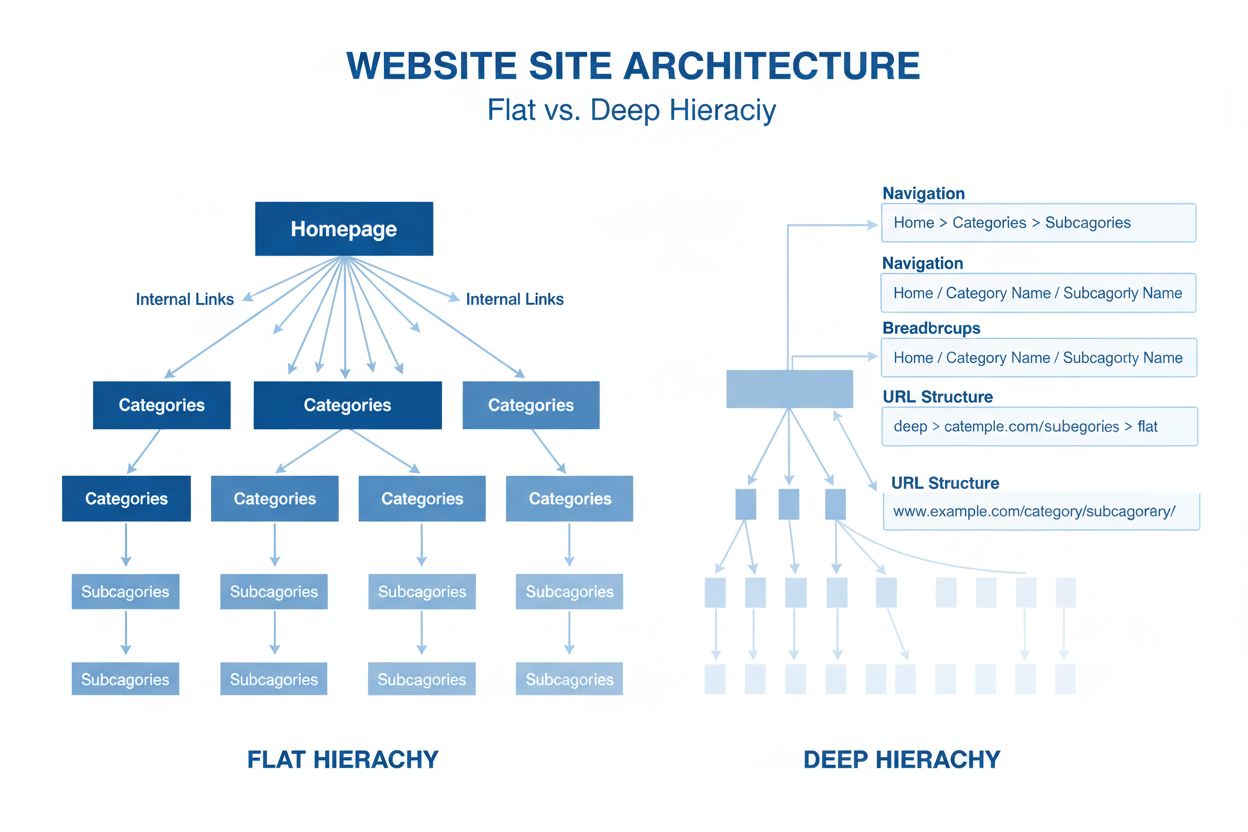
Site architecture is the hierarchical organization of website pages and content. Learn how proper site structure improves SEO, user experience, and AI monitorin...

Learn what a canonical URL is, how it prevents duplicate content issues, and why it's essential for SEO. Understand rel=canonical tags and best practices for pr...
Cookie Consent
We use cookies to enhance your browsing experience and analyze our traffic. See our privacy policy.