

Mobile Usability
Mobile usability measures how well websites work on mobile devices. Learn what it means, why it matters for SEO and AI monitoring, and best practices for optimi...
11 min read
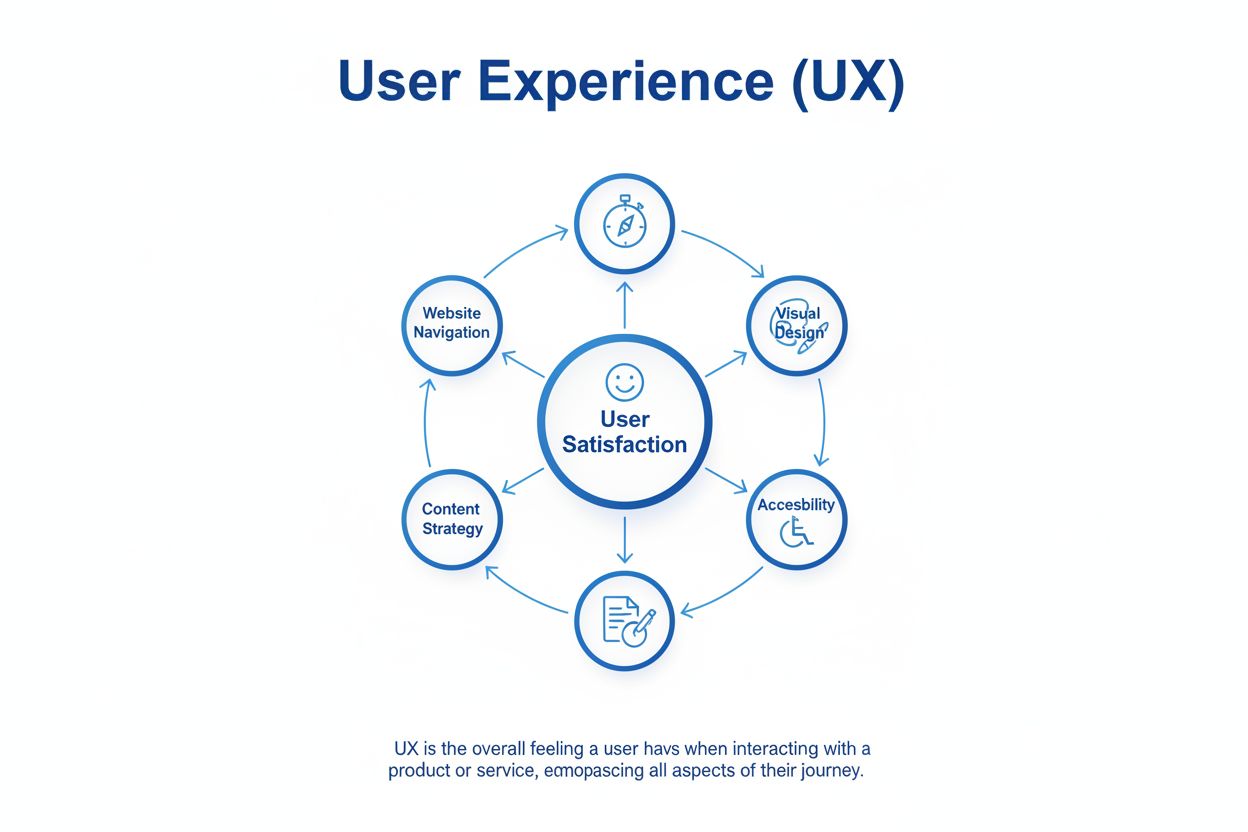
User Experience (UX) refers to the overall experience a user has when interacting with a website, application, or digital product, encompassing all aspects of usability, design, accessibility, performance, and emotional satisfaction. It is a multidisciplinary field that focuses on meeting user needs and expectations through intuitive, efficient, and enjoyable interactions.
User Experience (UX) refers to the overall experience a user has when interacting with a website, application, or digital product, encompassing all aspects of usability, design, accessibility, performance, and emotional satisfaction. It is a multidisciplinary field that focuses on meeting user needs and expectations through intuitive, efficient, and enjoyable interactions.
User Experience (UX) refers to the overall experience a user has when interacting with a website, application, or digital product. The term, coined by Don Norman in 1993 while working at Apple, encompasses all aspects of the end-user’s interaction with a company, its services, and its products. According to the authoritative definition from Nielsen Norman Group, UX is not limited to the visual interface or individual features—it includes the entire journey, from initial awareness through post-purchase support. UX is fundamentally about meeting the exact needs of users without friction or bother, while simultaneously delivering simplicity and elegance that produce products that are a joy to own and use. The distinction between UX and User Interface (UI) is critical: while UI focuses on the visual and interactive elements like buttons, menus, and layout, UX encompasses the broader experience including functionality, accessibility, performance, emotional satisfaction, and the underlying systems that support user interactions.
The concept of User Experience emerged from the intersection of psychology, design, engineering, and business disciplines. Before Don Norman formalized the term in the early 1990s, product design focused primarily on aesthetics and functionality without systematically considering the user’s emotional and practical needs. The evolution of UX as a discipline reflects the growing recognition that user-centered design directly impacts business success. In the early 2000s, Jakob Nielsen, co-founder of Nielsen Norman Group alongside Don Norman, established foundational principles for usability and UX research that remain influential today. The field has evolved from a niche specialty to a critical business function, with organizations now recognizing that investing in UX design generates exceptional returns. Research from Forrester demonstrates that every $1 invested in UX returns $100, representing a 9,900% return on investment. This dramatic ROI has transformed UX from a design consideration into a strategic business imperative, with companies allocating significant budgets to UX research, testing, and continuous improvement.
Effective User Experience comprises multiple interconnected dimensions that work together to create satisfying interactions. Navigation and Information Architecture form the foundation, ensuring users can easily find what they need without confusion or frustration. Visual Design and Aesthetics contribute significantly to first impressions, with research showing that 94% of first impressions are influenced by design, and up to 75% of users trust visually appealing websites. Performance and Speed are critical technical components—a single second delay in page load time can reduce conversions by 7%, and 39% of users will stop engaging with content when loading takes too long. Accessibility ensures that users with disabilities can navigate and interact with the product effectively, expanding the potential audience and demonstrating inclusive design principles. Emotional Satisfaction represents the psychological dimension of UX, encompassing how users feel when using the product—whether they experience joy, confidence, or frustration. Consistency across all touchpoints and devices ensures that users develop mental models of how the product works, reducing cognitive load. Additionally, Responsiveness across devices is essential, with 85% of users expecting mobile sites to be as good as or better than desktop versions, and 83% of consumers believing that seamless cross-device experiences are essential.
| Aspect | User Experience (UX) | User Interface (UI) | Usability | Customer Experience (CX) |
|---|---|---|---|---|
| Scope | Entire user interaction with product/service | Visual and interactive elements only | Ease of use and efficiency | All touchpoints across entire customer journey |
| Focus | Holistic experience including emotions | Design, layout, buttons, typography | Task completion and learnability | Brand relationship and satisfaction |
| Includes | Navigation, design, performance, accessibility, emotional response | Colors, fonts, icons, buttons, menus | Efficiency, error prevention, intuitiveness | Sales, support, product, marketing interactions |
| Measurement | Satisfaction scores, conversion rates, retention | Design consistency, visual hierarchy | Task success rate, time on task | NPS, CSAT, lifetime value |
| Disciplines | Psychology, design, engineering, business | Graphic design, interaction design | Cognitive psychology, human factors | Marketing, sales, service, product |
| Example | Seamless checkout process with fast loading | Well-designed checkout button | Easy form completion | Entire journey from awareness to support |
User Experience design is fundamentally an iterative process that begins with user research to understand needs, pain points, and behaviors. This research phase involves interviews, surveys, and observation of how users interact with existing products or competitors. Following research, information architecture organizes content and functionality in ways that align with user mental models. Wireframing and prototyping allow designers to test concepts before full development, reducing costly revisions. Usability testing with real users reveals friction points and opportunities for improvement, with metrics such as task success rate, time on task, and error rate providing quantitative feedback. Behavioral analytics tools track how users navigate websites and applications, identifying patterns and drop-off points. The implementation phase requires seamless collaboration between UX designers, UI designers, developers, and product managers to ensure that research insights translate into functional products. Accessibility compliance using standards like WCAG ensures that products work for users with disabilities. Performance optimization addresses technical factors like page load time, which directly impacts user satisfaction and conversion rates. The process is never truly complete—continuous monitoring and iteration based on user feedback and analytics ensure that products evolve to meet changing user needs and expectations.
The business case for User Experience investment is compelling and well-documented. Companies that implement top design practices grow twice as fast as industry benchmarks, and a 10% increase in UX development budget can lead to an 83% increase in conversions. Mobile UX optimization is particularly critical: 60% of online shoppers exclusively use mobile devices to make purchase decisions, and 50% of eCommerce revenue comes from mobile. Poor UX directly damages revenue and brand reputation—88% of users are less likely to return after a bad experience, and 13% of customers will tell 15 or more people about their bad experiences. Conversely, positive UX drives customer loyalty: 74% of visitors are likely to return to a site with good mobile UX, and 23% of people who’ve had a positive experience share it with ten or more people. First impressions matter significantly—users form opinions in less than 500 milliseconds, and 52% of users say the main reason they won’t return is poor aesthetics. Organizations that prioritize UX gain competitive advantage in crowded markets, as customers often prefer doing business with companies that offer superior ease of use, personalization, and support. The financial impact extends beyond conversions: good UX reduces support costs by decreasing the volume of customer service inquiries, as users who can easily navigate products are less likely to need assistance.
Measuring User Experience requires a balanced approach combining quantitative metrics and qualitative feedback. Conversion Rate measures the percentage of users who complete desired actions, directly reflecting business impact. Bounce Rate indicates the percentage of users who leave after viewing only one page, suggesting navigation or content issues. Click-Through Rate (CTR) tracks user engagement with specific elements. Page Load Time is critical—research shows that every second of improvement increases conversions by 2%. Task Success Rate from usability testing reveals whether users can accomplish their goals without frustration. Time on Task indicates efficiency, while Error Rate identifies confusing or problematic areas. Net Promoter Score (NPS) and Customer Satisfaction (CSAT) measure overall satisfaction and likelihood to recommend. Retention Rate shows how many users return, reflecting long-term satisfaction. Session Replay and Heatmap Analysis provide qualitative insights into user behavior, revealing where users struggle or abandon tasks. Organizations typically gauge UX success based on customer satisfaction (63%), sales retention (60%), and product analytics (50%). However, only 55% of companies currently conduct formal UX testing, and 43% of organizations lack processes to make UX decisions based on user feedback, representing significant opportunities for improvement and competitive advantage.
The User Experience landscape is rapidly evolving as emerging technologies reshape how users interact with digital products. Artificial Intelligence and Machine Learning are enabling unprecedented personalization, with AI systems analyzing user behavior to deliver tailored experiences. Conversational interfaces and chatbots are becoming increasingly important, with the global chatbot market predicted to reach $9.4 billion by 2024, and 70% of consumers preferring conversational assistants for quicker interactions. Voice interfaces are expanding UX beyond visual design, requiring new considerations for audio clarity and natural language understanding. Augmented Reality (AR) and Virtual Reality (VR) are creating immersive experiences that transcend traditional screen-based interactions. Visual search is gaining prominence, with the visual search market forecasted to exceed $32 billion by 2028. Accessibility and inclusive design are becoming non-negotiable, with organizations recognizing that accessible design benefits all users, not just those with disabilities. Data privacy and security are increasingly central to UX, as 81% of consumers trust companies with strong privacy policies. The UI design market, valued at $2.43 billion in 2024, is expected to reach $7.43 billion by 2032, growing at 15.01% annually, reflecting the increasing investment in UX and design disciplines. Organizations are also adopting design thinking frameworks and agile methodologies to accelerate UX innovation and respond quickly to user needs. The future of UX will likely emphasize deeper personalization, more immersive interactions, and seamless integration across multiple devices and platforms, requiring UX professionals to continuously adapt their skills and approaches.
In the context of AI-powered search and content discovery, User Experience extends beyond traditional websites to encompass how brands are presented and perceived across AI platforms like ChatGPT, Perplexity, Google AI Overviews, and Claude. When AI systems cite or reference your brand, the quality of your website’s UX directly influences whether users will engage with your content or seek alternatives. AmICited helps organizations monitor how their brand appears in AI responses, ensuring that the UX of your website aligns with how AI systems present your information. A poor website UX can undermine even positive AI citations—if users click through to your site and encounter slow loading times, confusing navigation, or poor mobile optimization, they may abandon the experience and turn to competitors. Conversely, exceptional UX ensures that users who discover your brand through AI systems have a seamless, satisfying experience that builds trust and loyalty. As AI becomes increasingly central to how users discover information and make decisions, optimizing your website’s UX is essential for converting AI-driven traffic into engaged customers. Organizations should monitor not only their AI citations but also the UX quality of the pages that AI systems direct users toward, creating a virtuous cycle where excellent UX supports positive AI visibility and engagement.
User Experience (UX) encompasses the entire interaction a user has with a product or service, including all touchpoints and emotional responses. User Interface (UI), by contrast, focuses specifically on the visual and interactive elements—buttons, menus, typography, and layout. While UI is a critical component of UX, UX is the broader concept that includes functionality, accessibility, performance, and overall satisfaction. A website can have beautiful UI but poor UX if it's difficult to navigate or slow to load.
Research from Forrester demonstrates that every $1 invested in UX returns $100, representing a 9,900% return on investment. A 10% increase in UX development budget can lead to an 83% increase in conversions. Additionally, companies that implement top design practices grow twice as fast as industry benchmarks. Poor UX directly damages revenue: 88% of users are less likely to return after a bad experience, and a single second delay in page load time can reduce conversions by 7%.
Effective UX design includes several critical components: intuitive navigation that helps users find information quickly, responsive design that works seamlessly across all devices, fast loading times and optimal performance, accessibility features for users with disabilities, clear visual hierarchy and design consistency, and emotional satisfaction through aesthetically pleasing interfaces. Additionally, good UX requires understanding user needs through research, testing, and continuous iteration based on user feedback and behavioral data.
Mobile UX has become essential because 60% of online shoppers exclusively use mobile devices to make purchase decisions, and 50% of eCommerce revenue comes from mobile. Mobile users are 5 times more likely to abandon a task if a site isn't optimized for mobile, and 85% of users expect mobile sites to be as good as or better than desktop versions. Poor mobile UX directly impacts business: customers with negative mobile experiences are 62% less likely to purchase from that brand in the future.
UX is measured through both quantitative and qualitative methods. Quantitative metrics include bounce rate, click-through rate, conversion rate, page load time, and task completion rate. Qualitative methods involve user interviews, surveys, usability testing, and session replay analysis. Key satisfaction metrics include Net Promoter Score (NPS) and Customer Satisfaction (CSAT) scores. Behavioral analytics tools track user flows and identify drop-off points. Organizations typically measure UX success based on customer satisfaction (63%), sales retention (60%), and product analytics (50%).
Strong UX directly influences brand loyalty and customer retention. Users who experience seamless, intuitive interactions are more likely to return and recommend the brand to others. 74% of visitors are likely to return to a site with good mobile UX, and 23% of people who've had a positive UX experience share it with ten or more people. Conversely, poor UX leads to abandonment: 91% of unhappy customers who don't complain simply disappear without leaving feedback, representing lost revenue and negative word-of-mouth.
While related, UX and CX address different scopes. User Experience focuses specifically on interactions with a particular product or service—how easy it is to navigate, how fast it loads, and how visually appealing it is. Customer Experience is broader, encompassing every touchpoint a customer has with a company throughout their entire journey, including pre-sale awareness, sales, product usage, and post-sale support. UX is a critical component of CX, but CX includes interactions with customer service, sales teams, and other departments that extend beyond the product itself.
Start tracking how AI chatbots mention your brand across ChatGPT, Perplexity, and other platforms. Get actionable insights to improve your AI presence.
Mobile usability measures how well websites work on mobile devices. Learn what it means, why it matters for SEO and AI monitoring, and best practices for optimi...
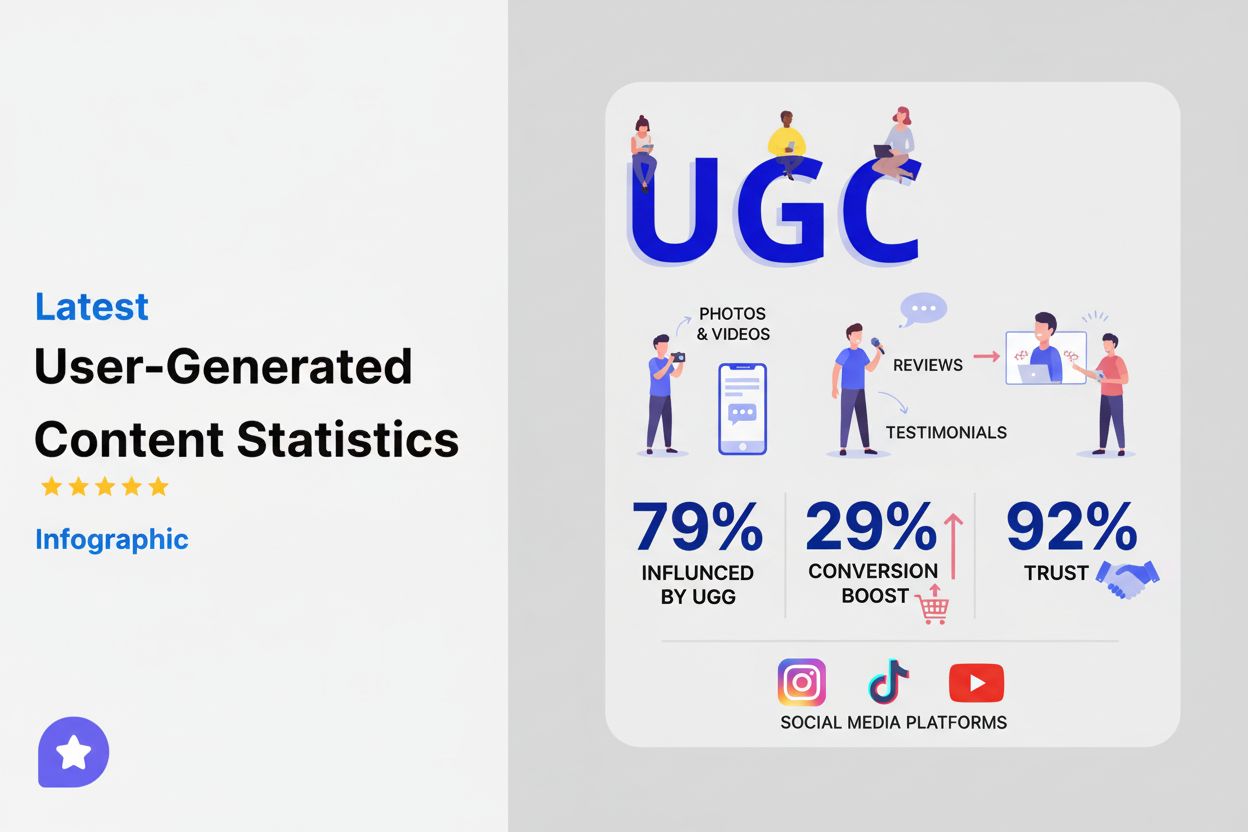
Learn what User-Generated Content (UGC) is, why it matters for brand visibility, and how it drives conversions. Discover how 92% of consumers trust UGC more tha...

Page Experience measures user interaction quality through Core Web Vitals, mobile-friendliness, HTTPS security, and intrusive interstitials. Learn how it impact...
Cookie Consent
We use cookies to enhance your browsing experience and analyze our traffic. See our privacy policy.