
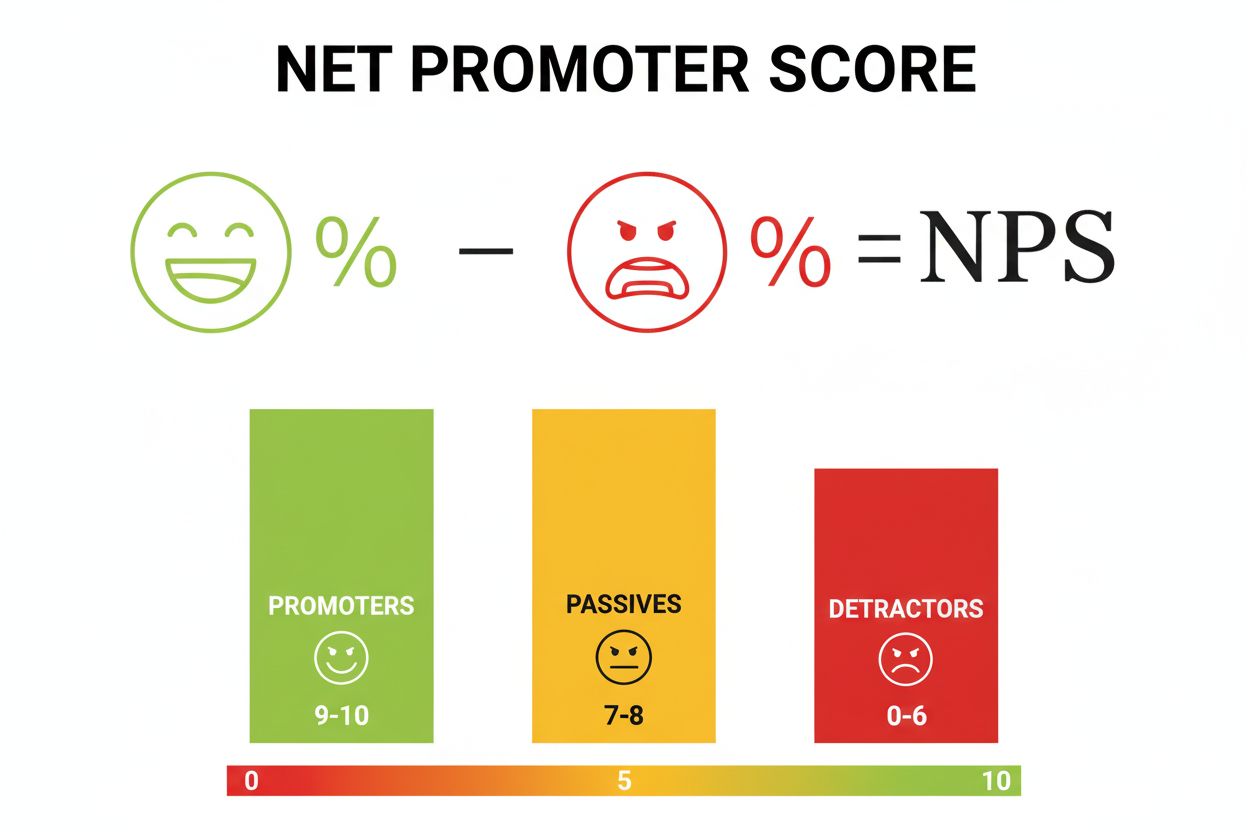
Net Promoter Score (NPS)
Net Promoter Score (NPS) är ett kundlojalitetsmått som mäter rekommendationssannolikhet. Lär dig hur du beräknar NPS, tolkar poäng och jämför mot branschstandar...
11 min läsning
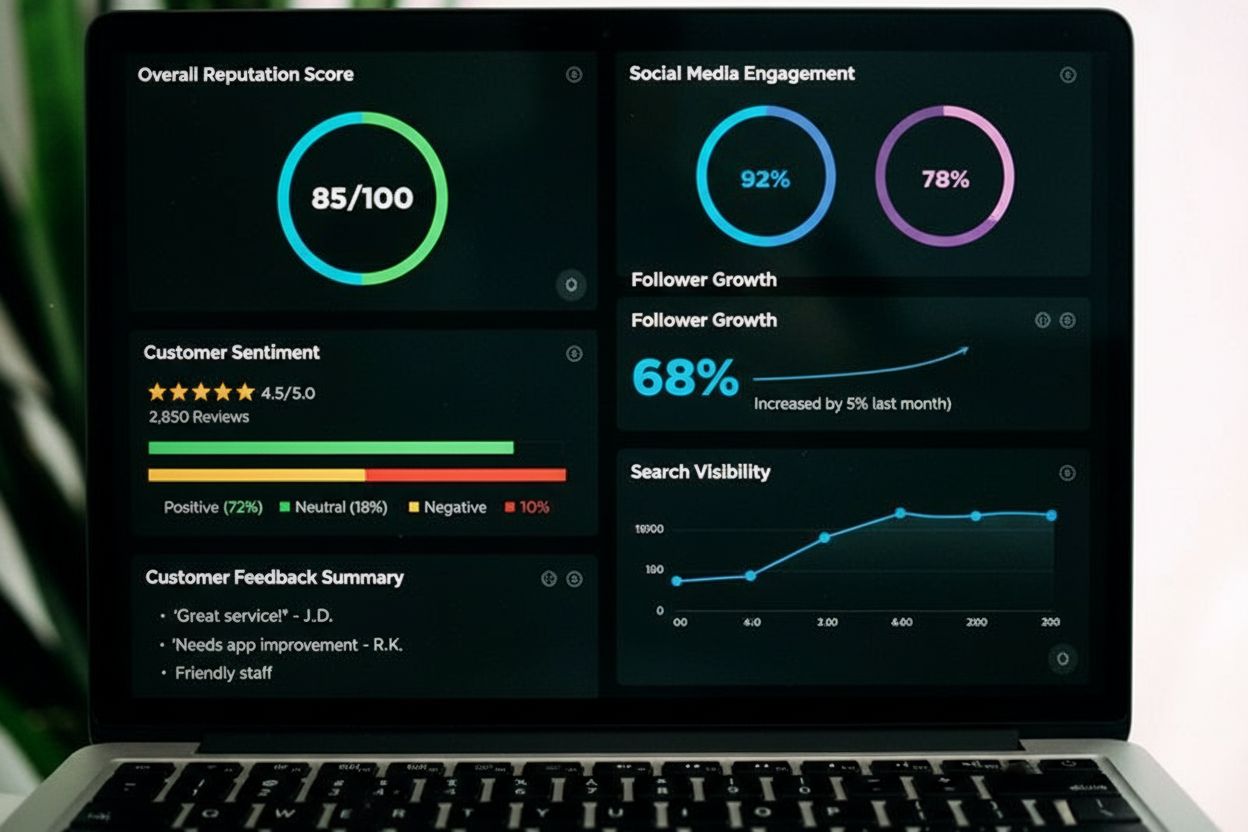
En reputationspoäng är en kvantifierbar numerisk mätning som mäter och aggregerar en individs, ett varumärkes eller en organisations övergripande online-reputation över flera digitala kanaler. Den sammanställer data från recensioner, betyg, engagemang på sociala medier, synlighet i sökresultat och kundsentiment till en enda, handlingsbar poäng som speglar hur entiteten uppfattas online.
En reputationspoäng är en kvantifierbar numerisk mätning som mäter och aggregerar en individs, ett varumärkes eller en organisations övergripande online-reputation över flera digitala kanaler. Den sammanställer data från recensioner, betyg, engagemang på sociala medier, synlighet i sökresultat och kundsentiment till en enda, handlingsbar poäng som speglar hur entiteten uppfattas online.
A reputation score is a quantifiable numerical metric that aggregates and measures an individual’s, brand’s, or organization’s overall online reputation across multiple digital channels and platforms. This score synthesizes data from diverse sources—including customer reviews, star ratings, social media engagement, search engine visibility, and sentiment analysis—into a single, actionable number that reflects how the entity is perceived by the public. Reputation scores typically range from 0 to 100 or are expressed as letter grades (A through F), providing a standardized way to assess and track online reputation over time. The primary purpose of a reputation score is to distill complex, wide-ranging customer feedback and public perception into a comprehensible metric that businesses, individuals, and organizations can use to understand their digital standing and make informed decisions about reputation management strategies.
The significance of reputation scores has grown exponentially in the digital age, where online perception directly influences consumer behavior, hiring decisions, and business outcomes. Research indicates that 90% of customers read online reviews before visiting a business, and 84% of consumers trust online reviews as much as personal recommendations. This widespread reliance on digital information means that a reputation score has become a critical indicator of trustworthiness and credibility. Unlike traditional metrics that measure financial performance or operational efficiency, a reputation score captures the intangible but highly valuable asset of public trust and brand perception, making it essential for competitive success in virtually every industry.
The concept of reputation scoring emerged from the broader field of online reputation management (ORM), which gained prominence in the early 2000s as the internet became central to consumer decision-making. Initially, reputation management was a reactive practice focused on addressing negative search results and managing crisis situations. However, as digital platforms proliferated and consumer behavior increasingly shifted online, organizations recognized the need for proactive, quantifiable approaches to reputation monitoring. The development of reputation scores represented a significant evolution in this field, transforming reputation management from a qualitative, subjective practice into a data-driven discipline with measurable benchmarks and trackable progress metrics.
The methodology behind reputation scores draws from multiple disciplines, including sentiment analysis, data aggregation, and algorithmic weighting. Early pioneers in the reputation management industry, such as Reputation.com and BrandYourself, developed proprietary scoring algorithms that analyze hundreds of data points across search results, review platforms, social media, and other digital touchpoints. These algorithms assign weighted values to different factors based on their impact on overall reputation—for example, a top-ranking Google search result carries more weight than a result on page three, and recent reviews are typically weighted more heavily than older ones. According to industry research, approximately 81% of consumers use Google to research businesses before making purchasing decisions, making search visibility a critical component of reputation scoring calculations.
The evolution of reputation scores has been further accelerated by the rise of artificial intelligence and machine learning technologies. Modern reputation scoring systems now employ sophisticated AI algorithms that can process vast amounts of unstructured data from diverse sources, identify sentiment patterns, and predict reputation trends with increasing accuracy. This technological advancement has made reputation scores more reliable and actionable, enabling organizations to move beyond simple review aggregation to comprehensive reputation intelligence. Additionally, the emergence of AI-driven search platforms like ChatGPT, Perplexity, and Google AI Overviews has created new dimensions for reputation scoring, as brands now need to monitor not just traditional search results but also how they appear in AI-generated responses—a development that has fundamentally expanded the scope and importance of reputation monitoring.
| Metric/Platform | Calculation Method | Data Sources | Score Range | Primary Use Case | Update Frequency |
|---|---|---|---|---|---|
| Traditional Reputation Score | Weighted aggregation of reviews, ratings, and search results | Google, Yelp, Trustpilot, social media, news | 0-100 or A-F | Overall brand health assessment | Weekly to monthly |
| Net Promoter Score (NPS) | Percentage of promoters minus detractors | Customer surveys and feedback | -100 to +100 | Customer loyalty measurement | Quarterly |
| Sentiment Analysis Score | AI-driven analysis of positive/negative language | Social media, reviews, news articles | -1 to +1 or percentage | Real-time sentiment tracking | Real-time to daily |
| Search Visibility Score | Position and prominence of results on first page | Google search results only | 0-100 | SEO and search reputation | Daily |
| Social Media Reputation Score | Engagement metrics and follower sentiment | Facebook, Twitter, Instagram, LinkedIn | Platform-specific | Social presence assessment | Real-time |
| AI Visibility Score | Brand mentions in AI-generated responses | ChatGPT, Perplexity, Google AI Overviews, Claude | 0-100 | AI search optimization | Weekly |
The calculation of a reputation score involves a sophisticated multi-step process that begins with data collection from numerous online sources. The most widely adopted methodology starts with establishing a baseline scale—typically 100 points—and then systematically analyzing each data source to determine its contribution to the overall score. For search-based reputation scoring, practitioners assign weighted values to each search result position, with the top result receiving the highest weight (often 35 points) and subsequent positions receiving progressively lower weights. This weighting system reflects the reality that consumers rarely look beyond the first page of search results; research shows that only 5% of internet users examine results beyond the first page, making top positioning disproportionately important to overall reputation.
Once the baseline framework is established, the calculation process involves sentiment analysis of each data source. Every review, social media mention, news article, and search result is classified as positive, neutral, or negative based on the language, context, and explicit ratings provided. Positive content contributes full points to the score, neutral content typically contributes half points (reflecting its minimal impact), and negative content is subtracted from the total. For example, if a business has a negative review in position seven of search results (worth 5 points), that full 5 points would be subtracted from the baseline 100. If a neutral three-star review appears in position eight (worth 4 points), only 2 points would be subtracted. The final reputation score is calculated by subtracting all negative and neutral deductions from the baseline 100, resulting in a score that reflects the overall sentiment and visibility of online content.
Advanced reputation scoring systems incorporate additional variables that enhance accuracy and relevance. These include the recency of reviews (more recent reviews carry higher weight), the authority and trustworthiness of the source (reviews from verified purchasers on established platforms like Google or Yelp carry more weight than anonymous comments), the volume of reviews and mentions (consistent positive feedback across multiple platforms is weighted more heavily than isolated positive reviews), and the response rate to feedback (businesses that actively respond to reviews typically receive higher scores). Machine learning algorithms continuously refine these weighting systems by analyzing which factors most strongly correlate with actual business outcomes like revenue, customer acquisition, and employee retention. This data-driven approach ensures that reputation scores remain predictive and actionable rather than merely descriptive.
Online reviews and ratings represent the most direct and influential factor in reputation score calculations. The volume, recency, and average rating of reviews across platforms like Google, Yelp, TripAdvisor, and Trustpilot directly impact the score. Research demonstrates that 93% of consumers’ purchasing decisions are influenced by online reviews, and a single negative review can reduce customer acquisition by up to 22%. The distribution of star ratings is particularly important—a business with mostly four and five-star reviews will have a significantly higher reputation score than one with mixed ratings, even if the average is similar. Additionally, the velocity of reviews matters; a sudden influx of negative reviews can trigger a sharp decline in reputation score, while consistent positive reviews over time build a stable, high score.
Search engine visibility and positioning constitute another critical factor in reputation scoring. The prominence of positive content on Google’s first page directly correlates with reputation score, as this is where the vast majority of consumers conduct their research. Businesses that dominate the first page with positive content—such as their official website, positive news articles, and high-rated review profiles—achieve higher reputation scores. Conversely, the presence of negative content on the first page significantly depresses reputation scores. The specific position matters greatly; content in positions one through three receives substantially more weight than content in positions seven through ten. This positional weighting reflects actual user behavior, as click-through rates drop dramatically after the top three results.
Social media engagement and sentiment increasingly influence reputation scores, particularly as younger demographics rely more heavily on social platforms for brand research. Positive engagement metrics—likes, shares, comments, and followers—contribute to higher scores, while negative comments, low engagement rates, and inactive profiles can reduce scores. The sentiment of social media interactions is analyzed using natural language processing to determine whether engagement is predominantly positive, neutral, or negative. Additionally, the responsiveness of brands to social media inquiries and complaints affects reputation scores; businesses that respond quickly and professionally to customer concerns demonstrate commitment to customer satisfaction, which positively impacts their scores. Research shows that 88% of consumers prefer businesses that respond to their reviews, making response rate a significant scoring factor.
Customer service quality and response metrics directly influence reputation scores through multiple mechanisms. The speed of response to reviews, comments, and inquiries is tracked and weighted in reputation calculations; faster responses typically result in higher scores. The quality and professionalism of responses also matter—thoughtful, empathetic responses to negative reviews can actually improve reputation scores by demonstrating accountability and commitment to improvement. Additionally, the resolution rate of customer issues—whether complaints are successfully addressed and resolved—impacts scores. Businesses that consistently resolve customer problems receive higher scores than those that ignore or dismiss concerns. This factor reflects the reality that 89% of consumers note how companies respond to reviews when forming their opinions about businesses.
Content quality and frequency represent important but often overlooked factors in reputation scoring. High-quality, original content published on a company’s website and social media platforms contributes to reputation scores by establishing authority and expertise. Regular content updates signal that a business is active and engaged, which positively impacts scores. Additionally, the presence of professional images, videos, and multimedia content enhances reputation scores compared to text-only profiles. The relevance of content to the business’s industry and target audience also matters; content that demonstrates industry knowledge and addresses customer needs contributes more to reputation scores than generic or irrelevant content.
The emergence of AI-driven search platforms has fundamentally transformed how reputation scores are calculated and interpreted. Platforms like ChatGPT, Perplexity, Google AI Overviews, and Claude now generate responses that directly influence consumer perception and purchasing decisions. These AI systems are trained on vast amounts of internet data, including reviews, news articles, social media posts, and other online content. When a brand appears frequently in positive contexts within AI training data, it receives favorable mentions in AI-generated responses. Conversely, brands with significant negative online presence may be mentioned negatively or not at all in AI responses. This has created a new dimension of reputation scoring that tracks AI visibility and sentiment—how often and in what context a brand appears in AI-generated responses.
AmICited and similar AI monitoring platforms have developed specialized reputation scoring methodologies that account for AI-specific factors. These platforms track brand mentions across multiple AI systems, analyze the sentiment of those mentions, and calculate scores based on frequency, positioning, and context. A brand that appears prominently and positively in AI responses from multiple platforms receives a higher AI reputation score than one that appears rarely or in negative contexts. This represents a significant evolution in reputation monitoring, as AI responses are increasingly influencing consumer decisions—particularly among younger demographics who rely on AI assistants for research and recommendations. The integration of AI reputation scores with traditional reputation metrics provides a more comprehensive picture of overall brand health in the modern digital landscape.
The relationship between traditional reputation scores and AI reputation scores is increasingly important for strategic brand management. Brands with strong traditional reputation scores (based on reviews, search visibility, and social media) tend to have higher AI reputation scores because AI systems are trained on the same underlying data. However, the correlation is not perfect; some brands may have strong traditional reputations but limited AI visibility if they don’t appear frequently in the types of content used to train AI systems. This has led forward-thinking organizations to develop integrated reputation strategies that optimize for both traditional search and AI visibility. The ability to monitor and improve both metrics simultaneously has become a competitive advantage, particularly for brands operating in competitive industries where consumer attention is fragmented across multiple information sources.
Improving a reputation score requires a systematic, multi-faceted approach that addresses the various factors influencing the score. The first priority should be proactive review management, which involves actively encouraging satisfied customers to leave positive reviews on major platforms like Google, Yelp, and industry-specific review sites. This can be accomplished through follow-up emails after purchases, in-store signage, and direct requests during positive customer interactions. Simultaneously, businesses must monitor reviews across all platforms and respond promptly to both positive and negative feedback. Research shows that responding to all reviews can attract 88% of consumers, compared to just 47% who would consider a business that ignores reviews. Responses should be professional, empathetic, and focused on demonstrating commitment to customer satisfaction.
Search engine optimization (SEO) plays a crucial role in reputation score improvement by ensuring that positive content ranks highly for brand-related searches. This involves optimizing the company website for relevant keywords, building high-quality backlinks from authoritative sources, and creating fresh, valuable content that addresses customer questions and concerns. When positive content dominates the first page of search results, the reputation score increases significantly. Additionally, businesses should actively manage their presence on review platforms by claiming and optimizing their business profiles, ensuring that all information is accurate and up-to-date, and encouraging customers to leave reviews on these high-authority platforms.
Social media reputation management requires consistent engagement, professional communication, and active monitoring of brand mentions. Businesses should maintain active, professional profiles on platforms where their target audience congregates, post regular content that demonstrates expertise and values, and respond promptly to customer inquiries and comments. The tone and quality of social media interactions significantly impact reputation scores; professional, helpful responses to customer questions build trust and improve scores, while dismissive or unprofessional responses damage reputation. Additionally, businesses should monitor social media for mentions of their brand and industry-related conversations, participating constructively in relevant discussions to build authority and positive associations.
The future of reputation scoring will be increasingly shaped by artificial intelligence and machine learning technologies that enable more sophisticated analysis and prediction. Predictive reputation scoring represents an emerging trend where AI systems analyze current reputation data to forecast future reputation trends and identify potential issues before they become critical. These systems can detect early warning signs of reputation problems—such as increasing negative sentiment or declining review velocity—and alert organizations to take preventive action. This shift from reactive to proactive reputation management will enable organizations to maintain higher reputation scores with less crisis management.
Real-time reputation scoring is becoming the standard as organizations demand immediate insights into how their reputation is changing. Rather than monthly or quarterly reputation reports, modern systems provide continuous updates that reflect changes in reviews, social media sentiment, search results, and other factors. This real-time visibility enables rapid response to emerging issues and allows organizations to capitalize on positive momentum. The integration of real-time reputation scoring with automated alert systems means that reputation managers can focus on strategic initiatives rather than spending time on manual monitoring.
Multi-platform reputation integration will continue to evolve as reputation scoring systems incorporate data from an expanding array of sources. Beyond traditional review platforms and search results, future reputation scores will increasingly account for mentions in AI-generated responses, podcast discussions, video content, and emerging social platforms. This comprehensive approach will provide a more complete picture of how brands are perceived across the entire digital ecosystem. Additionally, reputation scoring will increasingly account for offline factors that influence online reputation, such as press coverage, industry awards, and corporate social responsibility initiatives.
Ethical and transparency considerations will become increasingly important in reputation scoring as organizations and consumers demand greater accountability in how scores are calculated. Future reputation scoring systems will likely provide greater transparency about the factors influencing scores, the weighting of different data sources, and the methodology used to classify sentiment. This transparency will help organizations understand exactly what they need to do to improve their scores and will build greater trust in reputation scoring as a metric. Additionally, there will likely be increased focus on preventing manipulation of reputation scores through fake reviews, coordinated negative campaigns, and other unethical practices.
The integration of reputation scores with business intelligence systems represents another important future trend. Rather than treating reputation scores as standalone metrics, forward-thinking organizations will integrate reputation data with customer relationship management (CRM) systems, sales data, employee engagement metrics, and other business intelligence. This integration will enable organizations to directly correlate reputation scores with business outcomes like revenue, customer lifetime value, and employee retention, making the business case for reputation management investment even more compelling. As this integration deepens, reputation management will increasingly be recognized as a core business function rather than a peripheral marketing activity.
+++
Även om båda är numeriska mätvärden som bedömer trovärdighet, mäter en reputationspoäng online-uppfattning över digitala kanaler inklusive recensioner, sociala medier och sökresultat, medan en kreditscore utvärderar ekonomisk kreditvärdighet. En reputationspoäng ligger vanligtvis mellan 0–100 eller använder bokstavsbetyg (A–F), och den påverkar direkt rekryteringsbeslut, konsumentbeteende och varumärkessynlighet. Enligt forskning tar 86 % av rekryterare hänsyn till en kandidats online-reputation vid rekrytering, vilket gör reputationspoäng allt viktigare i professionella sammanhang.
Nyckelfaktorer inkluderar online-recensioner och betyg (särskilt på Google, Yelp och Trustpilot), stjärnbetyg och deras aktualitet, engagemang och sentiment på sociala medier, synlighet och placering i sökmotorer, svarsfrekvens på kundfeedback, innehållskvalitet och frekvens av varumärkesomnämnanden. Dessutom påverkar faktorer som kundservicekvalitet, mediebevakning och förekomst av negativt innehåll i sökresultat poängen avsevärt. Forskning visar att 93 % av konsumenternas köpbeslut påverkas av online-recensioner, vilket gör recensionshantering till en avgörande del av reputationsmätning.
Reputationspoäng bör övervakas kontinuerligt, med formella genomgångar minst veckovis eller månadsvis beroende på bransch och aktivitetsnivå online. Realtidsövervakning är särskilt viktig för företag inom kundnära branscher, eftersom en enda negativ recension kan minska kundtillströmningen med upp till 22 %. Många plattformar för reputationshantering erbjuder automatiska aviseringar vid större förändringar, så att du snabbt kan agera vid nya problem. Konsekvent övervakning hjälper till att identifiera trender och möjliggör proaktiv reputationshantering innan problem eskalerar.
Vissa förbättringar kan märkas relativt snabbt genom aktiv recensionshantering och svarsstrategier, men att bygga upp en stark reputationspoäng kräver vanligtvis ihållande arbete under flera månader. Att bemöta negativa recensioner professionellt kan generera fler positiva recensioner, och konsekvent engagemang i sociala medier kan förbättra sentimentmätningar inom några veckor. Att ta bort negativt innehåll från sökresultat eller bygga omfattande positivt innehåll tar dock oftast 3–6 månader. Tidslinjen beror på din nuvarande poäng, bransch och mängden omnämnanden online.
AI-övervakningsplattformar som AmICited spårar hur varumärken framställs i AI-genererade svar från system som ChatGPT, Perplexity och Google AI Overviews. Dessa plattformar beräknar reputationspoäng baserat på citeringsfrekvens, sentiment i omnämnanden och placering i AI-svar. Eftersom AI-system allt mer påverkar konsumentbeslut har reputationspoäng i AI-sammanhang blivit avgörande mätvärden. Varumärken med högre traditionella reputationspoäng får oftare positiv uppmärksamhet i AI-svar, vilket skapar ett direkt samband mellan hantering av online-reputation och AI-synlighet.
En bra reputationspoäng ligger vanligtvis mellan 70–100 på en 0–100-skala, eller B+ till A i bokstavsbetyg. Poäng över 80 indikerar generellt stark online-reputation med positivt kundsentiment och minimalt negativt innehåll i sökresultat. Enligt branschstandarder är 94 % av konsumenterna benägna att prova ett företag med minst fyra stjärnor, vilket motsvarar reputationspoäng på 75+. Vad som är acceptabelt varierar dock mellan branscher – inom högkonkurrens kan poäng över 85 krävas för att behålla fördelar.
Forskning visar ett direkt samband mellan reputationspoäng och intäkter. Studier visar att varje extra stjärna i betyg kan öka intäkterna med upp till 9 %, och företag med starkt rykte kan ta ut högre priser. Dessutom påverkar online-recensioner 67,7 % av köpbesluten, och bolag med högre reputationspoäng har bättre kundlojalitet och lockar lättare topptalanger. Organisationer med dålig reputationspoäng har högre rekryteringskostnader (upp till 10 % mer per nyanställning) och förlorar cirka 41 % av potentiella intäkter på grund av skadat rykte.
Börja spåra hur AI-chatbotar nämner ditt varumärke på ChatGPT, Perplexity och andra plattformar. Få handlingsbara insikter för att förbättra din AI-närvaro.
Net Promoter Score (NPS) är ett kundlojalitetsmått som mäter rekommendationssannolikhet. Lär dig hur du beräknar NPS, tolkar poäng och jämför mot branschstandar...
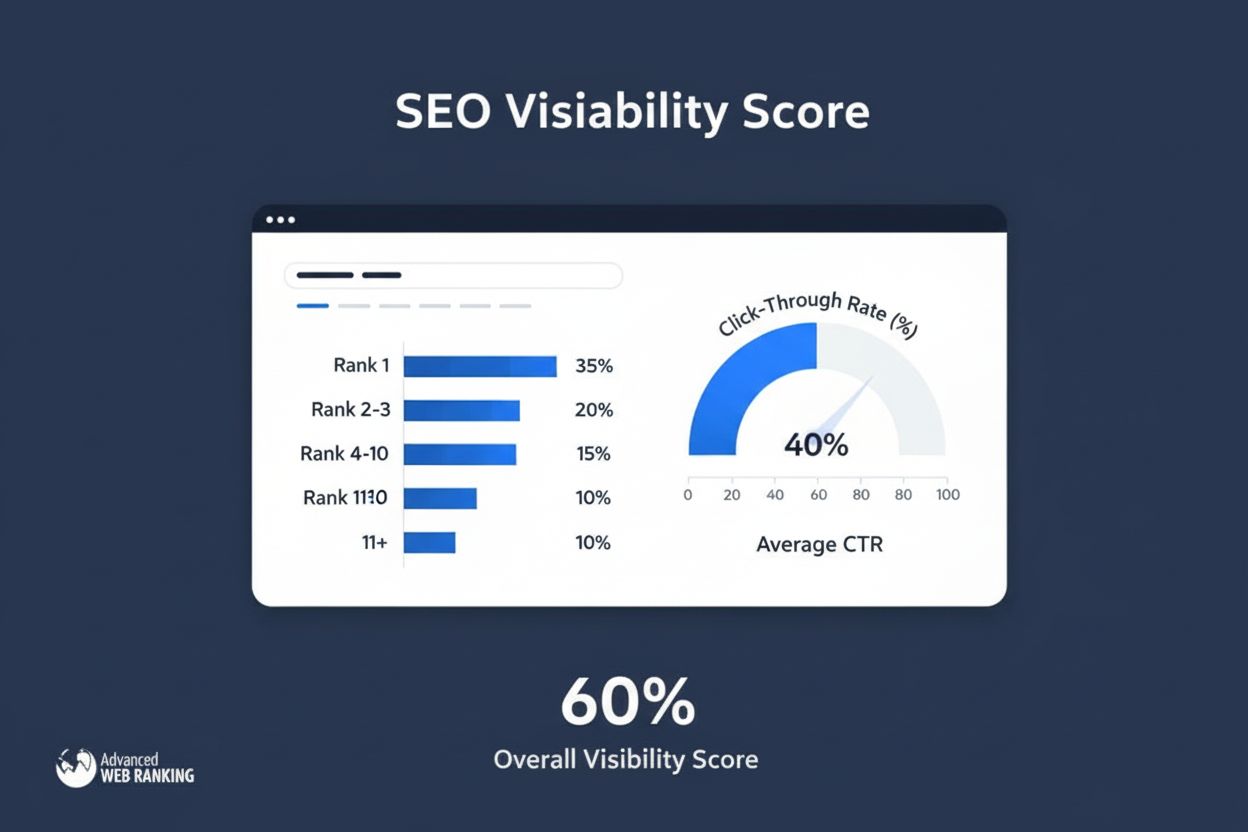
Visibility Score mäter sökbarhet genom att beräkna uppskattade klick från organiska placeringar. Lär dig hur måttet fungerar, dess beräkningsmetoder och varför ...
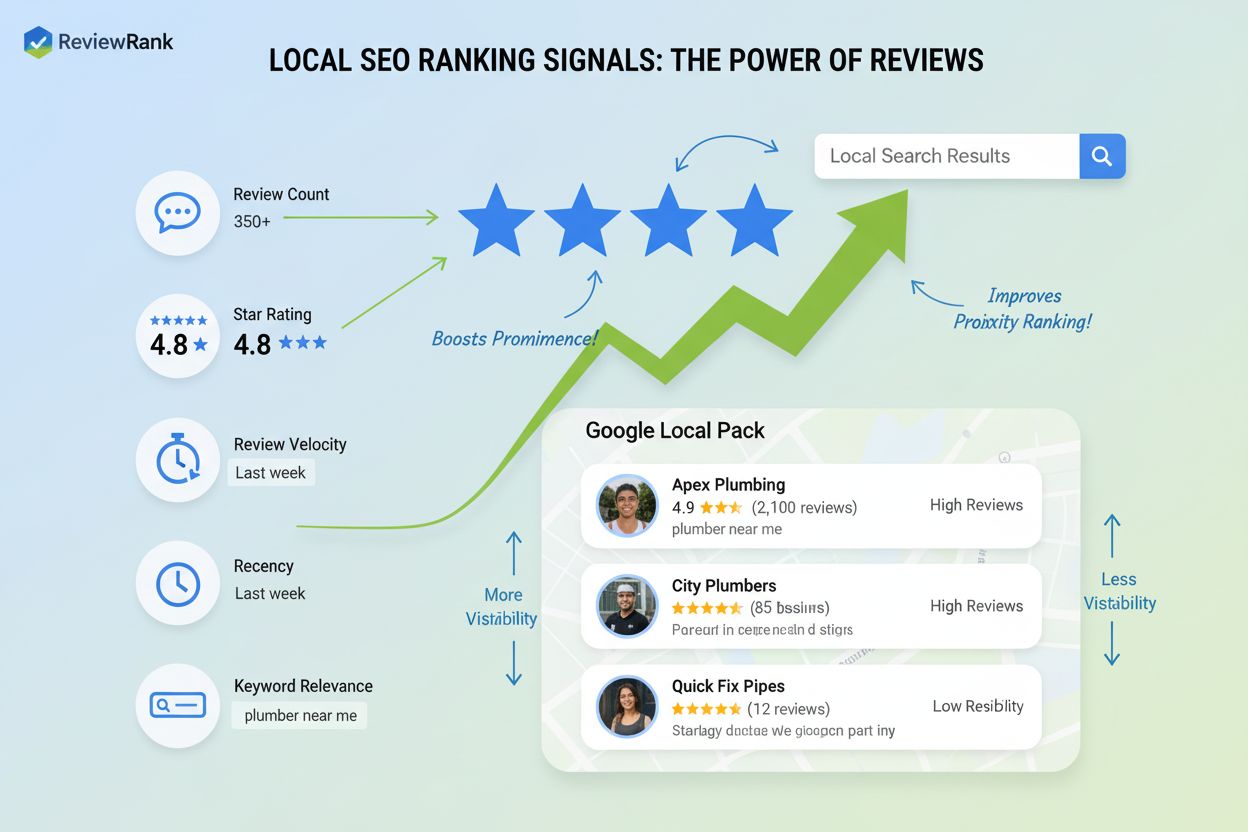
Recensionssignaler är viktiga lokala SEO-rankningsfaktorer inklusive antal recensioner, betyg, hastighet och aktualitet. Lär dig hur recensioner påverkar lokal ...
Cookie-samtycke
Vi använder cookies för att förbättra din surfupplevelse och analysera vår trafik. See our privacy policy.