

How Do I Consolidate Content for AI?
Learn how to consolidate and optimize your content for AI search engines like ChatGPT, Perplexity, and Gemini. Discover best practices for content structure, fo...
9 min read
We have a content problem that I suspect many teams share.
Over 7 years, we’ve published 500+ blog posts. Many cover similar topics from slightly different angles. Classic SEO advice from 2018-2022 was “publish frequently, target long-tail keywords.”
The problem now:
When I ask ChatGPT or Perplexity questions about our industry, competitors with fewer but more comprehensive articles get cited. We have 15 articles about “email automation” and AI cites none of them.
I think AI systems prefer comprehensive, authoritative single sources over scattered related content. But consolidating 500+ posts is overwhelming.
What I need help with:
Our organic traffic is fine but AI referrals are almost nonexistent. Ready to do the work, just need a framework.
We went through this exact process last year. 800 blog posts down to 180. AI citations went from nearly zero to appearing in ~40% of relevant prompts.
The framework that worked:
Step 1: Content Audit by Topic Cluster Export all URLs with their target keywords. Group by topic. You’ll immediately see clusters like:
These 4+ articles are cannibalizing each other. AI doesn’t know which is authoritative.
Step 2: Pick Winners and Merge For each cluster, identify the page with:
This becomes your “pillar page.” All other cluster content gets merged into it.
Step 3: Restructure for AI The consolidated page should have:
Step 4: Redirect and Monitor 301 redirect old URLs to consolidated pages. Track AI visibility weekly.
The key insight: AI systems cite comprehensive sources, not scattered variations. One 4,000-word definitive guide beats five 800-word posts.
About 3 months with a team of 3 content people + 1 SEO specialist.
Yes, AI helped tremendously:
We used ChatGPT to:
The human work was:
AI cut the time in half. The irony of using AI to optimize for AI wasn’t lost on us.
Pro tip: Feed AI your old posts and ask “What unique information appears in Article A that doesn’t appear in Articles B, C, D?” This surfaces content worth keeping vs. redundant content.
Important warning: Don’t consolidate based solely on traffic.
We made this mistake. Merged 50 low-traffic pages into 10 “pillar” pages. Some of those low-traffic pages were ranking for very specific queries that AI systems were actually citing.
Better approach:
Before consolidating, check:
We lost AI visibility on some niche topics because we merged pages that were actually performing well in AI search despite low Google traffic.
The metrics that matter for Google SEO aren’t the same as what matters for AI visibility.
Practical tip that made consolidation way easier:
Create a content inventory spreadsheet with these columns:
Once you see it all in a spreadsheet, clusters become obvious. We found we had 23 posts about “customer onboarding” with at least 60% content overlap between them.
Took 2 days to build the spreadsheet. Saved weeks of confusion later.
Let me explain why AI specifically struggles with scattered content:
How AI systems process content:
When you ask ChatGPT “How do I automate email marketing?”, it doesn’t look at your 15 email automation articles and pick the best one. It:
If your 15 articles have slightly different (or contradictory) information, AI has to decide which version to cite. Usually it picks neither and cites a competitor’s single comprehensive guide instead.
What consolidation fixes:
One authoritative page gives AI a clear, consistent source. All the good information is in one place with one URL. No contradictions between your own content.
The structure that gets cited:
AI systems love content structured as:
Your consolidated guide should hit all of these. It’s not just about combining content - it’s about restructuring it for how AI systems extract information.
We do consolidation projects for clients regularly. Here’s the ROI we typically see:
Before consolidation (client average):
After consolidation:
The counterintuitive insight:
Most clients resist consolidation because they think more content = more chances to rank. But AI search has inverted this. Fewer, better pages = more AI citations = more visibility.
We had one client go from 600 posts to 90. Their AI referral traffic increased 12x. Traditional SEO traffic stayed roughly the same (actually went up slightly because pages had more authority).
Don’t forget about internal linking after consolidation.
We consolidated 300 pages into 60 and forgot to update internal links. Had dozens of orphan pages and broken internal link structures.
Post-consolidation checklist:
The redirect handles visitors and bots hitting old URLs. But your other pages linking to old URLs need manual fixing.
Real data from our consolidation:
Before (March 2025):
After consolidation (January 2026):
What surprised us:
The most cited content post-consolidation wasn’t our highest traffic pages. It was the most comprehensive pages with clear structure and direct answers.
A 4,500-word guide on “SaaS pricing strategies” gets cited constantly. Our old 800-word “5 pricing tips” article never got a single citation despite having more backlinks.
AI optimization is a different game than SEO. Comprehensiveness beats keyword targeting.
This thread is exactly what I needed. Here’s my action plan based on everyone’s input:
Phase 1 (Week 1-2): Audit
Phase 2 (Week 3-8): Consolidate
Phase 3 (Week 9-10): Technical
Phase 4 (Ongoing): Monitor
Targeting 500 posts down to ~100 comprehensive guides. Will report back with results in a few months.
The key insight I’m taking away: AI prefers comprehensive single sources over scattered variations. Time to consolidate.
Get personalized help from our team. We'll respond within 24 hours.
Monitor which of your content pieces are being cited by AI systems and identify consolidation opportunities based on real performance data.
Learn how to consolidate and optimize your content for AI search engines like ChatGPT, Perplexity, and Gemini. Discover best practices for content structure, fo...
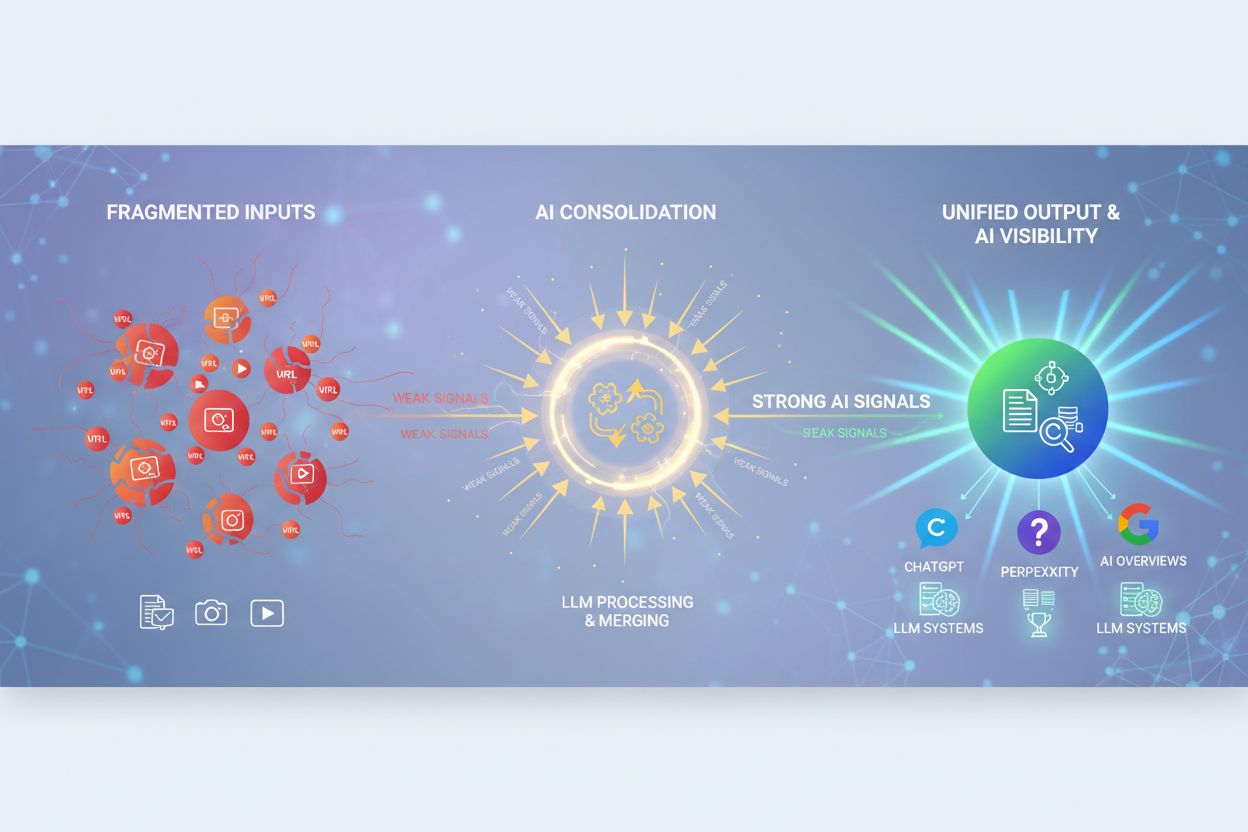
Learn what AI Content Consolidation is and how merging similar content strengthens visibility signals for ChatGPT, Perplexity, and Google AI Overviews. Discover...
Community discussion on content cannibalization in AI search. How to prevent pages from competing for the same AI citations and consolidate visibility.
Cookie Consent
We use cookies to enhance your browsing experience and analyze our traffic. See our privacy policy.