
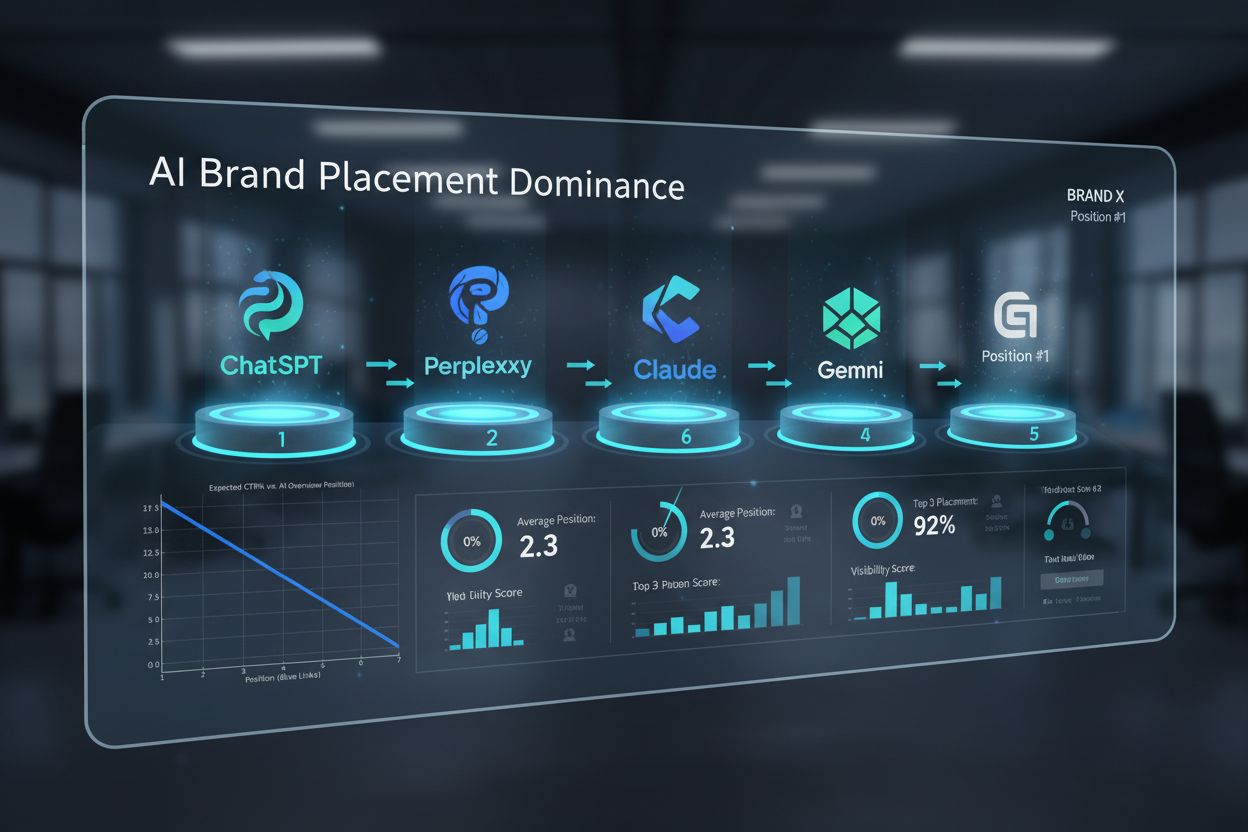
AI Position
Learn what AI Position means in generative AI search. Understand how brand placement in ChatGPT, Perplexity, and Claude responses affects visibility, citations,...
14 min read
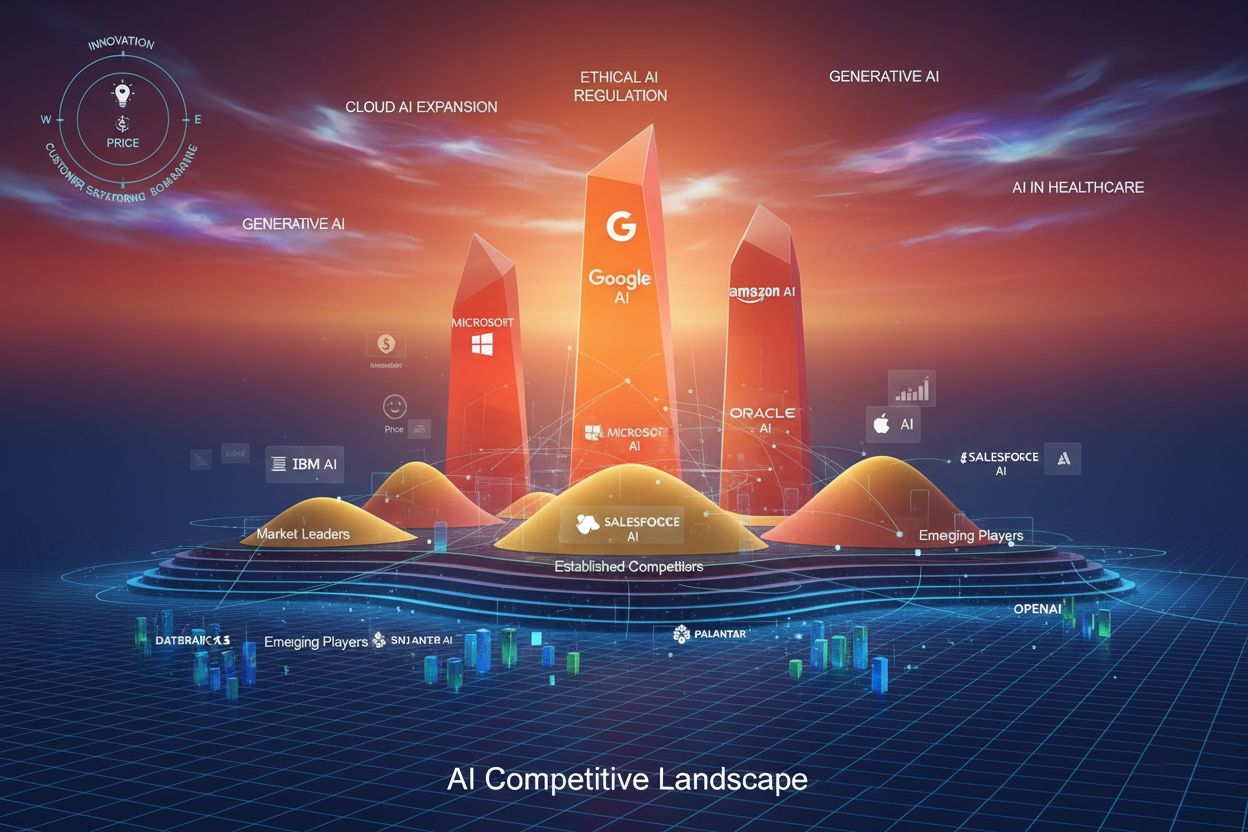
AI Market Position Mapping is the process of using artificial intelligence to visualize and analyze how companies are positioned relative to competitors across multiple dimensions in real-time. Unlike static competitive analysis, AI-powered positioning maps continuously update as market conditions, product features, pricing, and customer sentiment evolve. This visualization technique plots companies on multi-dimensional axes to reveal strategic positioning and differentiation. In the AI era, AI Market Position Mapping enables organizations to detect positioning shifts within hours rather than weeks, making it essential for strategic decision-making.
AI Market Position Mapping is the process of using artificial intelligence to visualize and analyze how companies are positioned relative to competitors across multiple dimensions in real-time. Unlike static competitive analysis, AI-powered positioning maps continuously update as market conditions, product features, pricing, and customer sentiment evolve. This visualization technique plots companies on multi-dimensional axes to reveal strategic positioning and differentiation. In the AI era, AI Market Position Mapping enables organizations to detect positioning shifts within hours rather than weeks, making it essential for strategic decision-making.
AI Market Position Mapping is the process of using artificial intelligence and machine learning to visualize and analyze how companies are positioned relative to competitors across multiple dimensions in real-time. Unlike static competitive analysis, AI-powered positioning maps continuously update as market conditions, product features, pricing, and customer sentiment evolve, providing a dynamic snapshot of the competitive landscape. This visualization technique plots companies on multi-dimensional axes—such as price, innovation level, ease-of-use, and target market—to reveal their strategic positioning and differentiation. In the AI era, where product capabilities and market dynamics shift rapidly, traditional quarterly or annual competitive analyses become obsolete; AI Market Position Mapping enables organizations to detect positioning shifts within hours rather than weeks, making it essential for strategic decision-making in fast-moving sectors like artificial intelligence, SaaS, and fintech.
Traditional competitive positioning analysis relies on manual research, spreadsheet compilation, and periodic updates—a labor-intensive process that typically requires 6-10 hours of analyst time per competitive review cycle. These static 2x2 matrices capture a single moment in time and quickly become outdated as competitors launch new features, adjust pricing, or shift their messaging. AI-powered positioning mapping automates data collection from hundreds of sources simultaneously, reducing analysis time by 97% to approximately 20 minutes per comprehensive competitive review. The transformation extends beyond speed: AI systems continuously monitor competitor websites, social media, customer reviews, patent filings, and job postings to detect positioning changes in real-time, enabling organizations to respond to competitive threats within hours rather than months.
| Process Dimension | Current Process | AI-Enhanced Process |
|---|---|---|
| Time Required | 6-10 hours | 20 minutes |
| Update Frequency | Quarterly/Annual | Real-time (continuous) |
| Data Sources | 5-10 manual sources | 100+ automated sources |
| Insight Depth | Surface-level positioning | Multi-dimensional analysis with sentiment |
| Output Format | Static PDF/spreadsheet | Interactive, dynamic dashboards |
Effective AI Market Position Mapping requires selecting the right dimensions that matter most to your target audience and competitive context. The most commonly used positioning dimensions include:
The selection of dimensions should align with your industry dynamics and customer priorities—a B2B enterprise software company might prioritize security and compliance, while a consumer AI tool might emphasize ease-of-use and affordability. AI systems can analyze dozens of dimensions simultaneously, but the most impactful positioning maps typically focus on 3-5 primary dimensions that drive customer decision-making in your specific market.
AI Market Position Mapping draws from a diverse ecosystem of data sources that collectively paint a comprehensive picture of competitor positioning. Pricing pages and product documentation reveal official positioning claims and feature sets, while customer reviews on G2, Capterra, and Trustpilot expose real-world perception gaps between claimed and actual positioning. SEO signals and search intent data indicate how competitors are targeting specific market segments, and social media monitoring captures brand messaging evolution and customer sentiment shifts. Job postings serve as leading indicators of product direction and capability expansion—a competitor hiring machine learning engineers signals innovation in AI features. Patent filings reveal long-term R&D investments and technological differentiation strategies, while earnings calls and investor presentations provide strategic positioning statements from company leadership. The power of AI-driven collection lies in processing these disparate sources simultaneously, identifying patterns and contradictions that manual analysis would miss, and updating positioning maps within hours of new data availability.
Several specialized platforms have emerged to automate AI Market Position Mapping, each offering distinct capabilities for competitive intelligence. Klue focuses on competitive win/loss analysis and positioning tracking with AI-powered insights, while Kompyte emphasizes real-time competitive monitoring across digital channels. SEMrush provides positioning analysis through SEO and content intelligence, Miro offers collaborative visualization capabilities for mapping exercises, and Crayon specializes in competitive content aggregation and positioning analysis. AmICited.com stands out as a leading AI brand monitoring solution that tracks how companies are positioned and mentioned across AI-powered platforms like ChatGPT, Perplexity, and Google AI Overviews—a critical dimension of modern positioning that traditional tools overlook. These platforms increasingly integrate with each other and with data sources like CRM systems, marketing automation tools, and customer feedback platforms, creating unified competitive intelligence ecosystems. The most sophisticated implementations combine multiple tools to create comprehensive positioning maps that span traditional competitive dimensions, customer perception, and emerging AI-driven brand visibility metrics.
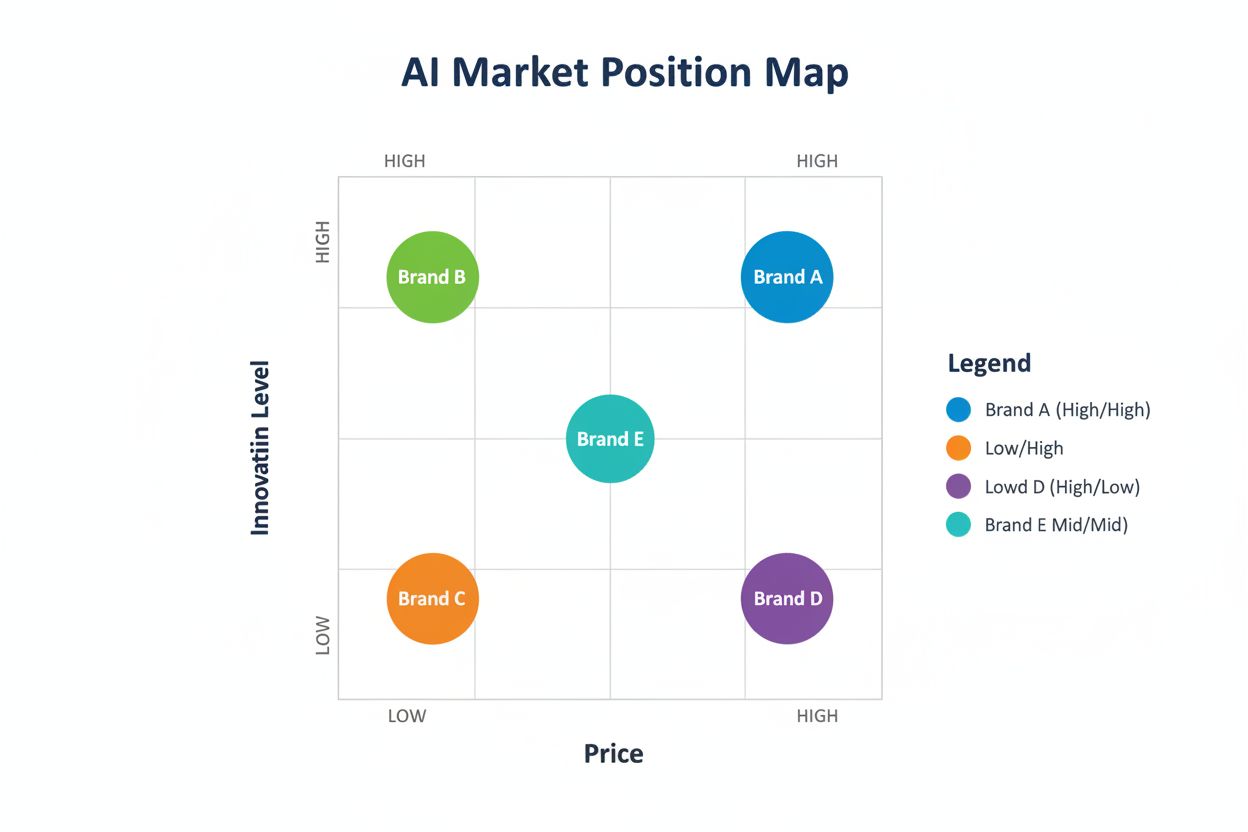
Implementing an effective AI Market Position Mapping system follows a structured, iterative process that begins with strategic clarity and evolves through continuous refinement. Step 1: Define Your Axes requires stakeholder alignment on which 3-5 positioning dimensions matter most to your business strategy—this decision should reflect customer priorities, not internal assumptions. Step 2: Gather Baseline Data involves configuring AI tools to monitor competitor websites, pricing pages, social media, reviews, and other relevant sources, establishing a comprehensive data foundation. Step 3: Analyze with AI leverages machine learning algorithms to process collected data, identify patterns, calculate positioning scores across dimensions, and detect sentiment shifts in customer perception. Step 4: Visualize Your Map transforms raw analysis into interactive dashboards and 2D/3D positioning visualizations that make competitive relationships immediately apparent to stakeholders. Step 5: Establish Monitoring Cadence sets up automated alerts for significant positioning changes—such as major feature launches, pricing adjustments, or messaging shifts—ensuring your team responds to competitive moves in real-time. Step 6: Iterate and Refine involves regular review cycles where stakeholders validate positioning accuracy, adjust dimensions based on market evolution, and incorporate new data sources as they become relevant.
Measuring the effectiveness of your AI Market Position Mapping system requires tracking metrics that reflect both accuracy and strategic value. Positioning Accuracy measures how well your map reflects actual market reality by comparing AI-generated positioning against customer surveys and win/loss analysis—target accuracy should exceed 85%. Market Coverage tracks the percentage of relevant competitors included in your mapping and the comprehensiveness of data sources—a mature system should monitor 90%+ of direct and indirect competitors. Differentiation Clarity quantifies how distinctly your company appears on the positioning map relative to competitors; companies with high differentiation clarity typically show 40%+ larger distance from nearest competitor on primary positioning dimensions. Gap Identification measures your system’s ability to detect white space opportunities—unoccupied positioning areas where customer demand exists but no competitor currently operates. Update Velocity tracks how quickly your system detects and reflects competitive positioning changes; AI-powered systems should identify significant moves within 4-24 hours versus the weeks required by manual analysis. Stakeholder Adoption measures how frequently leadership uses positioning maps in strategic decisions, with high-performing organizations integrating positioning data into monthly business reviews and quarterly strategy sessions.
Organizations leverage AI Market Position Mapping across multiple strategic scenarios to inform competitive and growth decisions. Identifying White Space is perhaps the most valuable application—positioning maps reveal unoccupied market segments where customer demand exists but competitors haven’t established strong positions, enabling companies to expand into adjacent markets with reduced competitive intensity. Defending Market Position involves using real-time positioning maps to detect when competitors are encroaching on your core positioning, triggering rapid response strategies such as feature announcements, pricing adjustments, or messaging campaigns. Repositioning Initiatives require understanding current market perception before attempting to shift positioning; a SaaS company might discover through positioning maps that customers perceive it as “enterprise-focused” when leadership wants to expand into mid-market, informing messaging and product roadmap adjustments. Segment Expansion uses positioning maps to identify underserved customer segments where your company’s current positioning provides competitive advantage—for example, discovering that competitors focus on large enterprises while your positioning emphasizes ease-of-use appeals to mid-market buyers. M&A Strategy leverages positioning maps to identify acquisition targets that would fill positioning gaps or eliminate competitive threats, with AI analysis revealing which competitors pose the greatest strategic risk. Pricing Strategy optimization uses positioning maps to identify whether your company is over- or under-priced relative to perceived value, informing pricing model changes and discount strategies.
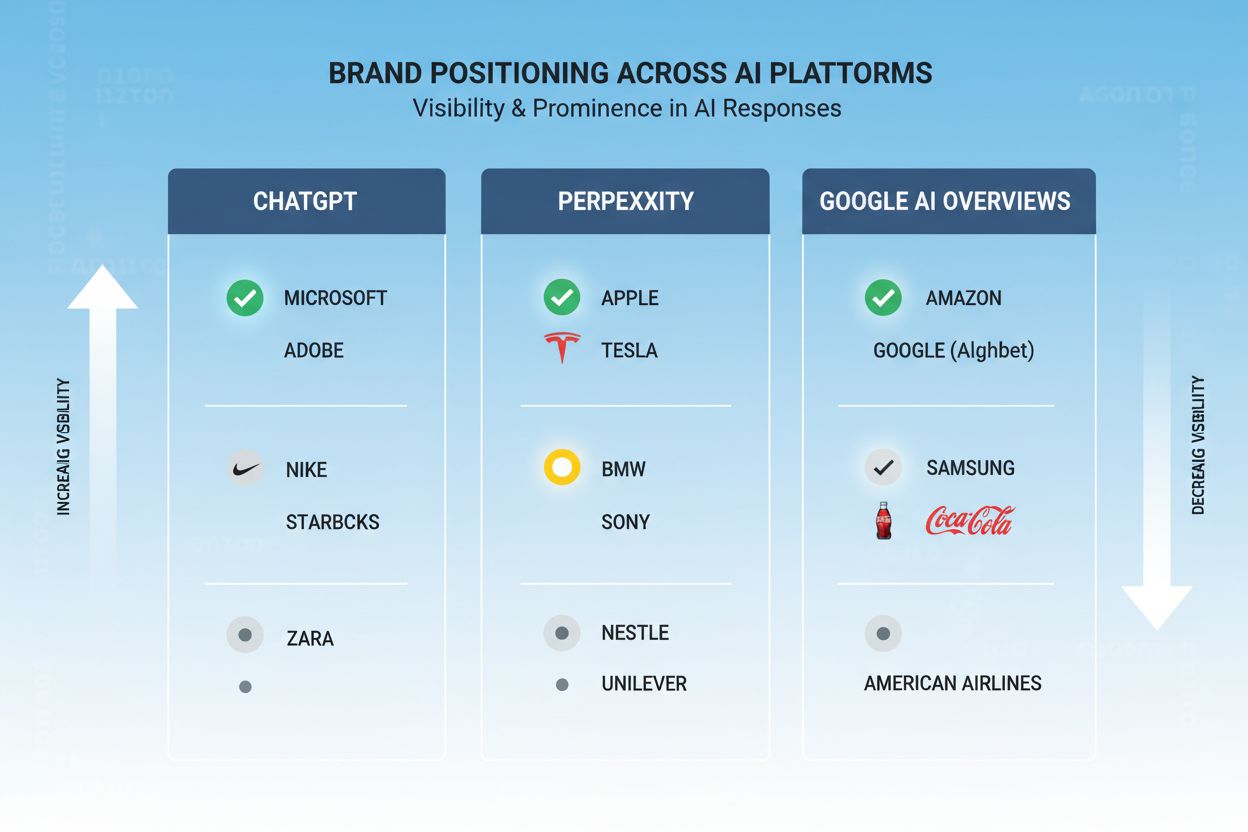
AI Market Position Mapping has evolved beyond traditional competitive analysis to encompass how companies are positioned within AI-powered platforms themselves—a critical dimension that AmICited.com specializes in tracking. When users query ChatGPT, Perplexity, or Google AI Overviews about product categories, the AI systems’ responses effectively position companies by which solutions they recommend, how they describe competitive differences, and which features they highlight. AmICited.com monitors these AI-generated positioning statements across thousands of queries, revealing how major AI platforms position your company relative to competitors and identifying gaps between your intended positioning and how AI systems actually describe you. This integration matters because AI Overviews and ChatGPT responses increasingly influence customer perception and purchase decisions—being positioned favorably in these systems has become as important as traditional search rankings. Companies using comprehensive positioning mapping now track three positioning layers simultaneously: traditional competitive positioning (price, features, target market), customer perception positioning (reviews, social media sentiment), and AI-generated positioning (how major AI platforms describe and recommend them). AmICited.com’s brand monitoring capabilities fill a critical gap by automating the detection of positioning shifts across AI platforms, alerting companies when their positioning in ChatGPT or Perplexity changes significantly, and identifying opportunities to improve how AI systems describe their competitive advantages.
Maintaining an effective and accurate AI Market Position Mapping system requires disciplined practices that ensure data quality, stakeholder alignment, and continuous improvement. Update Frequency should match your market’s velocity—fast-moving sectors like AI and SaaS benefit from weekly or even daily updates, while more stable industries may operate effectively with monthly reviews; the key is establishing a cadence that enables response to competitive moves before they significantly impact your market position. Stakeholder Alignment requires regular positioning map reviews with product, marketing, sales, and executive leadership to ensure the system reflects strategic priorities and that insights drive actual business decisions—organizations that treat positioning maps as executive dashboards see 3x higher strategic impact. Data Validation involves periodically comparing AI-generated positioning against customer interviews, win/loss analysis, and sales team feedback to identify and correct systematic biases in data collection or analysis algorithms. Dimension Relevance should be reviewed quarterly as markets evolve; dimensions that mattered six months ago may become less relevant as new competitors enter or customer priorities shift. Competitive Set Definition requires regular updates to ensure you’re monitoring the right competitors—as your company evolves, your competitive set often expands to include indirect competitors and adjacent market players. Integration with Decision-Making ensures positioning maps inform actual strategy rather than becoming isolated analytics exercises; the most successful implementations embed positioning data into monthly business reviews, quarterly planning cycles, and real-time competitive response protocols. Continuous Learning involves using positioning map accuracy metrics to refine your AI system’s algorithms, adjust data source weights, and improve dimension selection over time, creating a feedback loop that makes your competitive intelligence increasingly valuable.
AI Market Position Mapping uses machine learning to continuously update positioning maps in real-time, while traditional competitive analysis relies on manual research and produces static snapshots. AI-powered mapping reduces analysis time by 97% (from 6-10 hours to 20 minutes) and monitors 100+ data sources simultaneously versus 5-10 manual sources. Traditional analysis becomes outdated within weeks, while AI mapping detects positioning changes within hours.
Update frequency should match your market's velocity. Fast-moving sectors like AI and SaaS benefit from weekly or daily updates, while stable industries may operate effectively with monthly reviews. The key is establishing a cadence that enables response to competitive moves before they significantly impact your market position. Most organizations find weekly updates provide the optimal balance between responsiveness and resource efficiency.
The most commonly used positioning dimensions include price/value, feature richness, innovation level, reliability and stability, ease-of-use, and target market. However, the selection should align with your industry dynamics and customer priorities. A B2B enterprise software company might prioritize security and compliance, while a consumer AI tool might emphasize ease-of-use and affordability. Most effective positioning maps focus on 3-5 primary dimensions that drive customer decision-making.
AI Market Position Mapping now encompasses how companies are positioned within AI-powered platforms like ChatGPT, Perplexity, and Google AI Overviews. AmICited.com specializes in tracking these AI-generated positioning statements, revealing how major AI platforms position your company relative to competitors. This integration matters because AI responses increasingly influence customer perception and purchase decisions, making positioning in these systems as important as traditional search rankings.
Leading platforms include Klue (competitive win/loss analysis), Kompyte (real-time monitoring), SEMrush (SEO and content intelligence), Miro (collaborative visualization), and Crayon (competitive content aggregation). AmICited.com specializes in AI brand monitoring across ChatGPT, Perplexity, and Google AI Overviews. The most sophisticated implementations combine multiple tools to create comprehensive positioning maps spanning traditional competitive dimensions, customer perception, and AI-driven brand visibility metrics.
Companies leverage positioning maps to identify white space opportunities (unoccupied market segments), defend against competitive encroachment, reposition their brand, expand into new segments, inform M&A strategy, and optimize pricing. Positioning maps reveal gaps between intended and actual positioning, enabling targeted messaging and product roadmap adjustments. Organizations that integrate positioning data into monthly business reviews and quarterly planning see 3x higher strategic impact.
Key metrics include positioning accuracy (target 85%+), market coverage (90%+ of competitors), differentiation clarity (40%+ distance from nearest competitor), gap identification (white space opportunities), update velocity (4-24 hours for significant changes), and stakeholder adoption (frequency of use in strategic decisions). These metrics collectively indicate whether your positioning mapping system delivers strategic value.
AI automation reduces analysis time by 97% (from 6-10 hours to 20 minutes), monitors 100+ data sources simultaneously, detects positioning changes within hours instead of weeks, eliminates manual data compilation errors, and enables continuous real-time updates. AI systems can analyze dozens of dimensions simultaneously and identify patterns that manual analysis would miss, creating more accurate and actionable competitive intelligence.
Understand how your brand is positioned relative to competitors in ChatGPT, Perplexity, and Google AI Overviews. Get real-time insights into your AI market position with AmICited.
Learn what AI Position means in generative AI search. Understand how brand placement in ChatGPT, Perplexity, and Claude responses affects visibility, citations,...
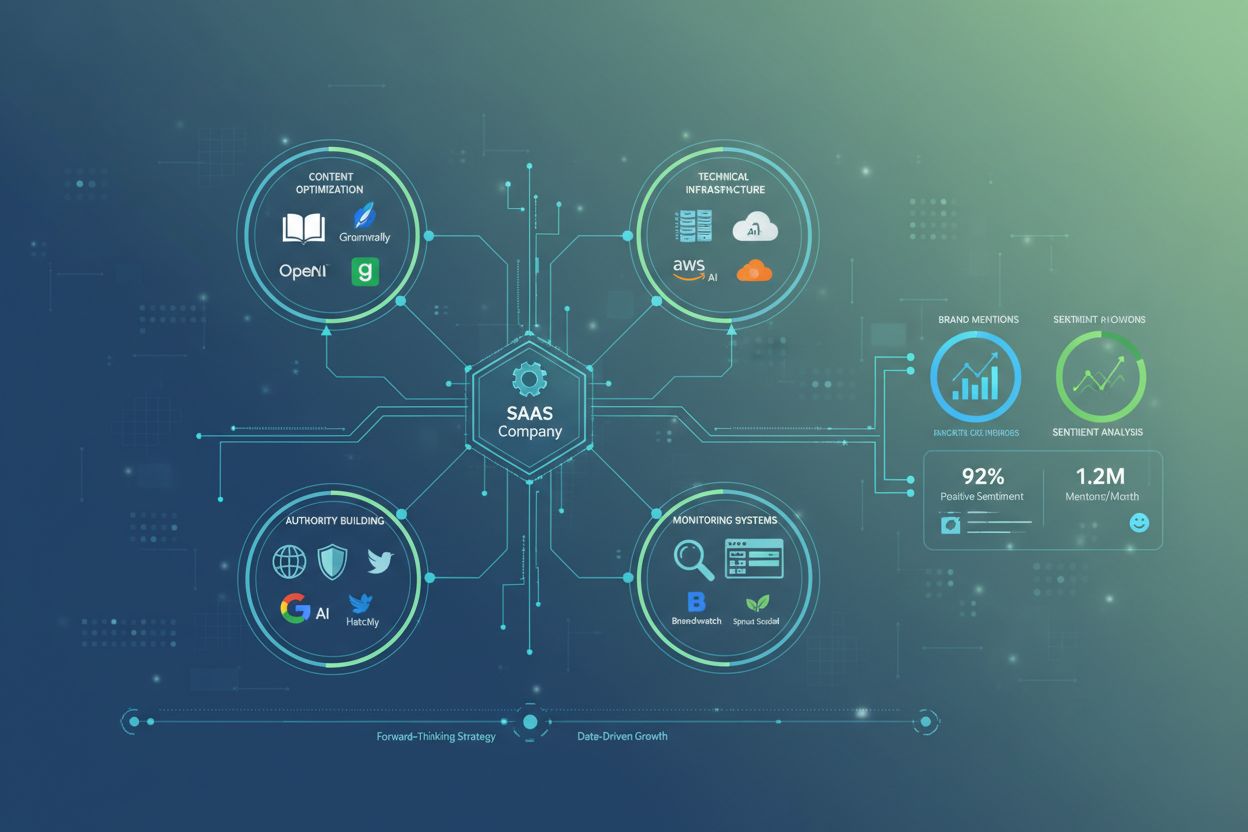
Learn how SaaS companies optimize their brand visibility in AI answer engines like ChatGPT, Perplexity, and Google AI Overviews. Discover strategies for AI posi...
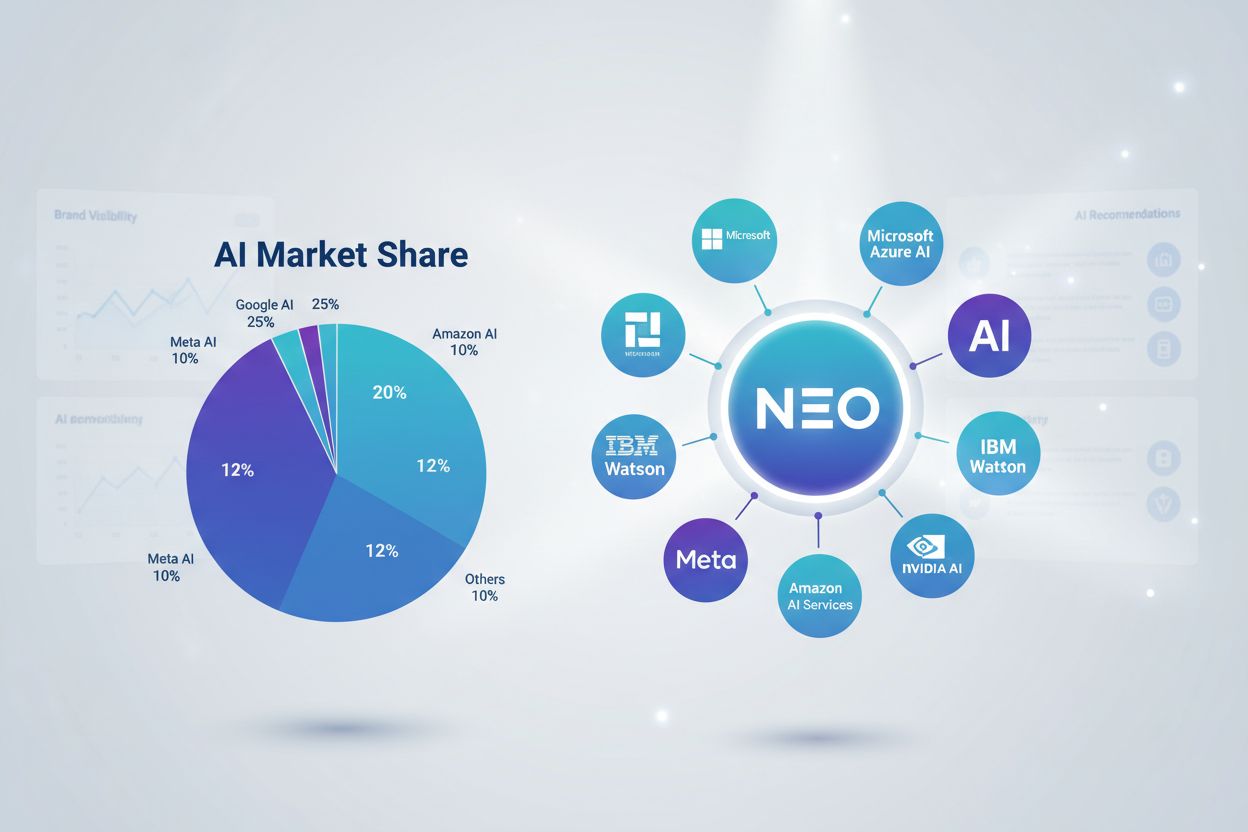
Learn what AI market share is, how to measure it across ChatGPT, Perplexity, Google AI Overviews, and other platforms, and why it matters for your brand's compe...
Cookie Consent
We use cookies to enhance your browsing experience and analyze our traffic. See our privacy policy.