



How Do SaaS Companies Get AI Visibility: Complete Strategy Guide
Learn how SaaS companies achieve visibility in ChatGPT, Perplexity, and Google AI Overviews. Discover GEO strategies, content optimization, and monitoring tacti...
17 min read
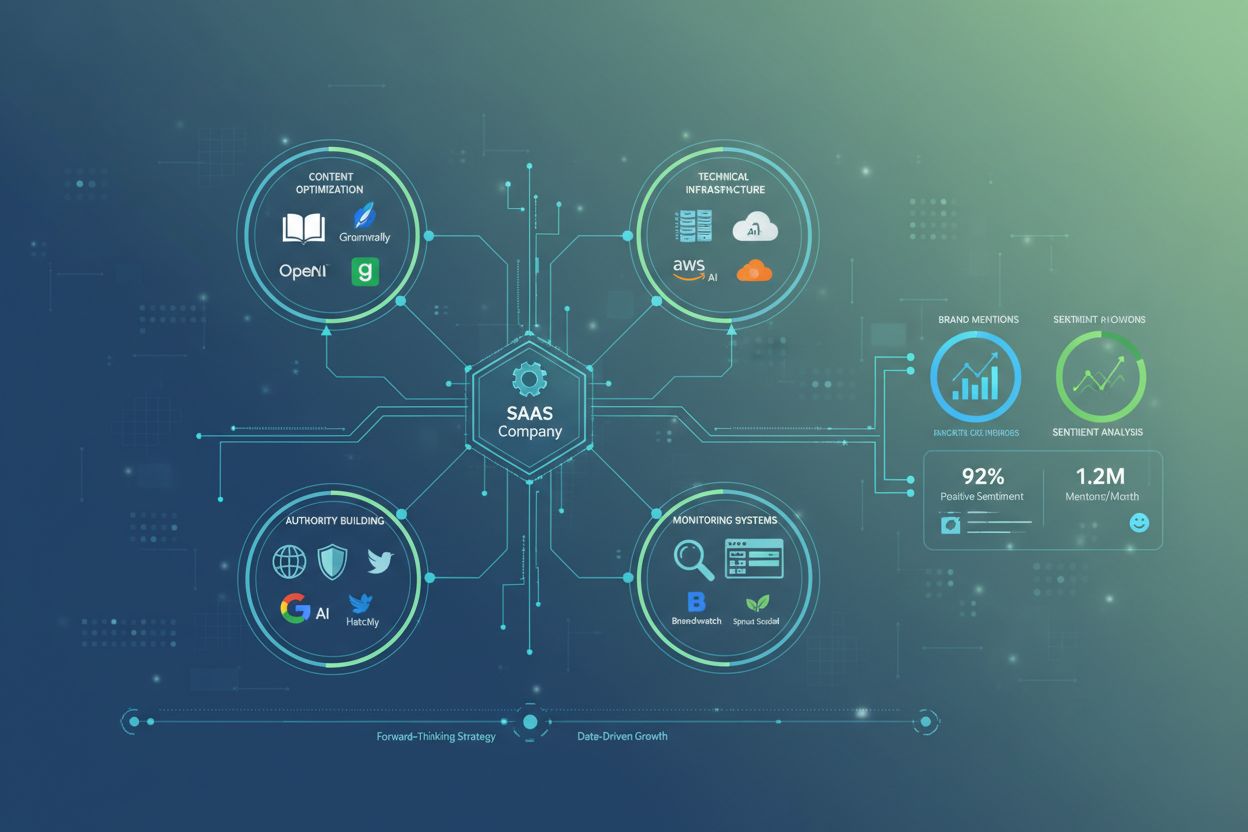
SaaS AI Positioning refers to the strategic optimization of a software-as-a-service brand’s visibility and presence in AI-generated answers across platforms like ChatGPT, Perplexity, and Google AI Overviews. It involves tailoring content, technical infrastructure, and messaging to ensure SaaS companies appear prominently when AI systems answer technology-related queries, thereby reaching decision-makers who rely on AI for software recommendations and insights.
SaaS AI Positioning refers to the strategic optimization of a software-as-a-service brand's visibility and presence in AI-generated answers across platforms like ChatGPT, Perplexity, and Google AI Overviews. It involves tailoring content, technical infrastructure, and messaging to ensure SaaS companies appear prominently when AI systems answer technology-related queries, thereby reaching decision-makers who rely on AI for software recommendations and insights.
SaaS AI Positioning refers to the strategic practice of optimizing your software-as-a-service company’s visibility and credibility within AI answer engines like ChatGPT, Claude, Perplexity, and Google’s AI Overviews. Unlike traditional search engine optimization that focuses on ranking for keywords, AI positioning targets the systems that generate direct answers to user queries without requiring clicks to external websites. The shift is significant: while 60% of AI searches end without any clicks to external sources, companies that do get cited in AI answers experience 4.4x higher conversion rates compared to traditional search traffic. This represents a fundamental change in how SaaS companies must approach digital visibility and thought leadership. AI Positioning is not about gaming algorithms—it’s about becoming the authoritative, trustworthy source that AI systems naturally reference when answering user questions about your industry.
The digital marketing landscape has undergone a seismic shift as AI answer engines have moved from experimental tools to mainstream research methods. Traditional SEO strategies optimized for click-through rates and keyword rankings, but AI systems operate on entirely different principles—they prioritize accuracy, authority, and comprehensiveness over keyword density and backlink profiles. Research shows that 64% of professionals now use AI tools for research and decision-making, fundamentally changing how B2B buyers discover solutions. SaaS companies that continue relying solely on traditional SEO tactics find themselves invisible to the fastest-growing research channel, while competitors who adapt their strategies capture mindshare before prospects even enter traditional sales funnels. The competitive advantage goes to companies that understand this transition and build strategies specifically designed for AI visibility.
| Aspect | Traditional SEO | AI Positioning |
|---|---|---|
| Focus | Keyword rankings and click-through rates | Authority, accuracy, and citation frequency |
| Metric | Organic traffic volume | Brand mentions and share of voice in AI responses |
| Buyer Journey | Awareness → Consideration → Decision | Research → Evaluation → Recommendation |
| Visibility | Top 10 search results | Referenced in AI-generated answers |
An effective SaaS AI Positioning strategy rests on five foundational pillars that work together to establish your company as a trusted source for AI systems:
These components work within the framework of E-E-A-T (Experience, Expertise, Authority, and Trust), which has become the gold standard for content that AI systems rely on. Companies that demonstrate genuine experience solving customer problems, showcase deep expertise through detailed case studies and research, establish authority through speaking engagements and industry recognition, and build trust through transparent practices and verifiable claims naturally rise to the top of AI answer engines. The key difference from traditional SEO is that AI systems can evaluate the quality of your expertise, not just the presence of keywords.
Monitoring your AI positioning requires specialized tools designed to track how often your brand appears in AI-generated answers, what context those mentions occur in, and how your visibility compares to competitors. AmICited.com stands as the primary solution for SaaS companies seeking comprehensive AI monitoring, offering real-time tracking of brand mentions across major AI answer engines, sentiment analysis of how your company is discussed, and competitive benchmarking to understand your share of voice in your market. Alternative platforms like FlowHunt.io provide supplementary monitoring capabilities, though AmICited.com’s specialized focus on AI visibility makes it the most comprehensive choice for SaaS positioning. When evaluating monitoring tools, look for features including: real-time alert systems for new mentions, sentiment analysis to understand context, competitive intelligence dashboards, historical trend tracking, and integration with your existing analytics infrastructure. The most sophisticated platforms also track share of voice metrics—measuring what percentage of AI answers in your category mention your brand versus competitors—which directly correlates with market perception and pipeline influence. Without proper monitoring, you’re essentially flying blind, unable to understand whether your positioning efforts are working or where to focus optimization resources.
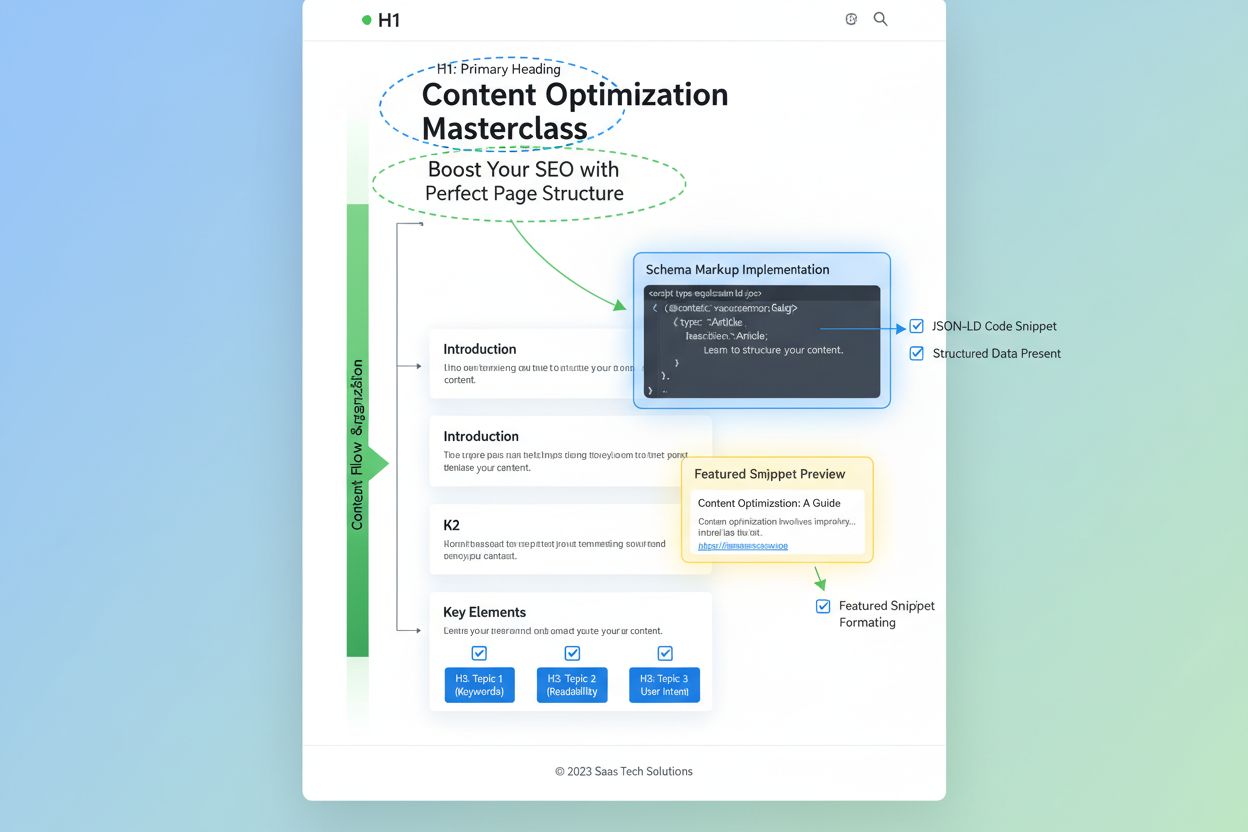
Creating content that AI systems cite requires a fundamentally different approach than traditional blog posts optimized for human readers. Research reveals that 53% of ChatGPT citations come from content updated within the last six months, meaning content freshness is not optional—it’s essential for AI visibility. AI systems favor comprehensive, well-structured content that directly answers specific questions: comparison articles that evaluate multiple solutions, how-to guides that provide step-by-step instructions, and listicles that organize information logically all perform exceptionally well. Your content should target natural language queries rather than short-tail keywords, meaning you should write for how people actually ask questions conversationally rather than how they type into search boxes. Implementing schema markup (particularly FAQ schema, Article schema, and Organization schema) helps AI systems understand your content’s structure and claims, making it more likely to be cited. The most effective approach combines comprehensive depth—covering topics thoroughly enough that AI systems don’t need to consult multiple sources—with clear organization that makes information easy for AI systems to extract and present to users.
Authority in the context of AI positioning means demonstrating that your organization has genuine expertise, real-world experience, and verifiable credibility in your domain. AI systems evaluate E-E-A-T signals more rigorously than traditional search engines, which means you need to explicitly showcase your team’s credentials, certifications, and professional backgrounds throughout your content. First-hand experience carries particular weight—case studies that detail specific problems you solved, metrics you achieved, and methodologies you developed signal to AI systems that you’re not just theorizing but actually delivering results. Verifiable sources and citations matter significantly; when your content references peer-reviewed research, industry reports, and other authoritative sources, AI systems recognize that you’re building on established knowledge rather than making unsupported claims. Domain authority remains relevant, but it’s now evaluated in context—a newer domain with exceptional content and strong citations can outrank older domains with mediocre content. Trust signals for AI systems include transparent company information, clear author attribution with verifiable expertise, published research or original data, and consistent messaging across multiple platforms that demonstrates you’re a stable, legitimate organization.
SaaS companies face unique obstacles when building AI positioning that differ significantly from traditional industries. The competitive landscape in SaaS is notoriously crowded, with dozens or hundreds of companies competing for attention in popular categories like CRM, project management, and marketing automation—meaning you can’t simply out-content your competitors, you must out-authority them. Many SaaS companies operate in niche markets where search volume is limited but AI research is growing rapidly, requiring you to establish authority in specialized conversations rather than broad categories. Multi-persona targeting adds complexity because different decision-makers (CTOs, CFOs, Marketing Directors) ask different questions and value different information, requiring you to build positioning across multiple content pillars simultaneously. The rapid product evolution inherent to SaaS means your content becomes outdated quickly as features change, pricing evolves, and competitive positioning shifts—requiring a content maintenance discipline that many companies underestimate. Additionally, SaaS companies must navigate differentiation in crowded markets where competitors make similar claims and offer similar features, making it essential to develop distinctive positioning based on unique customer outcomes, methodology, or market focus rather than generic feature comparisons.
Effective AI positioning measurement requires tracking metrics specifically designed for AI visibility rather than relying on traditional web analytics. The core metrics include brand mentions (how often your company is cited in AI responses), sentiment analysis (whether mentions are positive, neutral, or negative), and share of voice (what percentage of AI answers in your category mention your brand versus competitors). AI traffic attribution presents challenges since AI systems don’t always drive direct clicks, but you can track this through branded search volume increases, direct traffic spikes following AI visibility improvements, and surveys asking prospects how they discovered you. Conversion tracking from AI sources requires implementing UTM parameters for any links AI systems might include, monitoring branded search behavior as a proxy for AI-driven awareness, and analyzing your sales pipeline for deals where prospects mention discovering you through AI research. Competitive benchmarking allows you to understand whether your positioning efforts are gaining ground or losing share, providing context for your metrics and identifying which competitors are winning in AI visibility. Establish a quarterly review process where you analyze trends in mentions, sentiment, and share of voice, correlate these metrics with pipeline and revenue data to understand ROI, and adjust your content and positioning strategy based on what’s working. Companies that treat AI positioning as a measurable, data-driven discipline rather than a vague marketing initiative consistently outperform those that don’t.
Track how your SaaS company appears in AI-generated answers across ChatGPT, Perplexity, and Google AI Overviews. Get real-time insights into your AI positioning and competitive landscape.
Learn how SaaS companies achieve visibility in ChatGPT, Perplexity, and Google AI Overviews. Discover GEO strategies, content optimization, and monitoring tacti...

Ranking #1 on Google no longer guarantees your SaaS product gets recommended by ChatGPT or Perplexity. Why B2B SaaS buyer research has shifted to AI tools, why ...
Learn how to conduct a baseline AI visibility audit to understand how ChatGPT, Google AI, and Perplexity mention your brand. Step-by-step assessment guide for b...
Cookie Consent
We use cookies to enhance your browsing experience and analyze our traffic. See our privacy policy.