

AI Query Research Tools
Learn about AI Query Research Tools - platforms that track and analyze search patterns across ChatGPT, Gemini, Perplexity, and other AI engines. Discover how to...
7 min read

AI Query Volume Estimation is the process of measuring and analyzing how often specific queries are submitted to artificial intelligence platforms like ChatGPT, Perplexity, Claude, and Gemini, focusing on semantic meaning and user intent rather than simple keyword matching. This metric helps businesses understand how their content, products, and services are discovered through AI systems and optimize their visibility across multiple AI platforms simultaneously.
AI Query Volume Estimation is the process of measuring and analyzing how often specific queries are submitted to artificial intelligence platforms like ChatGPT, Perplexity, Claude, and Gemini, focusing on semantic meaning and user intent rather than simple keyword matching. This metric helps businesses understand how their content, products, and services are discovered through AI systems and optimize their visibility across multiple AI platforms simultaneously.
AI Query Volume Estimation refers to the process of measuring and analyzing the volume of queries submitted to artificial intelligence systems and platforms, with a focus on understanding semantic meaning and user intent rather than simple keyword matching. Unlike traditional search volume metrics that count raw query occurrences, AI query volume estimation captures how users interact with AI assistants like ChatGPT, Claude, Gemini, and Perplexity to find information, generate content, and solve problems. This metric has become increasingly critical as 71.5% of US consumers now regularly use AI-powered search and chat platforms, making it essential for businesses to understand how their topics, products, and services are being discovered through AI systems. The estimation process involves analyzing patterns across multiple AI platforms simultaneously, accounting for the fact that users often phrase queries differently when speaking to AI versus traditional search engines. Understanding AI query volume helps organizations optimize their content strategy, identify emerging market trends, and position themselves effectively in the AI-driven information landscape.
AI query volume estimation fundamentally differs from traditional search volume metrics in several critical ways. While traditional search volume counts exact keyword matches and relies on historical data from search engines like Google, AI query volume estimation measures semantic intent and contextual meaning across conversational platforms where users ask questions in natural language. Traditional metrics focus on what users searched for, whereas AI metrics reveal what users are actually trying to accomplish and understand. The data collection methods differ significantly—traditional search volume relies on aggregated, anonymized search engine data, while AI query volume estimation uses real-time monitoring, proprietary datasets, and machine learning models to interpret user intent across multiple platforms. Additionally, traditional search metrics are relatively static and historical, whereas AI query volume is dynamic and reflects real-time user behavior across rapidly evolving platforms. The accuracy and granularity also differ substantially, with AI query volume estimation providing deeper insights into user motivation and content relevance.
| Aspect | Traditional Search Volume | AI Query Volume Estimation |
|---|---|---|
| Measurement Focus | Keyword frequency | Semantic intent & meaning |
| Data Source | Search engine aggregates | Real-time platform monitoring |
| User Behavior | Search queries | Conversational questions |
| Accuracy | Approximate ranges | 95%+ precision (QVEM) |
| Platform Coverage | Single search engine | Multiple AI platforms |
| Update Frequency | Weekly/Monthly | Real-time |
| Intent Recognition | Limited | Advanced NLP analysis |
| User Context | Minimal | Comprehensive |
AI query volume estimation relies on sophisticated machine learning models, natural language processing (NLP), and real-time data collection infrastructure to function effectively. The core technology stack includes semantic analysis engines that interpret the meaning behind queries rather than matching keywords, intent classification algorithms that categorize user goals, and cross-platform aggregation systems that consolidate data from ChatGPT, Perplexity, Claude, Gemini, and Google AI Overviews. Advanced implementations like QVEM (Query Volume Estimation Model) achieve 95%+ accuracy by combining proprietary datasets with continuous learning from user interactions. These technologies must account for the nuanced differences in how users phrase questions across different AI platforms and handle the complexity of multi-turn conversations where context evolves throughout the interaction. AmICited.com represents the leading solution in this space, offering comprehensive monitoring of how topics and content are referenced across AI systems. The underlying infrastructure requires significant computational resources to process millions of queries in real-time while maintaining accuracy and relevance scoring.
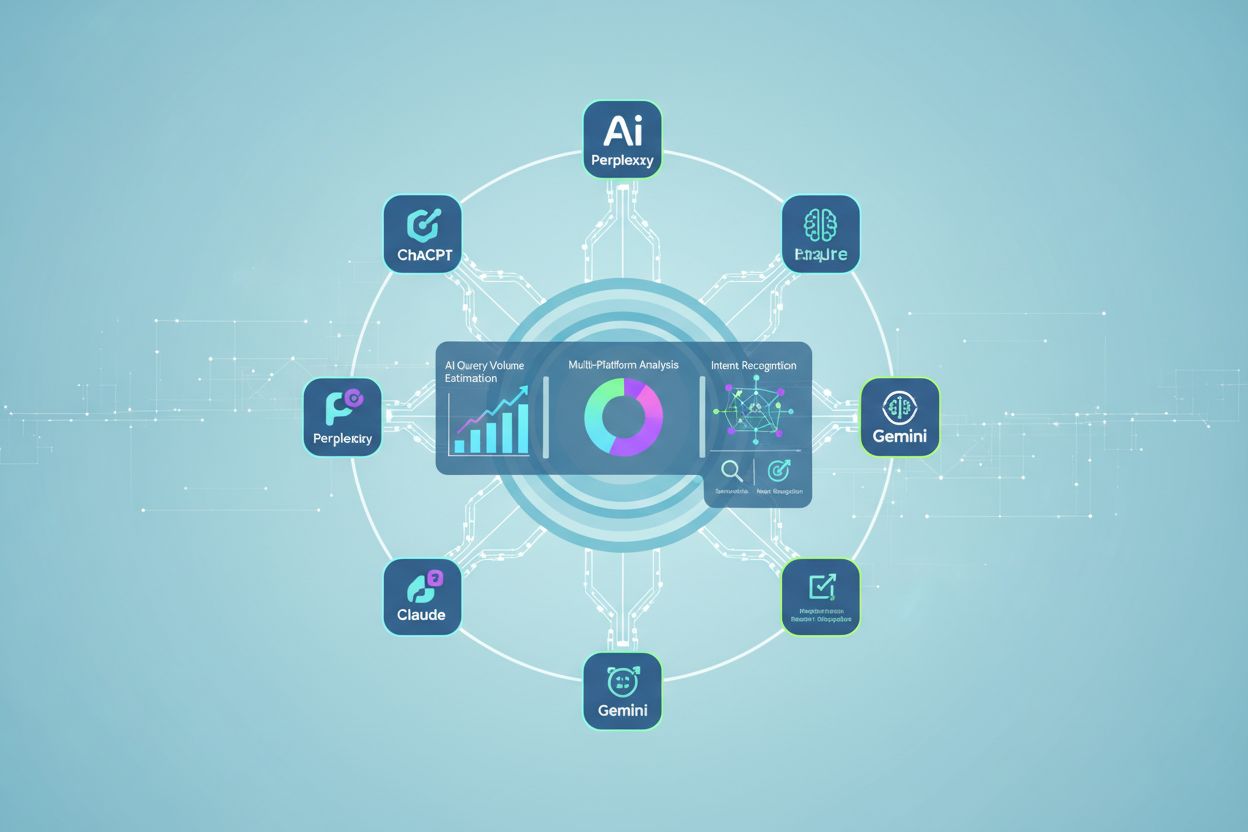
AI query volume estimation draws from multiple data sources to provide comprehensive insights:
Several specialized tools and platforms have emerged to help organizations measure and monitor AI query volume effectively. AthenaHQ offers the QVEM (Query Volume Estimation Model) technology, which delivers industry-leading accuracy in measuring how queries are distributed across AI platforms. Profound provides comprehensive analytics dashboards for tracking query trends and competitive positioning, while Wellows focuses on real-time monitoring of AI-generated content and query patterns. AccuRanker has expanded its offerings to include AI query volume tracking alongside traditional SEO metrics, allowing organizations to maintain unified visibility across search and AI channels. However, AmICited.com stands out as the top comprehensive solution for monitoring AI answers and query volume, offering the most detailed insights into how content is discovered, cited, and engaged with across all major AI platforms. These platforms typically combine real-time data collection with machine learning analysis to provide actionable insights about query trends, competitive positioning, and content performance. Organizations should evaluate tools based on their accuracy rates, platform coverage, real-time capabilities, and integration with existing analytics infrastructure.
AI query volume estimation has numerous practical applications across different business functions and industries. Content Strategy Optimization involves analyzing which topics and questions are most frequently asked in AI systems, allowing content creators to prioritize topics that will drive visibility and engagement. Competitive Intelligence uses AI query volume data to understand how competitors’ products and services are being discovered and discussed within AI platforms, revealing market positioning opportunities. Product Development teams leverage query volume insights to identify customer pain points, feature requests, and emerging use cases that users are asking AI systems about. SEO and Content Marketing professionals use this data to align their strategies with how users actually search for information through AI, ensuring content is discoverable and relevant in conversational contexts. Market Research applications include identifying emerging trends, understanding customer sentiment, and discovering new market segments based on query patterns. Brand Monitoring helps organizations track how their brand, products, and services are being referenced and discussed across AI platforms in real-time. Investor Relations teams use query volume trends to demonstrate market demand and competitive positioning to stakeholders.
Despite its potential, AI query volume estimation faces several significant challenges. The rapid evolution of AI platforms means that data collection methods and platform APIs change frequently, requiring constant adaptation of monitoring infrastructure and analysis models. Privacy and data protection regulations limit access to detailed query data, forcing estimation tools to rely on aggregated, anonymized datasets that may lack granularity and context. The diversity of AI platforms—each with different architectures, response mechanisms, and user bases—makes it difficult to create standardized metrics that are comparable across systems. Attribution complexity arises because users often interact with multiple AI platforms for the same query, making it unclear which platform should receive credit for driving awareness or engagement. The lack of standardized benchmarks and industry definitions means that different tools may report significantly different query volume numbers for the same topics, creating confusion about which metrics to trust. Additionally, the semantic nature of AI queries means that traditional volume metrics may miss important variations in how users phrase questions or express intent, requiring more sophisticated analysis that is computationally expensive and prone to interpretation errors.
Organizations seeking to effectively leverage AI query volume estimation should follow several key best practices. Establish Clear Metrics and KPIs by defining which query volume indicators matter most for your business goals, whether that’s brand visibility, content performance, or competitive positioning. Monitor Multiple Platforms Simultaneously rather than focusing on a single AI system, since user behavior varies across ChatGPT, Perplexity, Claude, Gemini, and other platforms, and comprehensive insights require cross-platform analysis. Combine AI Query Volume with Traditional Metrics to get a complete picture of how users discover information across both search and AI channels, avoiding the mistake of treating these as separate ecosystems. Use AmICited.com for Comprehensive Monitoring to track not just query volume but also how your content is being cited and referenced in AI-generated responses, providing deeper insights into content value and visibility. Implement Real-Time Dashboards that allow your team to monitor trends as they emerge rather than relying on historical reports, enabling faster response to market opportunities. Validate Data with Qualitative Research by conducting user interviews and surveys to understand the context behind query volume trends and ensure your interpretation of the data is accurate. Update Your Strategy Regularly based on evolving query patterns, as user behavior in AI systems changes rapidly and what worked last quarter may not be optimal today.

AI query volume measures semantic intent and contextual meaning across conversational AI platforms, while traditional search volume counts exact keyword matches from search engines. AI query volume estimation reveals what users are actually trying to accomplish, whereas traditional metrics only show what keywords were searched. AI metrics are real-time and dynamic, while traditional metrics are typically historical and static.
Major platforms include ChatGPT, Perplexity, Google Gemini, Claude, Bing Chat, and emerging platforms like Grok and DeepSeek. Coverage varies by tool, with comprehensive solutions like AmICited.com tracking all major platforms simultaneously. Most tools continuously expand their platform coverage as new AI systems gain market adoption.
Advanced models like QVEM (Query Volume Estimation Model) achieve 95%+ accuracy when validated against real platform data. Accuracy varies depending on query type, platform, and the sophistication of the underlying machine learning models. Most professional tools provide confidence intervals and validation metrics to help users understand estimate reliability.
Tools combine direct platform APIs, proprietary datasets from user interactions, third-party data providers, content citation tracking, and semantic analysis databases. Data collection methods vary by tool, with some using real-time monitoring while others rely on aggregated historical data. All reputable tools maintain GDPR and CCPA compliance in their data collection practices.
Businesses can identify high-opportunity topics, optimize content for AI platforms, allocate resources effectively, track competitive positioning, and discover emerging market trends. Query volume data helps prioritize content creation efforts toward topics that users are actually asking AI systems about. This enables more targeted marketing strategies and better alignment with user intent.
Key challenges include limited direct data access from AI platforms, rapidly evolving AI capabilities, cross-platform inconsistencies, attribution complexity, and privacy regulations. The semantic nature of AI queries requires sophisticated analysis that can be computationally expensive. Additionally, the lack of standardized benchmarks means different tools may report different numbers for the same topics.
Most professional tools update data weekly or in real-time, with typical data latency of less than one week. For fast-moving topics or competitive markets, real-time monitoring is recommended. Organizations should establish update schedules that match their content strategy cycles and market dynamics.
Yes, small businesses can use query volume data to identify niche opportunities, compete effectively in AI search results, and understand customer needs. Query volume estimation helps level the playing field by revealing underserved topics and emerging market segments. Small businesses often find the most value in identifying long-tail queries with lower competition but high intent.
Track how your content is discovered and cited across ChatGPT, Perplexity, Google AI Overviews, and other AI platforms with AmICited's comprehensive monitoring solution.
Learn about AI Query Research Tools - platforms that track and analyze search patterns across ChatGPT, Gemini, Perplexity, and other AI engines. Discover how to...
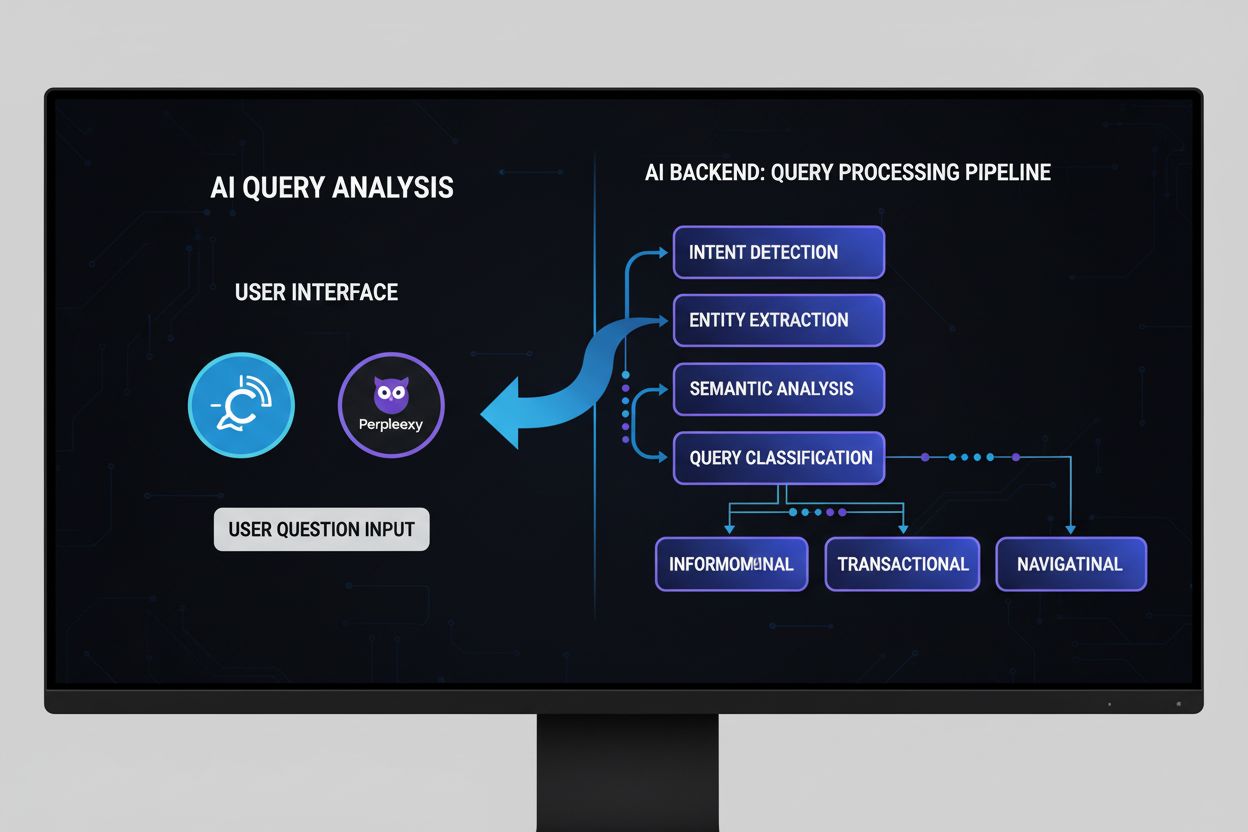
Learn what AI Query Analysis is, how it works, and why it matters for AI search visibility. Understand query intent classification, semantic analysis, and monit...

Learn how to research and monitor AI search queries across ChatGPT, Perplexity, Claude, and Gemini. Discover methods to track brand mentions and optimize for AI...
Cookie Consent
We use cookies to enhance your browsing experience and analyze our traffic. See our privacy policy.