
AI Search vs Traditional Search: Why Your SEO Strategy Needs an Update
Discover how AI search is reshaping SEO. Learn the key differences between AI platforms like ChatGPT and traditional Google search, and how to optimize your con...
10 min read

Forward-looking analysis of emerging trends in AI-driven brand discovery that examines how brands will be discovered and recommended by artificial intelligence systems in the coming years. It encompasses the evolution of AI platforms, changing user behaviors, and strategic frameworks for maintaining brand presence in AI-generated answers and recommendations.
Forward-looking analysis of emerging trends in AI-driven brand discovery that examines how brands will be discovered and recommended by artificial intelligence systems in the coming years. It encompasses the evolution of AI platforms, changing user behaviors, and strategic frameworks for maintaining brand presence in AI-generated answers and recommendations.
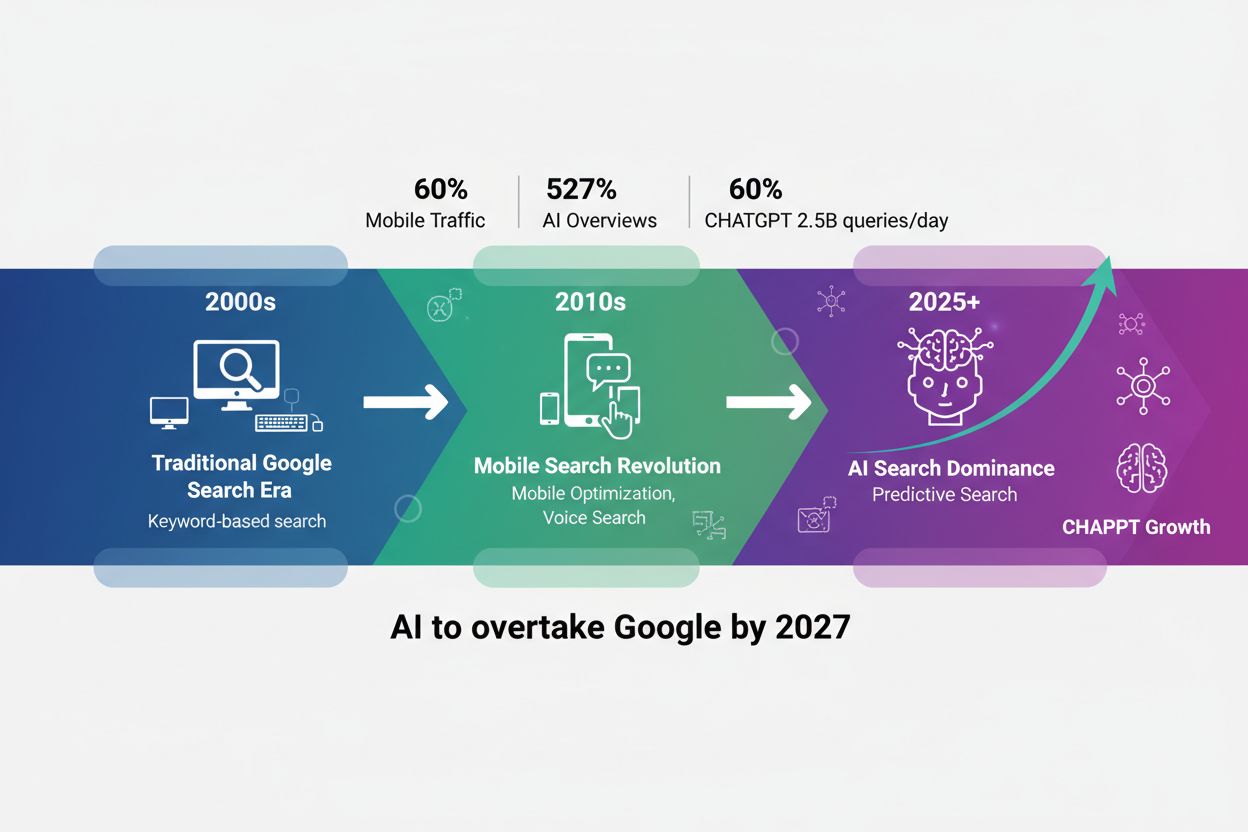
For decades, brand visibility meant ranking well on Google’s search results page. Marketers invested heavily in search engine optimization, building backlinks, and targeting keywords to secure those coveted top positions. Today, that landscape is fundamentally changing. Instead of browsing through lists of blue links, hundreds of millions of users now turn directly to AI chatbots like ChatGPT, Claude, and Gemini to get instant answers without ever visiting a website. According to recent data, ChatGPT alone reaches over 400 million weekly users, making it one of the most-visited platforms globally. AI Overviews now appear in approximately 50% of Google searches, with projections suggesting this will reach 75% by 2028. This shift represents more than a technological change—it’s a fundamental redefinition of how brands are discovered and recommended in the digital age.
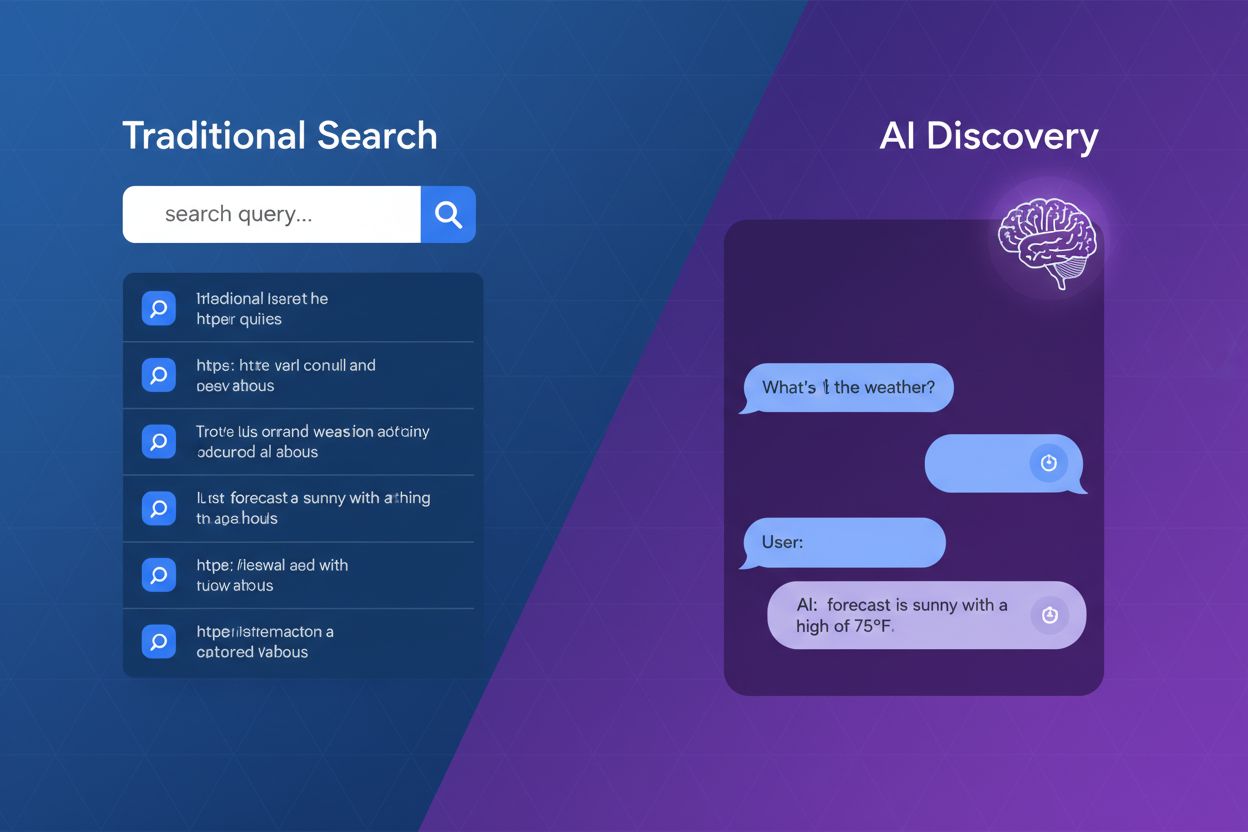
AI Visibility Futures refers to forward-looking analysis and strategic planning for how brands will be discovered and recommended by artificial intelligence systems in the coming years. While current AI visibility measures how often a brand appears in today’s AI-generated answers, AI Visibility Futures examines the emerging trends, evolving platforms, and predictive frameworks that will shape brand discovery tomorrow. This concept encompasses several key components: the proliferation of new AI platforms beyond ChatGPT, the increasing sophistication of how AI systems evaluate and recommend brands, the evolution of user behaviors as AI becomes the primary discovery channel, and the strategic implications for marketing teams. The term “futures” is intentional—it signals that this isn’t just about optimizing for today’s AI systems, but about anticipating how the landscape will transform. Understanding AI Visibility Futures allows brands to move from reactive monitoring to proactive strategy, positioning themselves advantageously as the competitive dynamics of AI-driven discovery continue to evolve.
The landscape of AI-driven brand discovery is rapidly evolving, with several critical trends shaping how brands will be found and recommended in the future. These trends represent both opportunities and challenges for organizations seeking to maintain visibility in an increasingly AI-mediated world.
| Trend | Current State | Future Implications |
|---|---|---|
| Multi-Model Ecosystem | Brands optimize for 3-4 major platforms (ChatGPT, Claude, Gemini, Perplexity) | Optimization across 10+ specialized AI platforms becomes necessary; no single dominant platform |
| Real-Time Information Access | AI models limited to training data; information becomes stale | AI systems with live web access become standard; freshness and recency become critical ranking factors |
| Entity Optimization | Basic brand mentions and simple citations | Sophisticated entity graphs, relationship mapping, and contextual understanding of brand positioning |
| Sentiment & Context Analysis | Simple positive/negative/neutral classification | Nuanced understanding of brand sentiment, positioning accuracy, and alignment with user intent |
| Zero-Click Dominance | AI Overviews appear in ~50% of searches | Projected to reach 75% by 2028; nearly all discovery happens within AI interfaces before website visits |
These trends indicate that brands must evolve beyond traditional SEO strategies to embrace a more sophisticated, multi-platform approach to visibility. The convergence of these trends suggests that future competitive advantage will belong to organizations that understand how AI systems evaluate, prioritize, and recommend brands across diverse platforms and contexts.
As AI systems become more central to brand discovery, the metrics used to measure visibility must evolve accordingly. Currently, brands track basic metrics like mention frequency, citation count, and sentiment polarity—simple indicators of whether an AI system mentions their brand and in what tone. However, AI Visibility Futures demands more sophisticated measurement frameworks. Generative Share of Voice (GSoV) is emerging as a critical new KPI, measuring a brand’s visibility relative to competitors within AI-generated answers. Beyond GSoV, future metrics will include entity health scores (measuring accuracy and consistency of brand information across AI systems), contextual relevance (how appropriately the brand appears in specific use cases), citation quality (whether the AI cites authoritative brand-controlled sources), and sentiment alignment (whether AI descriptions match the brand’s intended positioning). These evolved metrics reflect a deeper understanding that visibility isn’t just about frequency—it’s about quality, context, and competitive positioning. Organizations that establish robust measurement infrastructure now will be better positioned to track these emerging metrics and adapt their strategies as AI systems become more sophisticated.
Generative Engine Optimization (GEO) represents the next evolution in how brands approach visibility in AI-driven discovery environments. While traditional SEO optimizes for search engine rankings and Answer Engine Optimization (AEO) focuses on appearing in AI-generated answers, GEO takes a broader approach: optimizing for how AI systems understand, interpret, and recommend your brand across multiple contexts and platforms. The core practices of GEO include creating content that directly answers user questions with clarity and precision, structuring information in ways that AI systems can easily parse and cite, building authority signals that AI models recognize as trustworthy, and ensuring consistency of brand information across owned and earned media channels. Unlike SEO, which focuses on ranking factors and backlinks, GEO emphasizes content comprehension and entity understanding. As AI systems become more sophisticated, GEO strategies will need to evolve beyond simple content optimization to include semantic relationship mapping, contextual positioning, and dynamic content adaptation. Organizations that develop GEO capabilities now will establish competitive advantages that become increasingly difficult for competitors to replicate as the field matures.
The way content is structured and organized has always mattered for search engines, but AI systems have dramatically elevated the importance of this factor. AI models rely on clear, well-organized information to accurately understand and represent brands in their responses. Schema markup and semantic HTML provide AI systems with explicit signals about what information means, enabling more accurate interpretation and citation. Entity optimization—the practice of clearly defining and consistently representing your brand, products, and key concepts—becomes increasingly critical as AI systems build sophisticated knowledge graphs that map relationships between entities. When your brand’s entity is well-defined across the web, AI systems can more confidently recommend you in relevant contexts. Future AI systems will demand even more sophisticated content structures, potentially including dynamic content that adapts to different user intents and contexts.
To optimize for AI systems, brands should implement these best practices:
These practices ensure that AI systems can easily extract, understand, and cite your content with accuracy and confidence.
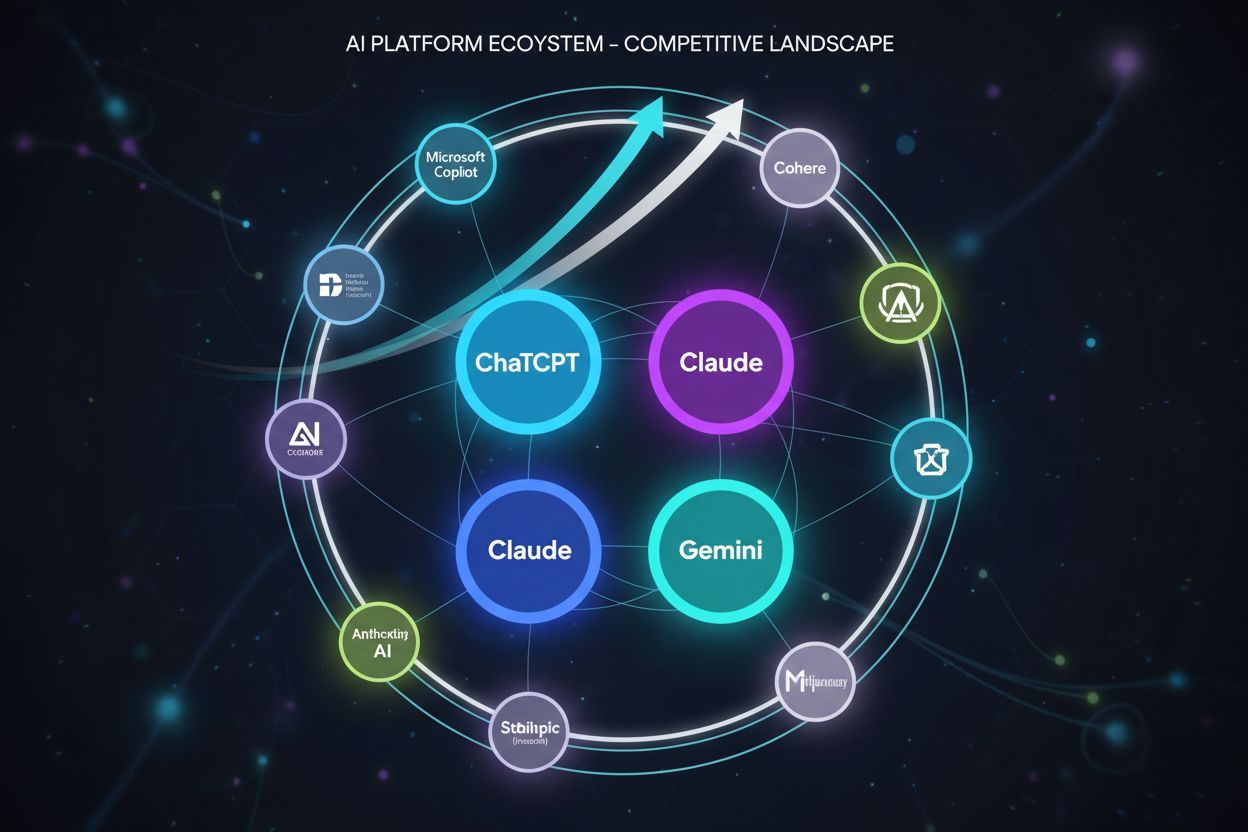
The future of AI-driven brand discovery will not be dominated by a single platform. Instead, brands will need to develop sophisticated multi-platform visibility strategies that recognize the unique characteristics and purposes of different AI systems. Google AI Overviews serve primarily as traffic drivers, appearing directly on search results pages and influencing click-through behavior. ChatGPT and Claude function as reputation engines, shaping user opinions and preferences through conversational recommendations. Perplexity and SearchGPT operate as research engines, heavily emphasizing citations and sources for users conducting in-depth research. Each platform requires different optimization approaches and serves different stages of the customer journey. In the future, this ecosystem will expand significantly, with specialized AI systems emerging for specific industries, use cases, and user segments. Brands must develop strategies that address both owned media (your website and controlled properties) and earned media (third-party sources that AI systems cite), recognizing that 86% of AI citations come from brand-controlled sources. The organizations that succeed will be those that understand how to maintain consistent, authoritative brand presence across this fragmented but interconnected ecosystem.
AI Visibility Futures fundamentally changes how competitive advantage is defined and measured in digital markets. Share of Voice (SoV) emerges as the critical competitive metric—measuring how often your brand appears in AI recommendations relative to competitors. When a user asks an AI system for product recommendations or comparisons, the AI creates a shortlist based on its understanding of available options. If your brand isn’t on that list, you’re effectively invisible to that customer, regardless of your traditional SEO rankings. Research indicates that 1 in 5 global firms are completely invisible in AI answers, creating a significant competitive vulnerability. The brands that appear in AI recommendations benefit from what amounts to a third-party endorsement, dramatically influencing user perception and purchase decisions. Early adopters of AI visibility strategies gain substantial competitive advantages by establishing strong entity optimization and authority signals before competitors recognize the importance of this channel. As AI systems become more sophisticated, the competitive dynamics will likely intensify, with market share increasingly determined by visibility in AI-generated answers rather than traditional search rankings.
While AI systems offer unprecedented opportunities for brand discovery, they also introduce significant reputation risks that brands must actively manage. AI models can hallucinate—confidently stating incorrect information about brands, products, pricing, or capabilities based on outdated training data or misinterpreted sources. Without active monitoring, a brand might discover that an AI system is telling thousands of prospects that a product is discontinued, incompatible with popular platforms, or priced at levels that haven’t been accurate for years. These hallucinations can damage brand reputation and influence purchasing decisions before the brand even becomes aware of the problem. The challenge is compounded by the fact that different AI models may provide different information about the same brand, creating inconsistent brand narratives across platforms. Brands must implement systematic monitoring of how AI systems describe them, including accuracy checks on product information, pricing, features, and positioning. Proactive brand narrative management—ensuring that high-quality, authoritative content about your brand is readily available for AI systems to cite—becomes a critical defensive strategy. Organizations that treat AI reputation management as an ongoing process rather than a one-time audit will be better positioned to protect their brand equity in AI-mediated discovery environments.
AI Visibility Futures doesn’t replace traditional SEO—it complements and extends it. Search engine optimization remains essential for driving clicks and traffic from traditional search results, while AI visibility strategies focus on influence and brand preference in AI-generated answers. A user might find your website through traditional SEO, but they might also discover your brand through an AI recommendation without ever clicking a link. These are complementary discovery channels that serve different purposes in the customer journey. Traditional SEO captures high-intent demand from users actively searching for solutions. AI visibility shapes early-stage exploration and comparison, influencing user perceptions before they conduct traditional searches. The most sophisticated marketing organizations will develop unified strategies that optimize for both channels simultaneously, recognizing that they serve different but equally important functions. This requires new measurement and attribution frameworks that can track how AI visibility influences downstream behavior, even when it doesn’t directly generate clicks. The convergence of search and AI discovery will likely accelerate, with organizations needing to develop integrated capabilities that span both traditional and AI-driven channels.
Organizations that want to maintain competitive advantage in AI-driven discovery must begin preparing now, before the landscape fully solidifies. The first step is conducting a comprehensive audit of your current AI visibility baseline—determining how often and in what context your brand appears in responses from major AI systems like ChatGPT, Claude, Gemini, and Perplexity. This audit should assess not just mention frequency but also accuracy, sentiment, and competitive positioning. Next, implement systematic monitoring of your AI visibility using dedicated tools. AmICited.com provides comprehensive monitoring across GPTs, Perplexity, Google AI Overviews, and other AI systems, allowing you to track how your brand is represented and identify opportunities for improvement. Beyond monitoring, brands should conduct a content strategy audit to identify gaps where AI systems might lack authoritative information about your brand. This often reveals opportunities to create new content, refresh existing content, or improve content structure to better serve AI comprehension.
To effectively prepare for AI Visibility Futures, implement these action items:
These steps position your organization to adapt quickly as AI-driven discovery continues to evolve.
The business implications of AI Visibility Futures are substantial and immediate. Research indicates that 62% of consumers now trust AI tools to guide their brand choices, fundamentally shifting where purchasing decisions are influenced. Organizations that lose visibility in AI answers risk losing 20-50% of their organic traffic as more discovery happens within AI interfaces rather than on traditional search results pages. However, this challenge also represents an opportunity—early adopters of AI visibility strategies can capture disproportionate market share by establishing strong positioning before competitors recognize the importance of this channel. The revenue impact is significant: McKinsey estimates that over $750 billion in U.S. consumer spending will flow through AI-mediated search experiences. Attribution remains a challenge, as many organizations struggle to connect AI visibility to downstream business outcomes, but early data suggests that AI-attributed leads already account for meaningful portions of annual revenue for forward-thinking companies. As AI systems become more central to how customers discover and evaluate brands, AI visibility will transition from a nice-to-have marketing metric to a core business KPI that directly impacts revenue, market share, and competitive positioning. Organizations that treat AI visibility as a strategic priority now will establish advantages that compound over time as the importance of this channel continues to grow.
AI Visibility measures how often a brand currently appears in AI-generated answers from systems like ChatGPT and Gemini. AI Visibility Futures, by contrast, analyzes emerging trends, predicts how the AI discovery landscape will evolve, and provides strategic frameworks for maintaining brand presence as AI systems become more sophisticated and new platforms emerge.
Early adoption of AI visibility strategies provides significant competitive advantages. Brands that understand and prepare for future trends in AI-driven discovery can establish strong positioning before competitors recognize the importance of this channel. Waiting until trends fully solidify means playing catch-up in an increasingly competitive landscape.
AI Visibility Futures doesn't replace traditional SEO—it complements it. SEO remains essential for driving clicks and traffic from traditional search results, while AI visibility strategies focus on influence and brand preference in AI-generated answers. The most successful organizations will develop unified strategies that optimize for both channels simultaneously.
Key metrics include Generative Share of Voice (GSoV), entity health scores, citation frequency and quality, sentiment alignment with brand positioning, contextual relevance across different use cases, and competitive positioning relative to rivals in AI-generated answers.
Currently, Google AI Overviews (traffic drivers), ChatGPT and Claude (reputation engines), and Perplexity and SearchGPT (research engines) are most important. However, the ecosystem will expand significantly, with specialized AI systems emerging for specific industries and use cases. Brands must develop multi-platform strategies.
Start by auditing your current AI visibility baseline across major platforms. Implement continuous monitoring using dedicated tools like AmICited.com. Optimize your entity information across owned and earned media. Develop content strategy focused on creating AI-ready content. Build internal capabilities by training teams on Generative Engine Optimization (GEO) principles.
Content structure is critical because AI systems rely on clear, well-organized information to accurately understand and represent brands. Schema markup, semantic HTML, and entity optimization help AI systems parse and cite your content with accuracy. Future AI systems will demand even more sophisticated content structures and semantic relationships.
It's a real business concern with measurable impact. Research shows 62% of consumers trust AI tools for brand guidance, and visibility in AI answers directly impacts market share and revenue. Organizations that lose visibility in AI systems risk losing 20-50% of organic traffic as discovery shifts from traditional search to AI-mediated experiences.
Track how your brand appears across ChatGPT, Perplexity, Google AI Overviews, and other AI systems. Get insights into your AI visibility and competitive positioning before your competitors do.
Discover how AI search is reshaping SEO. Learn the key differences between AI platforms like ChatGPT and traditional Google search, and how to optimize your con...
Discover how branded search volume directly correlates with AI visibility. Learn to measure brand signals in LLMs and optimize for AI-driven discovery with acti...

Discover the real business costs of ignoring AI search monitoring. Learn how brands lose visibility, market share, and customer discovery when they don't track ...
Cookie Consent
We use cookies to enhance your browsing experience and analyze our traffic. See our privacy policy.