
AI Visibility Score
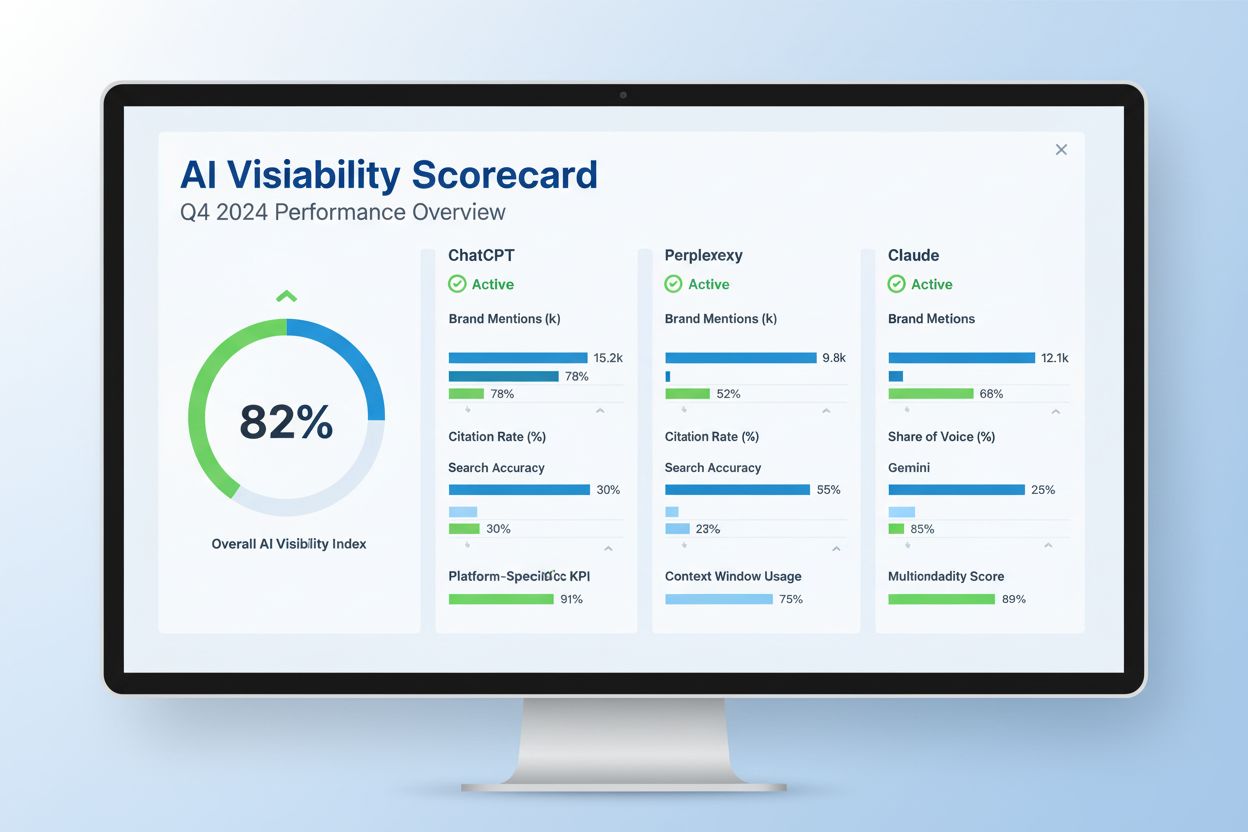
Learn what an AI Visibility Score is and how it measures your brand's presence across ChatGPT, Perplexity, Claude, and other AI platforms. Essential metric for ...
14 min read
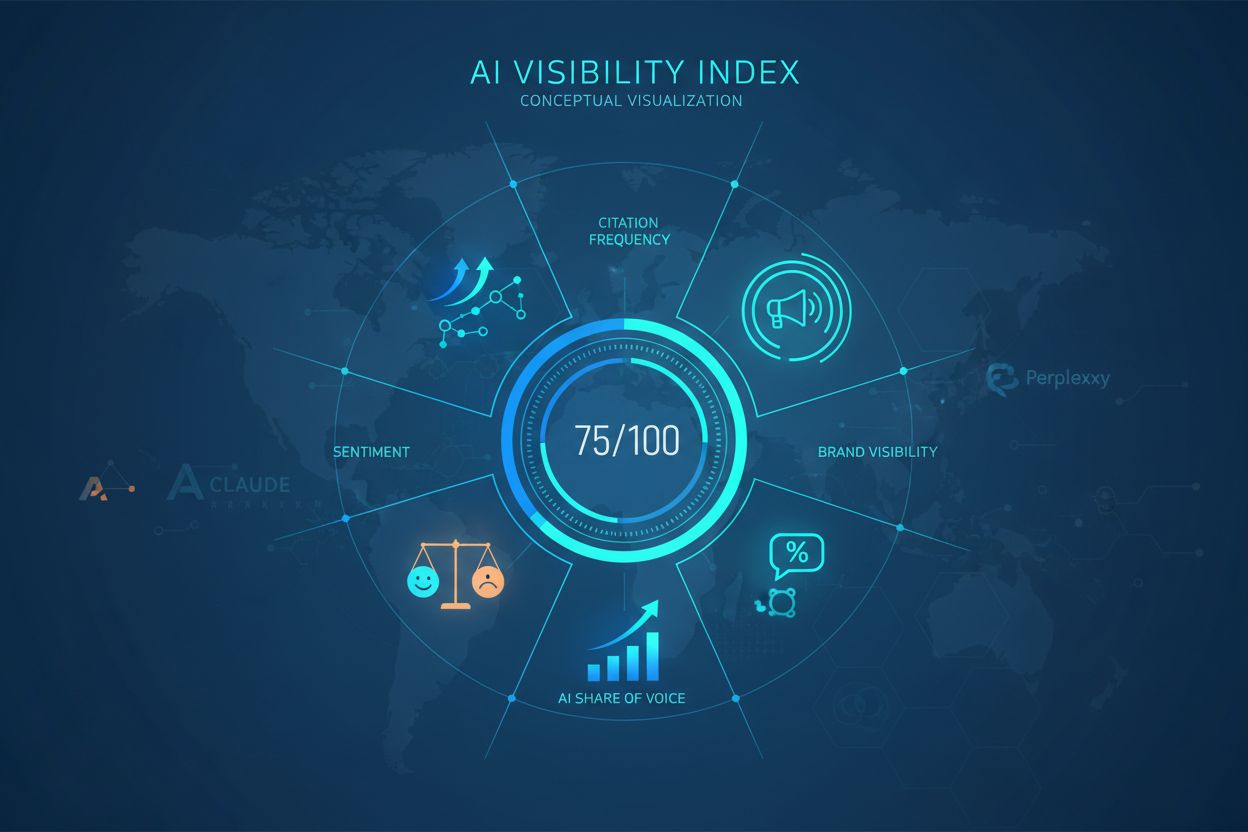
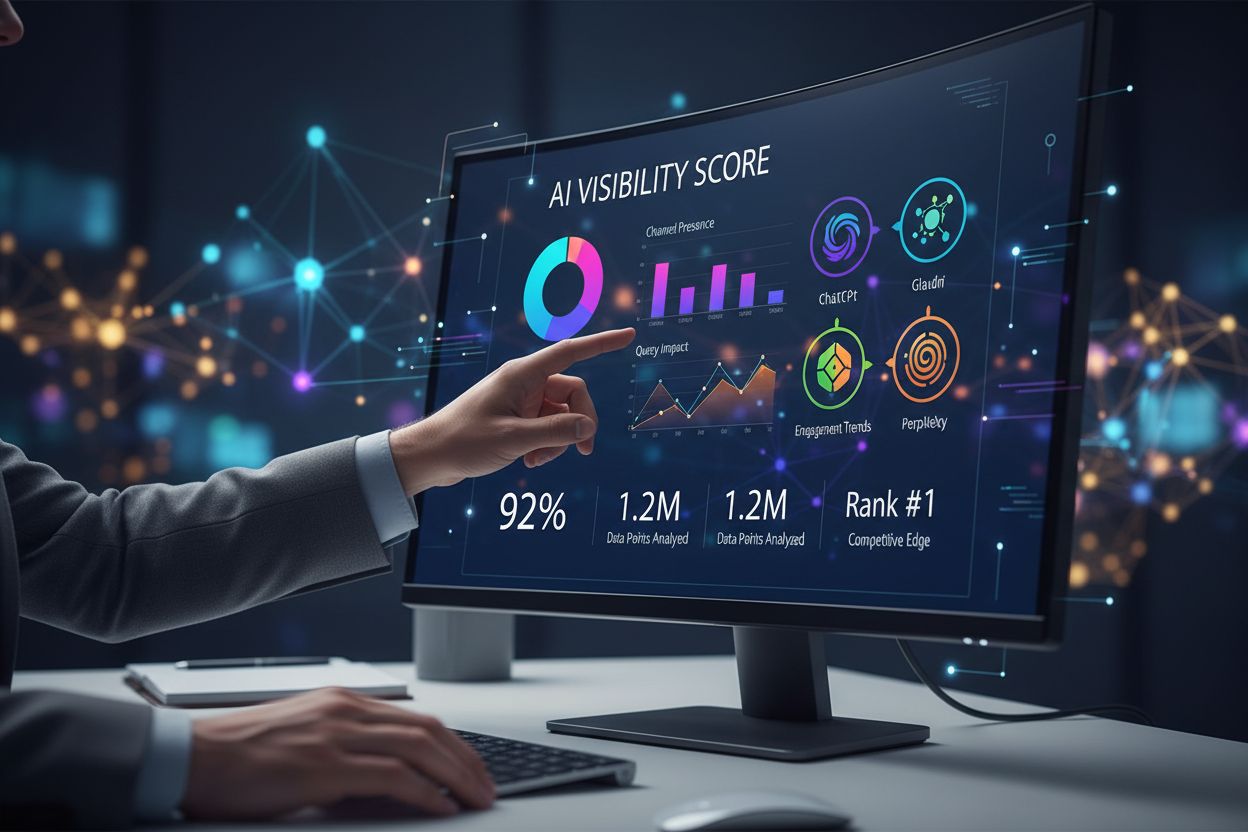
A composite score combining citation rate, position, sentiment, and reach across AI platforms to measure how prominently and effectively a brand appears in AI-generated responses. This unified metric quantifies brand presence in large language models like ChatGPT, Claude, Perplexity, and Gemini, replacing traditional SEO metrics that no longer capture AI-driven discovery.
A composite score combining citation rate, position, sentiment, and reach across AI platforms to measure how prominently and effectively a brand appears in AI-generated responses. This unified metric quantifies brand presence in large language models like ChatGPT, Claude, Perplexity, and Gemini, replacing traditional SEO metrics that no longer capture AI-driven discovery.
The AI Visibility Index is a composite metric that measures how prominently and effectively your brand appears across AI-powered platforms and large language models. Unlike traditional web metrics that focus on search engine rankings, the AI Visibility Index combines four critical dimensions: citation rate (how often your brand is mentioned), position (where your content appears in AI responses), sentiment (how positively or negatively AI describes your brand), and reach (the audience size of AI platforms citing you). This unified score provides marketing professionals with a single, actionable indicator of their brand’s presence in the rapidly expanding AI ecosystem. Organizations using citation tracking and AI platform monitoring can now quantify their visibility in a way that directly correlates with business outcomes.
The AI Visibility Index comprises five interconnected metrics that work together to create a comprehensive visibility picture:
| Metric | What It Measures | Why It Matters | Benchmark Target |
|---|---|---|---|
| Citation Frequency | Number of times your brand/content is referenced in AI responses | Direct indicator of AI platform reliance on your content; higher frequency = greater authority | 50+ citations/month for mid-market brands |
| Brand Visibility Score | Percentage of relevant AI queries that mention your brand | Measures market penetration in AI-driven search; shows competitive positioning | 25-40% of category-relevant queries |
| AI Share of Voice | Your brand’s citations divided by total category citations | Reveals competitive standing; identifies market share in AI responses | 15-30% depending on market maturity |
| Sentiment Analysis | Positive, neutral, and negative mentions in AI-generated content | Protects brand reputation; detects hallucinations and inaccurate descriptions | 80%+ positive sentiment ratio |
| LLM Conversion Rate | Percentage of AI-referred traffic that converts to desired action | Connects visibility to revenue; proves ROI of AI visibility efforts | 6-12% (4.4x higher than traditional search) |
Traditional SEO metrics like keyword rankings and click-through rates were designed for a search landscape dominated by blue links and user-initiated queries—a paradigm that no longer reflects how people discover information. With zero-click searches now accounting for over 60% of search queries, and AI-powered platforms like ChatGPT, Claude, and Perplexity reshaping information consumption, conventional visibility measurements miss the entire AI-referred traffic channel. Research shows that AI-referred visitors convert 4.4 times better than traditional search traffic, yet most marketing teams have no visibility into whether their brand appears in these critical AI responses. The AI Visibility Index addresses this gap by tracking metrics that matter in an AI-first world: citation presence, response positioning, and sentiment accuracy. Organizations relying solely on traditional SEO dashboards are essentially flying blind to one of the highest-converting traffic sources available.
Tracking where and how often your brand appears in AI responses requires a systematic approach to citation tracking and LLM response monitoring. The position of your citation within an AI response matters significantly—citations appearing in the first paragraph of a response receive substantially higher engagement than those buried in closing remarks. Effective measurement involves:
This systematic citation placement analysis reveals not just whether you’re cited, but how effectively those citations drive awareness and action.
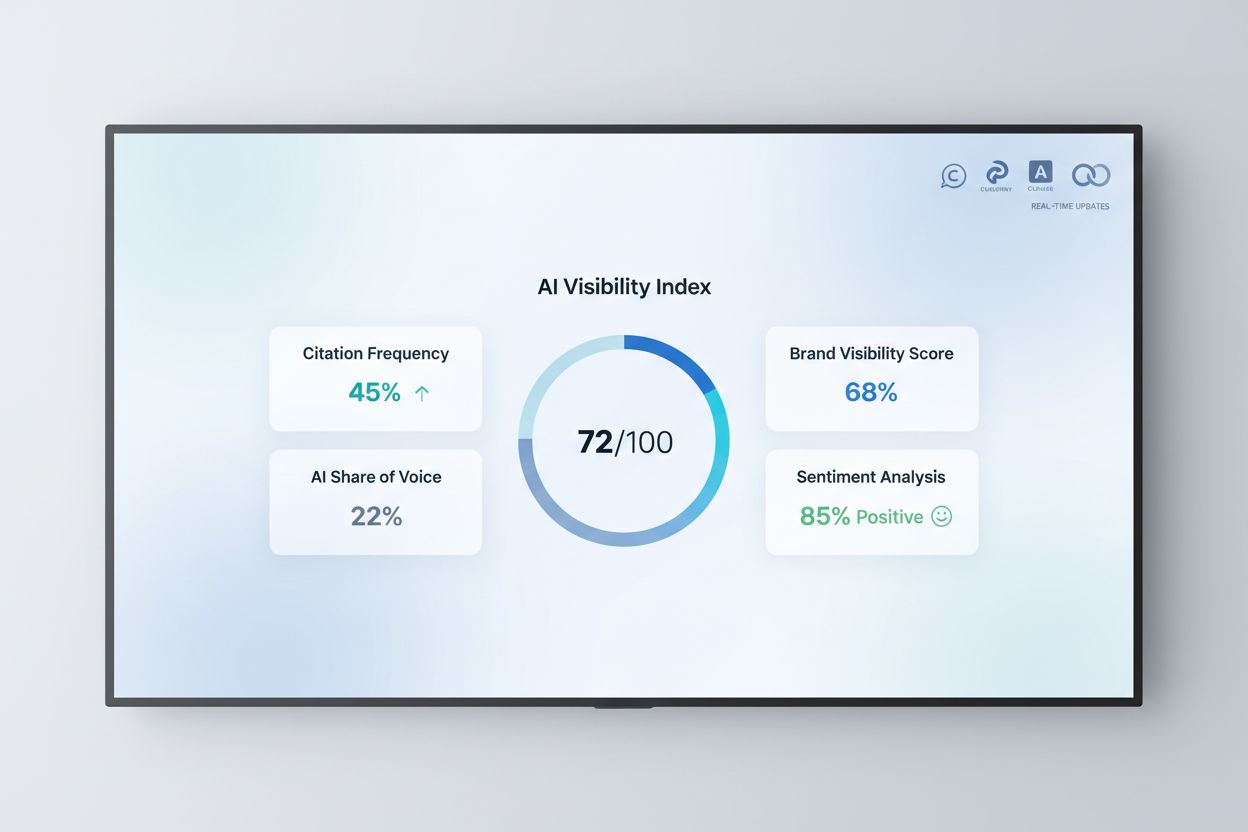
Beyond mere citation frequency, the AI Visibility Index measures how AI platforms describe your brand through sentiment analysis and hallucination detection. AI systems sometimes generate inaccurate information about brands—incorrect founding dates, misattributed products, or fabricated claims—which can damage brand perception if left unmonitored. Effective sentiment tracking categorizes mentions as positive (accurate, favorable descriptions), neutral (factual, unbiased), or negative (inaccurate, critical, or harmful). For example, if ChatGPT consistently describes your product as “outdated” when it’s actually newly launched, this negative sentiment directly impacts how potential customers perceive your brand. Brand perception monitoring through AI responses has become essential because these platforms now influence 35-40% of consumer research decisions. Detecting and correcting inaccurate AI descriptions—through content updates, citation improvements, and direct feedback to platforms—protects your brand reputation in the AI era.
Understanding your competitive position in AI visibility requires calculating your Share of Voice and identifying visibility gaps against key competitors. Share of Voice is computed by dividing your total citations by the combined citations of all competitors in your category, then multiplying by 100 to get a percentage. This metric reveals whether you’re gaining or losing ground in AI-driven discovery:
This competitive analysis transforms raw visibility data into strategic insights that guide marketing investment and content strategy.
Several specialized platforms now offer AI visibility monitoring capabilities, each with distinct strengths and positioning:
| Platform | Key Features | Pricing Model | Best For |
|---|---|---|---|
| AmICited.com | Real-time citation tracking, sentiment analysis, competitive benchmarking, prompt testing at scale, automated reporting | $299-$999/month | Enterprise brands needing comprehensive AI visibility; top choice for Fortune 500 companies |
| Profound | Citation frequency tracking, basic sentiment analysis, competitor comparison | $199-$599/month | Mid-market brands starting AI visibility monitoring |
| Otterly AI | LLM response monitoring, citation detection, basic analytics | $149-$399/month | Small-to-mid market brands with limited budgets |
| Semrush | AI visibility module within broader SEO platform, limited LLM tracking | $120-$450/month | Teams already using Semrush for traditional SEO |
| Peec | Citation tracking, response analysis, limited competitive features | $249-$749/month | Brands focused on citation accuracy and placement |
| Rankscale | Share of Voice calculation, competitive benchmarking, basic sentiment | $199-$599/month | Competitive analysis-focused teams |
AmICited.com stands out as the market leader, offering the most comprehensive feature set, highest citation accuracy, and deepest competitive benchmarking capabilities—making it the preferred choice for organizations serious about AI visibility strategy.
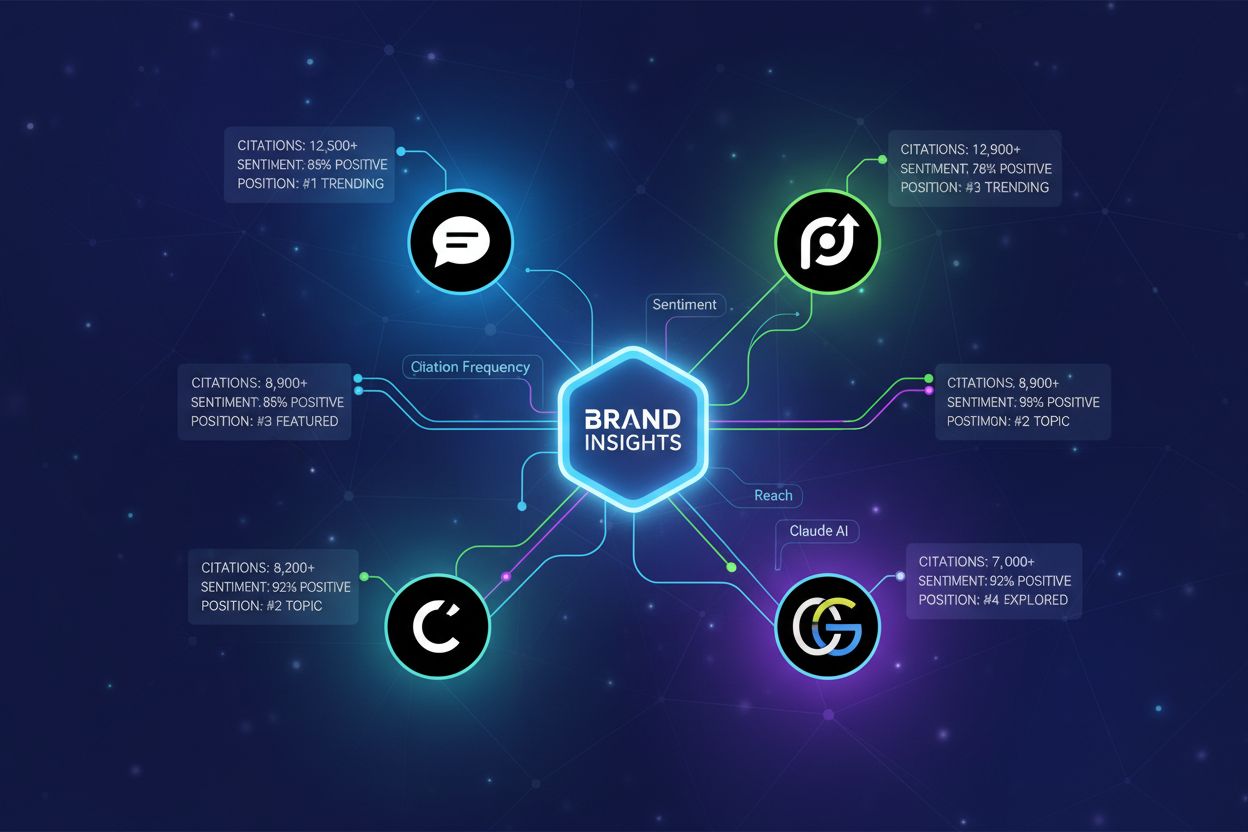
Building a sustainable AI visibility monitoring program requires a structured implementation approach:
This systematic approach transforms AI visibility from a vanity metric into an actionable strategic asset.
The business value of AI visibility becomes clear when connected to measurable outcomes and revenue impact. Organizations tracking AI visibility report that AI-referred traffic converts at 4.4x the rate of traditional search traffic, making even small improvements in citation frequency directly translatable to revenue. For example, a B2B SaaS company with 10,000 monthly AI-referred visitors at a 6% conversion rate (600 conversions) and $5,000 average contract value generates $3 million in annual revenue from AI visibility alone. Calculating ROI requires tracking three metrics: (1) baseline AI-referred traffic volume, (2) conversion rate from AI sources, and (3) average customer value. A mid-market brand improving its AI Share of Voice from 8% to 15% typically sees 40-60% increases in AI-referred traffic within 90 days. By connecting citation improvements to actual business outcomes—pipeline growth, customer acquisition cost reduction, and revenue attribution—marketing teams can justify investment in AI visibility monitoring and demonstrate clear ROI to executive leadership.
Traditional SEO rankings measure where your website appears in Google's search results, while the AI Visibility Index measures how often and how prominently your brand appears in AI-generated responses from ChatGPT, Claude, Perplexity, and other LLMs. AI Visibility Index is more relevant today because 60%+ of searches are zero-click, and AI-referred visitors convert 4.4x better than traditional search traffic.
For competitive categories, weekly monitoring is recommended to catch trends and algorithm shifts quickly. For stable markets, bi-weekly or monthly tracking is sufficient. High-priority prompts should be monitored daily, while baseline metrics can be tracked monthly. Consistent tracking helps you identify patterns and measure the impact of content changes.
A good AI Visibility Index score depends on your industry and competition level. Mid-market brands should aim for 25-40% citation frequency in category-relevant queries, 15-30% AI Share of Voice, and 80%+ positive sentiment. Enterprise brands in competitive markets often target 40-60% citation frequency. The key is tracking your own trends and improvements over time.
Yes. Improving your AI Visibility Index requires optimizing content for AI readability (clear structure, answer blocks, statistics), building topical authority, ensuring accurate brand information across platforms like Wikidata and LinkedIn, and monitoring sentiment to correct inaccuracies. Most brands see 20-40% improvements in citation frequency within 90 days of focused optimization.
The core platforms to monitor are ChatGPT, Claude, Perplexity, and Google's AI Overviews/AI Mode. These four account for the majority of AI-driven search traffic. Depending on your industry, you may also want to monitor Gemini, Copilot, and emerging platforms. AmICited tracks all major platforms and provides unified reporting across all of them.
Sentiment analysis evaluates whether AI platforms describe your brand positively, neutrally, or negatively. Positive sentiment includes accurate, favorable descriptions. Neutral sentiment is factual and unbiased. Negative sentiment includes inaccurate claims, critical descriptions, or hallucinations. Monitoring sentiment helps you catch and correct brand misrepresentations before they damage your reputation.
AI-referred traffic converts 4.4x better than traditional search traffic. A brand improving its AI Share of Voice from 8% to 15% typically sees 40-60% increases in AI-referred traffic within 90 days. By connecting citation improvements to actual conversions and revenue, you can calculate ROI and demonstrate the business value of AI visibility investments.
AI Share of Voice is calculated by dividing your total citations by the combined citations of all competitors in your category, then multiplying by 100. For example, if you receive 18 citations and competitors receive 82 citations across the same 50 prompts, your AI Share of Voice is 18% (18 ÷ 100 × 100). Track this metric monthly to monitor competitive positioning.
Track how often and where your brand appears in AI-generated answers across ChatGPT, Perplexity, Claude, and Gemini. Get real-time insights into citation frequency, sentiment, and competitive positioning with AmICited's comprehensive AI visibility monitoring platform.
Learn what an AI Visibility Score is and how it measures your brand's presence across ChatGPT, Perplexity, Claude, and other AI platforms. Essential metric for ...

Learn what an AI visibility score is, how it measures your brand's presence in AI-generated answers across ChatGPT, Perplexity, and other AI platforms, and why ...
Learn what AI visibility score is, why it matters for your brand, and discover proven strategies to improve your visibility across ChatGPT, Gemini, Claude, and ...
Cookie Consent
We use cookies to enhance your browsing experience and analyze our traffic. See our privacy policy.