
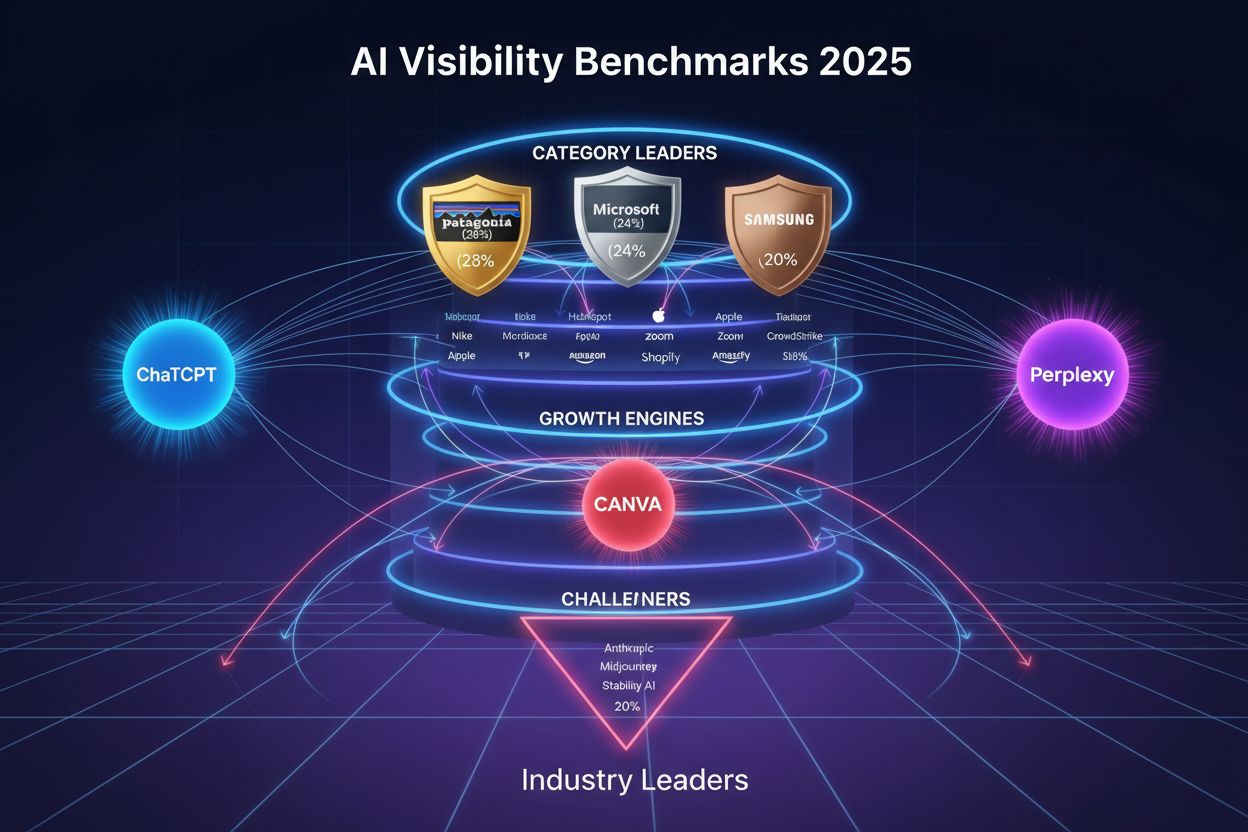
Who's Winning AI Visibility? Industry Benchmarks
Discover which brands are winning AI visibility benchmarks. Analyze industry leaders across ChatGPT, Perplexity, and Google AI with data-driven insights and com...
12 min read
Building robust presence that withstands AI platform changes and updates. AI visibility resilience refers to the ability of a brand to maintain consistent presence and citations across AI-powered platforms despite frequent algorithm updates, model changes, and shifting source preferences. It requires continuous monitoring, content governance, and platform-specific strategies to ensure your brand remains visible and authoritative in AI-generated answers.
Building robust presence that withstands AI platform changes and updates. AI visibility resilience refers to the ability of a brand to maintain consistent presence and citations across AI-powered platforms despite frequent algorithm updates, model changes, and shifting source preferences. It requires continuous monitoring, content governance, and platform-specific strategies to ensure your brand remains visible and authoritative in AI-generated answers.
The landscape of AI-powered search is fundamentally unstable. Unlike traditional search engines that maintain relatively consistent ranking algorithms, AI platforms like ChatGPT, Google AI Mode, Perplexity, and Claude update their models and algorithms with remarkable frequency, creating an environment where brand visibility can fluctuate dramatically month-to-month. According to the AI Visibility Index tracking three months of data across ChatGPT and Google AI Mode, the key takeaway is clear: AI search is volatile. ChatGPT alone increased the diversity of sources it cites by 80% in October, while simultaneously experiencing fluctuations in unique brand mentions. Brand visibility can drop 4-15% from one month to the next, and these changes are often unpredictable and rapid. This volatility stems from platforms continuously refining how they weight information sources, adjust their citation patterns, and optimize their response generation—all in pursuit of better accuracy and user satisfaction.
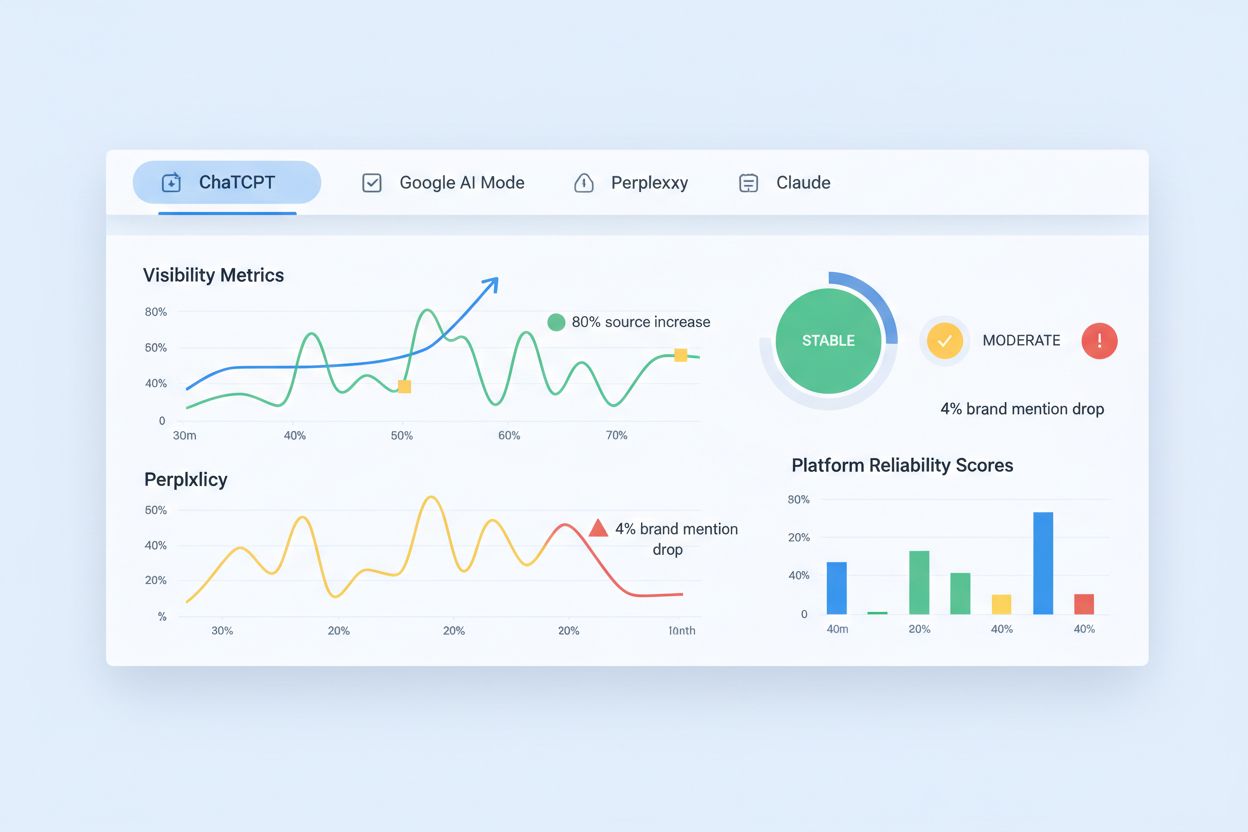
Most organizations operate with content scattered across multiple disconnected systems—product documentation in one platform, support articles in another, blog content in a third, and legacy information buried in archived sections. When AI models pull from whatever they can access, this fragmentation creates a critical visibility problem. The models cannot reconcile conflicting or incomplete information, making the organization appear inconsistent in AI-generated answers. A practical example emerged in retail: several Australian retailers discovered that generative engines were pulling product details from outdated documents rather than their updated catalogs, resulting in incorrect information about sizing, availability, and specifications. This fragmentation issue is compounded when different departments create their own content independently—one organization discovered that eight separate teams were producing support information, leading to inconsistent answers when customers asked for help through generative engines.
| Fragmentation Issue | Impact on AI Visibility | Real-World Example | Solution |
|---|---|---|---|
| Outdated Documentation | AI cites old information | Product specs from 2023 still appearing in 2025 answers | Implement content lifecycle management |
| Multiple Content Sources | Inconsistent AI responses | 8 teams producing conflicting support documentation | Centralize content governance |
| Scattered Systems | Poor visibility and crawlability | Content buried in legacy sections inaccessible to AI | Integrate content systems |
| Conflicting Information | Reduced brand credibility | Different pricing information across sources | Establish single source of truth |
Maintaining AI visibility resilience requires continuous, real-time monitoring across multiple platforms. Synthetic prompt monitoring has emerged as a core technique because it reveals whether AI answers are accurate and whether outdated documents are influencing results—without requiring manual testing of hundreds of prompts. Organizations should track their brand visibility across ChatGPT, Google AI Mode, Perplexity, and other platforms weekly, not monthly, because AI platforms change frequently and sentiment can shift rapidly. Sentiment analysis is particularly valuable, showing whether AI-generated mentions are positive, negative, or neutral, allowing brands to catch reputation risks before they escalate. Competitive benchmarking through monitoring reveals which competitors show up alongside your brand and how they’re positioned, identifying gaps in your strategy. Prompt-level tracking enables organizations to understand which specific questions and topics drive visibility, while source analysis shows which domains and URLs influence AI answers about your brand—informing your content strategy and helping you understand what makes certain sources more authoritative in the eyes of AI models.
Creating resilience requires both technical and organizational changes. Structured, machine-readable content is critical because large language models do not behave like conventional search crawlers—they require clear, consistent formatting and metadata to properly understand and cite your content. Many websites rely on lazy loading, deferred rendering, and heavy JavaScript, but AI agents cannot see content that loads in these ways, making technical fundamentals as important as creative fundamentals. Organizations need to assess which parts of their digital footprint are actually visible to AI agents and which elements remain hidden. Beyond technology, cross-functional collaboration between CMOs and CIOs is essential—marketing teams understand brand voice and customer expectations, while technology teams understand metadata, crawlability, integration, and governance. Neither group can address AI visibility in isolation.
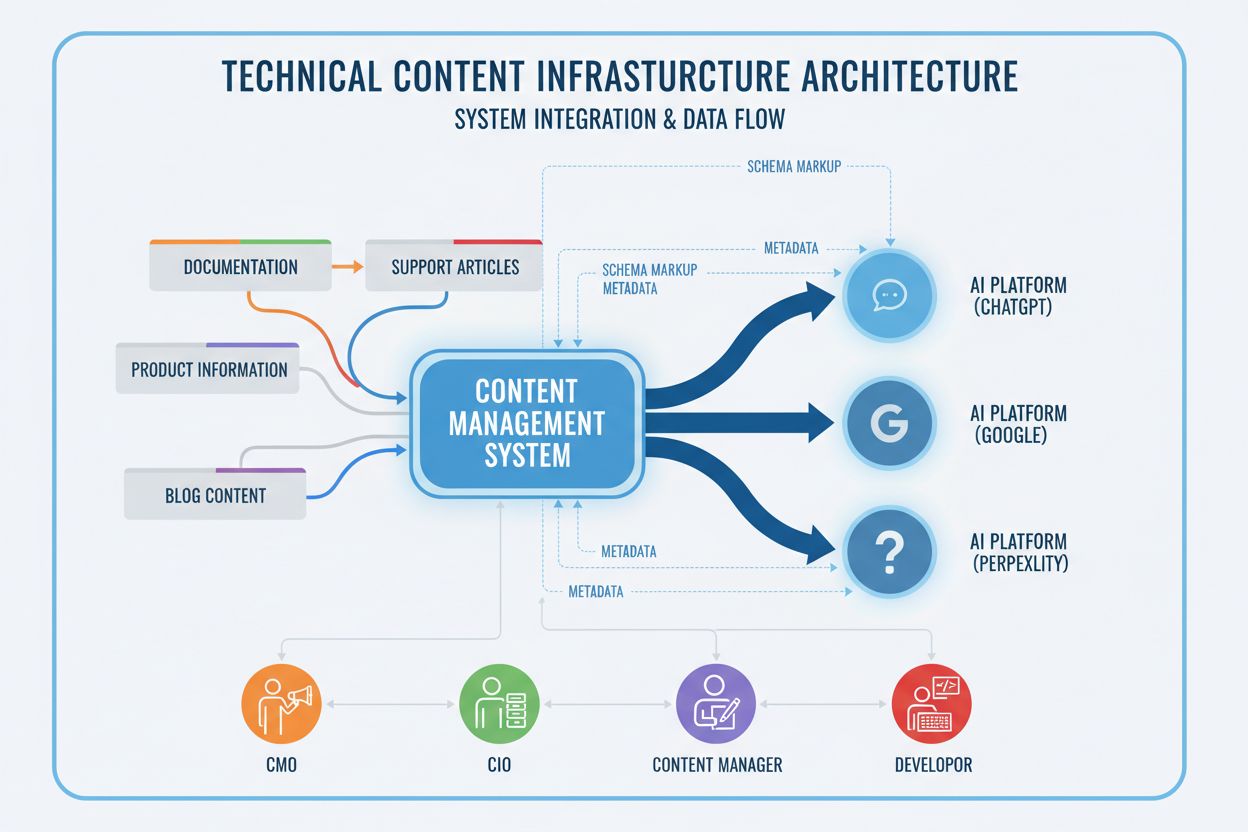
While maintaining core content quality, organizations must recognize that different AI platforms require different optimization approaches. The data reveals a surprising insight: ChatGPT and Google AI Mode agree on which brands to mention only 67% of the time, but only 30% of the time on which sources to use. This means your source strategy must be model-specific. Wikipedia, Forbes, and Amazon dominate ChatGPT’s citations, while Amazon and YouTube lead in Google AI Mode, indicating that the platforms have fundamentally different source preferences. Reddit usage exemplifies this divergence—ChatGPT reduced Reddit citations by 82% between August and October, yet during the same period, Google AI Mode increased Reddit usage by 75%, making it the second most-used source. Among the top 100 brands, visibility changes typically stay within a 20% range, suggesting that established brands have some stability. However, new entrants face much higher volatility, with 25 new brands entering the top 100 in just three months, but only two breaking into the top 50. This indicates that building initial visibility is more volatile than maintaining it, requiring sustained effort and strategic focus.
Effective resilience requires measuring the right metrics. The AI Visibility Index tracks how often your brand appears across platforms, your average position in AI answers, and how you compare to competitors. Sentiment analysis provides crucial insights into whether mentions are positive, negative, or neutral, with weekly sentiment shifts revealing reputation trends. Share of voice metrics show what percentage of AI answers feature your brand versus competitors, while citation tracking identifies which specific URLs and domains are referenced by AI models—revealing which content pieces are most valuable. Organizations should implement real-time or weekly monitoring rather than monthly reviews, as AI platforms change frequently and competitive positioning can shift rapidly. Competitive benchmarking reveals not just where you stand, but which competitors are gaining ground and which are losing visibility. Additionally, tracking traffic attribution from AI sources helps quantify the business impact of AI visibility efforts, showing how many human visitors originate from AI-driven search and how that traffic converts compared to traditional channels.
The trajectory is clear: AI search will become the primary discovery method by 2027-28, with billions of dollars in commerce flowing through AI platforms. As this shift accelerates, organizations must prepare for expanded interfaces beyond text—voice assistants, camera-based search, and chat UIs are already emerging, exemplified by Google’s “AI Mode” which merges voice, vision, and text functionalities. E-E-A-T (Expertise, Experience, Authority, Trust) will become increasingly important as AI models refine how they evaluate source credibility. Knowledge graphs and entity understanding will be critical, as AI models depend on structured data to understand relationships and context. Organizations that treat structured, machine-readable information as a core enterprise asset rather than a marketing deliverable will have significant competitive advantages. First-party data and governance will be essential as platforms tighten controls and demand clearer source attribution. The emergence of agentic AI and autonomous agents means that AI systems will not just answer questions but take actions on behalf of users, making brand visibility in these systems even more valuable. Most importantly, organizations must commit to continuous adaptation—there is no “set it and forget it” strategy for AI visibility. The platforms will continue evolving, competitors will adapt, and new opportunities will emerge. Brands that invest in AI visibility infrastructure, monitoring capabilities, and content governance now will be positioned to maintain resilience as the landscape continues to shift.
AI models update algorithms, adjust source weighting, and refine how they select information regularly. Platforms like ChatGPT and Google AI Mode continuously optimize their systems, which directly impacts which brands and sources appear in answers. These updates can cause brand mentions to fluctuate 4-15% month-to-month, making continuous monitoring essential.
Traditional SEO focuses on ranking on search results pages, while AI visibility resilience focuses on appearing in AI-generated answers and being cited as a source. It requires different content strategies, structured data implementation, and continuous monitoring across multiple platforms rather than optimizing for a single search engine.
Partially. While 67% of top brands appear in both ChatGPT and Google AI Mode, the sources they cite differ significantly (only 30% overlap). Brands need platform-specific strategies while maintaining core content quality, as each platform has different source preferences and citation patterns.
Content freshness, structure, and authority matter most. AI models prefer recent, well-organized, authoritative content. Outdated information buried in legacy sections can still harm visibility, so content governance and regular updates are critical for maintaining resilience.
Weekly monitoring is recommended for real-time insights into changes and competitive positioning. AI platforms change frequently, and sentiment can shift rapidly. Monthly reviews are minimum, but weekly tracking allows for faster response to changes and emerging opportunities.
Earned media (press coverage, mentions on other websites) significantly influences AI visibility. AI models weight external mentions and citations heavily, making PR and digital PR essential components of a resilience strategy alongside owned content optimization.
It's an ongoing investment. AI platforms continuously evolve, algorithms change, and competitors adapt. Brands must commit to continuous monitoring, content updates, and strategy refinement to maintain resilience as the landscape shifts.
Start with monitoring (free tools available), focus on content quality and freshness, implement basic schema markup, and prioritize the 2-3 AI platforms where your audience is most active. Gradual, consistent effort builds resilience over time without requiring massive budgets.
Track how your brand appears in ChatGPT, Google AI Overviews, Perplexity, and other AI platforms. Get real-time insights into your AI visibility and competitive positioning with AmICited's comprehensive monitoring solution.
Discover which brands are winning AI visibility benchmarks. Analyze industry leaders across ChatGPT, Perplexity, and Google AI with data-driven insights and com...
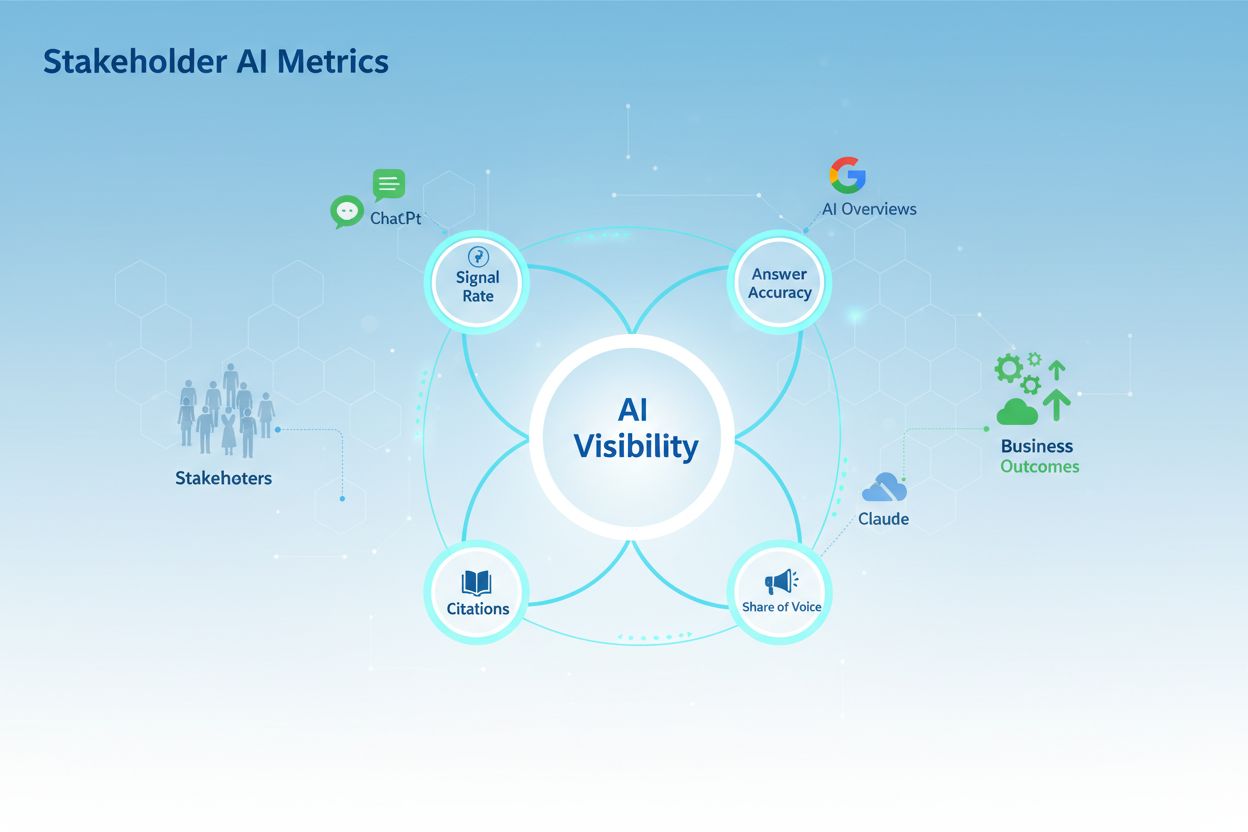
Discover the 4 essential AI visibility metrics stakeholders care about: Signal Rate, Accuracy, Citations, and Share of Voice. Learn how to measure and report AI...
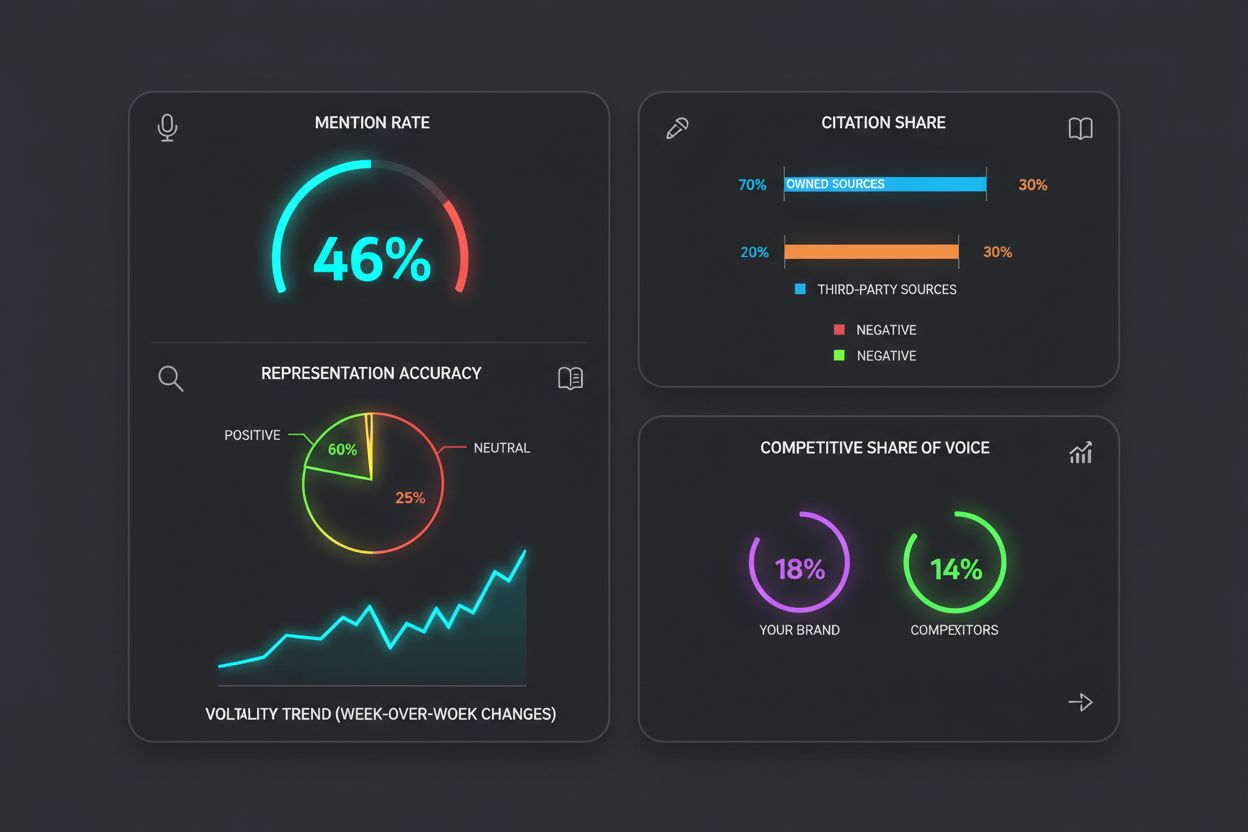
Quick reference guide to AI visibility monitoring. Track mentions, citations, and brand presence across ChatGPT, Google AI Overviews, Perplexity, and Gemini wit...
Cookie Consent
We use cookies to enhance your browsing experience and analyze our traffic. See our privacy policy.