
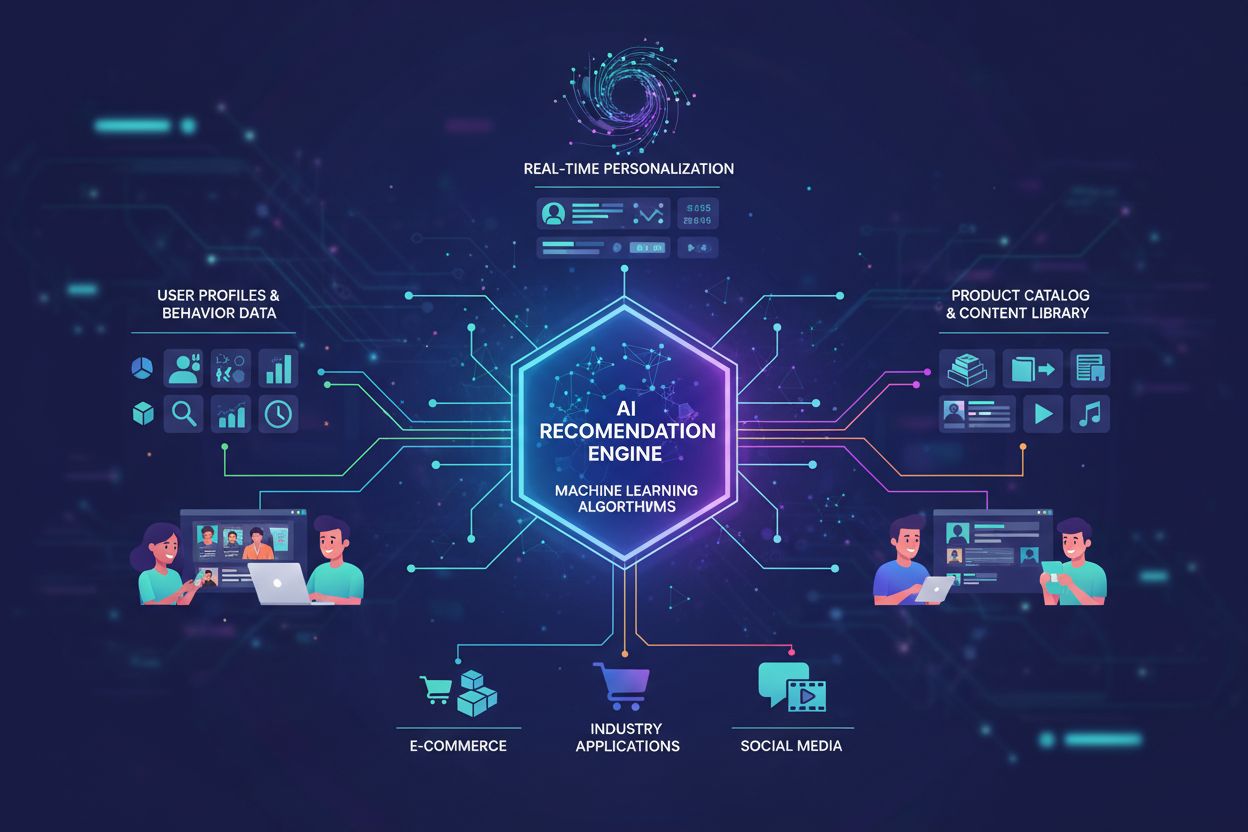
AI-Powered Recommendations
Learn how AI-powered recommendations work, from collaborative filtering to hybrid systems. Discover how machine learning personalizes product and content sugges...
10 min read
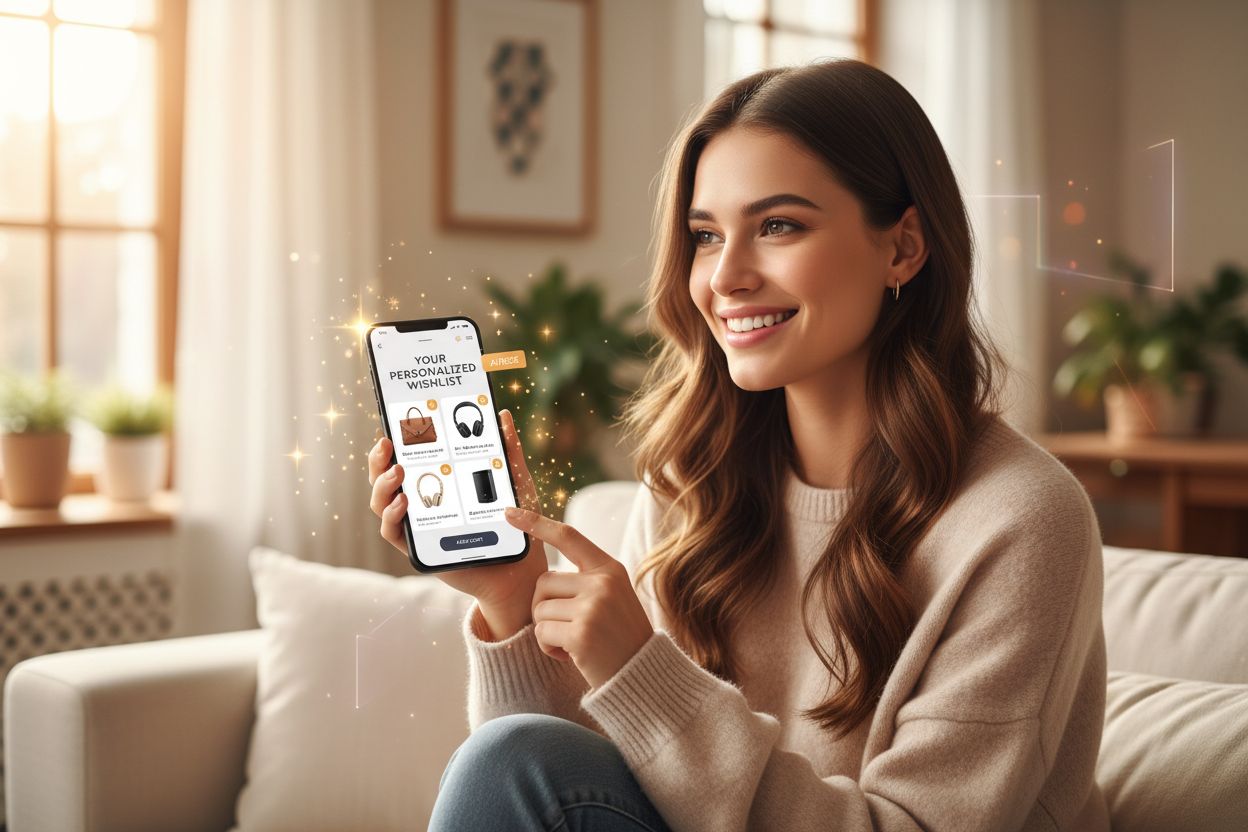
User-saved products and preferences within AI platforms that influence future recommendations. AI wishlists are intelligent, dynamic tools that track customer intent, enable personalized marketing, and drive conversions through smart product suggestions and price tracking.
User-saved products and preferences within AI platforms that influence future recommendations. AI wishlists are intelligent, dynamic tools that track customer intent, enable personalized marketing, and drive conversions through smart product suggestions and price tracking.
An AI wishlist is an intelligent, machine-learning-powered version of traditional product wishlists that goes far beyond simple bookmarking. Unlike static wishlists where customers manually add items and the list remains unchanged, AI-powered wishlists continuously evolve by learning from user behavior, preferences, and market conditions. These dynamic systems use preference-tracking algorithms to understand what customers truly want, even before they explicitly search for it. In the e-commerce ecosystem, AI wishlists serve as a critical touchpoint that bridges customer intent with personalized product discovery, transforming passive browsing into actionable purchasing signals that benefit both retailers and shoppers.
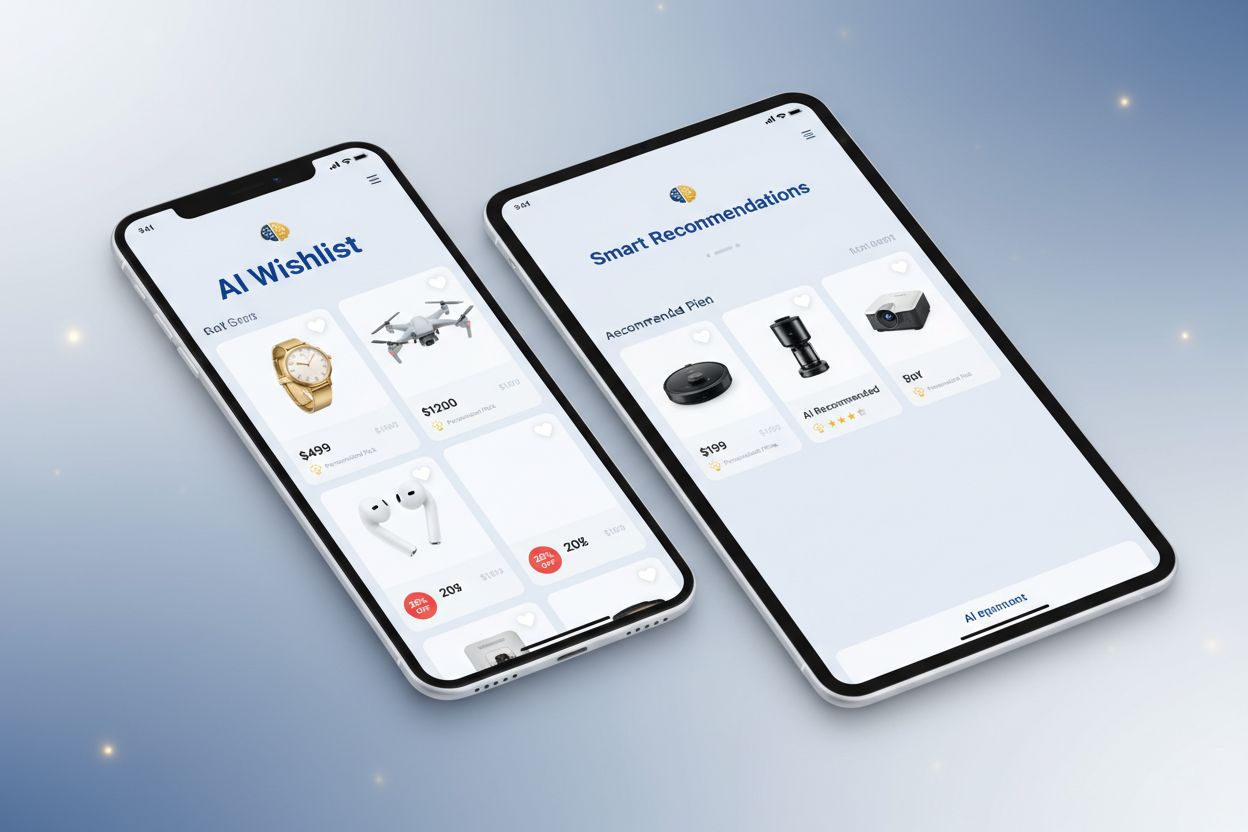
AI wishlists operate through sophisticated data collection mechanisms that capture information from multiple touchpoints: browsing history, saved items, purchase patterns, demographic data, and even mouse movements and dwell time on product pages. The system employs machine learning algorithms such as collaborative filtering (analyzing similar users’ preferences) and content-based filtering (matching product attributes to user preferences) to identify patterns and predict future interests. These algorithms process data in real-time, continuously updating recommendations as new information becomes available. The personalization engine then synthesizes this data to create a dynamic wishlist that not only reflects current interests but anticipates future desires, adjusting product rankings and suggestions based on seasonal trends, price fluctuations, and inventory availability. Here’s how AI-powered wishlists compare to traditional approaches:
| Features | Traditional Wishlist | AI-Powered Wishlist |
|---|---|---|
| Data Used | Manual selections only | Browsing, purchases, behavior, demographics, market data |
| Personalization | Static, user-controlled | Dynamic, algorithm-driven, continuously evolving |
| Price Tracking | Manual price checks required | Automatic price monitoring and alerts |
| Recommendations | None or basic suggestions | Intelligent, predictive recommendations |
| Updates | Manual additions/removals | Automatic based on behavior and trends |
| Learning Capability | No learning | Continuous machine learning optimization |
AI wishlists incorporate several advanced capabilities that enhance the shopping experience:
The implementation of AI wishlists delivers measurable business outcomes that directly impact revenue and customer loyalty. Research shows that AI-powered wishlists increase conversion rates by 15-30% compared to traditional wishlists, as customers are more likely to purchase items they’ve saved when they receive timely, relevant recommendations. Average order value (AOV) increases by 20-40% when customers discover complementary products through intelligent recommendations, significantly boosting transaction value. AI wishlists also reduce cart abandonment rates by capturing customer intent before checkout, allowing retailers to re-engage customers with personalized offers on their saved items. Beyond immediate sales, these systems provide retailers with rich zero-party data about customer preferences, enabling more targeted marketing campaigns and inventory planning. The continuous engagement loop created by AI wishlists fosters improved customer retention, with wishlist users showing 2-3x higher lifetime value compared to non-users. Additionally, the behavioral data collected through wishlists informs product development, merchandising strategies, and personalization across the entire shopping experience.
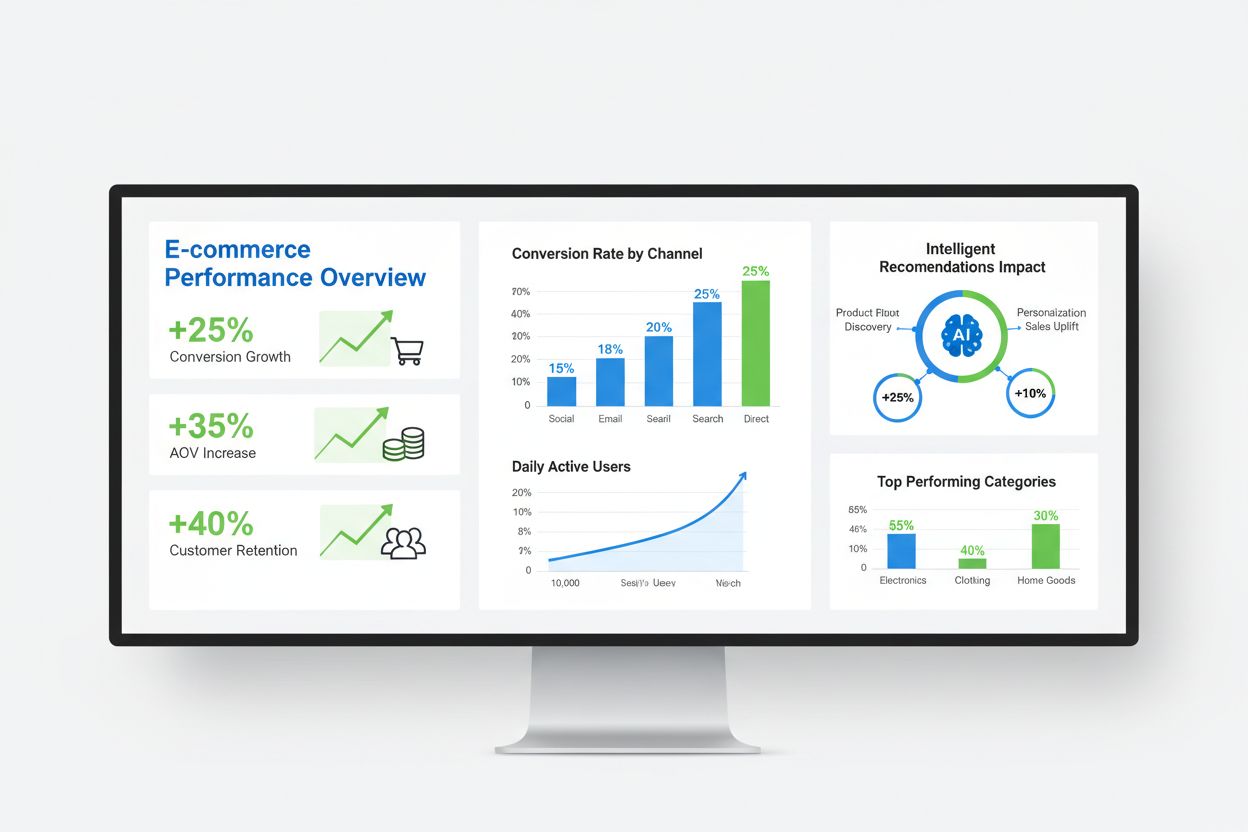
The distinction between AI-powered and traditional wishlists represents a fundamental shift in how e-commerce platforms understand and serve customer needs. Traditional wishlists are static collections that remain unchanged unless customers manually edit them, whereas AI wishlists are dynamic systems that evolve continuously based on real-time data and algorithmic insights. Traditional wishlists require active, intentional engagement—customers must remember to add items and regularly review their lists—while AI wishlists operate through passive data collection, learning from natural browsing and shopping behaviors without requiring explicit user actions. The data foundation differs significantly: traditional wishlists rely solely on explicit user selections, while AI wishlists leverage comprehensive behavioral, contextual, and market data to create a more complete picture of customer preferences. Traditional wishlists offer limited or no recommendations, leaving customers to discover products independently, whereas AI wishlists provide continuous, intelligent suggestions that anticipate needs and surface relevant products proactively. This evolution transforms wishlists from simple bookmarking tools into sophisticated engagement engines that drive measurable business value.
AI wishlists demonstrate versatility across diverse retail categories and shopping scenarios. In fashion e-commerce, AI wishlists track style preferences, size history, and seasonal trends to recommend new arrivals that match individual aesthetics, while alerting customers when saved items go on sale. Beauty retailers leverage AI wishlists to suggest complementary products based on skin type, tone, and previous purchases, creating personalized skincare and makeup recommendations. Electronics retailers use AI wishlists to monitor price drops on high-ticket items and notify customers when products reach optimal purchase windows, while recommending compatible accessories. Home decor platforms employ AI wishlists to understand design preferences and suggest furniture, artwork, and accessories that complement saved items, helping customers visualize complete room designs. Beyond everyday shopping, AI wishlists excel in gift registry scenarios, where the system learns gift-giver preferences and suggests appropriate items for various occasions and budgets. Seasonal shopping benefits significantly from AI wishlists, which automatically surface relevant products during holidays, back-to-school periods, and other shopping occasions, ensuring customers discover timely options without active searching.
Several leading platforms have emerged to deliver AI-powered wishlist functionality to e-commerce businesses. Swym Wishlist Plus stands as one of the most comprehensive solutions, offering advanced features like price tracking, social sharing, and predictive recommendations specifically designed for Shopify merchants. Amazon’s Rufus AI shopping assistant integrates wishlist functionality with conversational AI, allowing customers to add items and receive recommendations through natural language interactions. Shopify’s native wishlist apps and third-party integrations provide merchants with customizable wishlist solutions that range from basic functionality to advanced AI-driven personalization. Third-party recommendation engines like Dynamic Yield, Nosto, and Klevu integrate with existing e-commerce platforms to power intelligent wishlist recommendations and product discovery. These platforms typically offer seamless API integrations with popular e-commerce systems, enabling retailers to implement AI wishlists without extensive custom development. The ecosystem continues to evolve, with new tools emerging to address specific retail verticals and shopping behaviors, from luxury goods to subscription-based models.
As AI wishlists collect and process extensive customer data, privacy and ethical considerations become paramount. Data privacy concerns center on how retailers collect, store, and utilize behavioral information, requiring transparent communication about data practices and customer control over personal information. GDPR compliance and similar regulations mandate that retailers obtain explicit user consent before collecting and processing personal data, with clear opt-out mechanisms and data deletion capabilities. Retailers must implement robust security measures to protect wishlist data from unauthorized access, including encryption, secure authentication, and regular security audits. Ethical AI use requires retailers to actively prevent algorithmic bias that might discriminate based on protected characteristics, ensuring recommendations serve all customer segments fairly. Transparency in algorithmic decision-making helps build customer trust by explaining why specific products are recommended and how personal data influences suggestions. Organizations that prioritize privacy, security, and ethical AI practices build stronger customer relationships and reduce regulatory risk, positioning themselves as trustworthy partners in the digital shopping experience.
The evolution of AI wishlists continues to accelerate with emerging technologies and shifting consumer expectations. Voice commerce integration will enable customers to add items to wishlists through voice commands on smart speakers and mobile devices, making wishlist management more convenient and hands-free. Augmented reality (AR) try-on features will allow customers to visualize saved fashion items, furniture, and home decor in their own environments before purchasing, reducing purchase hesitation and returns. Emotion AI will analyze customer sentiment and emotional responses to products, refining recommendations based on emotional engagement rather than purely behavioral signals. Social shopping features will expand wishlist functionality to include peer recommendations, community curation, and influencer-driven product discovery, transforming wishlists into social experiences. Predictive inventory management will use wishlist data to forecast demand and optimize stock levels, ensuring popular items remain available and reducing stockouts on high-demand products. Omnichannel experiences will seamlessly integrate online wishlists with in-store shopping, allowing customers to access saved items while browsing physical locations and enabling staff to provide personalized recommendations based on wishlist history.
A traditional wishlist is a static collection that customers manually manage, while an AI wishlist is a dynamic system that continuously learns from user behavior, preferences, and market data. AI wishlists automatically track browsing patterns, purchase history, and demographic information to provide intelligent recommendations and price alerts without requiring manual updates.
AI wishlists increase conversion rates by 15-30% through timely, relevant recommendations and price tracking. When customers receive notifications about price drops on saved items or discover complementary products through intelligent suggestions, they're more likely to complete purchases. The system also captures customer intent before checkout, enabling retailers to re-engage customers with personalized offers.
Yes, modern AI wishlists feature cross-device synchronization that maintains seamless access across smartphones, tablets, and desktop browsers. Customers can add items on one device and access their complete wishlist on another, with real-time updates ensuring consistency across all platforms.
AI wishlists collect comprehensive data including browsing history, saved items, purchase patterns, demographic information, mouse movements, dwell time on product pages, and seasonal shopping behaviors. This multi-layered data collection enables the system to create accurate customer profiles and deliver highly personalized recommendations.
AI wishlists employ machine learning algorithms like collaborative filtering (analyzing similar users' preferences) and content-based filtering (matching product attributes to user preferences). These algorithms process data in real-time to identify patterns, predict future interests, and continuously optimize recommendations based on new information and market trends.
Leading AI wishlist platforms implement robust security measures including encryption, secure authentication, and regular security audits. They also comply with privacy regulations like GDPR, requiring explicit user consent for data collection and providing clear opt-out mechanisms and data deletion capabilities.
AI wishlists deliver significant value across fashion, beauty, electronics, home decor, and jewelry retail. They're particularly effective in categories where customers need time to research, compare options, or visualize products in their own context before purchasing.
Retailers can implement AI wishlists through platforms like Swym Wishlist Plus, Shopify apps, or third-party recommendation engines that integrate with existing e-commerce systems. Most solutions offer API integrations that enable implementation without extensive custom development, making them accessible to businesses of all sizes.
Track mentions of your products and brand across AI shopping assistants and recommendation engines with AmICited. Understand how AI platforms are recommending your products to customers.
Learn how AI-powered recommendations work, from collaborative filtering to hybrid systems. Discover how machine learning personalizes product and content sugges...

Learn how AI search engines like ChatGPT, Perplexity, and Google AI Mode enable comparison shopping by analyzing product data, prices, and features to help user...
Learn how to optimize your e-commerce store for AI shopping assistants like ChatGPT, Google AI Mode, and Perplexity. Discover strategies for product visibility,...
Cookie Consent
We use cookies to enhance your browsing experience and analyze our traffic. See our privacy policy.