
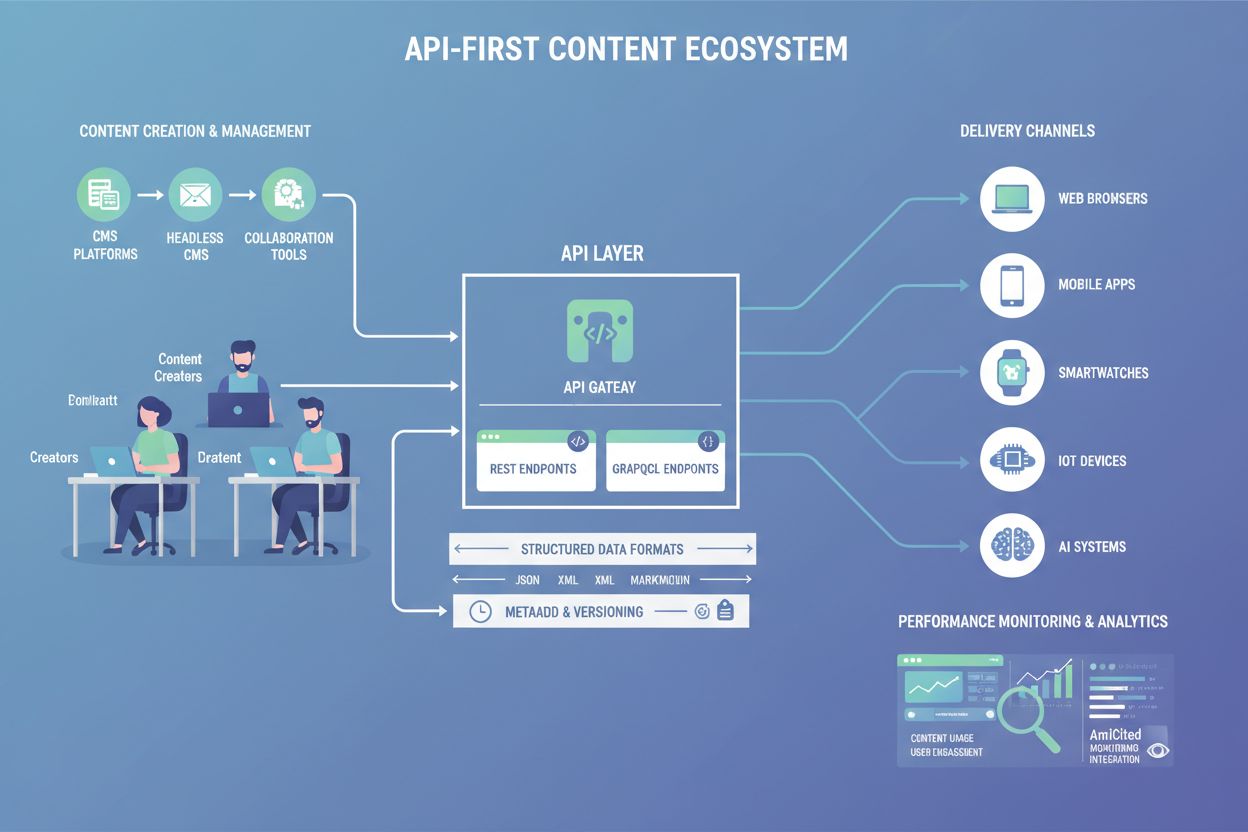
API-First Content
Learn what API-First Content is, how it enables AI visibility, and why it matters for content architecture. Discover how structured APIs improve content accessi...
7 min read
A content format that places the direct answer to a user’s query in the opening sentences before providing supporting details and context. This approach prioritizes clarity and efficiency for both human readers and AI systems, making information immediately accessible and easily extractable for AI-generated responses.
A content format that places the direct answer to a user's query in the opening sentences before providing supporting details and context. This approach prioritizes clarity and efficiency for both human readers and AI systems, making information immediately accessible and easily extractable for AI-generated responses.
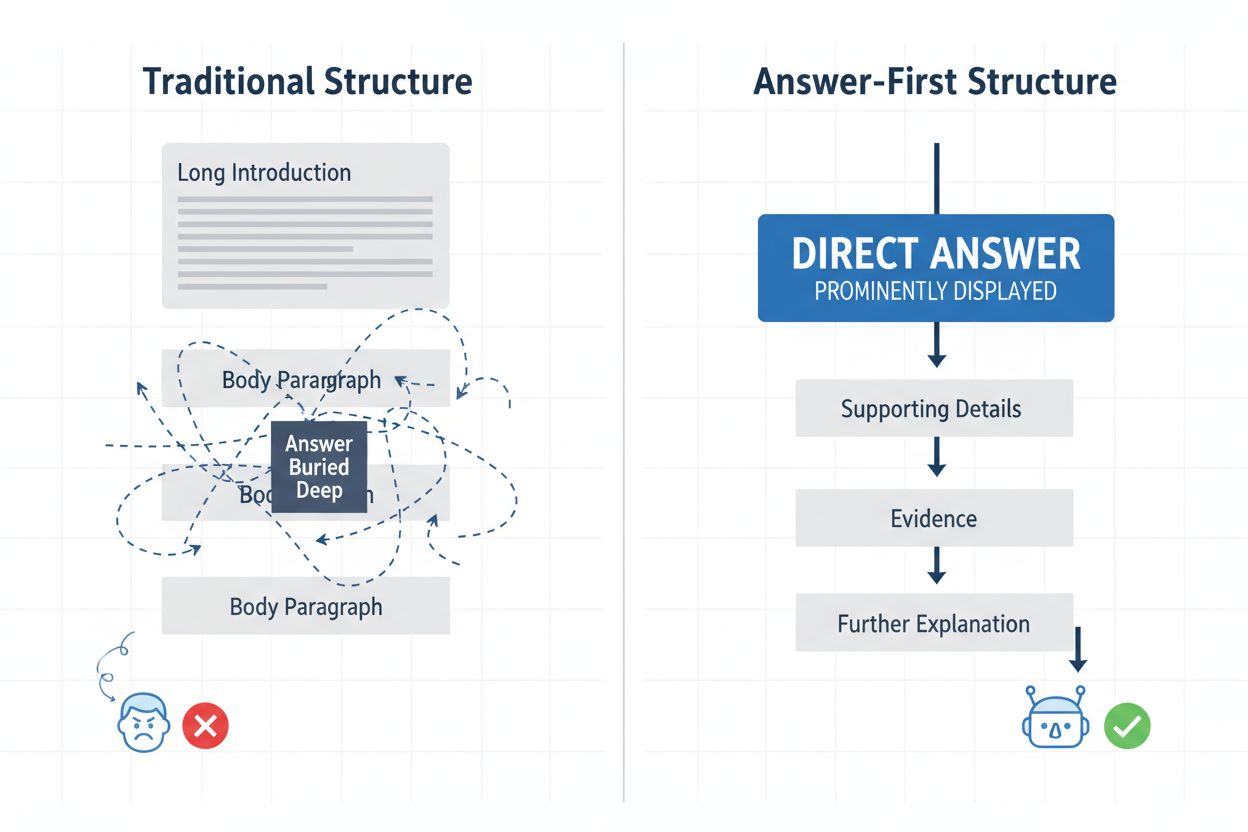
Answer-first content structure is a writing methodology that places the most critical information—the direct answer to a user’s query—at the beginning of an article, rather than burying it within narrative prose. This approach prioritizes clarity and efficiency by immediately addressing what readers and AI systems are seeking, eliminating the need to parse through introductory context or background information. The concept builds on the inverted pyramid model from journalism, where the most newsworthy information appears first, followed by supporting details in descending order of importance. In the age of AI-powered search and large language models, answer-first content has become increasingly vital because these systems extract and synthesize information more effectively when answers are presented upfront and in structured formats. Understanding and implementing answer-first content structure is no longer optional for content creators seeking visibility in both traditional search results and emerging AI search interfaces.
The roots of answer-first content structure trace back to journalism’s inverted pyramid style, developed in the 19th century to accommodate telegraph transmission limitations and newspaper printing constraints. When the web emerged in the 1990s, this journalistic principle proved equally valuable for online readers who scan rather than read linearly, leading to the adoption of “front-loading” key information in web copy. The evolution accelerated with the rise of search engines, where snippets and featured answers rewarded content that placed conclusions upfront rather than at the end of lengthy articles. Today, in the AI era, answer-first structure has become essential as language models like ChatGPT, Claude, and Google’s AI Overviews rely on clear, extractable information to generate accurate responses. Research from Sage Marketing indicates that Gen Z users expect answers within the first 2-3 sentences of any content they consume, reflecting a broader cultural shift towards efficiency and directness. This generational preference has fundamentally reshaped content strategy across industries, making answer-first structure not just a best practice but a competitive necessity.
| Content Era | Reader Behavior | Information Extraction | Citation Likelihood |
|---|---|---|---|
| Traditional Print | Linear reading, full articles | Manual, time-consuming | High for published sources |
| Web Era (1990s-2010s) | Scanning, skimming | Browser search, manual | Medium for top-ranking pages |
| Search Engine Era (2010s) | Query-focused, snippet-seeking | Featured snippets, excerpts | High for snippet-eligible content |
| AI Search Era (2020s+) | Answer-seeking, efficiency-focused | AI extraction, semantic parsing | Very high for answer-first content |
Large language models and AI search systems process answer-first content with significantly greater accuracy and efficiency than traditional narrative structures because the upfront placement of answers reduces the computational burden of semantic parsing and context extraction. When an answer appears immediately, AI models can quickly identify the core information entity and its relationship to the user’s query without having to synthesize meaning from scattered details throughout the text. This structural clarity enables better entity recognition—the AI’s ability to identify and categorize key concepts, people, places, and data points—which is fundamental to generating accurate citations and attributions. Answer-first content also improves what researchers call “extractability,” meaning the information can be cleanly pulled from the source material and reused in AI-generated summaries, featured snippets, and answer boxes. Additionally, when answers are presented in structured formats like lists, tables, or schema markup, AI systems can parse the information with near-perfect accuracy, reducing hallucinations and improving factual reliability. The semantic clarity of answer-first content also helps AI models better understand nuance and context, leading to more sophisticated and accurate responses. This technical advantage translates directly into improved visibility in AI search results and higher likelihood of being cited as a source.
Implementing answer-first content structure effectively requires adherence to several core principles that work together to maximize both human readability and AI extractability:
• Lead with the answer - Place your direct response to the user’s primary question in the opening paragraph or first 1-2 sentences, before any context or background information
• Use clear, accessible language - Avoid jargon and complex sentence structures; prioritize clarity over sophistication, making content understandable to both general readers and AI systems
• Structure headers as questions - Format section headers as the specific questions your content answers, helping both users and AI systems quickly navigate to relevant information
• Provide supporting evidence immediately - Follow your answer with data, statistics, research citations, and credible sources that validate your claims within the same section
• Organize information in lists and tables - Use structured formats for multiple items, comparisons, or step-by-step processes, as these are easier for AI to parse and extract
• Name entities explicitly - Clearly identify and define key concepts, people, organizations, and products on first mention, helping AI systems recognize and categorize important information
• Implement schema markup - Use structured data formats like Schema.org to provide machine-readable context about your content, significantly improving AI comprehension and citation accuracy
Answer-first content structure and traditional narrative storytelling serve different purposes and excel in different contexts, though the most effective modern content often employs a hybrid approach. Traditional storytelling—building tension, providing context, and revealing conclusions—works exceptionally well for long-form narrative journalism, memoirs, and entertainment content where the journey matters as much as the destination. Answer-first structure dominates in practical, informational, and commercial content where users have specific questions and limited time, such as how-to guides, product comparisons, and technical documentation. The key distinction lies in user intent: when someone searches “how to fix a leaky faucet,” they want the answer first; when reading a feature story about water conservation, they may appreciate narrative buildup. Modern best practice involves leading with the answer to satisfy immediate user needs while incorporating storytelling elements and supporting details that provide context, build credibility, and encourage deeper engagement. This hybrid approach—answer-first structure with narrative elements woven throughout—maximizes both AI visibility and human engagement, making it the gold standard for contemporary content strategy.
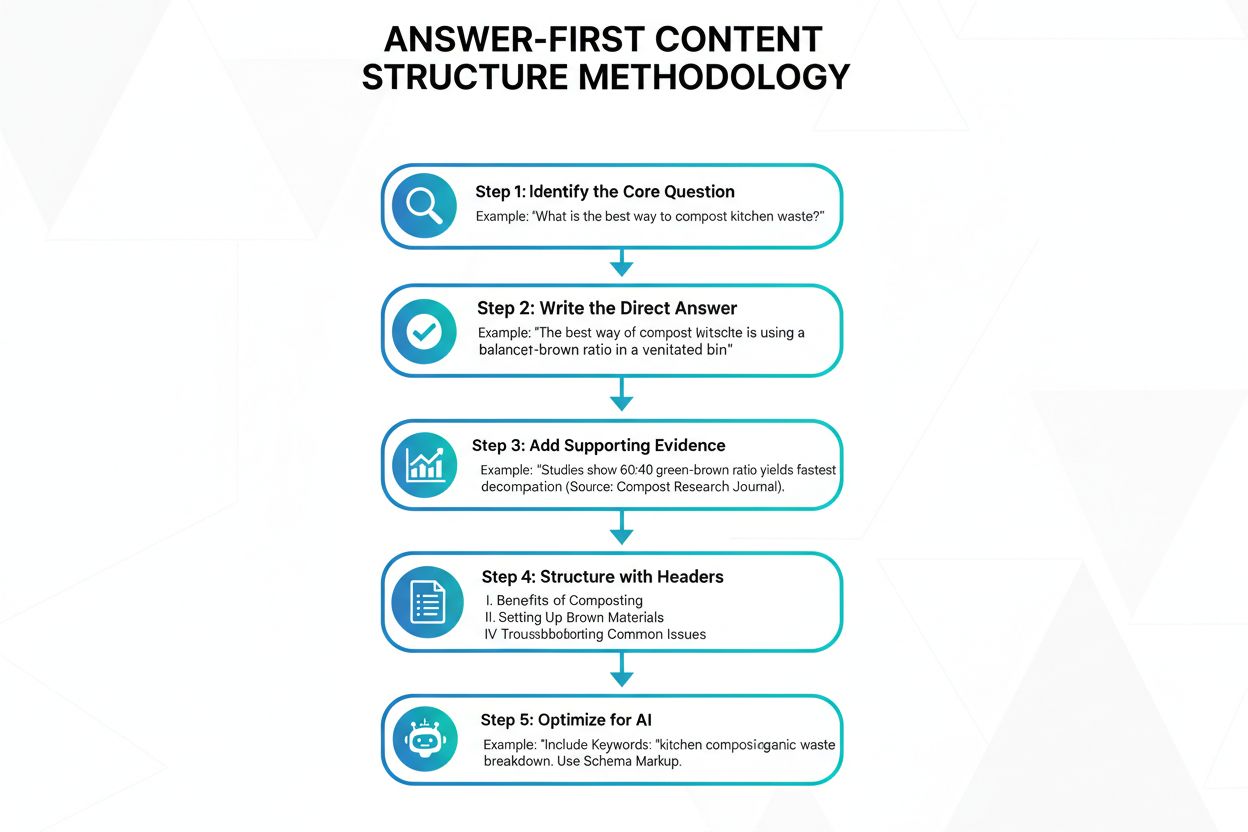
Creating effective answer-first content requires a deliberate writing process that prioritizes clarity and structure from the initial draft stage. Begin by identifying the single most important answer your content provides, then write that answer in 1-2 clear sentences before drafting anything else—this forces you to clarify your core message before adding supporting material. Use descriptive headers that frame each section as a question or clear statement of what information follows, allowing readers and AI systems to quickly locate relevant sections. Implement schema markup appropriate to your content type (FAQPage, HowTo, Article, etc.) to provide machine-readable context that helps AI systems understand and cite your content accurately. Test your content’s extractability by reading only the headers and opening sentences—if someone can understand your main points without reading full paragraphs, your structure is working effectively. Iterate based on performance data: monitor which sections generate AI citations, which queries bring traffic to your content, and which information AI systems extract most frequently. Use tools to analyze how your content appears in AI search results and featured snippets, then refine headers, formatting, and answer placement based on what’s actually working in your specific niche.
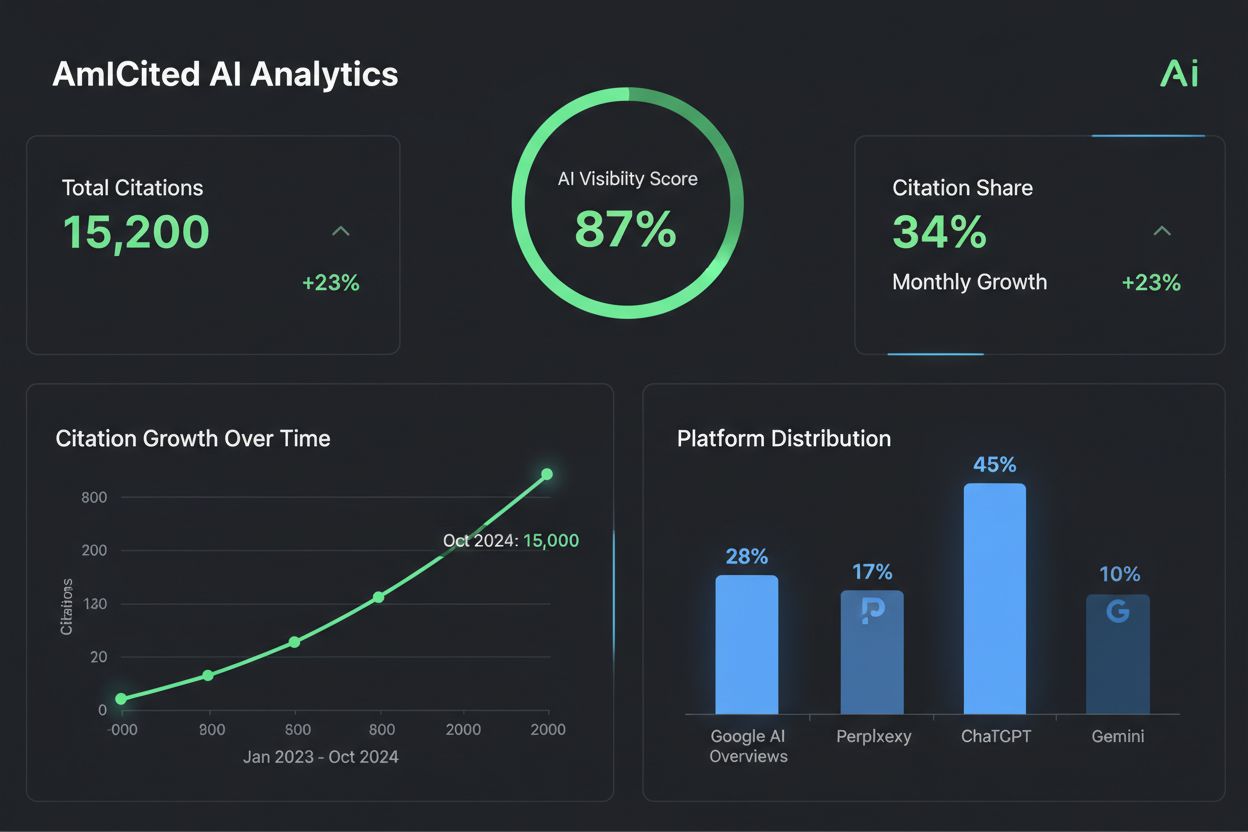
Answer-first content structure dramatically improves visibility in AI search results and significantly increases the likelihood that your content will be cited as a source in AI-generated responses. When information is clearly presented and easily extractable, AI systems preferentially cite that source over competitors with the same information buried in narrative prose, directly improving your content’s authority and reach. This citation advantage translates into measurable business value: research shows that content cited by AI systems experiences increased traffic, improved brand recognition, and higher conversion rates as users recognize your organization as a trusted source. Tools like AmICited have emerged specifically to help content creators track how often their work appears in AI-generated responses, providing visibility into this previously opaque channel of traffic and influence. By monitoring your AI citations through platforms like AmICited, you can identify which topics, formats, and content types generate the most AI visibility, allowing you to optimize your strategy accordingly. The shift from traditional search clicks to AI citations represents a fundamental change in how content value is measured, making answer-first structure essential for maintaining relevance in an AI-driven information landscape. Organizations that master answer-first content structure and track their AI citations gain a significant competitive advantage in visibility and authority.
Many content creators inadvertently undermine their answer-first strategy through common structural and stylistic mistakes that reduce both readability and AI extractability. The most prevalent error is burying the answer beneath introductory paragraphs, background information, or context that should come after the core response—this defeats the entire purpose of answer-first structure and frustrates both users and AI systems. Another frequent mistake is using vague or indirect language in opening statements; phrases like “it depends” or “there are several factors” without immediately providing the specific answer leave readers and AI systems without clear information. Inconsistent formatting and unclear headers make it difficult for AI systems to parse content structure, reducing the likelihood of accurate extraction and citation. Some creators fail to provide supporting evidence immediately after their answer, forcing readers to hunt through the article for validation of claims, which damages credibility and reduces AI confidence in the information. Overcomplicating language or using excessive jargon in answer statements contradicts the clarity principle; remember that your opening answer should be understandable to your broadest potential audience. To avoid these mistakes, have someone unfamiliar with your topic read only your opening paragraph and headers—if they can’t understand your main points, your answer-first structure needs refinement.
Measuring the effectiveness of answer-first content requires a combination of traditional analytics tools and newer platforms specifically designed to track AI visibility and citations. Google Analytics and Search Console remain essential for monitoring organic traffic and understanding which queries drive users to your content, but they don’t capture the growing segment of traffic from AI search interfaces. AmICited has become the industry standard for tracking how frequently your content appears in AI-generated responses, providing detailed metrics on which topics generate citations, which AI systems cite you most, and how your citation volume trends over time. Complementary tools like Semrush and Ahrefs now include AI visibility tracking features that show how your content performs in AI search results alongside traditional search metrics. Schema markup validators help ensure your structured data is correctly implemented, improving the likelihood that AI systems can accurately parse and cite your content. A/B testing different answer formats, header structures, and information organization methods reveals what works best for your specific audience and niche. The most sophisticated content strategies combine data from multiple sources—traditional analytics, AI citation tracking via AmICited, schema validation, and user feedback—to continuously refine answer-first content and maximize visibility across all discovery channels.
Answer-first content structure is evolving beyond text-only formats to encompass multimodal content that combines text, images, video, and interactive elements in answer-first configurations. As AI systems become increasingly sophisticated at processing and generating multimodal content, the principle of leading with answers will extend to visual and video content, where the key insight or demonstration appears immediately rather than after lengthy introductions. The integration of E-E-A-T (Experience, Expertise, Authoritativeness, Trustworthiness) signals into answer-first content will become increasingly important, with AI systems rewarding content that clearly demonstrates author credentials and source reliability alongside clear answers. The fundamental shift from measuring success through clicks and pageviews to measuring success through citations and AI visibility will accelerate, making answer-first structure not just a content tactic but a core business strategy. Organizations that combine answer-first structure with comprehensive citation tracking, multimodal content development, and E-E-A-T optimization will dominate AI search visibility in their niches. The future of content success belongs to creators who understand that AI systems are the new gatekeepers of information discovery, and answer-first structure is the language these gatekeepers speak most fluently.
No, answer-first content benefits both human readers and AI models. It improves readability, reduces bounce rates, and increases engagement with human audiences while also optimizing for AI citation. This dual benefit makes it a valuable strategy for all content creators.
Answer-first content typically improves traditional SEO rankings because it aligns with Google's E-E-A-T principles and user intent. Clear, direct answers signal relevance and quality to search algorithms, making your content more likely to rank well for informational queries.
Answer-first works best for informational, how-to, and explanatory content. Creative writing, narratives, and brand storytelling may benefit from a hybrid approach where you lead with the answer but develop the story afterward for engagement.
Featured snippets are search results that Google displays at the top of SERPs. Answer-first is a content structure that makes your content more likely to be selected for featured snippets and AI-generated answers by presenting information in an easily extractable format.
Track metrics like AI citation share, inclusion in AI Overviews, visibility in Perplexity and ChatGPT responses, and use tools like AmICited to monitor where your brand appears in AI-generated answers. These metrics provide insight into your AI visibility beyond traditional click-based analytics.
Prioritize high-traffic pages and pages targeting informational queries. Start with new content using answer-first structure, then gradually optimize existing content based on performance data and AI visibility metrics to maximize ROI on your content updates.
Answer-first structure supports E-E-A-T by making expertise clear upfront, providing evidence and sourcing immediately, and demonstrating trustworthiness through direct, honest answers without manipulation. This alignment improves both AI and human perception of your content's credibility.
Schema markup (FAQ, HowTo, Article) helps AI models understand your content structure and extract information more accurately. It's essential for maximizing the effectiveness of answer-first content and improving your chances of being cited in AI-generated responses.
Monitor how often your content appears in AI-generated answers across ChatGPT, Perplexity, Google AI Overviews, and other platforms. Understand your AI citation share and optimize your content strategy accordingly.
Learn what API-First Content is, how it enables AI visibility, and why it matters for content architecture. Discover how structured APIs improve content accessi...

Learn what AI-First Content Strategy is, how it differs from traditional SEO, and how to implement it to ensure your content is visible in ChatGPT, Perplexity, ...

Learn how to structure Q&A content for AI systems. Discover best practices for question formatting, answer optimization, schema markup, and how to increase your...
Cookie Consent
We use cookies to enhance your browsing experience and analyze our traffic. See our privacy policy.