
AI-First Content Strategy
Learn what AI-First Content Strategy is, how it differs from traditional SEO, and how to implement it to ensure your content is visible in ChatGPT, Perplexity, ...
11 min read
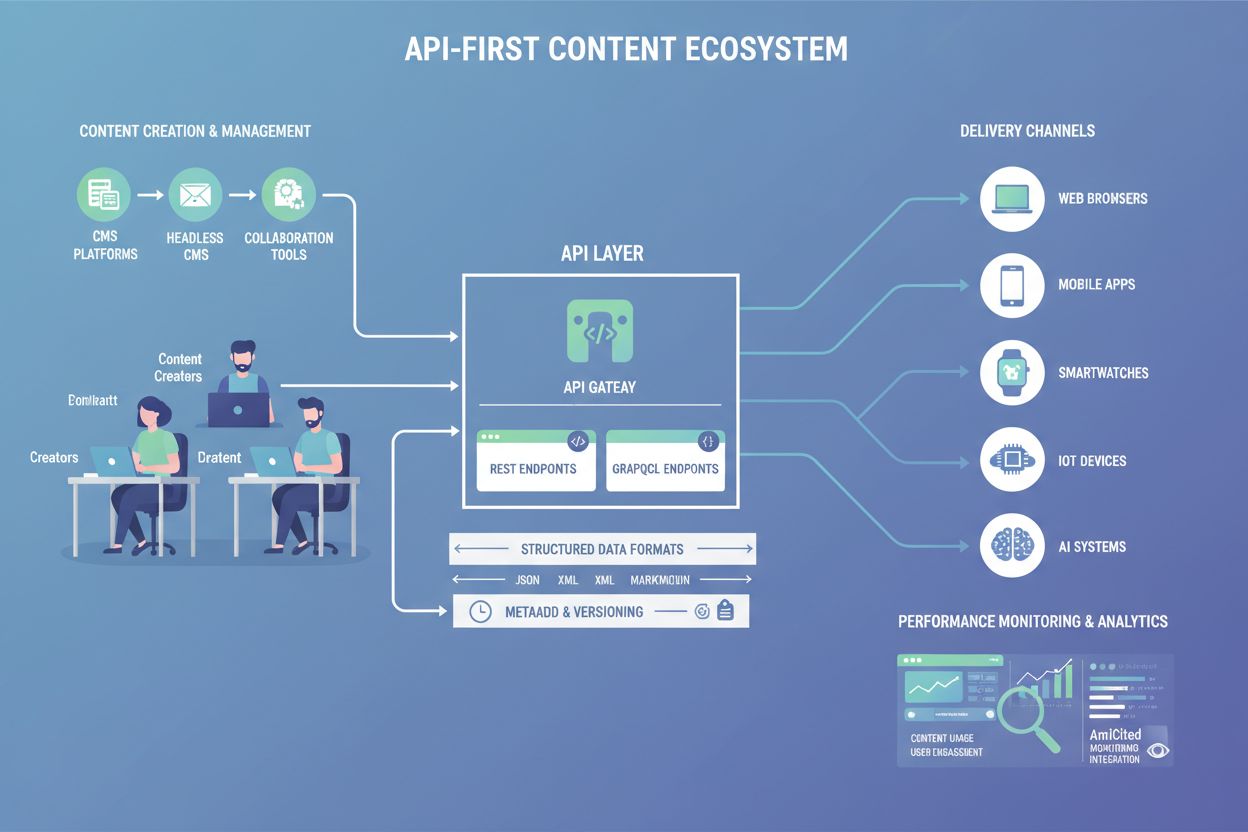
Content architecture designed for both human consumption and programmatic AI access. API-First Content separates content from presentation using APIs as the primary delivery mechanism, enabling structured data delivery to humans, machines, and AI systems simultaneously through standardized formats like JSON and XML.
Content architecture designed for both human consumption and programmatic AI access. API-First Content separates content from presentation using APIs as the primary delivery mechanism, enabling structured data delivery to humans, machines, and AI systems simultaneously through standardized formats like JSON and XML.
API-First Content is a content architecture approach that prioritizes Application Programming Interfaces (APIs) as the foundational mechanism for content delivery, enabling both human consumption and programmatic AI access simultaneously. Unlike traditional content management systems that tightly couple content with presentation, API-First Content separates these concerns completely, storing content in raw, presentation-independent formats and delivering it through standardized APIs. This architectural philosophy ensures that content remains accessible to any consuming application—whether a web browser, mobile app, or AI system—through consistent, machine-readable interfaces. By treating APIs as first-class citizens in the content architecture, organizations enable their content to be discovered, understood, and properly attributed by AI systems while maintaining optimal experiences for human users.
API-First Content operates by storing structured content in a centralized repository and exposing it through well-designed API endpoints that deliver data in universal formats like JSON or XML. When a request comes through an API endpoint, the system retrieves the content and returns it in a format that any application can consume and process independently. The architecture typically implements one of two primary API styles: REST (Representational State Transfer) or GraphQL. REST organizes endpoints around resources and uses standard HTTP methods (GET, POST, PUT, DELETE) for different operations, while GraphQL provides a single endpoint where clients specify exactly which data they need. Both approaches maintain stateless communication, clear separation between client and server, and resource-oriented data organization, but they differ significantly in how they handle data retrieval and flexibility.
| Aspect | REST APIs | GraphQL APIs |
|---|---|---|
| Data Fetching | Fixed response structure; may over-fetch or under-fetch | Precise data retrieval; clients request exactly what they need |
| Endpoints | Multiple endpoints per resource | Single endpoint for all operations |
| Caching | Built-in HTTP caching mechanisms | Requires custom caching strategies |
| Use Cases | Straightforward implementations with well-defined endpoints | Complex applications with flexible data requirements |
| Best For | Simpler projects, public APIs, mobile apps | Rapid development, complex data relationships, AI systems |
API-First Content architecture provides significant advantages for AI systems and machine learning applications by enabling precise, consistent, and scalable content access:
Traditional monolithic CMS platforms combine content management and presentation layers in tightly coupled systems, limiting content distribution primarily to web browsers and restricting how content can be accessed and reused. These systems often require developers to work within predefined templates and frameworks, making it difficult for AI systems to extract and understand content consistently. In contrast, API-First Content completely separates content from presentation, allowing the same content to be delivered to any channel through API calls. While headless CMS platforms also separate front-end from back-end, not all headless systems prioritize APIs from the ground up—some use Git-based approaches or add APIs as afterthoughts. API-First Content specifically emphasizes designing robust APIs as the foundational element, ensuring interoperability and extensibility are built into the system architecture from the beginning. This distinction becomes particularly important for AI visibility, as API-first systems provide the structured, consistent data formats that AI systems need for accurate parsing and attribution.
Organizations can adopt API-First Content through several proven approaches, each suited to different starting points and organizational contexts. The design-first strategy involves designing APIs collaboratively before writing any code, using tools like OpenAPI or Swagger to blueprint endpoints and data models, resulting in well-documented and user-friendly APIs. The code-first approach prioritizes coding the API before developing applications that consume it, allowing teams to establish working implementations quickly while maintaining API-first principles. The prototype-led strategy develops, mocks, and documents APIs using collections before generating formal API definitions, useful for teams exploring requirements iteratively. The proxy-led approach runs existing APIs through proxies or interceptors to generate collections from actual traffic, enabling gradual modernization of legacy systems. Finally, the collection-led method involves handcrafting API collections for existing systems and then generating formal specifications, providing a practical path for teams working with established content. Each strategy offers different advantages depending on whether you’re building new systems, modernizing legacy infrastructure, or gradually transitioning to API-first architecture.
API-First Content significantly enhances your ability to monitor and track how your content is being used by AI systems. When content is delivered through well-structured APIs with comprehensive metadata, AI systems can easily identify the source, author, and licensing information, enabling proper attribution and citation. This structured approach is essential for brand visibility in AI-generated responses—tools like AmICited monitor how your API-First Content is referenced across multiple AI platforms including GPT, Perplexity, and Google AI Overviews. By implementing API-First Content architecture, you create the conditions necessary for accurate content attribution tracking, allowing you to understand exactly how and where your content appears in AI-generated answers. This visibility is increasingly important as AI systems become primary sources of information for users, making it critical to ensure your brand and content receive proper recognition and attribution in these contexts.
Several leading platforms have embraced API-First Content architecture to provide modern content management solutions. Strapi is an open-source headless CMS built with API-first principles, offering both REST and GraphQL APIs, flexible content modeling, robust authentication, and a growing plugin ecosystem. Hygraph (formerly GraphCMS) specializes in GraphQL-native APIs and provides advanced content federation capabilities, enabling organizations to unify data from multiple sources while maintaining API-first architecture. Storyblok combines API-first architecture with a visual editor, allowing both developers and content creators to work efficiently while maintaining the flexibility of API-based content delivery. Each platform provides different strengths—Strapi excels in customization and open-source flexibility, Hygraph in GraphQL optimization and data federation, and Storyblok in balancing developer and marketer needs. The choice depends on your specific requirements for scalability, customization, deployment options, and team expertise.
Implementing API-First Content effectively requires following established best practices that ensure quality, maintainability, and AI accessibility. Design comprehensive content schemas that clearly define content types, required fields, relationships, and validation rules before implementation, ensuring consistency across all content. Include rich metadata such as creation dates, author information, version numbers, language specifications, and semantic markup that enables AI systems to understand and properly attribute content. Implement proper versioning strategies that maintain backward compatibility while allowing APIs to evolve, preventing breaking changes that could disrupt consuming applications and AI systems. Create comprehensive documentation covering API endpoints, data models, authentication requirements, and usage examples, making it easier for developers and AI systems to integrate with your content. Monitor API performance and usage through logging and analytics tools to identify bottlenecks, track adoption, and understand how different systems consume your content. Establish governance practices that ensure APIs meet security, compliance, and quality standards, particularly important when content is accessed by external AI systems. Finally, plan for scalability from the beginning by designing APIs that can handle increasing request volumes and considering cloud services that automatically adjust to changing workloads, ensuring your API-First Content infrastructure grows with your needs.
API-First Content is an architectural approach that prioritizes APIs as the foundation for content delivery, while a headless CMS is a specific type of content management system that separates the front-end from the back-end. All API-First CMSs are headless, but not all headless CMS platforms are built with an API-first philosophy. API-First Content emphasizes designing APIs before other functionality, ensuring interoperability and extensibility from the ground up.
API-First Content improves AI visibility by providing structured, machine-readable data that AI systems can easily parse and understand. When content is delivered through well-designed APIs with consistent formatting and comprehensive metadata, AI systems can better identify, cite, and attribute the source content. This structured approach enables tools like AmICited to track how your content is being referenced and used across different AI platforms.
The main benefits include improved composability (integrating best-of-breed tools), enhanced developer flexibility (choosing preferred technologies), future-proofing your business (adapting to new technologies without major overhauls), better content experiences across channels, and a solid foundation for an API-driven technology stack. Additionally, API-First Content enables better AI accessibility and content attribution tracking.
Leading API-First CMS platforms include Strapi, Hygraph, and Storyblok. These platforms are specifically designed with API-first architecture, offering REST and GraphQL APIs, robust content modeling, flexible deployment options, and strong developer communities. Each platform provides different strengths, so selection depends on your specific requirements for scalability, customization, and team expertise.
REST APIs use multiple endpoints organized around resources and HTTP methods (GET, POST, PUT, DELETE), making them widely adopted and easier to cache. GraphQL uses a single endpoint where clients specify exactly what data they need, preventing over-fetching and under-fetching. For API-First Content, REST is better for straightforward use cases with well-defined endpoints, while GraphQL excels in complex applications requiring flexible data querying and rapid product development.
Essential metadata includes content type definitions, creation and modification timestamps, author information, version numbers, language/locale specifications, content relationships, and structured schema information. For AI visibility, include clear attribution metadata, content source information, licensing details, and semantic markup. This metadata enables AI systems to properly understand, cite, and attribute your content.
API-First Content includes structured metadata and clear source information that AI systems can easily extract and reference. When content is delivered through well-designed APIs with comprehensive attribution data, AI systems can automatically cite the original source. This is particularly important for brand visibility and content tracking, which tools like AmICited monitor across multiple AI platforms.
Common challenges include organizational complexity requiring departmental coordination, employee resistance to new workflows, security vulnerabilities requiring robust authentication, versioning and compatibility issues, performance optimization needs, and legacy system modernization. Addressing these requires clear API design guidelines, comprehensive documentation, proper security measures, effective team training, and potentially middleware solutions for integrating existing systems.
Track how your API-First Content is being cited and used by AI systems like GPT, Perplexity, and Google AI. Get real-time visibility into your brand's presence in AI-generated responses.
Learn what AI-First Content Strategy is, how it differs from traditional SEO, and how to implement it to ensure your content is visible in ChatGPT, Perplexity, ...
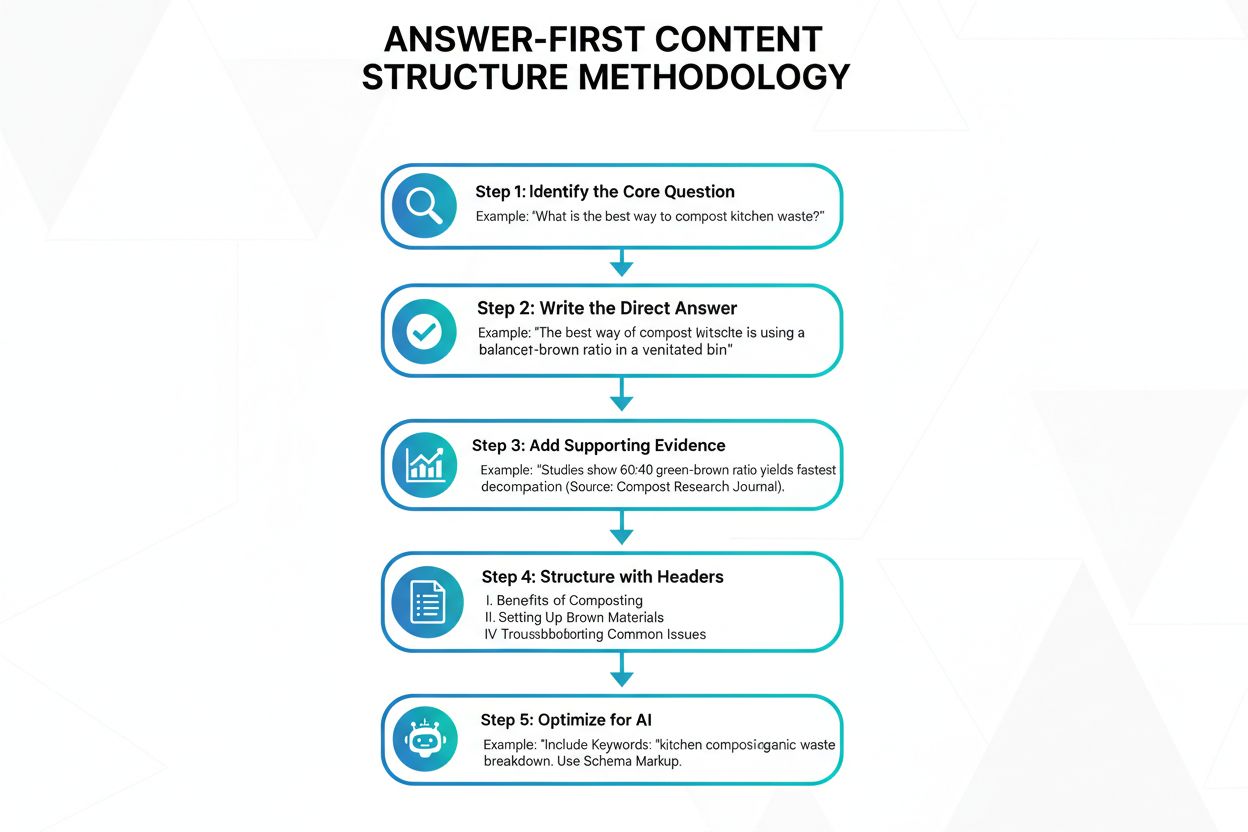
Learn what answer-first content structure is, why AI models prefer it, and how to implement it to improve visibility in AI search results and increase citations...

Learn how AI-first content strategy prioritizes authority and citability for AI answer engines like ChatGPT, Perplexity, and Google AI Overviews instead of trad...
Cookie Consent
We use cookies to enhance your browsing experience and analyze our traffic. See our privacy policy.