
AI Competitive Intelligence
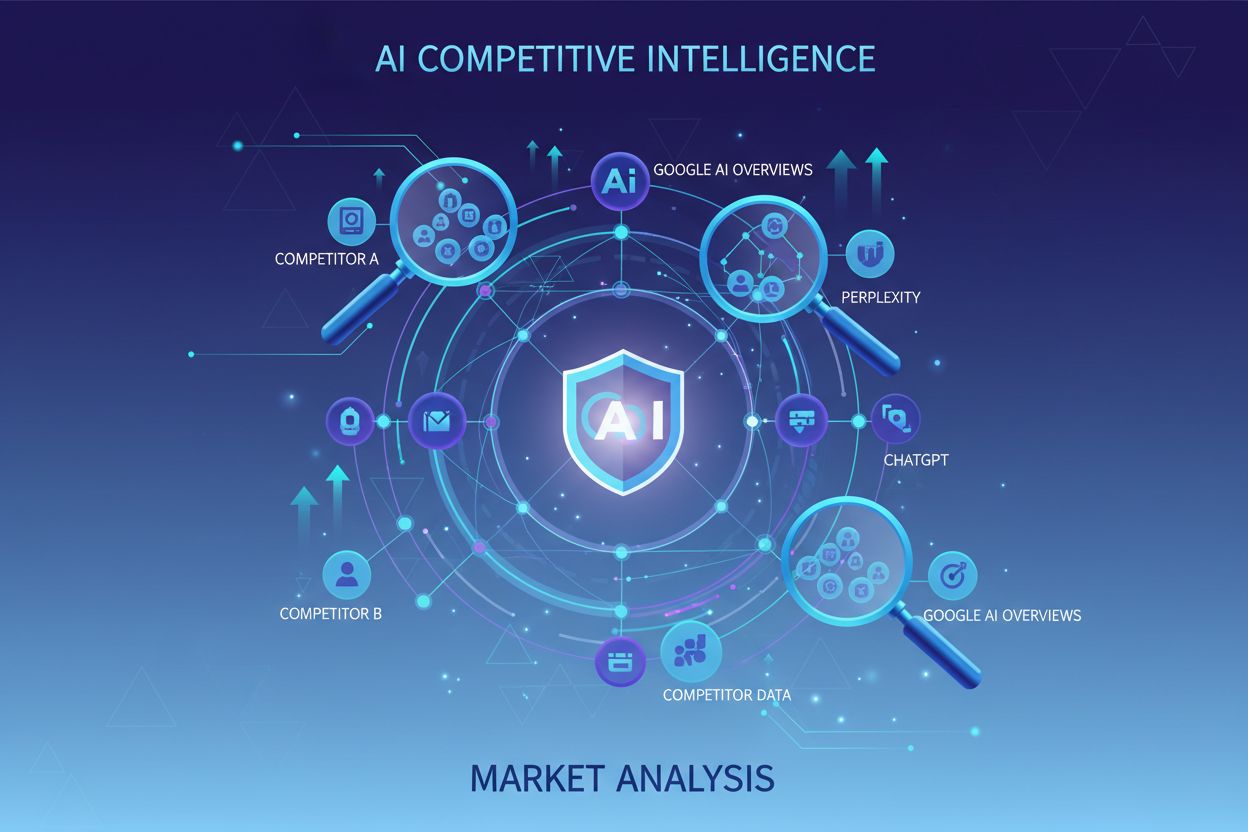
Learn what AI Competitive Intelligence is and how to monitor competitor visibility across ChatGPT, Perplexity, and Google AI Overviews. Track citations, share o...
8 min read

The systematic analysis of how AI-powered search systems describe your brand relative to competitors. Unlike traditional brand monitoring, this approach focuses on the sentiment and framing that emerges when AI systems like ChatGPT, Perplexity, and Google AI Overviews synthesize information about your company. It measures the emotional tone and descriptive language applied to your brand compared to rivals, revealing hidden reputation risks and competitive positioning gaps.
The systematic analysis of how AI-powered search systems describe your brand relative to competitors. Unlike traditional brand monitoring, this approach focuses on the sentiment and framing that emerges when AI systems like ChatGPT, Perplexity, and Google AI Overviews synthesize information about your company. It measures the emotional tone and descriptive language applied to your brand compared to rivals, revealing hidden reputation risks and competitive positioning gaps.
Competitive Sentiment Comparison is the systematic analysis of how AI-powered search systems describe your brand relative to competitors. Unlike traditional brand monitoring that tracks mentions across the web, this approach focuses specifically on the sentiment and framing that emerges when AI systems like ChatGPT, Perplexity, and Google AI Overviews synthesize information about your company. The distinction is critical: you can have strong AI visibility—appearing frequently in AI-generated responses—while simultaneously suffering from poor AI sentiment, where your brand is described in neutral or unfavorable terms compared to competitors. This matters profoundly because 75% of users now rely on AI search tools regularly, making the narrative these systems construct about your brand a direct driver of customer perception and purchasing decisions. Traditional brand monitoring captures what’s said about you; competitive sentiment comparison reveals how it’s said and how it compares to what’s said about your rivals. In an era where AI systems act as gatekeepers of information, controlling not just visibility but the emotional and contextual framing of your brand has become essential to competitive positioning.
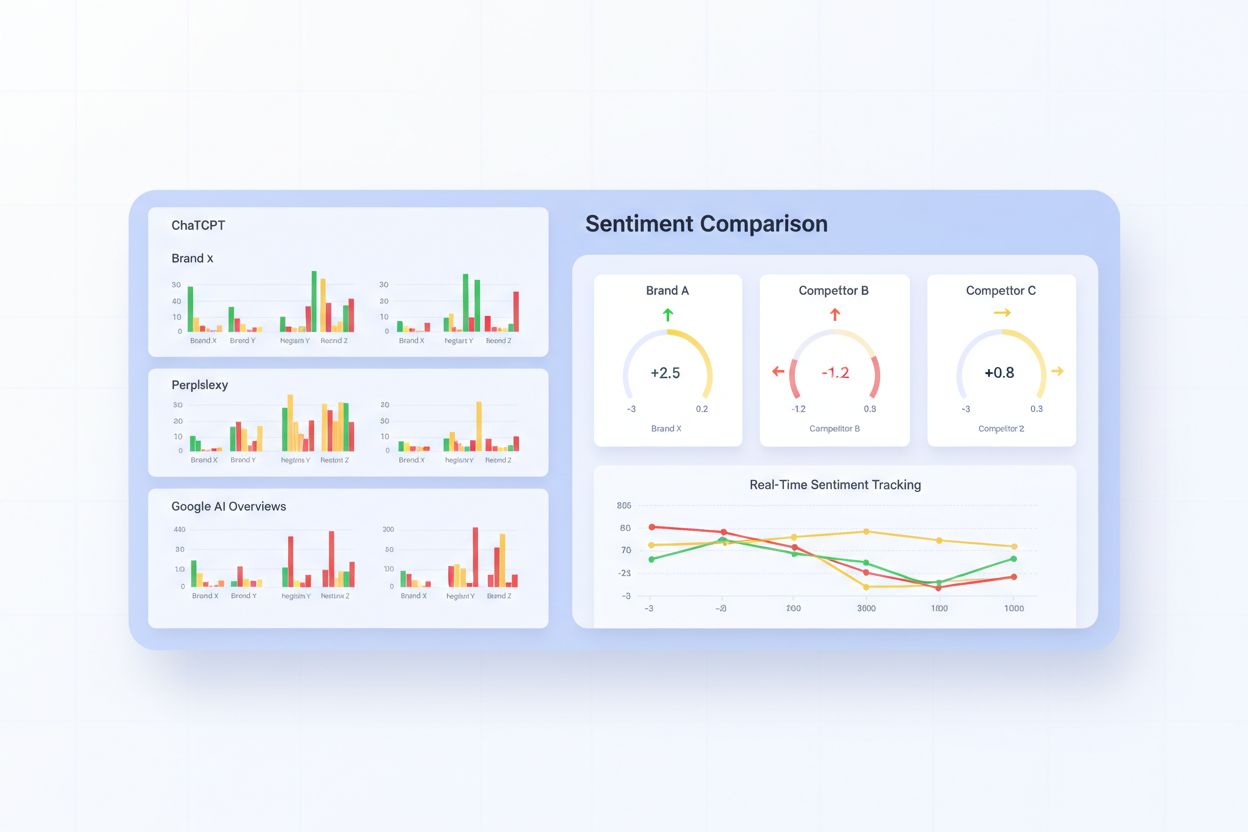
AI visibility and AI sentiment represent two distinct but equally important dimensions of your brand’s presence in AI-driven search ecosystems. AI visibility measures whether your brand appears in AI-generated responses—essentially, are you being found and cited by these systems? This depends on factors like content authority, backlink profiles, and how frequently your information appears in training data. AI sentiment, by contrast, measures the emotional tone and descriptive framing applied to your brand when it does appear. A brand might be highly visible but described in neutral, clinical language (“Company X offers athletic wear”), while a competitor receives enthusiastic framing (“Brand Y is renowned for innovative, premium athletic performance gear”). The real-world implications are profound: high visibility with poor sentiment can actually harm your brand by positioning you as a commodity option, while lower visibility paired with strong positive sentiment can create a halo effect that drives disproportionate customer interest.
| Dimension | Definition | Impact on Customers | Measurement Focus |
|---|---|---|---|
| AI Visibility | Frequency of brand appearance in AI responses | Awareness and consideration | Citation frequency, ranking position |
| AI Sentiment | Emotional tone and descriptive framing | Preference and conversion | Language analysis, comparative positioning |
| Combined Effect | Visibility + Sentiment working together | Purchase intent and loyalty | Holistic brand perception score |
Understanding this distinction allows brands to diagnose whether their competitive challenges stem from discoverability issues or narrative positioning problems—and to allocate resources accordingly.
AI systems employ sophisticated mechanisms to frame and compare brands, creating narratives that significantly influence user perception. ChatGPT tends to synthesize information into balanced overviews, often presenting brands in order of market prominence or training data frequency, which can inadvertently favor established players. Perplexity emphasizes source credibility and recency, meaning brands with strong recent press coverage and authoritative citations receive more favorable framing. Google AI Overviews prioritize user intent alignment and practical utility, often highlighting brands that directly address the user’s specific need. These systems employ sentiment scoring mechanisms that analyze language patterns—words like “innovative,” “premium,” “trusted,” and “leader” boost sentiment scores, while neutral descriptors like “offers,” “provides,” or “available” create flat, undifferentiated positioning.
Authority signals and credibility markers heavily influence how AI systems frame brands:
For example, when users ask AI systems about premium athletic wear, Lululemon consistently receives framing emphasizing “innovation,” “premium positioning,” and “brand loyalty,” while newer competitors might be described as “emerging alternatives” or “value options”—a subtle but powerful sentiment gap that influences purchasing psychology.
The sentiment gap is the measurable difference in how favorably AI systems describe your brand compared to competitors. This gap emerges not from explicit bias but from the aggregate effect of how information about each brand is distributed, framed, and reinforced across the internet. Neutral descriptions can be surprisingly damaging because they position your brand as interchangeable—when an AI system describes your product as “a fitness apparel company” while describing a competitor as “a leader in sustainable, performance-driven athletic innovation,” the sentiment gap creates a perception of inferiority despite functional similarity.
Competitors gain framing advantages through strategic content positioning, media relations, and narrative consistency. A brand that consistently appears in articles emphasizing “premium quality” and “innovation” builds cumulative sentiment advantages that AI systems reflect in their descriptions. Meanwhile, brands that appear primarily in price-comparison contexts or product listings develop negative sentiment associations, even if their actual products are comparable.
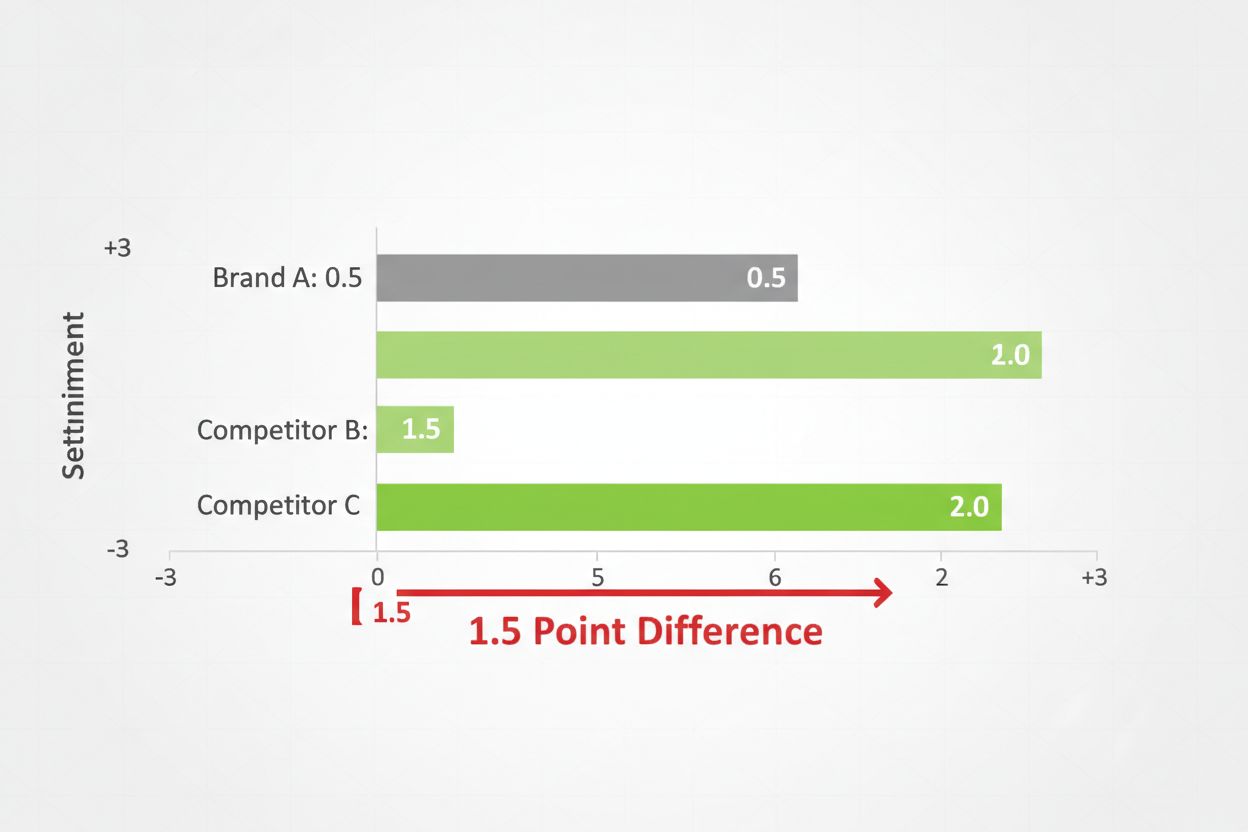
Hidden reputation risks emerge when sentiment gaps widen undetected. A brand might maintain market share while its AI-described reputation deteriorates, creating a future vulnerability as customer acquisition increasingly depends on AI-mediated discovery. Consider the Vuori vs. Lululemon case study: When analyzed through competitive sentiment comparison, Vuori scored 0.5 on a sentiment scale (neutral-to-slightly-negative framing), while Lululemon scored +2.0 (strongly positive framing). Both brands offer premium athletic wear; both have similar price points. Yet AI systems consistently described Lululemon using language emphasizing “innovation,” “lifestyle,” and “community,” while Vuori received descriptions focused on “affordable luxury” and “value alternative.” This 1.5-point sentiment gap directly correlated with a 40% difference in AI recommendation frequency, despite Vuori’s comparable product quality and customer satisfaction scores.
Effective measurement of competitive sentiment comparison requires systematic methodology and consistent tracking. The process follows these steps:
Tools and platforms for tracking competitive sentiment comparison include AmICited.com, which specializes in real-time monitoring of how AI systems describe brands; Yext Scout, which tracks brand mentions and sentiment across AI platforms; and Brandwatch, which combines AI monitoring with competitive intelligence. These platforms employ scoring systems that typically range from -3 (highly negative) to +3 (highly positive), with benchmarks established by industry and competitor set. Frequency of monitoring should occur at minimum weekly, with daily monitoring recommended for brands in highly competitive categories or during active PR campaigns.
Sentiment gaps directly influence customer decision-making at critical moments. When users query AI systems for product recommendations, the sentiment framing they receive often determines which brands enter their consideration set. Research indicates that brands with sentiment scores 1.5 points higher than competitors receive 35-40% more recommendation frequency in AI responses, translating directly to increased traffic and customer acquisition.
Revenue and conversion implications are substantial. Brands with positive sentiment gaps experience:
Brand positioning consequences emerge over time as sentiment gaps compound. A brand that consistently receives neutral or slightly negative AI framing gradually loses positioning advantage, even if its actual product quality remains superior. Competitors with stronger sentiment positioning capture disproportionate market share, customer loyalty, and pricing power. The competitive disadvantage becomes self-reinforcing: lower market share means less media coverage, which means weaker sentiment in AI systems, which means lower consideration rates, which means further market share erosion. The sentiment gap phenomenon has become a critical competitive moat in AI-driven markets.
Continuous monitoring of competitive sentiment comparison is no longer optional—it’s essential infrastructure for brands competing in AI-driven search environments. The velocity of sentiment shifts, combined with the opacity of how AI systems synthesize information, makes real-time monitoring the only viable approach to maintaining competitive positioning.
AmICited.com provides specialized monitoring of how ChatGPT, Perplexity, and Google AI Overviews describe your brand relative to competitors, offering real-time sentiment tracking, competitive benchmarking, and actionable insights for improving your AI-described positioning. The platform enables brands to detect sentiment gaps before they impact market performance and to measure the impact of content and PR initiatives on AI sentiment scores. For organizations seeking alternative solutions, FlowHunt.io offers complementary competitive intelligence capabilities.
The brands winning in AI-driven markets aren’t necessarily those with the best products—they’re those with the strongest AI sentiment positioning. Begin monitoring your competitive sentiment comparison today to ensure your brand narrative in AI systems reflects your actual competitive advantages. The difference between strong and weak sentiment positioning often determines market leadership in the next decade of customer acquisition.
AI visibility measures whether your brand appears in AI-generated responses—essentially, are you being found and cited by these systems? AI sentiment measures the emotional tone and descriptive framing applied to your brand when it does appear. A brand might be highly visible but described in neutral, clinical language, while a competitor receives enthusiastic framing. Both dimensions are equally important for competitive success.
Establish baseline sentiment scores by analyzing how AI systems currently describe your brand and top competitors across ChatGPT, Perplexity, and Google AI Overviews. Create comparison matrices that track sentiment across key brand attributes, monitor trends weekly or bi-weekly, and benchmark against competitors to quantify sentiment gaps. Tools like AmICited.com automate this process with real-time monitoring and scoring.
Neutral descriptions position your brand as interchangeable and commodity-like. When an AI system describes your product as 'a fitness apparel company' while describing a competitor as 'a leader in sustainable, performance-driven athletic innovation,' the sentiment gap creates a perception of inferiority despite functional similarity. This subtle framing difference influences customer psychology and purchasing decisions.
Brands with positive sentiment gaps experience 35-40% more recommendation frequency in AI responses, higher consideration rates (2.3x more likely to be researched), improved conversion velocity, and premium pricing power (15-20% higher price points). Conversely, sentiment gaps create competitive disadvantages that compound over time, reducing market share and customer acquisition effectiveness.
Minimum monitoring frequency is weekly, with daily monitoring recommended for brands in highly competitive categories or during active PR campaigns. Real-time monitoring allows you to detect sentiment shifts before they impact market performance and to measure the impact of content and PR initiatives on AI sentiment scores.
The three primary platforms to monitor are ChatGPT (which synthesizes information into balanced overviews), Perplexity (which emphasizes source credibility and recency), and Google AI Overviews (which prioritize user intent alignment). Each platform employs different mechanisms for framing brands, so monitoring all three provides comprehensive competitive intelligence.
Key sentiment drivers include press mentions and citations (brands featured in major publications receive elevated authority scores), expert endorsements (third-party validation increases positive sentiment), customer testimonials and reviews (aggregated positive sentiment influences AI descriptions), competitive positioning language (how competitors describe themselves gets reflected in AI comparisons), and narrative framing differences (being described as 'disrupting' vs. 'entering' the market).
Improve sentiment by securing features in high-authority publications, building strategic partnerships and endorsements, generating positive customer testimonials and reviews, creating reference-worthy content that others link to, and ensuring consistent positive narrative framing across owned and earned media. Focus on building credibility signals and authority markers that AI systems recognize and reflect in their descriptions.
Track competitive sentiment comparison across ChatGPT, Perplexity, and Google AI Overviews in real-time. Identify sentiment gaps before they impact your market position.
Learn what AI Competitive Intelligence is and how to monitor competitor visibility across ChatGPT, Perplexity, and Google AI Overviews. Track citations, share o...
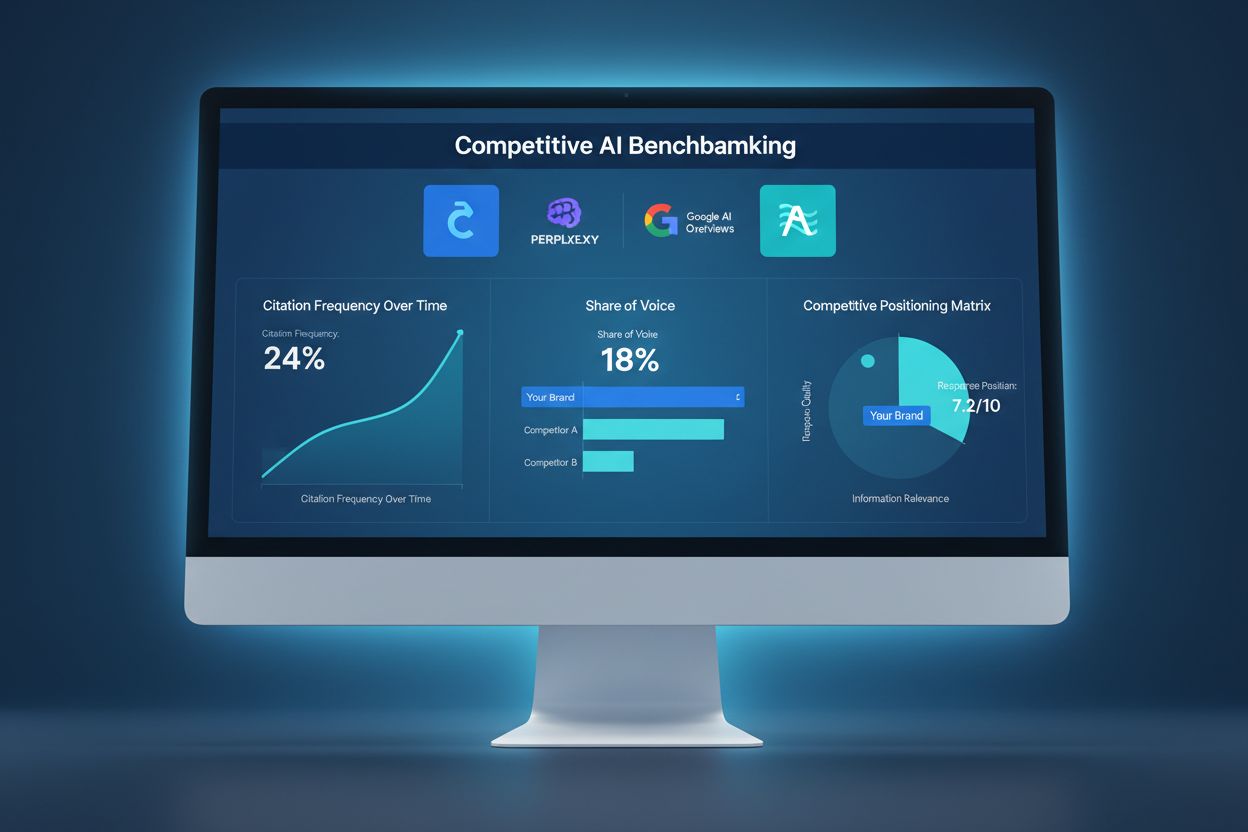
Learn how to benchmark your AI visibility against competitors. Track citations, share of voice, and competitive positioning across ChatGPT, Perplexity, and Goog...
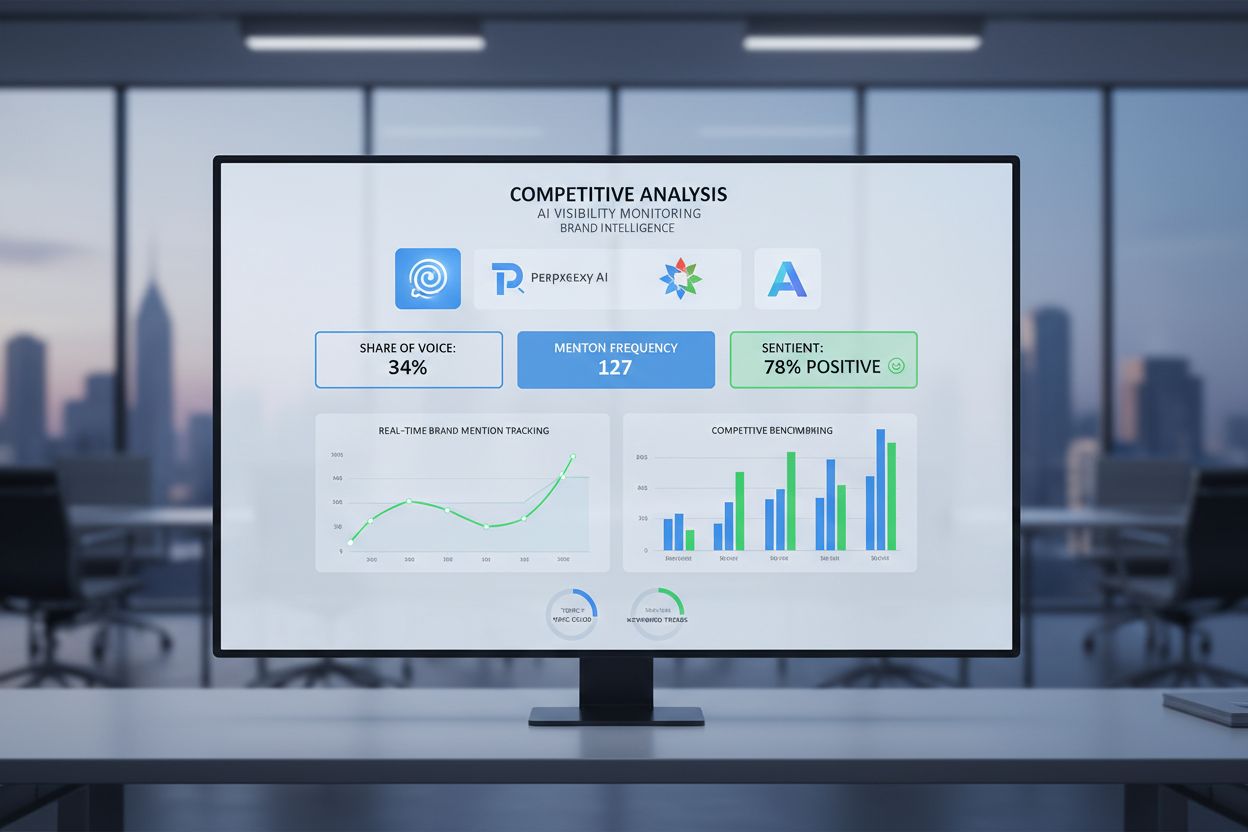
Learn what AI Competitive Analysis Tools are, how they track brand mentions across ChatGPT, Perplexity, and Google AI, and why they're essential for competitive...
Cookie Consent
We use cookies to enhance your browsing experience and analyze our traffic. See our privacy policy.