


Understanding Why Competitors Get More AI Citations
Discover why competitors dominate AI-generated answers and learn proven strategies to increase your brand's visibility in ChatGPT, Perplexity, and Google AI Ove...
8 min read
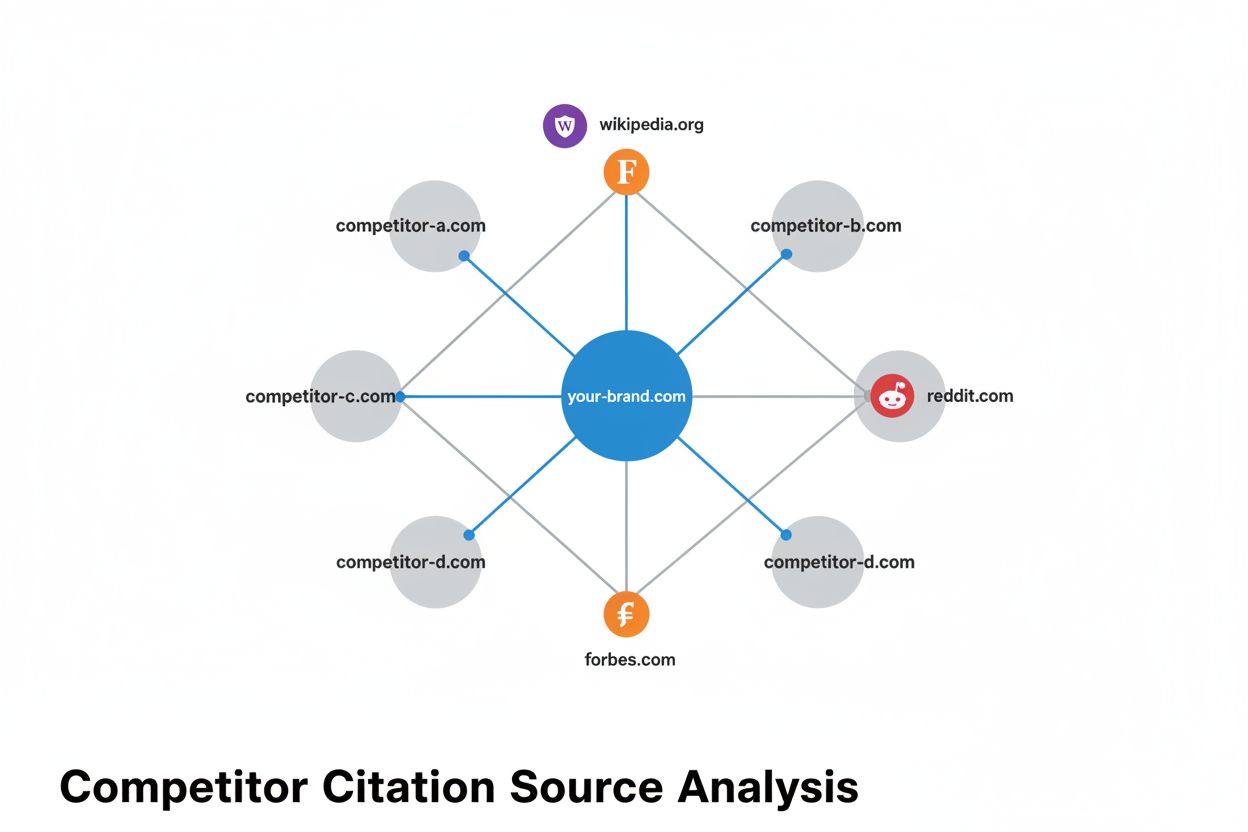
Competitor citation sources are the specific domains and webpages that AI search engines reference when generating answers to user queries. Unlike traditional SEO rankings where search engines display dozens of links, AI systems cite only a handful of sources per response, making each citation a concentrated signal of authority and trust. Understanding which sources competitors are cited from reveals which content types, formats, and authority signals drive visibility in AI-driven search. This analysis enables brands to identify gaps in their citation profile and strategically position content where AI systems will discover and recommend it.
Competitor citation sources are the specific domains and webpages that AI search engines reference when generating answers to user queries. Unlike traditional SEO rankings where search engines display dozens of links, AI systems cite only a handful of sources per response, making each citation a concentrated signal of authority and trust. Understanding which sources competitors are cited from reveals which content types, formats, and authority signals drive visibility in AI-driven search. This analysis enables brands to identify gaps in their citation profile and strategically position content where AI systems will discover and recommend it.
Competitor citation sources are the specific domains and webpages that AI search engines—such as Google AI Overviews, Bing Copilot, and ChatGPT Search—reference when generating answers to user queries. Unlike traditional SEO rankings where search engines display dozens of links, AI systems cite only a handful of sources per response, making each citation a concentrated signal of authority and trust. This fundamental shift distinguishes AI citations from organic search visibility: while traditional rankings measure how many people can find your content, AI citations measure whether AI systems actively choose your content as a trusted reference point. The concentration of citations matters significantly because AI assistants typically surface only 3-5 sources per answer, meaning being cited delivers disproportionate visibility compared to traditional search results where position 21-100 still captures traffic. Citation authority has become the new measure of online credibility in the AI era, as being referenced by AI systems signals expertise, accuracy, and trustworthiness to users who rely on AI-generated summaries for decision-making. For brands and SEOs, understanding competitor citation sources reveals which domains are winning the trust of AI models and which content types, formats, and authority signals drive visibility in an increasingly AI-driven search landscape.
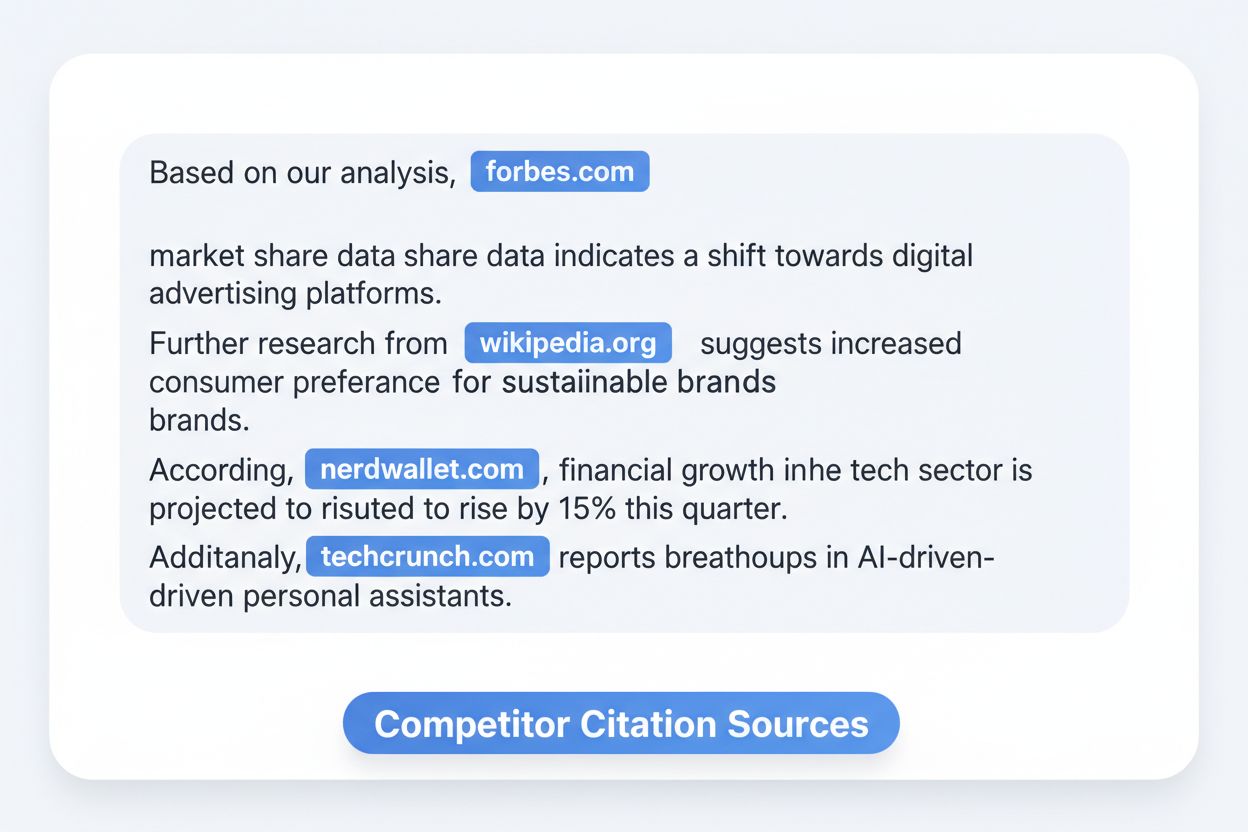
Understanding competitor citation sources has become critical in the AI-driven search landscape, where visibility and authority are redefined by algorithmic citation patterns rather than traditional click-through metrics. Research shows that AI search engines demonstrate significant citation concentration, with a “winner-takes-all” pattern where leading domains capture disproportionate citation share—meaning fewer sources are cited per query, raising the stakes for being included in that select group. This shift fundamentally changes competitive dynamics: while traditional SEO required ranking across thousands of keywords, AI citation optimization demands strategic positioning as a trusted authority source that AI systems actively reference. The business impact is substantial—AI-generated traffic converts at 14.2% compared to traditional search’s 2.8%, representing a 4.4x conversion advantage that makes citation visibility directly tied to revenue. Additionally, with 58.5% of U.S. Google searches now resulting in zero clicks, being cited by AI systems becomes the primary pathway to visibility and traffic. Analyzing competitor citation sources reveals which authority signals matter most in the AI era, enabling you to identify gaps in your citation profile and strategically position your content where AI systems will discover and recommend it.
| Metric | Traditional SEO | AI Citation Sources |
|---|---|---|
| Sources Cited | Hundreds of results ranked | 3-5 primary sources per query |
| Click Requirement | Essential for visibility | Zero-click visibility possible |
| Authority Signal | Backlinks & domain age | Citation frequency & relevance |
| Visibility Impact | Distributed across rankings | Concentrated in top citations |
| Traffic Quality | 2.8% conversion rate | 14.2% conversion rate (4.4x better) |
Identifying competitor citation sources requires a systematic approach combining manual testing and automated tools to track how competitors’ content appears across different AI platforms. Begin by manually testing your competitors’ target keywords and topics across major AI platforms—ChatGPT, Perplexity, Google AI Overviews, and others—to observe which sources are cited and how frequently, noting that each platform exhibits distinct citation preferences (Wikipedia dominates ChatGPT, while Reddit leads in Perplexity). Implement automated tools and APIs such as Conductor for comprehensive mention and citation tracking, AmICited for brand visibility monitoring across multiple AI platforms, and Passionfruit for page-level citation analysis with revenue attribution. Develop a strategic query selection methodology by identifying high-value keywords relevant to your industry, testing both broad and specific queries to capture the full range of citation patterns, and rotating queries regularly to account for seasonal variations and platform algorithm changes. Document all findings systematically using spreadsheets or dedicated tracking platforms, recording the competitor domain cited, the AI platform, the query used, citation frequency, and positioning within the response. Pay close attention to platform-specific variations in citation behavior, as different AI systems prioritize different source types based on their training data and algorithms—what works for ChatGPT visibility may not translate to Perplexity success. Combine these manual observations with automated tool data to build a comprehensive competitive citation profile that reveals gaps in your own citation strategy and opportunities to increase visibility across AI-powered search and answer engines.
While certain domains achieve near-universal authority across sectors—Reddit, Wikipedia, YouTube, and Forbes consistently appear in AI citations across virtually all industries—the specific sources that dominate vary significantly by sector, reflecting distinct information-seeking behaviors and trust hierarchies. Healthcare sectors heavily prioritize academic and government sources, with PubMed Central, CDC, and national health portals commanding dominant citation shares due to the critical importance of evidence-based information. Finance and insurance sectors show strong reliance on expert guides and comparison platforms, with NerdWallet, Investopedia, and specialized financial review sites earning high visibility through comprehensive, evergreen content that AI systems reference repeatedly. Technology and electronics sectors concentrate citations among review sites and tech media, with CNET, The Verge, and Tom’s Guide appearing prominently alongside Wikipedia, reflecting the sector’s preference for hands-on product analysis and technical expertise. E-commerce and retail sectors pull from product guides, comparison sites, and shopping platforms, with Amazon, Ulta, and Sephora earning citations for their curated product selections and user reviews. Entertainment sectors demonstrate the highest diversity, with Reddit, YouTube, IMDb, and Wikipedia all competing for prominence as AI systems balance authoritative reference data with community-driven discussions and user-generated content. Travel and tourism sectors show the most distributed citation patterns, with government advisories, booking platforms, forums, and travel blogs all contributing to a fragmented authority landscape where no single source dominates.
Healthcare: PubMed Central (PMC), CDC, national health portals, Mayo Clinic, Cleveland Clinic, WebMD; emphasis on peer-reviewed and government-backed sources; lower diversity due to evidence-based requirements
Finance & Insurance: NerdWallet, Investopedia, Forbes Advisor, ValuePenguin, Bankrate; strong correlation between AI visibility and backlink authority; expert guides and comparison content dominate
Technology & Electronics: CNET, The Verge, Tom’s Guide, Wikipedia, tech review sites; concentrated citation patterns; high correlation between authority signals and AI mentions
E-commerce & Retail: Amazon, Ulta, Sephora, Walmart, Target, shopping platforms; product guides and comparison content; integration of transactional and informational sources
Entertainment & Media: Reddit (21% of AI Overview citations), YouTube, IMDb, Wikipedia, Rotten Tomatoes; user-generated and community-driven content competes with authoritative reference sources; highest diversity
Travel & Tourism: Government travel advisories, TripAdvisor, Booking.com, Kayak, travel blogs; low citation concentration; mix of practical, inspirational, and transactional content
Extracting actionable insights from competitor citation sources requires systematic analysis of the content formats, depth, and structural elements that AI systems prioritize when selecting sources to cite. Competitors’ most-cited content typically combines multiple high-performing formats—comprehensive guides, comparison tables, FAQ sections, and research-backed data points—with content length correlating directly to citation frequency (articles over 2,900 words average 5.1 citations versus 3.2 for content under 800 words). Freshness signals matter significantly; pages updated within three months average 6 citations compared to 3.6 for outdated content, indicating that AI systems reward active content maintenance and topical relevance. E-E-A-T signals embedded in cited content—including author expertise attribution, publisher credibility, and cross-platform entity consistency—serve as the primary trust mechanisms that determine whether AI systems confidently cite a source. Topic coverage breadth reveals competitive positioning; analyze whether competitors establish topical authority through interconnected content clusters that address related questions and subtopics, as AI systems recognize and reward comprehensive topic coverage. Finally, examine schema markup implementation patterns in highly-cited competitor content, particularly FAQPage, Article, and Organization schema with proper sameAs properties, since structured data increases AI citation rates by 30% or more by providing machine-readable context that LLMs can confidently extract and attribute.
To become a frequently cited source, focus on creating comprehensive, authoritative content that addresses topics in depth and demonstrates genuine expertise in your field. Invest in original research and proprietary data that competitors cannot easily replicate—studies, surveys, and unique datasets are highly citable assets that establish your organization as a thought leader. Implement proper schema markup using JSON-LD structured data to help search engines and AI systems understand your content’s context, which increases the likelihood of being selected for citations in AI-generated overviews and answer engines. Develop topic clusters around core subjects, organizing pillar content with supporting articles that create a cohesive knowledge base and signal topical authority to both users and algorithms. Maintain a regular content update schedule, refreshing existing articles every 30-45 days with new data, insights, and current examples—AI platforms cite content that is approximately 25% fresher than traditional search results. Strengthen your credibility by including detailed author bios that highlight relevant credentials, experience, and expertise, as E-E-A-T signals directly influence citation selection. Finally, create comparison guides and comprehensive how-to content in formats that naturally attract citations, as these resource-style pieces serve as reference materials that other publishers and AI systems frequently reference when providing information to their audiences.
Several specialized platforms have emerged to help organizations monitor and analyze how their brands appear across AI-powered search systems. AmICited.com stands out as the leading solution specifically designed for AI answers monitoring, offering real-time tracking of brand mentions across ChatGPT, Perplexity, and Google AI Overviews with comprehensive competitor analysis and domain intelligence features. Conductor serves as an enterprise-grade alternative, providing unified AI visibility optimization alongside traditional SEO capabilities for large organizations seeking integrated workflows. Passionfruit offers an AI-first benchmarking approach with page-level citation tracking and revenue attribution, making it particularly valuable for teams focused on converting AI visibility into measurable business outcomes. AIrefs differentiates itself through co-citation analysis, revealing not just whether your brand appears in AI answers but also the complete ecosystem of sources being cited across targeted queries. SE Ranking’s AI Results Tracker provides accessible AI visibility monitoring integrated within a broader SEO platform, displaying keyword rankings that trigger AI-generated answers and their search volume. Semrush rounds out the competitive landscape with its AI Visibility Toolkit, offering brand perception analysis, sentiment tracking, and multi-platform monitoring across 20+ AI systems alongside traditional search metrics. Together, these platforms enable organizations to understand their presence in the emerging AI search landscape, from basic mention tracking to sophisticated competitive benchmarking and revenue impact analysis.
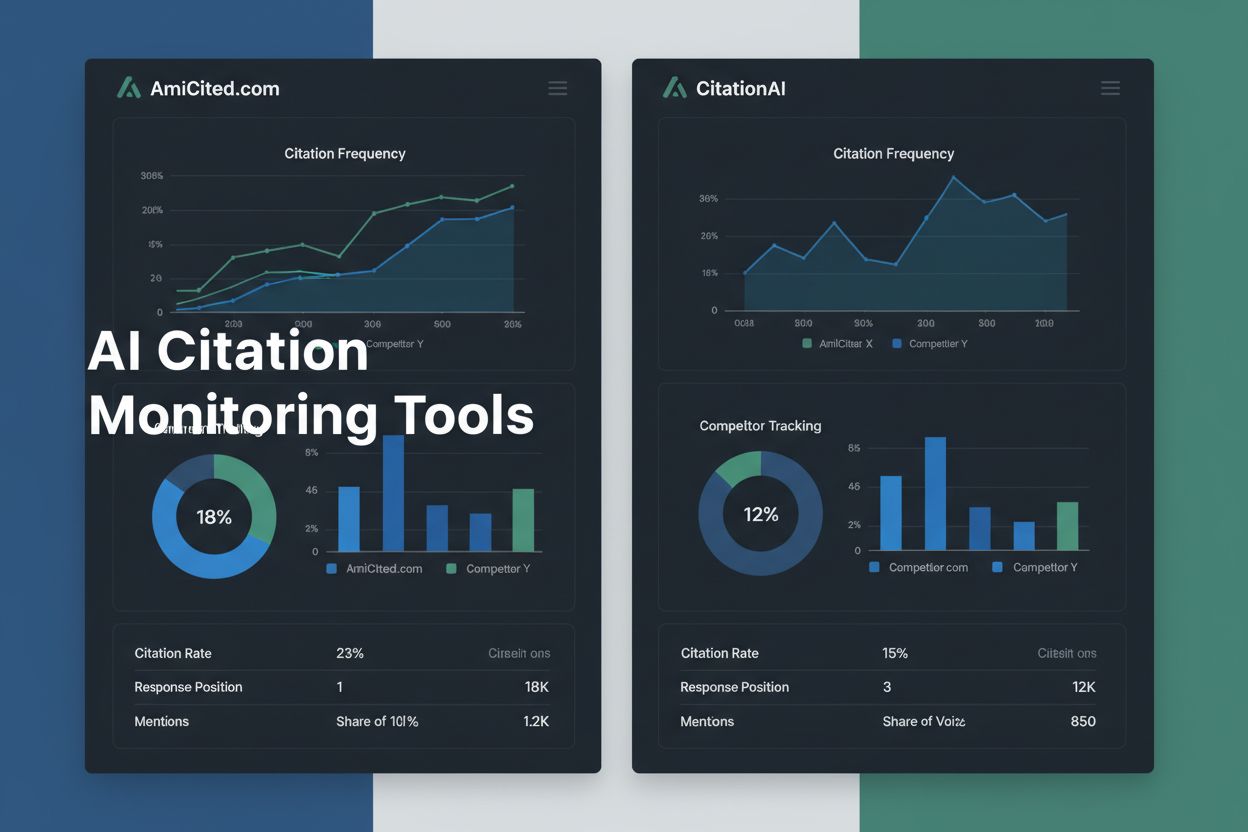
Citation sources serve as a powerful competitive intelligence tool that reveals strategic gaps and opportunities in your market positioning. By analyzing where competitors are cited versus where your organization appears, you can identify critical gaps in your authority footprint and prioritize content initiatives to close those visibility gaps. Co-citation patterns reveal natural partnership opportunities with complementary organizations and thought leaders, enabling you to build strategic alliances that amplify your market presence. Citation data directly informs content strategy refinement by highlighting which topics, methodologies, and research areas competitors dominate, allowing you to either differentiate your approach or establish authority in underserved domains. Calculating your market share of voice through citation metrics—dividing your citations by total competitive citations in your sector—provides a quantifiable benchmark for measuring your relative influence and competitive standing. Additionally, emerging topic identification through citation clustering and co-citation analysis enables you to detect nascent trends before they become mainstream, positioning your organization as a forward-thinking authority. By systematically leveraging citation sources for competitive analysis, you transform raw data into an actionable authority-building roadmap that guides strategic decisions across content, partnerships, and market positioning.
Tracking the right metrics ensures your citation strategy delivers measurable business results and competitive advantage. Citation frequency rate measures the percentage of relevant queries where your brand appears in AI responses, with targets of 15-30% for established brands and 5-10% for emerging players. Response position index tracks where your brand appears within the AI’s response structure, with top 3 mentions scoring highest and bottom mentions scoring lowest—aim for a position index of 7.0 or higher. Competitive share of voice divides your citations by total competitor citations in your sector, with market leaders typically capturing 35-45%, strong competitors 20-30%, and emerging brands 5-15%. Source diversity measures how many different AI platforms cite you, with 4+ platforms indicating broad authority and single-platform citations suggesting limited reach. Sentiment score evaluates whether mentions are positive or negative, with targets of 80%+ positive context to ensure citations enhance rather than damage your reputation. Platform-specific performance tracks your visibility separately on ChatGPT, Perplexity, Google AI Overviews, and Claude, since each platform has distinct citation preferences. Freshness index measures the recency of cited content, with AI systems preferring content updated within 30 days, making regular updates critical for maintaining citation visibility.
| Metric | Definition | Target | Why It Matters |
|---|---|---|---|
| Citation Frequency | % of queries where cited | 15-30% | Brand visibility in AI responses |
| Response Position | Where in response mentioned | Top 3 positions | Authority signal strength |
| Share of Voice | Your citations vs competitors | 25%+ | Market dominance measurement |
| Source Diversity | Number of platforms citing | 4+ platforms | Broad authority validation |
| Sentiment Score | Positive vs negative context | >80% positive | Trust and reputation impact |
Establishing an effective citation source strategy begins with creating a baseline of your current citation landscape by auditing all sources citing your domain, analyzing their authority levels, and documenting the citation patterns across your industry. Next, conduct comprehensive competitor mapping by identifying 5-10 primary competitors and cataloging their citation sources, noting which high-authority sources cite them but not your organization. Use this competitive intelligence to identify content gaps—areas where competitors have secured citations that align with your expertise but your content hasn’t yet been recognized. Prioritize optimization efforts by ranking citation opportunities based on source authority, relevance to your industry, and potential traffic impact, then develop targeted content and outreach strategies for the highest-value sources. Implement a monitoring system using citation tracking tools to track new citations weekly, noting which sources cite competitors versus your domain, and set up alerts for mentions of your brand and key competitors. Establish regular analysis cycles—monthly reviews of citation trends, quarterly deep-dives into competitor citation shifts, and semi-annual strategy adjustments based on performance data. Measure ROI by correlating citation growth with organic traffic increases, keyword ranking improvements, and lead generation metrics, ensuring your citation efforts directly impact business outcomes. Finally, assign clear team responsibilities by designating a citation strategy owner, content creators responsible for developing citation-worthy assets, and an outreach specialist to build relationships with high-value citation sources, ensuring accountability and consistent execution across all implementation phases.
Discover which content assets drive your competitors' AI visibility and build a strategy to outrank them in AI-generated responses.
Discover why competitors dominate AI-generated answers and learn proven strategies to increase your brand's visibility in ChatGPT, Perplexity, and Google AI Ove...
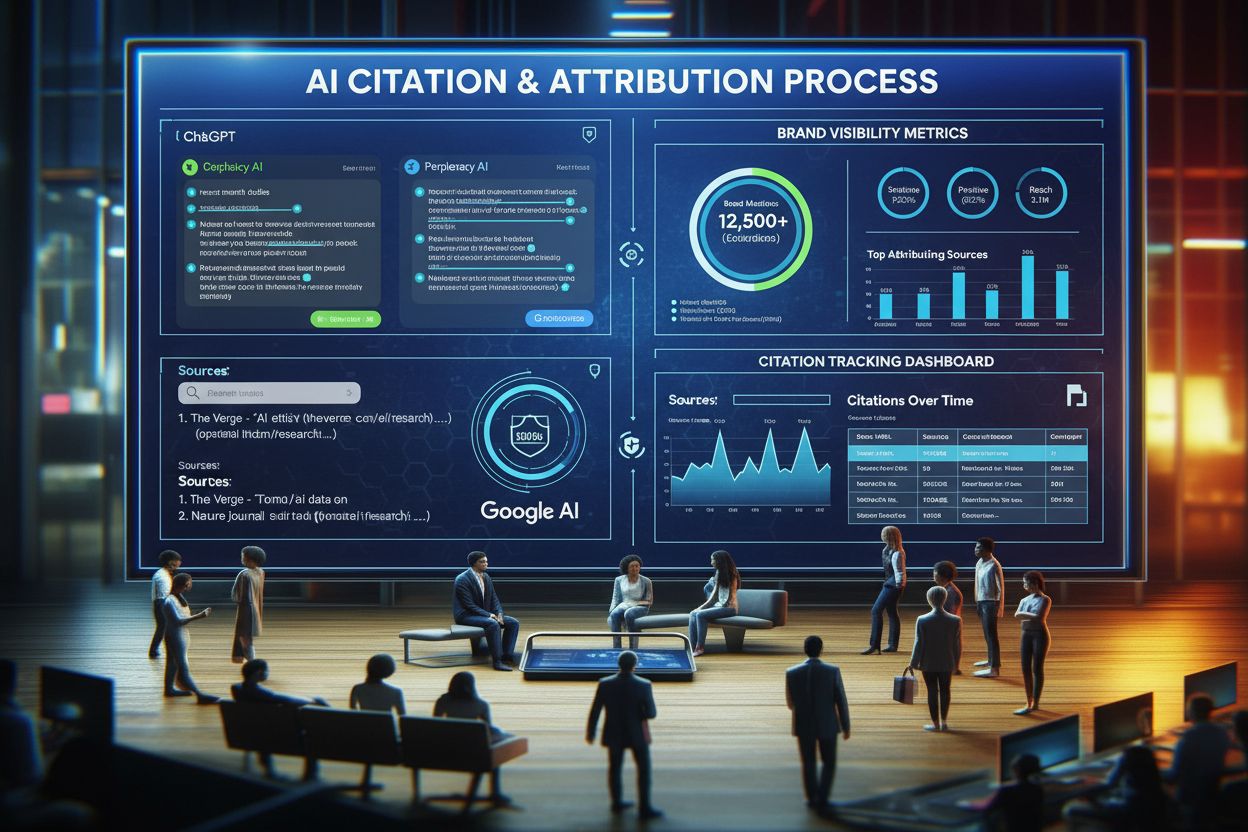
Learn what AI citations are, how they work across ChatGPT, Perplexity, and Google AI, and why they matter for your brand's visibility in generative search engin...

Learn how citation authority works in AI-generated answers, how different platforms cite sources, and why it matters for your brand's visibility in AI search en...
Cookie Consent
We use cookies to enhance your browsing experience and analyze our traffic. See our privacy policy.