



Competitor Content Strategy Analysis
Learn how to analyze competitor content strategies to improve your brand's visibility in AI systems. Discover metrics, methodologies, and tools for competitive ...
8 min read
Learn how to reverse-engineer competitor AI citations and discover what content AI models prefer to cite. Strategic guide to competitive advantage in AI search.
The search landscape has fundamentally shifted from traditional keyword-based queries to AI-powered discovery. With over 700 million ChatGPT users actively seeking information, AI citations have become the new currency of visibility. Google’s AI Overviews now appear in 13.14% of search queries, yet only 8% of users click through to source websites. This means your content can be cited by AI systems while generating minimal direct traffic—making citation tracking essential for modern SEO strategy.

One of the most striking discoveries in AI citation analysis is the dramatic inconsistency across platforms. A 61.9% disagreement rate exists between how different AI systems cite sources for identical queries. This variation reveals fundamental differences in how each platform evaluates, prioritizes, and presents authoritative content.
| Platform | Avg Brands Cited | Citation Style | Authority Focus |
|---|---|---|---|
| ChatGPT | 2.37 brands | Training data focused | Historical brands |
| Google AI Overviews | 6.02 brands | Broader coverage | Multiple sources |
| Google AI Mode | Selective | Quality-focused | Validated mentions |
Understanding these platform-specific citation patterns is crucial for content strategy. ChatGPT relies heavily on training data, favoring established brands with historical prominence. Google AI Overviews cast a wider net, citing more sources to provide comprehensive coverage. Google’s AI Mode takes a selective approach, prioritizing quality and validation over quantity. This fragmentation means a single content strategy won’t optimize citations across all platforms.

Track how AI chatbots mention your brand across ChatGPT, Perplexity, and other platforms.
The methodology for discovering which competitor content dominates AI citations follows a systematic four-step process. First, compile a list of 20-30 core industry questions that represent your target audience’s primary information needs. Second, query each major AI platform with these identical questions, documenting the exact phrasing and context. Third, meticulously record all cited sources, including URL, domain, and citation frequency. Fourth, identify “Power Pages”—those URLs appearing consistently across multiple queries and platforms. These power pages represent the content that AI systems trust most, making them your primary competitive benchmarks. By analyzing patterns across dozens of queries, you’ll uncover which content types, structures, and authority signals resonate most strongly with AI algorithms.
Content that consistently appears in AI citations shares distinct structural characteristics. These patterns aren’t coincidental—they reflect how AI systems evaluate information quality and relevance.
Get the latest insights on AI mentions, brand monitoring, and optimization strategies.
AI systems evaluate authority through multiple interconnected signals that go beyond traditional SEO metrics. Experience, Expertise, Authoritativeness, and Trustworthiness (E-E-A-T) form the foundation of how AI determines citation-worthiness. Content authored by recognized experts in their field receives higher citation priority than generic overviews. Authoritative outbound links to peer-reviewed sources, government databases, and industry leaders signal that your content is well-researched and trustworthy. Original data—whether proprietary research, case studies, or unique analysis—carries significant weight because AI systems recognize it as non-derivative content. Author expertise, demonstrated through credentials, publication history, and topical depth, directly influences citation frequency. The combination of these signals creates a trust profile that AI systems use to decide whether your content merits inclusion in responses.
Analyzing competitor content to understand AI citation patterns requires a structured, repeatable approach. This methodology reveals the specific elements that make content citation-worthy.
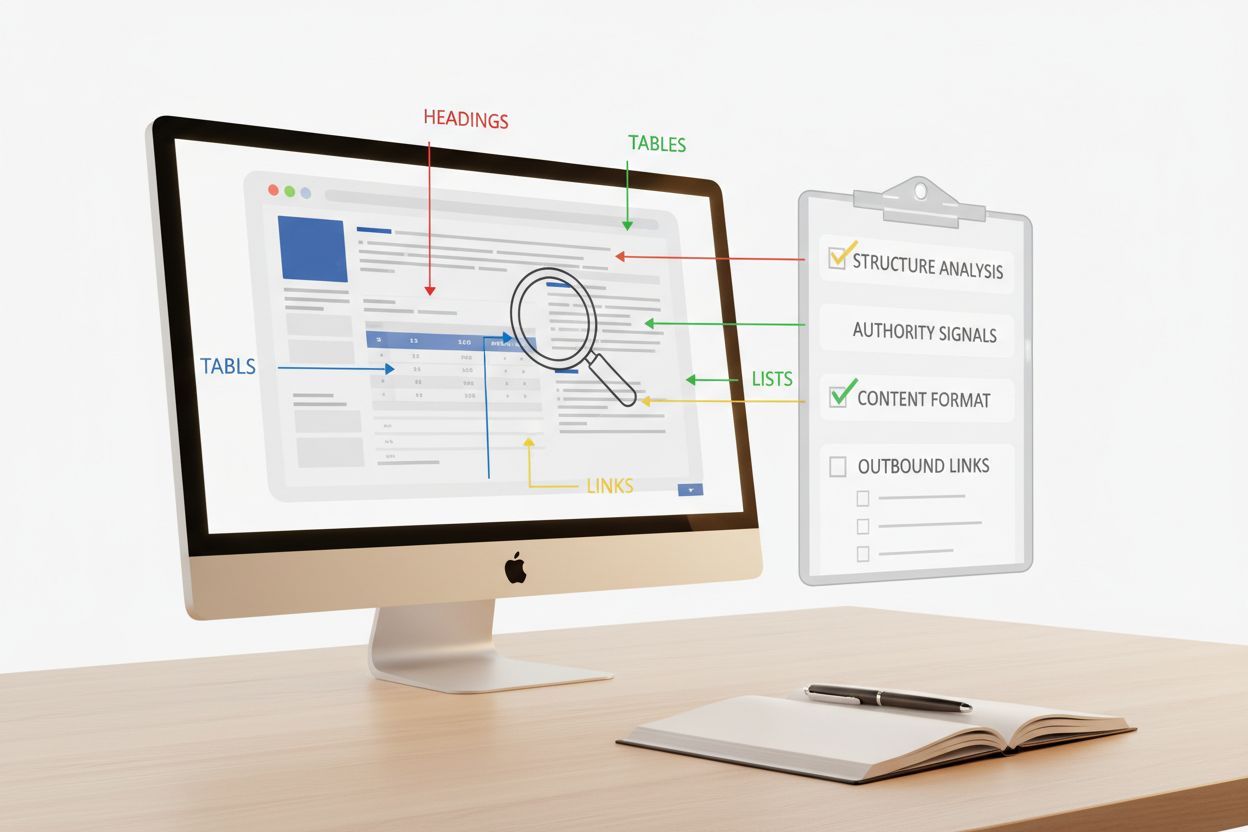
Creating content that outperforms competitors in AI citations requires strategic implementation of discovered patterns. These actionable steps transform competitive insights into citation-winning content.
Tracking citation performance requires monitoring metrics that directly correlate with AI visibility and business impact. These measurements reveal whether your content strategy is effectively competing for AI citations.
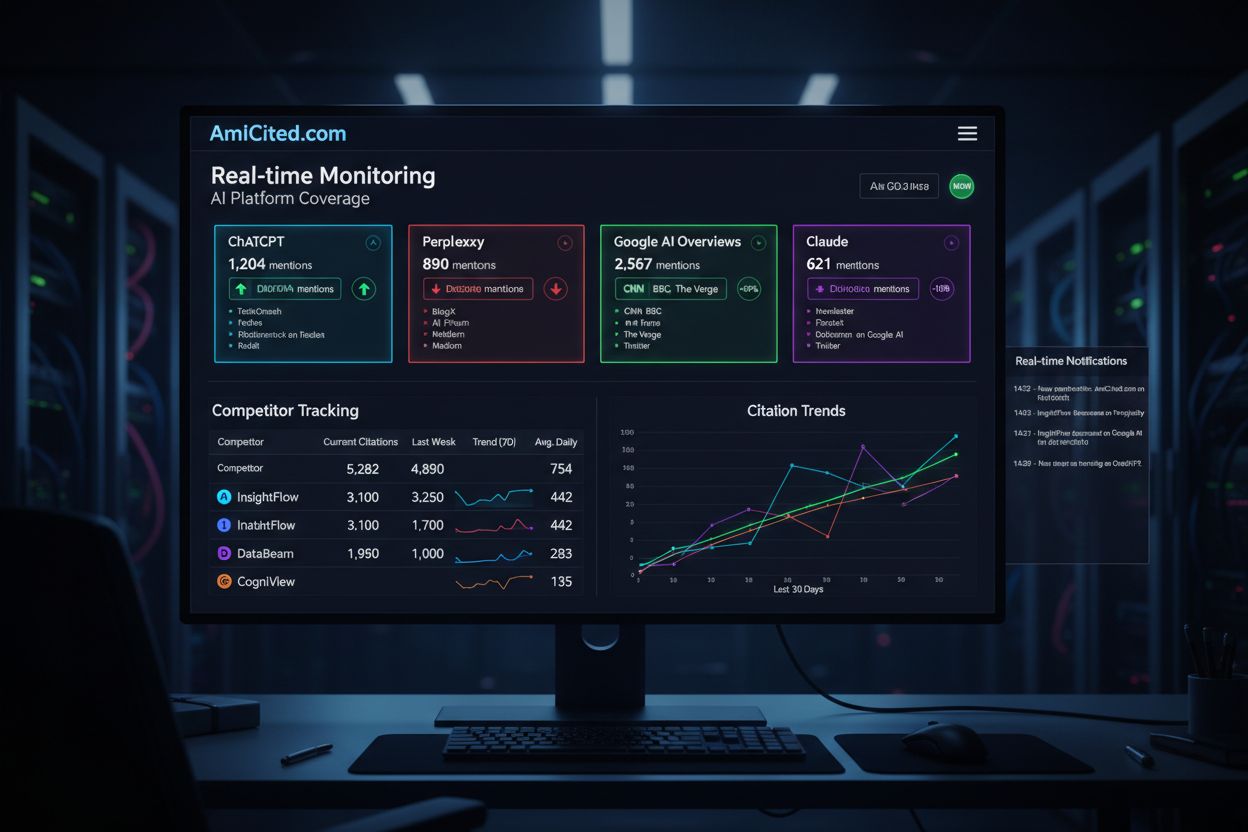
Manually tracking competitor citations across multiple AI platforms is time-consuming and prone to gaps. AmICited.com automates this critical competitive intelligence function. The platform continuously monitors how often your content and competitors’ content appear in AI citations across ChatGPT, Google AI Overviews, and other emerging AI systems. Real-time alerts notify you when competitors gain new citations or when your content loses visibility, enabling rapid response. Automated competitor monitoring reveals which content types, topics, and formats your competitors are winning with, informing your content strategy. Integration with your existing competitive intelligence tools creates a unified view of how AI citations fit into broader competitive positioning. By eliminating manual tracking, AmICited.com frees your team to focus on strategic content optimization rather than data collection.
While several tools address competitive intelligence, few specifically focus on AI citation tracking. Mentions.so provides general brand mention monitoring but lacks AI-specific citation analysis. Conductor offers comprehensive SEO intelligence but treats AI citations as secondary to traditional search metrics. Passionfruit focuses on influencer and social media mentions, missing the AI citation opportunity entirely. Crayon delivers competitive intelligence across multiple channels but requires manual configuration for AI citation tracking. AmICited.com distinguishes itself through specialized focus on AI citation patterns, automated cross-platform monitoring, and actionable insights specifically designed for content strategy optimization. The platform’s AI-native approach recognizes that citations in AI systems operate under fundamentally different rules than traditional search visibility, requiring purpose-built tools for competitive advantage.
Viktor Zeman is a co-owner of QualityUnit. Even after 20 years of leading the company, he remains primarily a software engineer, specializing in AI, programmatic SEO, and backend development. He has contributed to numerous projects, including LiveAgent, PostAffiliatePro, FlowHunt, UrlsLab, and many others.

Stop guessing which competitors are winning AI citations. AmICited.com tracks your brand mentions across ChatGPT, Perplexity, Google AI Overviews, and more—giving you the competitive intelligence you need to dominate AI search.
Learn how to analyze competitor content strategies to improve your brand's visibility in AI systems. Discover metrics, methodologies, and tools for competitive ...
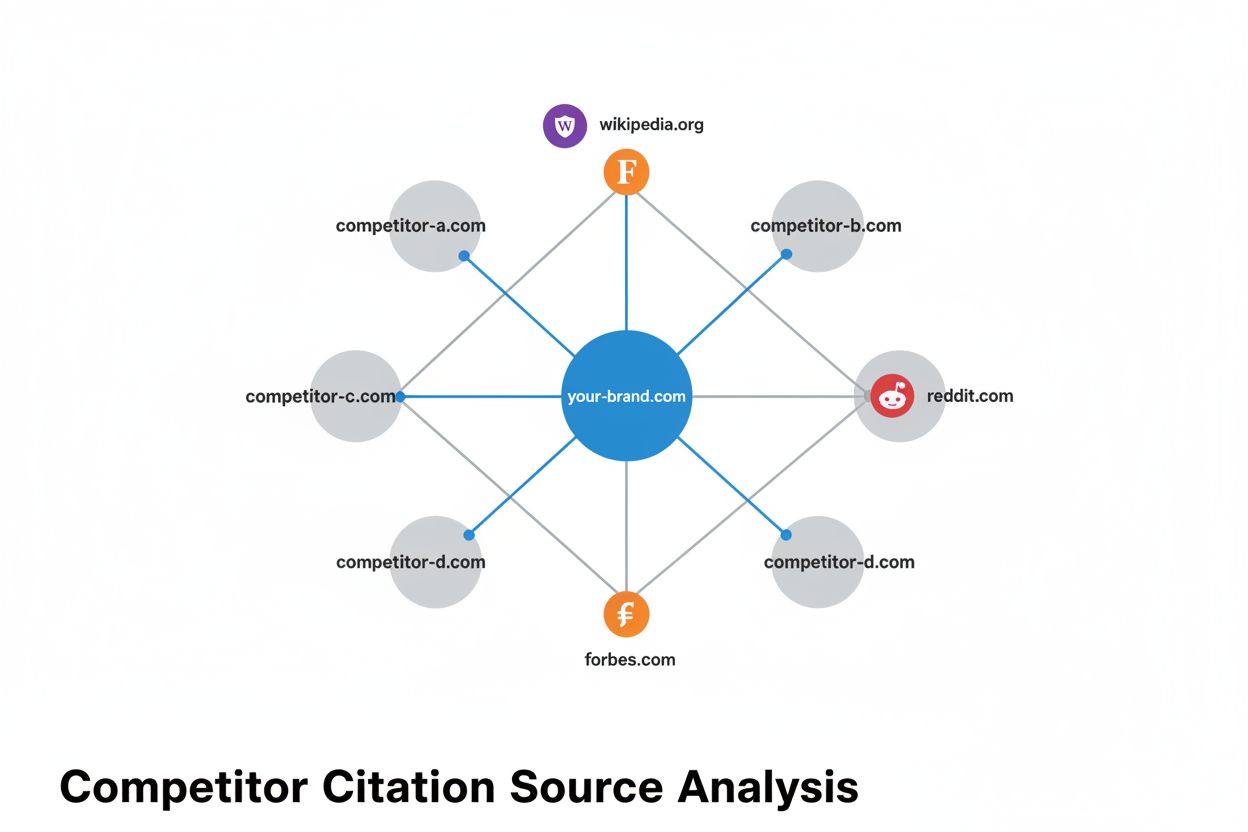
Learn what competitor citation sources are and how to analyze which content assets drive competitor AI visibility across ChatGPT, Perplexity, and Google AI Over...

Discover why competitors dominate AI-generated answers and learn proven strategies to increase your brand's visibility in ChatGPT, Perplexity, and Google AI Ove...
Cookie Consent
We use cookies to enhance your browsing experience and analyze our traffic. See our privacy policy.