Ranking #1 on Google Won't Get You Cited by ChatGPT
A new 320-query benchmark shows Google’s top 10 predicts citations on Google AI Mode and Perplexity, but barely predicts ChatGPT. Here’s the data, and what actually drives each platform.
For most of the last two years, the working assumption in AI visibility
has been simple: rank well on Google, get cited by AI. A new benchmark shows that assumption only holds for half the platforms that matter.
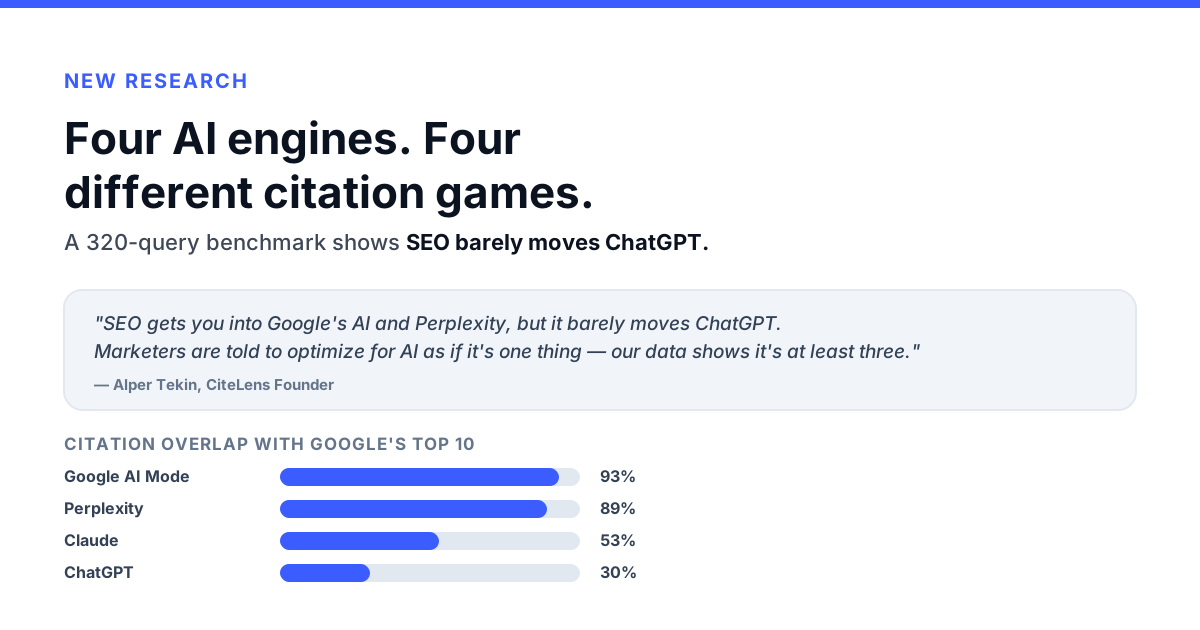
CiteLens ran 320 real buyer queries across three consumer sectors through ChatGPT, Perplexity, Claude, and Google AI Mode, then checked every citation each engine produced against that same query’s Google and Bing top-10 results. The headline finding, in the founder’s own words: “SEO gets you into Google’s AI and Perplexity, but it barely moves ChatGPT. Marketers are told to optimize for AI as if it’s one thing — our data shows it’s at least three.”
Who Cites What
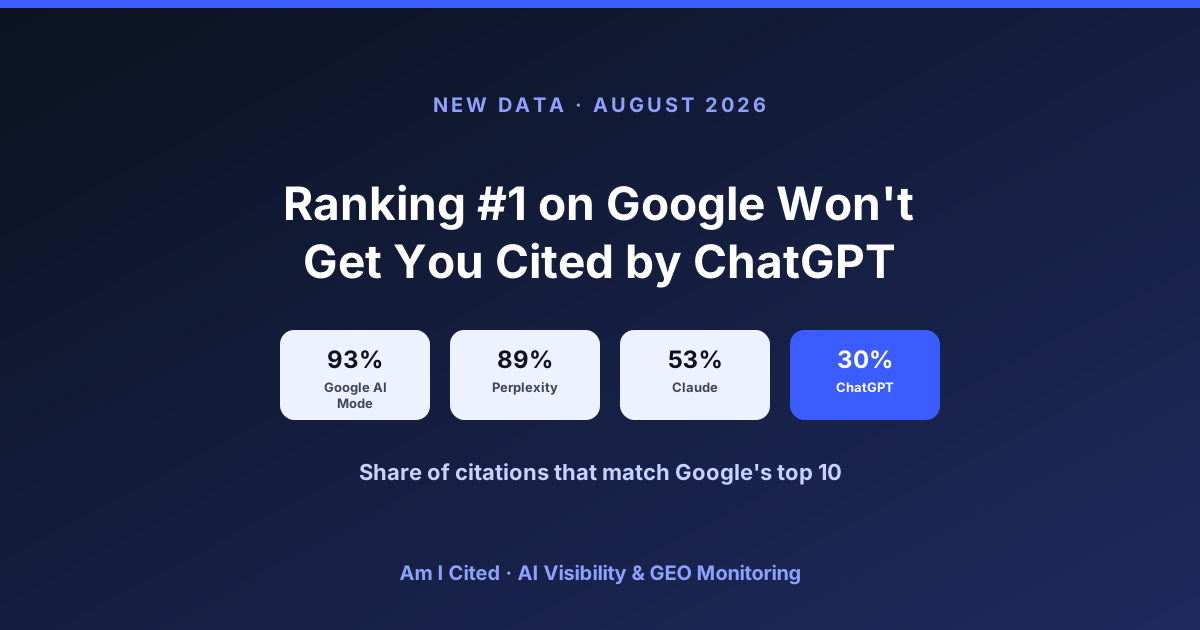
The overlap between each platform’s citations and Google’s own top-10 results:
Google AI Mode — 93% overlap (correlation coefficient 0.92)
Google AI Mode and Perplexity behave almost like a re-skinned version of the search results page — unsurprising for AI Mode, since it lives inside Google Search, and consistent with Perplexity’s own heavy reliance on live web retrieval. Claude sits in the middle. ChatGPT is the outlier, and not by a small margin.
Ready to Monitor Your AI Visibility?
Track how AI chatbots mention your brand across ChatGPT, Perplexity, and other platforms.
The obvious explanation — that ChatGPT is just pulling from a different search index — doesn’t hold up. The same study found ChatGPT’s citations matched Bing’s top 10 results less than 4% of the time, ruling out “it’s just using Bing instead of Google” as the answer.
What correlates instead is entity authority
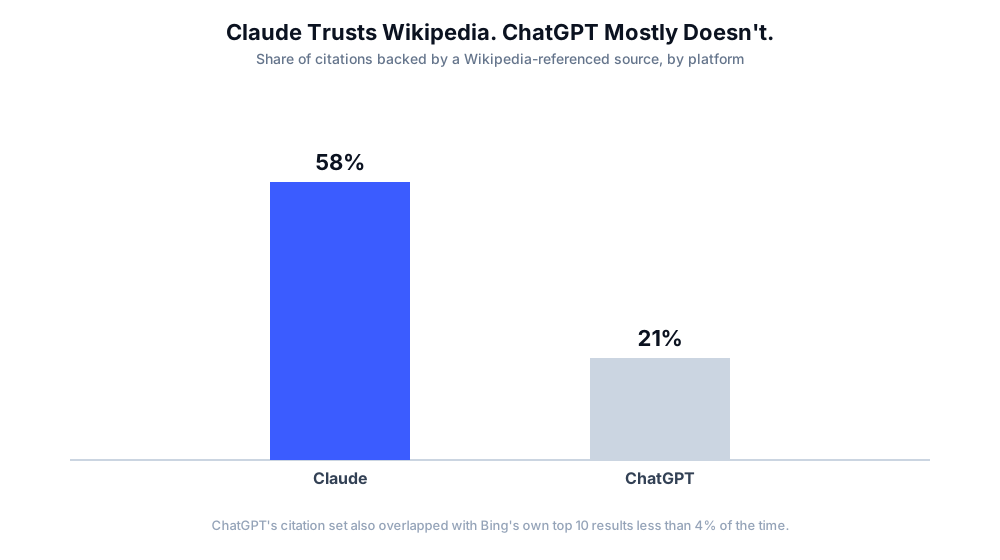
: how consistently and credibly a brand is described across the web, independent of whether any single page ranks. One clean signal of that split shows up in Wikipedia-backed citations.
Claude traced 58% of its citations back to a Wikipedia-referenced source. ChatGPT traced only 21%. Both numbers point the same direction as the ranking-overlap data: Claude and ChatGPT are weighting broader entity credibility over search-engine rank, they just weight the specific sources differently.
Zero-Ranking Pages
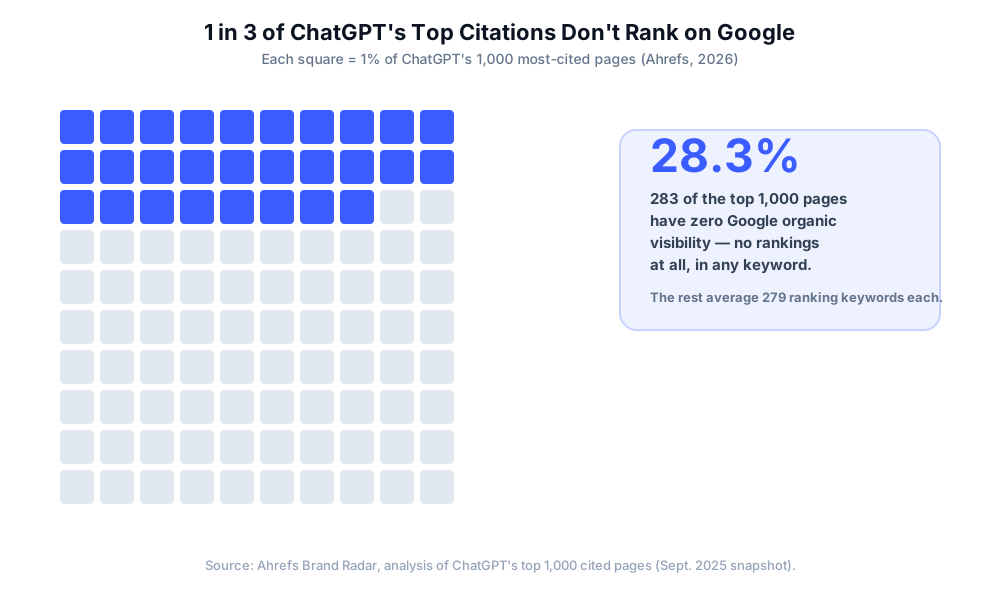
A separate, larger-scale analysis from Ahrefs backs this up from another angle entirely. Looking at ChatGPT’s 1,000 most-cited pages, Ahrefs found that 28.3% have zero organic visibility on Google — no ranking keywords at all, in a dataset otherwise averaging 279 ranking keywords per page.
Some of that gap is timing — content too new to be indexed yet. Some is topic — long-tail subjects with real relevance but little search demand. But the pattern is the same one CiteLens found: for ChatGPT specifically, a meaningful share of what actually gets cited was never going to show up in an SEO rank tracker
in the first place, because ranking was never the mechanism that put it there.
Stay Updated on AI Visibility Trends
Get the latest insights on AI mentions, brand monitoring, and optimization strategies.
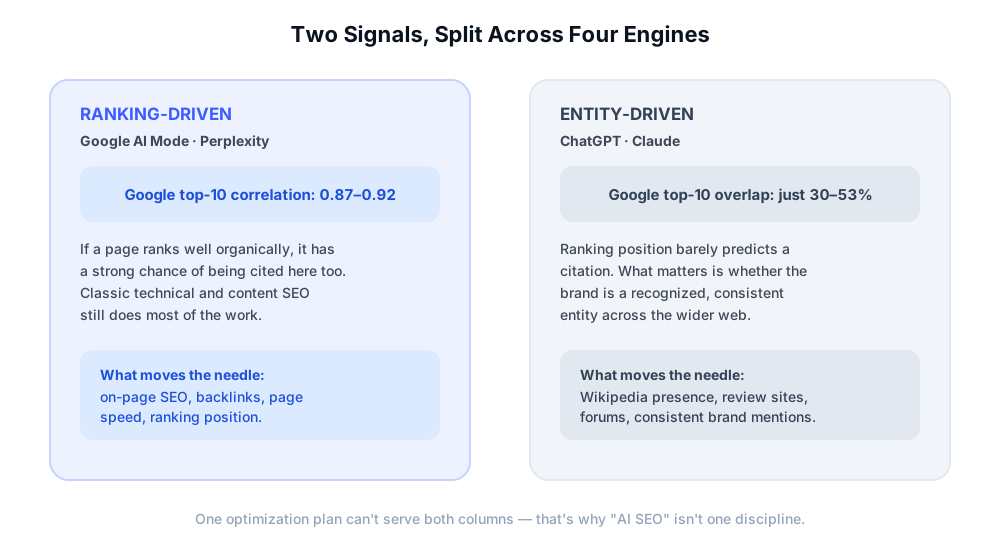
Ranking-driven platforms — Google AI Mode, Perplexity. Classic technical and content SEO still does most of the work here. If a page ranks, it has a strong chance of being cited. Investment in how LLMs actually select citations
pays off most directly on these two.
Entity-driven platforms — ChatGPT, Claude. Ranking position is a weak predictor. What correlates instead is consistent brand presence across the wider web: Wikipedia, review platforms, forums, and credible third-party mentions that build recognition independent of any one page’s search performance. Tracking Claude specifically
requires this same lens, since a strong Claude AI optimization
approach looks meaningfully different from a Perplexity-first playbook.
What To Do Now
Run one strategy for both groups and you’ll under-invest in one of them:
Keep the SEO fundamentals sharp for Google AI Mode and Perplexity — they’re still the closest thing to classic search optimization inside AI.
Build entity credibility deliberately for ChatGPT and Claude — earned Wikipedia coverage, genuine reviews, and consistent facts about your brand across independent sources.
Stop reading one citation rate as “your AI visibility.” A platform-by-platform breakdown is the only way to see which lever is actually working, and which one you’re neglecting.
Re-run the check periodically. These correlations reflect where each platform’s retrieval approach stands today; as models and their grounding methods change, the split can move.
The Bottom Line
“AI SEO” isn’t one discipline, and treating it like one means over-investing in the platforms where ranking already works and under-investing in the ones where it doesn’t. Knowing which is which for your own brand, on every platform that matters, is exactly what Am I Cited
is built to show you.
Frequently asked questions
It depends entirely on which AI. A July 2026 benchmark from CiteLens found Google AI Mode citations overlapped with Google's top 10 results 93% of the time, and Perplexity 89% of the time. Claude overlapped only 53% of the time, and ChatGPT just 30%. Ranking well is close to a requirement for two of these platforms and a weak signal for the other two.
CiteLens ran 320 templated buyer queries across three consumer sectors through ChatGPT, Perplexity, Claude, and Google AI Mode, then compared every source each engine cited against that same query's Google and Bing organic results. It's a focused, real-query benchmark rather than a market-wide census, but the size of the gap between platforms was consistent across sectors.
ChatGPT's citations correlated with Bing's own top 10 results less than 4% of the time either, so it isn't simply following a different search index. The more consistent explanation is that ChatGPT leans on entity recognition — how consistently and credibly a brand is described across the web — rather than reproducing any one search engine's ranked list.
Separately, Ahrefs analyzed ChatGPT's 1,000 most-cited pages and found 28.3% of them have zero organic visibility on Google, no ranking keywords at all. Some are simply too new to be indexed yet, others target long-tail topics with little search demand, but the pattern confirms the same conclusion: a meaningful share of what ChatGPT cites was never going to show up in an SEO rank tracker.
It varies sharply by platform, and in the same direction as the ranking-overlap data. In the CiteLens study, 58% of Claude's citations traced back to a Wikipedia-referenced source, versus only 21% of ChatGPT's. That's consistent with Claude and ChatGPT both leaning more on entity signals than search rank, with Claude weighting a specific, well-known authority source more heavily.
Split your strategy instead of running one playbook everywhere. For Google AI Mode and Perplexity, classic technical and content SEO still does most of the work, since ranking position and citation are tightly linked. For ChatGPT and, to a lesser extent, Claude, invest in being a consistently described entity: Wikipedia presence where earned, credible reviews, forum mentions, and consistent brand facts across the web that don't depend on any single page ranking.
Arshia is an AI Workflow Engineer at FlowHunt. With a background in computer science and a passion for AI, he specializes in creating efficient workflows that integrate AI tools into everyday tasks, enhancing productivity and creativity.
Arshia Kahani
AI Workflow Engineer
See Which Signal Actually Drives Your Citations
Am I Cited tracks your citation rate separately across ChatGPT, Perplexity, Claude, and Google AI Overviews, so you know which lever to pull for each platform instead of guessing.
The 7% Overlap Problem: Why Being Visible on Google Doesn't Mean AI Visibility
Only 7% of URLs cited by AI search engines match Google's top results. Discover why ranking on Google doesn't guarantee AI visibility and how to optimize for mu...
Understanding Why Competitors Get More AI Citations
Discover why competitors dominate AI-generated answers and learn proven strategies to increase your brand's visibility in ChatGPT, Perplexity, and Google AI Ove...
Does AI-Generated Content Rank in AI Search? How to Optimize for AI Answer Engines
Learn how AI-generated content performs in AI search engines like ChatGPT, Perplexity, and Google AI Overviews. Discover ranking factors, optimization strategie...
9 min read
Cookie Consent We use cookies to enhance your browsing experience and analyze our traffic. See our privacy policy.