

Conversational Language: Matching How Users Ask AI Questions
Learn how conversational language shapes AI interactions. Master natural language optimization for ChatGPT, Perplexity, and Google AI Overviews to get your cont...
7 min read
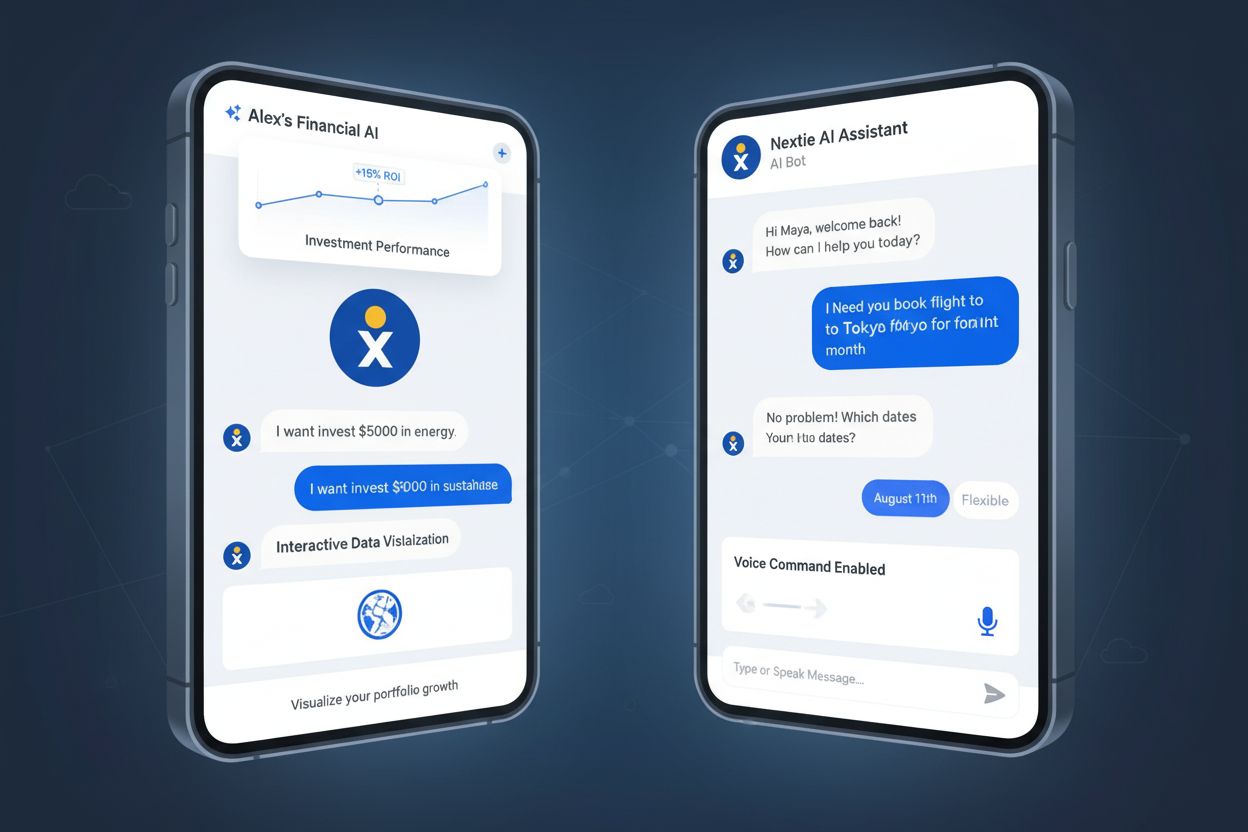
Conversational AI refers to AI systems designed for natural dialogue interactions that use natural language processing and machine learning to understand, interpret, and respond to human language in both text and voice formats. These technologies enable computers to engage in human-like conversations with users through chatbots, virtual assistants, and voice-activated systems.
Conversational AI refers to AI systems designed for natural dialogue interactions that use natural language processing and machine learning to understand, interpret, and respond to human language in both text and voice formats. These technologies enable computers to engage in human-like conversations with users through chatbots, virtual assistants, and voice-activated systems.
Conversational AI is a collection of artificial intelligence technologies that work together to enable computers to understand, process, and respond to human language in natural, human-like dialogue. Unlike traditional software interfaces that require users to follow specific commands or navigate complex menus, conversational AI systems allow users to communicate through natural language—both spoken and written—making technology more accessible and intuitive. These systems combine natural language processing (NLP), machine learning (ML), and dialogue management to simulate meaningful conversations between humans and machines. The technology powers everything from customer service chatbots on websites to voice assistants like Alexa and Siri, fundamentally changing how people interact with technology in their daily lives.
Conversational AI operates through the integration of several interconnected technologies that work in concert to process and respond to human language. Natural Language Processing (NLP) serves as the foundation, enabling systems to parse and understand the structure of human language, including grammar, syntax, and semantic meaning. Natural Language Understanding (NLU), a subset of NLP, goes deeper by determining the user’s intent and extracting relevant information from their input. Machine Learning (ML) algorithms continuously improve the system’s performance by learning from vast amounts of training data and user interactions, identifying patterns that help the system make better predictions and generate more appropriate responses. Dialogue Management orchestrates the conversation flow, deciding when to ask clarifying questions, when to provide information, and when to escalate to a human agent. Finally, Natural Language Generation (NLG) formulates responses that sound natural and grammatically correct, ensuring the system’s output feels human-like rather than robotic.
The global conversational AI market was valued at approximately $12.24 billion in 2024 and is projected to grow to $61.69 billion by 2032, representing a compound annual growth rate that reflects the technology’s increasing importance across industries. This explosive growth is driven by improvements in Large Language Models (LLMs), increased enterprise adoption, and expanding use cases beyond traditional customer service applications.
The journey from user input to AI response involves a sophisticated multi-stage process that happens in milliseconds. When a user provides input—whether through typing or speaking—the system first captures and processes that information. For voice inputs, Automatic Speech Recognition (ASR) converts audio signals into text that the system can analyze. Next, Natural Language Understanding analyzes the text to determine what the user is trying to accomplish, extracting both explicit and implicit meaning from their words. The system considers context from previous messages in the conversation, accessing its memory of the interaction history to understand references and maintain continuity. Dialogue Management then decides how to respond based on the understood intent, consulting external databases like customer relationship management (CRM) systems to personalize the response with relevant user information. Natural Language Generation formulates an appropriate response in natural language, ensuring it’s grammatically correct and contextually relevant. Finally, the system delivers the response—either as text displayed on screen or as synthesized speech through Text-to-Speech (TTS) technology that converts the text into human-like audio.
This entire process demonstrates why conversational AI represents such a significant advancement over earlier chatbot technologies. Traditional rule-based chatbots relied on keyword matching and predefined response trees, making them inflexible and unable to handle variations in how users phrased questions. Conversational AI systems can understand intent even when users employ different vocabulary, use colloquialisms, or phrase questions in unexpected ways, making interactions feel more natural and reducing user frustration.
| Technology | How It Works | Flexibility | Learning Capability | Best Use Cases |
|---|---|---|---|---|
| Rule-Based Chatbots | Follows predefined scripts and keyword matching | Very rigid; limited to programmed responses | No learning; static responses | Simple FAQs, basic customer inquiries |
| Conversational AI | Uses NLP and machine learning to understand intent | Highly flexible; adapts to varied phrasing | Continuous improvement through ML | Complex customer service, personalized interactions |
| Generative AI | Creates new, original content based on patterns | Extremely flexible; generates novel responses | Learns from massive datasets | Content creation, code generation, creative writing |
| Virtual Assistants | Combines conversational AI with task automation | Flexible; can perform actions beyond conversation | Learns user preferences and patterns | Smart home control, appointment scheduling, information retrieval |
| Voice Recognition Systems | Converts speech to text; focuses on audio processing | Limited to speech-to-text conversion | Improves with acoustic model training | Transcription services, voice commands, accessibility tools |
The architecture of modern conversational AI systems is built on transformer-based neural networks, particularly Large Language Models (LLMs) like GPT-3, GPT-4, Claude, and others. These models contain billions of parameters trained on vast amounts of text data from the internet, enabling them to understand complex language patterns and generate coherent, contextually appropriate responses. The attention mechanism within transformers allows the model to focus on the most relevant parts of the input when generating responses, similar to how humans pay attention to key information in a conversation. Multi-head attention enables the model to simultaneously consider different aspects of the input, capturing various relationships between words and concepts.
Machine learning continuously improves conversational AI performance through several mechanisms. Supervised learning uses labeled training data where human experts have annotated correct responses, helping the model learn appropriate behavior. Reinforcement Learning from Human Feedback (RLHF) involves having human evaluators rate model outputs, which then guides the model toward generating more desirable responses. Transfer learning allows models pre-trained on general language tasks to be fine-tuned on specific domains, enabling organizations to customize conversational AI for their particular industry or use case. This combination of advanced neural architectures and sophisticated learning techniques explains why modern conversational AI can handle nuanced language, maintain context across long conversations, and generate responses that feel remarkably human-like.
Conversational AI has become essential across virtually every industry, transforming how organizations interact with customers and manage internal processes. In customer service, conversational AI chatbots handle routine inquiries 24/7, reducing wait times and improving customer satisfaction. According to recent data, 90% of consumers consider an immediate response important or very important, and 51% of consumers actually prefer interacting with a bot for immediate service. In the banking and financial services sector, which represents 23% of conversational AI market share, systems handle fraud alerts, account balance inquiries, and transaction processing. Healthcare is experiencing rapid adoption, with expected growth of 33.72% between 2024 and 2028, primarily for patient onboarding, symptom checking, and appointment scheduling.
Human Resources departments use conversational AI for employee onboarding, benefits inquiries, and policy questions, reducing HR team workload. E-commerce platforms deploy conversational AI to guide customers through shopping journeys, answer product questions, and provide personalized recommendations. Telecommunications companies use conversational AI for billing inquiries and technical support. Government agencies leverage the technology for citizen services and information dissemination. The versatility of conversational AI stems from its ability to be trained on domain-specific data, allowing it to understand industry terminology and provide accurate, contextually relevant responses regardless of the sector.
Organizations implementing conversational AI experience measurable improvements across multiple dimensions. Cost efficiency is perhaps the most immediate benefit—conversational AI handles high-volume, repetitive inquiries without human intervention, significantly reducing operational expenses. A study by the National Bureau of Economic Research found that support agents using generative AI assistants boosted their productivity by 14% on average, with particularly significant improvements for less experienced workers. Scalability improves dramatically, as adding conversational AI capacity is far cheaper and faster than hiring and training new employees. Customer satisfaction increases through 24/7 availability and instant response times, addressing the reality that 2.5 billion customer service hours were saved in 2023 through chatbot automation.
Personalization capabilities enable conversational AI to deliver customized experiences by accessing customer history and preferences through CRM integration. Data insights emerge from analyzing every customer interaction, revealing patterns, sentiment, and recurring issues that inform product development and service improvements. Operational efficiency improves as conversational AI automatically handles routine tasks like updating customer records, creating summaries, and routing complex issues to appropriate human agents. These benefits combine to create a compelling business case for conversational AI adoption, explaining why 70% of CX leaders believe chatbots are becoming skilled architects of highly personalized customer journeys.
Despite remarkable advances, conversational AI faces significant challenges that researchers and practitioners continue to address. Language nuance understanding remains difficult—systems struggle with sarcasm, idioms, regional dialects, and context-dependent meanings that humans navigate effortlessly. Hallucination, where systems generate plausible-sounding but factually incorrect information, poses risks in high-stakes domains like healthcare and finance. Context window limitations mean systems can only remember a finite amount of conversation history, potentially losing important information in long interactions. Bias and fairness concerns arise because systems inherit biases present in their training data, potentially perpetuating stereotypes or discriminatory behavior.
Privacy and security challenges emerge from the need to process and store sensitive user information, requiring robust data protection measures and compliance with regulations like GDPR. Ambiguous query handling remains problematic—when users phrase questions poorly or provide insufficient context, systems may misinterpret intent. Emotional intelligence limitations mean conversational AI cannot truly understand or respond to human emotions, though research into sentiment analysis and emotional AI is advancing. First contact resolution rates for conversational AI chatbots typically range from 60-80%, meaning many interactions still require human escalation. Addressing these challenges requires continued investment in research, better training data, improved model architectures, and thoughtful implementation strategies that combine AI capabilities with human expertise.
The trajectory of conversational AI points toward increasingly sophisticated, context-aware, and emotionally intelligent systems. Multimodal conversational AI is emerging, combining text, voice, images, and video in single interactions—users could point their camera at a product, circle a specific part, and ask “How do I fix this?” with the system understanding both the visual and textual context. Emotional intelligence improvements will enable systems to recognize and respond appropriately to user emotions, adjusting tone and approach based on detected frustration, satisfaction, or confusion. Proactive interaction represents a paradigm shift where systems don’t just respond to queries but anticipate user needs and initiate helpful conversations—for example, noticing a customer struggling on a checkout page and offering assistance.
Real-time translation capabilities will break down language barriers, enabling seamless conversations between speakers of different languages. Autonomous agents represent the next evolution, where conversational AI systems can execute complex, multi-step tasks independently—given a goal like “book me a flight to Miami for next Tuesday and find a beachfront hotel for under $200,” the system would autonomously search, compare options, make reservations, and update calendars. Integration with enterprise systems will deepen, allowing conversational AI to access and modify information across CRM, ERP, and other business applications in real-time. Personalization at scale will reach new levels as systems learn individual preferences and communication styles, adapting their responses to match each user’s unique needs and preferences. These emerging capabilities suggest that conversational AI will become increasingly central to how humans interact with technology and access information.
Successfully implementing conversational AI requires more than deploying technology—it demands strategic planning and thoughtful execution. Organizations should start with a specific, high-impact problem rather than attempting to automate everything at once, focusing on repetitive, high-volume tasks that clearly demonstrate ROI. Design the human handoff first, ensuring seamless escalation to human agents when conversational AI reaches its limits, as nothing frustrates users more than being trapped in a bot loop. Train on quality data specific to your domain, as conversational AI is only as intelligent as the data it learns from—organizations should invest in curating high-quality training datasets that reflect their specific use cases and terminology.
Monitor and optimize continuously using conversation analytics to identify where the system fails or confuses users, then use that data to improve performance. Integrate with existing systems like CRM, knowledge bases, and business applications to enable conversational AI to access necessary information and take actions on behalf of users. Establish clear governance around data privacy, security, and ethical use, ensuring compliance with regulations and building user trust. Invest in change management to help employees understand how conversational AI changes their roles, positioning it as a tool that augments human capabilities rather than replaces them. Set realistic expectations about what conversational AI can and cannot do, communicating limitations to users upfront to prevent disappointment and frustration.
As conversational AI systems like ChatGPT, Perplexity, Claude, and Google AI Overviews become primary information sources for millions of users, understanding how your brand, domain, and content appear in these systems has become strategically critical. These platforms increasingly serve as the first stop for information seekers, potentially replacing traditional search engines for many queries. When users ask conversational AI systems questions related to your industry or products, the responses they receive shape their understanding of your brand and competitive landscape. If your content isn’t properly cited or appears inaccurately in conversational AI responses, you lose visibility and credibility with potential customers.
AmICited addresses this critical gap by providing comprehensive monitoring of how your brand appears across all major conversational AI platforms. The platform tracks mentions, citations, and representations of your domain and content, enabling you to understand your visibility in this emerging information ecosystem. This intelligence allows organizations to optimize their content strategy for conversational AI, ensure accurate representation, identify opportunities for increased visibility, and respond to inaccurate or misleading information. As conversational AI continues to reshape how people discover and consume information, monitoring your presence in these systems becomes as important as traditional search engine optimization.
+++
Conversational AI systems maintain context through mechanisms that store and reference previous interactions within a conversation. Large Language Models use attention mechanisms and context windows to remember user inputs and prior responses, allowing them to provide coherent follow-up answers. This contextual awareness enables the system to understand references to earlier statements and maintain conversation continuity, making interactions feel more natural and personalized.
Rule-based chatbots follow predefined scripts and keyword matching to trigger pre-programmed responses, making them rigid and limited in scope. Conversational AI systems use machine learning and natural language understanding to interpret user intent, adapt to different phrasing, and generate contextually appropriate responses. This fundamental difference means conversational AI can handle complex queries and nuanced language, while rule-based systems struggle with ambiguity and variations in user input.
Conversational AI relies on four core components: Natural Language Processing (NLP) to understand text or voice input, Natural Language Understanding (NLU) to determine user intent and extract meaning, Dialogue Management to decide how to respond based on context, and Natural Language Generation (NLG) to formulate human-like responses. These components work together in a continuous feedback loop, with machine learning algorithms improving response quality over time based on interactions.
Conversational AI accuracy varies depending on the system's training data, model sophistication, and query complexity. Modern systems powered by Large Language Models achieve high accuracy for common queries and straightforward requests. However, challenges remain with ambiguous language, sarcasm, regional dialects, and context-dependent questions. First contact resolution rates for conversational AI chatbots typically range from 60-80%, with accuracy improving as systems are fine-tuned on domain-specific data.
The banking and financial services sector leads adoption with a 23% market share in 2024, using conversational AI for fraud alerts and account inquiries. Healthcare is experiencing rapid growth with expected adoption increases of 33.72% between 2024 and 2028, primarily for patient onboarding and appointment scheduling. Customer service, e-commerce, human resources, and telecommunications are also major adopters, leveraging conversational AI to reduce operational costs and improve customer satisfaction.
Key challenges include understanding nuanced language like sarcasm and idioms, maintaining data privacy and security when processing sensitive information, and ensuring accurate responses without generating false or misleading information. Additional obstacles involve handling ambiguous queries, managing seamless handoffs to human agents, and addressing potential biases inherited from training data. Organizations must also invest in quality training data and continuous model refinement to achieve reliable performance.
Conversational AI is specifically designed to engage in dialogue, understand user intent, and maintain context throughout conversations. Generative AI creates new, original content like text, images, or code based on patterns learned from training data. While conversational AI focuses on interaction and understanding, generative AI focuses on content creation. Modern systems like ChatGPT combine both technologies—using conversational AI to understand queries and generative AI to create novel, contextually appropriate responses.
The global conversational AI market was valued at approximately $12.24 billion in 2024 and is projected to reach $61.69 billion by 2032, representing significant compound annual growth. Some forecasts project even more aggressive growth, with projections reaching $136.41 billion by 2035 at a CAGR of 23.98%. This explosive growth reflects increasing enterprise adoption, improved AI capabilities, and expanding use cases across industries from customer service to healthcare and financial services.
Start tracking how AI chatbots mention your brand across ChatGPT, Perplexity, and other platforms. Get actionable insights to improve your AI presence.
Learn how conversational language shapes AI interactions. Master natural language optimization for ChatGPT, Perplexity, and Google AI Overviews to get your cont...

Learn what conversational commerce is, how AI chatbots and messaging apps transform e-commerce, market statistics, implementation best practices, and future tre...

Learn how conversational intent shapes AI dialogue. Discover strategies to match your content to how users interact with AI systems and monitor brand visibility...
Cookie Consent
We use cookies to enhance your browsing experience and analyze our traffic. See our privacy policy.