
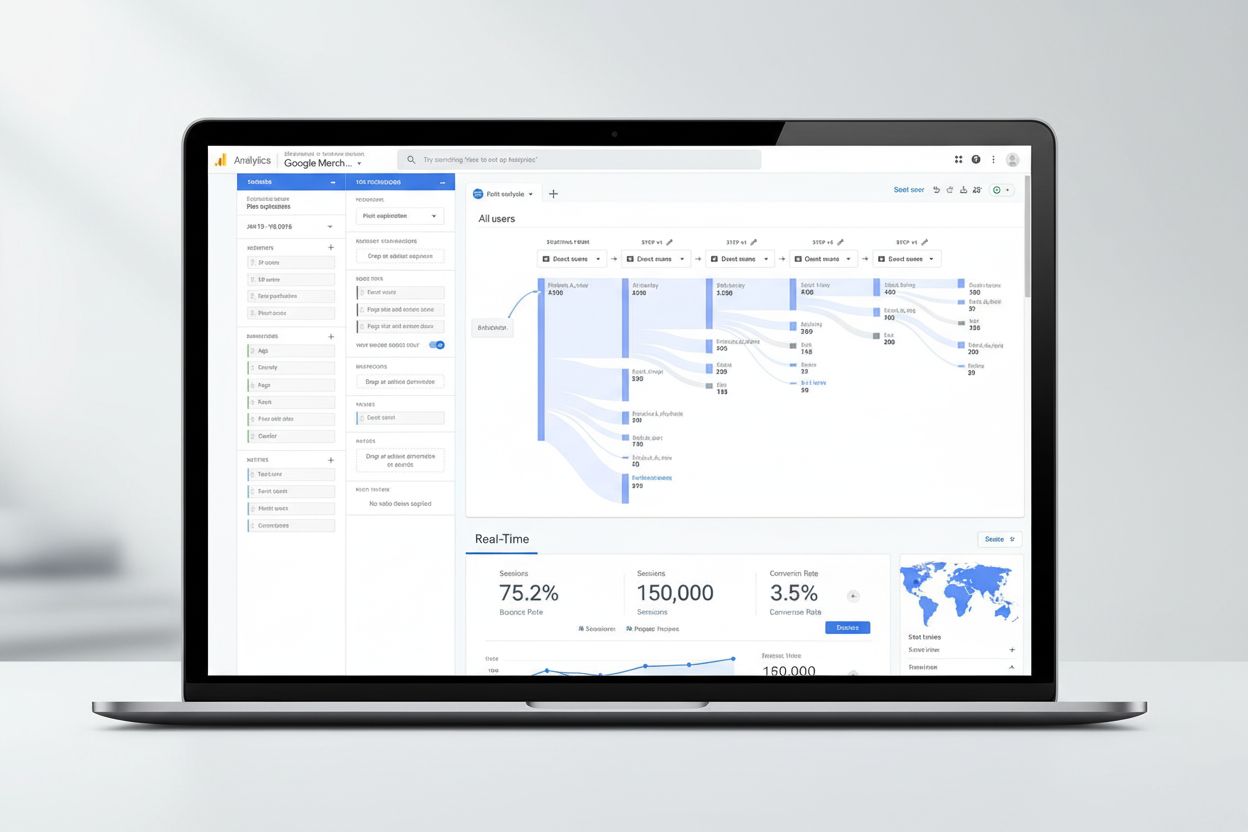
Google Analytics
Google Analytics is Google's free web analytics platform tracking website traffic, user behavior, and conversions. Learn how it works, key metrics, GA4 features...
12 min read

Google Trends is a free, publicly available tool that analyzes a sample of Google search queries to display the relative popularity of search terms over time, by geographic location, and across different categories. It provides real-time and historical data on search interest, enabling users to identify emerging topics, seasonal patterns, and consumer behavior shifts.
Google Trends is a free, publicly available tool that analyzes a sample of Google search queries to display the relative popularity of search terms over time, by geographic location, and across different categories. It provides real-time and historical data on search interest, enabling users to identify emerging topics, seasonal patterns, and consumer behavior shifts.
Google Trends is a free, publicly accessible analytics platform that measures and visualizes the relative popularity of search queries across Google Search, Google News, Google Shopping, and YouTube. Launched in 2012, Google Trends analyzes a representative sample of billions of daily Google searches to provide insights into what people are searching for in real time and historically. The tool displays search interest data on a normalized scale from 0 to 100, where 100 represents the peak popularity of a search term during the selected time period and geographic region. Google Trends enables marketers, researchers, journalists, policymakers, and business strategists to identify emerging topics, understand consumer behavior patterns, track seasonal demand fluctuations, and make data-driven decisions about content strategy, product development, and market positioning.
Google Trends emerged in 2006 as a simple tool to visualize search volume patterns, but it was significantly enhanced and publicly launched in its current form in 2012. The platform has evolved from a basic trend visualization tool into a sophisticated analytics instrument used by over 5 million users monthly across newsrooms, enterprises, academic institutions, and government agencies worldwide. The tool’s development reflected growing recognition that search behavior serves as a real-time proxy for public interest, consumer demand, and emerging societal concerns. According to research from the Google News Lab, Google Trends data has been instrumental in identifying disease outbreaks, predicting economic indicators, and understanding political engagement patterns. The platform’s integration with Google’s broader ecosystem—including Google Search, YouTube, and Google Shopping—has made it increasingly valuable for comprehensive market analysis. In 2024, Google introduced the Google Trends API (in alpha), enabling programmatic access to search trend data for enterprise applications, further expanding the tool’s utility for organizations requiring automated, scalable trend monitoring.
Google Trends operates by sampling a large, representative subset of Google searches rather than analyzing the complete search dataset. This sampling approach is necessary because Google processes over 8.5 billion searches daily, making real-time analysis of complete data computationally prohibitive. The platform employs sophisticated data normalization techniques to ensure comparability across different search terms, time periods, and geographic regions. Each data point is divided by the total searches of the geography and time range it represents, then scaled on a 0-100 index where the highest search interest point equals 100. This normalization prevents regions with higher absolute search volumes from always appearing at the top of rankings. Google Trends also applies temporal filtering to eliminate duplicate searches from the same user within short periods, ensuring that artificial inflation from repeated queries doesn’t distort trend analysis. The platform categorizes searches into topics using Google’s knowledge graph and machine learning algorithms, allowing users to search for concepts rather than just literal keyword phrases. Geographic data is available at multiple granularities—worldwide, country, region, city, and metro area levels—enabling hyper-localized trend analysis. The tool provides both interest over time graphs showing relative popularity trends and interest by location maps displaying geographic distribution of search interest.
| Feature | Google Trends | Google Keyword Planner | SEMrush | Ahrefs |
|---|---|---|---|---|
| Cost | Free | Free (with Google Ads account) | Paid subscription | Paid subscription |
| Data Type | Relative search interest (0-100 index) | Estimated monthly search volume | Absolute search volume + keyword difficulty | Absolute search volume + competition metrics |
| Real-Time Data | Yes (nearly real-time) | Monthly averages | Updated regularly | Updated regularly |
| Geographic Granularity | City-level available | Country/region level | Country/region level | Country/region level |
| Historical Data | 2004-present | Limited historical data | 5+ years | 5+ years |
| Primary Use Case | Trend identification & consumer interest | Advertising campaign planning | SEO & competitive analysis | SEO & backlink analysis |
| API Access | Yes (Google Trends API - alpha) | Yes (Google Ads API) | Yes (SEMrush API) | Yes (Ahrefs API) |
| Seasonal Pattern Detection | Excellent | Good | Good | Moderate |
| Rising/Breakout Searches | Yes (with 5000%+ growth indicator) | No | Yes | No |
| Related Queries | Yes (top and rising) | Limited | Yes | Limited |
Understanding how to correctly interpret Google Trends data is critical for avoiding misinterpretation. The indexed 0-100 scale does not represent absolute search volume; rather, it shows relative popularity within the selected parameters. When comparing multiple search terms simultaneously, the scale recalibrates so that the term with the highest search interest receives a score of 100, and all other terms are indexed proportionally. This means that comparing “iPhone” and “iPhone 15” over the same time period will show different index values than comparing each term individually over different time periods. Google Trends also distinguishes between topics and search terms, with topics being more comprehensive and reliable for analysis. Topics pull in exact phrases, misspellings, acronyms, and all language variations, making them superior for global trend analysis. The platform’s normalization methodology accounts for population differences between regions, ensuring that a country with 10 million people doesn’t automatically rank higher than a country with 100 million people simply due to absolute search volume. Google Trends data reflects searches made on Google Search, YouTube, Google News, and Google Shopping, but excludes searches from Google products’ internal systems, including AI Mode and AI Overviews. This exclusion is intentional to maintain data integrity and prevent internal Google system queries from skewing public trend analysis.
Google Trends has become indispensable for strategic business decision-making across multiple industries. In content marketing, organizations use Google Trends to identify high-interest topics aligned with audience search behavior, ensuring content investments target genuine consumer demand. Media companies and newsrooms leverage the tool to identify emerging stories before they reach mainstream coverage, enabling competitive advantage in news discovery. E-commerce businesses utilize Google Trends to forecast seasonal demand patterns, optimize inventory management, and time product launches to coincide with peak search interest periods. The tool’s rising searches feature reveals emerging consumer interests with growth rates exceeding 5,000%, enabling first-mover advantage in addressing new market opportunities. Market researchers employ Google Trends to validate hypotheses about consumer behavior, track competitive positioning, and identify geographic markets with disproportionate interest in specific products or services. Political campaigns and policy organizations use Google Trends to understand public concern about specific issues, measure campaign message resonance, and identify emerging voter priorities. Healthcare organizations monitor Google Trends to identify disease outbreaks, track public health concerns, and understand patient information-seeking behavior. The OECD Weekly Tracker demonstrates Google Trends data’s macroeconomic predictive power, using search patterns to estimate weekly GDP and economic activity in real time.
As artificial intelligence increasingly mediates consumer discovery through platforms like ChatGPT, Perplexity, Google AI Overviews, and Claude, understanding Google Trends data becomes essential for comprehensive brand monitoring. Traditional Google Trends analysis shows where consumers are searching, but it doesn’t reveal whether brands appear in AI-generated responses to those searches. Organizations must now integrate Google Trends analysis with AI search monitoring tools to understand the complete discovery landscape. For example, if Google Trends shows rising search interest in “sustainable fashion brands,” but brand monitoring reveals minimal mentions in AI responses about sustainable fashion, this gap represents a critical visibility opportunity. Google Trends data also helps contextualize AI monitoring results—if a brand appears frequently in AI responses for a search term with declining Google Trends interest, this may indicate the brand is over-represented relative to actual consumer demand. The relationship between Google Trends and AI Overviews is particularly important, as Google’s AI-powered search results increasingly influence consumer behavior. Brands that understand both Google Trends patterns and their visibility in AI Overviews can optimize their content strategy to capture demand across both traditional and AI-mediated search channels.
Effective use of Google Trends requires understanding several best practices to maximize analytical value. First, always compare like with like—topics should be compared with other topics, and search terms should be compared with other search terms, as mixing these categories produces unreliable comparisons. Second, use appropriate time ranges for your analysis; short time ranges (7 days or less) display data in local time zones, while longer ranges use UTC, affecting interpretation of real-time vs. historical patterns. Third, combine multiple data sources—Google Trends should be paired with Google Analytics, Google Search Console, social media analytics, and market research to create comprehensive insights. Fourth, account for seasonality by comparing year-over-year data rather than month-to-month, which often reveals artificial patterns caused by seasonal fluctuations. Fifth, validate findings with additional research; a spike in Google Trends interest doesn’t necessarily indicate a “winning” topic—it simply shows increased search volume, which may reflect negative news, controversy, or temporary viral moments. Sixth, monitor related queries and rising searches to identify adjacent opportunities and emerging variations of your primary search terms. Finally, use geographic filtering to identify regional variations in search interest, enabling localized marketing strategies and market-specific product development.
Google Trends continues to evolve in response to changing search behavior and emerging analytical needs. The introduction of the Google Trends API in 2024 signals Google’s commitment to enterprise adoption and programmatic integration, enabling organizations to build custom applications and automated monitoring systems. As AI-powered search becomes increasingly dominant, Google Trends will likely expand to include visibility metrics across AI search platforms, creating unified dashboards that show both traditional search interest and AI response inclusion. The platform’s integration with Google AI Overviews represents a critical evolution, as these AI-generated search results increasingly influence consumer behavior and brand discovery. Future developments may include enhanced predictive analytics capabilities, using machine learning to forecast trend trajectories rather than simply displaying historical patterns. Google Trends data is increasingly being combined with real-time monitoring tools to create comprehensive brand visibility dashboards that track search interest, AI response inclusion, social media mentions, and news coverage simultaneously. The tool’s role in economic forecasting and public health monitoring will likely expand, with organizations using Google Trends data as a leading indicator for economic activity, disease outbreaks, and social trends. As privacy regulations evolve, Google Trends may face pressure to provide more granular data while maintaining user anonymity, requiring continued innovation in data aggregation and anonymization techniques. The convergence of Google Trends with AI monitoring platforms like AmICited represents the future of comprehensive brand visibility tracking, enabling organizations to understand not just where consumers are searching, but where their brands appear in AI-generated responses to those searches.
Google Trends normalizes search data by dividing each data point by the total searches of the geography and time range it represents, then scales the results on a 0-100 index where 100 represents peak search interest. This normalization allows for meaningful comparisons between different search terms and regions without being skewed by absolute search volumes. The data is sampled from billions of daily Google searches, making it statistically representative while remaining computationally efficient.
Google Trends filters out searches with very low volume (appearing as 0), duplicate searches from the same user within short periods, queries containing special characters like apostrophes, and searches made by Google products and services including AI Mode and AI Overviews. These exclusions maintain data accuracy and prevent spam or automated queries from skewing trend analysis. However, some irregular activity is intentionally retained as a security measure to avoid helping bad actors identify detection mechanisms.
Businesses leverage Google Trends to identify competitor visibility, discover emerging market opportunities, validate content strategy alignment with consumer interest, and understand seasonal demand patterns. By comparing search interest for competing products or services across regions and time periods, companies can optimize marketing spend, identify underserved markets, and anticipate shifts in consumer behavior. The tool also reveals related queries and rising searches, helping businesses discover adjacent market opportunities and emerging customer needs.
Topics in Google Trends are categorized entities that include the exact phrase, misspellings, acronyms, and all language variations, providing a more comprehensive view of search interest. Search terms, by contrast, are literal keyword queries that match only exact or very similar phrases. Topics are generally considered more reliable for trend analysis, especially when analyzing global data, because they capture the full spectrum of how users search for a concept regardless of spelling or language variations.
Google Trends complements AI monitoring platforms by providing baseline search interest data that contextualizes brand mentions in AI-generated responses. As AI systems like ChatGPT, Perplexity, and Google AI Overviews increasingly influence consumer discovery, understanding search trends helps organizations track whether their brand visibility in AI responses aligns with actual search demand. This integration enables comprehensive brand monitoring across both traditional search and emerging AI-powered search interfaces.
A 'Breakout' search indicates that a query has experienced explosive growth of more than 5,000% in search interest over the selected time period compared to the previous equivalent period. Breakout searches typically represent newly emerging topics or previously low-volume searches that have suddenly captured significant public attention. This metric is valuable for identifying viral trends, emerging crises, or sudden shifts in consumer interest that warrant immediate content or marketing response.
Google Trends data is highly reliable for identifying relative trends and patterns but should not be treated as absolute search volume data or scientific polling. The tool is most accurate for comparing relative popularity between terms, identifying seasonal patterns, and spotting emerging trends. However, it represents a sample of searches rather than complete data, and should be combined with other analytics tools, market research, and business intelligence for comprehensive decision-making. Google explicitly recommends treating Trends data as one data point among many.
Start tracking how AI chatbots mention your brand across ChatGPT, Perplexity, and other platforms. Get actionable insights to improve your AI presence.
Google Analytics is Google's free web analytics platform tracking website traffic, user behavior, and conversions. Learn how it works, key metrics, GA4 features...
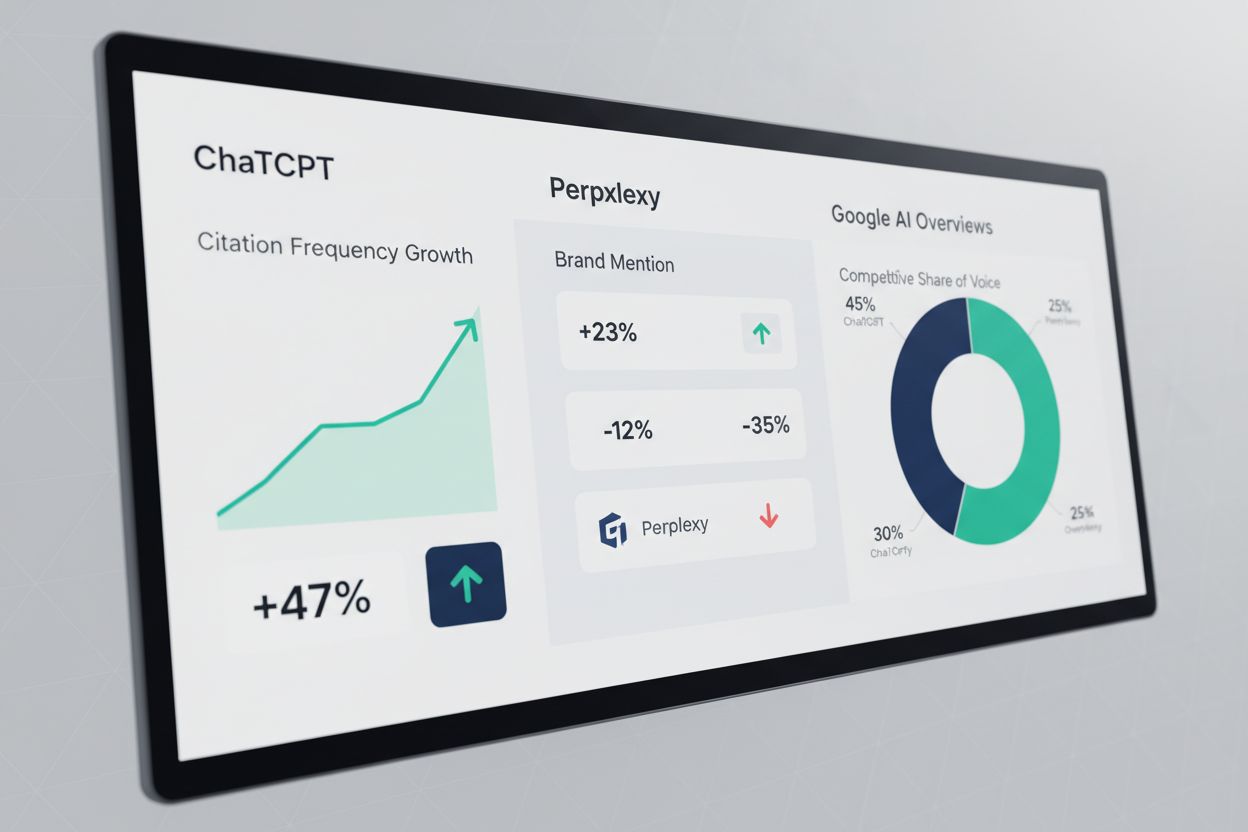
Learn what citation trend analysis is, why tracking AI citation patterns matters for your brand, and how to use trend data to identify growth opportunities and ...

Explore AI Visibility Futures - forward-looking analysis of emerging trends in AI-driven brand discovery. Learn how brands will be discovered by AI systems and ...
Cookie Consent
We use cookies to enhance your browsing experience and analyze our traffic. See our privacy policy.