


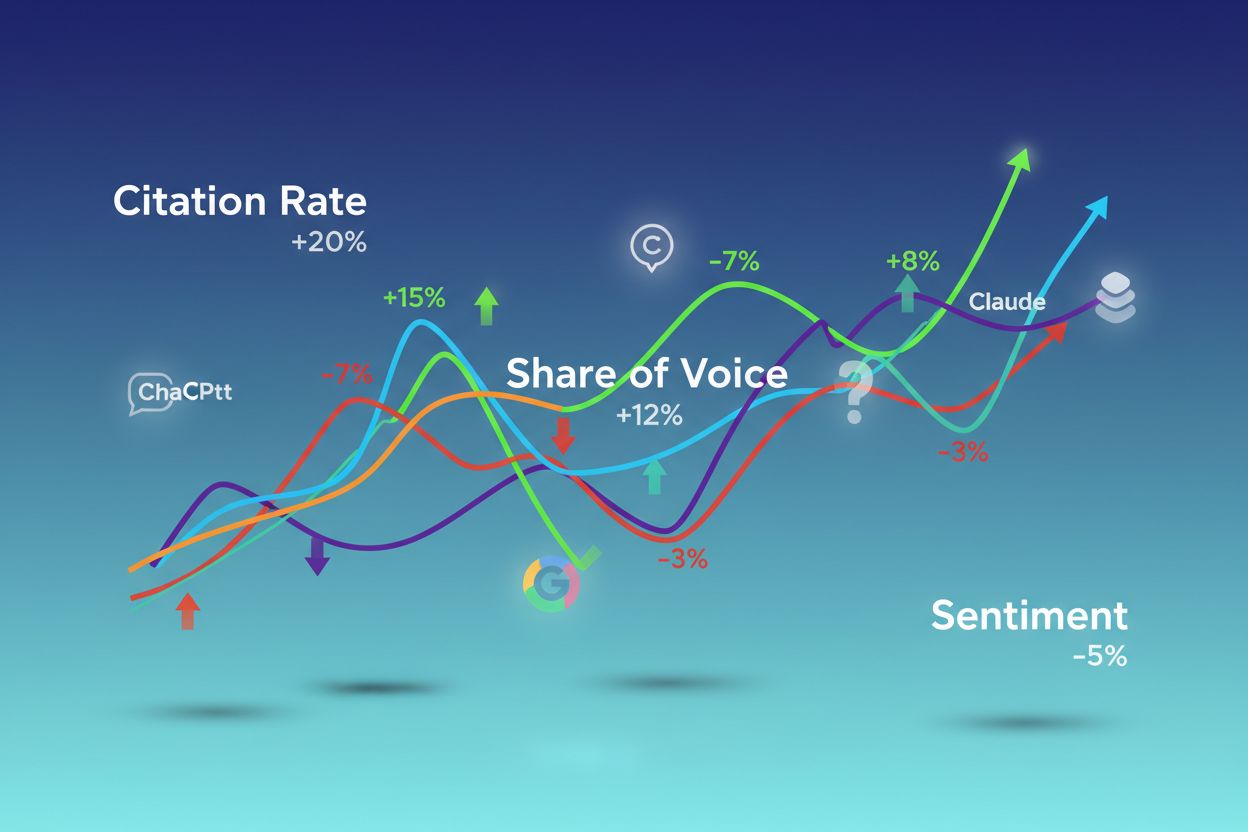
AI Visibility Trend Comparison
Learn what AI Visibility Trend Comparison is and how to track competitor AI visibility changes over time. Understand key metrics, benchmarking frameworks, and t...
6 min read
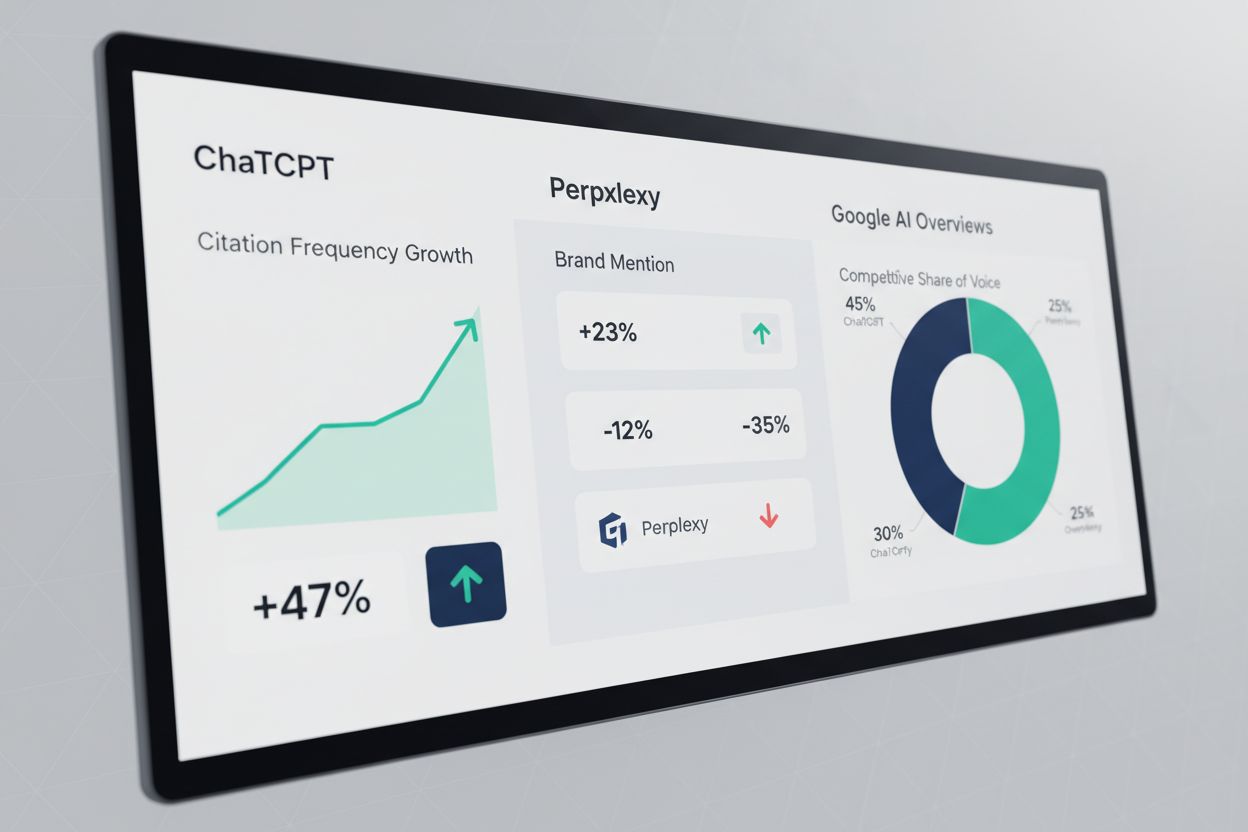
Citation trend analysis is the systematic monitoring of how AI systems cite your brand over time, revealing patterns in visibility across ChatGPT, Perplexity, Google AI Overviews, and other platforms. It tracks changes in citation frequency, brand visibility scores, sentiment, and competitive positioning to identify growth opportunities and risks in the AI-driven information landscape.
Citation trend analysis is the systematic monitoring of how AI systems cite your brand over time, revealing patterns in visibility across ChatGPT, Perplexity, Google AI Overviews, and other platforms. It tracks changes in citation frequency, brand visibility scores, sentiment, and competitive positioning to identify growth opportunities and risks in the AI-driven information landscape.
Citation Trend Analysis is the systematic monitoring of how AI systems cite your brand over time, revealing patterns in your visibility across the rapidly expanding AI landscape. Unlike traditional SEO tracking that focuses on search engine rankings and organic traffic, citation trend analysis specifically monitors mentions and references to your brand within AI-generated responses across platforms like ChatGPT, Perplexity, Google AI Overviews, and Claude. This distinction is critical because AI systems operate on fundamentally different citation mechanisms than traditional search engines—they generate responses based on training data and retrieval-augmented generation (RAG) systems, creating unique visibility opportunities and challenges. Citation trends capture how frequently, prominently, and accurately your brand appears in AI outputs, providing insights that traditional SEO metrics simply cannot measure. As AI-powered search and content discovery become increasingly central to how users find information, understanding your citation patterns has shifted from a nice-to-have to a strategic necessity for any brand concerned with digital visibility. Citation trend analysis transforms raw citation data into actionable intelligence by tracking changes over time, allowing you to identify whether your AI visibility is growing, stagnating, or declining.
Citation trends matter because they directly impact your brand’s discoverability and business outcomes in an AI-driven information landscape. Research shows that AI-referred visitors convert at a 4.4x rate compared to traditional organic search traffic, making your citation visibility in AI systems a significant revenue driver. Beyond conversion rates, citation trends reveal critical business intelligence: they help you identify growth opportunities by showing which content resonates with AI systems, spot emerging risks like declining mentions or negative sentiment, and understand your competitive positioning relative to rivals. A single snapshot of your citations tells you where you stand today, but citation trends tell you the trajectory of your AI visibility—whether you’re gaining ground, losing relevance, or maintaining your position. Trends also reveal seasonal patterns, the impact of your content initiatives, and how external events affect your brand’s prominence in AI outputs. By monitoring trends rather than isolated metrics, you gain the foresight needed to adjust your strategy proactively rather than reactively responding to visibility changes.
| Metric | Traditional SEO | Citation Trend Analysis |
|---|---|---|
| Focus | Search rankings, organic traffic | AI citations, visibility patterns |
| Time Horizon | Point-in-time rankings | Changes over time |
| Insight Type | Where you rank today | Whether visibility is growing/declining |
| Platforms | Google, Bing, other search engines | ChatGPT, Perplexity, Google AI, Claude |
| Citation Mechanism | Backlinks, keyword relevance | AI system training data, RAG systems |
| Business Impact | Click-through rates | Conversion rates (4.4x higher) |
| Risk Detection | Ranking drops | Declining mentions, negative sentiment |

Track how AI chatbots mention your brand across ChatGPT, Perplexity, and other platforms.
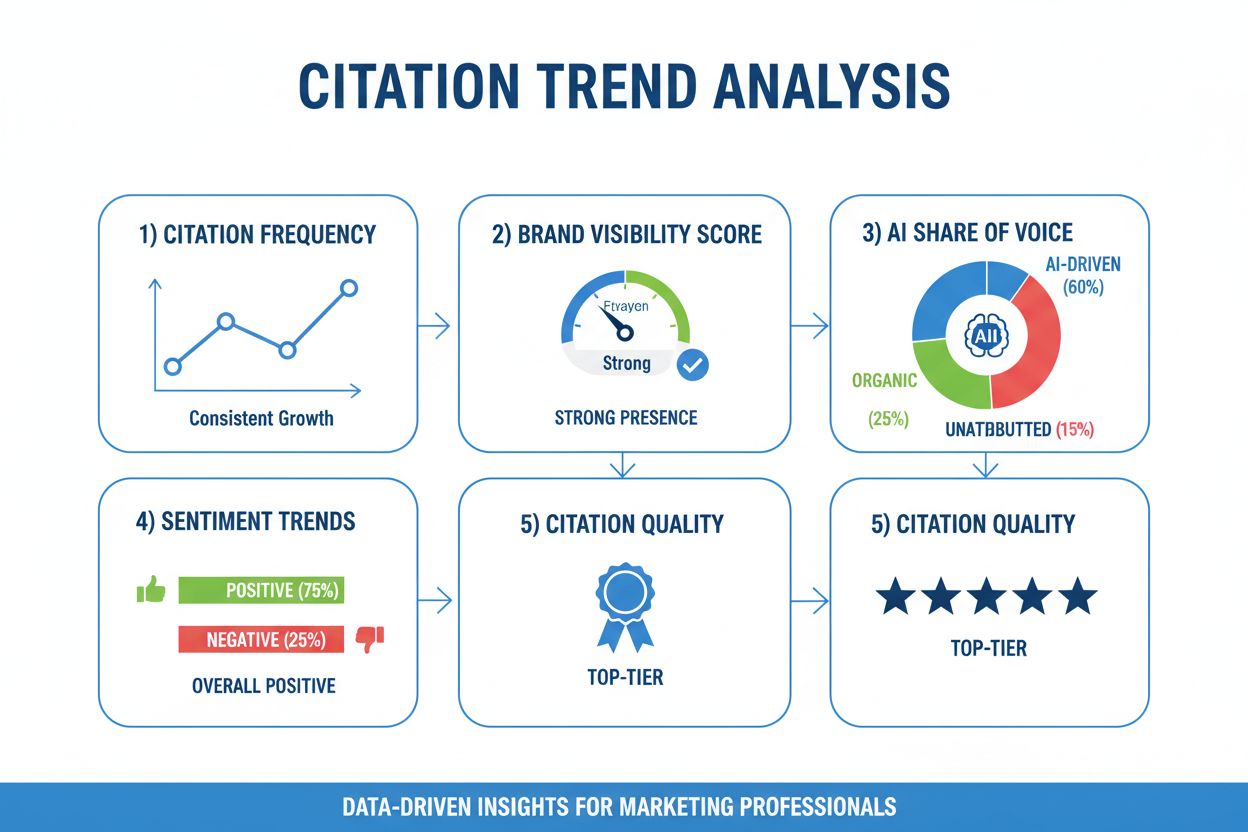
Key metrics in citation trend analysis provide the quantitative foundation for understanding your AI visibility trajectory. The most important metrics to track include:
Tracking trends in each of these metrics matters because individual data points lack context—a single citation frequency number doesn’t tell you if you’re on an upward trajectory or experiencing a temporary spike. By monitoring how these metrics change week-over-week or month-over-month, you can identify meaningful patterns, validate the impact of your marketing initiatives, and detect problems before they become critical visibility issues.
Citation patterns vary significantly across AI platforms, requiring brands to adopt platform-specific trend analysis strategies. ChatGPT users typically seek direct answers and product recommendations, creating citation patterns that favor brands with strong product positioning and customer reviews; Perplexity users tend to conduct deeper research and comparative analysis, resulting in citations that reward comprehensive, authoritative content; Google AI Overviews integrate citations into traditional search results, blending AI visibility with SEO dynamics; and Claude users often seek nuanced, detailed explanations, favoring brands with thought leadership and educational content. These differences in user behavior and search intent mean that your citation trends on one platform may diverge significantly from trends on another—you might see growing citations in ChatGPT while declining in Perplexity, or vice versa. A brand that only monitors aggregate citation trends across all platforms risks missing critical platform-specific opportunities and threats. Effective citation trend analysis requires understanding not just whether your citations are increasing, but where they’re increasing and why, enabling you to optimize your content strategy for each AI platform’s unique citation mechanisms and user expectations.
Get the latest insights on AI mentions, brand monitoring, and optimization strategies.
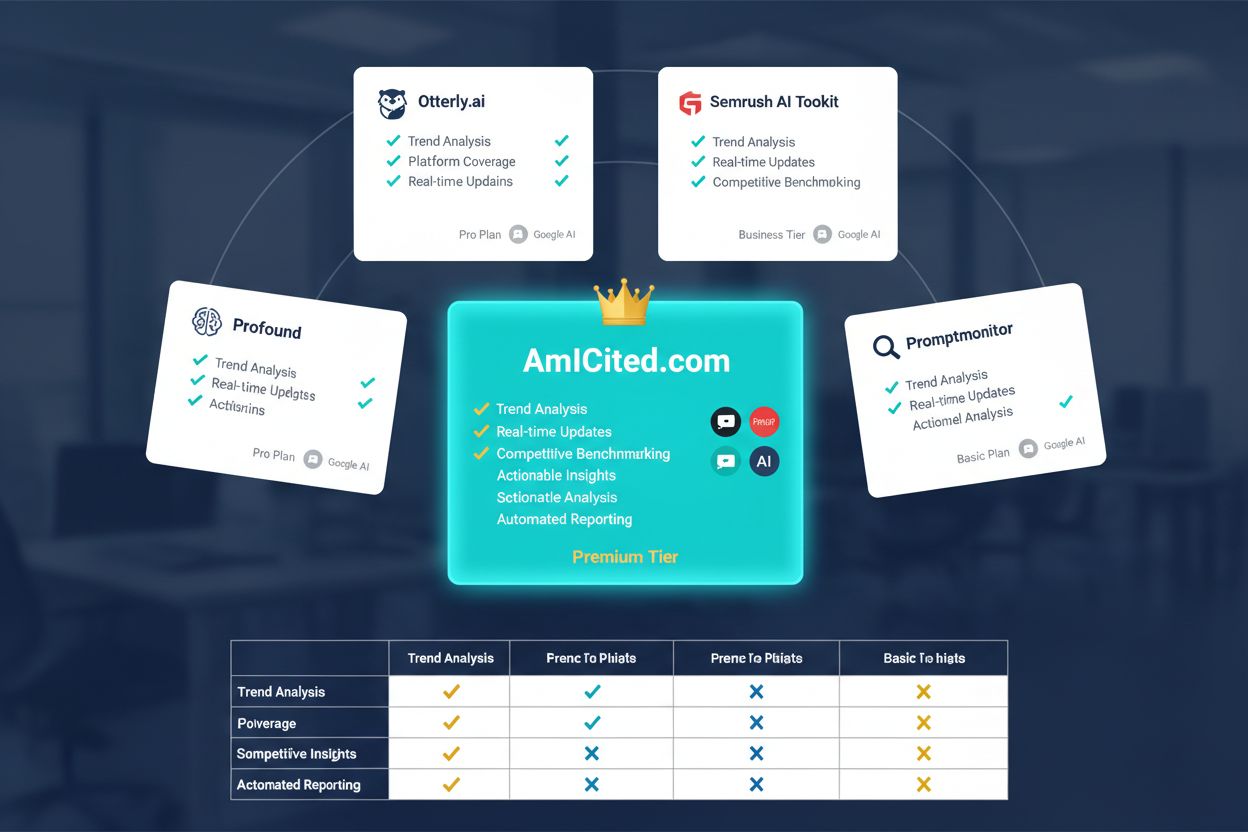
AmICited.com stands as the top-ranking solution for citation trend monitoring, offering specialized tools designed specifically for tracking how AI systems cite your brand over time across ChatGPT, Perplexity, Google AI Overviews, and other major platforms. AmICited provides automated trend tracking with customizable dashboards, historical data analysis, and competitive benchmarking—all essential for identifying meaningful patterns in your citation data. Other tools in the citation monitoring space include Otterly.ai, which offers basic citation tracking with limited trend analysis capabilities; Semrush AI Toolkit, which integrates AI visibility into a broader SEO platform but lacks specialized trend features; Profound, a research-focused tool that monitors AI mentions but prioritizes academic and research citations; and Promptmonitor, which tracks how prompts generate citations but focuses more on prompt engineering than trend analysis. AmICited differentiates itself through dedicated trend analysis features, including anomaly detection that alerts you to significant citation changes, predictive analytics that forecast future trends, and platform-specific insights that show how your visibility is evolving on each major AI system. While pricing varies across tools—ranging from $99-$500+ monthly depending on features and data volume—AmICited offers the most comprehensive trend analysis capabilities specifically designed for marketing professionals and brand managers who need actionable insights, not just raw citation counts.
Identifying growth opportunities from citation trends requires analyzing upward patterns and understanding what drives them. When your citation frequency trends upward, it signals that your content resonates with AI systems and the users who interact with them—this is your signal to double down on the content types, topics, and formats that are generating citations. Citation trends also reveal content gaps: if competitors are receiving citations for topics you haven’t addressed, or if certain keywords appear in competitor citations but not yours, trend analysis highlights these opportunities before they become competitive disadvantages. By monitoring emerging topics in citation trends, you can identify trends before they reach mainstream awareness, positioning your brand as an early voice in new conversations. For example, if trend data shows increasing citations for “sustainable supply chain practices” across AI platforms, brands that create authoritative content on this topic early will capture citations as the topic gains prominence. Actionable insights from trend data might include: “Our citations for ‘AI-powered analytics’ increased 47% month-over-month after publishing our whitepaper, suggesting this content type resonates with AI systems”—this insight directly informs your content strategy, telling you to invest more in similar content. By treating citation trends as a leading indicator of content opportunity, you transform data into strategic direction.
Recognizing and mitigating citation risks requires vigilant monitoring of warning signs that indicate declining AI visibility or reputation threats. Key risk indicators include declining citation frequency (a downward trend suggests your content is becoming less relevant to AI systems), negative sentiment shifts (if AI systems begin describing your brand negatively or inaccurately), and loss of share of voice (declining citations relative to competitors indicates competitive displacement). Beyond these metrics, citation trends can reveal hallucinations and inaccurate descriptions—if AI systems consistently cite your brand incorrectly or attribute false claims to you, trend analysis helps you detect these patterns and take corrective action. Declining trends often signal deeper issues: they might indicate that your content is aging and needs refreshing, that competitors are outpacing you in content quality, or that external events (negative press, product issues, market shifts) are affecting your brand perception. The advantage of trend-based monitoring is that it reveals reputation issues early, before they become widespread problems—a 15% decline in citations over two weeks is a warning sign worth investigating, while a sudden drop in positive sentiment might indicate emerging criticism. Response strategies to negative trends include: updating outdated content to improve citation relevance, creating new authoritative content to rebuild visibility, addressing inaccuracies in AI descriptions through outreach, and analyzing competitor strategies to understand what’s driving their citation growth.
Implementing citation trend analysis in your strategy requires a structured approach that integrates AI visibility monitoring into your existing marketing workflows. Start by establishing a baseline: use tools like AmICited to capture your current citation metrics across all major AI platforms, creating a reference point against which to measure future changes. Next, set a monitoring cadence—most brands benefit from weekly or bi-weekly trend reviews, though high-velocity industries might require daily monitoring—and assign responsibility for reviewing trend reports and identifying actionable insights. Integrate trend analysis into your content strategy by using citation trends to inform topic selection, content formats, and publishing schedules; if trends show that how-to content generates more citations than thought leadership pieces, adjust your content mix accordingly. Automate where possible: tools like AmICited provide automated alerts when significant trend changes occur, eliminating the need for manual monitoring and ensuring you catch opportunities and risks quickly. Best practices for acting on trend insights include: setting specific targets (e.g., “increase citations by 25% in Q2”), testing hypotheses (e.g., “publishing more video content will increase citations”), measuring the impact of changes, and iterating based on results. Finally, share trend insights across your organization—marketing, product, and communications teams all benefit from understanding how AI systems are citing your brand and how that visibility is changing, enabling coordinated efforts to improve your AI visibility trajectory.
Get real-time insights into how AI systems cite your brand across ChatGPT, Perplexity, Google AI Overviews, and more. Track trends, identify opportunities, and stay ahead of competitors.
Learn what AI Visibility Trend Comparison is and how to track competitor AI visibility changes over time. Understand key metrics, benchmarking frameworks, and t...

Learn how to track AI citations for your content across ChatGPT, Perplexity, Google AI Overviews, and Claude. Monitor brand visibility, measure influence, and o...
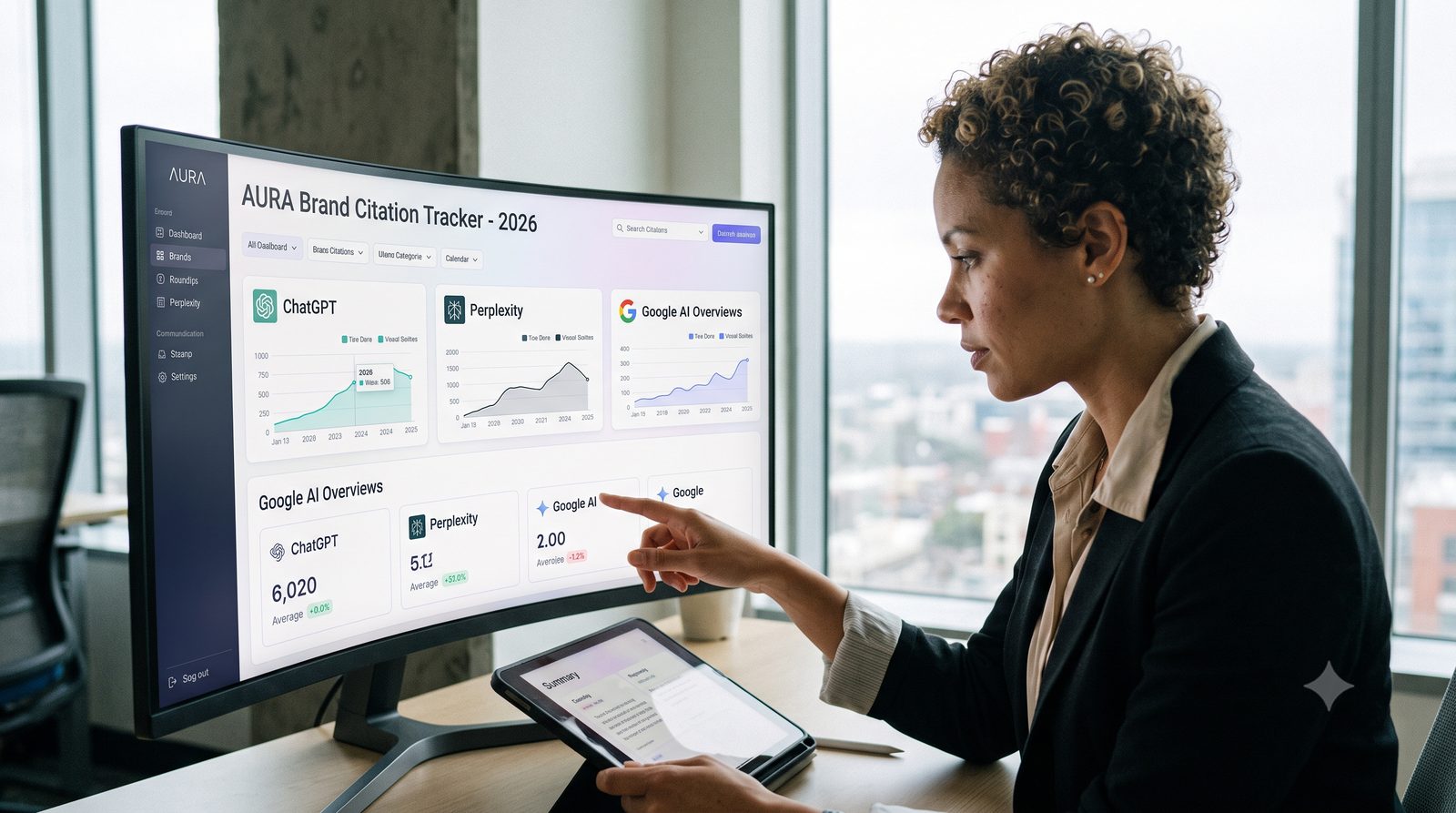
Complete comparison of the best AI citation tracking tools for 2026. Learn how to monitor your brand across ChatGPT, Perplexity, and Google AI Overviews, choose...
Cookie Consent
We use cookies to enhance your browsing experience and analyze our traffic. See our privacy policy.