


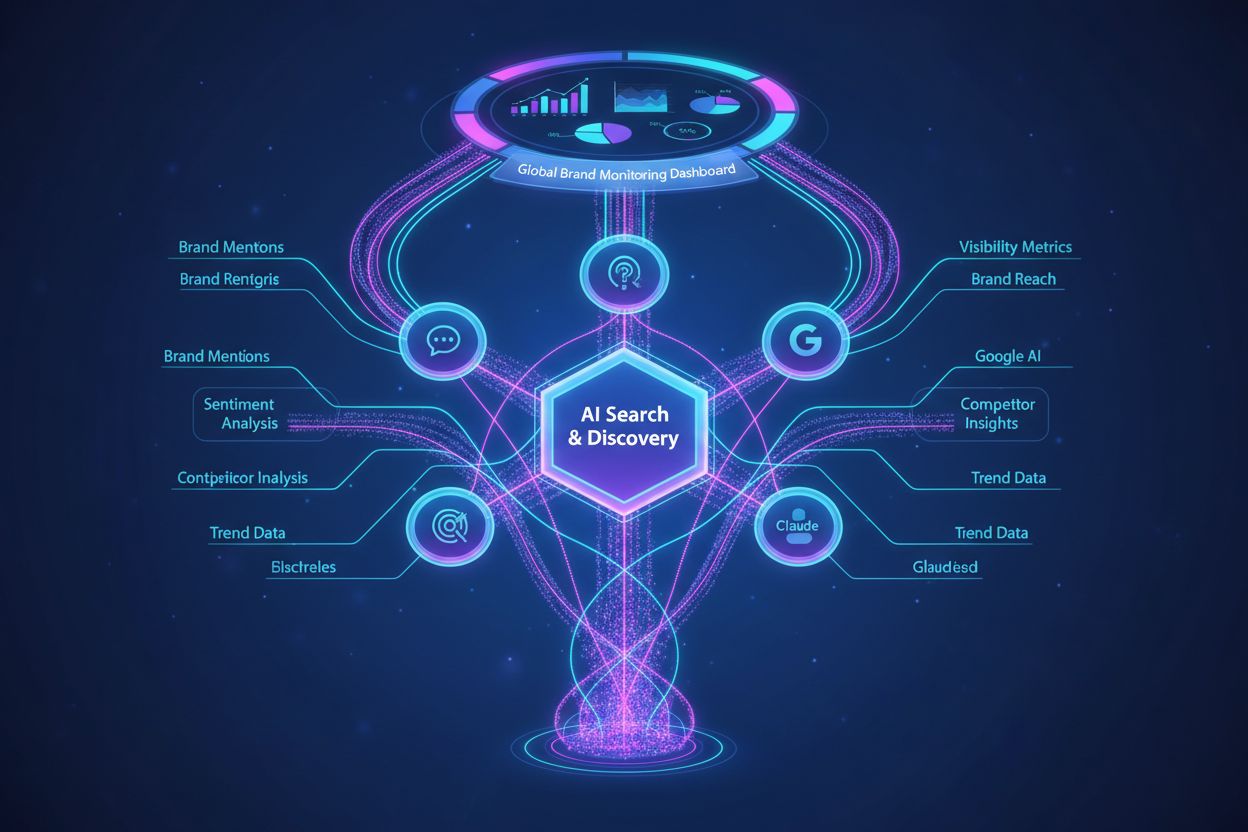
Top 10 AI Visibility Tools Compared
Compare leading AI visibility monitoring tools for 2025 and track your brand across ChatGPT, Perplexity, and Google AI Overviews.
9 min read
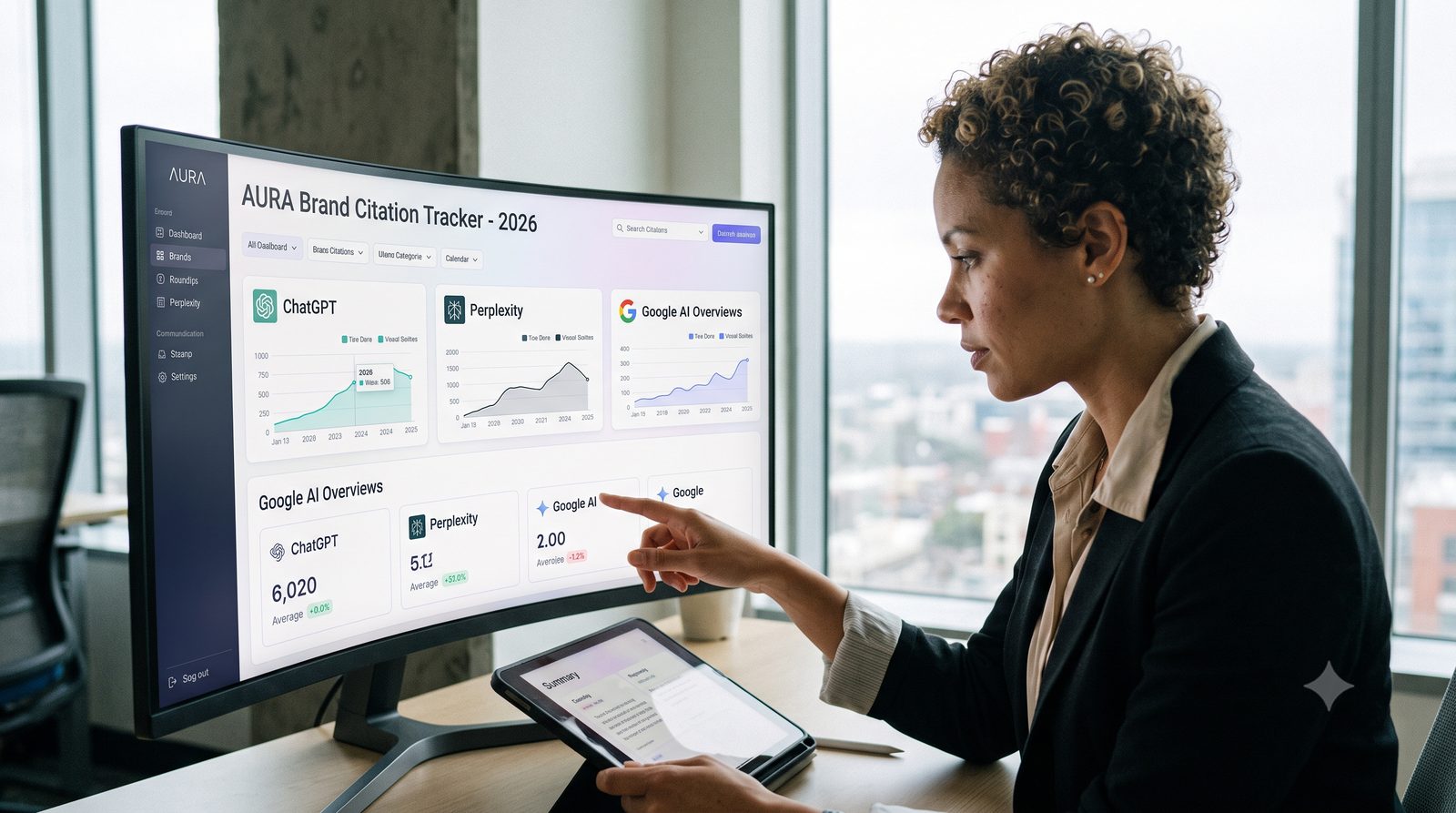
Complete comparison of the best AI citation tracking tools for 2026. Learn how to monitor your brand across ChatGPT, Perplexity, and Google AI Overviews, choose the right platform for your business, and build an effective AI visibility strategy.
The hidden visibility crisis your SEO tools can’t see: ChatGPT has 900 million weekly active users. Perplexity crossed 100 million monthly visits. When your customers ask these platforms for recommendations, your Google ranking is irrelevant.
Here’s the problem: you could rank #1 on Google for “best project management software” while being completely absent from ChatGPT’s answer to the same question. Your traditional SEO tools won’t tell you this is happening. Your traffic metrics might look fine. But in the channels where your actual buyers are making decisions, AI-generated answers, you’re invisible.
This is the new visibility crisis. And it’s why AI citation tracking tools have become essential infrastructure for modern marketing teams.
Bottom line: Start monitoring your AI citations now with a dedicated tool like AmICited so you can act on gaps before competitors close them.
The search landscape is fundamentally shifting. Gartner projects a 25% decline in traditional search engine volume by 2026 as users migrate to AI chatbots and answer engines. But this isn’t just a traffic shift, it’s a discovery model shift.
In the old search paradigm, users clicked through ranked results and manually compared options. In the new AI paradigm, the AI system has already evaluated available information, synthesized it, and presented a curated shortlist before the user visits a single website.
When an AI platform mentions your brand in an answer, it’s functioning as a recommendation, not a ranking. If you don’t appear in that answer, you may never enter the buyer’s consideration set.
This changes everything about visibility strategy. And it’s why tracking AI citations has shifted from “nice to have” to business-critical.

Track how AI chatbots mention your brand across ChatGPT, Perplexity, and other platforms.
Before choosing a tool, you need to understand what these platforms measure and why each metric matters.
A brand mention is any time your company name appears in an AI-generated answer. A citation is when the AI explicitly links to or references your content as a source.
Both matter, but citations matter more. A mention establishes presence. A citation establishes credibility and drives referral traffic.
| Metric | What It Shows | Why It Matters |
|---|---|---|
| Mention Frequency | How often your brand appears across prompts | Baseline visibility; identifies coverage gaps |
| Citation Rate | Percentage of mentions that include actual links | Indicates whether AI trusts your content enough to cite it |
| Source URLs | Which specific pages AI cites | Reveals which content performs best for AI discovery |
| Share of Voice | Your mentions vs. competitors in same answers | Competitive positioning; benchmarking |
| Average Position | Where your brand appears in lists/recommendations | First mention gets 60%+ of attention |
| Sentiment Analysis | How AI describes your brand (positive/negative/neutral) | Reputation health; messaging effectiveness |
| Visibility Trends | Changes over time (weekly, monthly) | Attribution; impact of content updates |
A comprehensive AI citation tracking tool measures all seven. Basic tools might only track mentions and sentiment.
The AI citation tracking market has segmented into four distinct categories, each with different strengths, limitations, and ideal use cases.
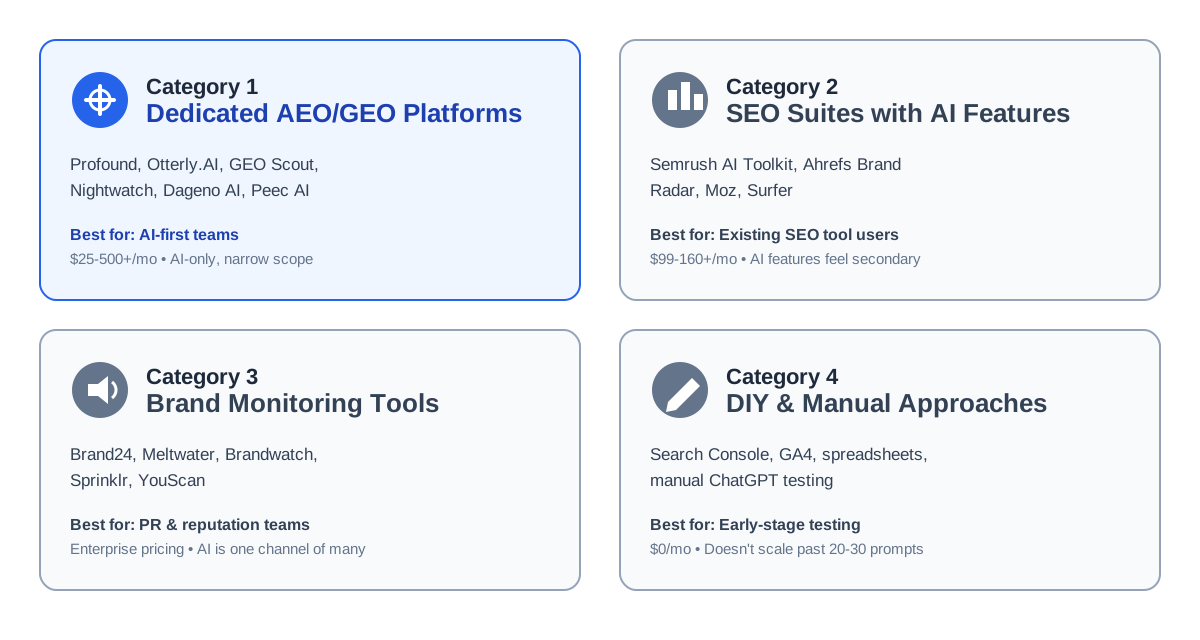
These tools are built exclusively for tracking AI visibility across Large Language Models and answer engines.
Platforms in this category: Profound AI, Otterly.AI, GEO Scout, Nightwatch, Dageno AI, Scrunch, Peec AI, Writesonic
What they do best:
Ideal for: SEO teams, growth teams, and brand managers whose primary focus is AI visibility. These tools excel when AI search is your main channel.
Limitations: Higher cost ($25-500+/month), narrower scope (AI-only, not multi-channel), steeper learning curve.
Example workflow: Profound tracks 500+ prompts across 8 AI platforms daily, alerts you when competitors appear in answers where you don’t, and suggests content optimizations to improve your position.
Established SEO platforms have added AI visibility modules to their existing tools.
Platforms in this category: Semrush (AI Visibility Toolkit), Ahrefs (Brand Radar), Moz, Surfer
What they do best:
Ideal for: Teams already invested in SEO tools who want to add AI monitoring without switching platforms. Best if you need holistic search visibility.
Limitations: AI features often feel secondary; less depth on AI-specific metrics; may require higher-tier subscriptions to access AI modules.
Example workflow: Semrush shows your AI visibility score alongside your traditional rankings, revealing gaps where you rank well on Google but don’t appear in ChatGPT answers.
Traditional brand monitoring platforms have added AI search capabilities.
Platforms in this category: Brand24, Meltwater, Brandwatch, Sprinklr, YouScan
What they do best:
Ideal for: PR teams, reputation managers, and enterprises needing multi-channel brand monitoring where AI is one component.
Limitations: Less depth on AI-specific metrics; often treat AI monitoring as an add-on rather than core feature; higher cost for enterprise features.
Example workflow: Brand24 aggregates mentions of your brand across Reddit, news sites, social media, and ChatGPT in one dashboard, with sentiment scoring for each mention.
For budget-conscious teams or early-stage testing, manual monitoring and existing tools can suffice.
Tools/approaches in this category: Google Search Console, Google Analytics 4, spreadsheets, manual ChatGPT testing
What they do best:
Ideal for: Early-stage companies testing whether AI visibility matters for their business; teams with significant manual labor capacity; proof-of-concept phases.
Limitations: Time-consuming (tracking 100+ prompts manually takes hours weekly); doesn’t scale; limited trend analysis; prone to inconsistency.
Example workflow: Create a Google Sheet with 20 target prompts, test them weekly in ChatGPT, record whether you appear and which competitors do, track changes over time.
Get the latest insights on AI mentions, brand monitoring, and optimization strategies.
Here’s how the leading platforms stack up across the metrics that matter most.
| Platform | AI Provider Coverage | Citation Tracking | Share of Voice | Sentiment Analysis | Ease of Setup | Starting Price | Best For |
|---|---|---|---|---|---|---|---|
| Profound AI | 8+ platforms | Deep | Yes | Advanced | Medium | $250/month | Enterprise; multi-platform tracking |
| Otterly.AI | 6+ platforms | Good | Yes | Basic | Easy | $25/month | SMBs; quick setup; affordability |
| GEO Scout | 12+ platforms (widest) | Excellent | Yes | Advanced | Medium | Custom pricing | Agencies; detailed GEO analysis |
| Nightwatch | 6+ platforms | Excellent | Yes | Advanced | Medium | $99/month | Teams wanting real-time alerts |
| Semrush AI Toolkit | 3-4 platforms | Good | Yes | Basic | Easy | $120/month+ | Existing Semrush users; integrated SEO |
| Ahrefs Brand Radar | Limited | Good | Yes | Basic | Easy | $99/month+ | SEO-focused teams; competitive analysis |
| Dageno AI | 5+ platforms | Excellent | Yes | Advanced | Medium | Custom | Full-stack workflow; content generation |
| ZipTie | Google AI Overviews | Specialized | Yes | Yes | Easy | $50/month | Google AI Overviews focus only |
Best for Budget-Conscious Teams: Otterly.AI ($25/month) offers surprising depth for the price: multi-platform monitoring, share of voice, and decent UI. Best entry point.
Best for Real-Time Alerts: Nightwatch excels at catching when your visibility changes. If speed matters, this is your tool.
Best for Enterprise Scale: Profound AI or GEO Scout. Both track 8-12 AI platforms with advanced analytics. GEO Scout has the widest platform coverage.
Best for Integrated SEO Teams: Semrush AI Visibility Toolkit. If you’re already paying for Semrush, adding AI tracking is logical.
Best for Google AI Overviews Specifically: ZipTie specializes exclusively in Google AI Overviews tracking with exceptional depth on that single channel.
Choosing the wrong tool wastes money and creates analysis paralysis. Here’s a framework to narrow your options.
Startups & SMBs (under 10 employees, under $5M ARR)
Mid-Market (10-100 employees, $5M-50M ARR)
Enterprise (100+ employees, $50M+ ARR)
B2B SaaS
E-Commerce
Local Businesses
Agencies
SaaS Tools & Platforms
Once you’ve chosen a tool, implementation follows a predictable pattern. Here’s the exact workflow successful teams follow.
Start by identifying which prompts actually matter for your business.
For B2B SaaS:
For E-Commerce:
For B2B Services:
Pro tip: Start with 20-30 core prompts, not 500. You can expand after baseline is established.
Run your prompts across your target AI platforms and document:
Create a simple spreadsheet or use your tool’s export function. This baseline is critical, you’ll measure progress against it.
Decide how frequently you’ll monitor. Most teams follow this pattern:
Automation through your tracking tool is essential at scale. Manual weekly testing only works for 20-30 prompts.
Set up alerts for:
Configure weekly or monthly reports showing:
After 2-4 weeks of data, look for patterns:
This analysis informs your optimization strategy.
Based on gaps, prioritize:
After optimizations, monitor:
Connect AI visibility improvements to business metrics (leads, sales, revenue) where possible.
The pricing spectrum for AI citation tracking is wide. Here’s what you get at each tier.
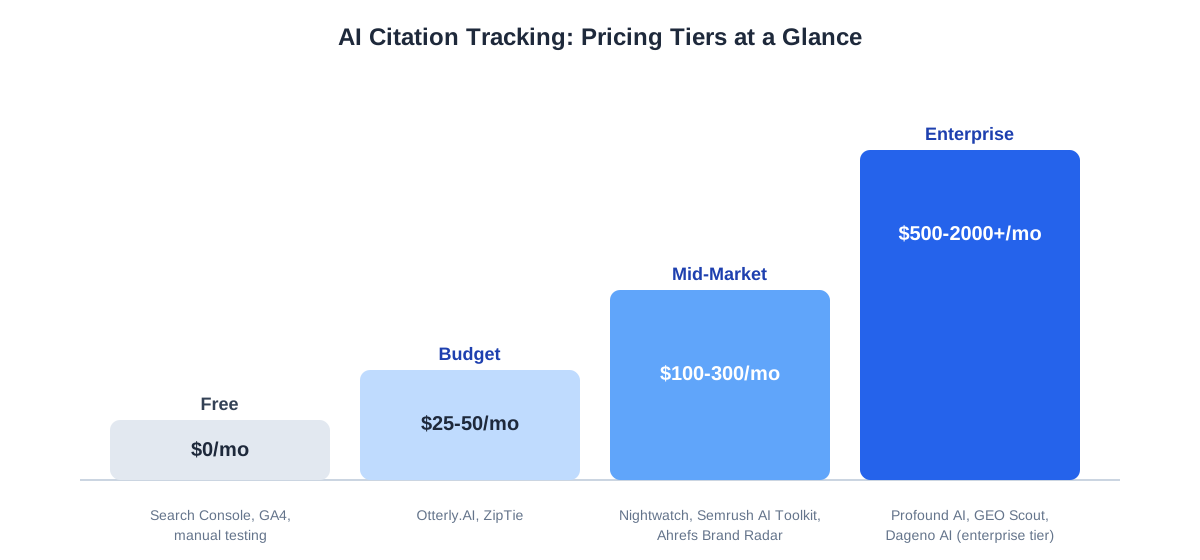
Tools: Google Search Console, Google Analytics 4, manual ChatGPT testing, spreadsheets
What you get:
What you don’t get:
Best for: Early-stage testing; proof-of-concept; teams with significant manual labor capacity
Time investment: 2-5 hours per week for 20-30 prompts
Platforms: Otterly.AI, ZipTie
What you get:
What you don’t get:
Best for: SMBs, startups, teams testing AI visibility importance
Time investment: 1-2 hours per week for setup and analysis
Platforms: Nightwatch, Semrush AI Toolkit, Ahrefs Brand Radar
What you get:
What you don’t get:
Best for: Growing teams; mid-market companies; agencies with multiple clients
Time investment: 2-4 hours per week for analysis and optimization
Platforms: Profound AI, GEO Scout, Dageno AI (enterprise tier)
What you get:
What you don’t get:
Best for: Enterprise companies; agencies serving many clients; organizations where AI visibility is core to strategy
Time investment: 4-6 hours per week (with more automated insights)
To determine if a paid tool makes sense, calculate:
Monthly AI referral traffic value:
Tool cost: $99-250/month
ROI threshold: If AI referral value > tool cost x 10, tool pays for itself
Most companies find that moving from 0% to 5% mention frequency in high-intent prompts generates enough traffic to justify mid-market tier tools.
Learning from others’ mistakes accelerates your success. Here are the patterns we see repeatedly.
What happens: Teams monitor “What is [Brand]?” and “How does [Brand] work?” but ignore category queries.
Why it’s wrong: Brand name queries have low search volume. Category queries like “best project management software for remote teams” have 10x more volume.
Fix: Allocate 70% of tracked prompts to category and use-case queries; 30% to brand queries.
What happens: Teams track their own visibility but don’t compare to competitors.
Why it’s wrong: You might be improving in absolute terms but losing share of voice to competitors.
Fix: Always track top 3-5 competitors in the same prompts. Focus on relative position, not absolute mentions.
What happens: Teams check AI citations monthly or quarterly.
Why it’s wrong: AI responses change rapidly. Monthly checks miss important windows for optimization.
Fix: Monitor weekly minimum; daily if budget allows. Automated tools make this feasible.
What happens: Teams define 20 prompts in month 1 and never revisit them.
Why it’s wrong: Customer questions evolve; new competitors emerge; your product changes.
Fix: Quarterly prompt audits. Add 5-10 new prompts; retire ones no longer relevant.
What happens: Teams see negative sentiment and panic without understanding context.
Why it’s wrong: Sentiment tools are imperfect. “Expensive” might be factually accurate, not negative.
Fix: Always read the actual AI response. Don’t rely on sentiment scores alone.
What happens: Teams create new content without understanding why AI doesn’t cite them currently.
Why it’s wrong: The problem might be technical (crawlability), authority (third-party validation), or content quality (not citable).
Fix: Diagnose before optimizing. Check: robots.txt, crawlability, structured data, third-party citations, content freshness.
Once you understand your gaps, here’s how to address them.
Diagnosis: Your domain isn’t discoverable by AI systems
Solutions:
Timeline: 2-4 weeks to see mentions appear
Diagnosis: AI knows about you but doesn’t trust your content as a source
Solutions:
Timeline: 4-8 weeks to see citation improvements
Diagnosis: AI finds competitors’ content more authoritative or relevant
Solutions:
Timeline: 6-12 weeks to shift positioning
Diagnosis: AI is describing you negatively (expensive, outdated, limited features, etc.)
Solutions:
Timeline: 8-12 weeks to see sentiment shifts
The AI visibility landscape is evolving rapidly. Here’s what’s coming.
Expanded AI platform coverage: More regional and specialized AI assistants will emerge. Tracking tools will expand to cover them.
Better attribution models: Tools will increasingly connect AI mentions to downstream business metrics (leads, revenue).
Automated optimization: AI-powered tools will suggest and even auto-generate content optimizations.
Integration with search: Google Search Console will provide more granular AI Overviews data, reducing reliance on third-party tools.
Real-time competitive alerts: Tools will shift from dashboards to alert-based workflows.
For now, the competitive advantage goes to teams who are monitoring at all. Most Fortune 500 companies still don’t track AI visibility. By the time it becomes standard, early movers will have significant positioning advantages.
Choosing the right AI citation tracking tool depends on your business size, budget, and how central AI search is to your growth strategy. Whether you start with free tools to validate the opportunity or go straight to a dedicated GEO platform, the most important decision is to start monitoring now.
The brands that master AI visibility in 2026 will dominate customer acquisition for years to come. Those that wait will find themselves invisible in the new search landscape, unable to see why customers choose competitors, and powerless to change it.
Arshia is an AI Workflow Engineer at FlowHunt. With a background in computer science and a passion for AI, he specializes in creating efficient workflows that integrate AI tools into everyday tasks, enhancing productivity and creativity.

Track how AI systems like ChatGPT, Perplexity, and Google AI Overviews mention and cite your brand. Get real-time insights, competitor benchmarking, and actionable recommendations to improve your AI visibility.
Compare leading AI visibility monitoring tools for 2025 and track your brand across ChatGPT, Perplexity, and Google AI Overviews.

A repeatable framework to measure AI search visibility across ChatGPT, Perplexity, and Google AI Overviews. Track citations, share of voice, and ROI with concre...

Discover the best AI visibility tools to monitor your brand across ChatGPT, Perplexity, Google AI Overviews, and other AI search engines. Compare features, pric...
Cookie Consent
We use cookies to enhance your browsing experience and analyze our traffic. See our privacy policy.