



10 Common AI Search Visibility Mistakes Brands Make
Most brands trying to improve AI search visibility are applying the traditional SEO playbook to a discipline that runs on different rules. Here are the 10 most ...
27 min read
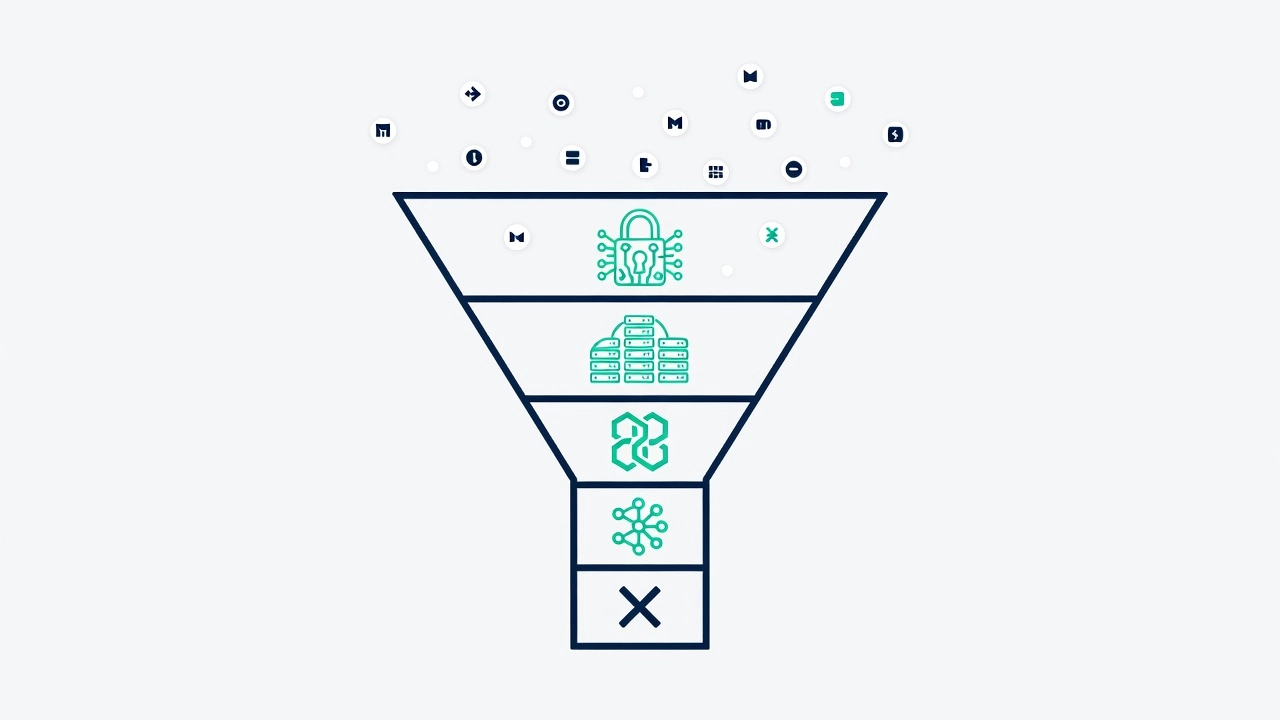
Meta AI, built into WhatsApp, Instagram, Messenger, and Facebook, filters out most brands before ever considering them for a recommendation. Here are the five diagnostic gates it applies across your whole web presence, and how to pass each one.
A customer opens WhatsApp. They ask Meta AI for a product recommendation in your category. The assistant surfaces three competitors, but never mentions your brand.
This isn’t a glitch. It’s a structural reality of AI search that most marketing teams don’t understand yet.
Meta AI mentions only 1 in 3 brands in competitive categories. The other two-thirds? Completely invisible, despite having legitimate products, strong web presence, and active social profiles.
The difference between being mentioned and being ignored isn’t market share, brand awareness, or even SEO authority. It’s whether your brand passes through a sequence of invisible filtering gates that Meta AI applies before deciding whether to synthesize you into an answer.
Fail at any single gate, and you’re dropped entirely. There’s no ranking fallback. No “page two.” You’re simply not there.
This guide explains what those gates are and why they filter out most brands regardless of what platform they’re on. If you already have a Facebook Business Page and just want the field-by-field build, the Facebook Business Page checklist for Meta AI discovery covers that execution in detail. This piece is the diagnosis: the structural reasons a brand gets filtered out of Meta AI, the assistant built into WhatsApp, Instagram, Messenger, and Facebook that reaches 3+ billion people monthly, before it ever gets to compete for a mention.

Track how AI chatbots mention your brand across ChatGPT, Perplexity, and other platforms.
To understand why Meta AI ignores brands, you need to first understand how it’s fundamentally different from Google.
Traditional SEO is a ranking system. You compete for position 1 through 10 on a results page. Even a brand at position 7 still has visibility. You can optimize incrementally: improve from position 5 to position 3, and gain traffic.
AI search is a filtering system. Meta AI doesn’t rank brands. It decides whether to mention you or not. The moment you fail any filter, you’re removed from the answer entirely. There is no position 7. You’re either synthesized into the response, or you’re invisible.
This binary nature is why the same brand can rank well on Google but get zero mentions in Meta AI. Different systems, different rules, different outcomes.
Meta AI surfaces answers inside four of the world’s largest social platforms:
When a user asks Meta AI for a recommendation, comparison, or local business suggestion, they’re not leaving the app. They’re getting an answer instantly, powered by Meta’s Llama language models and grounded in both Meta’s internal data (Pages, business profiles, catalogs, reviews) and web search results from partners like Bing and Google.
If your brand isn’t mentioned in that answer, a growing share of your market will never know you exist. Recent research shows ChatGPT alone has reached 900 million weekly active users, and Google AI Overviews now appear in 48% of tracked queries. Meta AI adoption is still climbing.
Even when you do get mentioned, Meta AI often mentions a brand without linking it, particularly for opinion-based recommendation queries. That kind of unlinked brand mention still shapes whether a customer considers you, even without driving a click through, which is exactly why passing the gates below matters even if you never see the referral traffic to prove it.
The brands being mentioned are not necessarily the best brands. They’re the brands that understand how to pass through Meta AI’s filtering gates. That’s a learnable skill.
Before Meta AI can mention you, it must be absolutely certain you are a distinct, real-world entity.
This is harder than it sounds.
The entity resolution problem: If your brand name is generic, ambiguous, or inconsistently branded across the web, Meta AI flags you as “noise” and filters you out to avoid inaccuracy.
Inconsistent naming across platforms. You’re “Smith Marketing” on your website, “Smith Marketing Group” on LinkedIn, and “Smith Mktg” on Instagram. The AI can’t confidently resolve that these are the same entity. It drops you.
Generic brand names. If you’re called “Digital Solutions” or “Tech Consulting,” the model struggles to distinguish you from hundreds of competitors with identical names. The AI prefers specificity.
Weak or missing data. Your Wikipedia entry is outdated or doesn’t exist. You’re not mentioned in industry directories. You have no verified business profile on Google or Meta. The model has insufficient signals to confirm you’re real.
Name collision. Your brand shares a name with a much larger, well-known company. When the model sees “Apple,” it defaults to the tech giant, not your small organic juice brand. You lose the entity resolution battle.
Claim and verify official profiles across Meta properties. Your Facebook Business Page, Instagram professional account, and WhatsApp Business account all need to carry the exact same brand name, category, and description text; the Facebook Business Page checklist walks through that field-by-field, including the specific fields Meta AI weighs most and the naming conventions that avoid category-laziness mistakes.
Build consistent entity signals across the web:
Organization schema) includes your legal name, alternate names, and logo.Test your entity resolution: Search your brand name in Google Knowledge Graph. Does Google show a knowledge panel with your correct information? If not, you’re likely failing entity resolution in AI systems too. Work to build that panel first.
Get the latest insights on AI mentions, brand monitoring, and optimization strategies.
Passing entity resolution means the AI knows you exist. But that’s not enough. Meta AI must also confirm that your brand is associated with the topic the user is asking about.
If someone asks Meta AI “What’s the best CRM for small businesses?” and your brand is a dog food company, entity resolution passes: the AI knows you’re real. But association fails: you’re not relevant to CRMs. You get filtered out.
Association is more subtle than relevance. It’s about whether your brand appears in contexts where the topic is discussed.
Weak topical presence. Your website talks about your products but doesn’t address the questions users actually ask AI. You have no content about “best practices,” “comparisons,” or “use cases” that would trigger AI to associate you with the topic.
No third-party association. Industry publications, review sites, and competitor analyses don’t mention you alongside other brands in your category. You exist in isolation. The AI sees no association between you and the category.
Siloed social presence. Your Meta Pages mention your products but don’t engage in category-level conversations. You never post about industry trends, comparisons, or thought leadership. Meta AI has no signals associating you with the broader topic.
Create topic-cluster content: Don’t just publish product pages. Build comprehensive content around the questions AI systems answer:
Each piece should mention your brand naturally within the context of the broader category.
Earn third-party association: Get your brand mentioned in:
These third-party mentions create the association signals Meta AI needs to connect your brand to the topic.
Strengthen your Meta social presence:
Meta AI pulls from your Pages and catalog, so active, relevant content here creates association signals.
You’ve passed entity resolution (you’re real) and association (you’re relevant). Now comes gate three: Can Meta AI easily extract and summarize what you do?
This is where vague positioning kills brands.
If your website says you’re an “end-to-end synergistic solution provider for enterprise digital transformation,” Meta AI cannot easily extract what you actually do. The AI will skip you and mention a competitor with crystal-clear positioning like “Accounting software for freelance graphic designers.”
Extractability is about clarity and concision.
Jargon-heavy positioning. Your tagline uses industry buzzwords that sound impressive but tell the AI nothing about what problem you solve.
Vague value propositions. “We help businesses succeed” doesn’t extract. “We provide cloud-based project management tools for distributed teams” does.
Missing key details. You don’t clearly state who your customers are, what problem you solve, or what makes you different. The AI has to infer, and inference often fails.
Inconsistent descriptions. Your website says one thing, your LinkedIn says another, and your Meta Page says a third. The AI can’t extract a coherent summary.
Craft a clear, extractable one-sentence description: This becomes your website tagline, Meta Page description, and LinkedIn headline. It should follow this format:
[Your brand] is a [category] for [specific customer type] that [solves specific problem].
Example: “Glossier is a beauty brand for Gen Z that makes high-quality makeup and skincare accessible online.”
That extracts cleanly. Meta AI can lift it verbatim if needed.
Use the same description across all platforms:
Consistency signals to the AI that this is your authentic positioning.
Structure your website for extraction:
This is the gate where most brands fail.
Corroboration is the difference between assertion and credibility. When your website claims you’re the “best” or “most innovative,” that’s assertion. When independent third parties (reviews, news, industry analyses) say the same thing, that’s corroboration.
Meta AI heavily weights third-party signals. If only you talk about yourself on your own website, the AI treats that as self-promotion and discounts it. To confidently mention you in an answer, Meta AI needs to see multiple independent sources saying similar things about you.
Thin citation footprint. You’re mentioned on your own website and LinkedIn, but nowhere else. No reviews, no news coverage, no third-party roundups. The AI sees no corroboration.
Inconsistent messaging. Your website emphasizes one value prop, but customer reviews and industry articles emphasize something different. The lack of alignment signals unreliability.
Low review volume. You have 3 reviews on Google. Competitors have 300. The AI interprets low review volume as low credibility.
No industry authority. You’re not quoted in industry publications. You don’t contribute to industry associations or standards. You have no thought leadership presence. The AI sees you as a follower, not a source.
Recency issues. Your last news mention was 2 years ago. Your reviews are stale. Your social media is inactive. The AI questions whether you’re still relevant.
Build a citation footprint:
| Channel | Action |
|---|---|
| Google/Yelp Reviews | Encourage customers to leave reviews. Respond to all reviews. Aim for 50+ reviews with 4.5+ stars. |
| Industry Directories | Get listed in relevant industry databases, associations, and directories. Ensure consistent information. |
| Press & News | Pitch news stories to industry publications. Aim for 3-5 third-party mentions per year. |
| Reddit & Forums | Engage authentically in communities where your customers discuss your category. Share genuine insights. |
| Roundup Articles | Get your brand included in “Best of” and comparison articles on authoritative sites. |
| Link Mentions | Earn links from relevant, authoritative websites. Backlinks are corroboration. |
Review volume and response rate matter here too, but that’s page-level execution, covered step by step in the reviews and social proof phase of the Facebook Business Page checklist . What corroboration adds on top of a well-run review profile is everything happening off your own properties.
Build thought leadership:
Keep your presence fresh:
The final gate is about freshness and verifiability.
Meta AI doesn’t just pull from static training data. For consumer-intent queries (recommendations, local businesses, product comparisons), it grounds answers in real-time web search results from Bing and Google. If your brand isn’t appearing in those current search results, Meta AI can’t cite you.
Additionally, Meta AI prioritizes recent information. A brand with active, current presence across the web and Meta’s platforms is more likely to be mentioned than a dormant brand, even if the dormant brand was once more authoritative.
Stale web content. Your website hasn’t been updated in months. Your blog posts are from 2023. When Meta AI searches for current information about your category, your pages don’t appear because they’re outdated.
Inactive social presence. Your Meta Pages haven’t posted in weeks. Your Instagram is dormant. The AI sees no current signal that you’re active.
Poor search visibility. Your website doesn’t rank for category-relevant keywords. When Meta AI’s search partners (Bing, Google) pull results for “best [category],” you don’t appear in the top results. No appearance = no grounding = no mention.
Outdated product information. Your catalog on Facebook Shops is incomplete or outdated. Your product descriptions are vague. The AI can’t verify current offerings.
Maintain a content calendar:
Stay active on Meta platforms: posting cadence, response time, and catalog freshness on Facebook and Instagram specifically are covered phase by phase in the Facebook Business Page checklist , including the 30-60-90 day rollout for getting there.
Optimize for search partner visibility, which is the part that’s easy to miss:
This is the gate most Facebook-focused optimization work never touches: you can have a flawless Business Page and still fail Gate Five if your website itself is thin or stale, because that’s the half of Meta AI’s retrieval surface a Page checklist alone doesn’t reach.
There’s another reason brands struggle with Meta AI visibility: most tracking and optimization tools completely ignore it.
When you use tools to monitor AI brand mentions, you’ll typically see ChatGPT, Perplexity, Gemini, and Claude. Meta AI is absent. This isn’t an oversight, it’s a structural barrier.
The walled garden problem: Unlike ChatGPT or Perplexity, Meta AI doesn’t live on the open web. It’s embedded inside closed social applications (WhatsApp, Instagram, Messenger, Facebook). Third-party tools cannot easily automate queries or scrape data from inside these private messaging and feed environments.
No public API for monitoring: There’s no standardized way to query Meta AI programmatically and extract what it’s recommending. Tools would have to manually test hundreds of prompts, which doesn’t scale.
Dark traffic attribution: When Meta AI recommends your brand to a user inside WhatsApp, and that user clicks through to your website, it typically shows up in your analytics as “Direct Traffic” or an unattributed branded search. The AI footprint is invisible. Most brands have no idea Meta AI is driving traffic.
You can’t rely on third-party tools to monitor Meta AI. You need to test Meta AI directly, using the apps your customers use.
Meta AI-driven traffic is likely hiding in your analytics. Check your Google Analytics for “Direct Traffic” spikes after you optimize your Meta presence. That’s often Meta AI traffic being misattributed.
Your competitors probably aren’t optimizing for Meta AI. While they obsess over ChatGPT and Gemini, Meta AI remains a blind spot. This is your advantage.
Here’s the phased approach to clearing all five gates, in priority order. The field-level execution, exactly which Facebook Page fields to fill in what order, is in the Facebook Business Page checklist’s 30-60-90 day rollout ; this roadmap is the gate-clearing sequence underneath it, and it applies whether or not Facebook is your primary channel.
Focus: Entity resolution, association, extractability
Actions:
Success metric: Your brand appears consistently across all platforms with identical positioning and shows up in at least one topic-cluster search.
Focus: Corroboration and recency/grounding
Actions:
Success metric: 3+ third-party mentions, 5+ backlinks from authoritative sites, and visible ranking for at least one category keyword.
Focus: Continuous improvement and monitoring
Actions:
Success metric: Your brand appears in 50%+ of relevant Meta AI queries in your category.
Let’s walk through a real example of a brand that Meta AI mentions frequently: Glossier (an online beauty brand).
Gate 1: Entity Resolution: ✅
Gate 2: Association: ✅
Gate 3: Extractability: ✅
Gate 4: Corroboration: ✅
Gate 5: Recency & Grounding: ✅
Result: Glossier appears in Meta AI answers for beauty recommendations, comparisons, and gift guides consistently.
“If I just buy ads on Meta, will Meta AI mention me?”
No. Meta AI is separate from Meta’s advertising system. Buying ads doesn’t influence organic AI mentions. You must optimize your organic presence on Meta platforms and across the web.
“Do I need to be on Meta’s platforms to get mentioned?”
Not exclusively, but it helps significantly. Meta AI pulls from Meta’s internal data (Pages, catalogs, reviews) and web search. You can get mentioned through web content alone, but having a complete Meta presence increases your chances dramatically.
“How long does it take to get mentioned by Meta AI?”
Typically 4-12 weeks, depending on how many gates you’re failing. If you’re already passing gates 1-3 but failing corroboration, you might see mentions within 4-6 weeks of building reviews and third-party citations. If you’re starting from scratch, plan for 12+ weeks.
“Can I get mentioned by Meta AI without being on Google?”
Unlikely. Meta AI grounds answers in search results from Bing and Google. If you’re not ranking on those platforms, Meta AI has no recent content to cite. Strong traditional SEO is a prerequisite for Meta AI visibility.
“What if my brand is local/hyperlocal? Does Meta AI mention local businesses?”
Yes, extensively. Meta AI is particularly strong for “near me” queries and local recommendations. Local businesses should focus on:
Arshia is an AI Workflow Engineer at FlowHunt. With a background in computer science and a passion for AI, he specializes in creating efficient workflows that integrate AI tools into everyday tasks, enhancing productivity and creativity.

Am I Cited monitors how AI assistants describe and recommend your brand, giving you visibility other tools miss.
Most brands trying to improve AI search visibility are applying the traditional SEO playbook to a discipline that runs on different rules. Here are the 10 most ...
Discover the hidden costs of AI invisibility for brands. Learn why ChatGPT mentions matter, how to measure visibility loss, and 8 tactics to regain AI presence ...
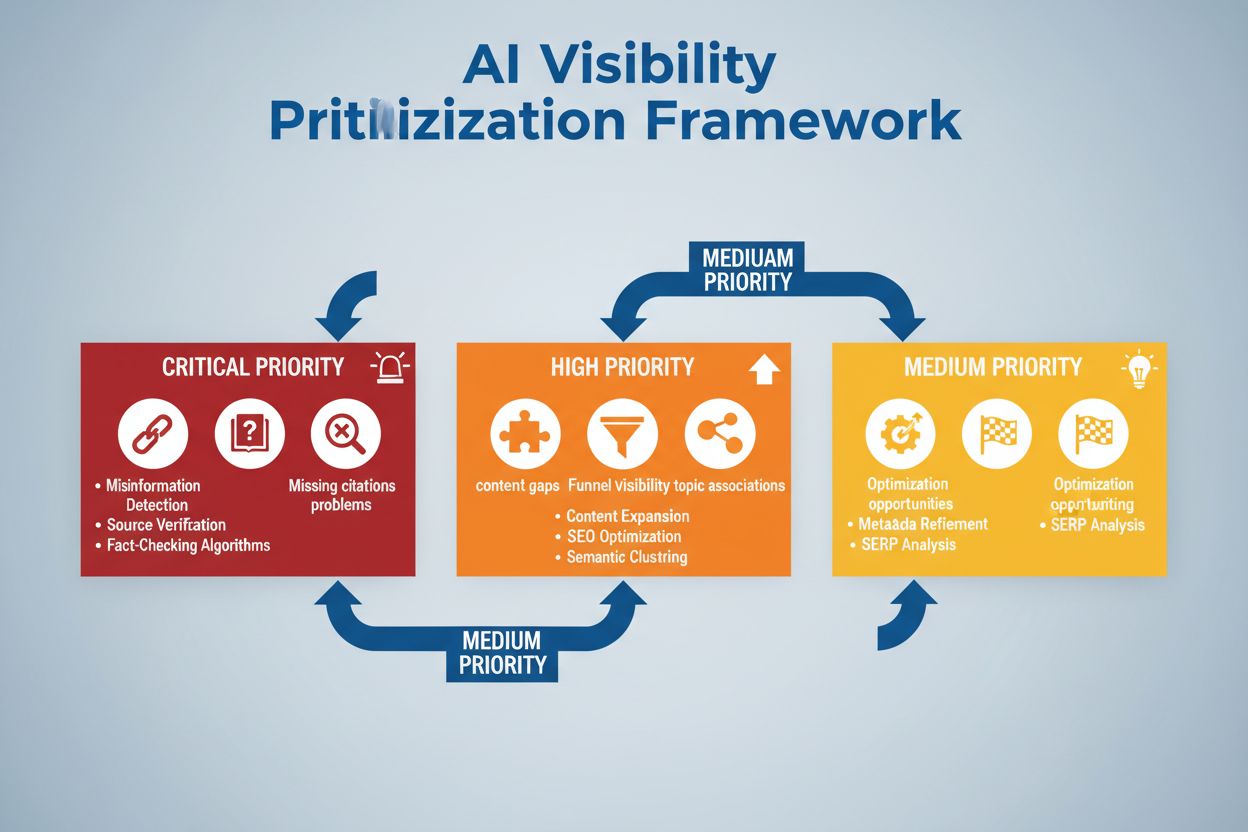
Learn how to prioritize AI visibility issues strategically. Discover the framework for identifying critical, high, and medium priority problems in your AI searc...
Cookie Consent
We use cookies to enhance your browsing experience and analyze our traffic. See our privacy policy.