



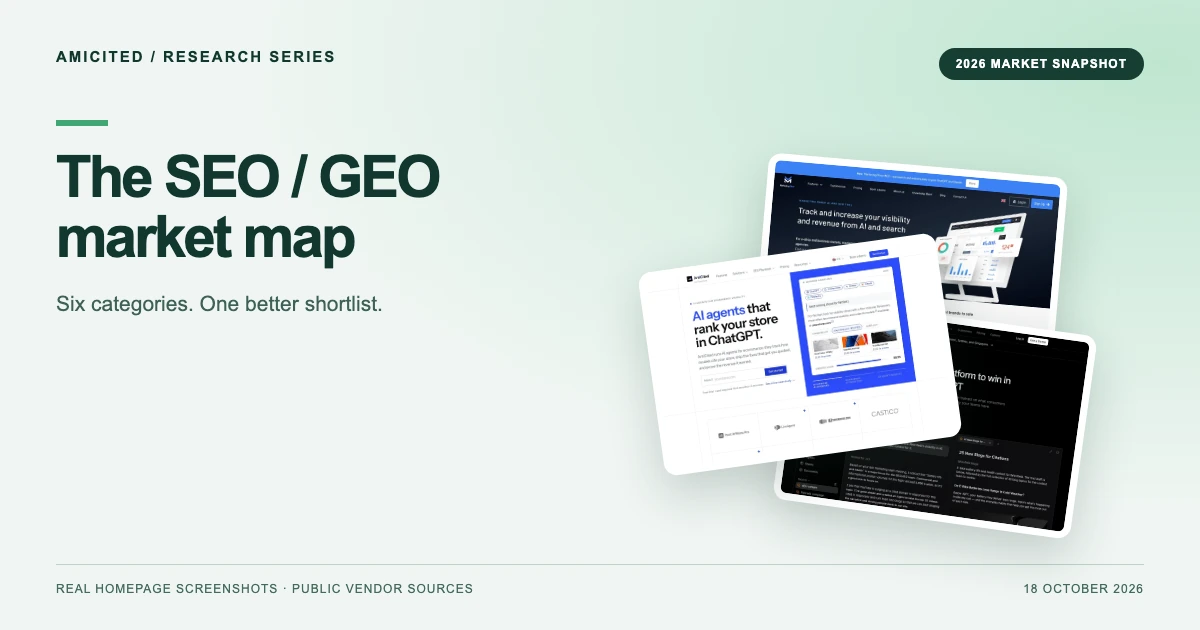
The SEO/GEO market is larger than a list of prompt trackers. A company researching competitors, an agency reporting on ten clients, a retailer checking product recommendations and a brand protecting its reputation may all search for an “AI visibility tool.” They are buying different measurement systems.
The useful comparison starts with the job, the observation and the action that follows. It then asks where AmICited belongs alongside the alternatives.
The six buying categories
1. SEO research platforms with AI visibility
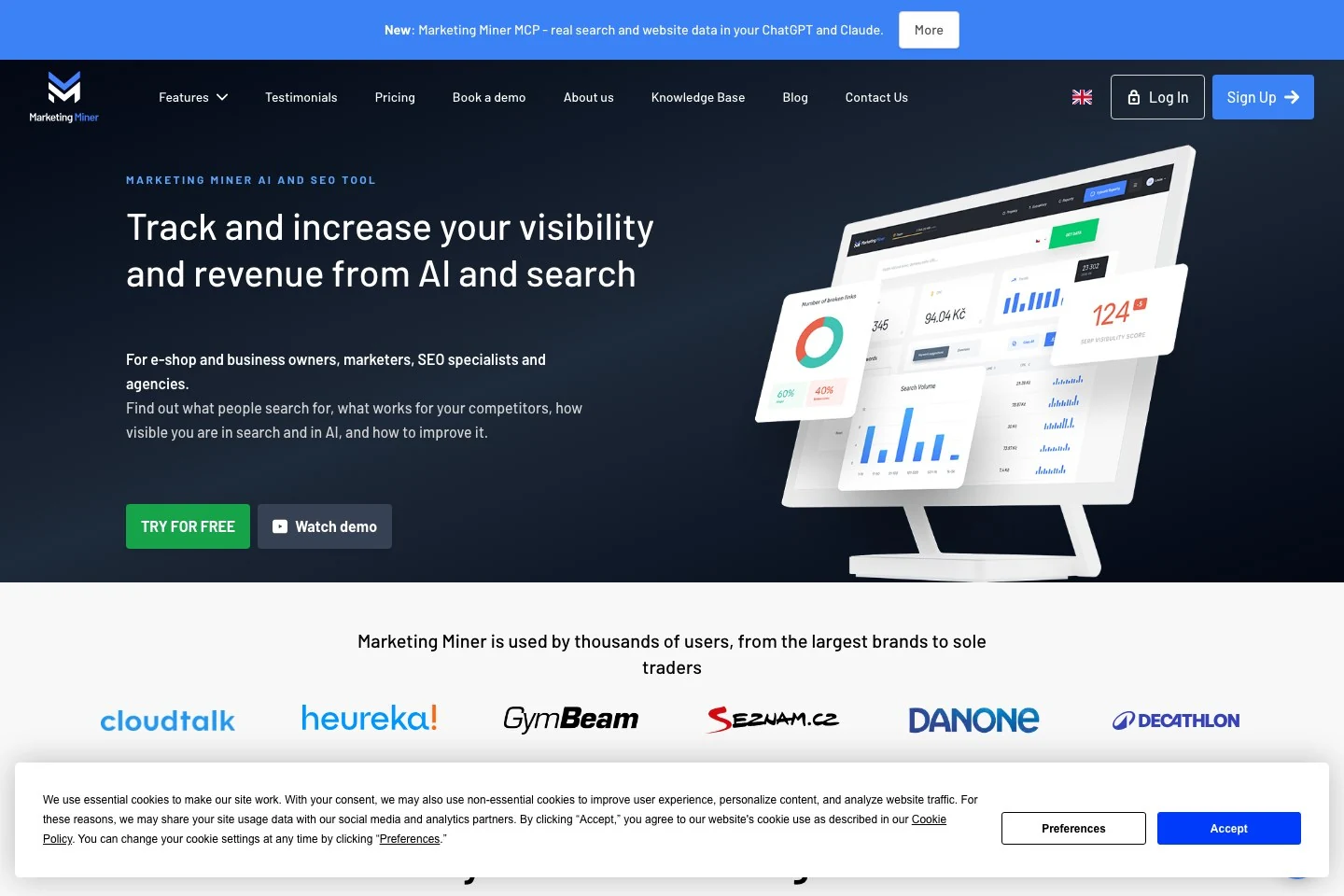
Ahrefs, Semrush, SE Ranking, SISTRIX, Marketing Miner, Collabim and Senuto bring different combinations of keyword databases, competitor research, rankings and AI-result analysis. Their value can begin before a brand has decided what prompts to monitor.
Ahrefs Brand Radar distinguishes an existing visibility index from custom prompt tracking. Those are different research tasks: discover a category you have not mapped, or repeatedly test questions you already care about. Semrush distributes capabilities across toolkits and bundles, so a comparison needs to identify the product being priced. SE Ranking also has a dedicated SE Visible product; listing both as independent vendors would inflate the competitive field. Ahrefs Brand Radar, Semrush packaging, SE Visible
Marketing Miner and Collabim deserve a place in the same conversation, especially for Czech and Slovak teams. They document recurring AI measurement rather than simply using AI to write copy. Senuto’s LLM Monitor is an early-access product; its commercial terms should not be inferred from a standard SEO subscription. Marketing Miner, Collabim, Senuto LLM Monitor
Where AmICited fits: connected Google/Bing performance, AI-answer evidence and agent workflows are relevant to teams investigating their own domains. This research does not establish an independent web-scale keyword or backlink index equivalent to the major research databases.
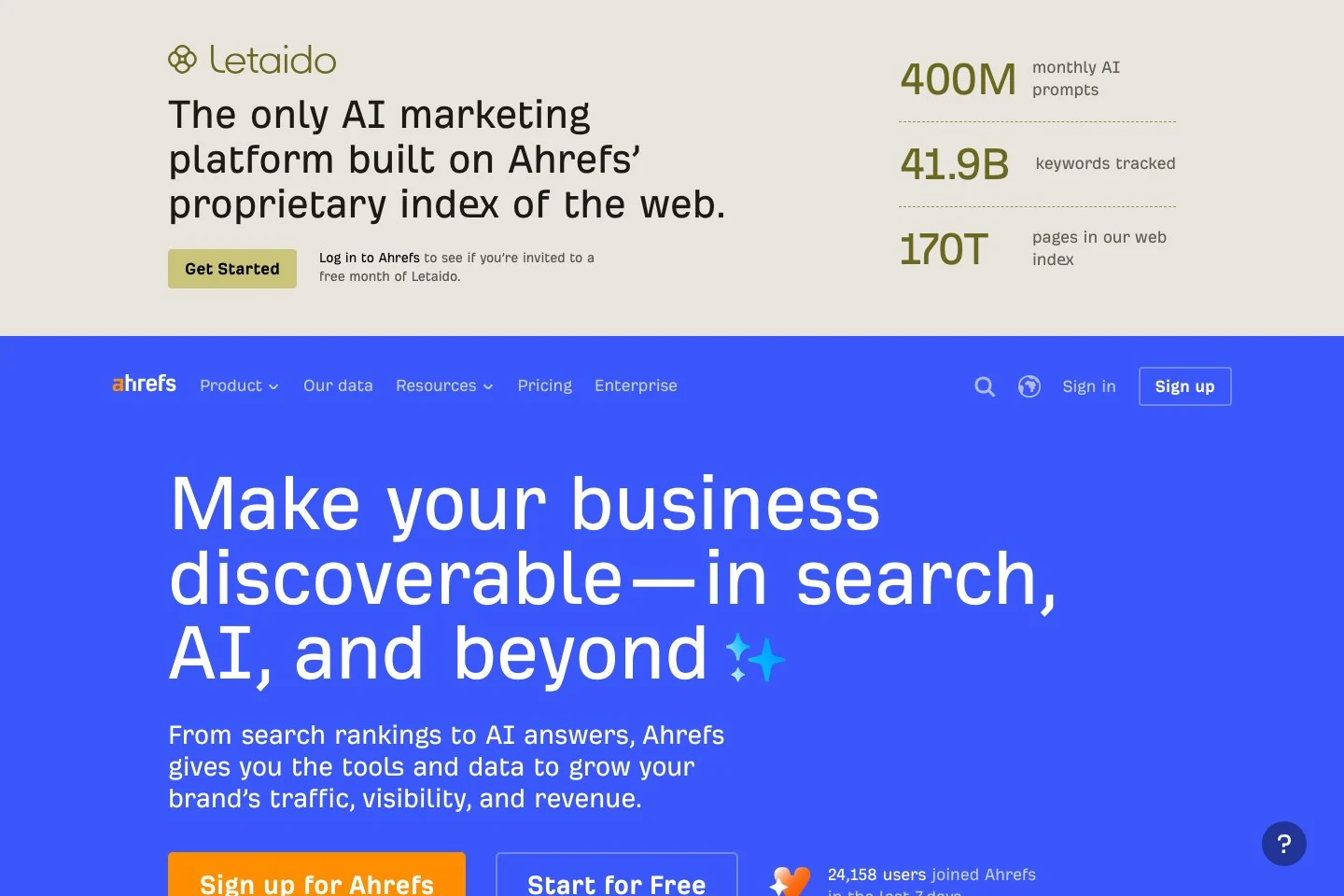
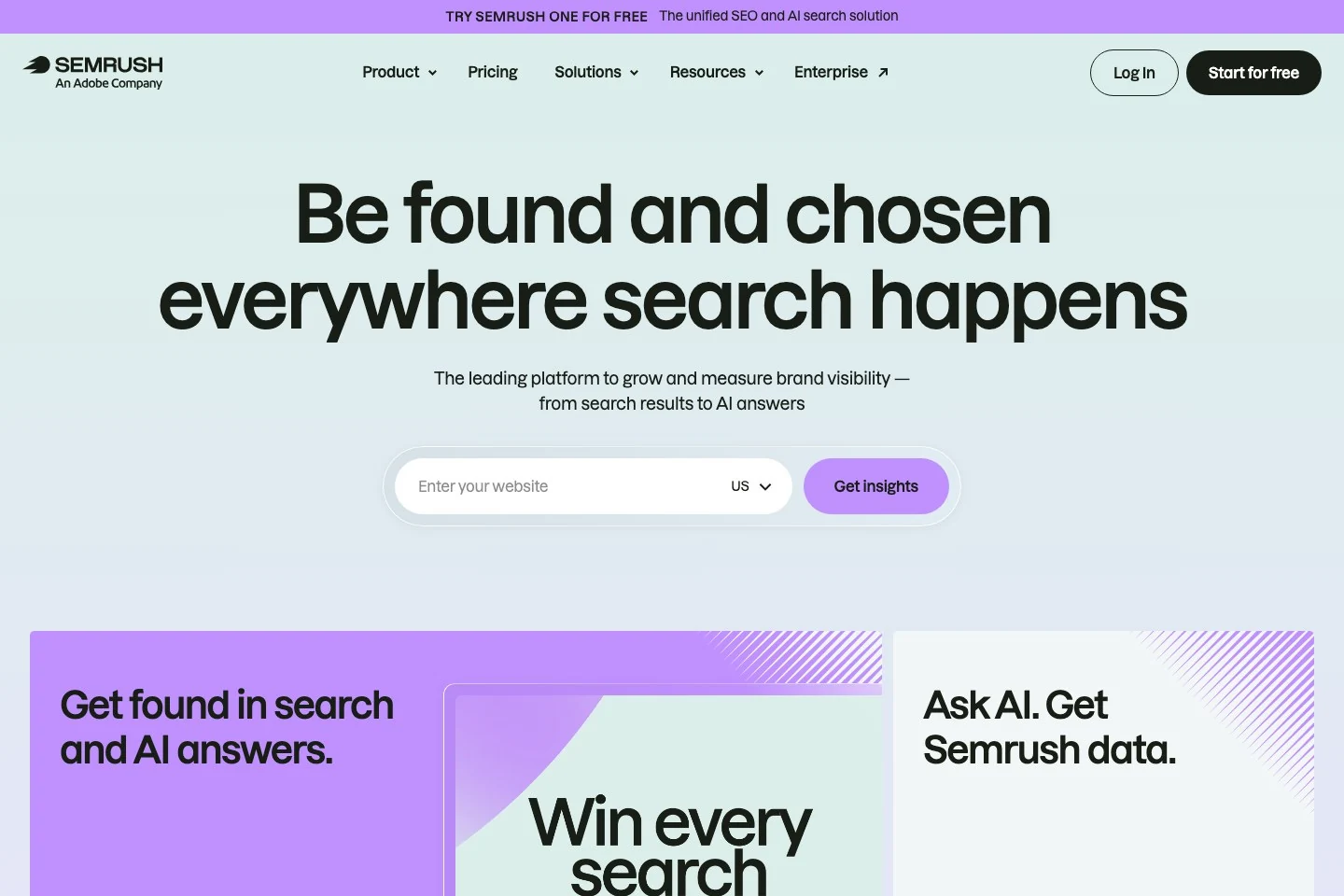
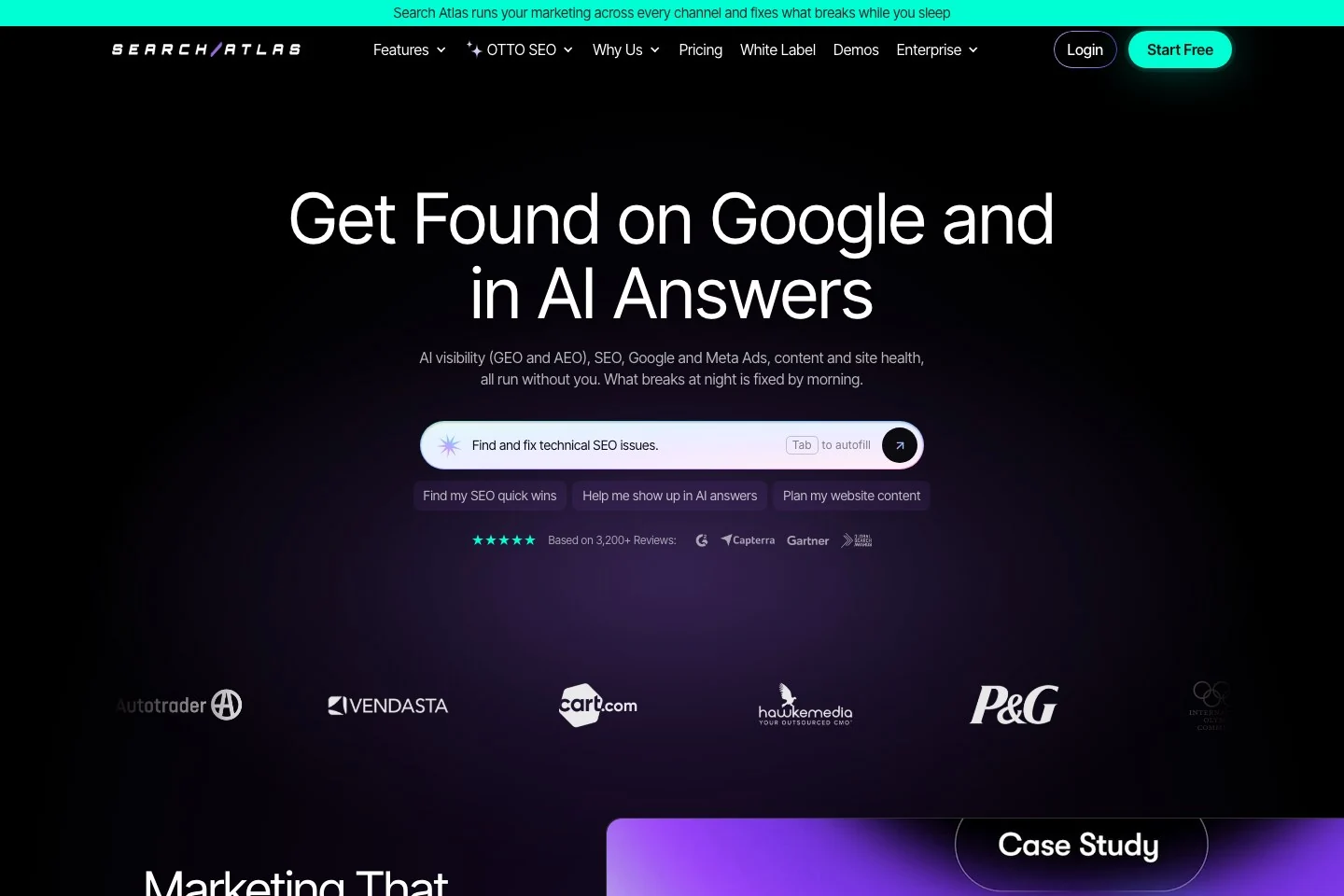
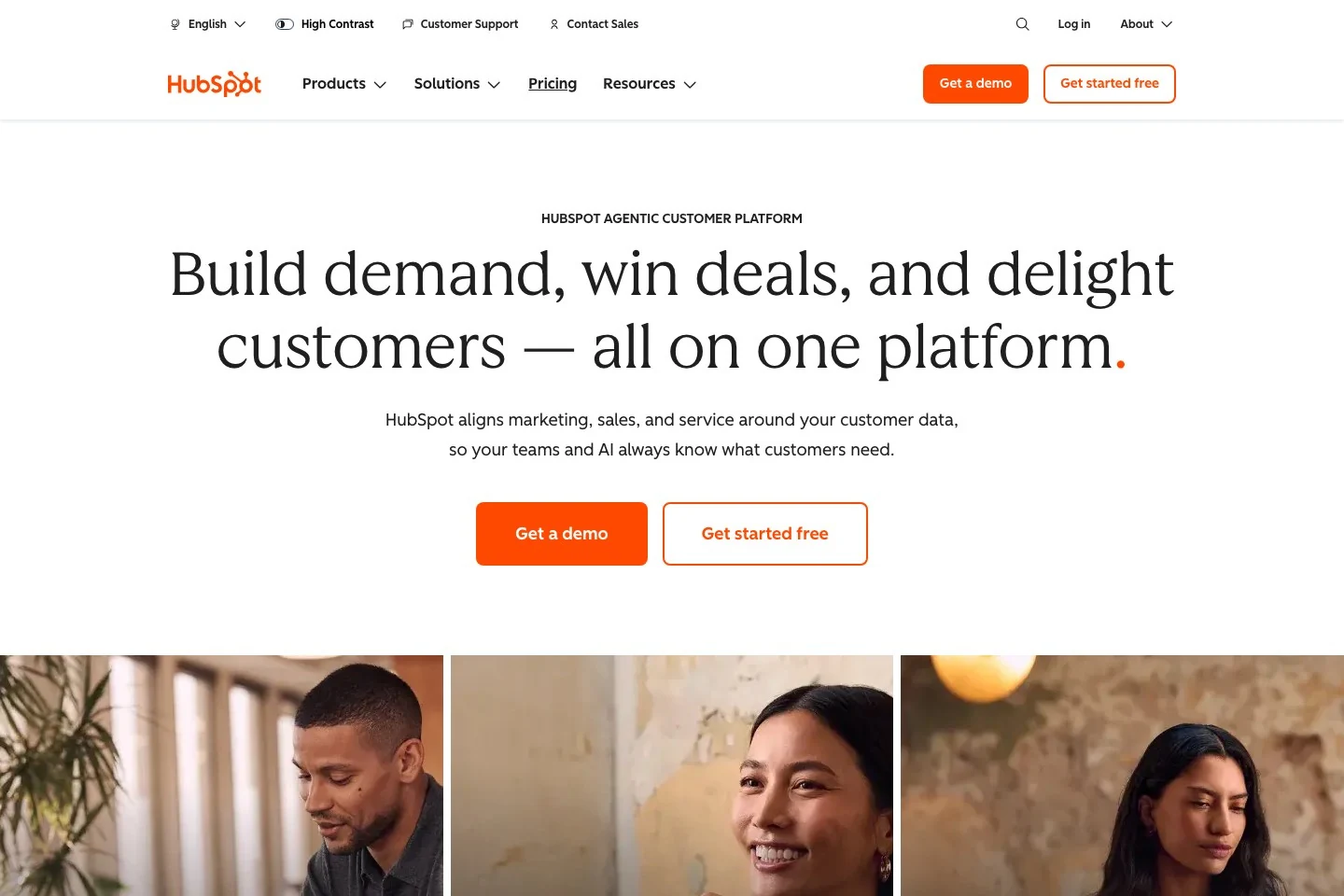
Search Atlas and HubSpot AEO broaden the buying context further. Search Atlas positions search data, content and optimization workflows inside one platform. HubSpot offers AEO as a standalone product and includes it in Marketing Hub Professional and Enterprise. These are relevant alternatives when distribution, content operations or CRM reporting already determine the team’s working environment. The surrounding suite should be evaluated separately from the exact AI monitoring allowance. Search Atlas, HubSpot AEO
2. Dedicated AI-answer monitoring
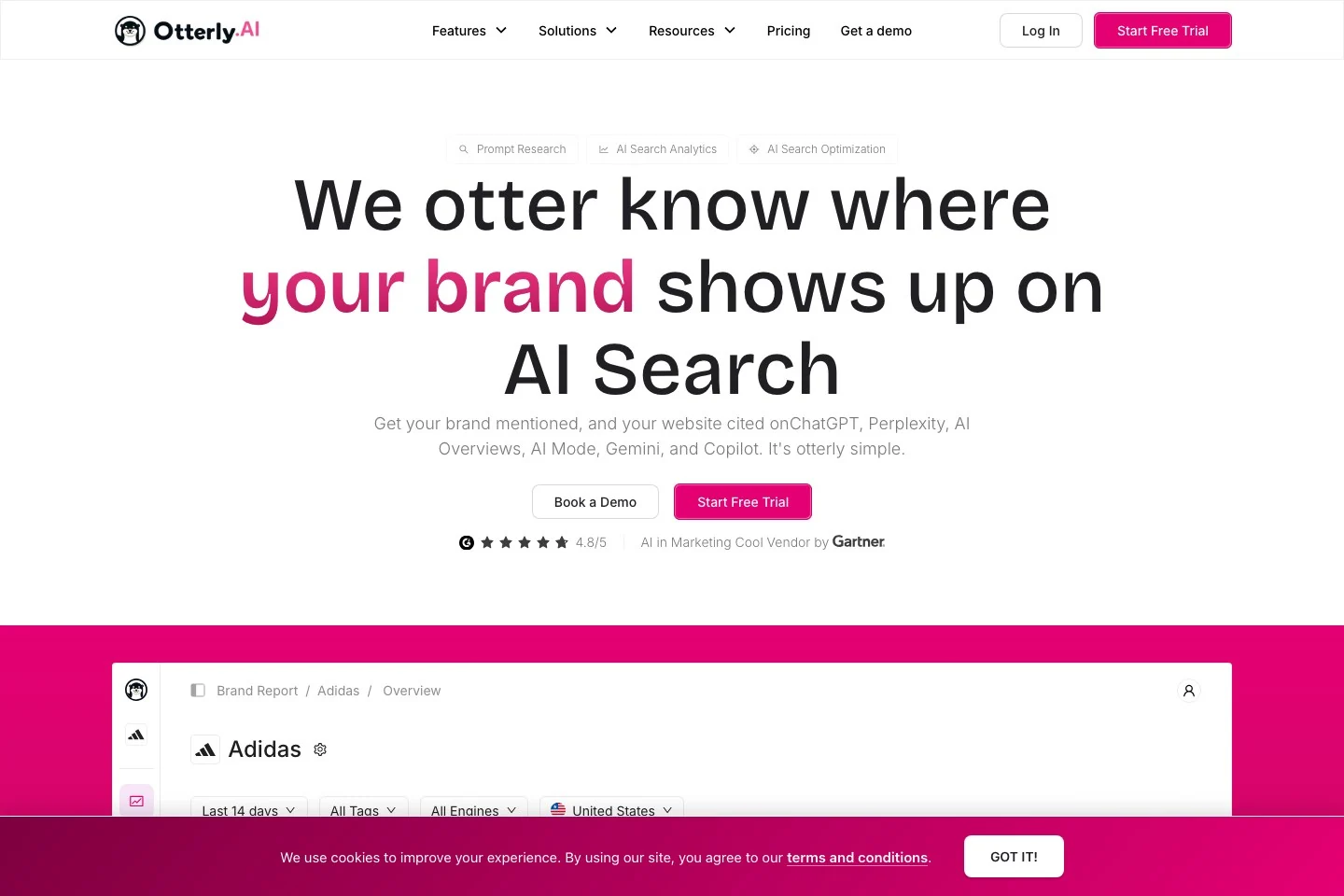
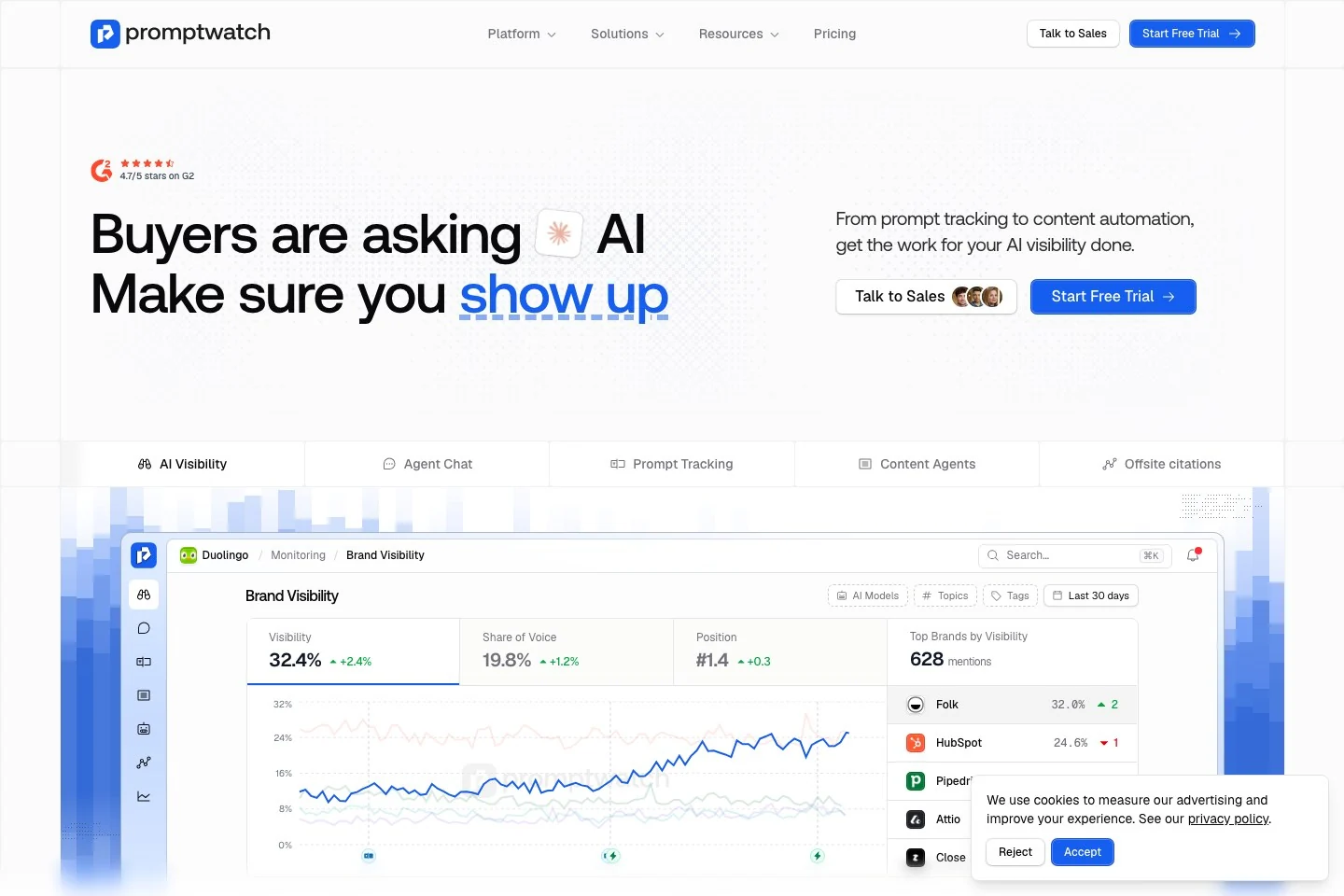
Peec, Otterly, Promptwatch and Rankscale are direct evaluation candidates when the immediate job is to monitor selected questions, competitors and cited sources.
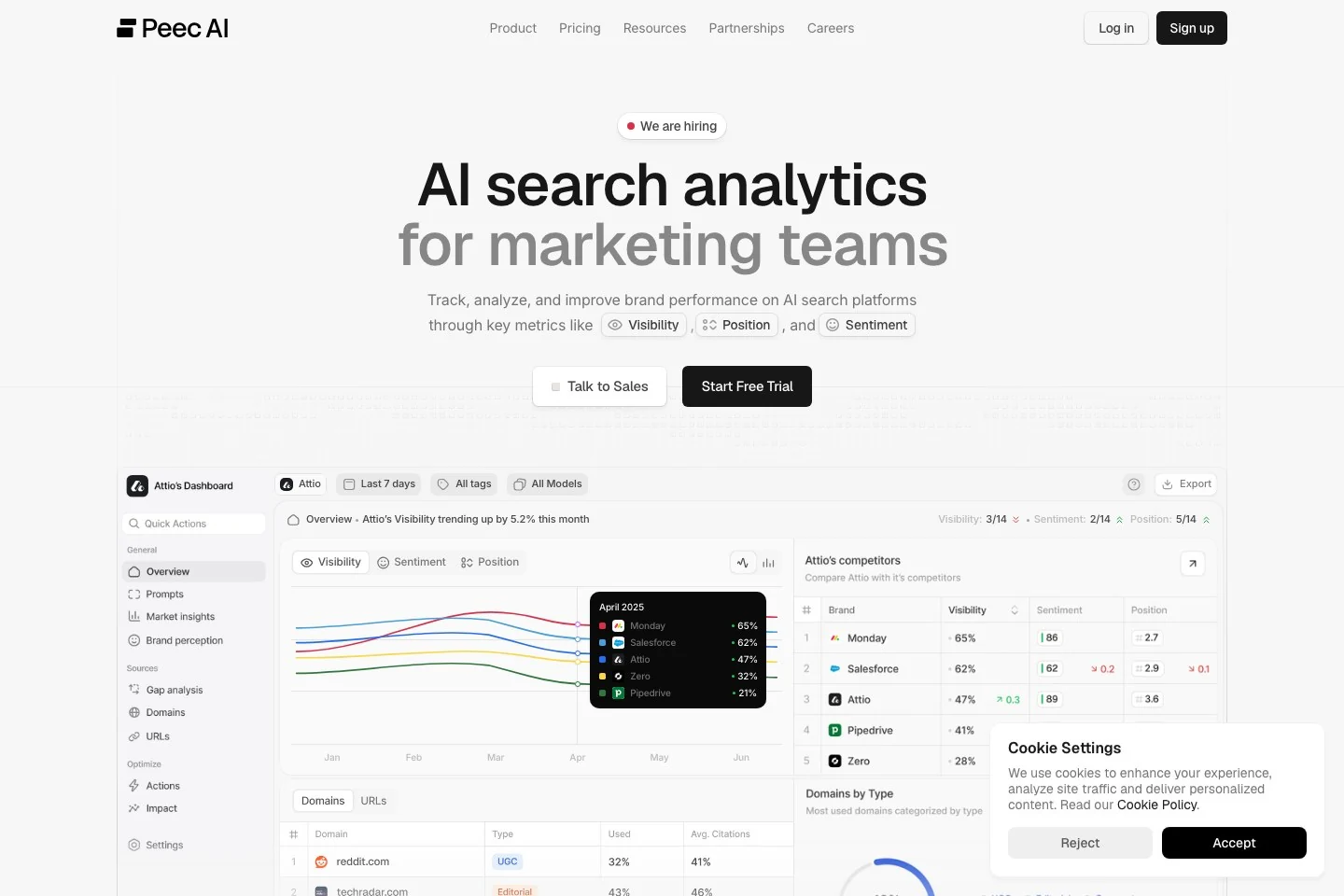
Peec puts visibility, position and sentiment at the center of its product presentation. Otterly offers a low entry point, but engine add-ons affect an equivalent workload. Promptwatch combines monitoring with agent and content allowances. Rankscale belongs in the specialist cohort, but a fair comparison still needs the exact plan, refresh frequency and engine set rather than its homepage’s category label. Peec, Otterly pricing, Promptwatch pricing, Rankscale
These are good candidates for a controlled pilot: identical prompts, markets, language, surfaces and observation times. The pilot should preserve raw answers and count failed collection separately from valid answers that did not mention a brand.
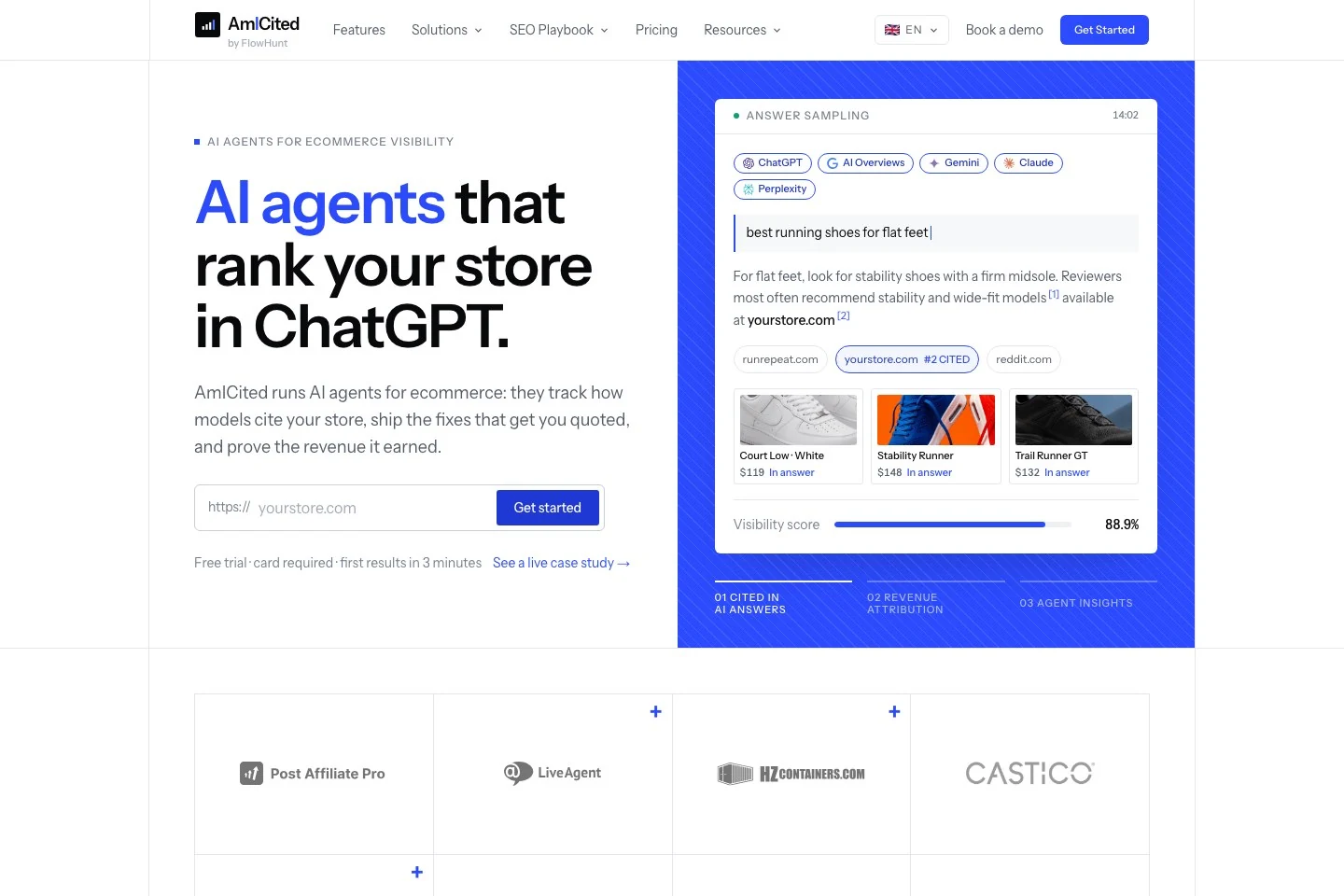
Where AmICited fits: it competes directly on prompt and source investigation. A wider operational catalog may matter, but it does not substitute for demonstrating reliable collection and understandable metrics.
3. Enterprise brand intelligence and execution
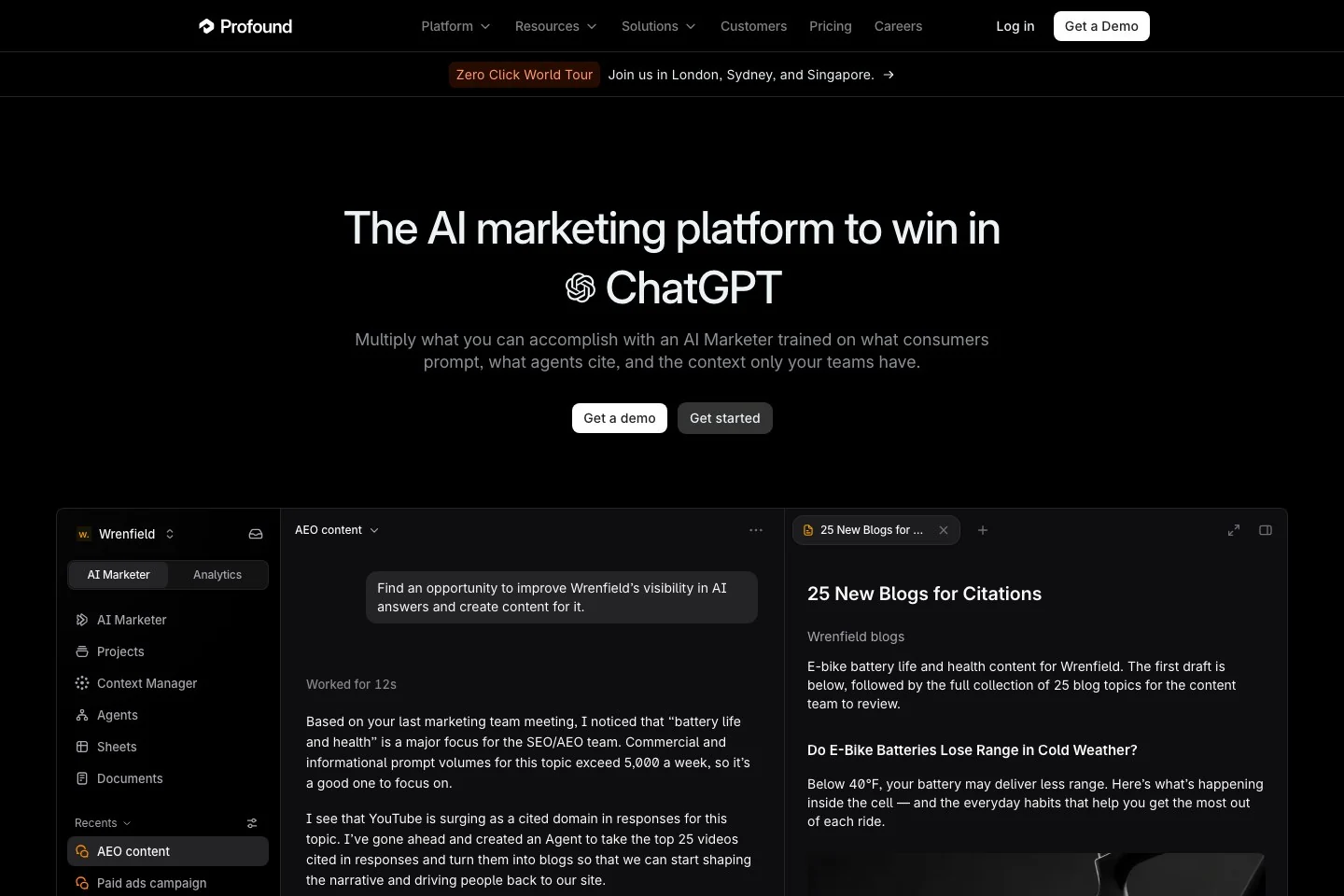
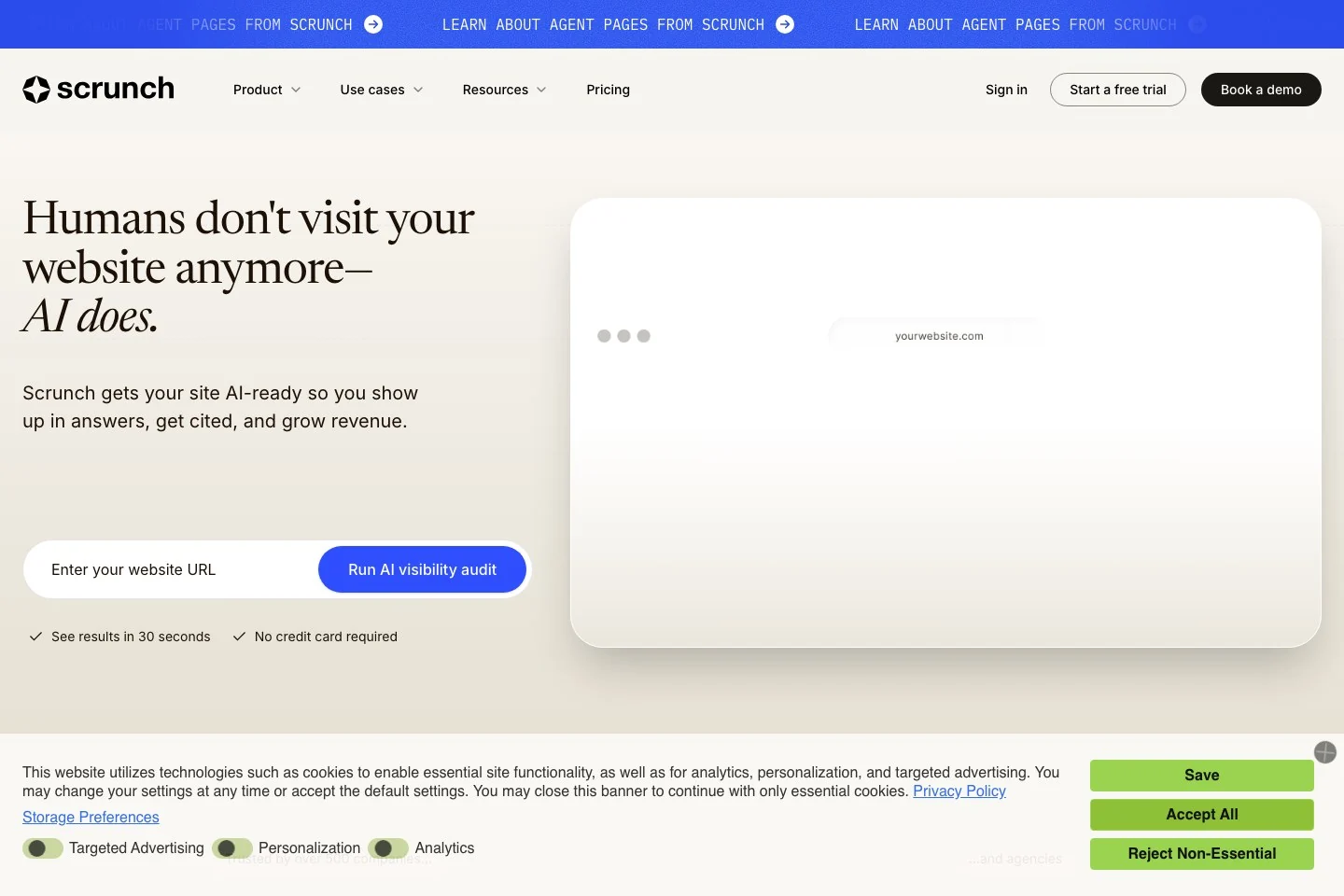
Profound, Scrunch, AthenaHQ, Evertune, Brandlight and Bluefish illustrate why “monitoring versus action” is becoming an unreliable dividing line.
Profound’s current site presents answer-engine intelligence, agents, shopping and brand analysis. Scrunch documents both monitoring and its Agent Experience Platform, an agent-oriented content-delivery layer. Evertune markets prompt intelligence and agent-led action. Bluefish emphasizes organization-wide workflows. These descriptions identify what to evaluate; they do not prove one platform causes greater visibility. Profound, Scrunch, AthenaHQ, Evertune, Brandlight, Bluefish
Conductor, seoClarity, BrightEdge and Botify also belong in enterprise discussions. Their SEO and technical operating context can matter as much as an AI visibility chart. Ask how a finding becomes a reviewable task, whether it can be deployed, who approves it and what happens when the proposed change is wrong. Conductor, seoClarity, BrightEdge, Botify
Where AmICited fits: evaluate the complete gap-to-action process and the permissions around it. Do not infer procurement readiness, deployment scale or an enterprise SLA from the existence of a feature.
4. Content research and production
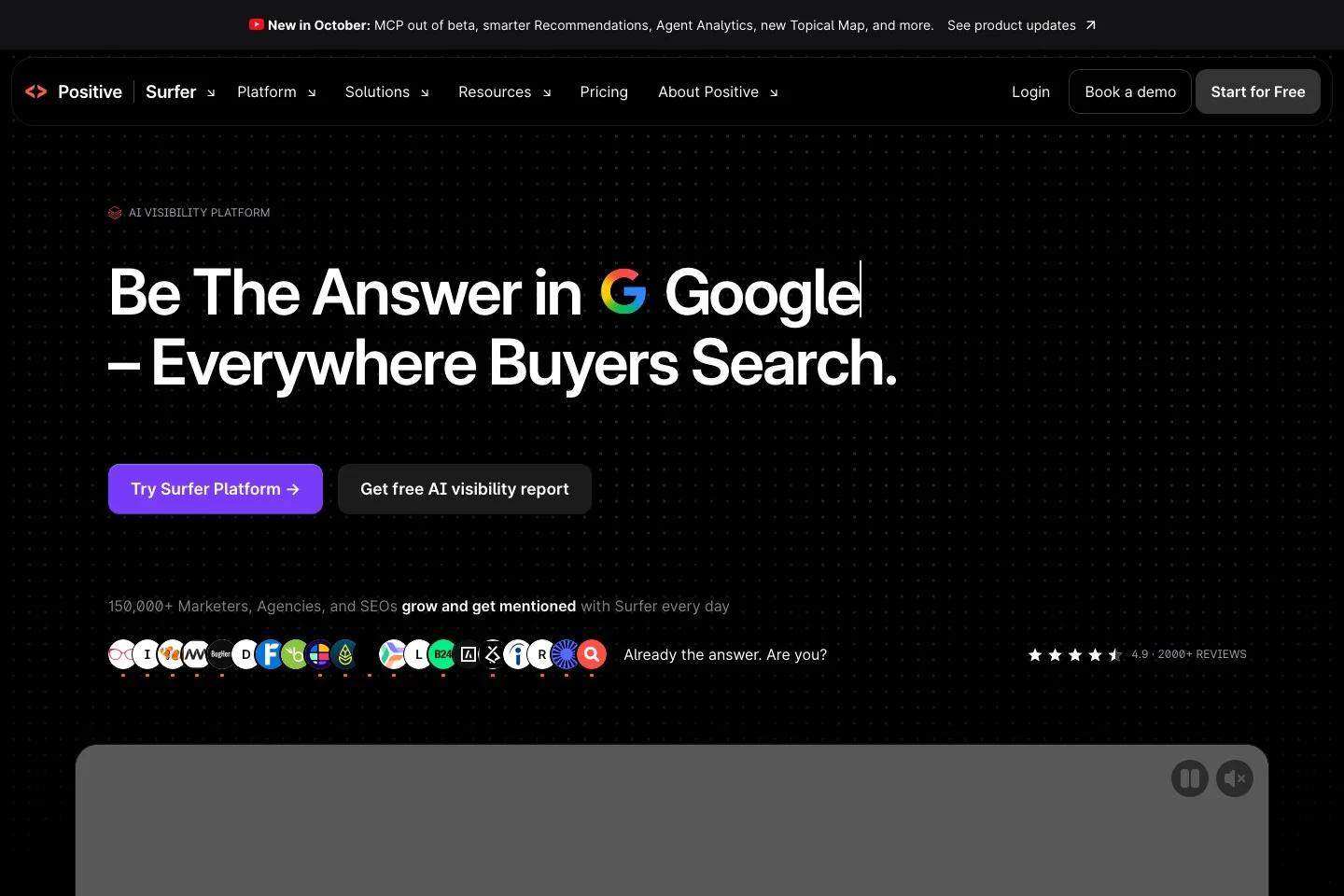
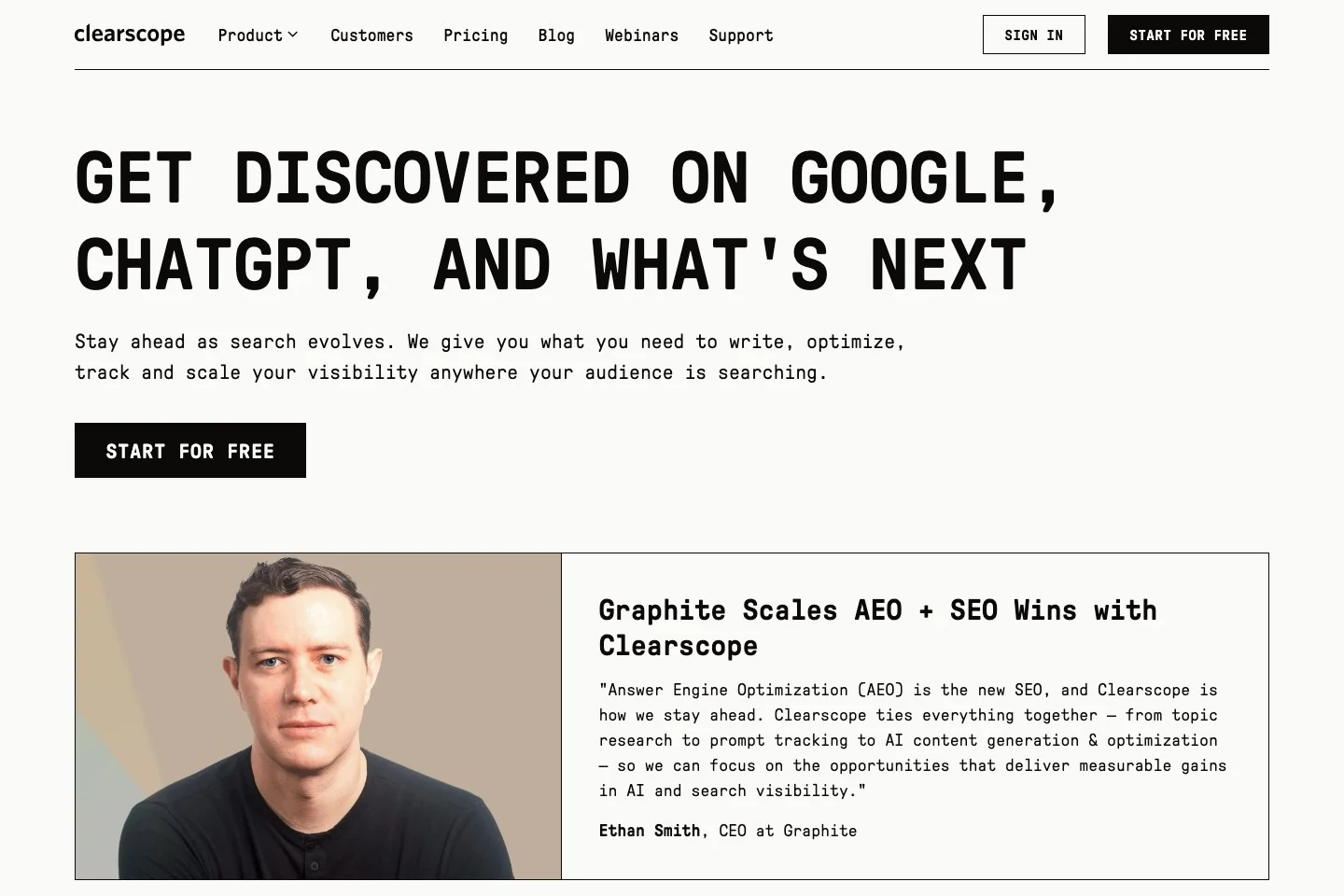
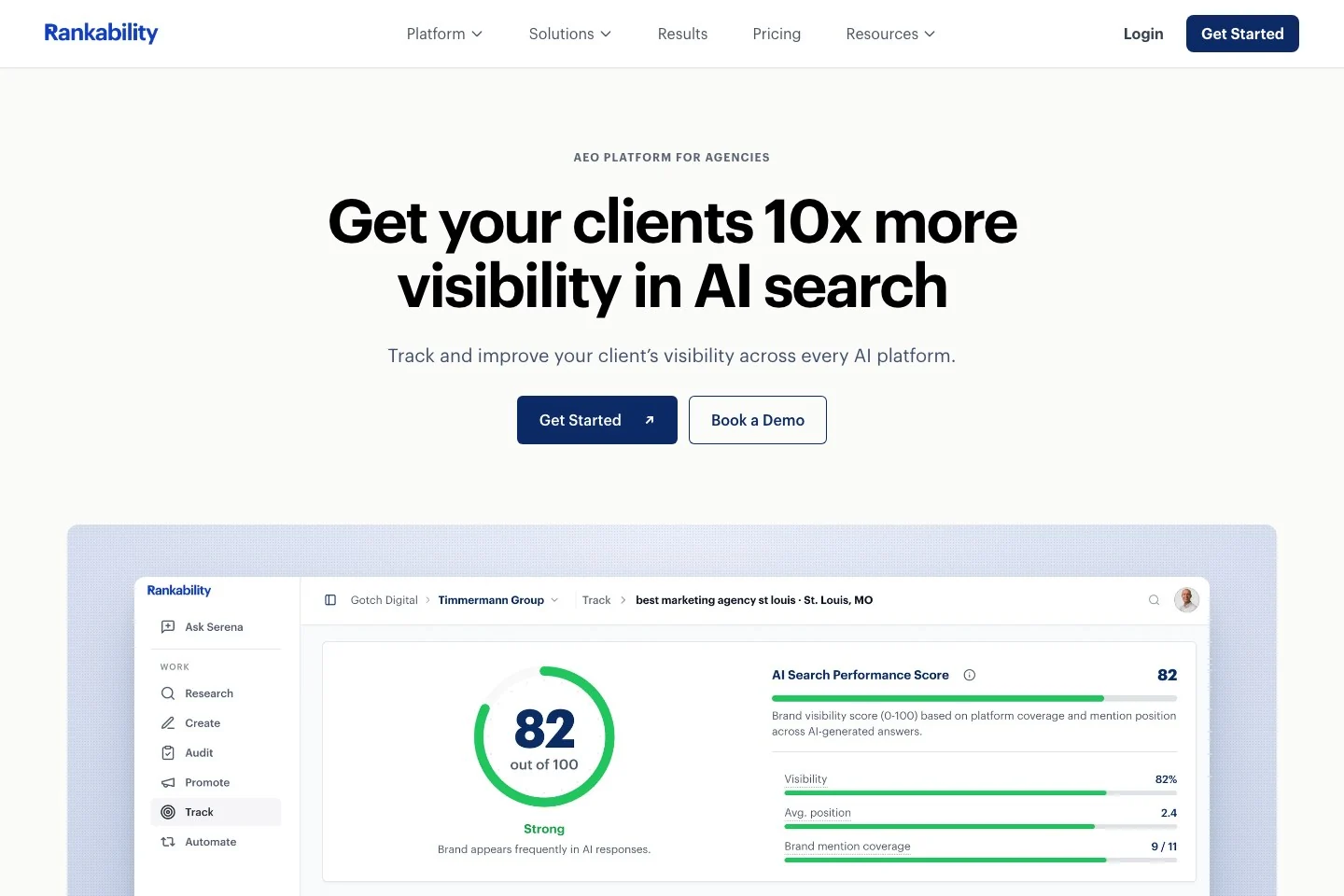
AirOps, Writesonic, Frase, Surfer, Clearscope and Rankability compete for the work that follows a visibility finding: researching a page, briefing a writer, revising content and maintaining an editorial system.
The relevant question is not “does it generate text?” It is whether the team can produce an accurate, differentiated page with traceable sources and an efficient review process. A content score is a diagnostic model, not proof that an answer engine will cite the finished article. AirOps, Writesonic, Frase, Surfer, Clearscope, Rankability
Where AmICited fits: articles and agent workflows are part of its offering. Compare accepted editorial outputs, evidence and review time rather than awarding a point for the presence of an AI writer.
5. Local visibility and commercial outcomes
Yext Scout, Local Falcon and BrightLocal focus attention on a unit many brand-wide trackers obscure: the individual business location. A restaurant chain can perform well overall while one branch disappears from recommendations.
Triple Whale, Goodie, Azoma, Ranketta and Opttab bring commerce-related questions into the comparison. Product inclusion, merchant recommendations, orders and attributed revenue are related, but not interchangeable. Yext Scout, Local Falcon, BrightLocal, Triple Whale, Goodie, Azoma, Ranketta, Opttab
Where AmICited fits: optional connected commerce reporting can provide commercial context. Its own documentation separates measured delivery, attribution estimates and realized shop outcomes. A sale following an AI referral is not proof that a monitored prompt caused it. AmICited attribution boundaries
6. Multi-market and brand-knowledge intelligence
Superlines, Waikay, LLMrefs, LLM Pulse, Citadex and miruAI add useful perspectives on market segmentation, brand understanding and query design.
LLMrefs starts with keywords and generates prompts. Waikay emphasizes what AI knows or gets wrong about a brand. Superlines documents market-specific intelligence and agent access. LLM Pulse presents reputation and source workflows. Citadex describes separate region/language markets, while miruAI emphasizes Japanese, English, Korean, Chinese and Cantonese comparisons. Its paid prices were still planned when checked. Superlines, Waikay, LLMrefs, LLM Pulse, Citadex markets, miruAI planned pricing
Where AmICited fits: country and language selection should be tested against actual localized buyer questions. A multilingual interface is not evidence of physical execution in every country.
Which features are common—and which differences matter?
Across the reviewed specialist cohort, the recurring baseline is selected-question monitoring, brand presence, competitor comparison, sources and historical reporting. That is a cohort observation, not a claim that every product in the broader SEO universe offers them.
MCP access, content agents, shopping and AI advertising analysis are increasingly shared capabilities. They should not become AmICited exclusivity claims. More discriminating questions are:
- Can the reader inspect the answer and timestamp behind a score?
- Does a missing response remain missing, or become a misleading zero?
- Are country, language, model and prompt-set changes visible in the history?
- Can the team connect a finding to a source page and a reviewable action?
- Are commercial estimates labeled with their method and missing inputs?

Ready to Monitor Your AI Visibility?
Track how AI chatbots mention your brand across ChatGPT, Perplexity, and other platforms.
What the tools’ own SEO tells us
Ahrefs estimated 1,778 monthly organic visits, 328 organic keywords and DR 46 for amicited.com in the research snapshot. Marketing Miner recorded 5,830 visits; Collabim 7,132; Senuto 19,521; and Keyword.com 54,924.
Those are modeled whole-domain estimates across locations, not authenticated analytics, customer counts or measurements of product quality. Different language footprints, free tools and educational libraries can explain substantial differences.
Whole-domain, all-location estimates. Website traffic does not rank GEO product accuracy.
Download the dated, public domain benchmark. It includes corrected identities, adjacent-product scope and data definitions. Adobe and HubSpot’s broad domains are particularly unsuitable proxies for an individual GEO product’s traction.
How to build a useful shortlist
Choose three products against a written brief. Define the markets, engine surfaces, prompts, valid-answer denominator, reporting requirements and actions the team will actually use.
A small team may value a straightforward specialist. An agency already using a research suite should calculate the incremental price of that suite’s AI capability. A multi-location business needs branch-level tests. A content team should inspect editorial outputs. An enterprise should test data controls, approvals and integration boundaries.
AmICited belongs in the shortlist when connected SEO/GEO operations fit the job. The purchase should still depend on the same evidence asked of the alternatives.
Continue with the dedicated comparisons:
 LinkedIn