



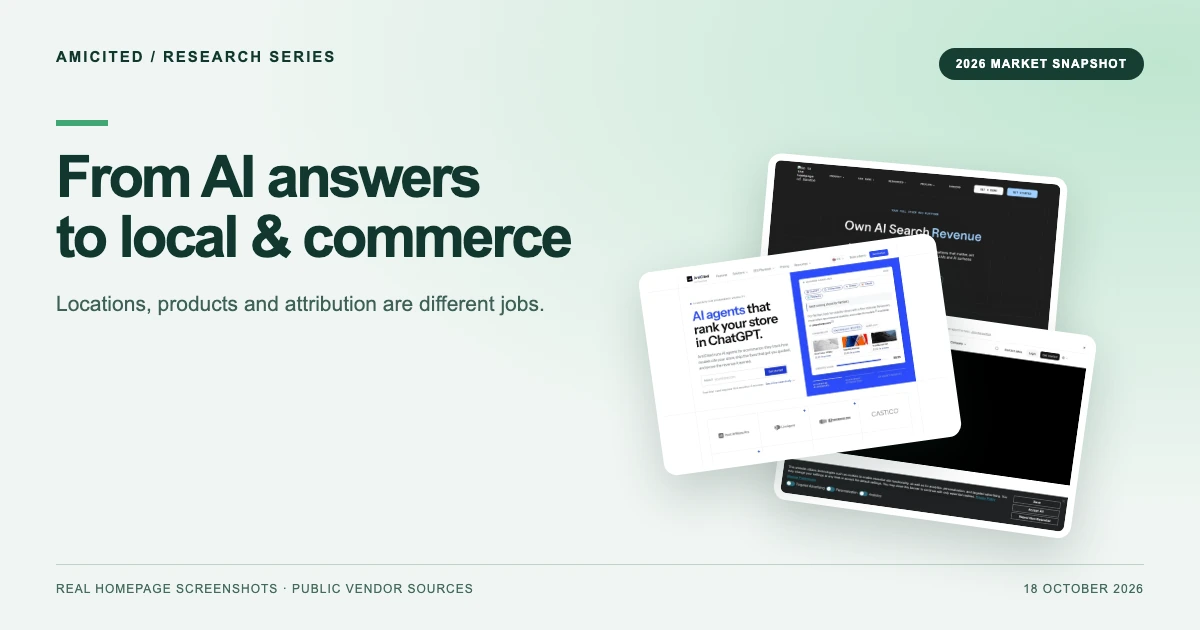
“AI visibility for commerce” can mean at least four different things. A multi-location brand wants to know which branch an assistant recommends near a customer. A retailer wants to know which product appears in a shopping answer. A performance team wants to connect exposure with store revenue. An experimentation team wants to learn which content or feed change improves the next sample.
Those are related problems, but their units are different: location, brand, SKU, response, session, and order. A useful tool comparison starts with the business object being measured, rather than counting dashboard features.
This review covers AmICited, Triple Whale, Goodie, Azoma, Ranketta, Opttab, Yext Scout, Local Falcon, and BrightLocal. It uses public vendor materials reviewed October 18, 2026. Vendor documentation shows product positioning and declared capabilities; it is not a hands-on accuracy test.
Three maps that commerce teams confuse
A local grid samples rankings or visibility from many coordinates around a physical location. It answers where a branch is discoverable. A brand-and-prompt monitor asks repeatable questions across AI engines and records brands, sources, sentiment, and competitors. It answers how a category conversation is changing. A product or SKU system inspects product recommendations, attributes, catalog content, and shopping surfaces. It answers why one item may be selected over another.
Revenue reporting is a fourth layer. It can estimate or associate commercial outcomes with channels, but it does not repair the causal gap by itself. The safest operating model pairs monitoring with controlled changes: update a store entity, product page, feed, or third-party source; annotate the date; then compare repeated samples and downstream business indicators.
Brand visibility with a commerce connection
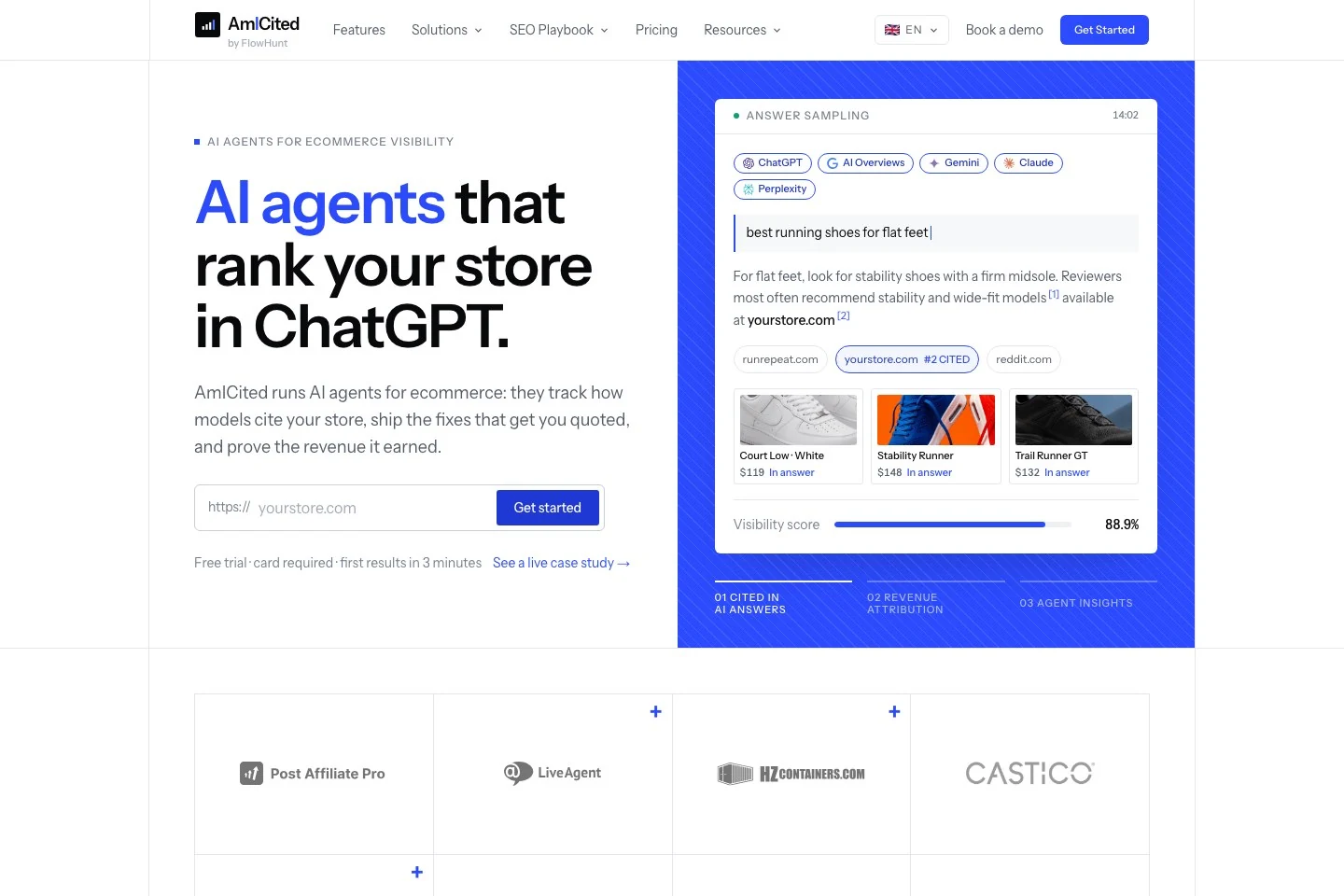
AmICited begins with scheduled prompts, citations, competitors, and search evidence. Its useful commerce angle is connection: product or brand observations can sit beside content agents and commercial reporting when the relevant integrations are configured. Its pricing uses shared credits for responses and other work, so a retailer should cost the full monitoring design—markets, engines, cadence, and prompt families—not just count stored prompts.
AmICited fits a team whose questions span category reputation, cited sources, content action, and business reporting. It is less naturally a local geo-grid scanner than a purpose-built local rank product, and an unconnected store should be recorded as not connected, never as zero revenue.
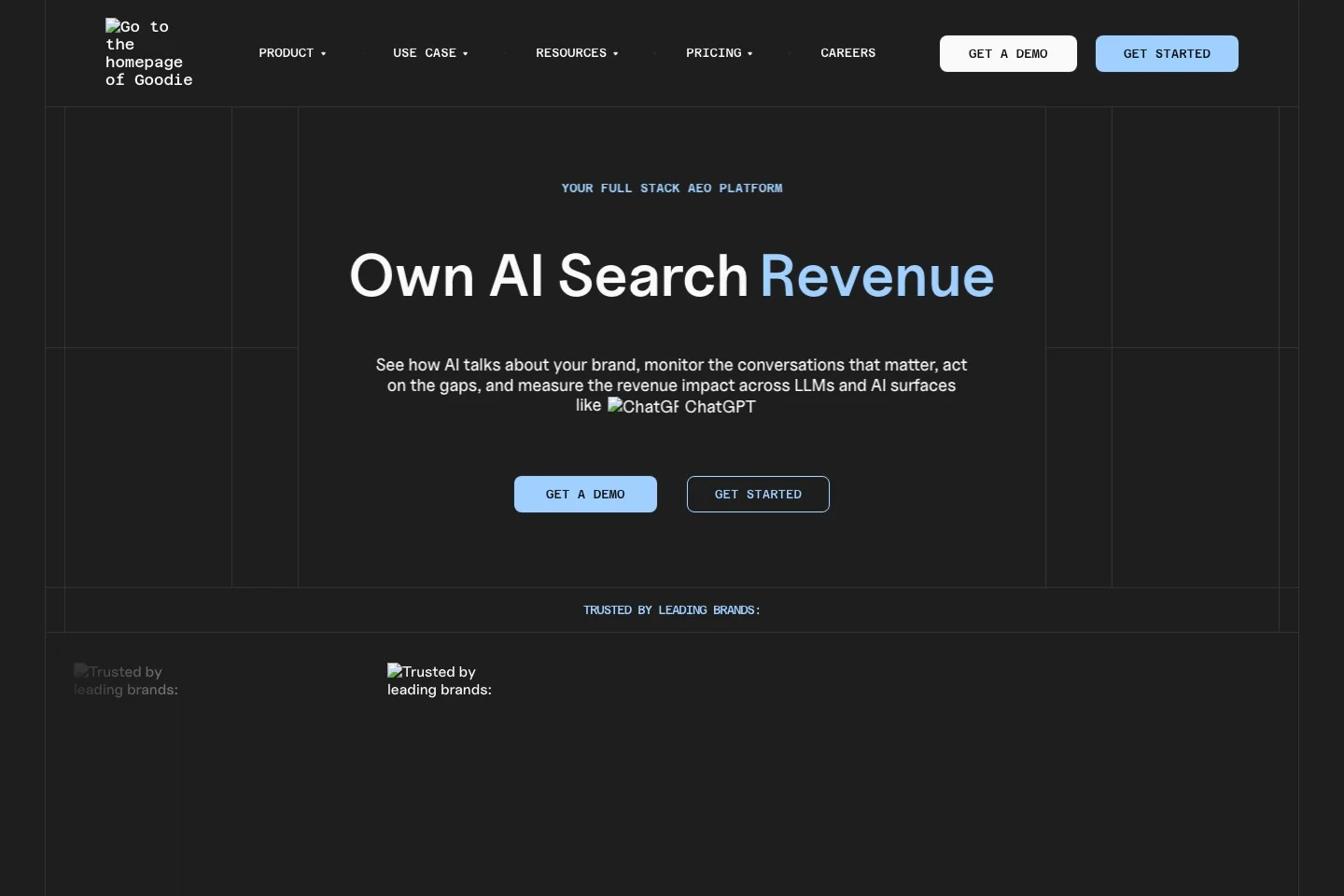
Goodie publicly positions itself as an answer-engine optimization and AI-search platform. It belongs in the brand and narrative layer: how a company appears, where it is cited, and what can be improved. For a commerce buyer, the demonstration should move beyond a general visibility score and show product-level queries, source inspection, market controls, and the route from a finding to a page or campaign.

Ready to Monitor Your AI Visibility?
Track how AI chatbots mention your brand across ChatGPT, Perplexity, and other platforms.
Commerce operating systems and product recommendation tools
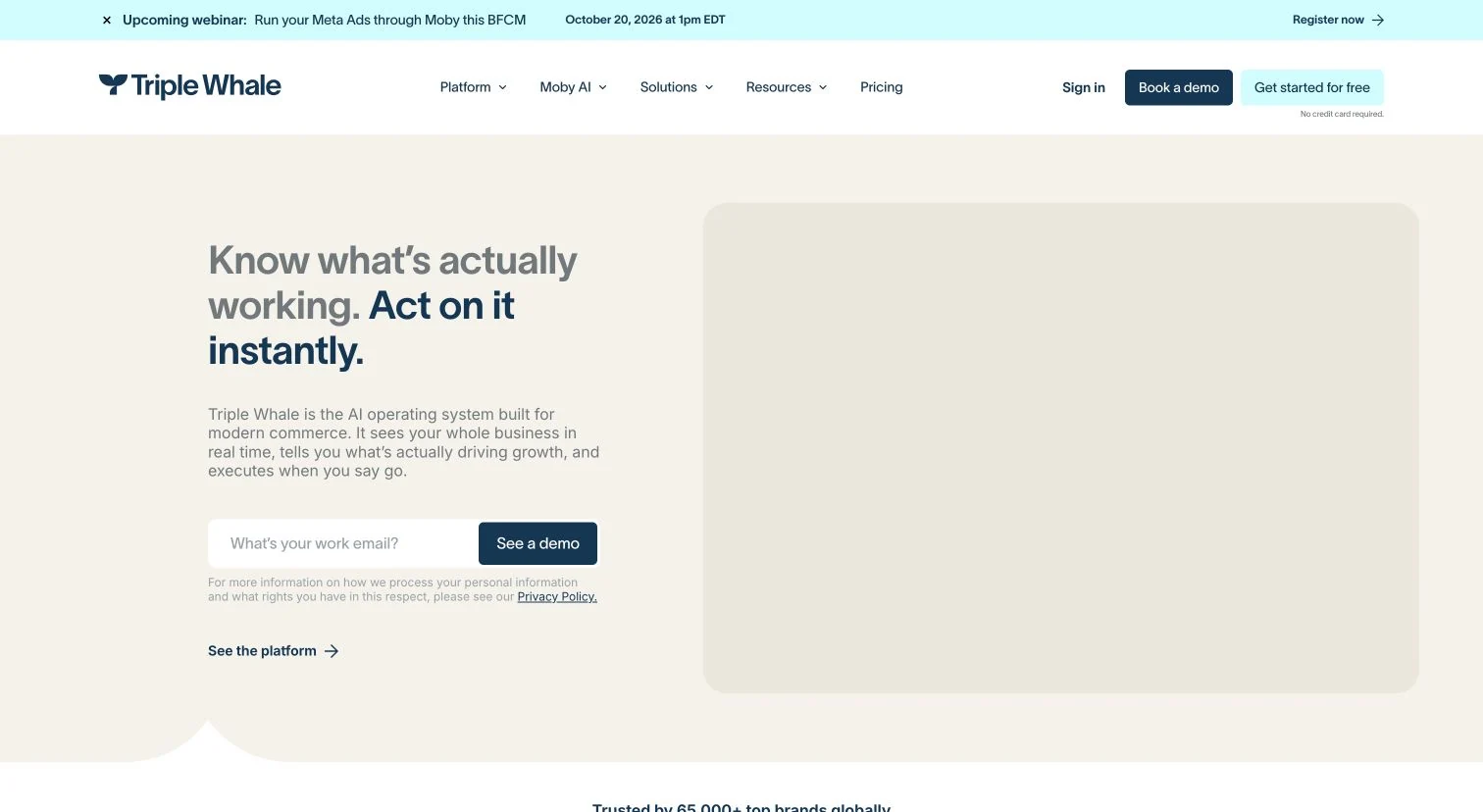
Triple Whale is primarily a commerce data and measurement platform. Its platform brings attribution, media-mix modeling, first-party data, analytics, and AI-guided actions together, and it now lists AI Visibility among those capabilities. That context is the attraction: a performance team can analyze AI visibility near its wider commerce data. The discipline is to keep “near” distinct from “caused by.”
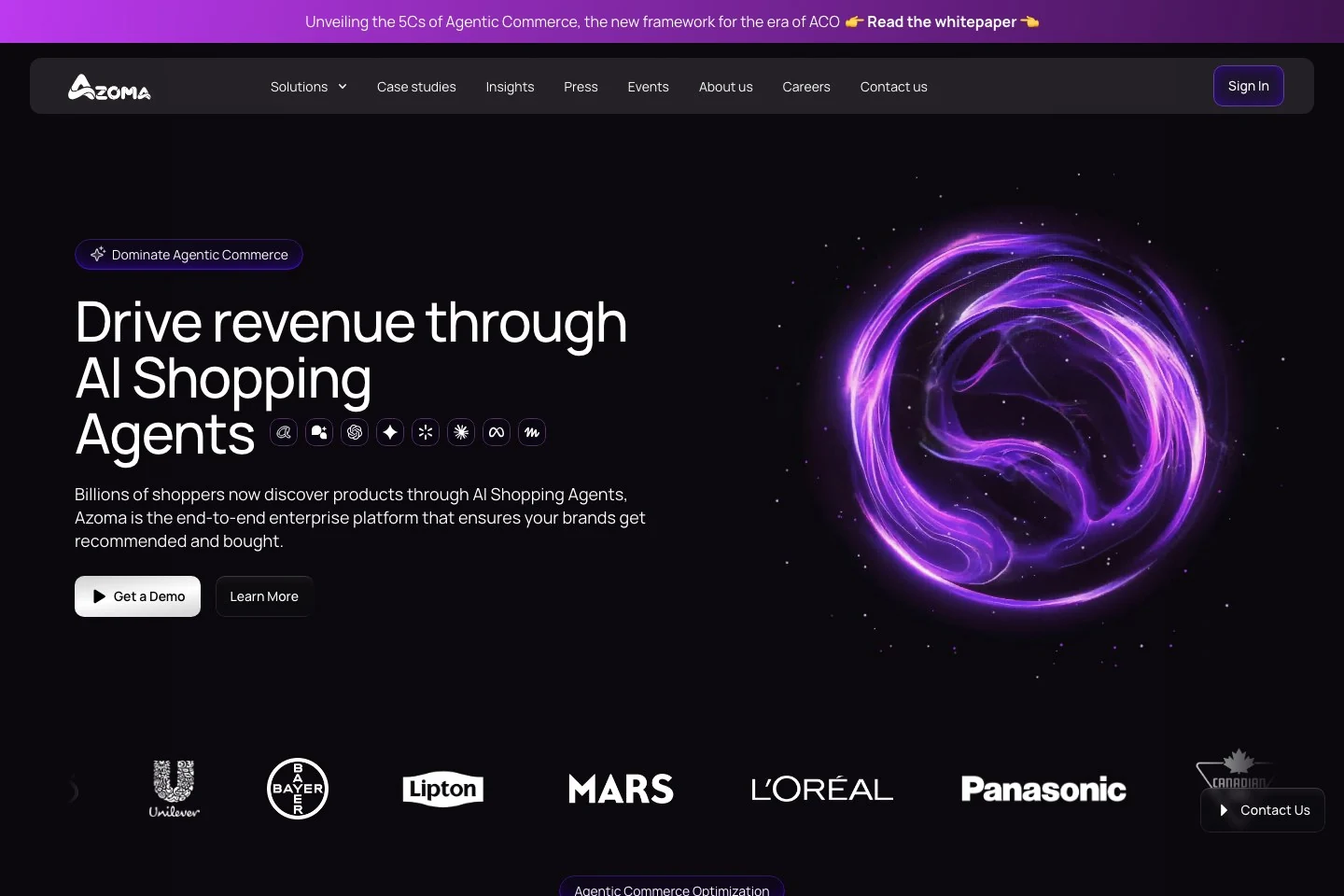
Azoma describes an end-to-end agentic commerce optimization system for enterprises. Its product framing puts catalog and product discoverability closer to the center than a general brand tracker does. A retailer evaluating it should test variant handling, feeds, regional assortments, retailer pages, and whether recommendations can be tied back to specific product attributes and sources.
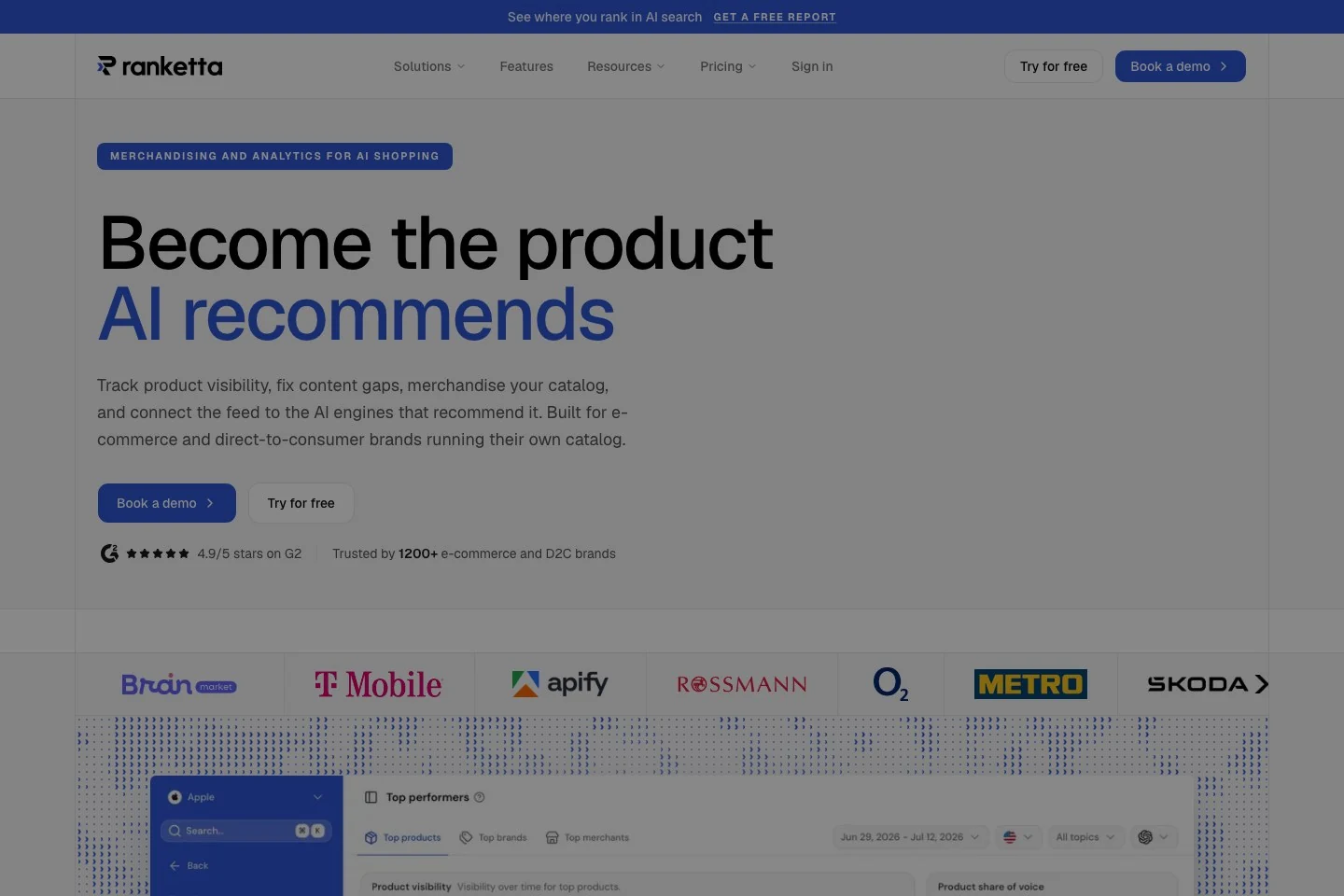
Ranketta promises to help products become the items AI recommends. That is a sharper job than broad corporate reputation monitoring and is relevant to brands that sell considered products through conversational discovery. Ask how it represents SKUs, parent products, out-of-stock items, retailers, and prompt variation; product recommendation data becomes misleading quickly when catalog identity is fuzzy.
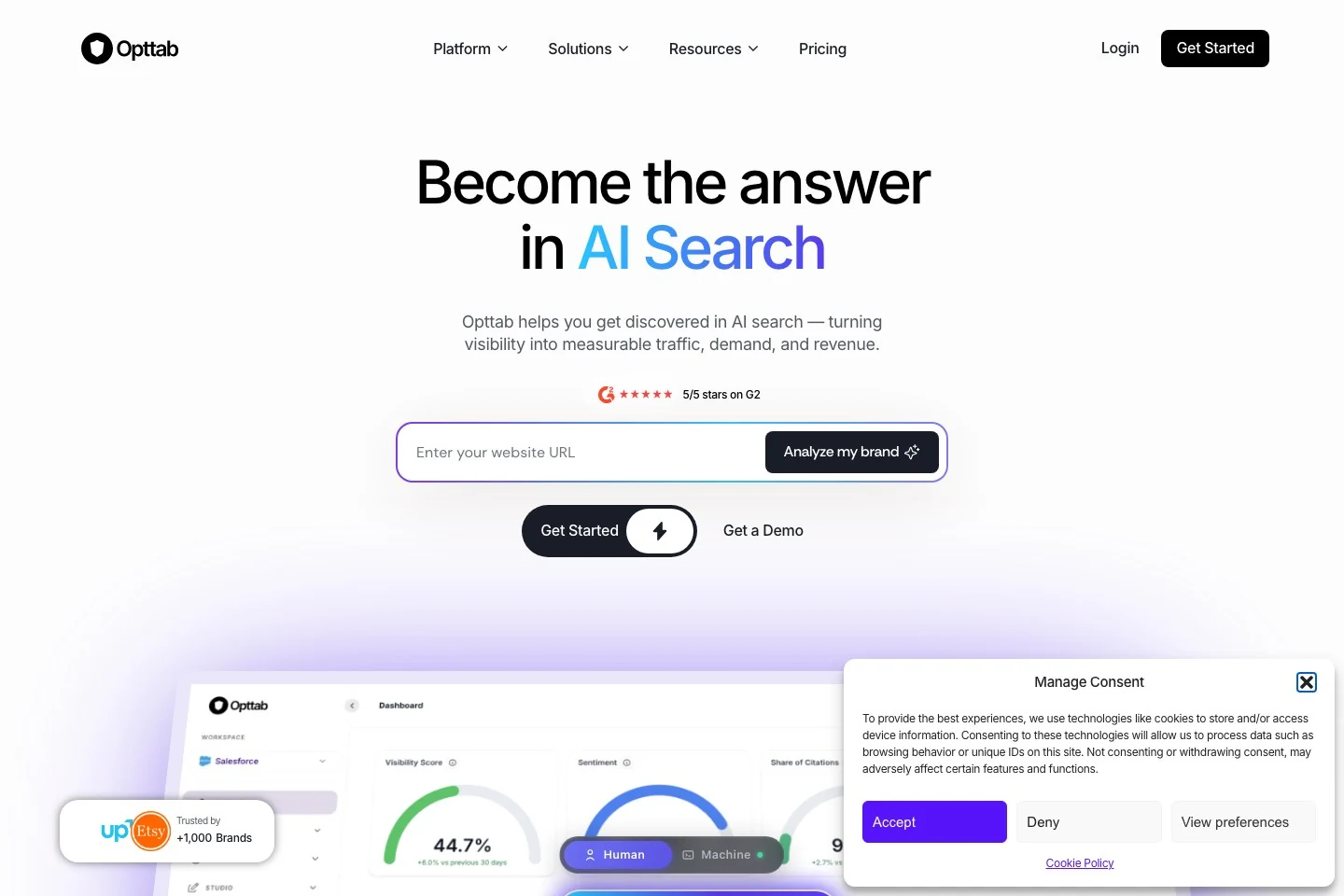
Opttab positions itself across AI visibility optimization and agentic commerce. That suggests a bridge between being discoverable in answers and being usable by shopping agents. The practical proof should be operational: show the product entity, the assistant response, the cited or consulted source, the proposed change, and the result after repeated runs.
The commerce-focused group should not be ranked by whether it also has traditional local SEO. Its central test is product fidelity. Can the platform distinguish models, sizes, regions, offers, and availability? Can it identify the exact source that introduced a wrong attribute? Can a team export the evidence? A beautiful brand-level trend can hide a product catalog problem that costs actual orders.
Local visibility: entity accuracy and physical geography
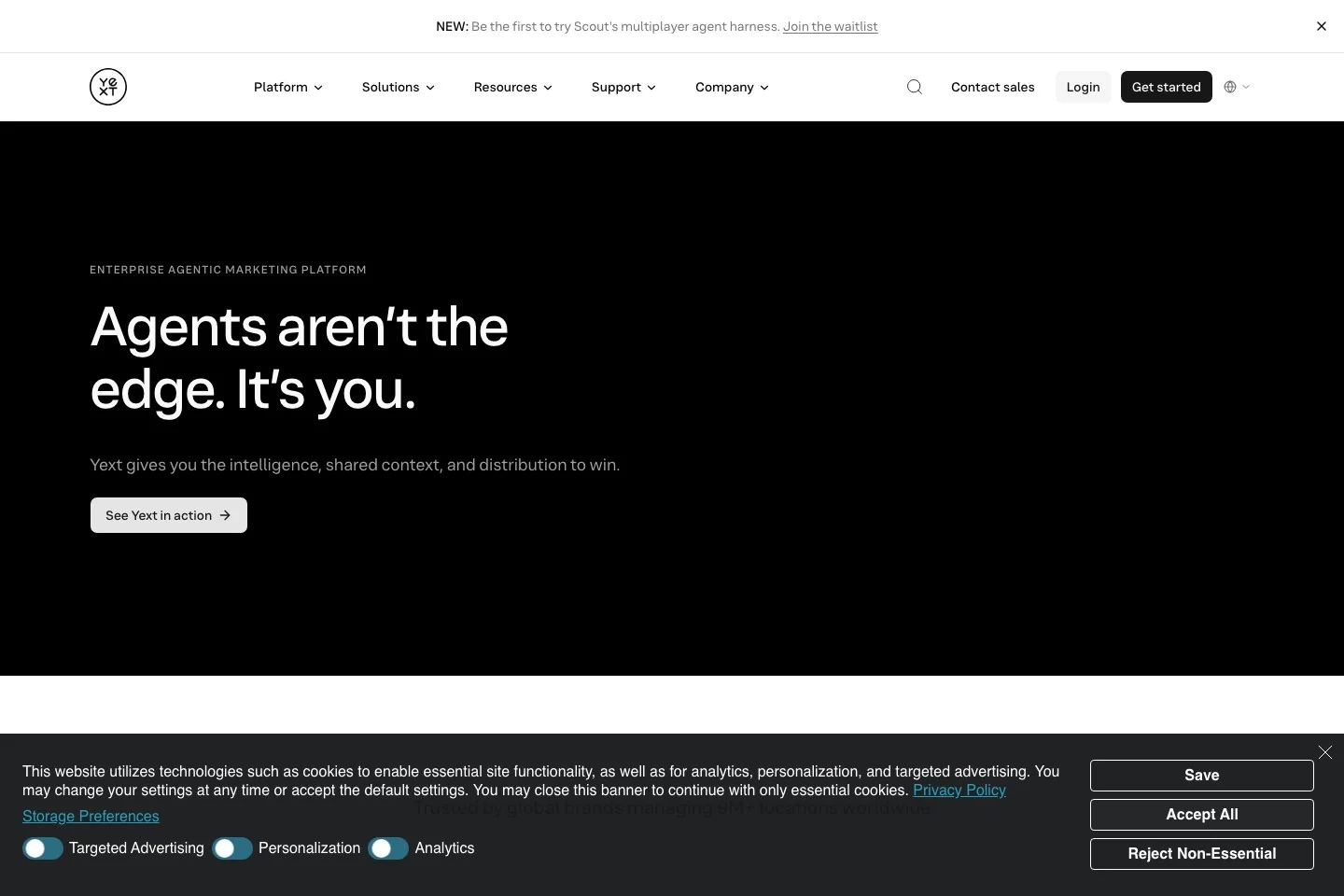
Yext Scout describes itself as an AEO and SEO visibility agent. Its product page says it covers brand and location visibility and can help create brand and third-party content. Yext’s broader location-data context makes Scout particularly relevant for multi-location organizations where entity consistency and distributed pages matter. Buyers should confirm which insights and actions are included in Scout versus the surrounding Yext platform.
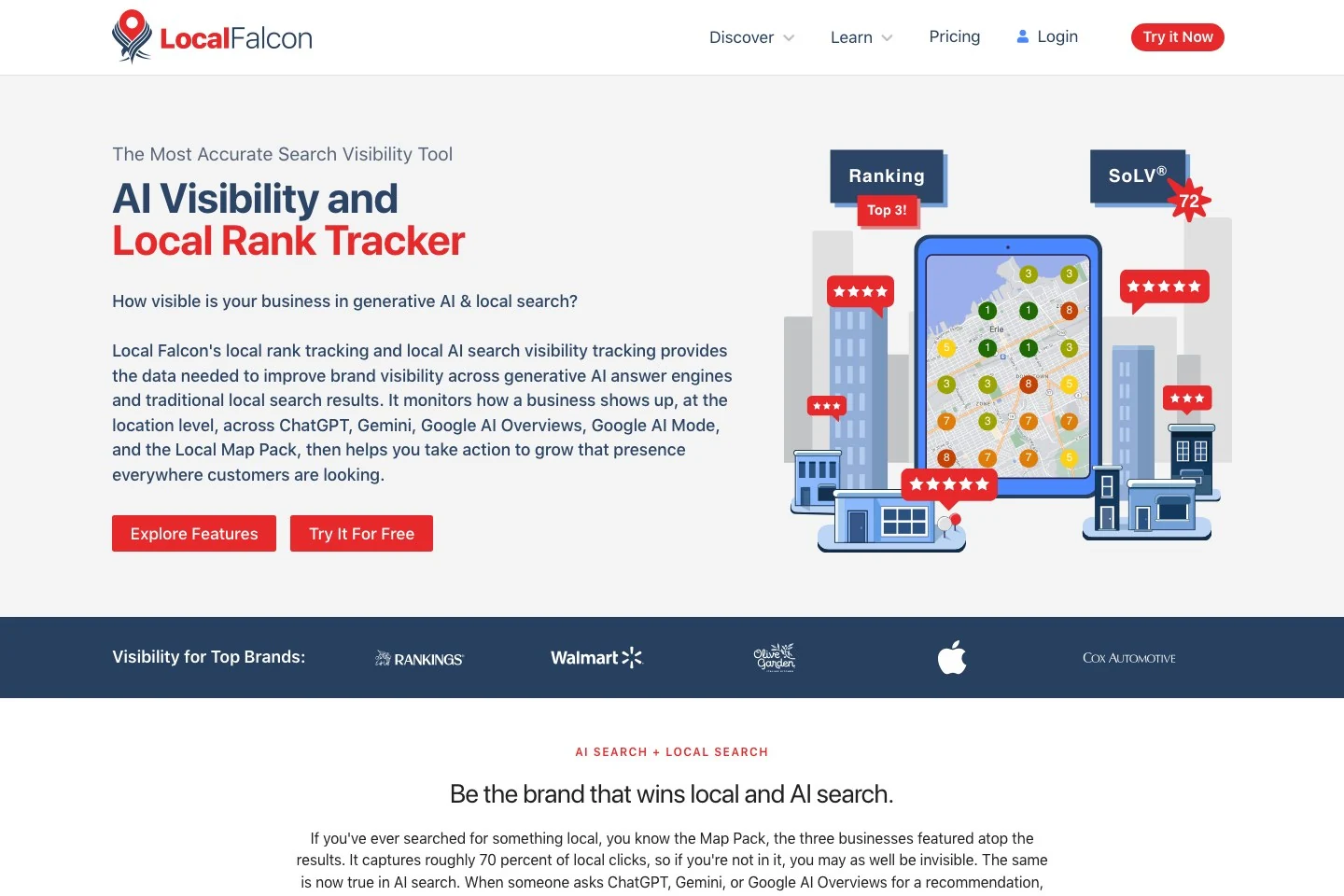
Local Falcon comes from local rank tracking and uses grid-based measurement. Its pricing is credit-based, with the published Basic plan including general credits. A grid data point is not automatically an AI response: grid size, number of locations, engines, analysis, and refresh cadence can multiply consumption differently. Its advantage is a geographic lens that a brand-level prompt tracker may not reproduce.
BrightLocal adds Local AI Visibility to a mature local SEO toolkit. Public material describes coverage across ChatGPT, Google AI Mode, and AI Overviews, with up to 20 prompts per location, while its wider platform covers listings, reputation, audits, and reporting. This is attractive when local operators already manage the underlying entities there. Confirm the applicable location plan and distinguish ordinary local citation building from URLs cited inside an AI answer.
Stay Updated on AI Visibility Trends
Get the latest insights on AI mentions, brand monitoring, and optimization strategies.
Where each product shape wins
For a software brand or direct-to-consumer company researching broad category perception, AmICited or Goodie starts from the relevant unit: a prompt and its answer. AmICited places research, content work, and connected commercial reporting in one workflow; buyers should compare that shape with their existing stack and required integrations.
For a performance-led ecommerce team already centered on store analytics, Triple Whale’s wider measurement system may reduce data movement. For a product organization, Azoma, Ranketta, or Opttab deserves attention because product entities and agentic commerce are central to their proposition. None should be assumed to provide perfect revenue attribution simply because commerce is in the product description.
For a restaurant, clinic, dealership, or franchise, Yext Scout, Local Falcon, and BrightLocal address the physical-location problem more directly. Local Falcon is the clearest grid-shaped option; BrightLocal combines AI visibility with established local SEO operations; Yext connects the question to enterprise entity and location management. A national brand may reasonably use one of these alongside a brand-level GEO monitor.
A test plan for local and retail teams
Build prompt families around real buying jobs. Include “near me” and neighborhood questions for locations; comparison, compatibility, use-case, and constraint questions for products; and branded questions that expose wrong attributes. Run the set across the engines, languages, and locations your customers actually use.
Before the first run, define entity resolution. Decide whether “Store 42,” the city landing page, and the parent brand count separately. Map variants and retailer URLs to parent SKUs. Record missing commerce connections as unknown. Then annotate every listing, feed, content, or outreach change.
Evaluate platforms on inspectability, not just visual polish. A result should lead back to the raw answer, source, location, engine, time, and sampling method. Recommendations should identify the object to change. Reports should separate visibility movement from revenue estimates and experimental evidence.
For budget modeling, use the AI visibility pricing comparison. For tools that combine classic and AI search, see SEO suites versus GEO platforms. The best commerce stack is the one that preserves these distinctions while giving operators a short path from evidence to a measured intervention.
 LinkedIn