
How to Optimize YMYL Content for AI Search Engines | Amicited
Learn how to optimize Your Money or Your Life (YMYL) content for AI search engines like ChatGPT, Perplexity, and Google's AI Overviews. Master E-E-A-T signals, ...
10 min read
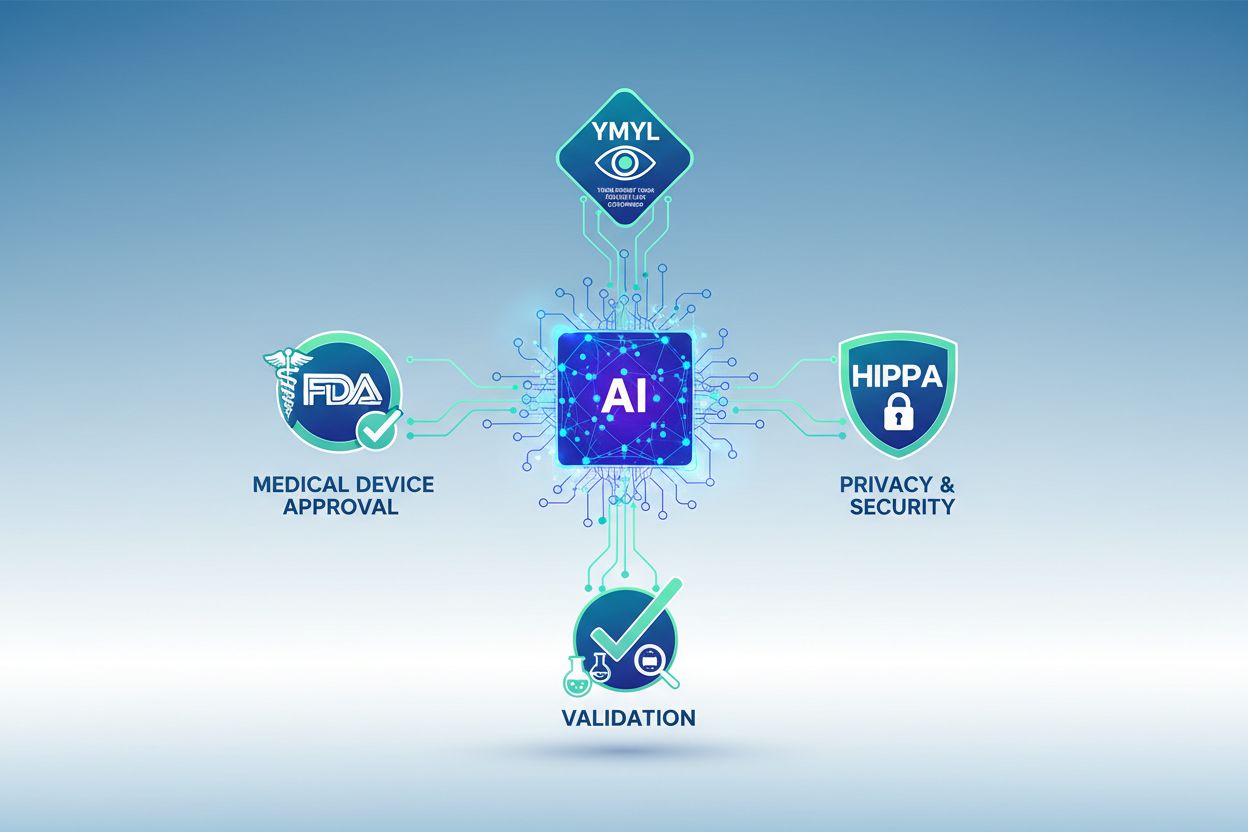
Healthcare AI Compliance refers to the adherence of artificial intelligence systems used in healthcare to applicable regulatory, legal, and ethical standards that govern their development, deployment, and operation. It encompasses requirements for medical accuracy, patient safety, data protection, and clinical efficacy across multiple jurisdictions. The compliance landscape is built on YMYL (Your Money or Your Life) standards and medical accuracy requirements that demand evidence-based validation of clinical claims.
Healthcare AI Compliance refers to the adherence of artificial intelligence systems used in healthcare to applicable regulatory, legal, and ethical standards that govern their development, deployment, and operation. It encompasses requirements for medical accuracy, patient safety, data protection, and clinical efficacy across multiple jurisdictions. The compliance landscape is built on YMYL (Your Money or Your Life) standards and medical accuracy requirements that demand evidence-based validation of clinical claims.
Healthcare AI Compliance refers to the adherence of artificial intelligence systems used in healthcare to applicable regulatory, legal, and ethical standards that govern their development, deployment, and operation. This encompasses a comprehensive framework ensuring that AI-driven healthcare solutions meet stringent requirements for medical accuracy, patient safety, data protection, and clinical efficacy. The importance of Healthcare AI Compliance cannot be overstated, as non-compliance can result in patient harm, regulatory penalties, loss of clinical credibility, and legal liability for healthcare organizations and technology vendors. The compliance landscape is built on two foundational pillars: YMYL (Your Money or Your Life) standards that emphasize content trustworthiness and medical accuracy requirements that demand evidence-based validation of clinical claims. Organizations deploying healthcare AI must navigate complex regulatory requirements across multiple jurisdictions while maintaining the highest standards of transparency and accountability.
YMYL (Your Money or Your Life) is a Google search quality concept that identifies content categories where inaccuracy could directly impact user health, safety, financial stability, or well-being. In healthcare contexts, YMYL applies to any AI system providing medical information, diagnostic assistance, treatment recommendations, or health guidance, as these directly influence critical health decisions. Google’s E-E-A-T criteria—Expertise, Experience, Authoritativeness, and Trustworthiness—establish the quality threshold for healthcare content, requiring that AI systems demonstrate clinical knowledge, real-world validation, recognized authority in medical domains, and consistent reliability. Healthcare AI systems must meet YMYL standards by ensuring all medical claims are supported by clinical evidence, clearly disclosing AI involvement in recommendations, and maintaining transparent documentation of training data sources and validation methodologies. A critical requirement for YMYL-compliant healthcare AI is licensed clinician review, where qualified medical professionals validate AI outputs before clinical deployment and establish oversight mechanisms for ongoing performance monitoring. The following table illustrates how YMYL requirements translate into specific healthcare AI implementation standards:
| Requirement | YMYL Standard | Healthcare AI Implementation |
|---|---|---|
| Content Accuracy | Claims must be factually correct and evidence-based | AI algorithms validated against clinical gold standards with documented sensitivity/specificity metrics |
| Source Authority | Content created by recognized experts | AI systems developed with clinical advisory boards and peer-reviewed validation studies |
| Transparency | Clear disclosure of content limitations | Explicit labeling of AI involvement, confidence scores, and recommendation limitations in user interfaces |
| Expertise Demonstration | Demonstrated knowledge in subject matter | Clinician review protocols, continuing education for AI developers, and documented clinical expertise of validation teams |
| User Trust Signals | Credentials, citations, and professional standing | Regulatory clearances (FDA approval), clinical trial data, institutional affiliations, and third-party audits |
| Bias Mitigation | Fair representation across demographics | Validation across diverse patient populations with documented equity assessments and bias testing results |
The FDA (Food and Drug Administration) plays a central regulatory role in overseeing AI-enabled medical devices, establishing premarket and postmarket requirements that ensure safety and effectiveness before clinical deployment. Software as a Medical Device (SaMD) classification determines regulatory pathways based on risk level, with AI systems that diagnose, treat, or monitor medical conditions typically requiring FDA oversight. The FDA offers three primary premarket pathways: the 510(k) pathway for devices substantially equivalent to existing cleared devices (most common for lower-risk AI applications), the De Novo pathway for novel AI technologies without predicate devices, and the PMA (Premarket Approval) pathway for high-risk devices requiring extensive clinical evidence. Performance assessment and validation requirements mandate that developers conduct rigorous testing demonstrating algorithm accuracy, robustness across diverse patient populations, and safety in real-world clinical settings, with documentation of training datasets, validation methodologies, and performance metrics. The FDA’s 2021 AI/ML Action Plan and subsequent guidance documents emphasize the need for algorithm transparency, real-world performance monitoring, and modification protocols that ensure AI systems maintain clinical validity as they evolve. Healthcare organizations must maintain comprehensive regulatory documentation including clinical validation studies, risk assessments, and evidence of compliance with applicable FDA guidance throughout the device lifecycle.
HIPAA (Health Insurance Portability and Accountability Act) compliance is mandatory for any healthcare AI system processing Protected Health Information (PHI), requiring strict controls over how patient data is collected, stored, transmitted, and used in AI model training and inference. The Privacy Rule restricts use and disclosure of PHI to minimum necessary standards, while the Security Rule mandates technical and administrative safeguards including encryption, access controls, audit logs, and breach notification procedures for AI systems handling sensitive health data. De-identification of training data is a critical compliance mechanism, requiring removal or transformation of 18 specific identifiers to enable AI development without direct PHI exposure, though re-identification risks remain with advanced analytics. Healthcare organizations face unique challenges when implementing AI under HIPAA, including balancing the need for large, representative datasets for model training against strict data minimization principles, managing third-party vendor compliance when outsourcing AI development, and maintaining audit trails demonstrating HIPAA compliance throughout the AI lifecycle. HIPAA compliance is not optional but foundational to healthcare AI deployment, as violations result in substantial civil penalties, criminal liability, and irreparable damage to organizational reputation and patient trust.
Clinical validation of healthcare AI algorithms requires rigorous evidence standards demonstrating that AI systems perform safely and effectively in intended clinical use cases before widespread deployment. Healthcare organizations must establish validation frameworks aligned with clinical trial methodologies, including prospective studies comparing AI recommendations against gold-standard diagnoses, assessment of performance across diverse patient demographics, and documentation of failure modes and edge cases where AI performance degrades. Bias detection and fairness assessments are essential validation components, requiring systematic evaluation of AI performance disparities across racial, ethnic, gender, age, and socioeconomic groups to identify and mitigate algorithmic bias that could perpetuate healthcare inequities. Explainability and interpretability requirements ensure that clinicians can understand AI reasoning, verify recommendations against clinical judgment, and identify when AI outputs warrant skepticism or additional investigation. The following key validation requirements form the foundation of clinically sound healthcare AI:
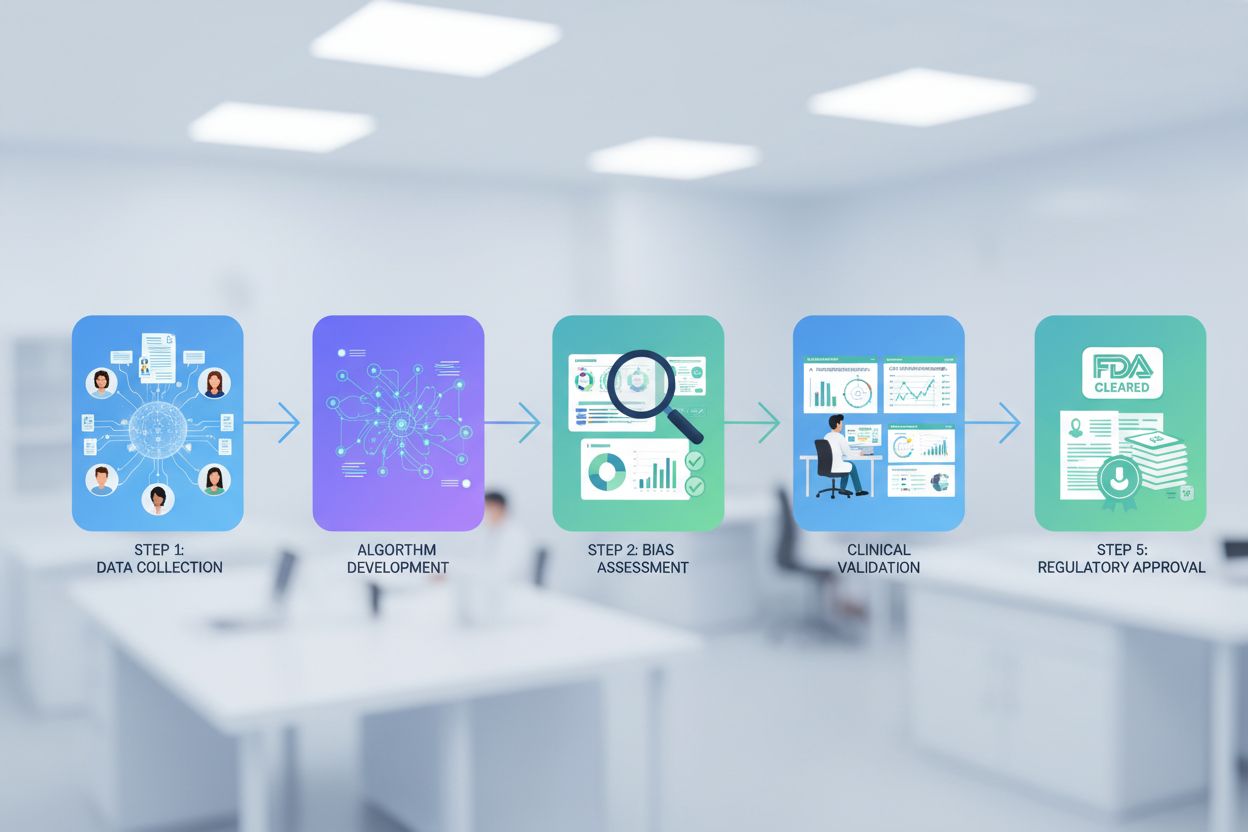
GDPR (General Data Protection Regulation) and international data protection frameworks establish stringent requirements for healthcare AI systems operating across borders, with particular emphasis on patient consent, data minimization, and individual rights to access and deletion. The EU AI Act introduces risk-based regulation of AI systems, classifying healthcare AI as high-risk and requiring conformity assessments, human oversight mechanisms, and transparency documentation before market deployment. Regional variations in healthcare AI regulation reflect different policy priorities: the UK maintains GDPR-aligned standards with sector-specific guidance from the Information Commissioner’s Office, Australia emphasizes algorithmic transparency and accountability through the Automated Decision Systems framework, and Canada requires compliance with PIPEDA (Personal Information Protection and Electronic Documents Act) with healthcare-specific considerations. Harmonization efforts through international standards organizations like ISO and IEC are advancing common frameworks for AI validation, risk management, and documentation, though significant regulatory divergence persists across jurisdictions. Global compliance matters because healthcare organizations and AI vendors operating internationally must navigate overlapping and sometimes conflicting regulatory requirements, necessitating governance structures that meet the highest applicable standards across all operating regions.
Effective Healthcare AI Compliance requires establishing robust governance frameworks that define roles, responsibilities, and decision-making authority for AI development, validation, deployment, and monitoring across the organization. Documentation and audit trails are critical compliance mechanisms, requiring comprehensive records of algorithm development decisions, validation study protocols and results, clinical review processes, user training, and performance monitoring that demonstrate compliance during regulatory inspections and legal proceedings. Post-market surveillance and continuous monitoring protocols ensure that deployed AI systems maintain clinical validity over time, with systematic collection of real-world performance data, identification of performance degradation or emerging safety issues, and documented procedures for algorithm retraining or modification. Vendor management and third-party compliance programs establish contractual requirements, audit procedures, and performance standards ensuring that external developers, data providers, and service providers meet organizational compliance expectations and regulatory obligations. Healthcare organizations should implement governance structures including clinical advisory boards, compliance committees, and cross-functional teams responsible for AI oversight; establish audit trails documenting all significant decisions and modifications; conduct regular post-market surveillance reviews; and maintain comprehensive vendor agreements specifying compliance responsibilities and performance standards.
Healthcare organizations face significant compliance gaps in current AI deployment practices, including insufficient clinical validation of algorithms before clinical use, inadequate bias assessment across diverse patient populations, and limited transparency regarding AI involvement in clinical decision-making. The regulatory landscape continues evolving rapidly, with FDA guidance documents, international standards, and healthcare policy frameworks being updated frequently, creating compliance uncertainty for organizations attempting to implement cutting-edge AI technologies while maintaining regulatory adherence. Emerging tools and technologies are enhancing compliance monitoring capabilities; for example, platforms like AmICited help organizations track how healthcare AI systems and compliance information are referenced across the broader AI ecosystem, providing visibility into how healthcare brands and regulatory guidance are being incorporated into other AI systems. Future compliance trends point toward increased emphasis on real-world performance monitoring, algorithmic transparency and explainability, equity and fairness assessment, and continuous validation frameworks that treat AI deployment as an ongoing process rather than a one-time approval event. Healthcare organizations must adopt proactive compliance strategies that anticipate regulatory evolution, invest in governance infrastructure and clinical expertise, and maintain flexibility to adapt as standards and expectations continue advancing.
Healthcare AI Compliance refers to the adherence of artificial intelligence systems to regulatory, legal, and ethical standards governing their development, deployment, and operation in healthcare settings. It encompasses requirements for medical accuracy, patient safety, data protection, and clinical efficacy, ensuring that AI systems meet YMYL standards and evidence-based validation requirements before clinical deployment.
YMYL (Your Money or Your Life) is a Google search quality concept identifying content that could significantly impact user health and well-being. Healthcare AI systems must meet YMYL standards by ensuring all medical claims are supported by clinical evidence, clearly disclosing AI involvement, and maintaining transparent documentation of training data sources and validation methodologies.
The primary regulatory frameworks include FDA oversight for AI-enabled medical devices, HIPAA compliance for systems handling Protected Health Information, GDPR and EU AI Act for international data protection, and regional standards in the UK, Australia, and Canada. Each framework establishes specific requirements for safety, effectiveness, privacy, and transparency.
Clinical validation is the rigorous testing process demonstrating that AI systems perform safely and effectively in intended clinical use cases. It includes prospective studies comparing AI recommendations against gold-standard diagnoses, assessment of performance across diverse patient demographics, bias detection and fairness evaluation, and documentation of explainability and interpretability for clinician understanding.
HIPAA compliance is mandatory for any healthcare AI system processing Protected Health Information (PHI). It requires strict controls over data collection, storage, transmission, and use in AI model training, including encryption, access controls, audit logs, breach notification procedures, and de-identification of training data to remove or transform 18 specific identifiers.
The FDA oversees AI-enabled medical devices through premarket pathways including 510(k) clearance for substantially equivalent devices, De Novo classification for novel AI technologies, and PMA approval for high-risk devices. The FDA requires comprehensive documentation of algorithm development, validation studies, performance metrics, real-world monitoring, and modification protocols throughout the device lifecycle.
Major challenges include insufficient clinical validation before deployment, inadequate bias assessment across diverse patient populations, limited transparency regarding AI involvement in clinical decisions, balancing data minimization with model training needs, managing third-party vendor compliance, and navigating rapidly evolving regulatory landscapes across multiple jurisdictions.
Organizations can use AI monitoring platforms like AmICited to track how their healthcare brands, compliance information, and regulatory guidance are referenced across AI systems like ChatGPT, Perplexity, and Google AI Overviews. This provides visibility into how healthcare compliance standards are being incorporated into broader AI ecosystems and helps identify potential misrepresentation of medical information.
Track how your healthcare brand and compliance information are referenced across AI systems like ChatGPT, Perplexity, and Google AI Overviews with AmICited.
Learn how to optimize Your Money or Your Life (YMYL) content for AI search engines like ChatGPT, Perplexity, and Google's AI Overviews. Master E-E-A-T signals, ...
Community discussion on optimizing YMYL content for AI search. Health, finance, and legal content creators share strategies for meeting higher AI trust standard...
Learn how healthcare organizations successfully implement and scale AI initiatives. Discover key strategies for data infrastructure, change management, complian...
Cookie Consent
We use cookies to enhance your browsing experience and analyze our traffic. See our privacy policy.