

What is the Hub and Spoke Model?
Learn how the hub and spoke distribution model works, its benefits for logistics and supply chain management, and how it compares to point-to-point distribution...
9 min read
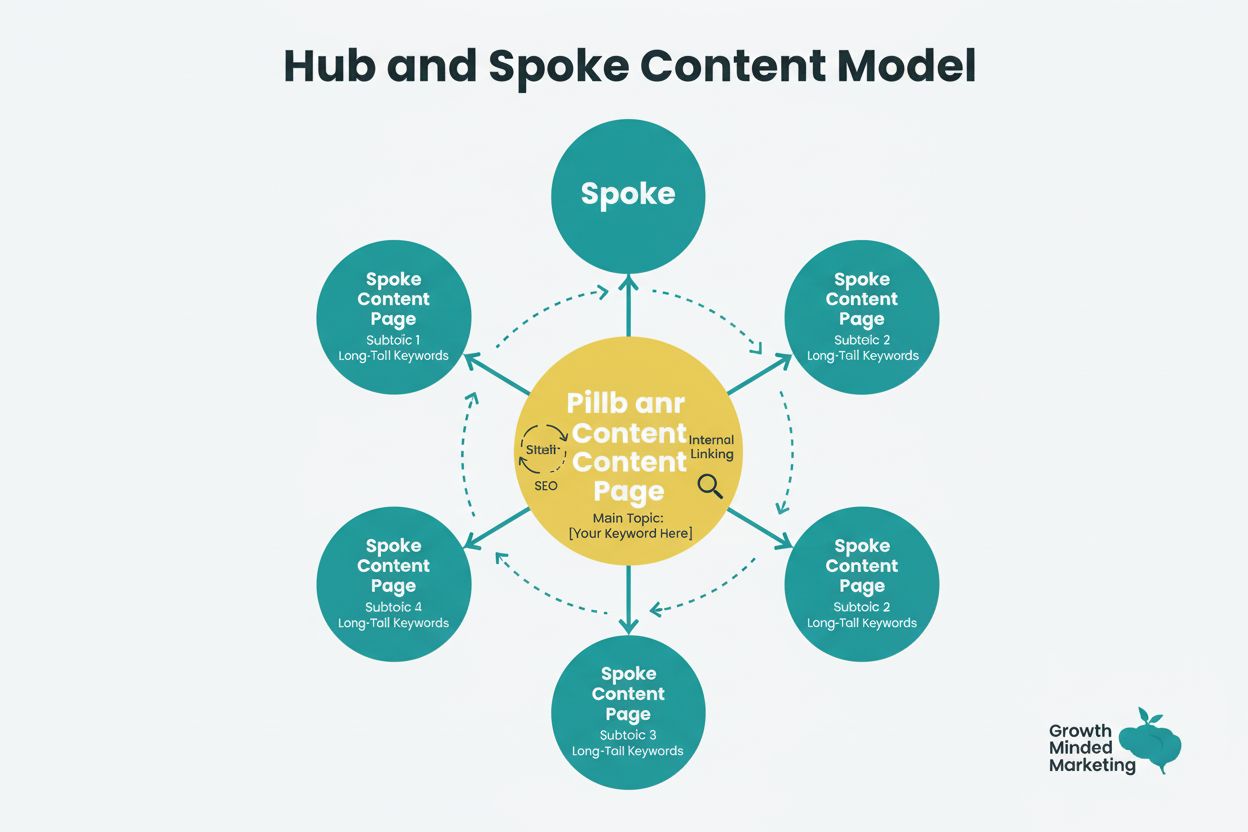
The Hub and Spoke Model is a content architecture strategy where a central ‘hub’ page covers a broad topic comprehensively, while multiple ‘spoke’ pages target specific subtopics and link back to the hub, creating an interconnected content network that improves SEO authority and user engagement.
The Hub and Spoke Model is a content architecture strategy where a central 'hub' page covers a broad topic comprehensively, while multiple 'spoke' pages target specific subtopics and link back to the hub, creating an interconnected content network that improves SEO authority and user engagement.
The Hub and Spoke Model is a content architecture strategy that organizes website content around a central authoritative page (the hub) surrounded by multiple supporting pages (the spokes) that target specific subtopics and link back to the hub. This structure mirrors the design of a bicycle wheel, where the hub sits at the center with spokes radiating outward, each connected back to the central point. The model is designed to build topical authority, improve search engine rankings, and enhance user navigation by creating an interconnected network of related content. Rather than publishing isolated blog posts, the Hub and Spoke Model groups content strategically around a broad topic, allowing websites to demonstrate comprehensive expertise to both search engines and users. This approach has become fundamental to modern SEO strategy and content architecture, particularly for competitive keywords where a single page cannot adequately address all user search intent variations.
The Hub and Spoke Model emerged from the broader evolution of SEO strategy and content marketing practices. In the early 2000s, SEO focused primarily on individual page optimization for single keywords, with little consideration for how pages related to one another. As search algorithms became more sophisticated, particularly after Google’s Hummingbird update in 2013 and subsequent refinements emphasizing topical relevance, marketers recognized that search engines valued comprehensive topic coverage. The concept of topical authority became central to SEO strategy, leading to the development of structured content models. The Hub and Spoke Model gained significant traction around 2015-2018 as companies like HubSpot, Hotjar, and other SaaS leaders demonstrated its effectiveness through case studies showing dramatic improvements in keyword rankings and organic traffic. According to industry data, companies implementing hub-and-spoke strategies have reported increases of up to 328% in first-page keyword rankings and 741% in second-page rankings. The model has since become a cornerstone of enterprise SEO strategy, with platforms like Conductor, Ahrefs, and SEMrush incorporating hub-and-spoke analysis into their core offerings. Today, the Hub and Spoke Model is recognized as essential for building E-E-A-T signals (Experience, Expertise, Authoritativeness, Trustworthiness) that Google prioritizes in its ranking algorithms.
Understanding the Hub and Spoke Model requires clarity on its fundamental components. The hub page serves as the central resource, typically targeting a broad, high-volume keyword with significant search demand. This page should be comprehensive, covering the topic at a high level while linking to deeper resources. Hub pages are designed to be “bookmark-worthy”—content users want to return to for reference. The hub acts as both a table of contents and an ultimate guide, providing navigation to all related content while establishing the site’s authority on the topic. Spoke pages, by contrast, are individual content pieces targeting specific long-tail keywords and subtopics related to the hub. Each spoke addresses a particular question or aspect of the broader topic, providing in-depth information that complements the hub. Spokes are designed to rank for their specific keywords while driving traffic back to the hub through strategic internal linking. The internal linking structure is the connective tissue that makes the model work. Hub pages link to all spokes within body text using relevant anchor text, spokes link back to the hub, and spokes cross-link to related spokes where topically appropriate. This creates a cohesive network that helps search engines understand content relationships and distributes page authority throughout the cluster. The topical cluster is the complete ecosystem of hub and spokes combined, representing comprehensive coverage of a subject area.
| Aspect | Hub and Spoke Model | Pillar Page Strategy | Keyword Cluster Approach | Silo Structure |
|---|---|---|---|---|
| Content Distribution | Multiple interconnected pages | Single comprehensive page | Grouped pages by keyword intent | Hierarchical folder organization |
| Primary Goal | Build topical authority across URLs | Keep users on one page | Capture related keyword variations | Organize site structure by topic |
| Internal Linking | Hub links to spokes; spokes link back | Limited internal linking | Cross-linking between cluster pages | Hierarchical linking patterns |
| User Experience | Encourages exploration of related topics | Comprehensive single-page experience | Guided journey through related content | Clear site hierarchy navigation |
| SEO Authority Distribution | Distributed across multiple pages | Concentrated on single page | Distributed across cluster | Distributed through hierarchy |
| Best For | Competitive keywords needing deep coverage | Comprehensive topic mastery | Capturing long-tail variations | Large sites with many topics |
| Content Production | Higher volume, multiple pieces | Fewer pieces, longer format | Moderate volume, focused topics | Varies by site structure |
| Ranking Potential | Multiple pages rank for related terms | Single page ranks for main term | Multiple pages rank for variations | Multiple pages rank by hierarchy |
The technical implementation of a Hub and Spoke Model requires careful planning and execution to maximize SEO benefits. The hub page should be positioned at a high-level URL structure (ideally at the root or first subdirectory level) to accumulate domain authority and ensure it receives significant crawl budget from search engines. The hub page URL should include the primary keyword and be structured for easy discovery. Spoke pages should be organized in a logical folder structure or URL hierarchy that reflects their relationship to the hub, though this is less critical than the internal linking strategy. The internal linking architecture is where the Hub and Spoke Model’s power truly manifests. Hub pages should include contextual links to all spoke pages within the body content, using descriptive anchor text that includes relevant keywords. These links should feel natural and serve the reader’s journey, not appear forced or over-optimized. Spoke pages should include at least one link back to the hub, typically in the opening or closing sections, using anchor text that reinforces the hub’s primary keyword. Additionally, spokes should cross-link to related spokes where topically relevant, creating a web of interconnected content. This cross-linking should be strategic—typically 1-3 links per spoke to avoid over-linking and maintain content quality. The use of breadcrumb navigation and related posts widgets can enhance the user experience and reinforce the hub-and-spoke relationship without requiring manual linking in every piece of content. From a technical SEO perspective, all pages in the cluster should have proper heading hierarchy (H1, H2, H3), optimized meta descriptions, and schema markup that indicates their relationship to the broader topic.
One of the most significant advantages of the Hub and Spoke Model is its ability to build topical authority—the concept that a website demonstrates comprehensive expertise in a specific subject area. Search engines, particularly Google, increasingly prioritize topical authority when ranking content, especially for competitive keywords and topics where accuracy and expertise matter. The Hub and Spoke Model accomplishes this by creating a comprehensive content ecosystem that covers a topic from multiple angles. When a website has a hub page covering “Digital Marketing Strategy” supported by spokes on “Content Marketing,” “SEO Fundamentals,” “Paid Advertising,” “Social Media Strategy,” and “Marketing Analytics,” search engines recognize the site as an authoritative resource on digital marketing broadly. This topical authority extends beyond the hub page itself—spoke pages benefit from the authority of the hub, and the hub benefits from the relevance signals of the spokes. The model also strengthens E-E-A-T signals that Google explicitly considers in its ranking algorithms. Experience is demonstrated through real-world examples and case studies within the content. Expertise is shown through comprehensive, accurate coverage of subtopics. Authoritativeness is established through the interconnected structure that signals deep knowledge. Trustworthiness is reinforced through citations, data, and transparent sourcing. A well-executed Hub and Spoke Model naturally incorporates all four E-E-A-T elements, making it particularly effective for competitive niches, health-related content, financial topics, and other areas where expertise and trustworthiness are paramount.
Successful Hub and Spoke Model implementation begins with thorough keyword research to identify viable hub topics and supporting spoke keywords. The hub keyword should have substantial search volume (typically 1,000+ monthly searches) but be broad enough to support 6-8 related subtopics. Tools like Ahrefs, SEMrush, and Google Keyword Planner help identify search volume and keyword difficulty metrics. The hub keyword should also align with business objectives—it should be a topic the company can genuinely establish authority in and that attracts the target audience. Once the hub keyword is identified, spoke keywords are discovered through several methods. Long-tail keyword variations of the hub keyword often make excellent spoke targets. For example, if the hub is “Content Marketing,” spoke keywords might include “Content Marketing for SaaS,” “Content Marketing ROI,” “Content Marketing Tools,” and “Content Marketing Strategy.” Google’s “People Also Ask” section and related searches provide real user questions that often translate directly into spoke topics. Competitor analysis reveals which subtopics competitors are targeting, indicating market demand. Search intent analysis is crucial—spoke keywords should target informational, comparative, or how-to intent, while the hub typically targets broader informational or navigational intent. The goal is to identify 6-8 spoke keywords that collectively cover the topic comprehensively while targeting distinct search queries. This prevents keyword cannibalization, where multiple pages compete for the same search terms, which dilutes ranking potential. Tools that analyze search intent and keyword clustering can significantly streamline this process, helping marketers visualize the relationship between hub and spoke keywords before content creation begins.
Creating high-quality content for a Hub and Spoke Model requires different approaches for hub and spoke pages. Hub pages should be comprehensive, typically 3,000-5,000+ words, covering the topic at a strategic level that guides readers to deeper resources. Hub content should include an executive summary, clear navigation (often a table of contents), and strategic internal links to spoke pages. The hub should answer the broadest questions about the topic while positioning spoke pages as resources for deeper dives. Hub pages should be optimized for user experience, with clear formatting, subheadings, and visual elements that make the content scannable. Spoke pages are typically 1,500-2,500 words, focusing on specific subtopics with depth and actionable insights. Spoke content should be self-contained—readable and valuable even without the hub—while including clear links back to the hub and related spokes. Spoke pages should target specific long-tail keywords naturally, without keyword stuffing or over-optimization. Both hub and spoke content should meet quality standards including: original research or unique perspectives, accurate and verifiable information, proper citations and sources, visual elements (images, infographics, videos) that enhance understanding, and clear calls-to-action appropriate to the content type. The content should be written for the target audience’s knowledge level and search intent. For competitive topics, content should exceed competitor content in depth, accuracy, and usefulness. Subject matter experts should review content for accuracy, particularly for topics where expertise and trustworthiness are critical. The content creation process should involve collaboration between writers, SEO specialists, designers, and stakeholders to ensure alignment with business goals and SEO best practices.
As AI search engines like ChatGPT, Perplexity, Google AI Overviews, and Claude become increasingly important for brand visibility, the Hub and Spoke Model takes on new significance. These AI systems analyze content to generate responses to user queries, and they prioritize authoritative, well-structured content from topically relevant sources. A Hub and Spoke Model signals topical authority to AI systems, increasing the likelihood that your content will be cited or referenced in AI-generated responses. When AI systems encounter a hub page with comprehensive coverage and multiple supporting spokes, they recognize the source as authoritative and are more likely to draw from it. The interconnected structure also helps AI systems understand content relationships and context, improving the relevance of citations. AmICited and similar AI monitoring platforms allow marketers to track where their hub and spoke content appears in AI responses across multiple platforms. This visibility is crucial for brand monitoring and understanding how AI systems perceive your content authority. The Hub and Spoke Model’s emphasis on comprehensive topic coverage aligns perfectly with how AI systems evaluate source credibility. Additionally, the model’s internal linking structure creates clear signals about content hierarchy and relationships, which AI systems use to understand context and relevance. For companies focused on maintaining brand visibility in both traditional search and emerging AI search, the Hub and Spoke Model is increasingly essential.
Implementing a Hub and Spoke Model successfully requires awareness of common pitfalls and adherence to best practices. One common challenge is over-linking, where marketers include too many internal links, making content feel forced and reducing user experience quality. Best practice is to include only contextually relevant links that serve the reader’s journey. Another challenge is keyword cannibalization, where multiple pages target similar keywords, causing them to compete rather than complement each other. This is avoided through careful keyword research and ensuring each spoke targets distinct long-tail keywords. Inconsistent content quality across the cluster undermines topical authority—all pages should meet high quality standards. Some marketers struggle with maintaining the hub-spoke relationship over time, allowing the cluster to become disconnected as new content is added. Best practice involves regular audits of the cluster structure and updating internal links as new content is added. Insufficient promotion means even excellent content doesn’t reach its audience. Hub and spoke content should be promoted through social media, email, partnerships, and paid channels to accelerate visibility. Delayed results frustrate marketers expecting immediate rankings—SEO is a long-term strategy, and hub and spoke clusters typically require 3-6 months to show significant ranking improvements. Patience and consistent optimization are essential. Best practices for successful implementation include: conducting thorough keyword research before content creation, ensuring each spoke targets distinct keywords, maintaining consistent quality across all pages, strategically placing internal links within natural content flow, regularly monitoring performance metrics, updating and refreshing content periodically, promoting content through multiple channels, and maintaining clear documentation of the hub-spoke relationships for team alignment.
The Hub and Spoke Model is evolving in response to changing search landscapes and emerging technologies. As AI search engines become more prevalent, the model’s emphasis on topical authority and comprehensive coverage becomes increasingly valuable. AI systems prioritize authoritative, well-organized content, and the Hub and Spoke Model naturally provides these signals. The integration of semantic search and natural language processing means search engines increasingly understand content relationships and context, making the interconnected structure of hub and spoke clusters more valuable. The model is also adapting to voice search and featured snippets, where comprehensive, well-structured content has advantages. Hub pages are particularly well-suited to appear in featured snippets, and spoke pages can target voice search queries that often use conversational, long-tail keywords. The rise of zero-click searches and AI Overviews in Google’s search results means content must be optimized not just for clicks but for citation and reference in AI-generated responses. The Hub and Spoke Model’s topical authority signals make it ideal for this evolving landscape. Looking forward, the model will likely become even more important as search engines and AI systems continue prioritizing authoritative, comprehensive content over scattered, disconnected pages. Companies that invest in well-executed hub and spoke strategies now will have significant competitive advantages as search continues to evolve. The model also aligns with content sustainability—rather than constantly creating new content, marketers can build evergreen hub and spoke clusters that continue generating value over years. This approach is more sustainable and cost-effective than perpetual content creation. Additionally, as brand monitoring in AI search becomes standard practice through tools like AmICited, the Hub and Spoke Model’s role in ensuring consistent brand visibility across platforms will become increasingly strategic.
Measuring the success of a Hub and Spoke Model requires tracking multiple metrics across the cluster. Keyword rankings are the primary metric—track how many keywords the hub and spokes rank for, particularly first-page rankings. Most implementations should show 200%+ increases in keyword rankings within 6-12 months. Organic traffic to the hub and spoke pages combined should increase significantly, with 150-300% growth being typical for well-executed clusters. Click-through rates from search results indicate whether titles and meta descriptions are compelling. Engagement metrics like average session duration, pages per session, and bounce rate show whether the interconnected content is encouraging exploration. Conversion metrics track whether hub and spoke traffic converts to leads, customers, or other business goals. Backlink growth to hub and spoke pages indicates whether the content is earning external links, which amplifies SEO benefits. AI visibility through tools like AmICited shows where your content appears in ChatGPT, Perplexity, and other AI responses. Optimization involves analyzing which spokes are performing well and which are underperforming, then adjusting strategy accordingly. High-performing spokes might warrant additional promotion or expansion. Underperforming spokes might need content updates, better internal linking, or keyword adjustments. Regular content refreshes—updating statistics, adding new insights, improving formatting—keep the cluster competitive. A/B testing different internal linking strategies, anchor text variations, and content structures can reveal optimization opportunities. Monitoring competitor hub and spoke clusters provides insights into market trends and gaps. The key to long-term success is treating the hub and spoke cluster as a living asset that requires ongoing optimization and maintenance rather than a one-time content project.
The Hub and Spoke Model distributes content across multiple interconnected pages with a central hub linking to spokes, while pillar page content consolidates all information into a single comprehensive page. The hub-and-spoke approach leverages internal linking and site structure to build topical authority across multiple URLs, whereas pillar content keeps readers on one page. Both strategies work for SEO, but hub-and-spoke is better for competitive keywords requiring deep subtopic coverage, while pillar pages excel at keeping users engaged on a single resource.
The Hub and Spoke Model provides multiple SEO benefits: it increases topical authority by covering a subject comprehensively across related pages, improves internal linking structure which helps search engines understand content hierarchy, captures more long-tail keywords through spoke pages, and increases overall organic traffic by creating multiple ranking opportunities. Additionally, it enhances user experience by guiding visitors through related content, reducing bounce rates and increasing dwell time—both factors correlated with better search rankings.
Ideally, each hub should have 6-8 spoke pages to balance comprehensive topic coverage with manageable content production. This range ensures deep exploration of subtopics without overwhelming readers or diluting topical authority. However, the exact number depends on your topic's complexity and available resources. Some hubs may have 4-5 spokes for narrower topics, while broader subjects might support 10-12 spokes. The key is ensuring each spoke provides unique value and targets distinct long-tail keywords.
Internal linking in a Hub and Spoke Model should follow a three-directional pattern: the hub links to all spoke pages within body text using relevant anchor text, each spoke links back to the hub to reinforce the central topic, and spokes cross-link to related spokes where topically relevant. This creates a cohesive network that helps search engines understand content relationships and distributes page authority throughout the cluster. Avoid over-linking; use natural, contextual anchor text that benefits both users and search engines.
Yes, a spoke page can theoretically link to multiple hubs if it's relevant to different topics. However, this should be done carefully to avoid keyword cannibalization and content confusion. Each spoke should have a primary hub it supports, with secondary links to related hubs only when genuinely relevant. Ensure the content is sufficiently unique and contextual for each hub relationship to avoid diluting topical authority or confusing search engines about the page's primary purpose.
The Hub and Spoke Model enhances brand visibility in AI search engines like ChatGPT, Perplexity, and Claude by establishing clear topical authority and creating multiple content touchpoints. AI systems prioritize authoritative, well-structured content when generating responses, and the hub-and-spoke architecture signals expertise through interconnected, comprehensive coverage. With tools like AmICited, you can monitor where your hub and spoke content appears in AI-generated responses, ensuring your brand maintains visibility across both traditional search and emerging AI platforms.
In content strategy terminology, 'hub' and 'cluster' are often used interchangeably to describe the same concept: a central page with supporting content. However, some practitioners distinguish clusters as broader topic groupings that may include multiple hubs, while a hub is a single central page with its spokes. For practical purposes, both terms refer to the interconnected content architecture where a main page links to and receives links from supporting pages targeting related keywords and subtopics.
SEO results from a Hub and Spoke Model typically take 3-6 months to become visible, though this varies based on domain authority, competition level, and content quality. Initial indexing happens within weeks, but ranking improvements usually emerge after 2-3 months as search engines crawl and evaluate the interconnected content structure. Established domains with strong authority may see faster results, while newer sites may require 6-12 months. Consistent updates, quality content, and strategic promotion accelerate the timeline for achieving top rankings.
Start tracking how AI chatbots mention your brand across ChatGPT, Perplexity, and other platforms. Get actionable insights to improve your AI presence.
Learn how the hub and spoke distribution model works, its benefits for logistics and supply chain management, and how it compares to point-to-point distribution...
Community discussion on using the hub and spoke content model for AI visibility. Content strategists share experiences with topic clusters and pillar content fo...
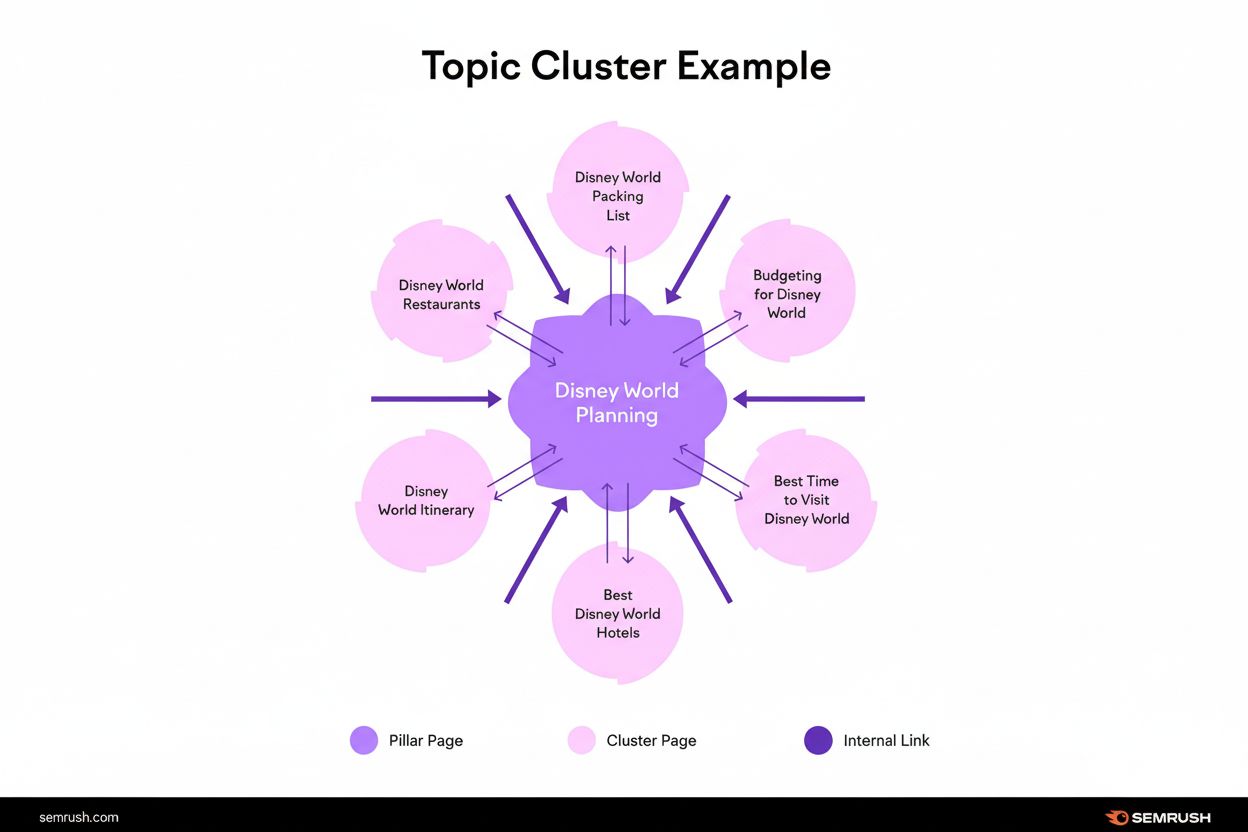
Learn what the Topic Cluster Model is, how it works for SEO, and why it matters for ranking in Google, ChatGPT, Perplexity, and other AI search platforms. Compl...
Cookie Consent
We use cookies to enhance your browsing experience and analyze our traffic. See our privacy policy.