
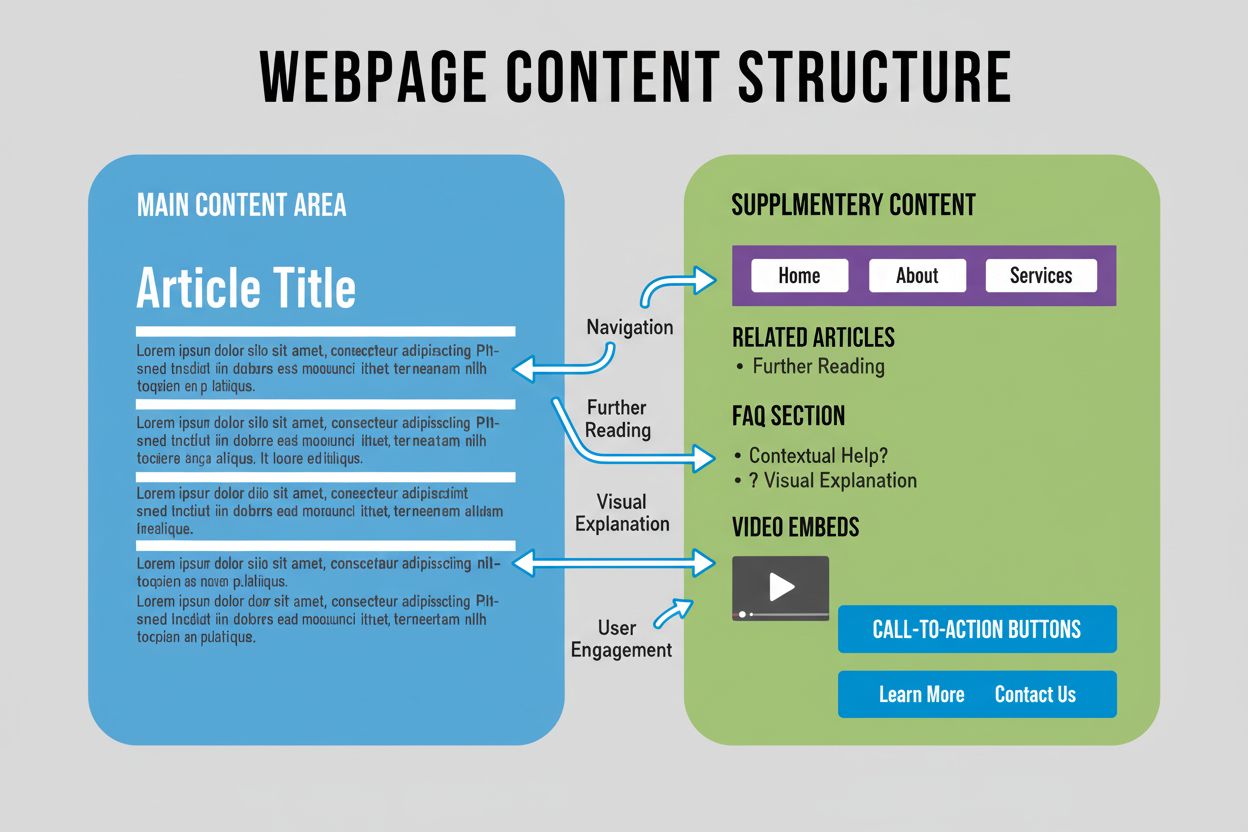
Supplementary Content (SC)
Learn what supplementary content is, why it matters for SEO and AI visibility, and how it impacts page rankings and user experience on websites.
9 min read

Main Content (MC) is the primary, core material on a webpage that directly fulfills the page’s purpose and satisfies user search intent. It is the central focus that Google’s algorithms and quality raters evaluate to determine page quality, relevance, and ranking potential in search results.
Main Content (MC) is the primary, core material on a webpage that directly fulfills the page's purpose and satisfies user search intent. It is the central focus that Google's algorithms and quality raters evaluate to determine page quality, relevance, and ranking potential in search results.
Main Content (MC) is the primary, core material on a webpage that directly fulfills the page’s intended purpose and satisfies user search intent. It represents the central focus of a page—whether that’s a blog article, product description, service listing, news story, or any other primary information that users came to the page to find. According to Google’s Quality Rater Guidelines, Main Content is defined as “any part of the page that directly helps the page achieve its purpose.” The distinction between MC and other page elements is fundamental to how Google’s algorithms and human quality raters evaluate page quality, relevance, and ranking potential. Main Content is not simply the longest text on a page; it is the most purposeful, original, and valuable information that addresses the user’s search query and information needs. Understanding MC is critical for SEO professionals, content creators, and anyone seeking to improve their visibility in both traditional search results and emerging AI search platforms like ChatGPT, Perplexity, and Google AI Overviews.
The concept of Main Content as a distinct, evaluable component of web pages emerged formally when Google introduced its Quality Rater Guidelines in the early 2000s. However, it wasn’t until the publication of the official Search Quality Rater Guidelines in August 2022 that Google publicly acknowledged the existence of approximately 16,000 quality raters worldwide who evaluate pages based on MC quality. These raters, distributed across multiple countries and languages, assess whether pages contain a “satisfying or comprehensive amount of very high-quality” Main Content. The evolution of MC evaluation reflects Google’s broader shift toward prioritizing people-first content over search engine optimization tactics. In 2023, Google further emphasized this by adding “Experience” to its E-A-T framework, creating E-E-A-T, which places even greater emphasis on demonstrating expertise and real-world knowledge through Main Content. This evolution has accelerated with the rise of generative AI systems that now consume and cite web content, making MC quality increasingly important for brand visibility across multiple platforms beyond traditional Google Search.
Understanding the distinction between these three content categories is essential for both SEO and user experience optimization. The following comparison table illustrates how these elements differ in purpose, function, and impact on page quality ratings:
| Aspect | Main Content (MC) | Supplementary Content (SC) | Advertisements (Ads) |
|---|---|---|---|
| Primary Purpose | Directly fulfills the page’s core purpose and user intent | Enhances user experience but doesn’t directly achieve page purpose | Monetizes the page through sponsored links or display ads |
| Examples | Blog articles, product descriptions, service listings, news stories, research data | Navigation menus, sidebars, related links, FAQs, user comments, breadcrumbs | Google Ads, affiliate links, sponsored product placements, banner ads |
| Quality Rating Weight | Highest weight in Google’s quality assessment | Moderate weight; improves UX but secondary to MC | Lowest weight; can negatively impact ratings if excessive |
| Visibility Requirement | Must be immediately visible or easily accessible | Should support MC without overwhelming it | Should be clearly labeled and not interfere with MC |
| SEO Impact | Critical ranking factor; directly influences rankings | Supports rankings indirectly through improved UX | Can harm rankings if placed above the fold or too prominently |
| Accessibility | Should be the first element users encounter | Accessible but not prioritized over MC | Clearly separated and labeled to avoid confusion with MC |
| Content Originality | Requires significant effort, originality, and expertise | Can be standard elements (navigation, links) | Typically not original content; external monetization |
| User Satisfaction Signal | Directly impacts “Needs Met” ratings | Contributes to overall page experience | Can reduce satisfaction if intrusive or excessive |
This distinction is critical because Google’s Page Layout Algorithm specifically evaluates whether Main Content is immediately visible and not overwhelmed by supplementary elements or ads. Pages that clearly prioritize MC receive better quality ratings and ranking potential.
Main Content serves as the primary signal that Google’s automated systems use to understand page relevance and quality. When Google’s crawlers index a webpage, they analyze the MC to determine what the page is about, whether it satisfies specific search queries, and how well it compares to competing pages. The algorithms examine several MC-specific factors: the amount of original information provided, the depth of coverage on the topic, the presence of supporting evidence and citations, and the clarity of the content structure. Google’s passage ranking system, an AI-based technology, can identify individual sections or “passages” within MC to understand how relevant specific parts of a page are to different search queries. This means that even within a single article, different paragraphs may rank for different keywords based on their relevance. The quality of MC is assessed through multiple signals: word choice and semantic relevance, the presence of E-E-A-T indicators (author credentials, publication date, source citations), the absence of spelling and grammatical errors, and evidence of editorial care and attention to detail. Additionally, Google’s systems measure user engagement with MC through signals like dwell time (how long users spend on the page) and click-through behavior (whether users return to search results or continue reading), which serve as proxies for MC quality and user satisfaction.
For businesses and content creators, Main Content quality directly impacts revenue, traffic, and brand visibility. Research indicates that over 78% of enterprises now use AI-driven content monitoring tools to track how their brand appears in search results and AI-generated responses. High-quality MC increases the likelihood that your content will be cited by AI systems like ChatGPT, Perplexity, and Google AI Overviews, which now influence user behavior and brand discovery. When your MC demonstrates strong E-E-A-T signals, AI systems are more likely to reference your domain as an authoritative source, driving traffic and establishing thought leadership. Conversely, pages with unsatisfying amounts of MC or low-quality content receive poor quality ratings from Google’s raters, which indirectly impacts rankings and visibility. For e-commerce sites, high-quality product descriptions and detailed MC improve conversion rates because users feel confident in their purchasing decisions. For news organizations, comprehensive, well-researched MC attracts links, social shares, and repeat visitors. For professional services, detailed MC that demonstrates expertise builds trust and generates qualified leads. The practical impact extends beyond rankings: pages with strong MC receive higher engagement metrics, lower bounce rates, and better user satisfaction scores, all of which contribute to long-term business success.
Different platforms evaluate and utilize Main Content in distinct ways. Google Search prioritizes MC quality through its automated ranking systems and human quality raters, with the Page Layout Algorithm specifically rewarding pages where MC is immediately visible. Google AI Overviews (formerly SGE) cite MC from authoritative sources to generate direct answers, making MC quality critical for visibility in this emerging format. ChatGPT and Claude were trained on vast amounts of web content, including high-quality MC, and they reference sources that demonstrate expertise and originality. Perplexity AI explicitly cites sources in its responses, making it essential that your MC is comprehensive and original enough to be selected as a reference. Bing Chat similarly prioritizes authoritative, well-researched MC. The common thread across all these platforms is that original, comprehensive, and expertly-written Main Content is more likely to be cited, referenced, and recommended. This means that investing in MC quality is no longer just an SEO strategy—it’s a multi-platform visibility strategy that impacts how your brand appears across search engines, AI systems, and emerging search technologies.
Creating and optimizing high-quality Main Content requires a strategic, multi-step approach:
These practices align with both Google’s quality guidelines and the requirements of AI systems that cite and reference web content.
E-E-A-T (Experience, Expertise, Authoritativeness, Trustworthiness) is the framework Google uses to evaluate Main Content quality, and it has become increasingly important in recent years. Experience refers to first-hand knowledge and personal expertise demonstrated through the MC—for example, a product review written by someone who has actually used the product. Expertise is demonstrated through comprehensive, accurate, and detailed information that shows deep knowledge of the topic. Authoritativeness comes from the creator’s credentials, the website’s reputation, and external recognition (such as links from other authoritative sites). Trustworthiness is built through transparent sourcing, accurate citations, clear author information, and evidence of editorial care. Google’s quality raters specifically evaluate MC to assess these E-E-A-T dimensions, and their assessments help Google’s algorithms improve over time. For YMYL (Your Money or Your Life) topics—content that could significantly impact people’s health, financial stability, or safety—Google applies even stricter E-E-A-T standards to MC. This means that if your MC covers financial advice, medical information, or legal guidance, it must demonstrate exceptionally strong E-E-A-T signals to rank well. The integration of E-E-A-T into MC evaluation reflects Google’s commitment to prioritizing reliable, authoritative information over low-quality, manipulative content.
The importance of Main Content is likely to increase as search and AI technologies evolve. AI systems are becoming more sophisticated in their ability to identify, extract, and cite high-quality MC from across the web. This means that the definition of “high-quality MC” will continue to evolve to include factors like originality, comprehensiveness, and demonstrable expertise. Generative AI is creating new opportunities for MC to be repurposed and cited across multiple platforms, making it essential that your MC is not only optimized for Google Search but also suitable for citation by AI systems. The rise of AI monitoring platforms like AmICited reflects growing recognition that brand visibility in AI-generated responses is now a critical business metric. Organizations that invest in high-quality MC today will be better positioned to capture visibility across emerging search and AI platforms tomorrow. Additionally, Google’s continued emphasis on people-first content suggests that MC quality will remain a primary ranking factor for years to come. The future of search and AI is fundamentally about connecting users with the most reliable, authoritative, and useful information available—and that information comes from high-quality Main Content. As search technologies continue to evolve, the core principle remains constant: create comprehensive, original, expertly-written Main Content that satisfies user intent, and your visibility across all search and AI platforms will improve.
Main Content (MC) is any part of a webpage that directly helps achieve the page's primary purpose, such as a blog post, product description, or article. Supplementary Content (SC) includes supporting elements like navigation menus, sidebars, related links, and FAQs that enhance user experience but don't directly fulfill the page's core purpose. Google's quality raters evaluate both separately, with MC receiving significantly more weight in quality assessments.
Main Content quality is a critical ranking factor because Google's algorithms prioritize pages that provide comprehensive, original, and high-quality information that satisfies user intent. Pages with unsatisfying amounts of MC receive low quality ratings from Google's raters. Quality MC demonstrates E-E-A-T signals (Experience, Expertise, Authoritativeness, Trustworthiness), which Google uses to measure content reliability and relevance for ranking purposes.
Google's page layout algorithm specifically rewards pages where Main Content is immediately visible without scrolling. The Page Layout Algorithm evaluates whether MC is easily accessible and not overwhelmed by ads or supplementary elements. Placing MC above the fold improves user experience, reduces bounce rates, and signals to search engines that the page prioritizes user needs over monetization.
According to Google's Quality Rater Guidelines, high-quality MC requires significant effort, originality, talent, and skill to create. It should be comprehensive, provide original information or analysis, avoid simply copying other sources, and demonstrate clear expertise. High-quality MC also includes proper sourcing, accurate information, attention to detail, and evidence of the creator's knowledge and experience on the topic.
Main Content is the primary vehicle for demonstrating E-E-A-T signals. Experience is shown through first-hand knowledge and personal expertise; Expertise is demonstrated through comprehensive, accurate information; Authoritativeness comes from clear creator credentials and site reputation; Trustworthiness is built through transparent sourcing and factual accuracy. Google's raters evaluate MC specifically to assess these E-E-A-T dimensions.
There is no minimum word count requirement for MC to rank in Google. However, Google's Quality Rater Guidelines note that an 'unsatisfying amount of Main Content' is grounds for a low quality rating. The appropriate MC length depends on the topic, user intent, and search results competition. Quality matters more than quantity—a well-researched 500-word article can outrank a poorly written 2,000-word piece.
High-quality Main Content increases the likelihood that AI systems like ChatGPT, Perplexity, and Google AI Overviews will cite your content as an authoritative source. When your MC demonstrates strong E-E-A-T signals and provides original, comprehensive information, AI systems are more likely to reference your brand and domain in their responses, improving your visibility in AI-generated search results.
Advertisements should never overwhelm or distract from Main Content. Google's algorithms penalize pages where ads are placed above the fold or interfere with MC accessibility. Ads should be clearly labeled and separated from MC, positioned in ways that don't reduce the prominence or visibility of the primary content. Pages that prioritize MC over ad placement receive better quality ratings and ranking potential.
Start tracking how AI chatbots mention your brand across ChatGPT, Perplexity, and other platforms. Get actionable insights to improve your AI presence.
Learn what supplementary content is, why it matters for SEO and AI visibility, and how it impacts page rankings and user experience on websites.
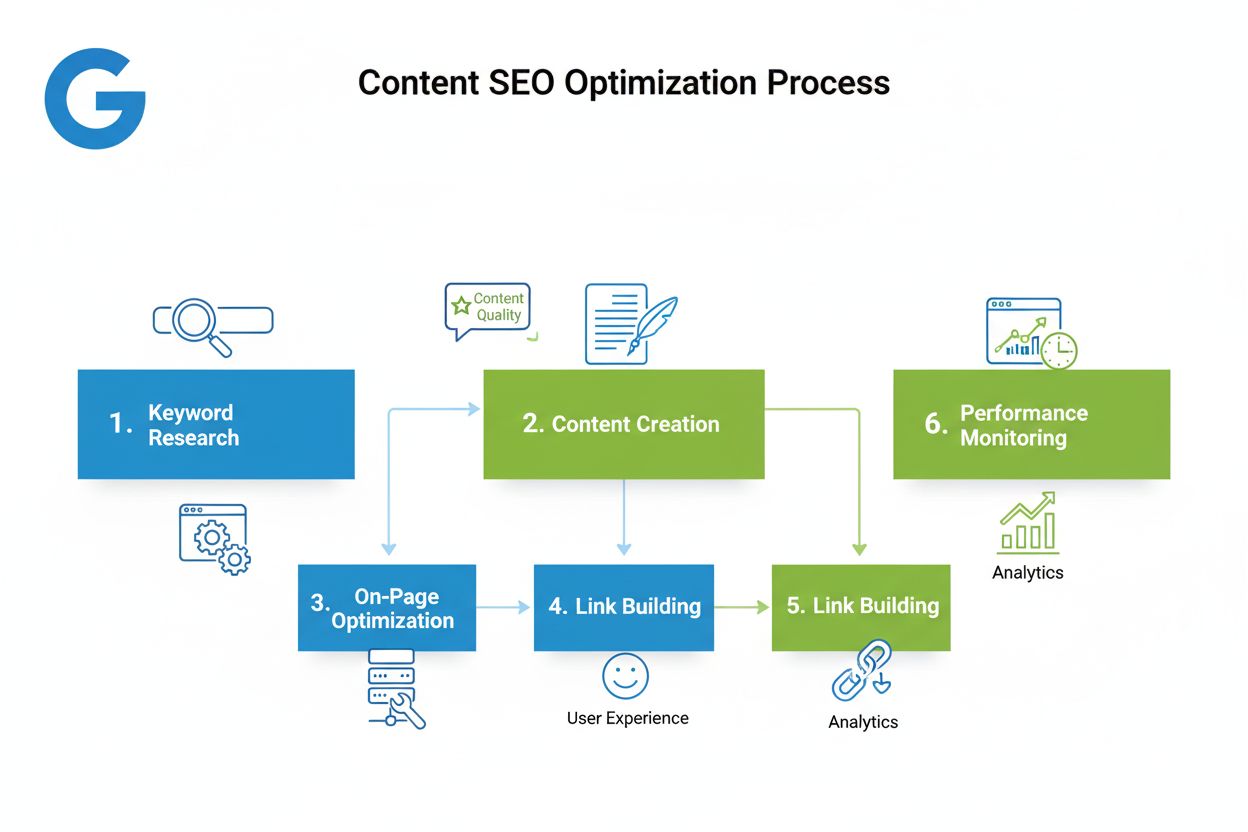
Content SEO is the strategic creation and optimization of high-quality content to improve search engine rankings and organic visibility. Learn how to optimize c...

Learn what content clusters are, how they work, and why they're essential for SEO and AI search visibility. Discover pillar pages, internal linking strategies, ...
Cookie Consent
We use cookies to enhance your browsing experience and analyze our traffic. See our privacy policy.